
Dynamic Phase Coupling For studying synchronization among brain
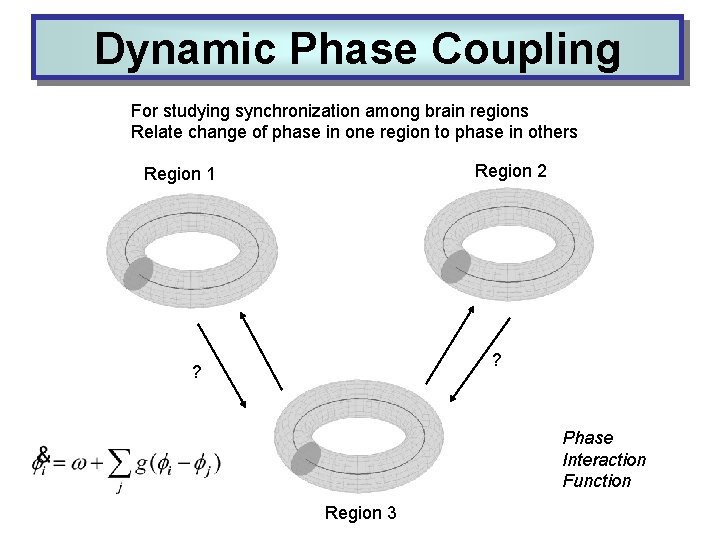
Dynamic Phase Coupling For studying synchronization among brain regions Relate change of phase in one region to phase in others Region 2 Region 1 ? ? Phase Interaction Function Region 3
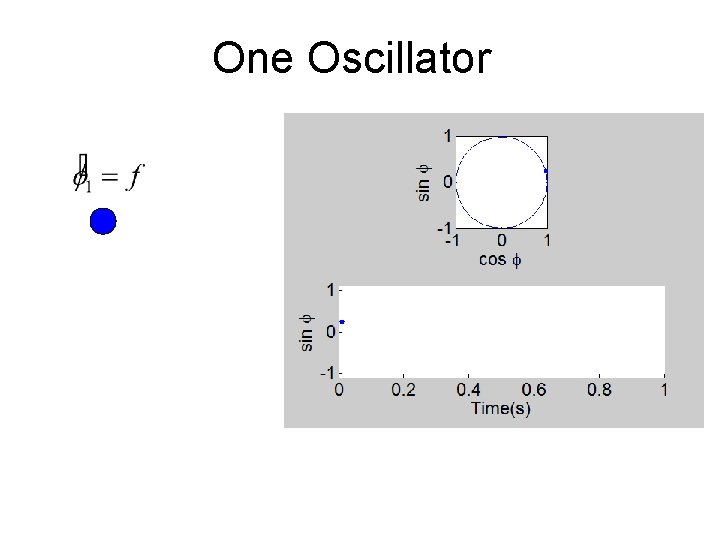
One Oscillator
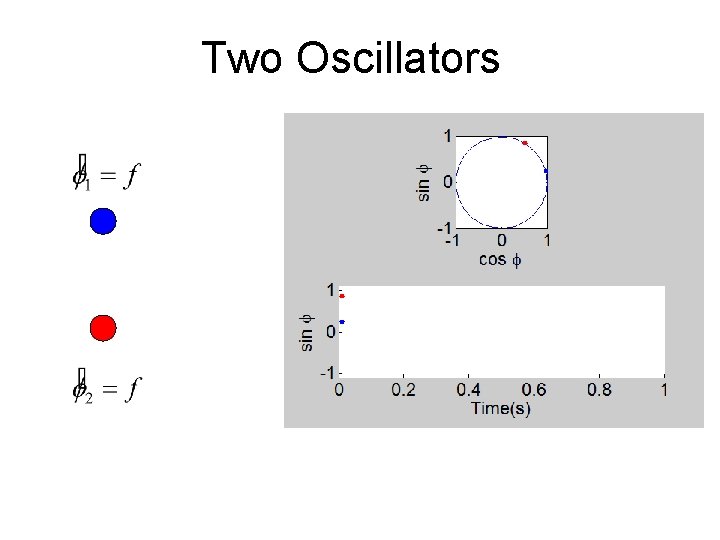
Two Oscillators
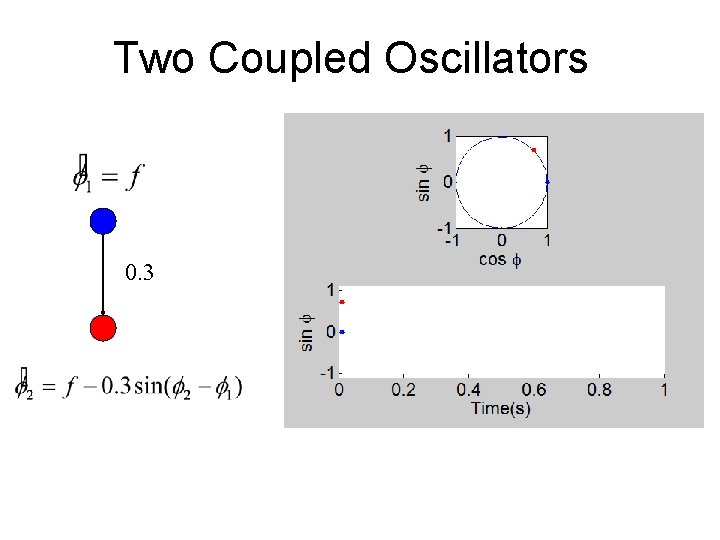
Two Coupled Oscillators 0. 3
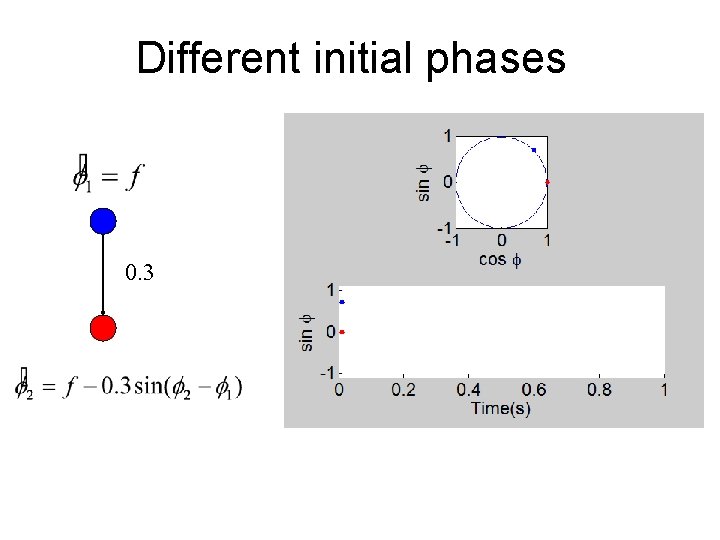
Different initial phases 0. 3
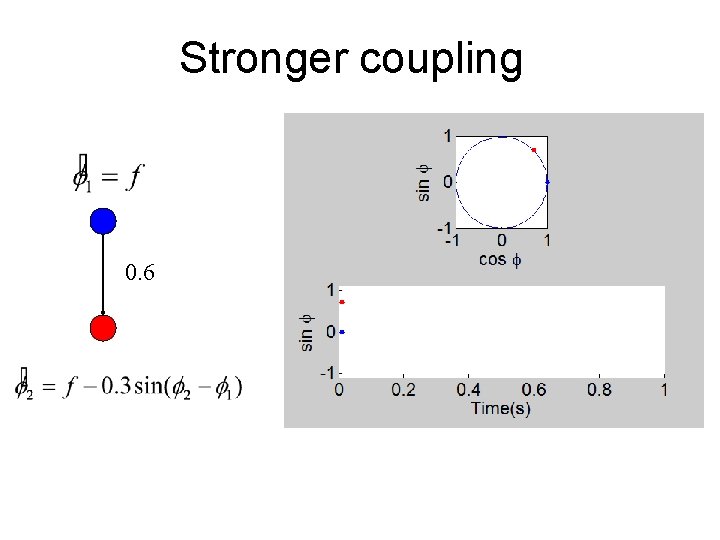
Stronger coupling 0. 6
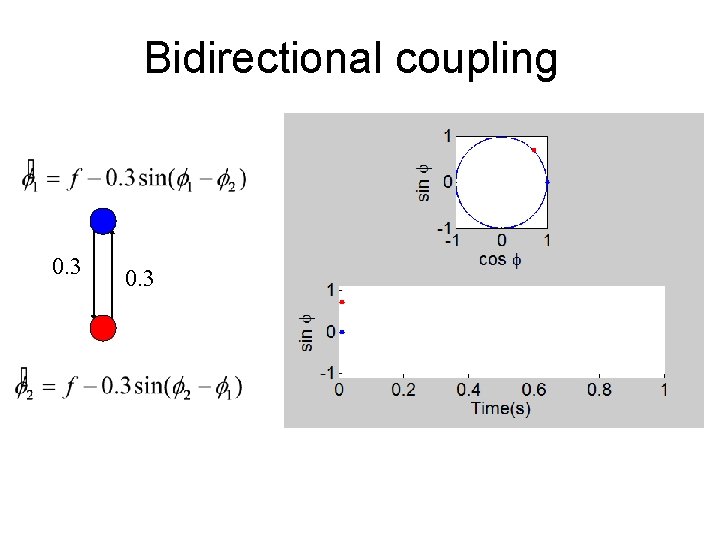
Bidirectional coupling 0. 3
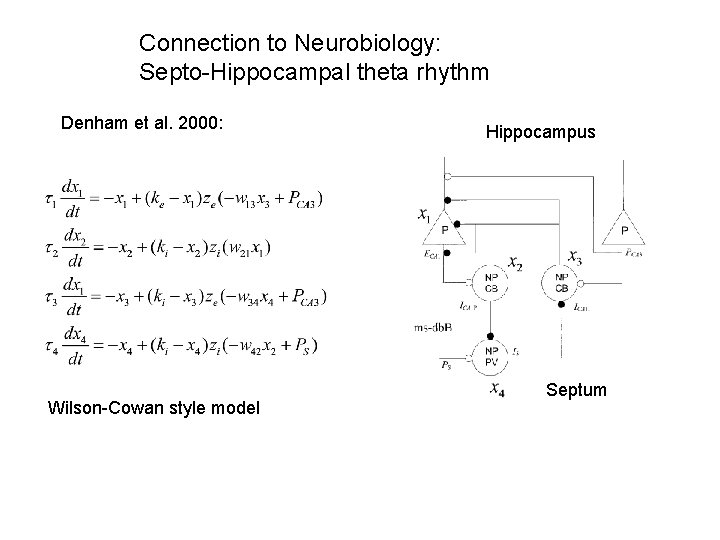
Connection to Neurobiology: Septo-Hippocampal theta rhythm Denham et al. 2000: Wilson-Cowan style model Hippocampus Septum
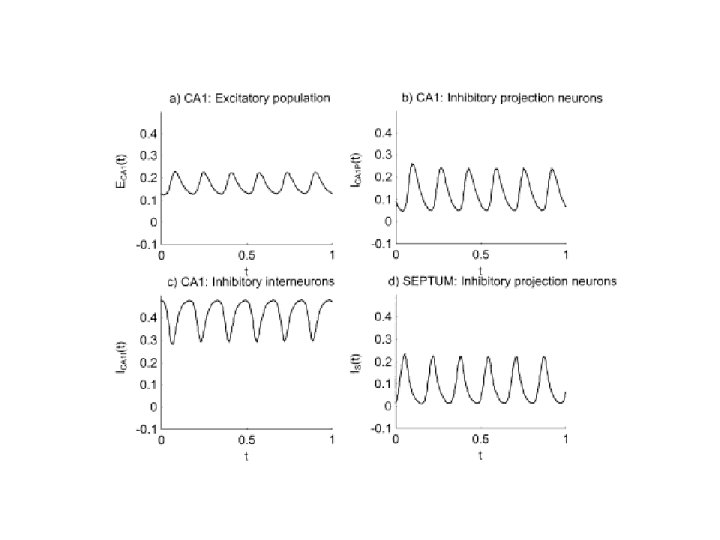
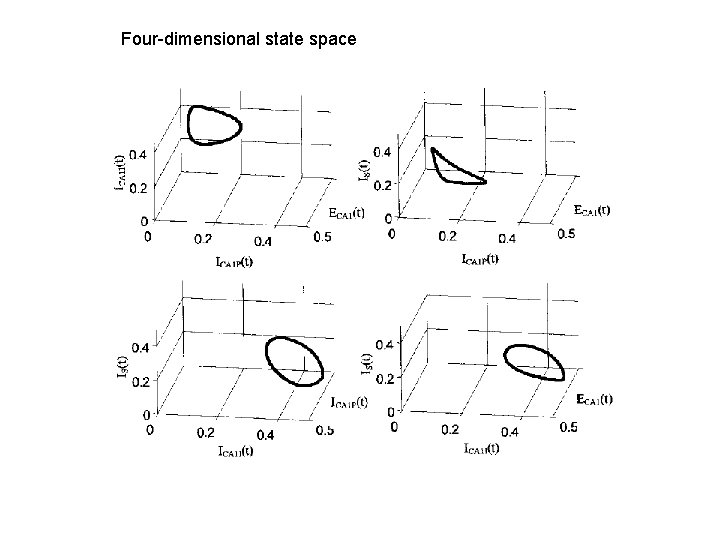
Four-dimensional state space
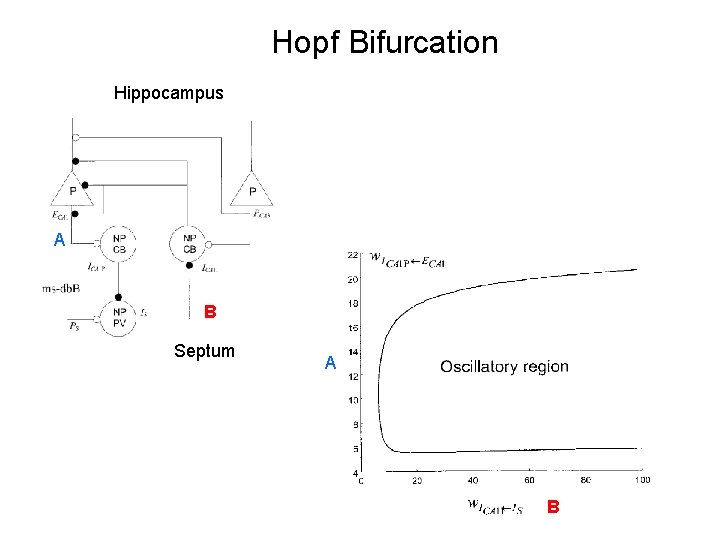
Hopf Bifurcation Hippocampus A B Septum A B
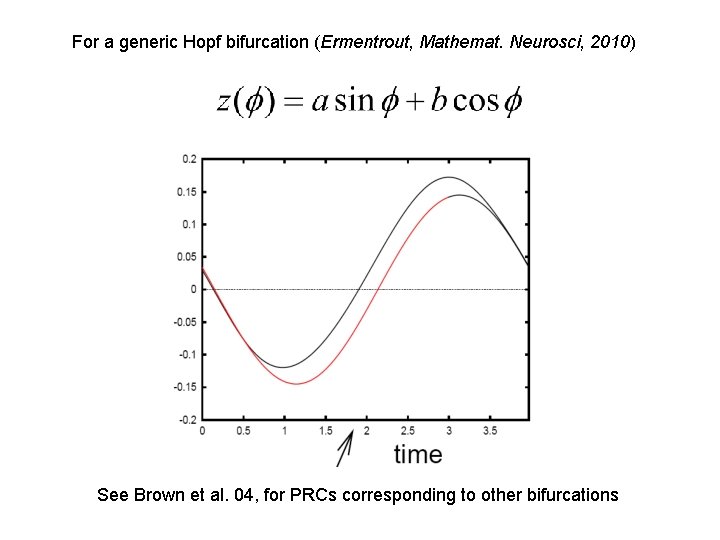
For a generic Hopf bifurcation (Ermentrout, Mathemat. Neurosci, 2010) See Brown et al. 04, for PRCs corresponding to other bifurcations
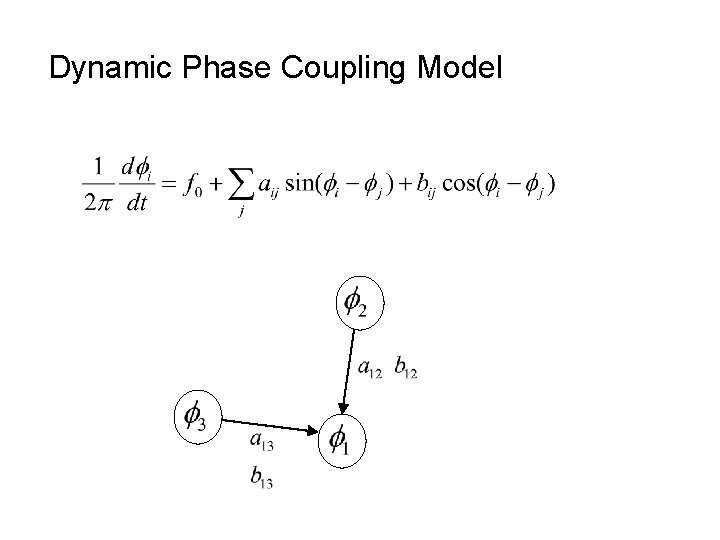
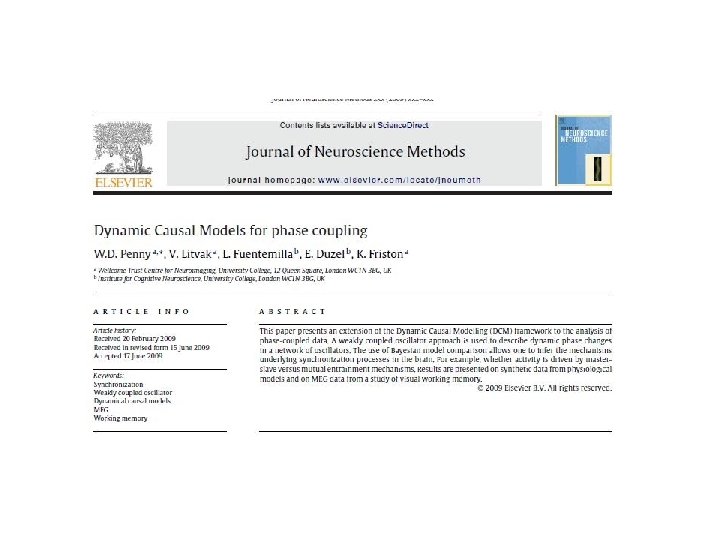
Dynamic Phase Coupling Model
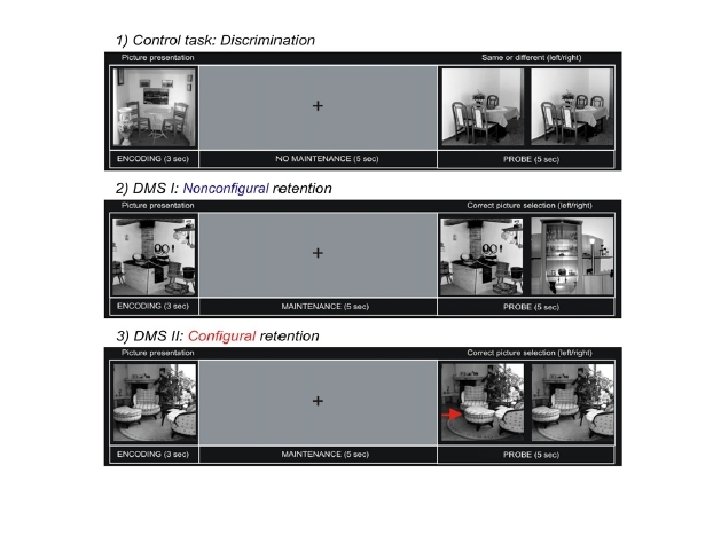
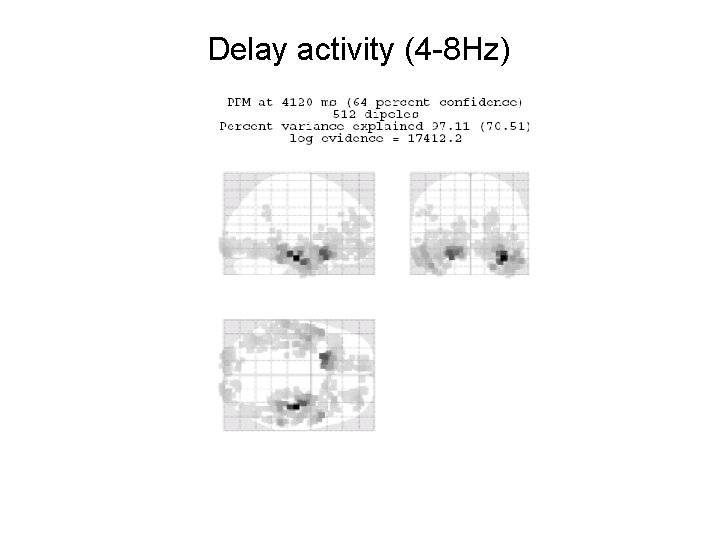
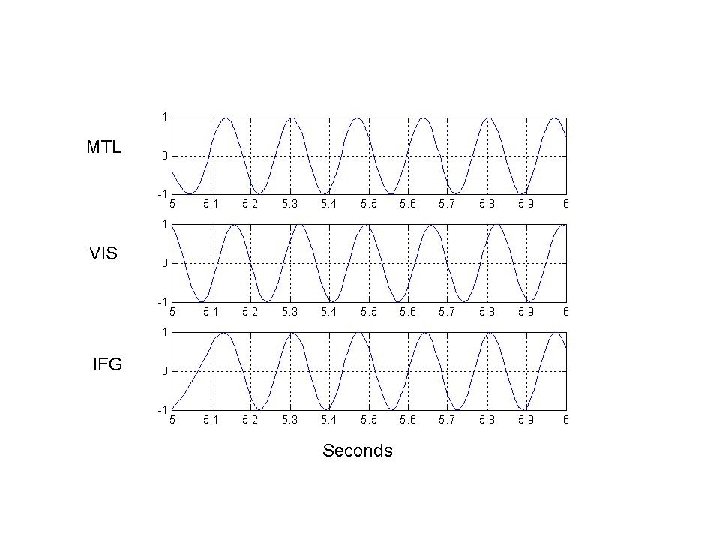
Delay activity (4 -8 Hz)
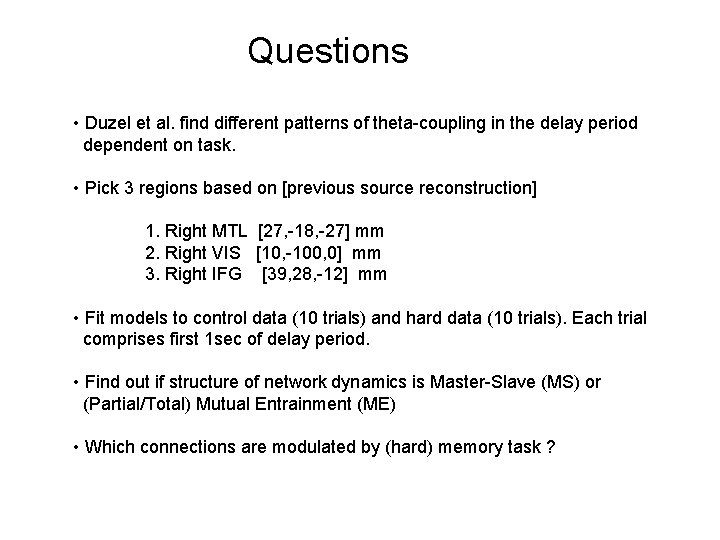
Questions • Duzel et al. find different patterns of theta-coupling in the delay period dependent on task. • Pick 3 regions based on [previous source reconstruction] 1. Right MTL [27, -18, -27] mm 2. Right VIS [10, -100, 0] mm 3. Right IFG [39, 28, -12] mm • Fit models to control data (10 trials) and hard data (10 trials). Each trial comprises first 1 sec of delay period. • Find out if structure of network dynamics is Master-Slave (MS) or (Partial/Total) Mutual Entrainment (ME) • Which connections are modulated by (hard) memory task ?
Data Preprocessing • Source reconstruct activity in areas of interest (with fewer sources than sensors and known location, then pinv will do; Baillet 01) • Bandpass data into frequency range of interest • Hilbert transform data to obtain instantaneous phase • Use multiple trials per experimental condition
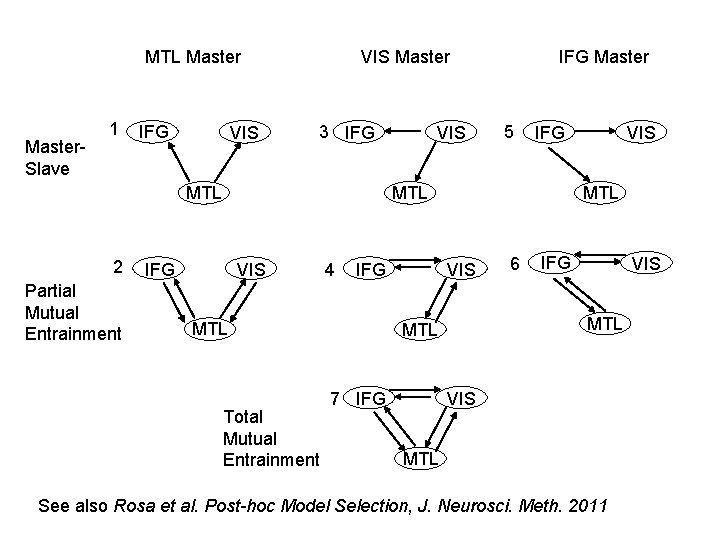
MTL Master. Slave 1 IFG VIS Master 3 IFG Partial Mutual Entrainment 5 IFG MTL 2 VIS IFG Master IFG VIS 4 IFG MTL Total Mutual Entrainment MTL VIS 6 IFG VIS MTL 7 IFG VIS MTL See also Rosa et al. Post-hoc Model Selection, J. Neurosci. Meth. 2011
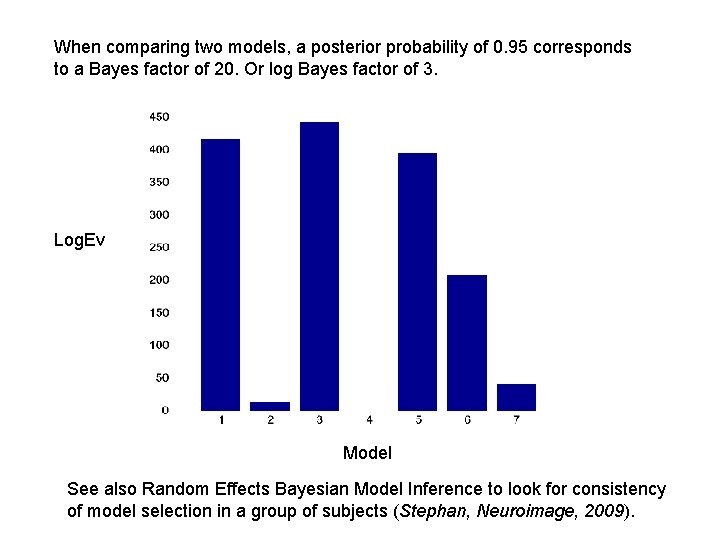
When comparing two models, a posterior probability of 0. 95 corresponds to a Bayes factor of 20. Or log Bayes factor of 3. Log. Ev Model See also Random Effects Bayesian Model Inference to look for consistency of model selection in a group of subjects (Stephan, Neuroimage, 2009).
Summary • • Statistical Parametric Mapping Multivariate Analysis Connectivity Modelling Role of Oscillations in Memory http: //www. fil. ion. ucl. ac. uk/~wpenny
Thank you to • • Wellcome Trust Kai Miller (Wash. U) Emrah Duzel (UCL) Gareth Barnes (UCL) Lluis Fuentemilla (UCL) Vladimir Litvak (UCL) STAMLIN organisers !
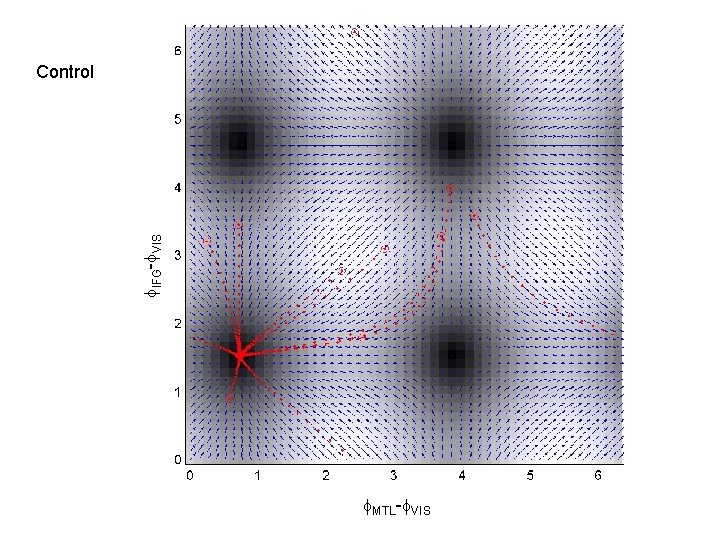
f. IFG-f. VIS Control f. MTL-f. VIS
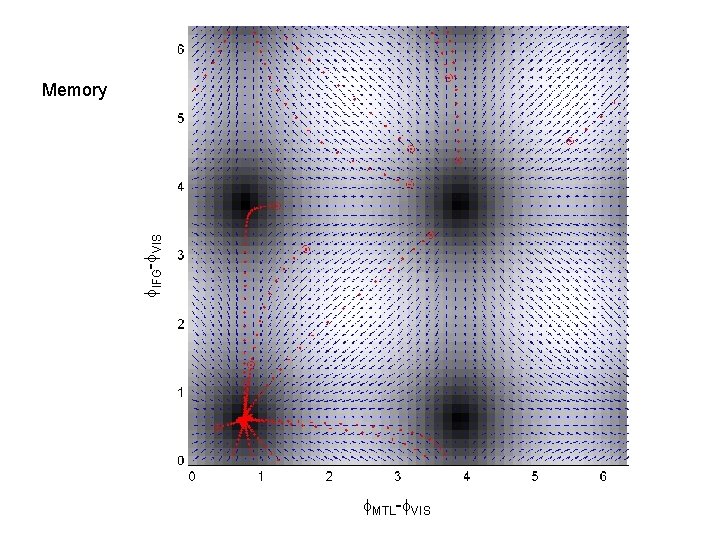
f. IFG-f. VIS Memory f. MTL-f. VIS
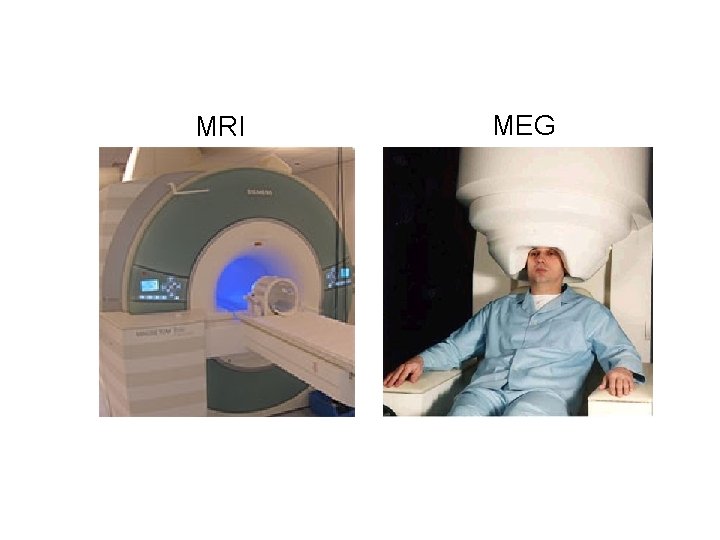
MRI MEG
- Slides: 26