
Dynamic Gas Scavenging System DGSS The Next Generation
- Slides: 16
Dynamic Gas Scavenging System (DGSS®) – The Next Generation of Scavenger Interface Steve Morris Anesthetic Gas Reclamation, LLC Nashville, Tennessee
What’s wrong with active scavenging? • Simple, effective, and low maintenance –BUT • Inefficient, costly, and energy-intensive
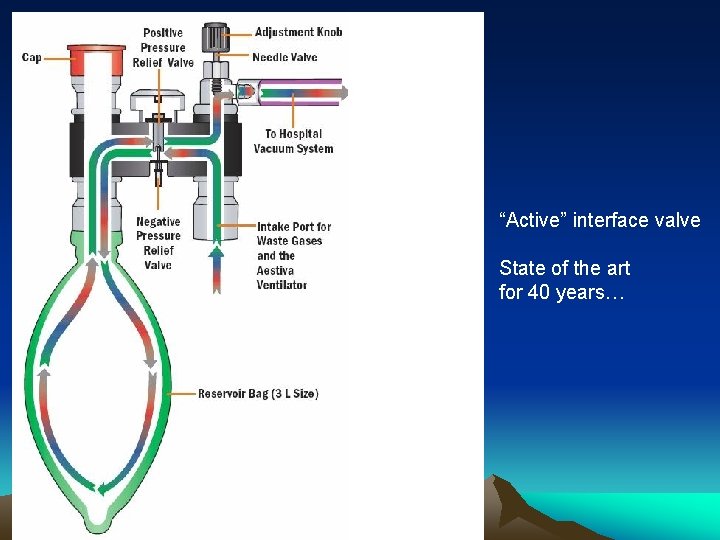
“Active” interface valve State of the art for 40 years…
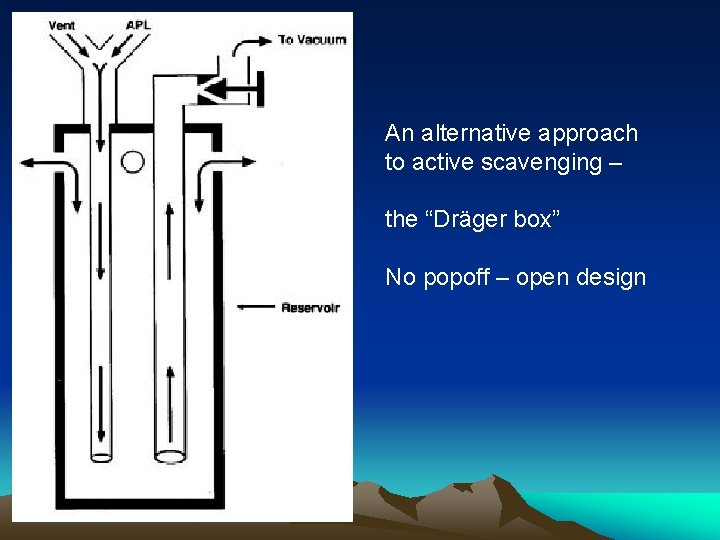
An alternative approach to active scavenging – the “Dräger box” No popoff – open design
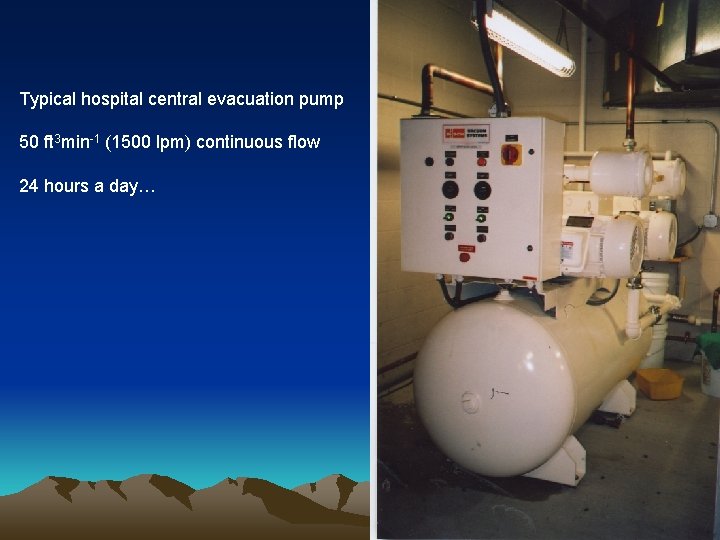
Typical hospital central evacuation pump 50 ft 3 min-1 (1500 lpm) continuous flow 24 hours a day…
PROBLEM • Continuous flow of 50 l/min for each OR requires a large vacuum producer – Capital cost – Ongoing energy requirement – Maintenance/replacement – Risk of overload/fire with older installations • http: //www. beaconmedaes. com/PDFs/library/WAGD. pdf
SOLUTION • Rework scavenging system to be efficient! • Reduce room air entrainment to zero • Reduce equipment and energy costs • Potentially reduce vacuum pump size by 40 -60%
Dynamic Gas Scavenging System - DGSS® • New scavenging interface for anesthesia machines – first innovation in 30 years • Conserves vacuum from hospital system • Enables collection of undiluted waste anesthetic gas • Replaces current scavenging interface
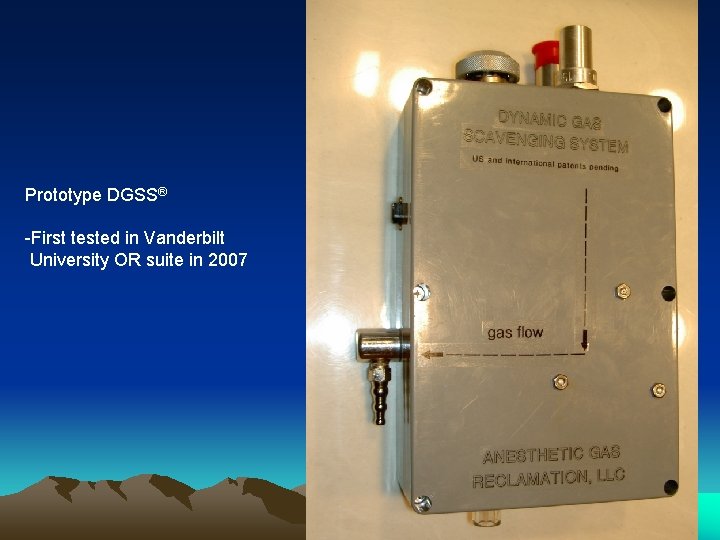
Prototype DGSS® -First tested in Vanderbilt University OR suite in 2007
DGSS history • Developed to facilitate WAG recovery • Converts high-flow WAGD to low-flow • FDA 510(k) done – December 2006 • Now in full production
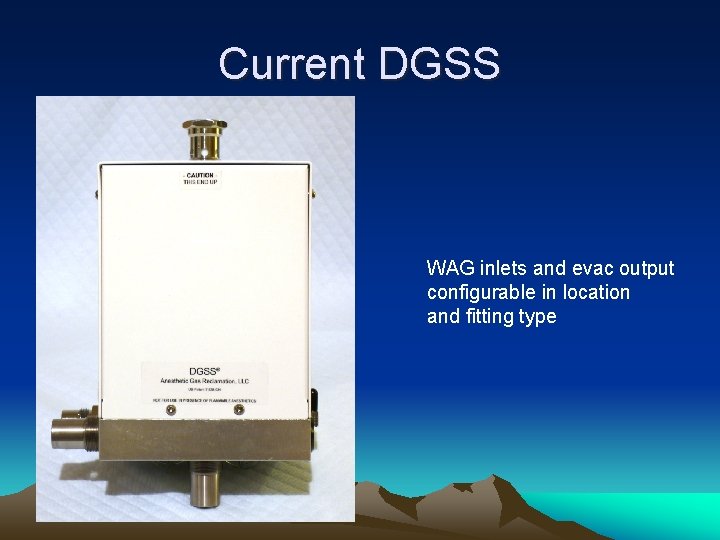
Current DGSS WAG inlets and evac output configurable in location and fitting type
Installation requirements • 12 VDC power (500 m. A) via external adapter • Specific machine mount • 19 or 30 mm WAG exhaust (single or dual) • Although approved as external device, the DGSS technology will, in future, be incorporated into existing machine design…
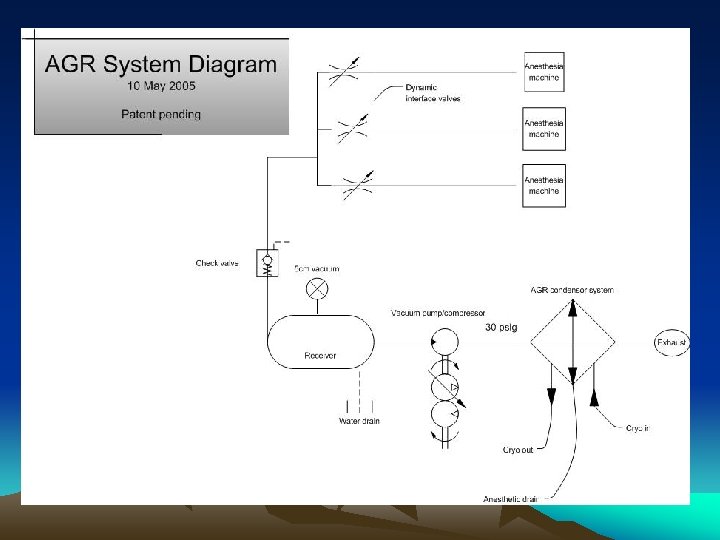
DGSS is the first step… • Low-flow WAGD enables anesthetic reclamation through condensation (coldtrap) technology • Recapture efficiencies are ~99% in pilot testing
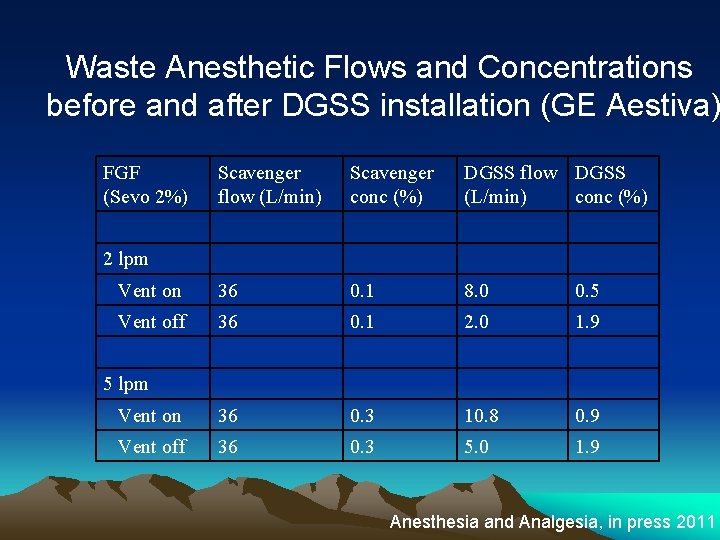
Waste Anesthetic Flows and Concentrations before and after DGSS installation (GE Aestiva) FGF (Sevo 2%) Scavenger flow (L/min) Scavenger conc (%) DGSS flow DGSS (L/min) conc (%) Vent on 36 0. 1 8. 0 0. 5 Vent off 36 0. 1 2. 0 1. 9 Vent on 36 0. 3 10. 8 0. 9 Vent off 36 0. 3 5. 0 1. 9 2 lpm 5 lpm Anesthesia and Analgesia, in press 2011
Conclusions • Waste anesthetic gas flows may be dramatically reduced with a modified interface valve • Scavenging ventilator drive gas reduces the efficiency of the system • This modified interface is a necessary first step toward efficient recovery of volatile anesthetics with cryogenic condensation