
DYNAMIC AUSCULTATION DR RAJESH K F This is


- Slides: 89
DYNAMIC AUSCULTATION DR RAJESH K F
� This is a technique of altering circulatory dynamics by means of a variety of physiological and pharmacological maneuvers and determining their effects on heart sounds and murmurs
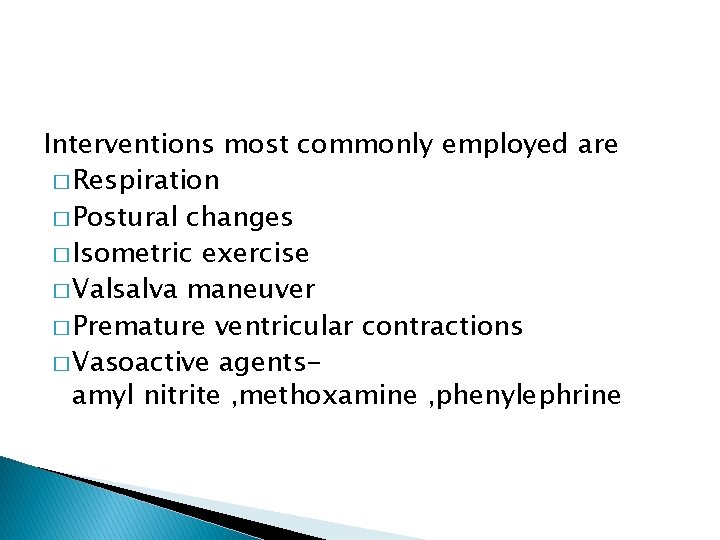
Interventions most commonly employed are � Respiration � Postural changes � Isometric exercise � Valsalva maneuver � Premature ventricular contractions � Vasoactive agentsamyl nitrite , methoxamine , phenylephrine
RESPIRATION Splitting of S 2
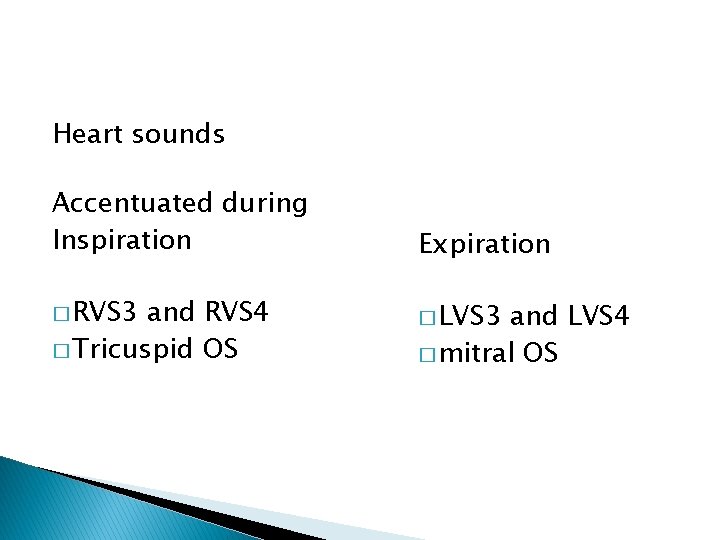
Heart sounds Accentuated during Inspiration Expiration � RVS 3 � LVS 3 and RVS 4 � Tricuspid OS and LVS 4 � mitral OS
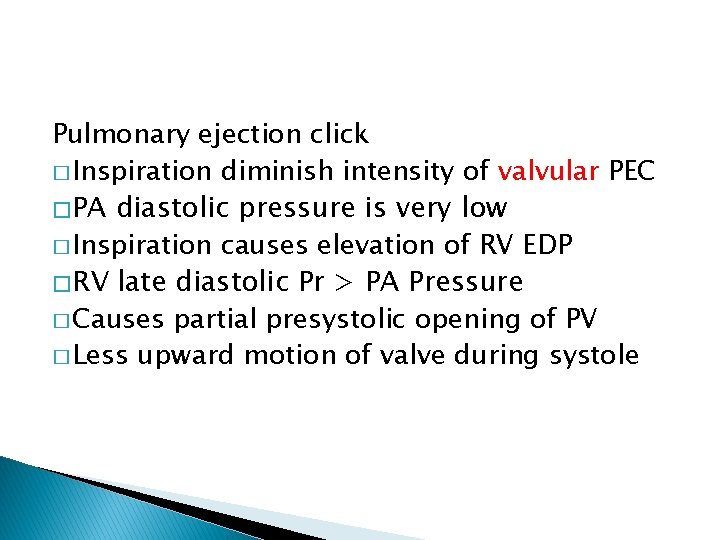
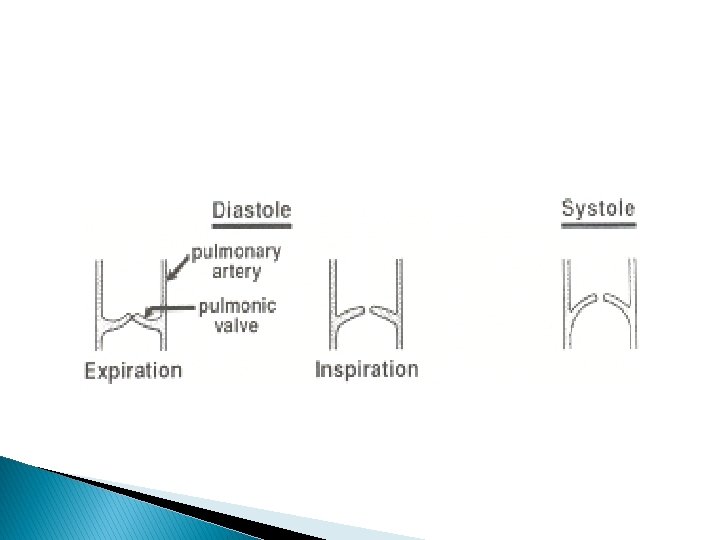
Pulmonary ejection click � Inspiration diminish intensity of valvular PEC � PA diastolic pressure is very low � Inspiration causes elevation of RV EDP � RV late diastolic Pr > PA Pressure � Causes partial presystolic opening of PV � Less upward motion of valve during systole
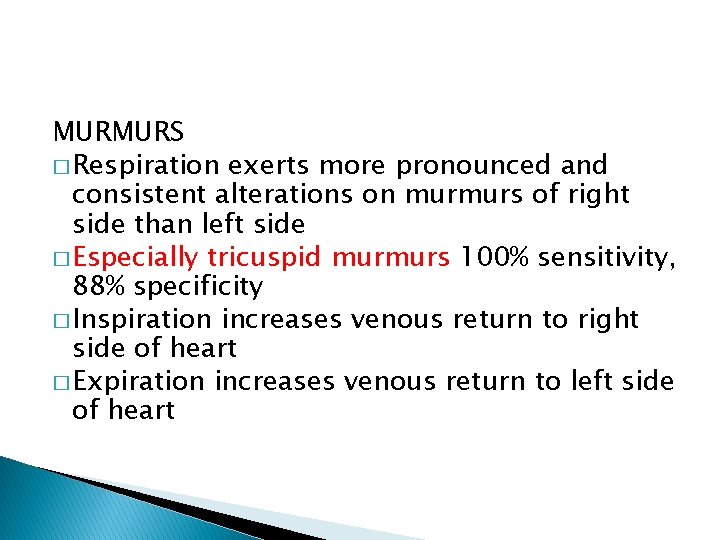
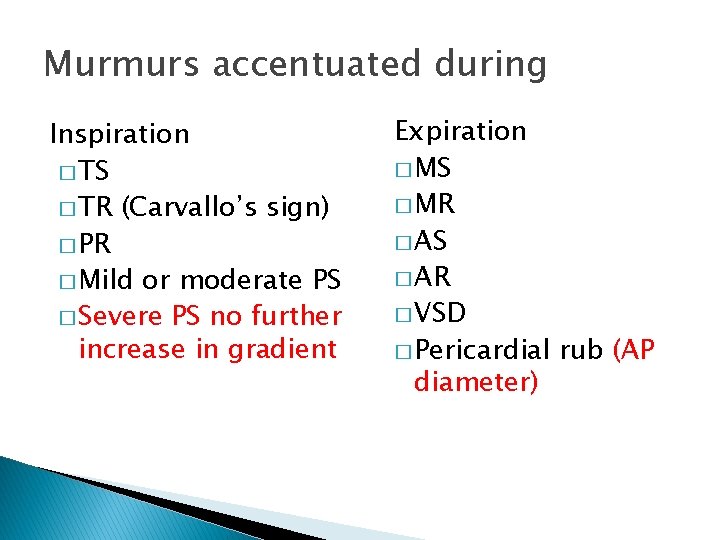
MURMURS � Respiration exerts more pronounced and consistent alterations on murmurs of right side than left side � Especially tricuspid murmurs 100% sensitivity, 88% specificity � Inspiration increases venous return to right side of heart � Expiration increases venous return to left side of heart
Murmurs accentuated during Inspiration � TS � TR (Carvallo’s sign) � PR � Mild or moderate PS � Severe PS no further increase in gradient Expiration � MS � MR � AS � AR � VSD � Pericardial rub (AP diameter)
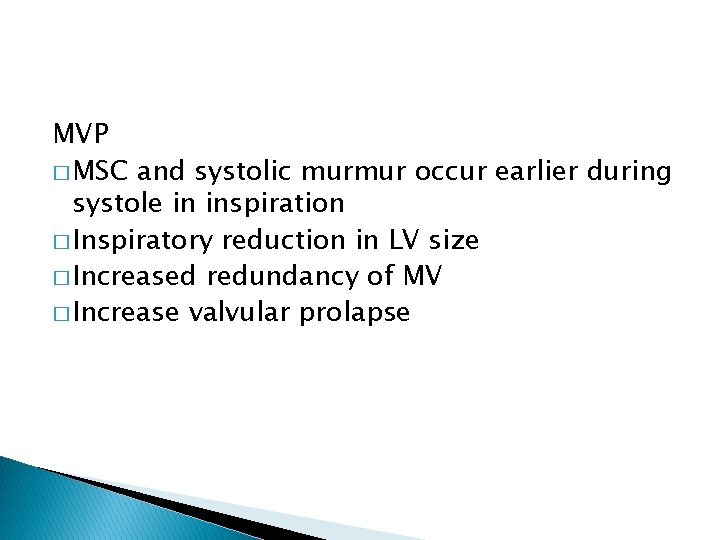
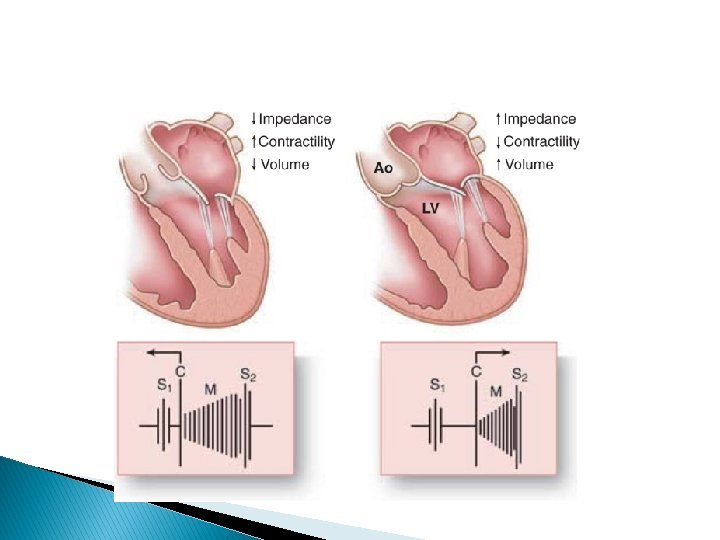
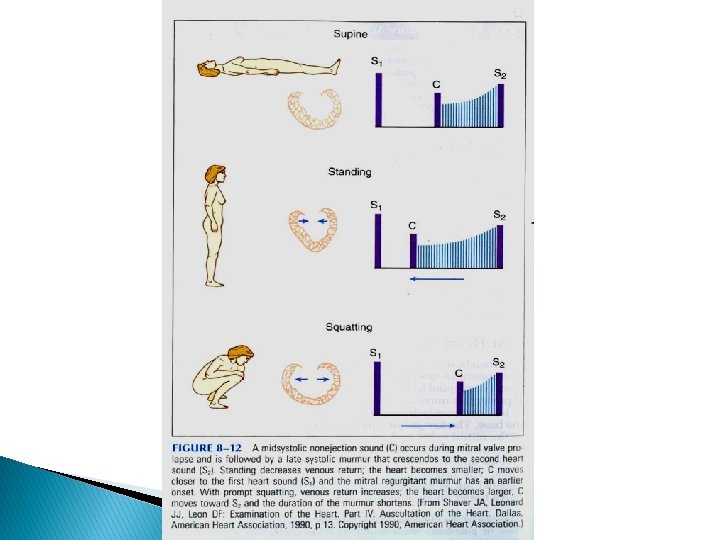
MVP � MSC and systolic murmur occur earlier during systole in inspiration � Inspiratory reduction in LV size � Increased redundancy of MV � Increase valvular prolapse
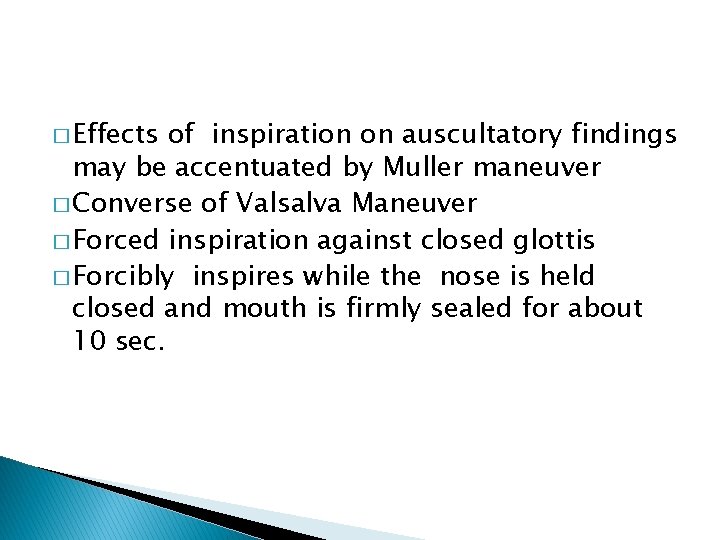
� Effects of inspiration on auscultatory findings may be accentuated by Muller maneuver � Converse of Valsalva Maneuver � Forced inspiration against closed glottis � Forcibly inspires while the nose is held closed and mouth is firmly sealed for about 10 sec.
� Widens split S 2 and augments murmur and filling sound originating in right side of the heart.
POSTURAL CHANGE RAPID STANDING � Decrease in venous return, thus stroke volume
� Width of the splitting become reduced � No change in patients with true fixed split Decrease in intensity � RVS 3 and RVS 4 � LVS 3 and LVS 4
Decrease in intensity � Semilunar valve stenosis � AV valve regurgitation murmurs � VSD � Most functional systolic murmurs
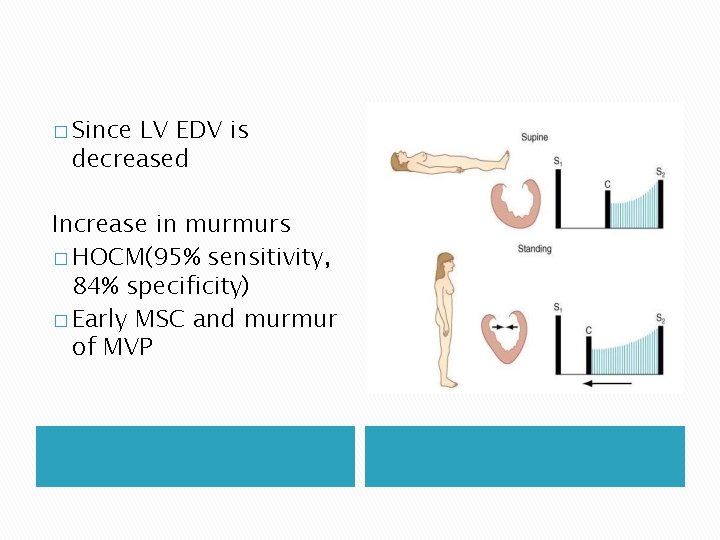
� Since LV EDV is decreased Increase in murmurs � HOCM(95% sensitivity, 84% specificity) � Early MSC and murmur of MVP
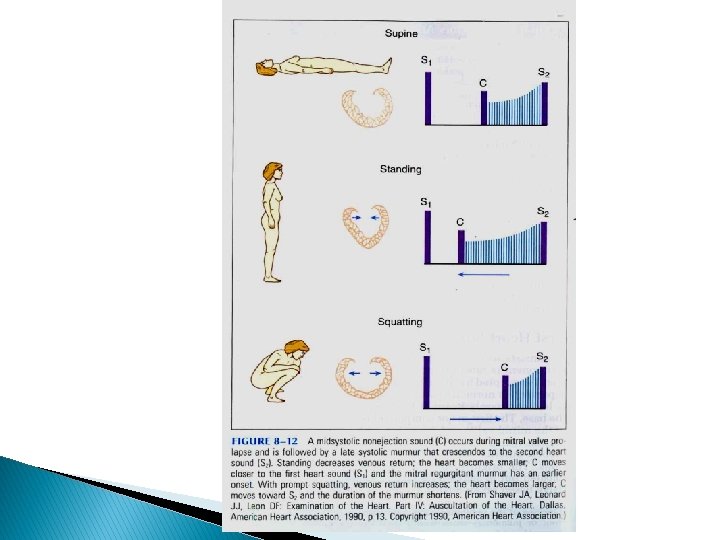
SQUATTING � Sudden change from standing to squatting position � Increase venous return and systemic resistance simultaneously � Squatting abruptly increases ventricular preload and afterload � Arterial pressure rise may cause transient reflex bradycardia
Increase in stroke volume causes augmentation of � S 3 and S 4(of both ventricles) � Right sided murmurs � MS � AS
Elevation of arterial pressure � Increase in aortic reflux AR MR volume LT to RT shunt in VSD blood flow through RVOT in TOF
Combination of elevated arterial pressure and venous return � Increase LV size and reduce LVOT obstruction � Decrease murmur in HOCM(95% sensitivity, 85% specificity) � Click and murmur of MVP delayed
LEFT LATERAL RECUMBENT POSITION Accentuate intensity of � S 1 � LVS 3 and LVS 4 � OS of MS � Murmurs of MS and MR � Click and murmur of MVP � Austin Flint murmur
SITTING AND LEANING FORWARD � Accentuate AR and PR murmur (mechanical)
ISOMETRIC EXERCISE � This can be carried out by using a calibrated handgrip device or a handball � Better to carryout bilaterally � Should be sustained for 20 to 30 secs � Valsalva maneuver during the handgrip must be avoided � Contraindicated in patients with myocardial ischemia and ventricular arrhythmias
Isometric exercise results in significant increase in � Systemic vascular resistance � Arterial pressure � Heart rate � COP � LV filling pressure � Heart size
� Systolic murmur of AS diminished –reduction of pressure gradient across AV � Diastolic murmur of AR and systolic murmurs of rheumatic MR and VSD increases � LVS 3 and LVS 4 accentuated � Diastolic murmur MS becomes louder – increase in flow across valve
Increase LV volume � Systolic murmur of HOCM decreased � Click and murmur of MVP delayed
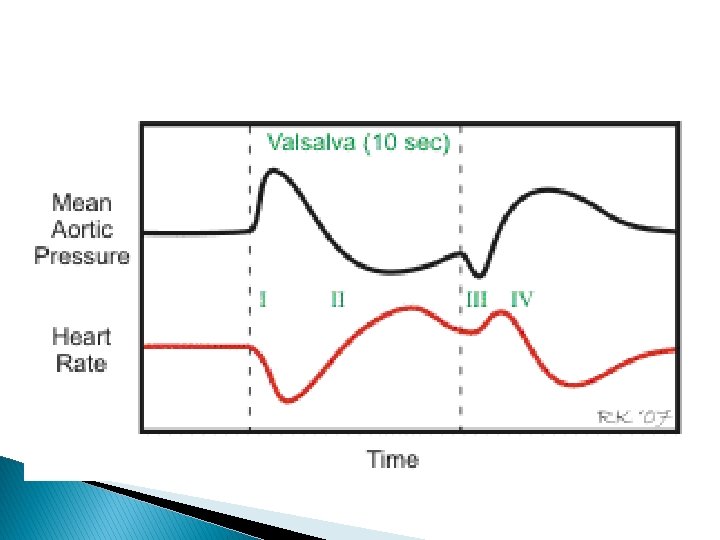
VALSALVA MANEUVER � Forced expiration against a closed glottis Standard test consists of asking the patient to blow against an aneroid manometer and maintain a pressure of 40 mmhg for 30 seconds
� Relatively deep inspiration followed by forced exhalation against a closed glottis for 10 to 20 seconds � Physician has to keep flat of the hand on the abdomen to provide the patient a force to breathe against � Normal response has four phases
PHASE 1 � Intrathoracic pressure rises � Transient increase in LV output and SBP
PHASE II STRAINING PHASE � Systemic venous return decrease � Filling of right and then left side reduced � Stroke volume reduced � Mean arterial and pulse pressures falls � Reflex tachycardia
� A 2 -P 2 interval narrows Attenuation of � S 3 and S 4 � AS & PS � MR & TR � AR & PR � TS & MS
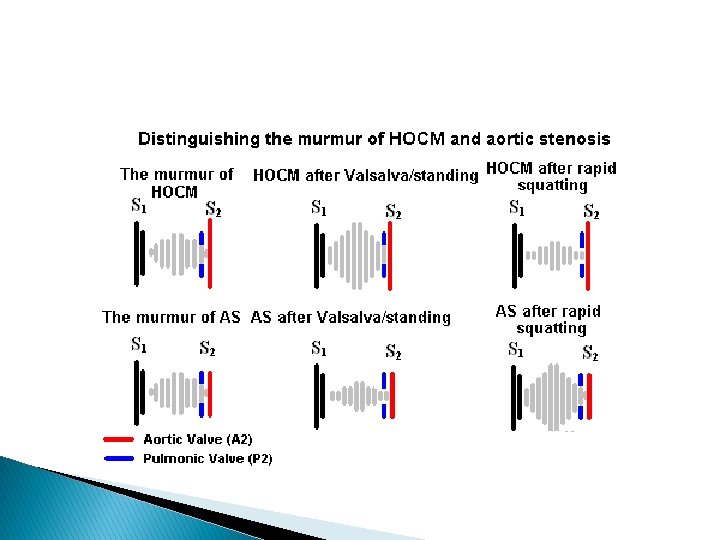
Since LV volume is reduced � Murmur of HOCM increased(65% sensitivity, 95% specificity) � Systolic click and murmur of MVP commence earlier
PHASEIII VALSALVA RELEASE � During first two cycles following release murmurs and sounds(S 3 and S 4) right side of heart return to normal � After six to eight cycles sounds and murmurs originating from left side of heart returns to normal � A 2 -P 2 split increases � Decrease SBP
� PHASE IV OVERSHOOT PHASE � Murmurs and heart sounds transiently augmented
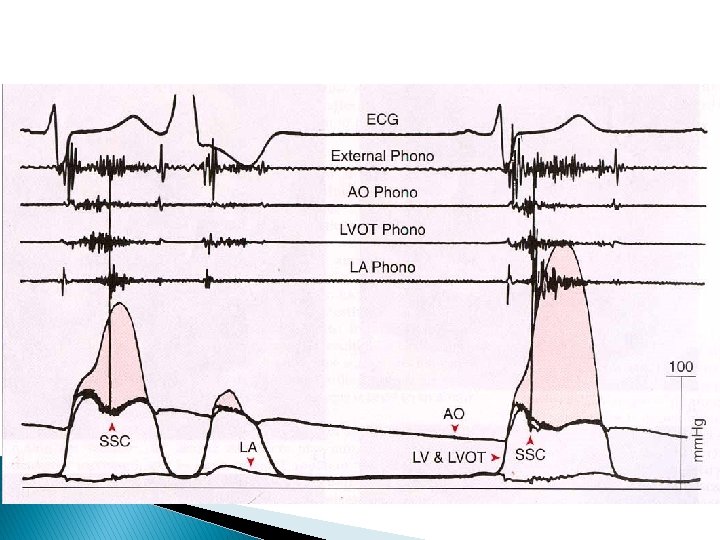
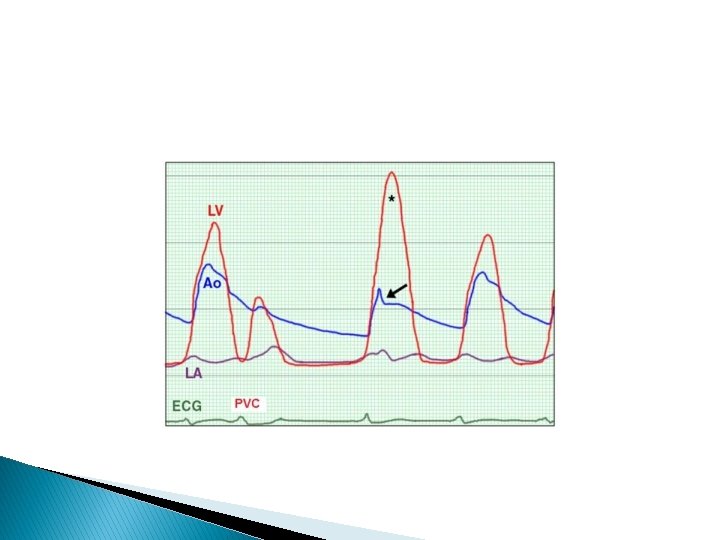
POSTPREMATURE VENTRICULAR CONTRACTIONS Followed by a significant pause � Increase in ventricular filling � Augmentation of cardiac contractility- post extra systolic potentiation
During postpremature beat – augmented are � ESM of AS and PS ^volume ^contractility � HOCM ^contractility-increase dynamic LVOT obstruction ^volume-decrease LVOT obstruction net increase gradient
� PSM of MR and of VSD - not altered(relatively little further increase in mitral valve flow or change in the LV-LA gradient) (ventricle has 2 openings aorta and LA in MR not in AS) � Systolic murmur of papillary muscle dysfunction diminish � Increase in LV size delays systolic click and murmur of MVP (depend mainly on volume)
� Similar auscultatory changes follow prolonged diastolic pauses in AF
PHARMACOLOGICAL AGENTS AMYL NITRITE INHALATION � Crush ampoule in towel � take 3 -4 deep breaths over 10 – 15 secs � First 30 secs– Systemic art pressure decrease � 30 to 60 secs– Reflex Tachycardia � > 60 secs -CO, HR and Velocity of BF increase
� S 1 augmented � A 2 diminished � OS mitral and tricuspid valve become louder � A 2 OS interval shortens � RVS 3 and LVS 3 augmented –rapidity of ventricular filling � LVS 3 associated with MR diminished(MR reduced)
Systolic murmurs accentuated are � HOCM � AS � PS � TR � Functional systolic murmurs Increased ventricular contractility and SV
Due fall in systemic arterial pressure murmurs diminished are � PSM of MR � PSM of VSD � EDM of AR � Austin flint murmur � Continuous murmur of PDA � Continuous murmur of AVF
Systolic ejection murmur of TOF diminished � Decrease in arterial pressure � Increase right to left shunt � Decrease blood flow in RVOT
Reduction cardiac size leads to � Early appearance of click and murmur of MVP � Murmur intensity show variable response
Amyl nitrate response useful in distinguishing � Systolic murmur of AS(^)and MR(v) � Systolic murmur of TR(^) and MR(v) � Systolic murmur of PS(^) and TOF(v) � Systolic murmur of PS(^) and VSD(v) � Diastolic murmur of MS(^) and Austin flint(v) � EDM of PR(^) and AR(v)
METHOXAMINE AND PHENYL EPHRINE � Increase systemic arterial pressure � Reflex bradycardia and decreased contractility and COP � Contraindicated in CHF and HTN
� Methoxamine 3 -5 mg IV increase arterial pressure by 20 -40 mm Hg for 10 to 20 min � Phenylephrine 0. 5 mg IV elevates systolic pressure around 30 mm Hg for 3 -5 min � Phenylephrine preferred due to shorter duration action
� S 1 reduced � A 2 becomes louder � A 2 OS prolonged � S 3 and S 4 response variable
Increase in arterial pressures cause following murmurs louder � EDM of AR � PSM of MR � VSD � TOF � Continuous murmurs of PDA and AVF
� Systolic murmur of HOCM softens(^ LV size) � Click and murmur of MVP delayed(^ LV size) Decrease in COP diminish � ESM of AS � Functional systolic murmurs � MDM of MS
TRANSIENT ARTERIAL OCCLUSION � Transient external compression of both brachial arteries � By bilateral cuff inflation to 20 mm Hg greater than peak systolic pressure � Augments the murmurs of MR, VSD, and AR
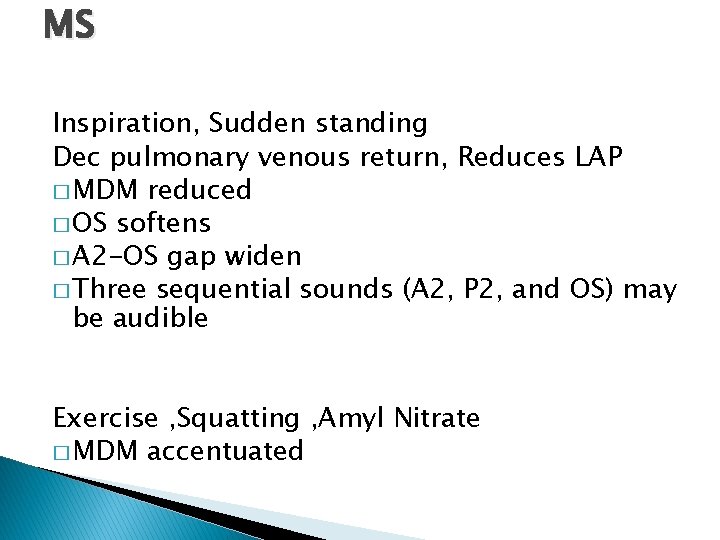
MS Inspiration, Sudden standing Dec pulmonary venous return, Reduces LAP � MDM reduced � OS softens � A 2 -OS gap widen � Three sequential sounds (A 2, P 2, and OS) may be audible Exercise , Squatting , Amyl Nitrate � MDM accentuated
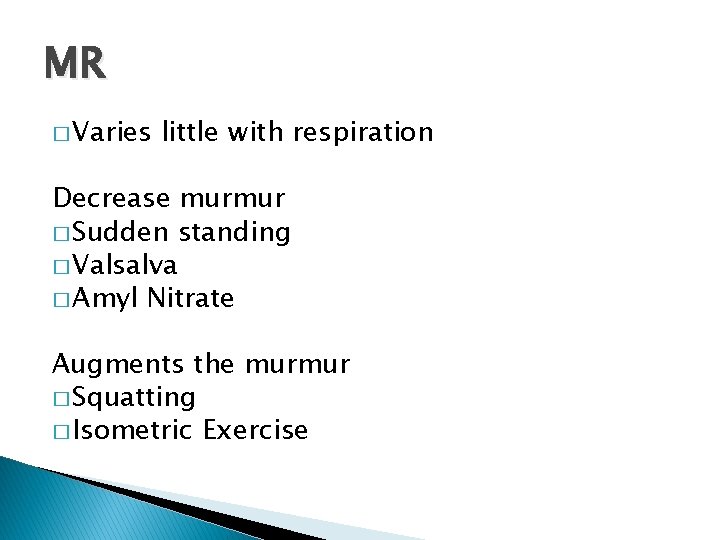
MR � Varies little with respiration Decrease murmur � Sudden standing � Valsalva � Amyl Nitrate Augments the murmur � Squatting � Isometric Exercise
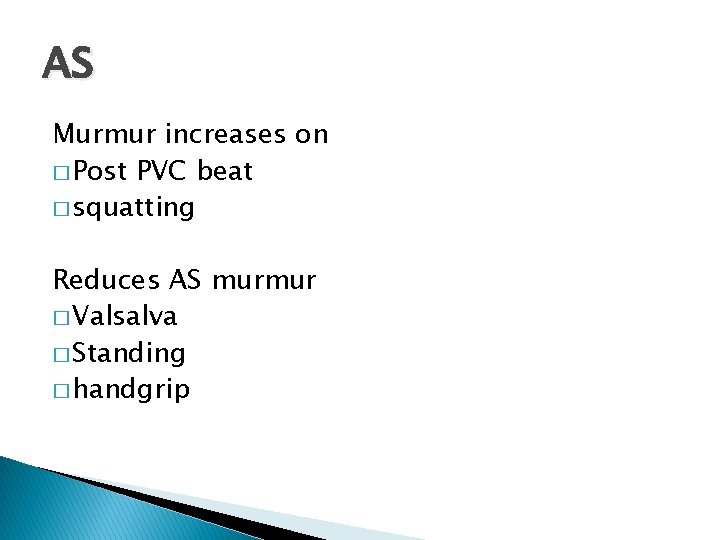
AS Murmur increases on � Post PVC beat � squatting Reduces AS murmur � Valsalva � Standing � handgrip
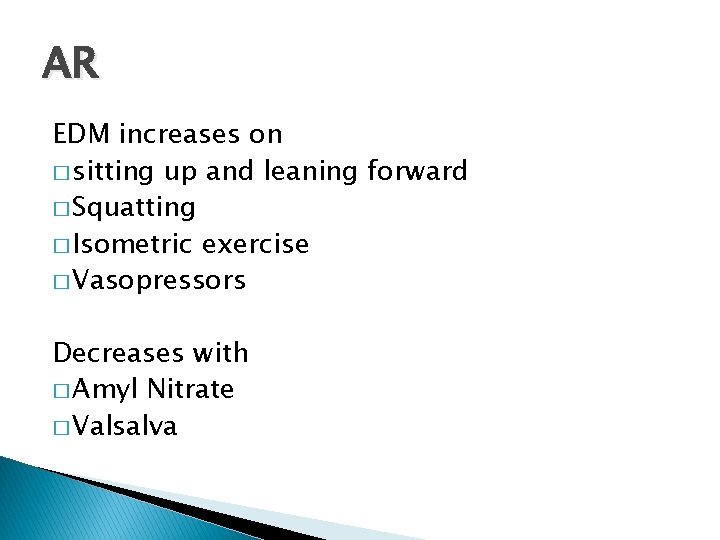
AR EDM increases on � sitting up and leaning forward � Squatting � Isometric exercise � Vasopressors Decreases with � Amyl Nitrate � Valsalva
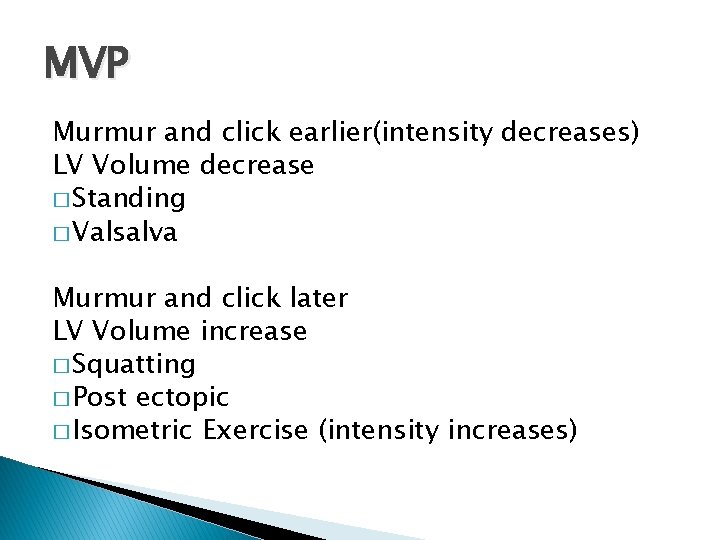
MVP Murmur and click earlier(intensity decreases) LV Volume decrease � Standing � Valsalva Murmur and click later LV Volume increase � Squatting � Post ectopic � Isometric Exercise (intensity increases)
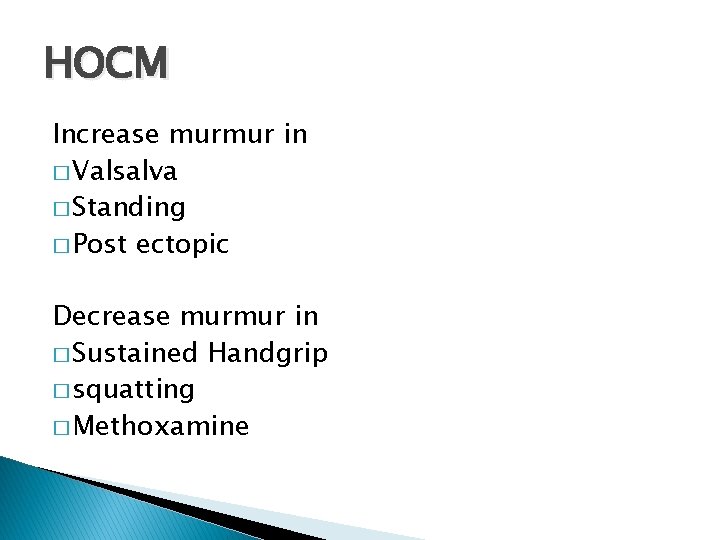
HOCM Increase murmur in � Valsalva � Standing � Post ectopic Decrease murmur in � Sustained Handgrip � squatting � Methoxamine
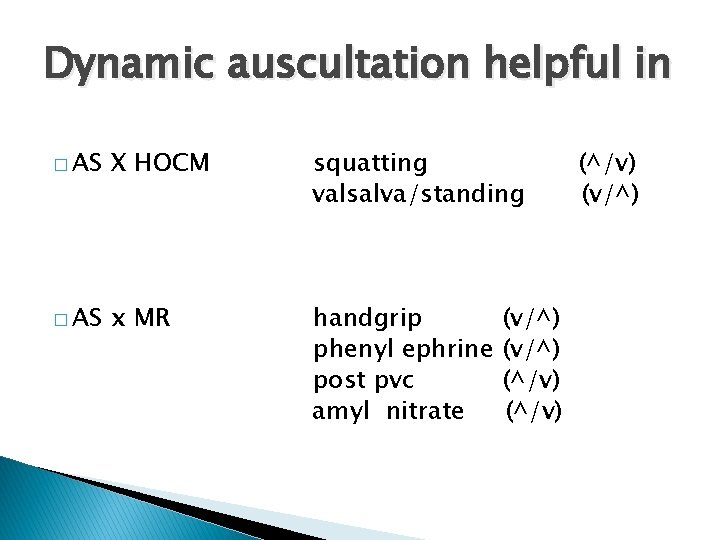
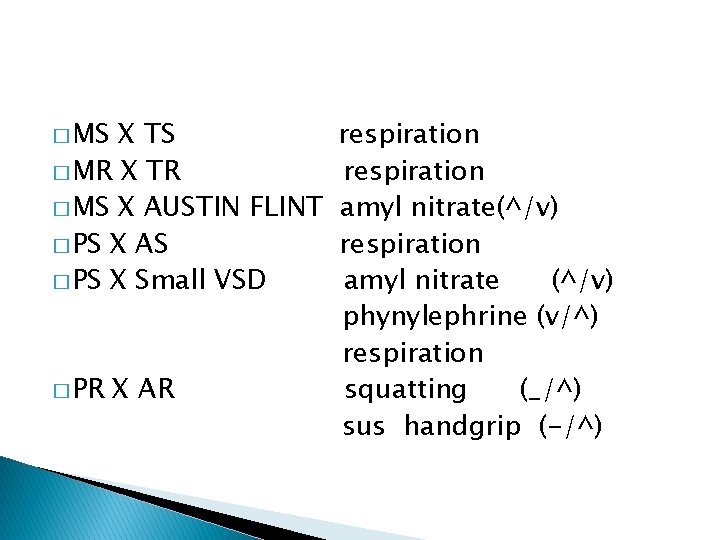
Dynamic auscultation helpful in � AS X HOCM squatting valsalva/standing � AS x MR handgrip phenyl ephrine post pvc amyl nitrate (v/^) (^/v) (v/^)
� MS X TS � MR X TR � MS X AUSTIN FLINT � PS X AS � PS X Small VSD � PR X AR respiration amyl nitrate(^/v) respiration amyl nitrate (^/v) phynylephrine (v/^) respiration squatting (_/^) sus handgrip (-/^)
� THANK U
MCQS
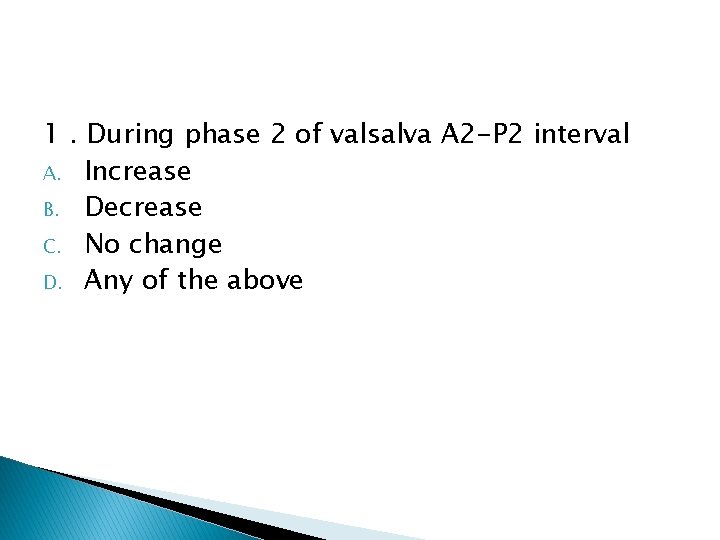
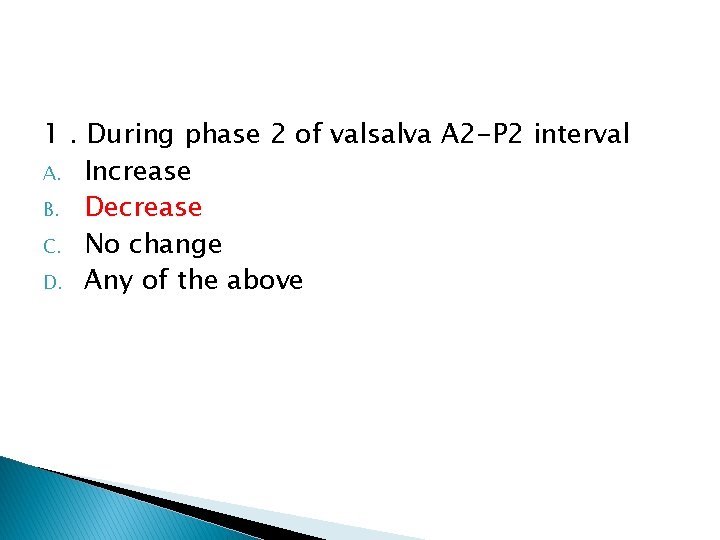
1. During phase 2 of valsalva A 2 -P 2 interval A. Increase B. Decrease C. No change D. Any of the above
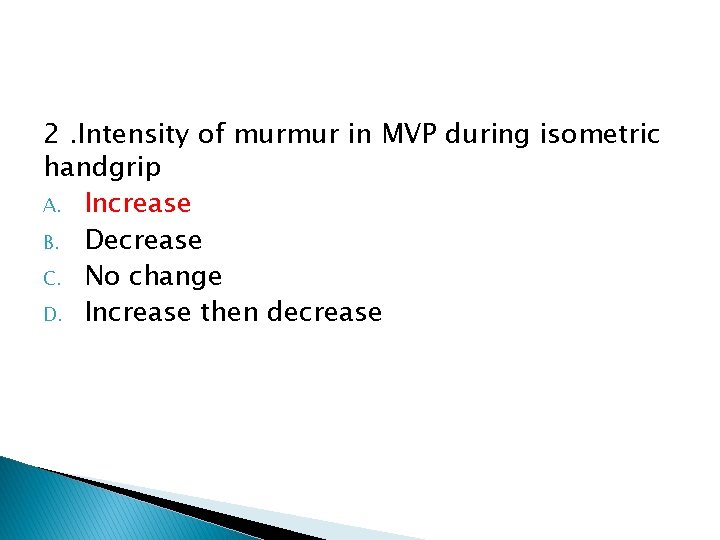
2. Intensity of murmur in MVP during isometric handgrip A. Increase B. Decrease C. No change D. Increase then decrease
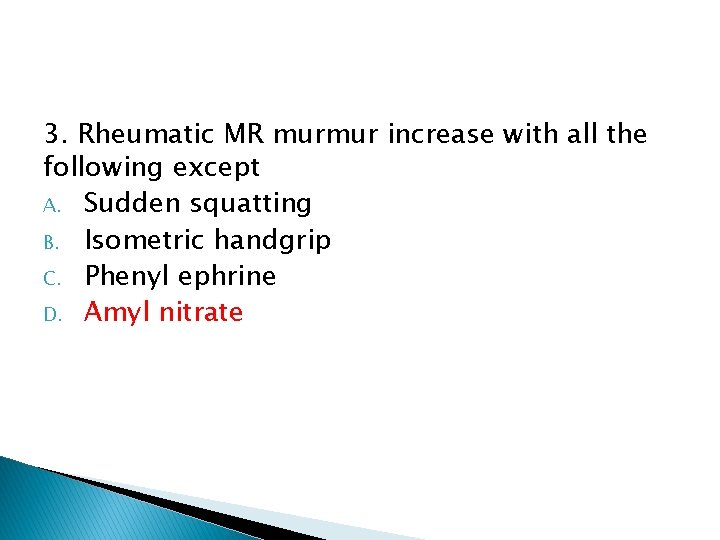
3. Rheumatic MR murmur increase with all the following except A. Sudden squatting B. Isometric handgrip C. Phenyl ephrine D. Amyl nitrate
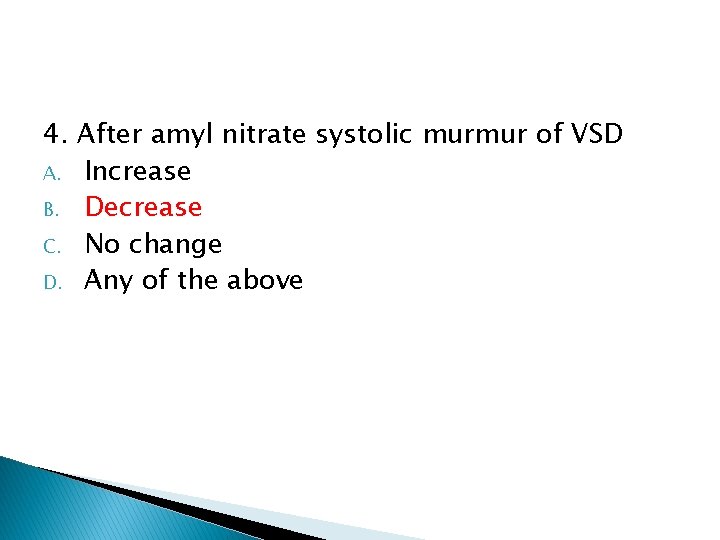
4. After amyl nitrate systolic murmur of VSD A. Increase B. Decrease C. No change D. Any of the above
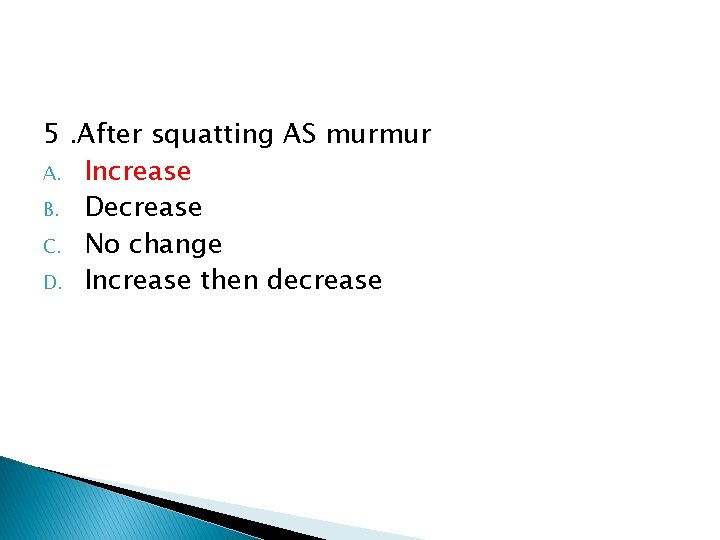
5. After squatting AS murmur A. Increase B. Decrease C. No change D. Increase then decrease
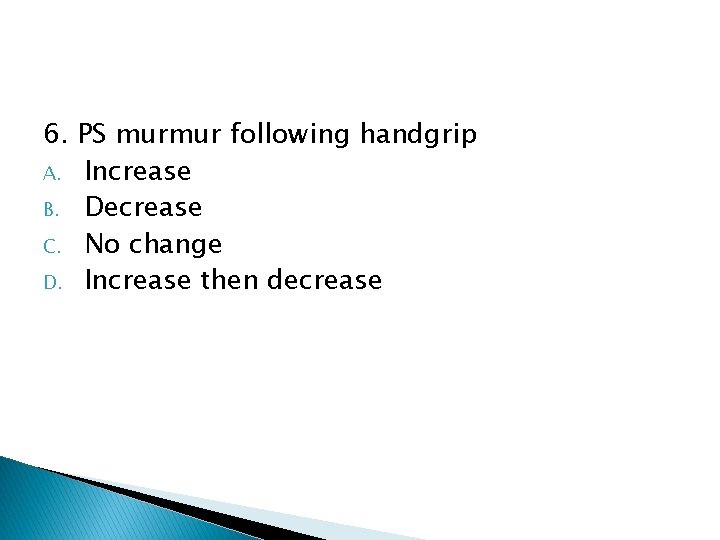
6. PS murmur following handgrip A. Increase B. Decrease C. No change D. Increase then decrease
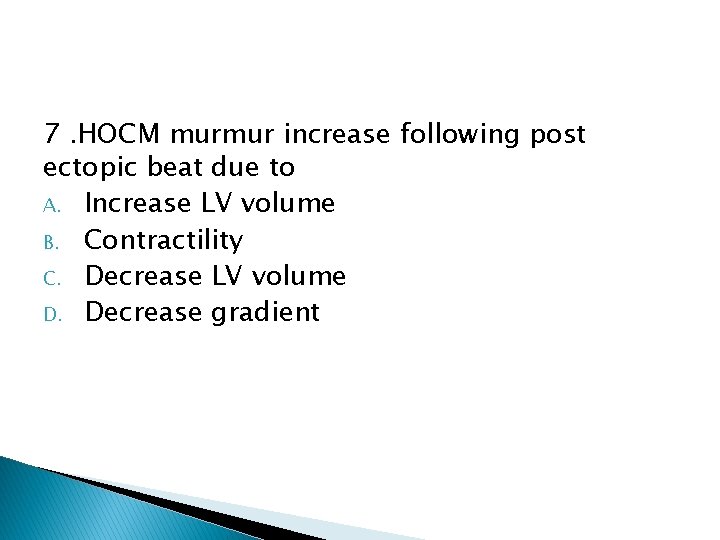
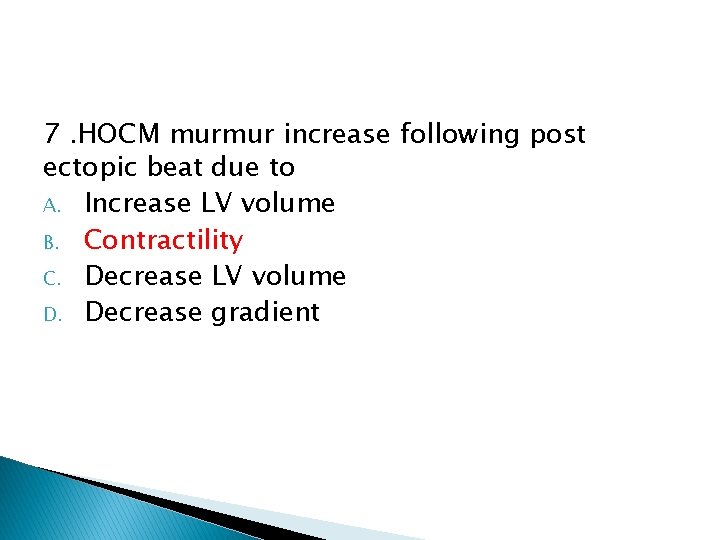
7. HOCM murmur increase following post ectopic beat due to A. Increase LV volume B. Contractility C. Decrease LV volume D. Decrease gradient
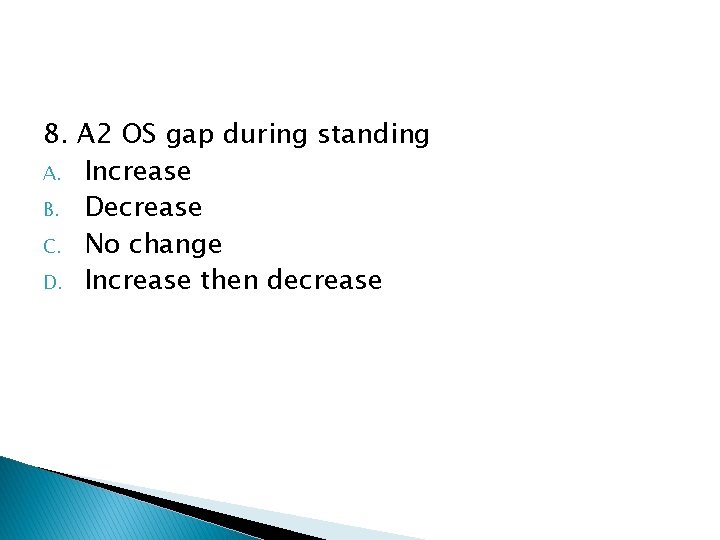
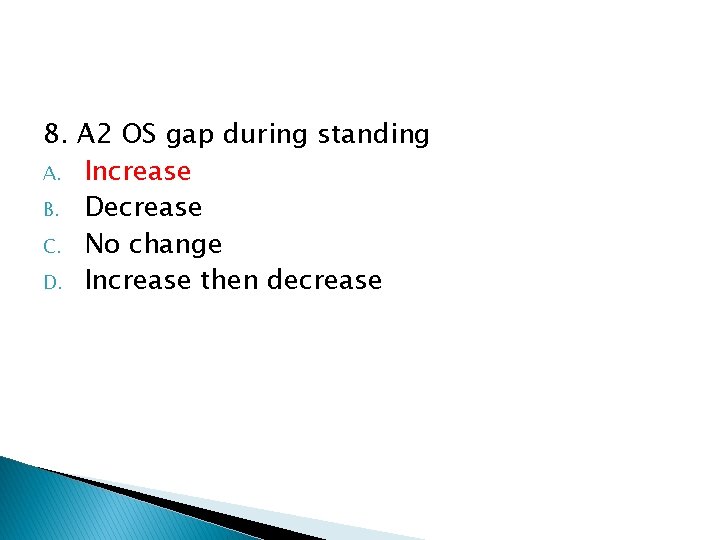
8. A 2 OS gap during standing A. Increase B. Decrease C. No change D. Increase then decrease
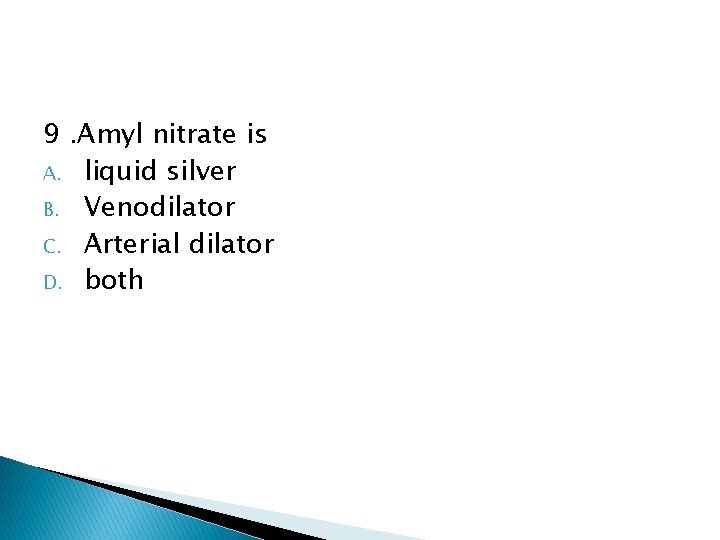
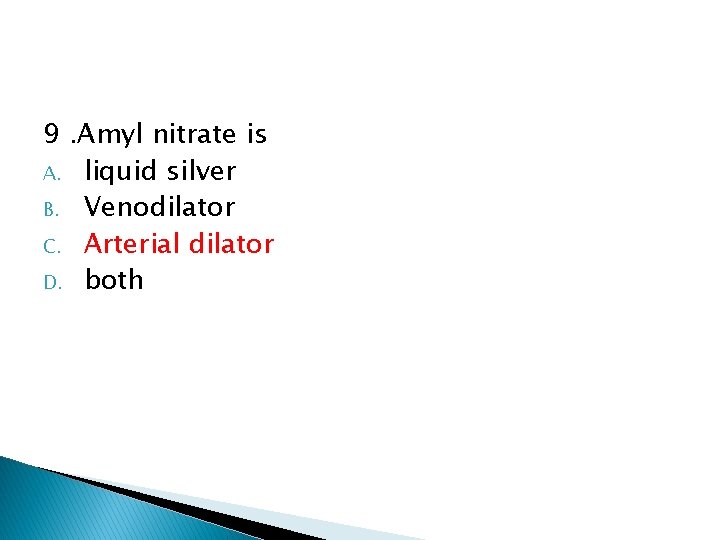
9. Amyl nitrate is A. liquid silver B. Venodilator C. Arterial dilator D. both
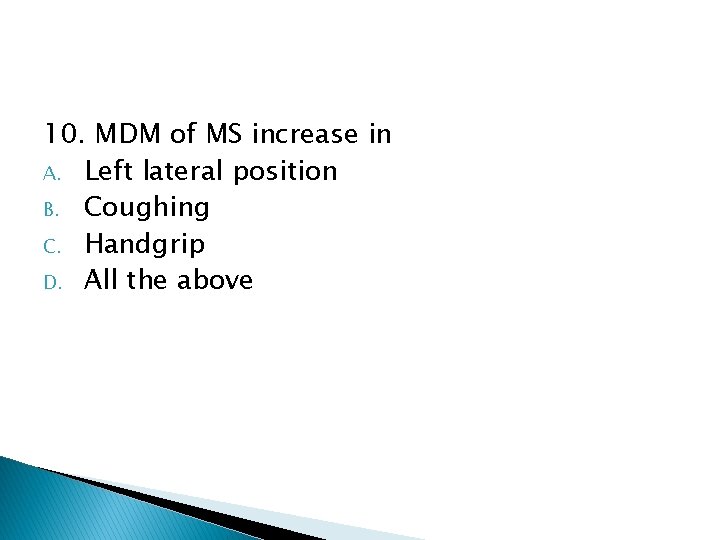
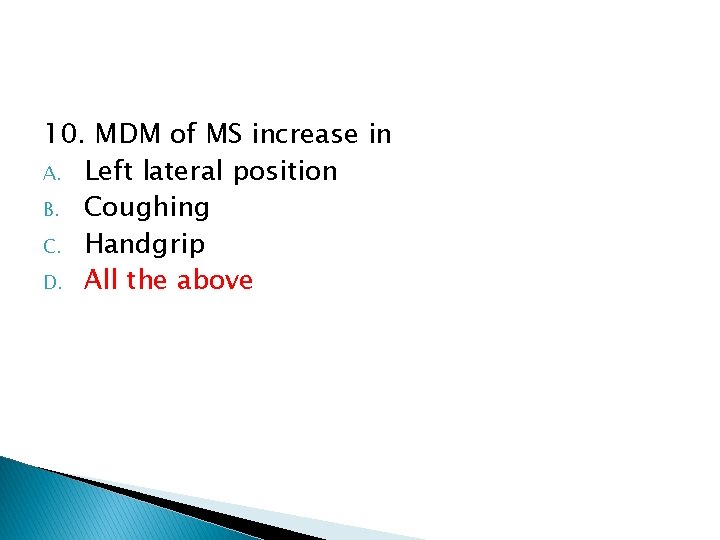
10. MDM of MS increase in A. Left lateral position B. Coughing C. Handgrip D. All the above
1. During phase 2 of valsalva A 2 -P 2 interval A. Increase B. Decrease C. No change D. Any of the above
2. Intensity of murmur in MVP during isometric handgrip A. Increase B. Decrease C. No change D. Increase then decrease
3. Rheumatic MR murmur increase with all the following except A. Sudden squatting B. Isometric handgrip C. Phenyl ephrine D. Amyl nitrate
4. After amyl nitrate systolic murmur of VSD A. Increase B. Decrease C. No change D. Any of the above
5. After squatting AS murmur A. Increase B. Decrease C. No change D. Increase then decrease
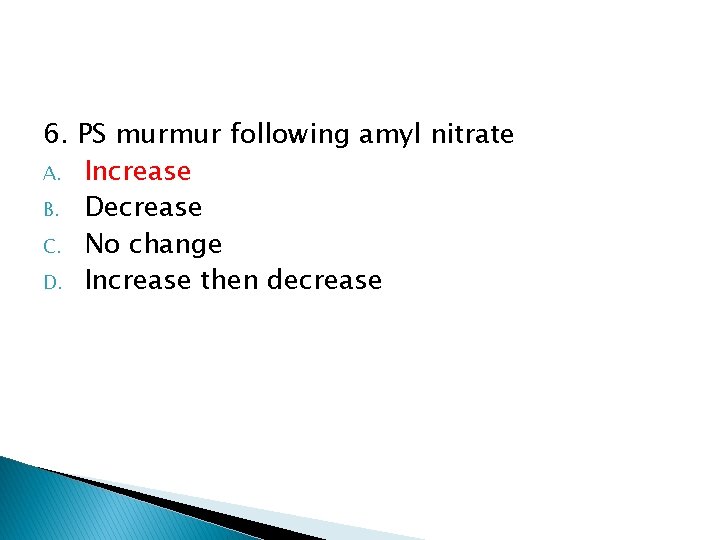
6. PS murmur following amyl nitrate A. Increase B. Decrease C. No change D. Increase then decrease
7. HOCM murmur increase following post ectopic beat due to A. Increase LV volume B. Contractility C. Decrease LV volume D. Decrease gradient
8. A 2 OS gap during standing A. Increase B. Decrease C. No change D. Increase then decrease
9. Amyl nitrate is A. liquid silver B. Venodilator C. Arterial dilator D. both
10. MDM of MS increase in A. Left lateral position B. Coughing C. Handgrip D. All the above