
DYNAMAP Project Procedure for Noise Mapping Updating in

- Slides: 17
DYNAMAP Project: Procedure for Noise Mapping Updating in Urban Area G. Zambon, A. Bisceglie, R. Benocci, M. Smiraglia, H. E. Roman Dipartimento di Scienze dell’Ambiente e del Territorio e di Scienze della Terra, Università di Milano-Bicocca, Piazza della Scienza 1, 20126 Milano, Italy INTER-NOISE 2017 46 TH INTERNATIONAL CONGRESS AND EXPOSITION ON NOISE CONTROL ENGINEERING HONG KONG 27 - 30 AUGUST, 2017
1. 2. 3. 4. 5. 6. 7. CONTENT: What is DYNAMAP Where it is implemented Basic Idea: Interpolation Non-Acoustic Parameter Pilot Area of DYNAMAP The Six Groups: Noise Maps Initialization - Updating of DYNAMAP 7. 1 Treatement of Noise Signal and Leq variations from each Station 7. 2 Starting Operation of Dynamap from 4 stations in each group 7. 3 The group acceptance interval: Elimination of anomalous events 7. 4 Operation using the Clustering of the 24 recording stations 7. 5 Leq at time t for arbitrary receiver point a. 8. CONCLUSIONS.
1. DYNAMAP: Goals Generate Real-Time Dynamic Traffic Noise Maps within a Large Urban Area using few Monitoring Noise Stations. Each Noise Map represents a group of road stretches, displaying similar Acoustic Equivalent Levels, Leq.
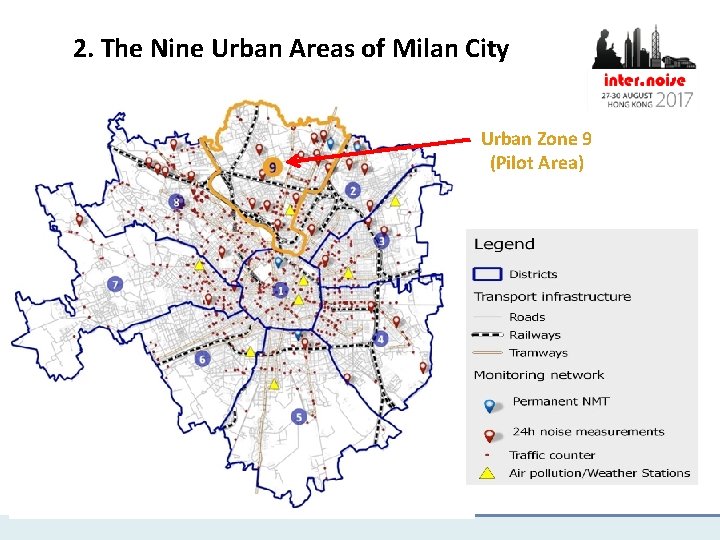
2. The Nine Urban Areas of Milan City Urban Zone 9 (Pilot Area)
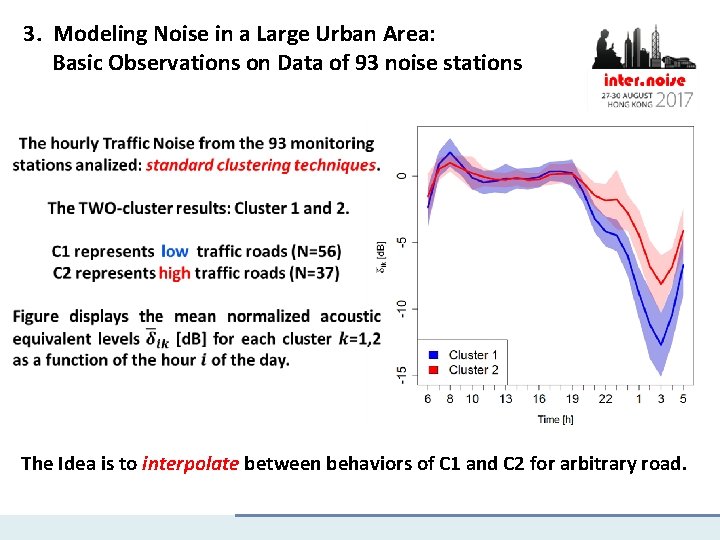
3. Modeling Noise in a Large Urban Area: Basic Observations on Data of 93 noise stations The Idea is to interpolate between behaviors of C 1 and C 2 for arbitrary road.
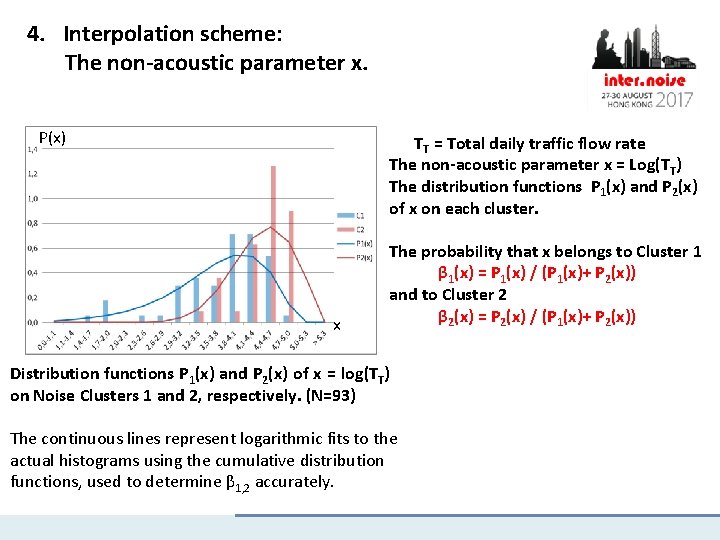
4. Interpolation scheme: The non-acoustic parameter x. P(x) TT = Total daily traffic flow rate The non-acoustic parameter x = Log(TT) The distribution functions P 1(x) and P 2(x) of x on each cluster. x The probability that x belongs to Cluster 1 β 1(x) = P 1(x) / (P 1(x)+ P 2(x)) and to Cluster 2 β 2(x) = P 2(x) / (P 1(x)+ P 2(x)) Distribution functions P 1(x) and P 2(x) of x = log(TT) on Noise Clusters 1 and 2, respectively. (N=93) The continuous lines represent logarithmic fits to the actual histograms using the cumulative distribution functions, used to determine β 1, 2 accurately.
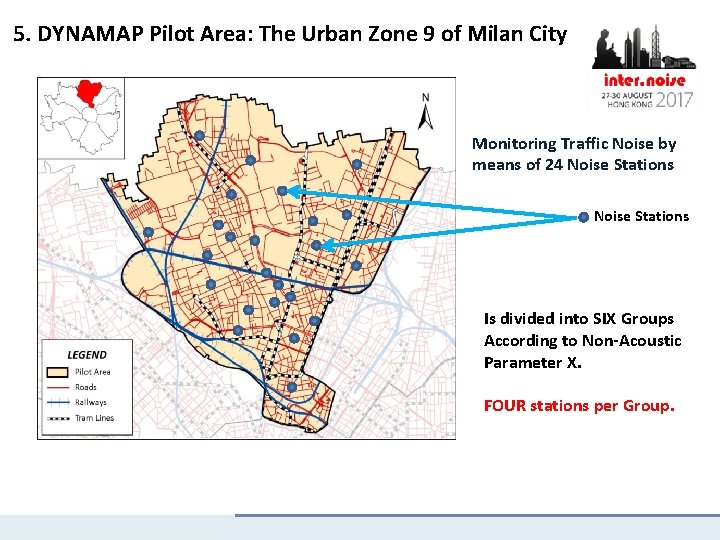
5. DYNAMAP Pilot Area: The Urban Zone 9 of Milan City Monitoring Traffic Noise by means of 24 Noise Stations Is divided into SIX Groups According to Non-Acoustic Parameter X. FOUR stations per Group.
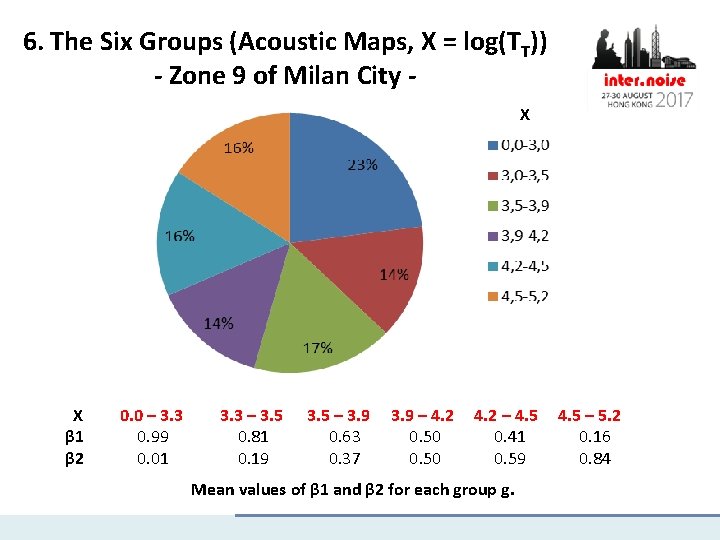
6. The Six Groups (Acoustic Maps, X = log(TT)) - Zone 9 of Milan City X X β 1 β 2 0. 0 – 3. 3 0. 99 0. 01 3. 3 – 3. 5 0. 81 0. 19 3. 5 – 3. 9 0. 63 0. 37 3. 9 – 4. 2 0. 50 4. 2 – 4. 5 0. 41 0. 59 Mean values of β 1 and β 2 for each group g. 4. 5 – 5. 2 0. 16 0. 84
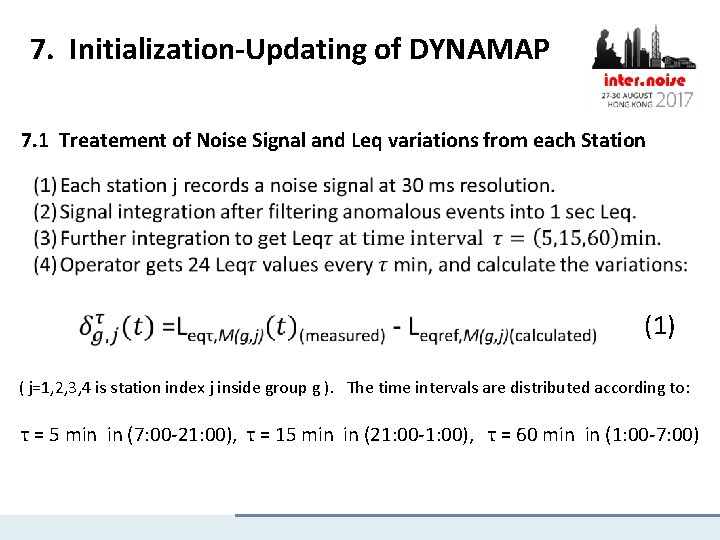
7. Initialization-Updating of DYNAMAP 7. 1 Treatement of Noise Signal and Leq variations from each Station (1) ( j=1, 2, 3, 4 is station index j inside group g ). The time intervals are distributed according to: τ = 5 min in (7: 00 -21: 00), τ = 15 min in (21: 00 -1: 00), τ = 60 min in (1: 00 -7: 00)
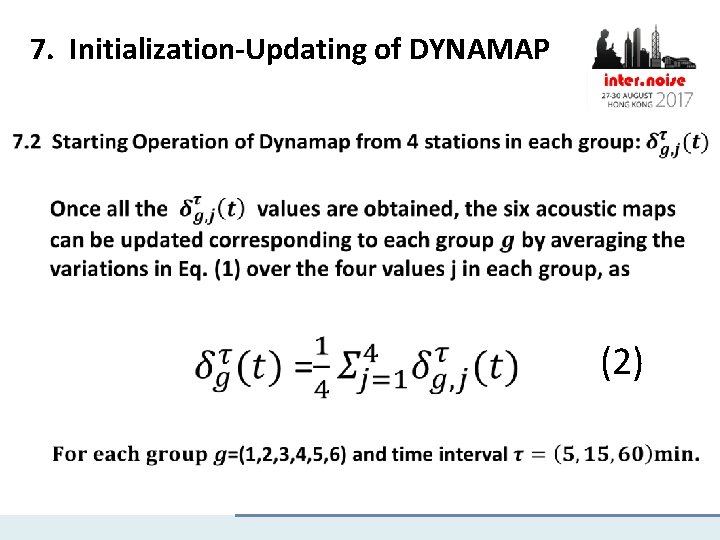
7. Initialization-Updating of DYNAMAP (2)
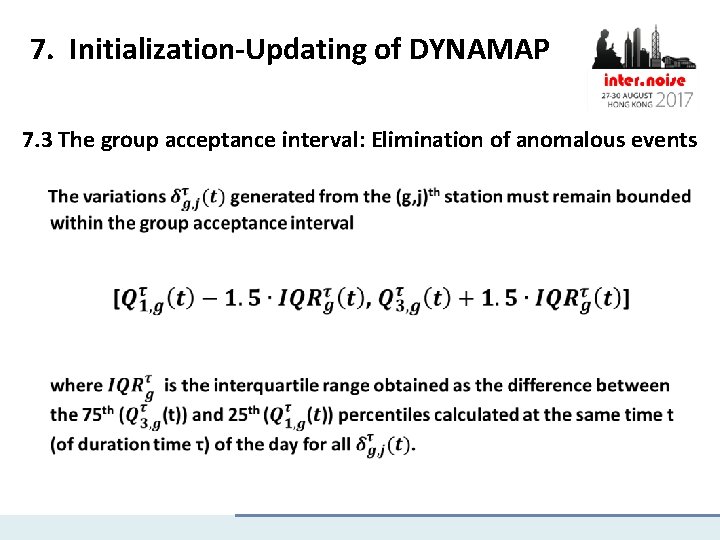
7. Initialization-Updating of DYNAMAP 7. 3 The group acceptance interval: Elimination of anomalous events
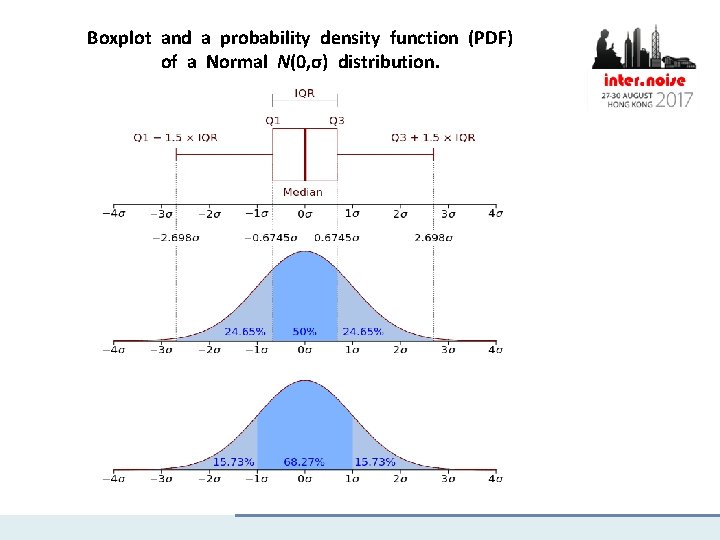
Boxplot and a probability density function (PDF) of a Normal N(0, σ) distribution.
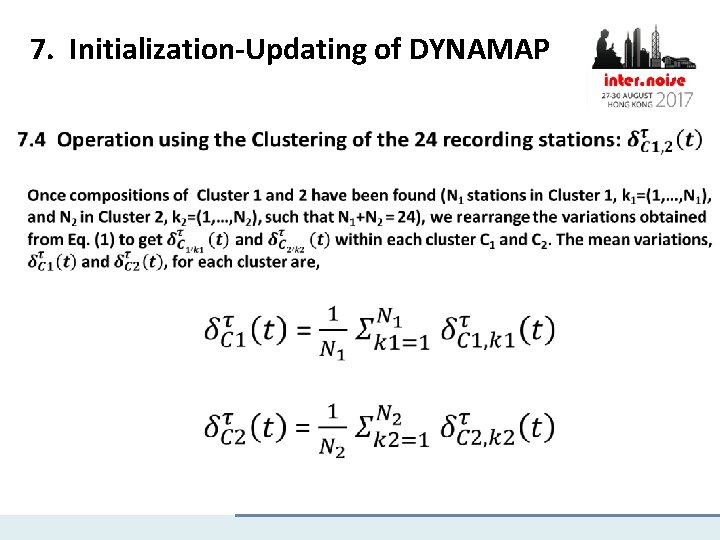
7. Initialization-Updating of DYNAMAP
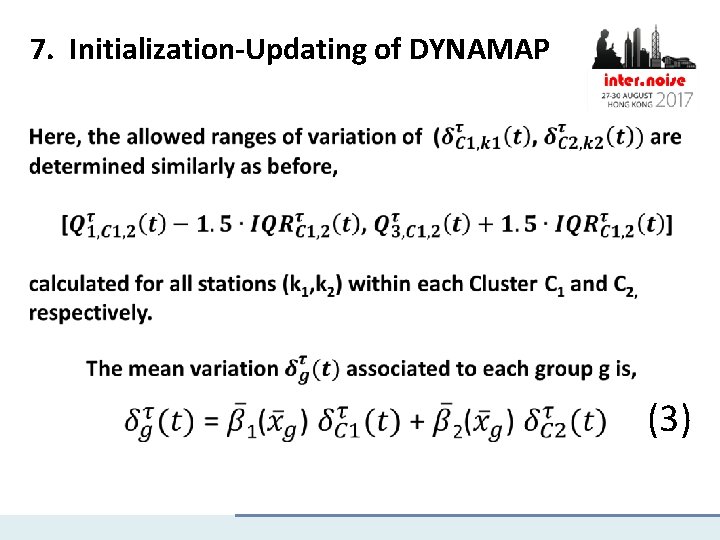
7. Initialization-Updating of DYNAMAP (3)
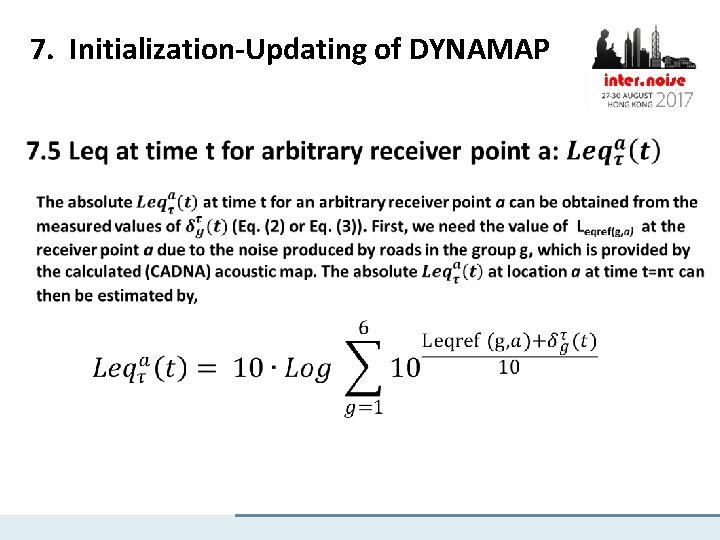
7. Initialization-Updating of DYNAMAP
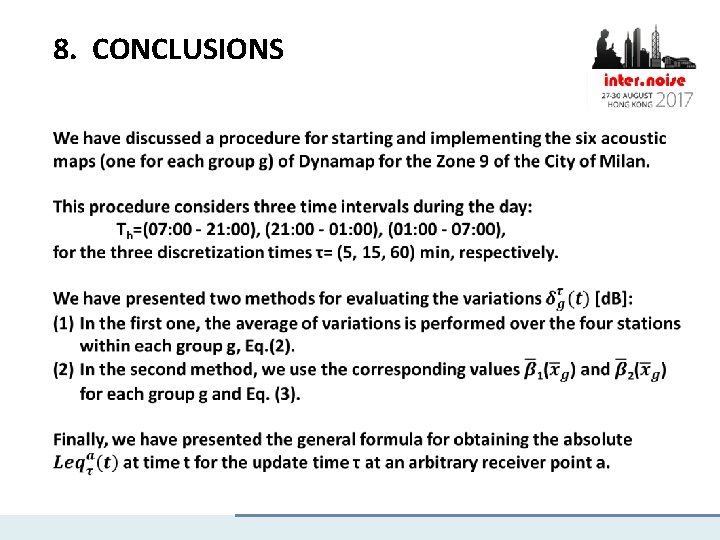
8. CONCLUSIONS
THANK YOU VERY MUCH FOR YOUR ATTENTION