
Dying Trajectory in the Last Year of Life
- Slides: 12
Dying Trajectory in the Last Year of Life: Does Cancer Trajectory Fit Other Diseases? Joan M Teno, M. D. M. S. Associate Professor Brown University School of Medicine
Dying in the US l l Institutionalization of Death historical changes from home to institutional death (hospital and NH) Hospice Medicare Benefit based on cancer disease trajectory
Hospice Medicare Benefit l l l Created early 1980 s, as both cost containment and improving the quality care of the dying For persons with “expected six month survival”, but never defined that term. Recent debate as focused on issue of ACCESS and ABUSE
Goals l l Describe functional trajectory in the last year of life for cancer and leading non-cancer causes of death. Examined its association with site of death and hospice involvement
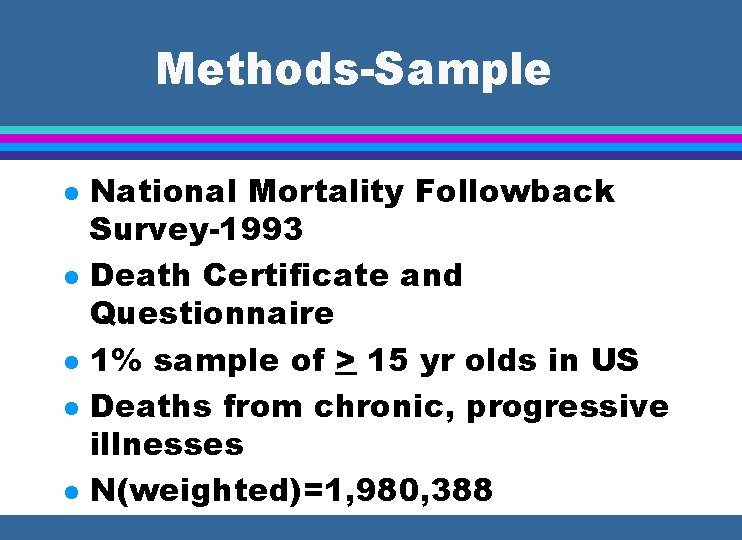
Methods-Sample l l l National Mortality Followback Survey-1993 Death Certificate and Questionnaire 1% sample of > 15 yr olds in US Deaths from chronic, progressive illnesses N(weighted)=1, 980, 388
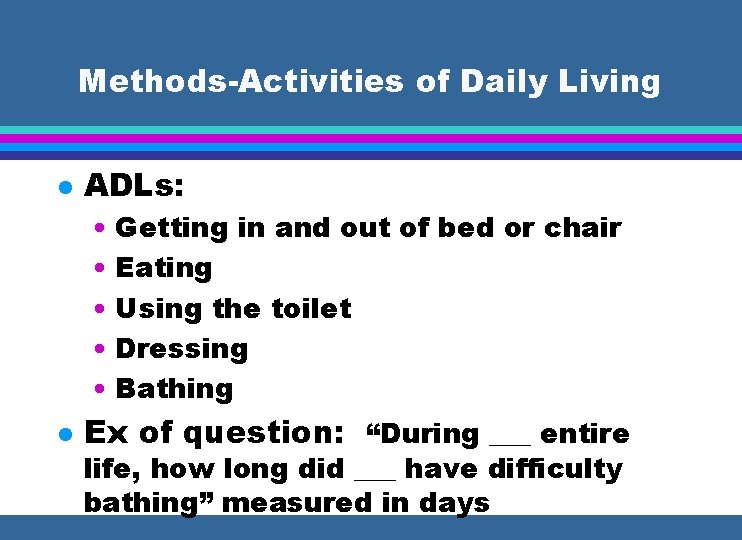
Methods-Activities of Daily Living l ADLs: • Getting in and out of bed or chair • Eating • Using the toilet • Dressing • Bathing l Ex of question: “During ___ entire life, how long did ___ have difficulty bathing” measured in days
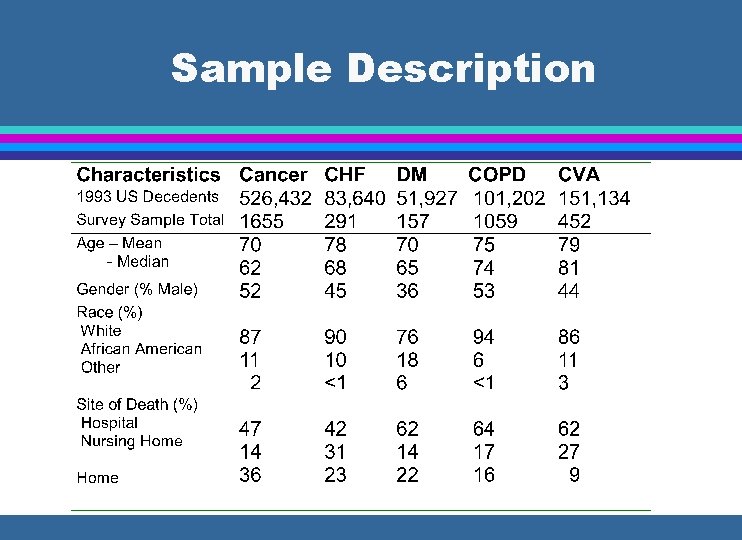
Sample Description
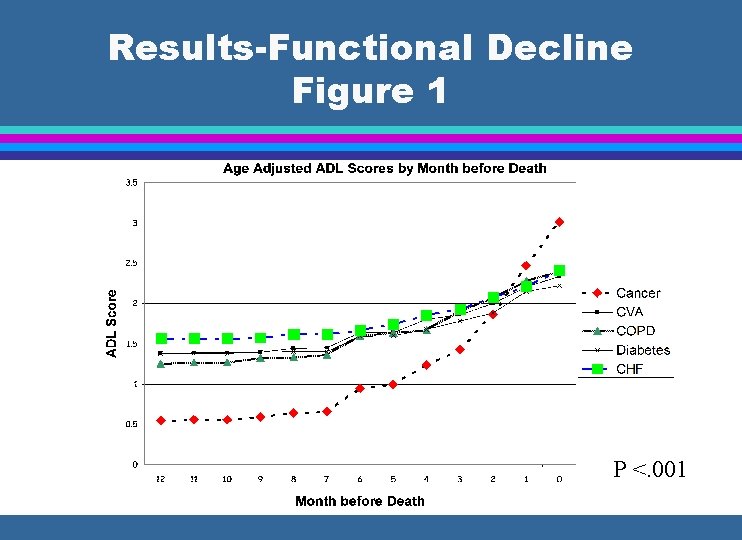
Results-Functional Decline Figure 1 P <. 001
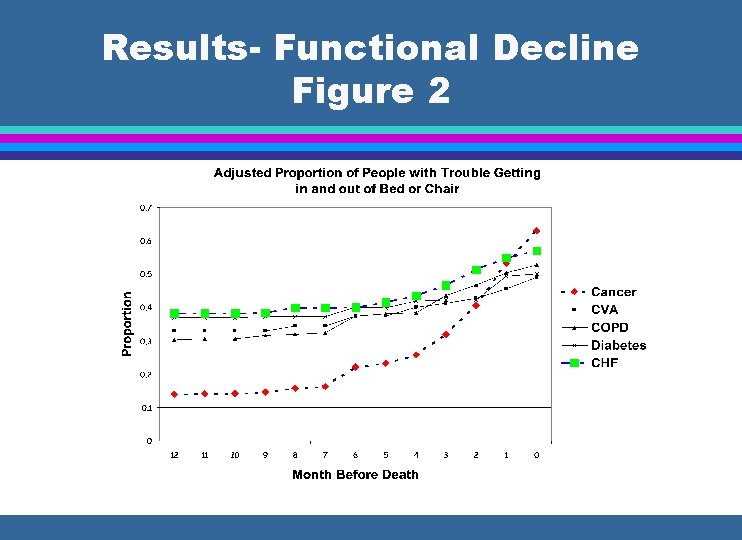
Results- Functional Decline Figure 2
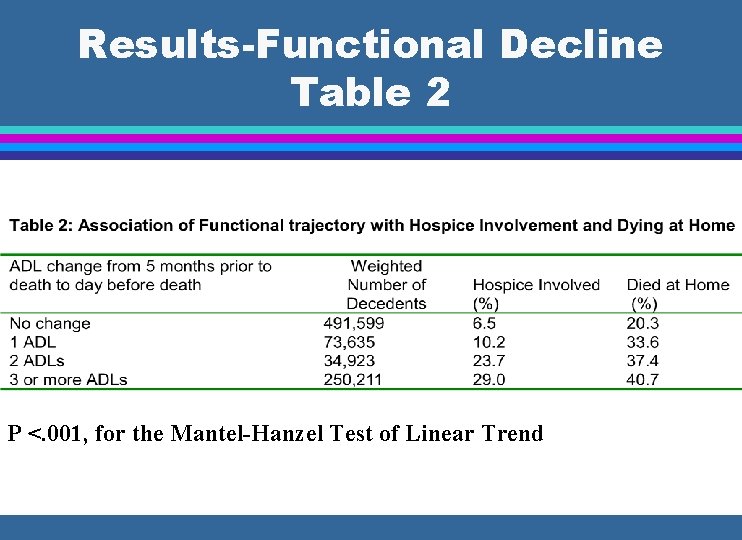
Results-Functional Decline Table 2 P <. 001, for the Mantel-Hanzel Test of Linear Trend
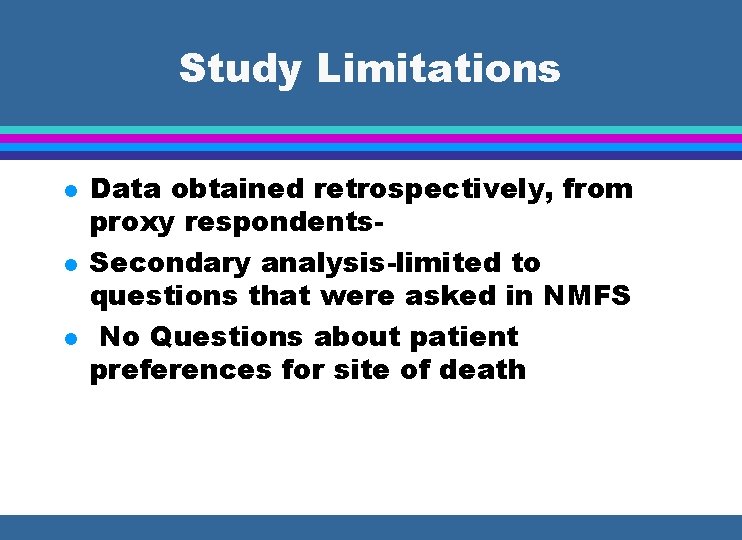
Study Limitations l l l Data obtained retrospectively, from proxy respondents. Secondary analysis-limited to questions that were asked in NMFS No Questions about patient preferences for site of death
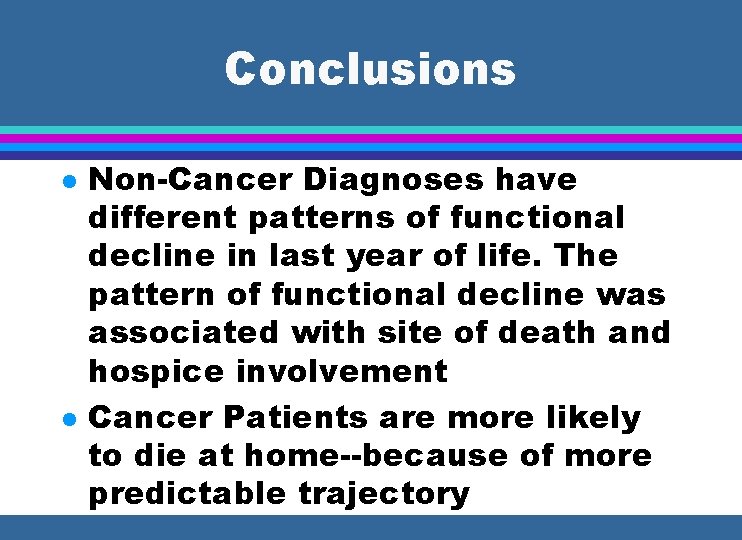
Conclusions l l Non-Cancer Diagnoses have different patterns of functional decline in last year of life. The pattern of functional decline was associated with site of death and hospice involvement Cancer Patients are more likely to die at home--because of more predictable trajectory