
DyeSensitized Solar Cells Sony EcoProducts 2008 Working Principles
- Slides: 18
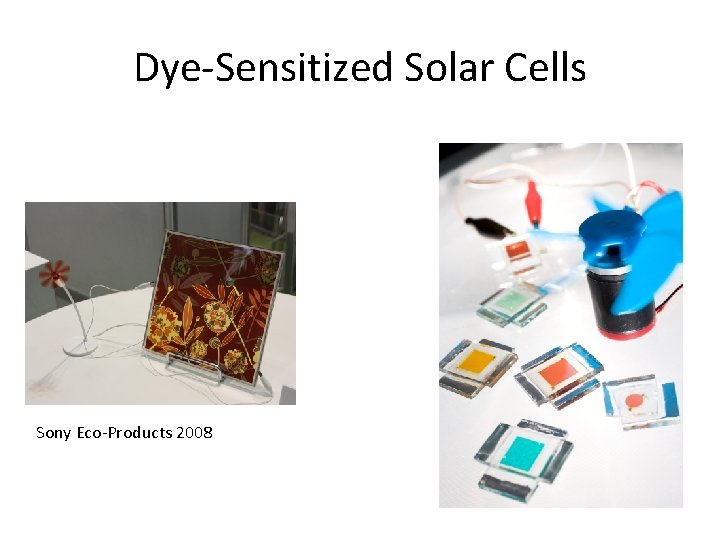
Dye-Sensitized Solar Cells Sony Eco-Products 2008
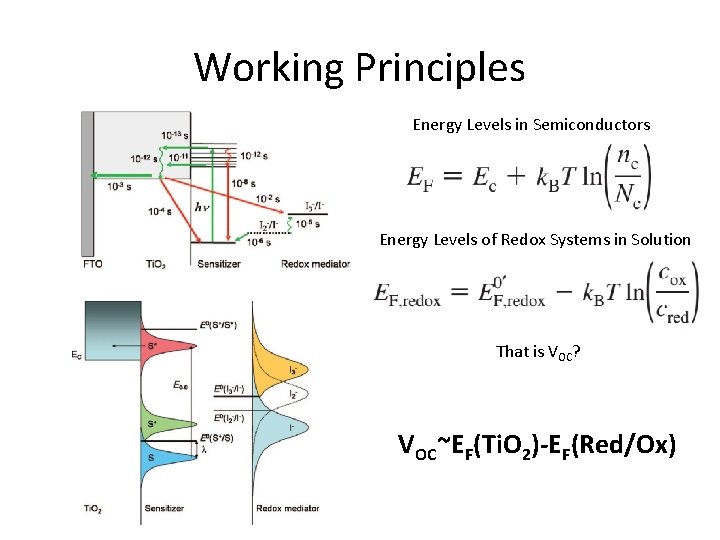
Working Principles Energy Levels in Semiconductors Energy Levels of Redox Systems in Solution That is VOC? VOC~EF(Ti. O 2)-EF(Red/Ox)
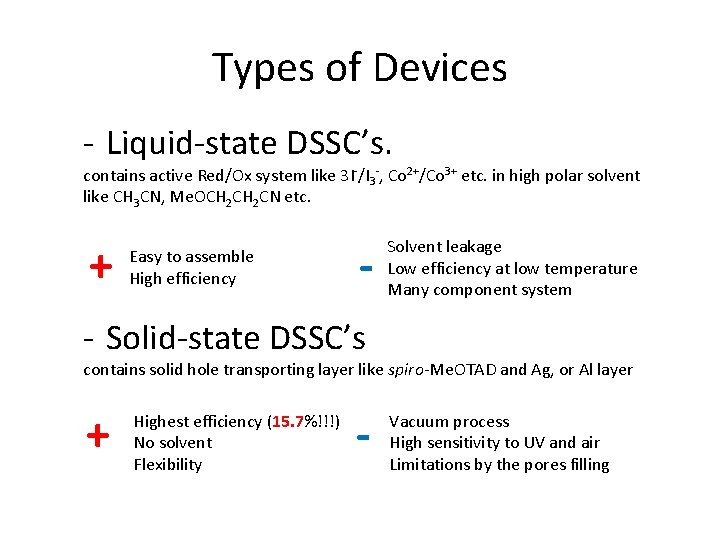
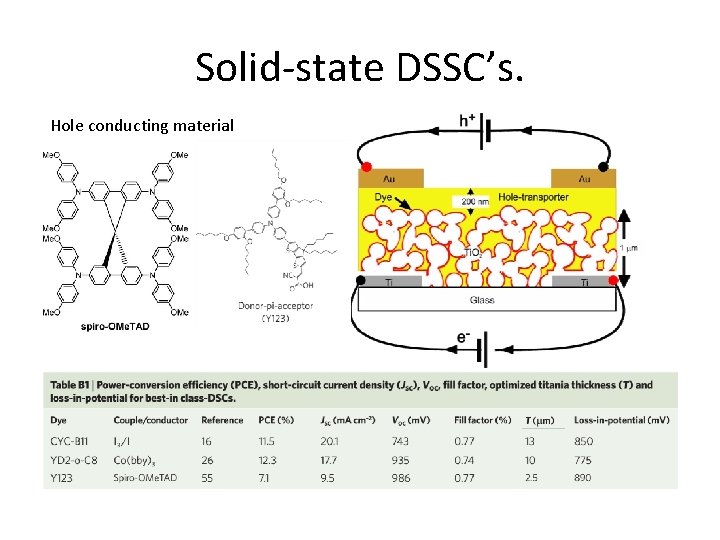
Types of Devices - Liquid-state DSSC’s. contains active Red/Ox system like 3 I-/I 3 -, Co 2+/Co 3+ etc. in high polar solvent like CH 3 CN, Me. OCH 2 CN etc. + Easy to assemble High efficiency - Solvent leakage Low efficiency at low temperature Many component system - Solid-state DSSC’s contains solid hole transporting layer like spiro-Me. OTAD and Ag, or Al layer + Highest efficiency (15. 7%!!!) No solvent Flexibility - Vacuum process High sensitivity to UV and air Limitations by the pores filling
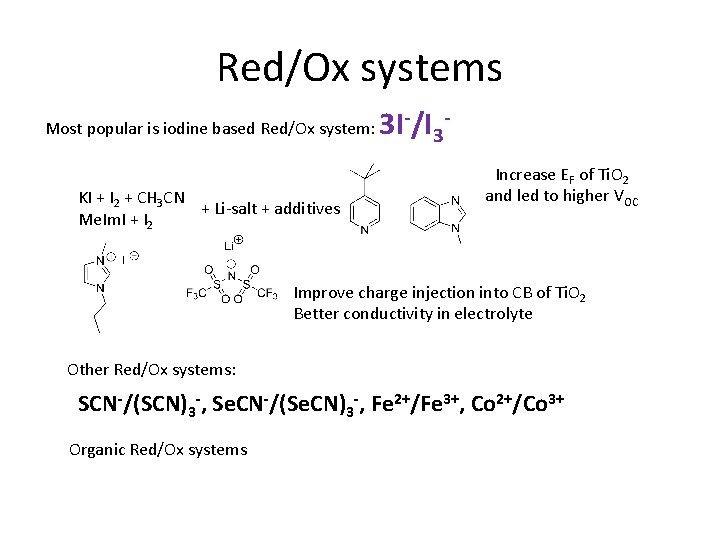
Red/Ox systems Most popular is iodine based Red/Ox system: KI + I 2 + CH 3 CN + Li-salt + additives Me. Im. I + I 2 3 I-/I 3 Increase EF of Ti. O 2 and led to higher VOC Improve charge injection into CB of Ti. O 2 Better conductivity in electrolyte Other Red/Ox systems: SCN-/(SCN)3 -, Se. CN-/(Se. CN)3 -, Fe 2+/Fe 3+, Co 2+/Co 3+ Organic Red/Ox systems
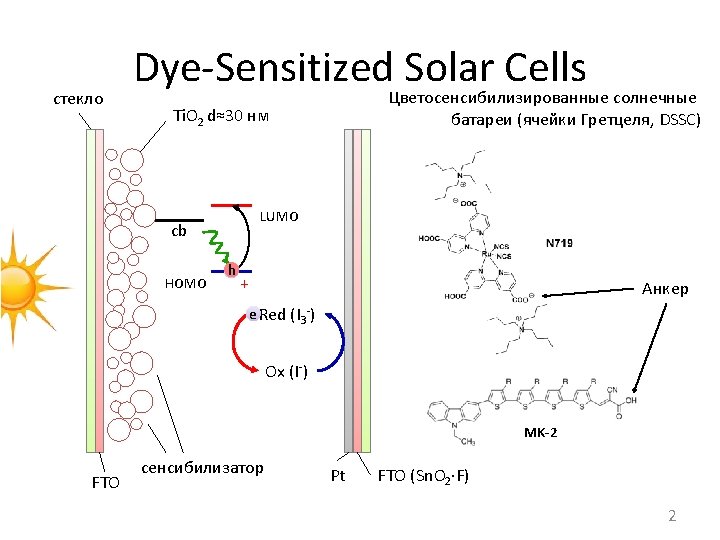
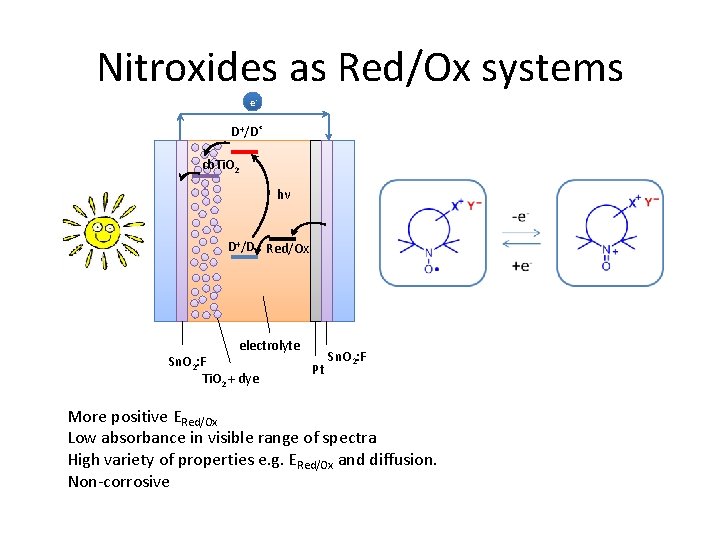
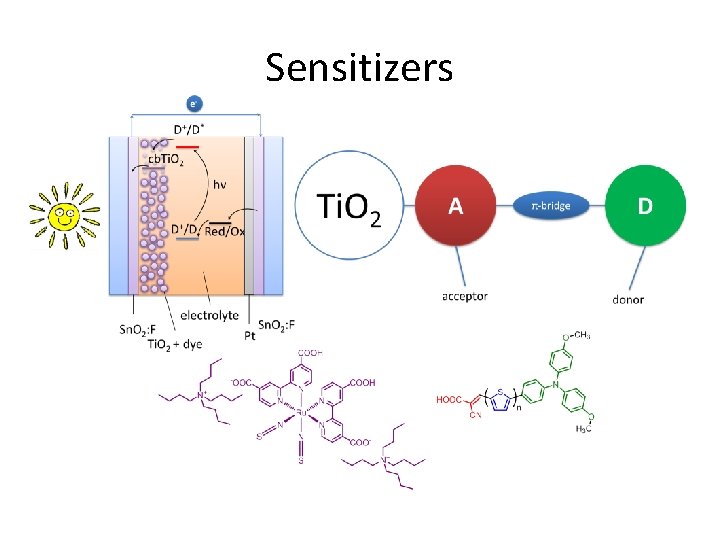
Nitroxides as Red/Ox systems e- D+/D* cb. Ti. O 2 hν D+/D Red/Ox electrolyte Sn. O 2: F Ti. O 2 + dye Pt Sn. O 2: F More positive ERed/Ox Low absorbance in visible range of spectra High variety of properties e. g. ERed/Ox and diffusion. Non-corrosive
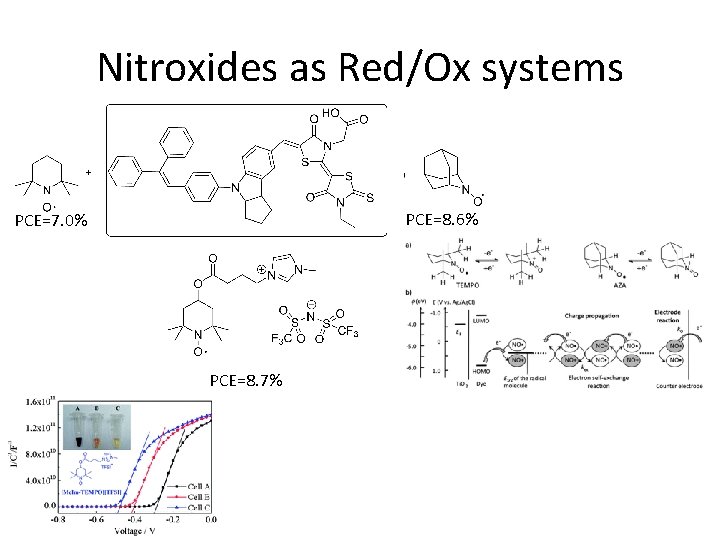
Nitroxides as Red/Ox systems PCE=8. 6% PCE=7. 0% PCE=8. 7%
Sensitizers
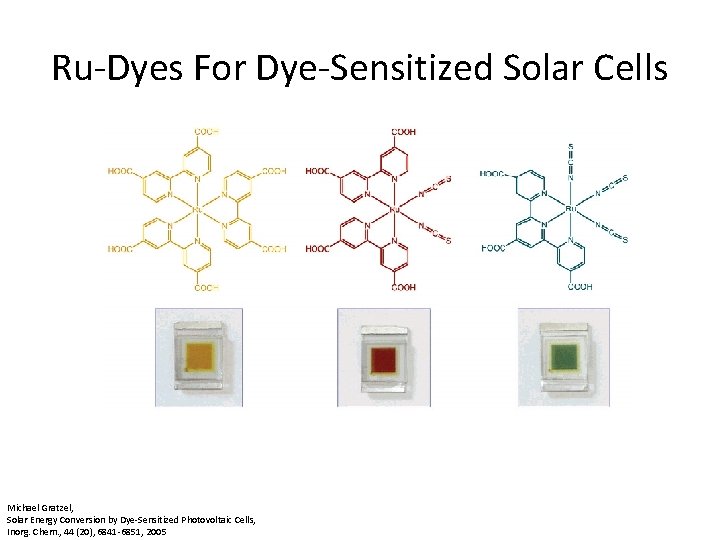
Ru-Dyes For Dye-Sensitized Solar Cells Michael Gratzel, Solar Energy Conversion by Dye-Sensitized Photovoltaic Cells, Inorg. Chem. , 44 (20), 6841 -6851, 2005
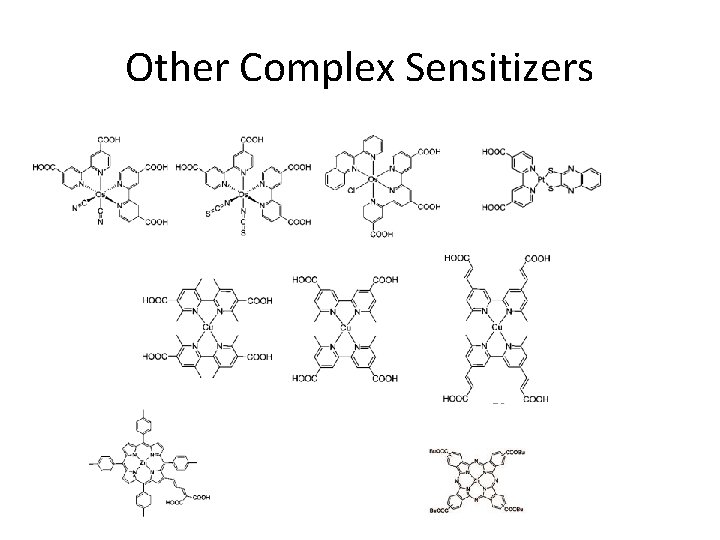
Other Complex Sensitizers
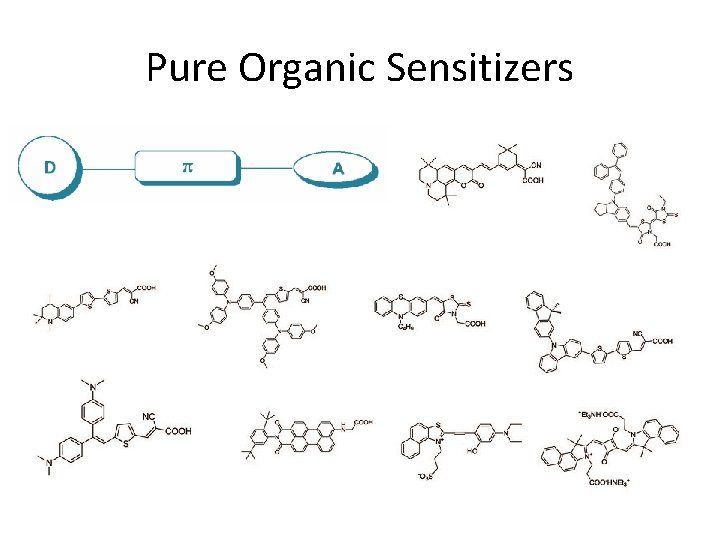
Pure Organic Sensitizers
Solid-state DSSC’s. Hole conducting material
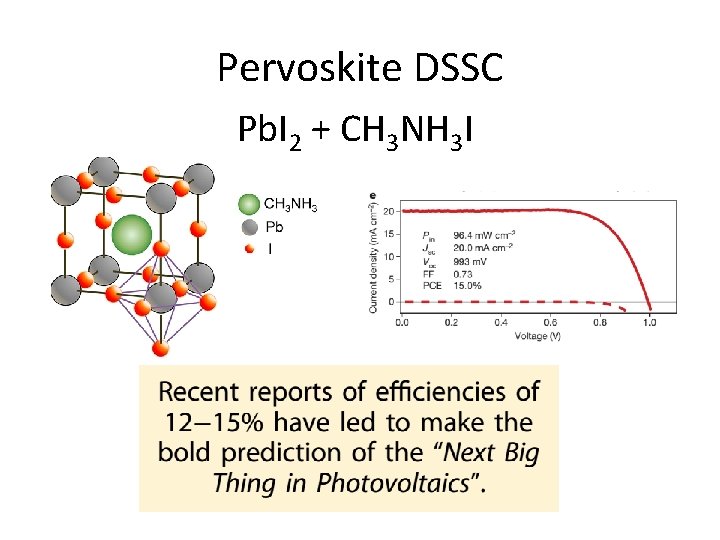
Pervoskite DSSC Pb. I 2 + CH 3 NH 3 I
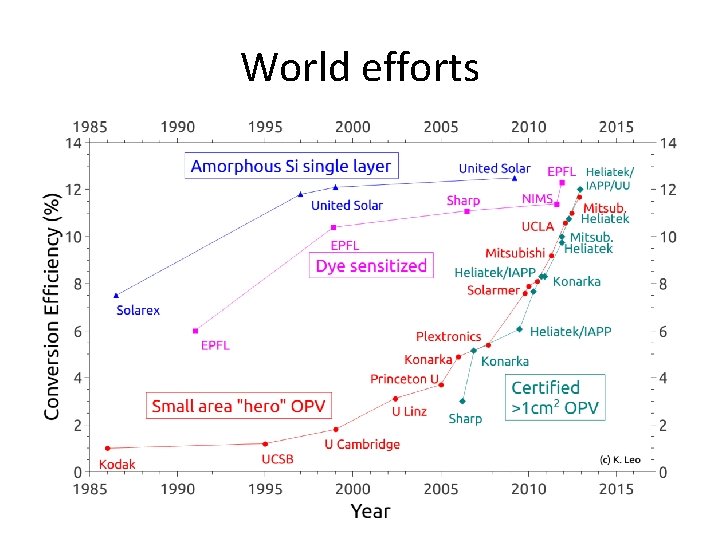
World efforts
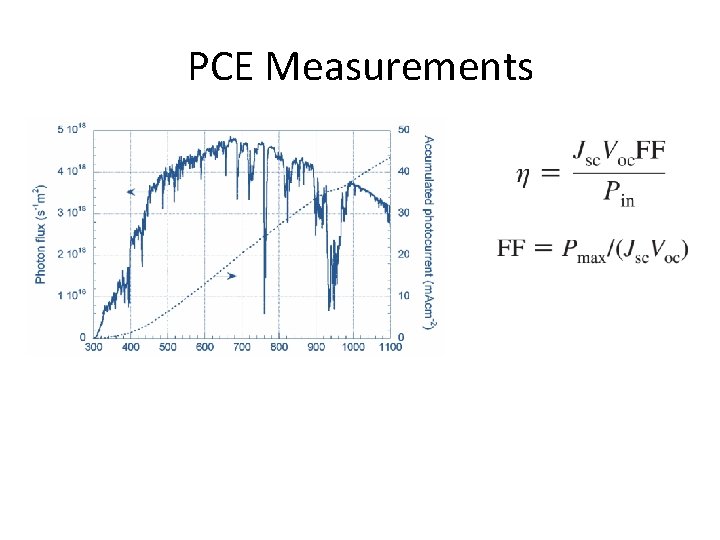
PCE Measurements
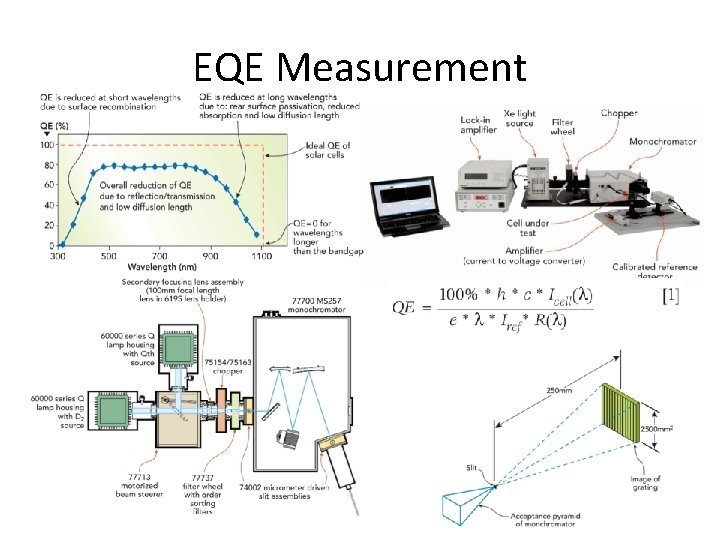
EQE Measurement
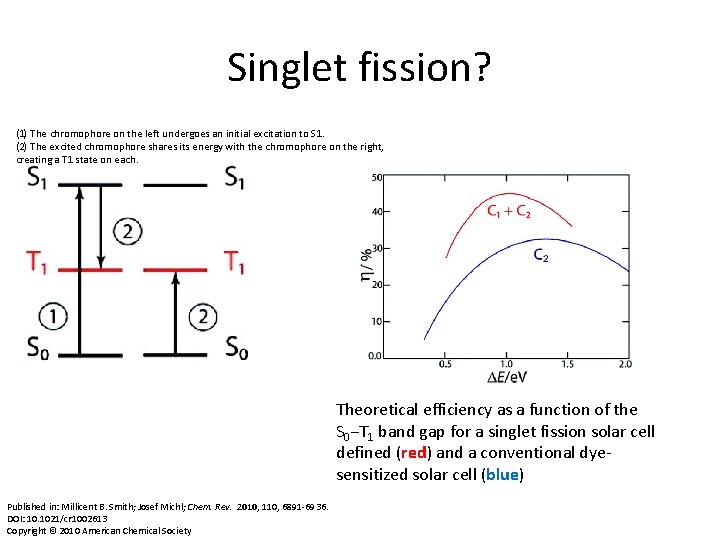
Singlet fission? (1) The chromophore on the left undergoes an initial excitation to S 1. (2) The excited chromophore shares its energy with the chromophore on the right, creating a T 1 state on each. Theoretical efficiency as a function of the S 0−T 1 band gap for a singlet fission solar cell defined (red) and a conventional dyesensitized solar cell (blue) Published in: Millicent B. Smith; Josef Michl; Chem. Rev. 2010, 110, 6891 -6936. DOI: 10. 1021/cr 1002613 Copyright © 2010 American Chemical Society