
DYADIC RELATIONS ATTRIBUTIONS AND FOLLOWERSHIP HUBUNGAN DIADIK DYADIC
DYADIC RELATIONS, ATTRIBUTIONS, AND FOLLOWERSHIP
HUBUNGAN DIADIK (DYADIC RELATIONS)?

DYADIC RELATIONS Hubungan individual yang berlangsung secara timbal balik antara pemimpin dan pengikut masing unit kerja.

DYADIC RELATIONS “Most of the early theory and research on leadership behavior did not consider how much leaders vary their behavior with different subordinates” “. . . dyadic relationships are not identical for all of a leader’s direct subordinates…”
LEADER-MEMBER EXCHANGE THEORY Pemimpin mengembangkan hubungan timbal balik yang terpisah dengan setiap bawahan sebagai 2 pihak yang saling menentukan peran dari bawahan.

LEADER-MEMBER EXCHANGE THEORY High. Exchange Relationshi p Low. Exchange Relationshi p
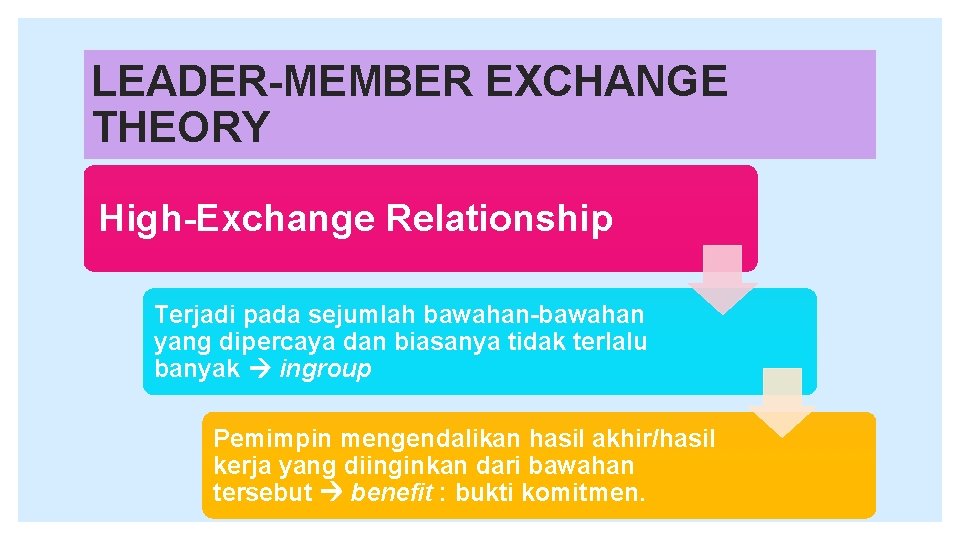
LEADER-MEMBER EXCHANGE THEORY High-Exchange Relationship Terjadi pada sejumlah bawahan-bawahan yang dipercaya dan biasanya tidak terlalu banyak ingroup Pemimpin mengendalikan hasil akhir/hasil kerja yang diinginkan dari bawahan tersebut benefit : bukti komitmen.

LEADER-MEMBER EXCHANGE THEORY Low-Exchange Relationship Hubungan yang memiliki tingkat saling mempengaruhi yang relatif lemah outgroup Bergantung pada formal role requirements : tugas, aturan, SOP, gaji.
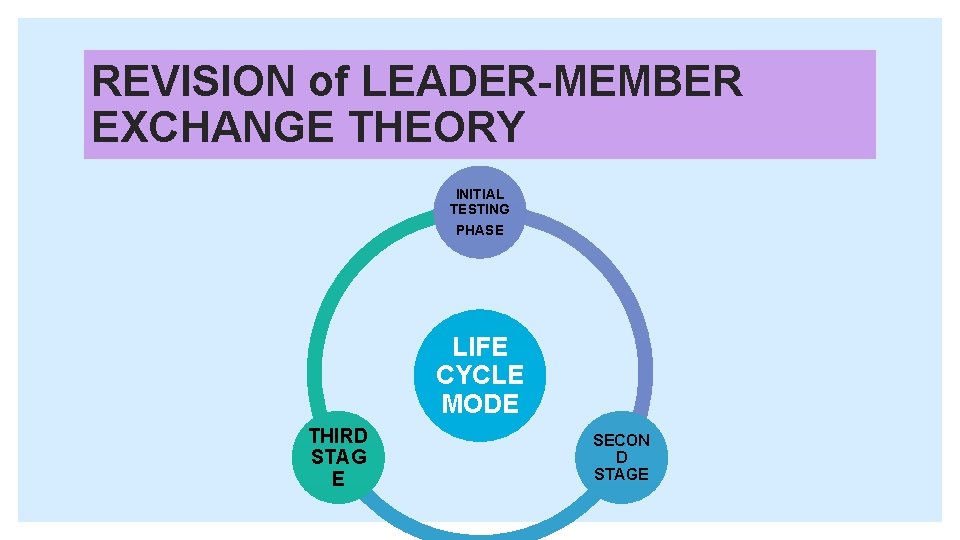
REVISION of LEADER-MEMBER EXCHANGE THEORY INITIAL TESTING PHASE LIFE CYCLE MODE THIRD STAG E SECON D STAGE
ATTRIBUTIONS THEORY Proses kognitif yang digunakan oleh pemimpin untuk menentukan alasan apakah kinerja bawahannya efektif dan menentukan reaksi yang tepat
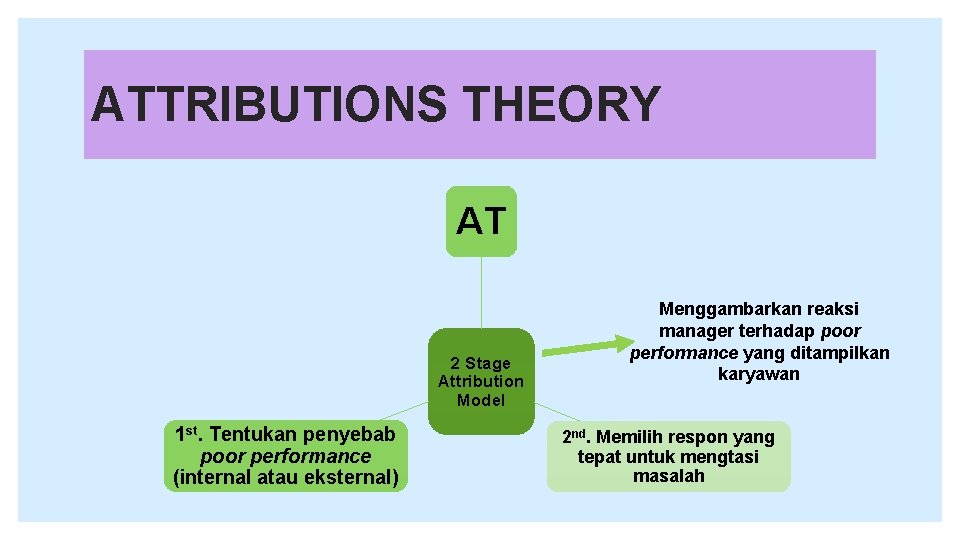
ATTRIBUTIONS THEORY AT 2 Stage Attribution Model 1 st. Tentukan penyebab poor performance (internal atau eksternal) Menggambarkan reaksi manager terhadap poor performance yang ditampilkan karyawan 2 nd. Memilih respon yang tepat untuk mengtasi masalah

Two-Stage Attribution Model “Managers attribute the major cause of poor performance either to something internal to the subordinate (e. g. , lack of effort or ability) or to external problems beyond the subordinate’s control (e. g. , the task had inherent obstacles, resources were inadequate, information was insufficient, other people failed to provide necessary support, or it was just plain bad luck)”
Two-Stage Attribution Model “The type of attribution made by a manager influences the response to the problem”
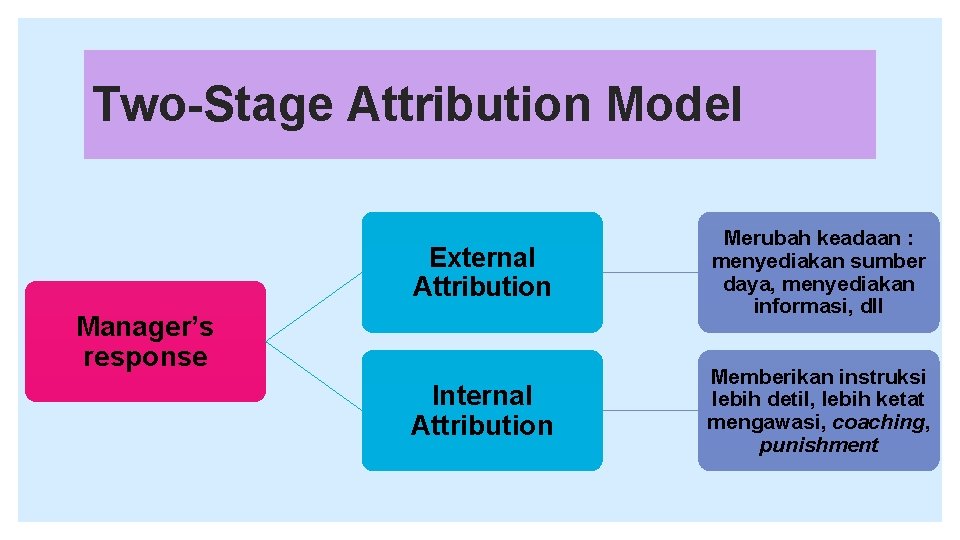
Two-Stage Attribution Model External Attribution Merubah keadaan : menyediakan sumber daya, menyediakan informasi, dll Internal Attribution Memberikan instruksi lebih detil, lebih ketat mengawasi, coaching, punishment Manager’s response
Research on Attributions & LMX “Leaders appear to be less critical in evaluating the performance of subordinates with whom they have established a high-exchange relationship (Duarte, Goodson, & Klich, 1994; Heneman, Greenberger, & Anonyuo, 1989)”
Research on Attributions & LMX “In contrast, poor performance is attributed to external causes for a high-exchange member and to internal causes for a low-exchange member” BIAS
FOLLOWER ATTRIBUTIONS ABOUT LEADERS Ada beberapa faktor yang saling mempengaruhi bagaimana bawahan menilai efektifitas pemimpin
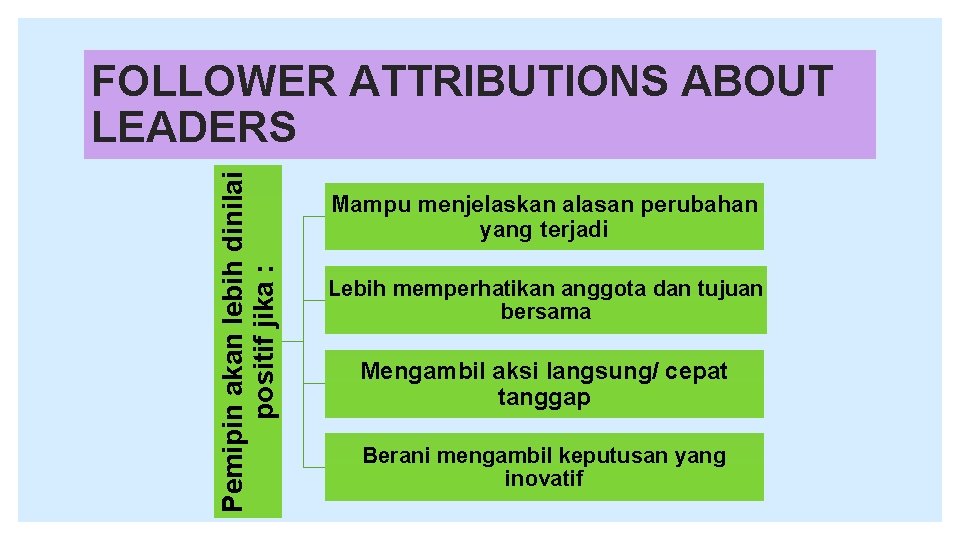
Pemipin akan lebih dinilai positif jika : FOLLOWER ATTRIBUTIONS ABOUT LEADERS Mampu menjelaskan alasan perubahan yang terjadi Lebih memperhatikan anggota dan tujuan bersama Mengambil aksi langsung/ cepat tanggap Berani mengambil keputusan yang inovatif
IMPRESSION MANAGEMENT Proses mempengaruhi persepsi orang lain mengenai diri kita
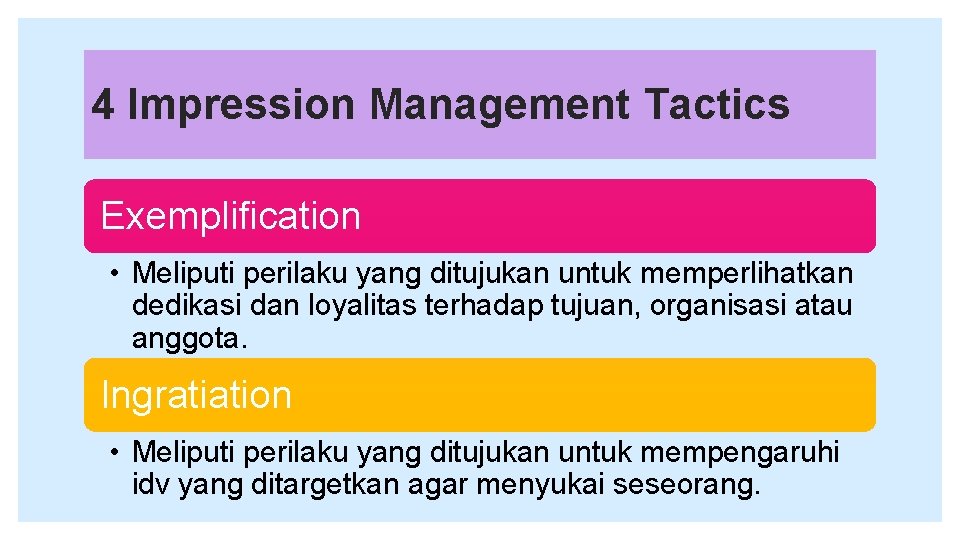
4 Impression Management Tactics Exemplification • Meliputi perilaku yang ditujukan untuk memperlihatkan dedikasi dan loyalitas terhadap tujuan, organisasi atau anggota. Ingratiation • Meliputi perilaku yang ditujukan untuk mempengaruhi idv yang ditargetkan agar menyukai seseorang.
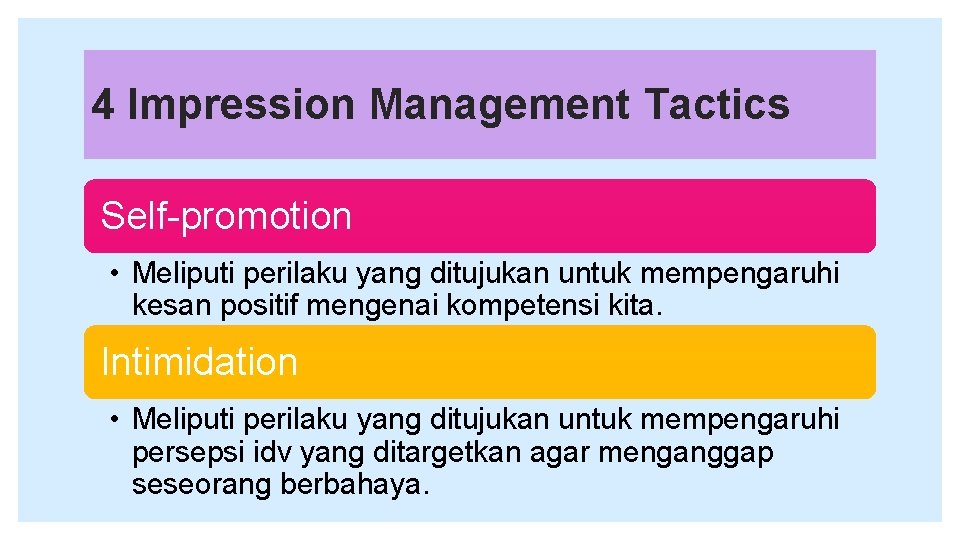
4 Impression Management Tactics Self-promotion • Meliputi perilaku yang ditujukan untuk mempengaruhi kesan positif mengenai kompetensi kita. Intimidation • Meliputi perilaku yang ditujukan untuk mempengaruhi persepsi idv yang ditargetkan agar menganggap seseorang berbahaya.
SELF-MANAGEMENT Seperangkat strategi yang digunakan seseorang untuk mempengaruhi dan meningktakan perilakunya sendiri
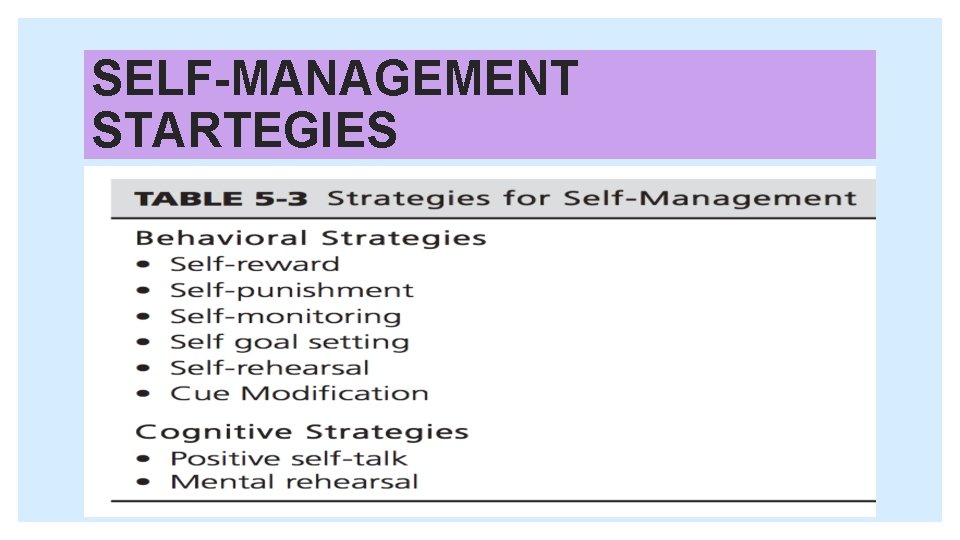
SELF-MANAGEMENT STARTEGIES
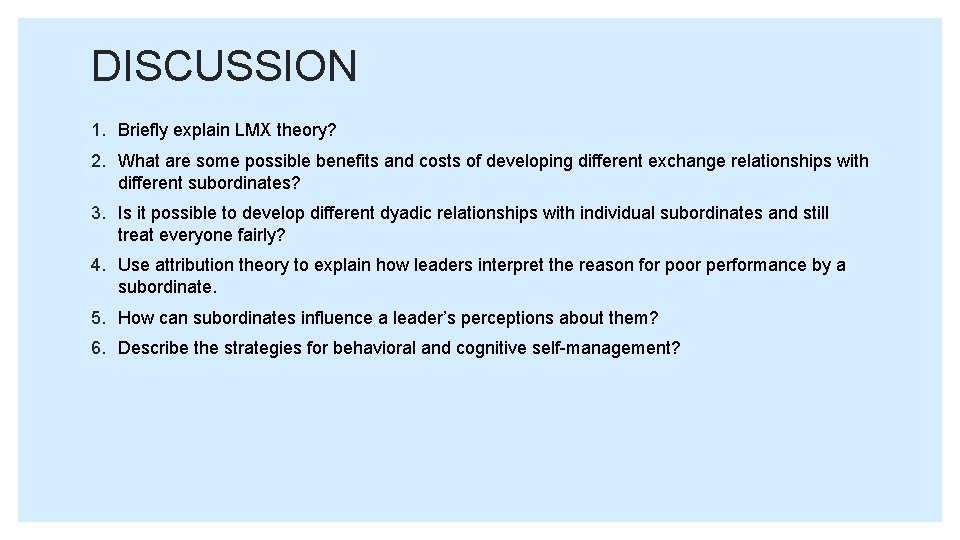
DISCUSSION 1. Briefly explain LMX theory? 2. What are some possible benefits and costs of developing different exchange relationships with different subordinates? 3. Is it possible to develop different dyadic relationships with individual subordinates and still treat everyone fairly? 4. Use attribution theory to explain how leaders interpret the reason for poor performance by a subordinate. 5. How can subordinates influence a leader’s perceptions about them? 6. Describe the strategies for behavioral and cognitive self-management?
TERIMA KASIH
- Slides: 25