
Dwarfism Achondroplasia GABRIELA GUIA BIOLOGY 1407 Introduction Unfortunately
Dwarfism “Achondroplasia” GABRIELA GUIA BIOLOGY 1407
Introduction �Unfortunately not everyone is born healthy and normal. �We do not have control over our chromosomes and genes. �Sometimes they undergo mutations that can cause a fatal result of the embryo, diseases, or even achondroplasia.
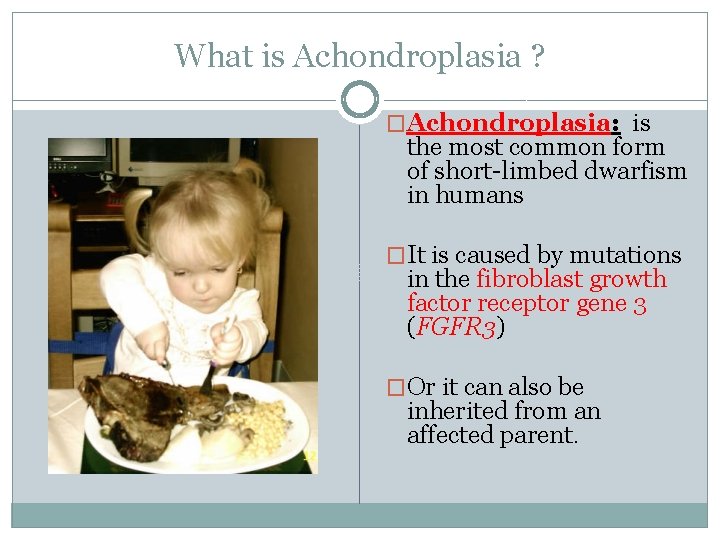
What is Achondroplasia ? �Achondroplasia: is the most common form of short-limbed dwarfism in humans �It is caused by mutations in the fibroblast growth factor receptor gene 3 (FGFR 3) �Or it can also be inherited from an affected parent.
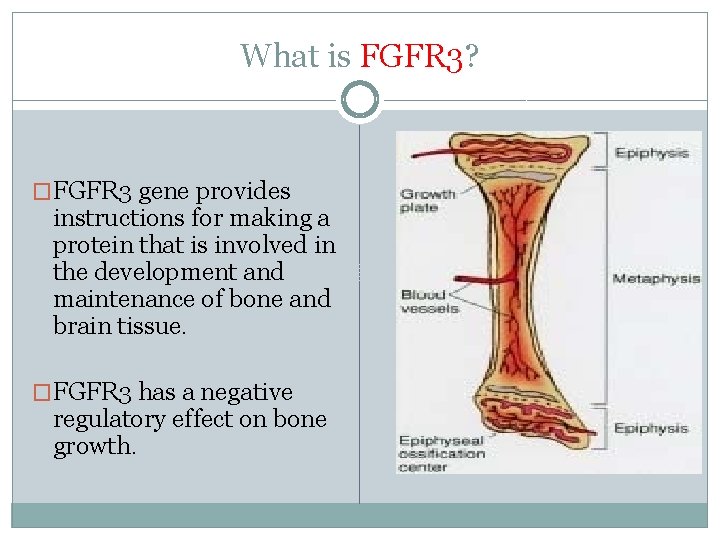
What is FGFR 3? �FGFR 3 gene provides instructions for making a protein that is involved in the development and maintenance of bone and brain tissue. �FGFR 3 has a negative regulatory effect on bone growth.
What is FGFR 3? � It determines cell type, formation of blood vessels, wound healing, and embryo development. �The penetrance of the gene is 100%, meaning that all individuals who have a single copy of the altered FGFR 3 have achondroplasia.
FGFR 3 �People with achondroplasia have one normal copy of the fibroblast growth factor receptor 3 gene and one mutant copy. �Only 1 copy of the gene needs to be present for the disorder to occur.
Achondroplasia � 2 mutations in the FGFR 3 gene, a G-to-A transition at nucleotide 1138 and a G-to-C transversion at the same nucleotide, both resulting in G 380 R amino acid substitutions, cause over 99% of cases of achondroplasia.
Achondroplasia There are over 200 types of dwarfism, the most common type is achondroplasia. �Achondroplasia occurs in one of every 25, 000 people.
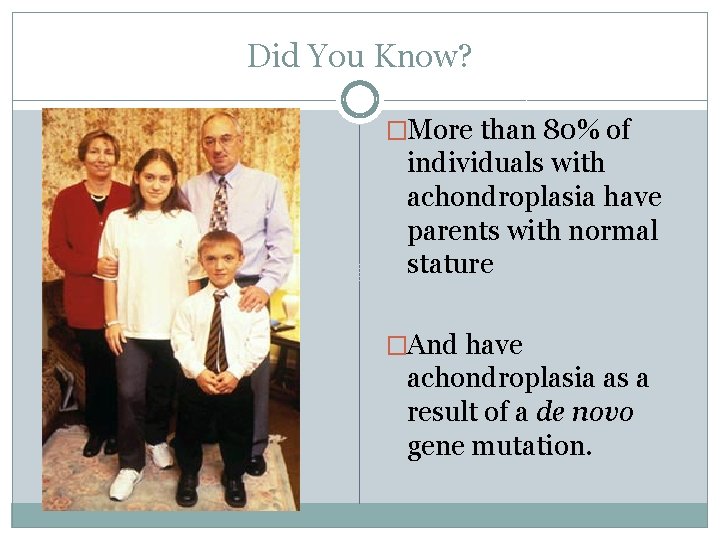
Did You Know? �More than 80% of individuals with achondroplasia have parents with normal stature �And have achondroplasia as a result of a de novo gene mutation.
De Novo Gene Mutation �Associated with increasing paternal age(over 35 years). �Studies demonstrate that new gene mutations are inherited from the father and occur during spermatogenesis
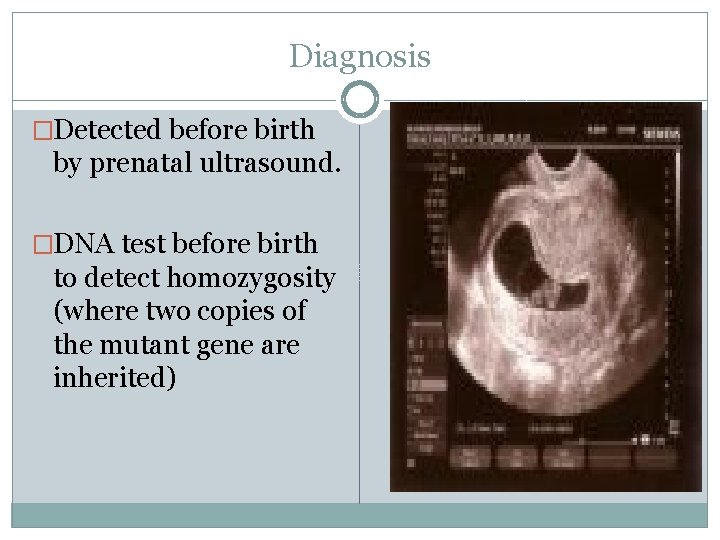
Diagnosis �Detected before birth by prenatal ultrasound. �DNA test before birth to detect homozygosity (where two copies of the mutant gene are inherited)

Achondroplasia Average Height �Male adult height is 131 cm (4 feet, 3 - 1/2 inches) �Female adult height is 123 cm (4 feet, 1/2 inches)
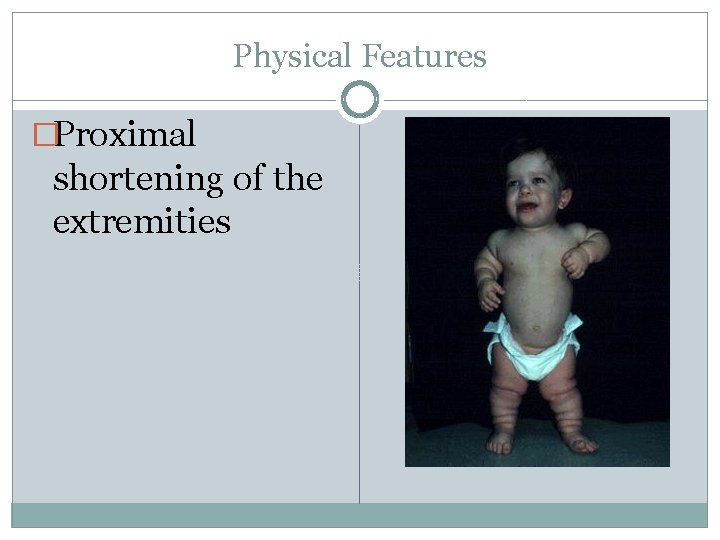
Physical Features �Proximal shortening of the extremities
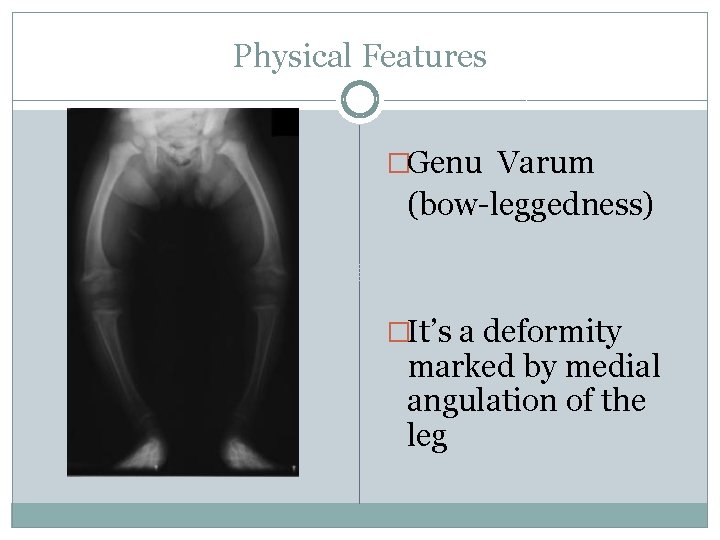
Physical Features �Genu Varum (bow-leggedness) �It’s a deformity marked by medial angulation of the leg
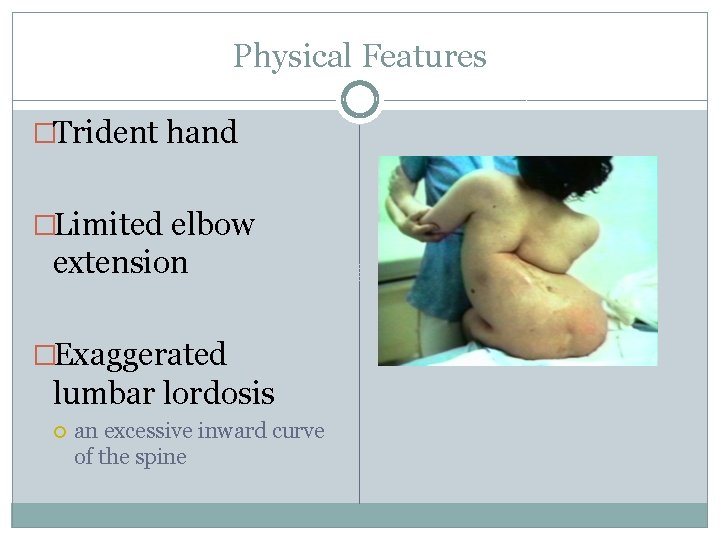
Physical Features �Trident hand �Limited elbow extension �Exaggerated lumbar lordosis an excessive inward curve of the spine
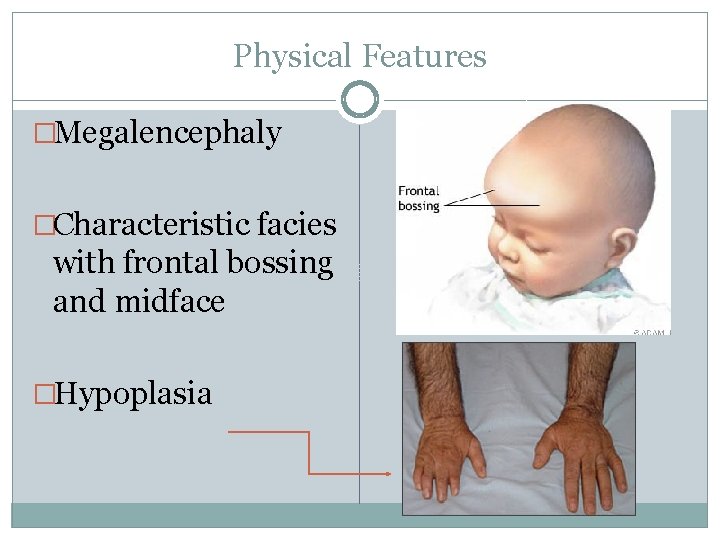
Physical Features �Megalencephaly �Characteristic facies with frontal bossing and midface �Hypoplasia
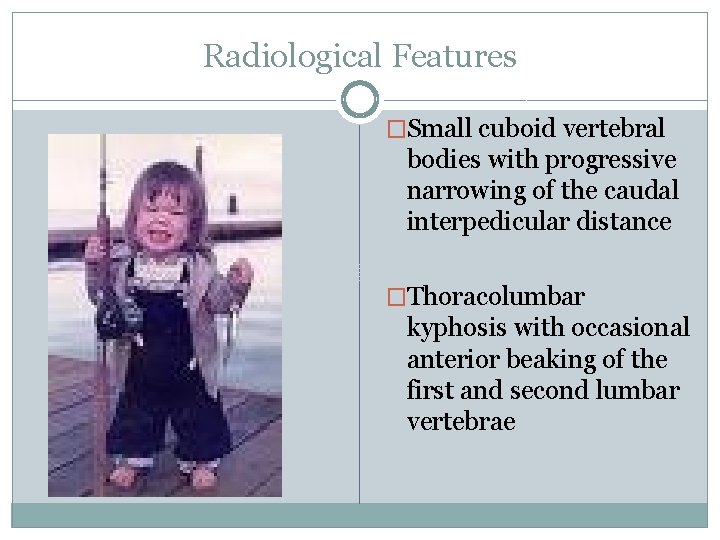
Radiological Features �Small cuboid vertebral bodies with progressive narrowing of the caudal interpedicular distance �Thoracolumbar kyphosis with occasional anterior beaking of the first and second lumbar vertebrae
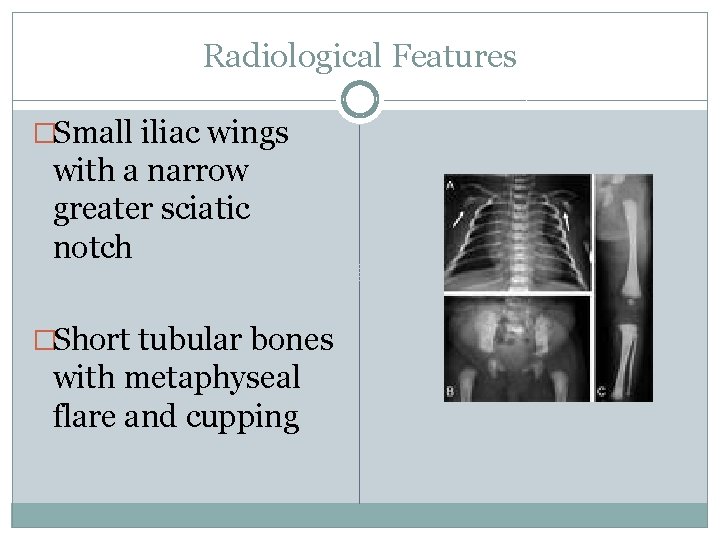
Radiological Features �Small iliac wings with a narrow greater sciatic notch �Short tubular bones with metaphyseal flare and cupping
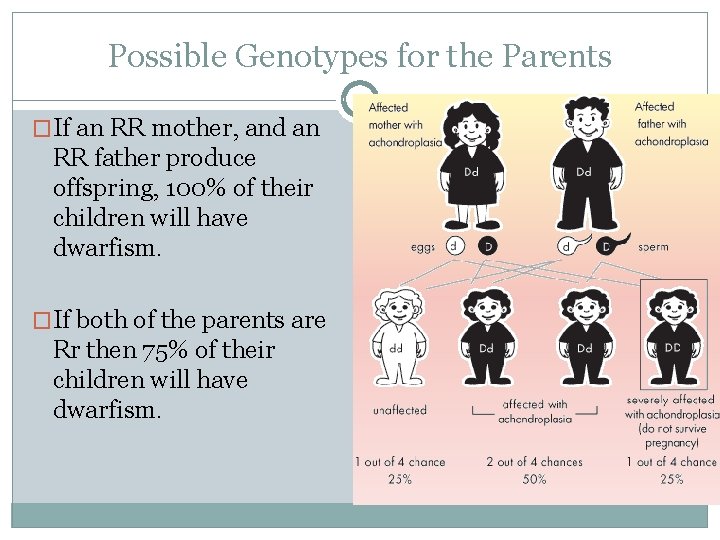
Possible Genotypes for the Parents �If an RR mother, and an RR father produce offspring, 100% of their children will have dwarfism. �If both of the parents are Rr then 75% of their children will have dwarfism.
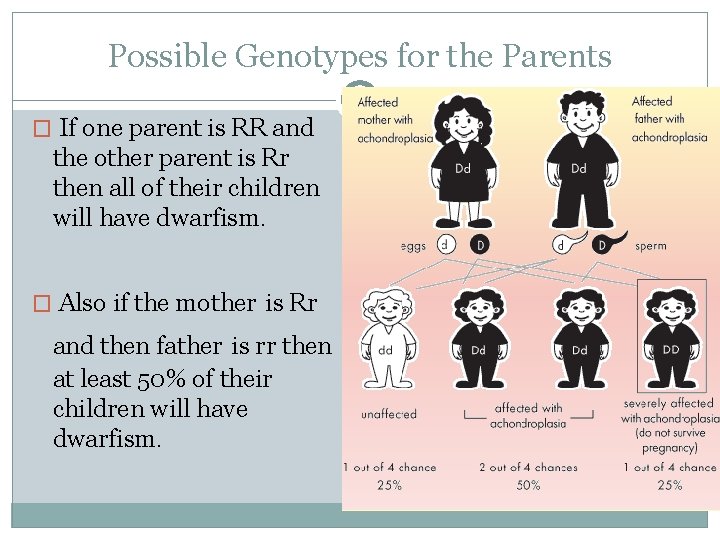
Possible Genotypes for the Parents � If one parent is RR and the other parent is Rr then all of their children will have dwarfism. � Also if the mother is Rr and then father is rr then at least 50% of their children will have dwarfism.
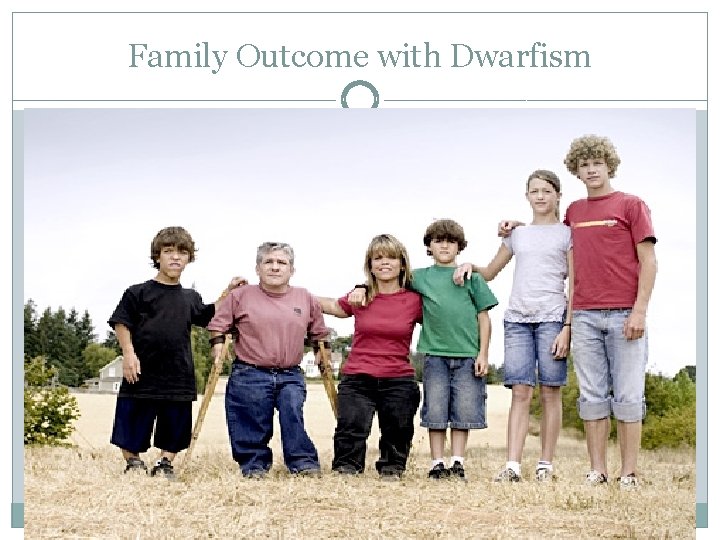
Family Outcome with Dwarfism
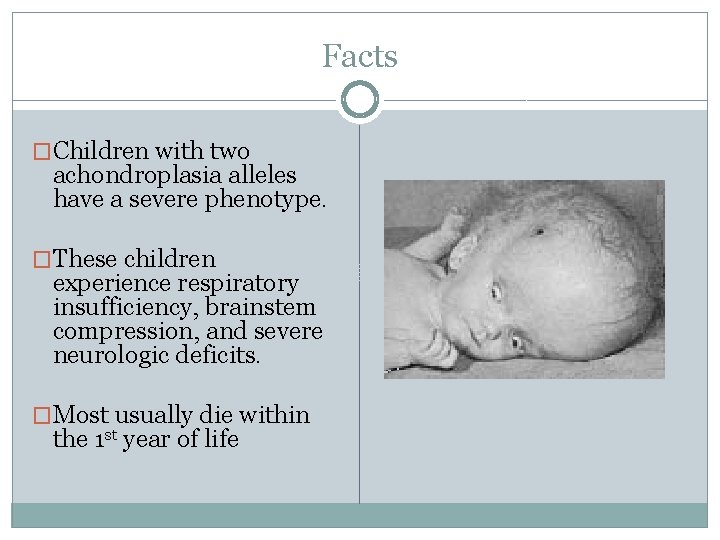
Facts �Children with two achondroplasia alleles have a severe phenotype. �These children experience respiratory insufficiency, brainstem compression, and severe neurologic deficits. �Most usually die within the 1 st year of life
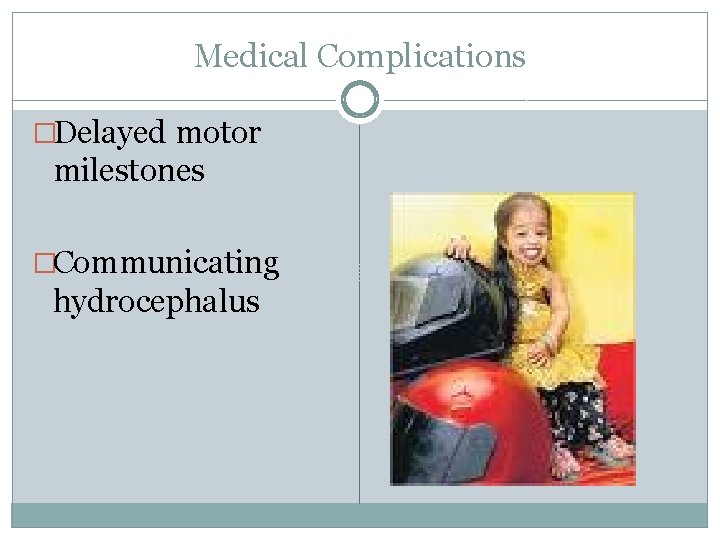
Medical Complications �Delayed motor milestones �Communicating hydrocephalus
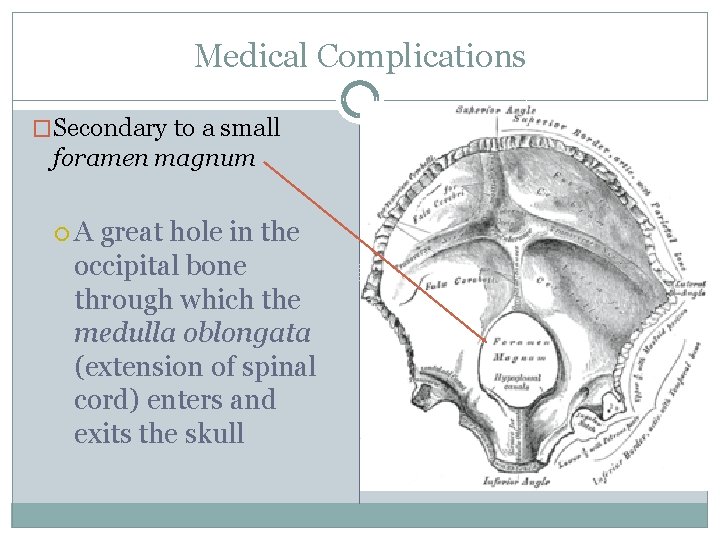
Medical Complications �Secondary to a small foramen magnum A great hole in the occipital bone through which the medulla oblongata (extension of spinal cord) enters and exits the skull
Medical Complications �Frequent sinusitis �Otitis media Inflimation of the middle ear
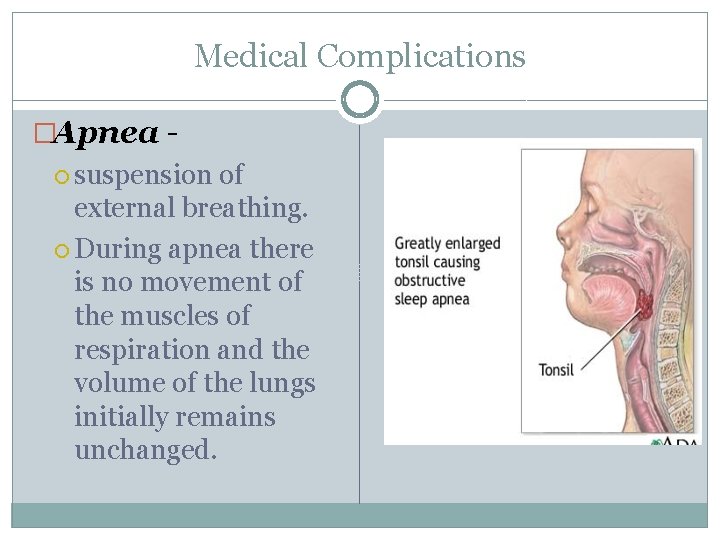
Medical Complications �Apnea suspension of external breathing. During apnea there is no movement of the muscles of respiration and the volume of the lungs initially remains unchanged.
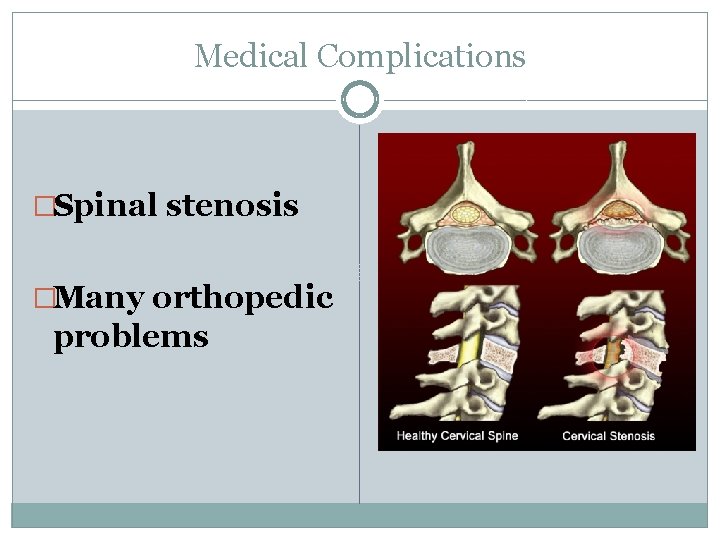
Medical Complications �Spinal stenosis �Many orthopedic problems
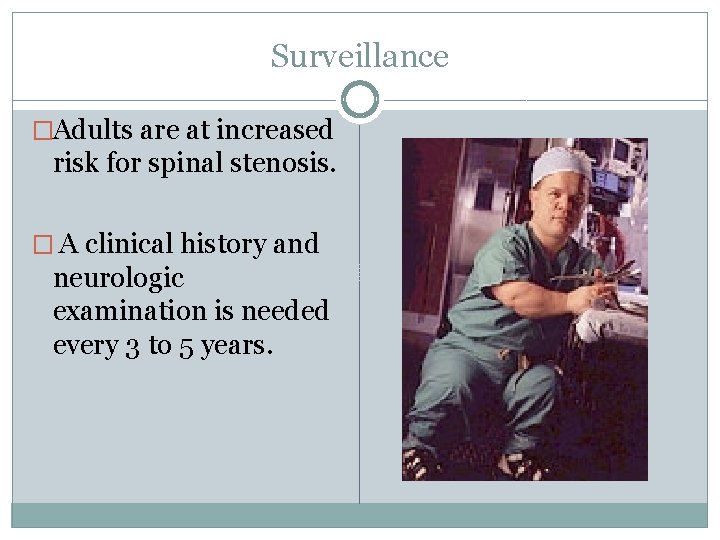
Surveillance �Adults are at increased risk for spinal stenosis. � A clinical history and neurologic examination is needed every 3 to 5 years.
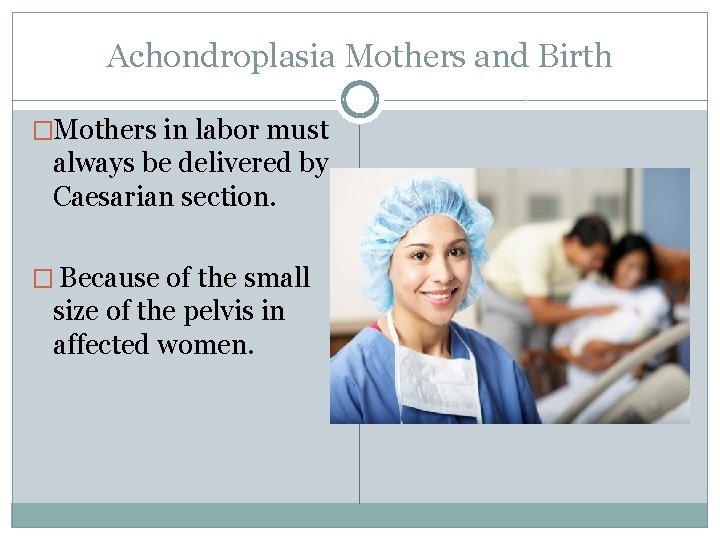
Achondroplasia Mothers and Birth �Mothers in labor must always be delivered by Caesarian section. � Because of the small size of the pelvis in affected women.
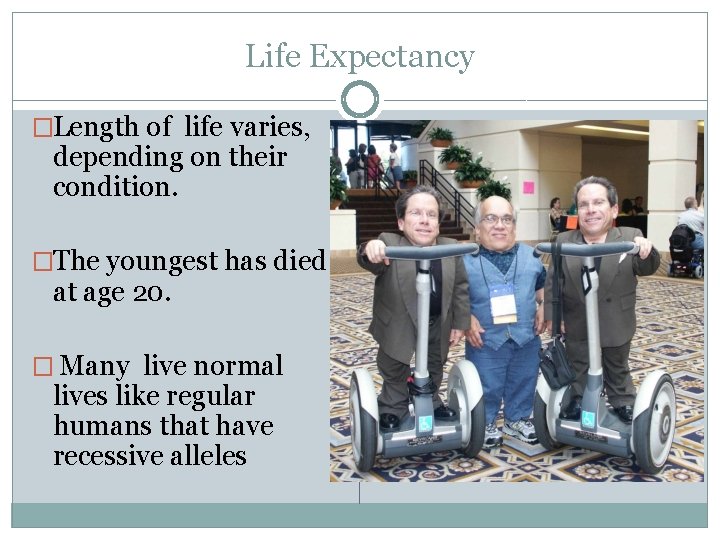
Life Expectancy �Length of life varies, depending on their condition. �The youngest has died at age 20. � Many live normal lives like regular humans that have recessive alleles
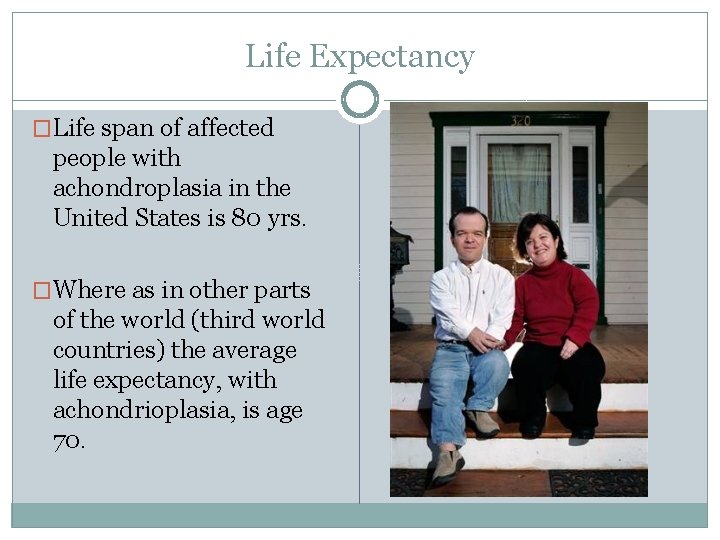
Life Expectancy �Life span of affected people with achondroplasia in the United States is 80 yrs. �Where as in other parts of the world (third world countries) the average life expectancy, with achondrioplasia, is age 70.

Achondroplasia Video Clip �httwww. youtube. com/watch? v=AZP 8 DWCfnh 4 p: // Please right click on link and choose “Open Hyperlink”
Socialization �Due to the visible nature of the short stature, affected persons and their families may encounter difficulties in socialization and school adjustment. �Support groups, such as the Little People of America, Inc (LPA), can assist families with these issues.

Little People of America (LPA) �LPA helps with: �Information on employment, education, disability rights, etc. �Medical issues
Little People of America (LPA) Continued �Suitable clothing �Adaptive devices �Parenting seminars and workshops.
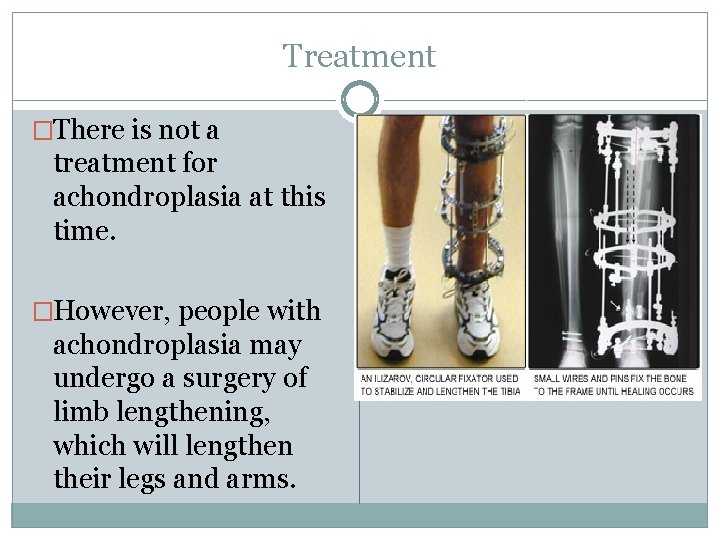
Treatment �There is not a treatment for achondroplasia at this time. �However, people with achondroplasia may undergo a surgery of limb lengthening, which will lengthen their legs and arms.
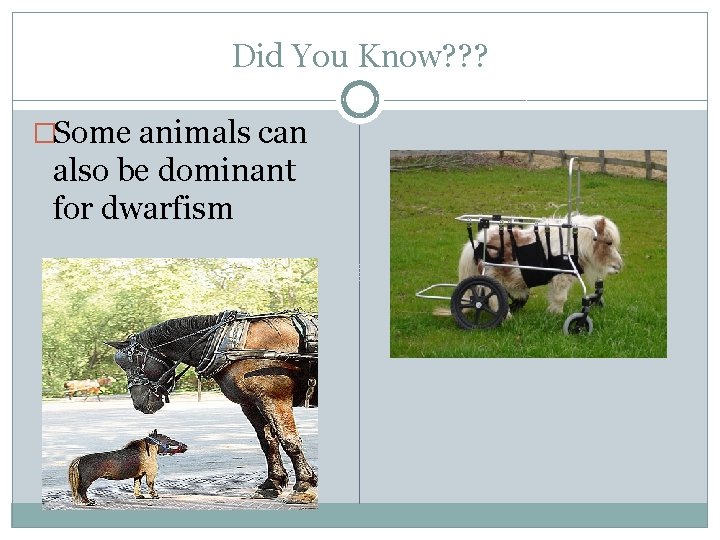
Did You Know? ? ? �Some animals can also be dominant for dwarfism

References �http: //en. wikipedia. org/wiki/Achondroplasia �http: //www. pubmedcentral. nih. gov/picrender. fcgi? a rtid=1801129&blobtype=pdf �Biology 8 th edition
- Slides: 38