
DUKE Translational Medicine Institute DUKE Heart Disease Cancer
- Slides: 26
DUKE Translational Medicine Institute DUKE Heart Disease, Cancer, Big Data and Google: The Baseline Study DTMI Baseline November 2014 Duke Translational Medicine Institute SB/2012/DCRI Confidential and Proprietary Kristin Newby, MD, MHS
DUKE Translational Medicine Institute DUKE The Premise • Health and disease reflect the complex interplay of biology, environment, socioeconomic and cultural influences, and time • Characteristics that result in transitions between health and disease or herald the coming of these transitions, are poorly understood and only superficially characterized • A more profound understanding of health and disease state transitions will – allow more focused preventive measures – provide opportunities for monitoring and targeted preemptive interventions – inform the development of new therapeutics and diagnostics – enable learning systems and continuous quality improvement at the individual, neighborhood, county and state level SB/2012/DCRI Confidential and Proprietary DTMI Strategy & Innovation Group 2
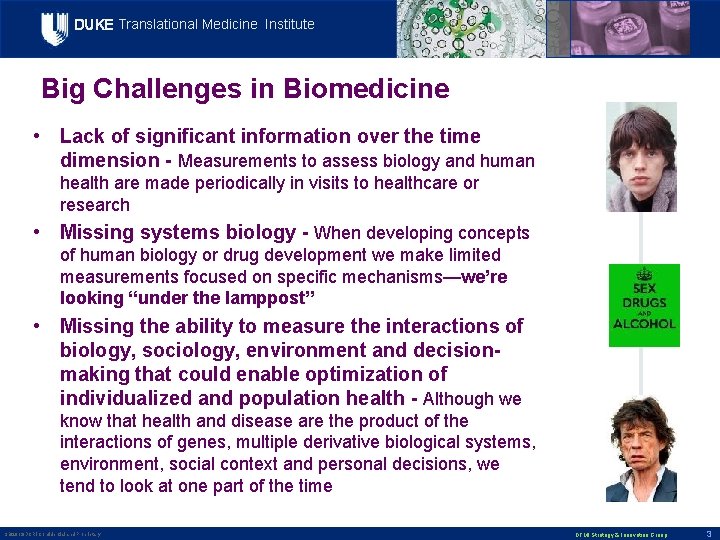
DUKE Translational Medicine Institute DUKE Big Challenges in Biomedicine • Lack of significant information over the time dimension - Measurements to assess biology and human health are made periodically in visits to healthcare or research • Missing systems biology - When developing concepts of human biology or drug development we make limited measurements focused on specific mechanisms—we’re looking “under the lamppost” • Missing the ability to measure the interactions of biology, sociology, environment and decisionmaking that could enable optimization of individualized and population health - Although we know that health and disease are the product of the interactions of genes, multiple derivative biological systems, environment, social context and personal decisions, we tend to look at one part of the time SB/2012/DCRI Confidential and Proprietary DTMI Strategy & Innovation Group 3
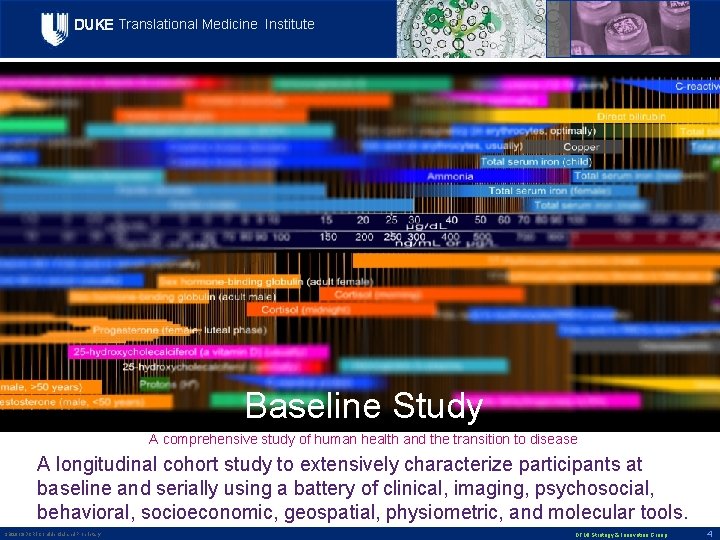
DUKE Translational Medicine Institute DUKE Baseline Study A comprehensive study of human health and the transition to disease A longitudinal cohort study to extensively characterize participants at baseline and serially using a battery of clinical, imaging, psychosocial, behavioral, socioeconomic, geospatial, physiometric, and molecular tools. SB/2012/DCRI Confidential and Proprietary DTMI Strategy & Innovation Group 4
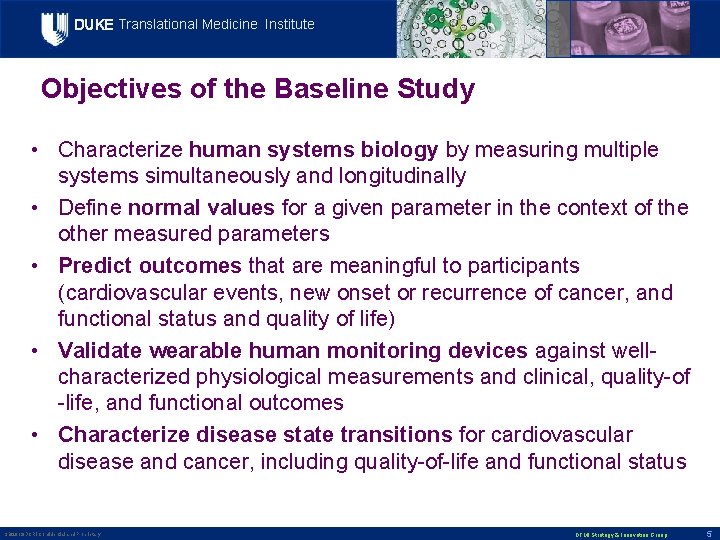
DUKE Translational Medicine Institute DUKE Objectives of the Baseline Study • Characterize human systems biology by measuring multiple systems simultaneously and longitudinally • Define normal values for a given parameter in the context of the other measured parameters • Predict outcomes that are meaningful to participants (cardiovascular events, new onset or recurrence of cancer, and functional status and quality of life) • Validate wearable human monitoring devices against wellcharacterized physiological measurements and clinical, quality-of -life, and functional outcomes • Characterize disease state transitions for cardiovascular disease and cancer, including quality-of-life and functional status SB/2012/DCRI Confidential and Proprietary DTMI Strategy & Innovation Group 5
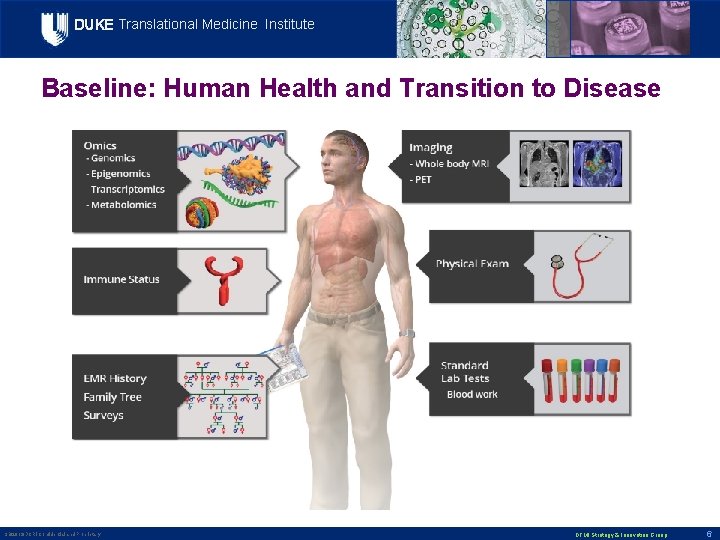
DUKE Translational Medicine Institute DUKE Baseline: Human Health and Transition to Disease SB/2012/DCRI Confidential and Proprietary DTMI Strategy & Innovation Group 6
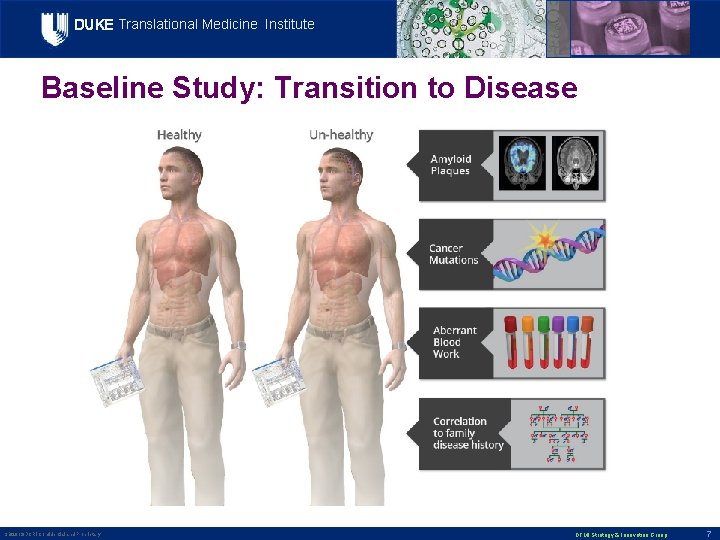
DUKE Translational Medicine Institute DUKE Baseline Study: Transition to Disease SB/2012/DCRI Confidential and Proprietary DTMI Strategy & Innovation Group 7
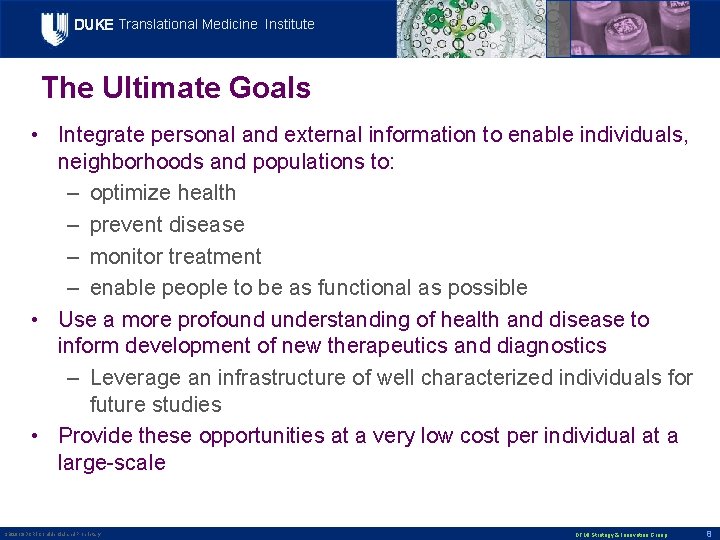
DUKE Translational Medicine Institute DUKE The Ultimate Goals • Integrate personal and external information to enable individuals, neighborhoods and populations to: – optimize health – prevent disease – monitor treatment – enable people to be as functional as possible • Use a more profound understanding of health and disease to inform development of new therapeutics and diagnostics – Leverage an infrastructure of well characterized individuals for future studies • Provide these opportunities at a very low cost per individual at a large-scale SB/2012/DCRI Confidential and Proprietary DTMI Strategy & Innovation Group 8
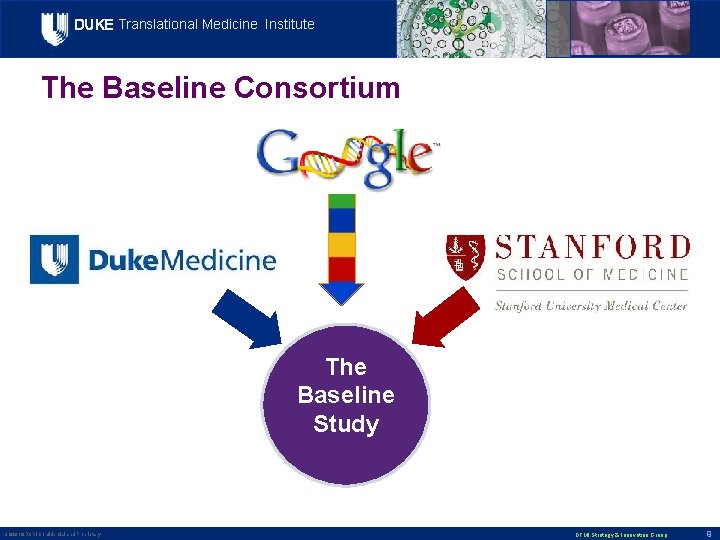
DUKE Translational Medicine Institute DUKE The Baseline Consortium The Baseline Study SB/2012/DCRI Confidential and Proprietary DTMI Strategy & Innovation Group 9
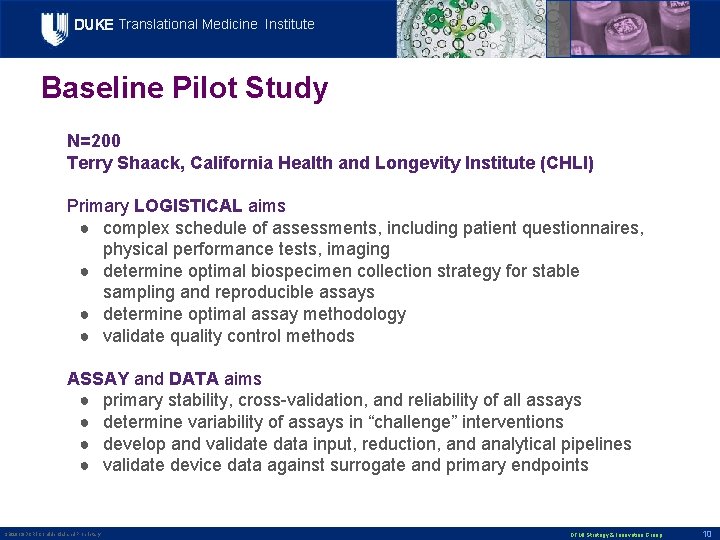
DUKE Translational Medicine Institute DUKE Baseline Pilot Study N=200 Terry Shaack, California Health and Longevity Institute (CHLI) Primary LOGISTICAL aims ● complex schedule of assessments, including patient questionnaires, physical performance tests, imaging ● determine optimal biospecimen collection strategy for stable sampling and reproducible assays ● determine optimal assay methodology ● validate quality control methods ASSAY and DATA aims ● primary stability, cross-validation, and reliability of all assays ● determine variability of assays in “challenge” interventions ● develop and validate data input, reduction, and analytical pipelines ● validate device data against surrogate and primary endpoints SB/2012/DCRI Confidential and Proprietary DTMI Strategy & Innovation Group 10
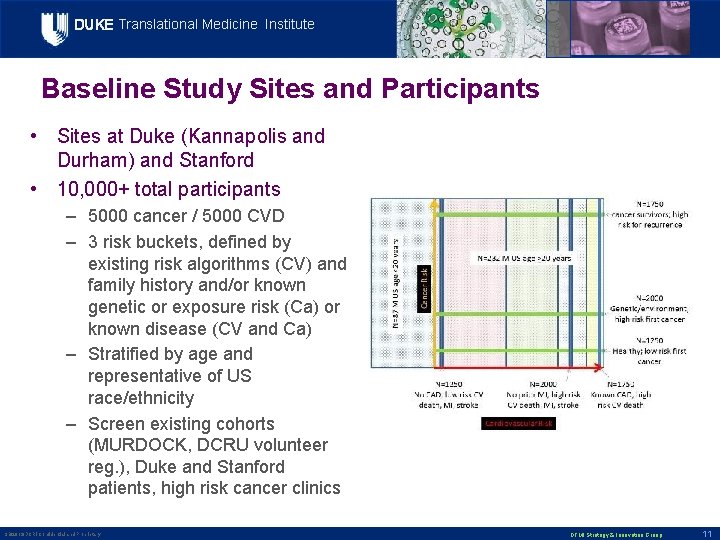
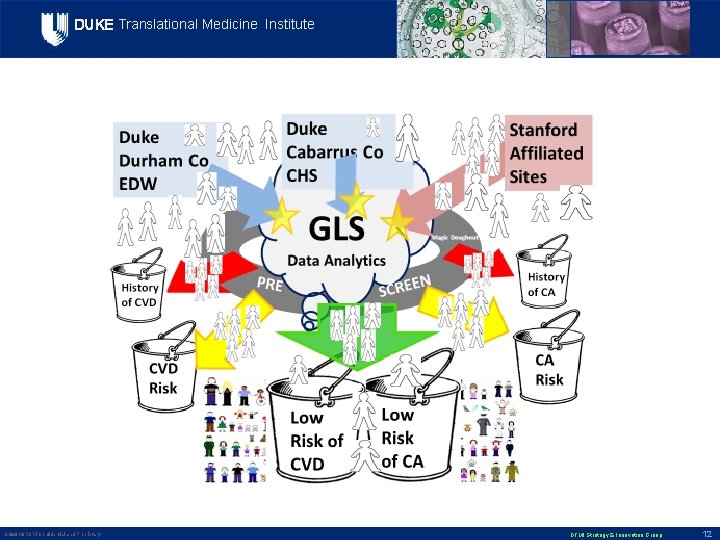
DUKE Translational Medicine Institute DUKE Baseline Study Sites and Participants • Sites at Duke (Kannapolis and Durham) and Stanford • 10, 000+ total participants – 5000 cancer / 5000 CVD – 3 risk buckets, defined by existing risk algorithms (CV) and family history and/or known genetic or exposure risk (Ca) or known disease (CV and Ca) – Stratified by age and representative of US race/ethnicity – Screen existing cohorts (MURDOCK, DCRU volunteer reg. ), Duke and Stanford patients, high risk cancer clinics SB/2012/DCRI Confidential and Proprietary DTMI Strategy & Innovation Group 11
DUKE Translational Medicine Institute DUKE SB/2012/DCRI Confidential and Proprietary DTMI Strategy & Innovation Group 12
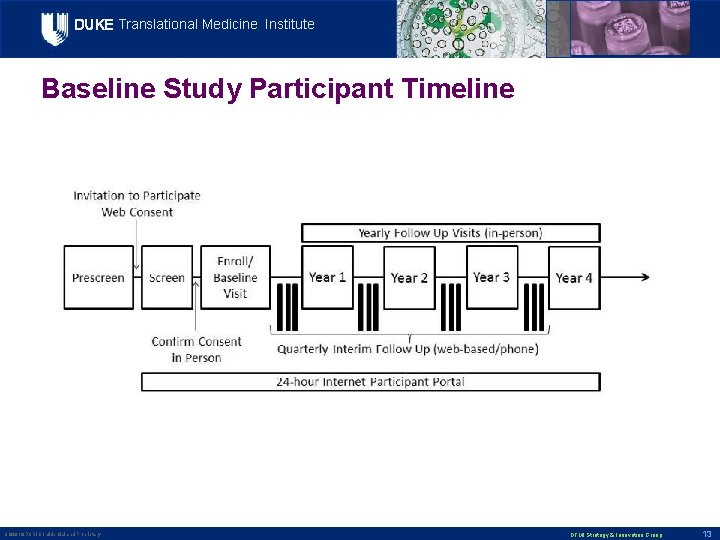
DUKE Translational Medicine Institute DUKE Baseline Study Participant Timeline SB/2012/DCRI Confidential and Proprietary DTMI Strategy & Innovation Group 13
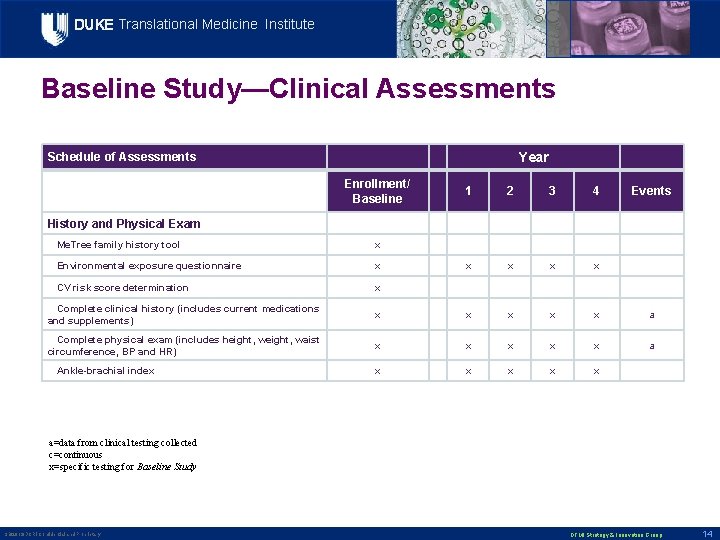
DUKE Translational Medicine Institute DUKE Baseline Study—Clinical Assessments Schedule of Assessments Year Enrollment/ Baseline 1 2 3 4 Events Me. Tree family history tool x Environmental exposure questionnaire x x x CV risk score determination x Complete clinical history (includes current medications and supplements) x x x a Complete physical exam (includes height, waist circumference, BP and HR) x x x a x x x History and Physical Exam Ankle-brachial index a=data from clinical testing collected c=continuous x=specific testing for Baseline Study SB/2012/DCRI Confidential and Proprietary DTMI Strategy & Innovation Group 14
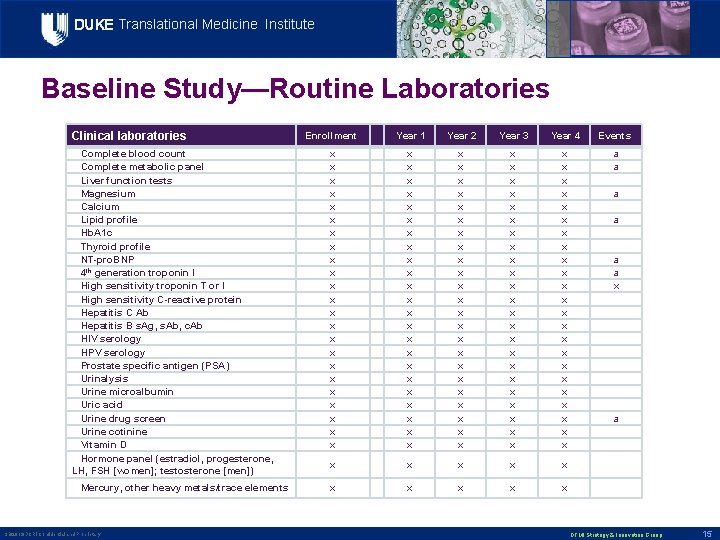
DUKE Translational Medicine Institute DUKE Baseline Study—Routine Laboratories Clinical laboratories Complete blood count Complete metabolic panel Liver function tests Magnesium Calcium Lipid profile Hb. A 1 c Thyroid profile NT-pro. BNP 4 th generation troponin I High sensitivity troponin T or I High sensitivity C-reactive protein Hepatitis C Ab Hepatitis B s. Ag, s. Ab, c. Ab HIV serology HPV serology Prostate specific antigen (PSA) Urinalysis Urine microalbumin Uric acid Urine drug screen Urine cotinine Vitamin D Hormone panel (estradiol, progesterone, LH, FSH [women]; testosterone [men]) Mercury, other heavy metals/trace elements SB/2012/DCRI Confidential and Proprietary Enrollment Year 1 Year 2 Year 3 Year 4 Events x x x x x x x x x x x x x x x x x x x x x x x x x x x x x a a a a a a x a x x x x x DTMI Strategy & Innovation Group 15
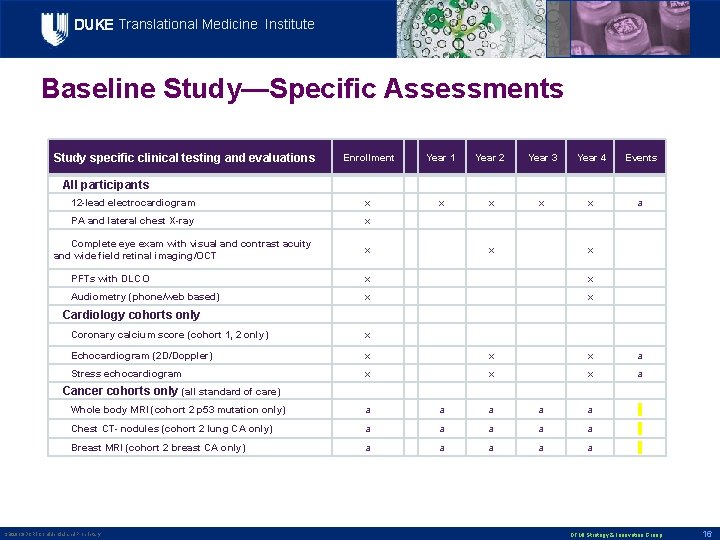
DUKE Translational Medicine Institute DUKE Baseline Study—Specific Assessments Study specific clinical testing and evaluations Enrollment Year 1 Year 2 Year 3 Year 4 Events All participants 12 -lead electrocardiogram x x x a PA and lateral chest X-ray x x x PFTs with DLCO x Audiometry (phone/web based) x x Cardiology cohorts only Coronary calcium score (cohort 1, 2 only) x Echocardiogram (2 D/Doppler) x x x a Stress echocardiogram x x x a Cancer cohorts only (all standard of care) Whole body MRI (cohort 2 p 53 mutation only) a a a Chest CT- nodules (cohort 2 lung CA only) a a a Breast MRI (cohort 2 breast CA only) a a a Complete eye exam with visual and contrast acuity and wide field retinal imaging/OCT SB/2012/DCRI Confidential and Proprietary DTMI Strategy & Innovation Group 16
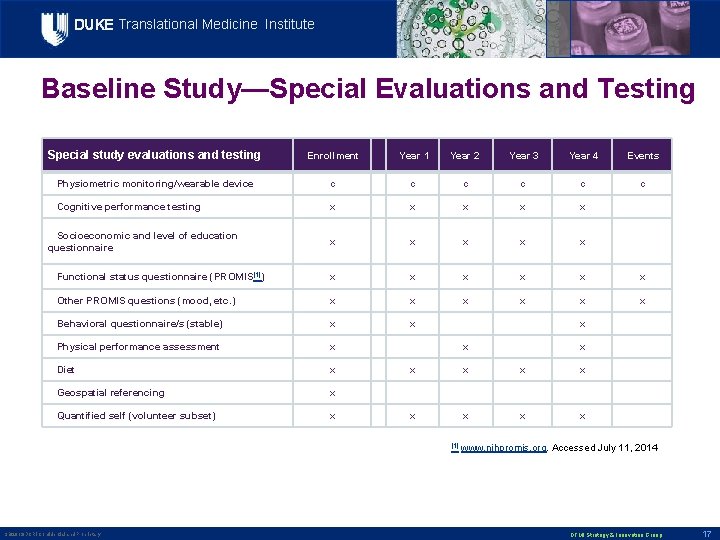
DUKE Translational Medicine Institute DUKE Baseline Study—Special Evaluations and Testing Special study evaluations and testing Enrollment Year 1 Year 2 Year 3 Year 4 Events Physiometric monitoring/wearable device c c c Cognitive performance testing x x x x x Functional status questionnaire (PROMIS[1]) x x x Other PROMIS questions (mood, etc. ) x x x Behavioral questionnaire/s (stable) x x x Physical performance assessment x x x Diet x x x Geospatial referencing x Quantified self (volunteer subset) x x x Socioeconomic and level of education questionnaire [1] www. nihpromis. org. Accessed July 11, 2014 SB/2012/DCRI Confidential and Proprietary DTMI Strategy & Innovation Group 17
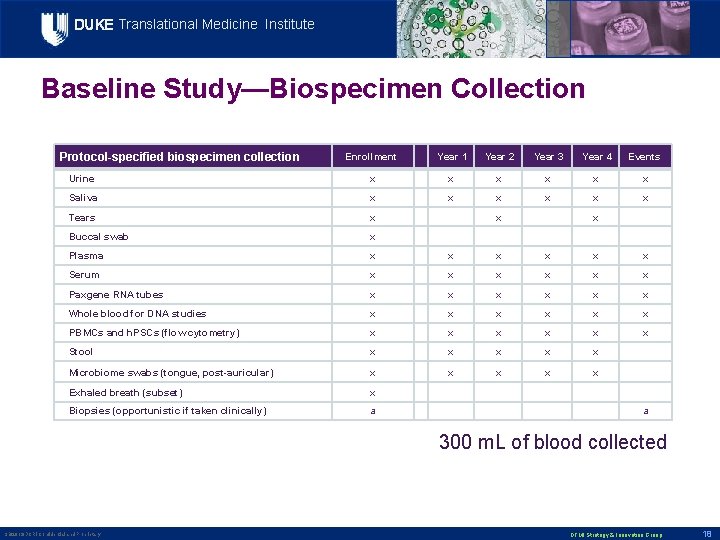
DUKE Translational Medicine Institute DUKE Baseline Study—Biospecimen Collection Protocol-specified biospecimen collection Enrollment Year 1 Year 2 Year 3 Year 4 Events Urine x x x Saliva x x x Tears x x x Buccal swab x Plasma x x x Serum x x x Paxgene RNA tubes x x x Whole blood for DNA studies x x x PBMCs and h. PSCs (flow cytometry) x x x Stool x x x Microbiome swabs (tongue, post-auricular) x x x Exhaled breath (subset) x Biopsies (opportunistic if taken clinically) a a 300 m. L of blood collected SB/2012/DCRI Confidential and Proprietary DTMI Strategy & Innovation Group 18
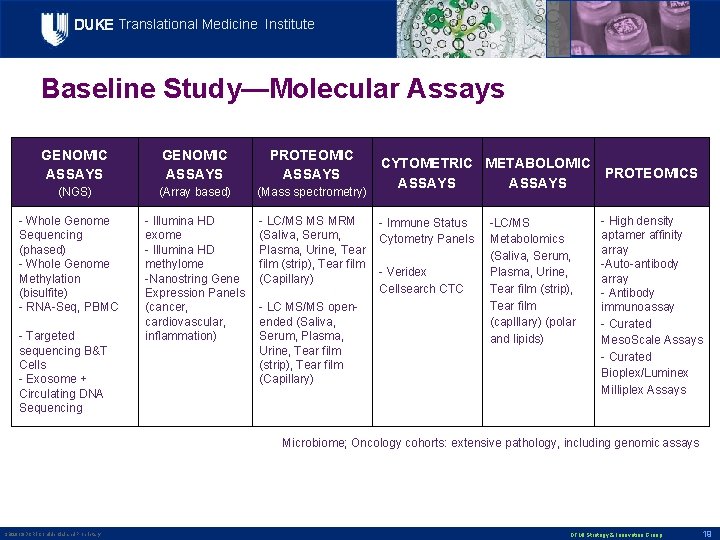
DUKE Translational Medicine Institute DUKE Baseline Study—Molecular Assays GENOMIC ASSAYS PROTEOMIC ASSAYS (NGS) (Array based) (Mass spectrometry) - Whole Genome Sequencing (phased) - Whole Genome Methylation (bisulfite) - RNA-Seq, PBMC - Targeted sequencing B&T Cells - Exosome + Circulating DNA Sequencing - Illumina HD exome - Illumina HD methylome -Nanostring Gene Expression Panels (cancer, cardiovascular, inflammation) CYTOMETRIC METABOLOMIC PROTEOMICS ASSAYS - LC/MS MS MRM - Immune Status (Saliva, Serum, Cytometry Panels Plasma, Urine, Tear film (strip), Tear film - Veridex (Capillary) Cellsearch CTC - LC MS/MS openended (Saliva, Serum, Plasma, Urine, Tear film (strip), Tear film (Capillary) -LC/MS Metabolomics (Saliva, Serum, Plasma, Urine, Tear film (strip), Tear film (caplllary) (polar and lipids) - High density aptamer affinity array -Auto-antibody array - Antibody immunoassay - Curated Meso. Scale Assays - Curated Bioplex/Luminex Milliplex Assays Microbiome; Oncology cohorts: extensive pathology, including genomic assays SB/2012/DCRI Confidential and Proprietary DTMI Strategy & Innovation Group 19
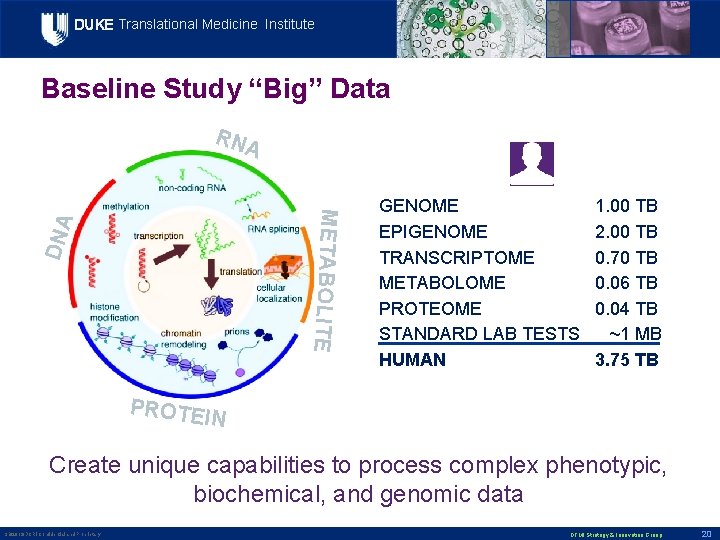
DUKE Translational Medicine Institute DUKE Baseline Study “Big” Data RNA DNA METABOLITE GENOME EPIGENOME TRANSCRIPTOME METABOLOME PROTEOME STANDARD LAB TESTS HUMAN 1. 00 TB 2. 00 TB 0. 70 TB 0. 06 TB 0. 04 TB ~1 MB 3. 75 TB PROTEI N Create unique capabilities to process complex phenotypic, biochemical, and genomic data SB/2012/DCRI Confidential and Proprietary DTMI Strategy & Innovation Group 20
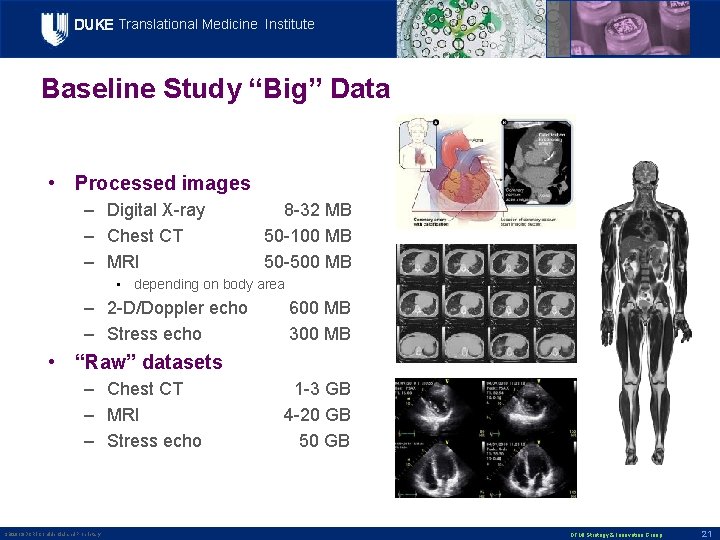
DUKE Translational Medicine Institute DUKE Baseline Study “Big” Data • Processed images – Digital X-ray – Chest CT – MRI 8 -32 MB 50 -100 MB 50 -500 MB • depending on body area – 2 -D/Doppler echo 600 MB – Stress echo 300 MB • “Raw” datasets – Chest CT – MRI – Stress echo SB/2012/DCRI Confidential and Proprietary 1 -3 GB 4 -20 GB 50 GB DTMI Strategy & Innovation Group 21
DUKE Translational Medicine Institute DUKE Wearable Physiometric Medical Devices SB/2012/DCRI Confidential and Proprietary DTMI Strategy & Innovation Group 22
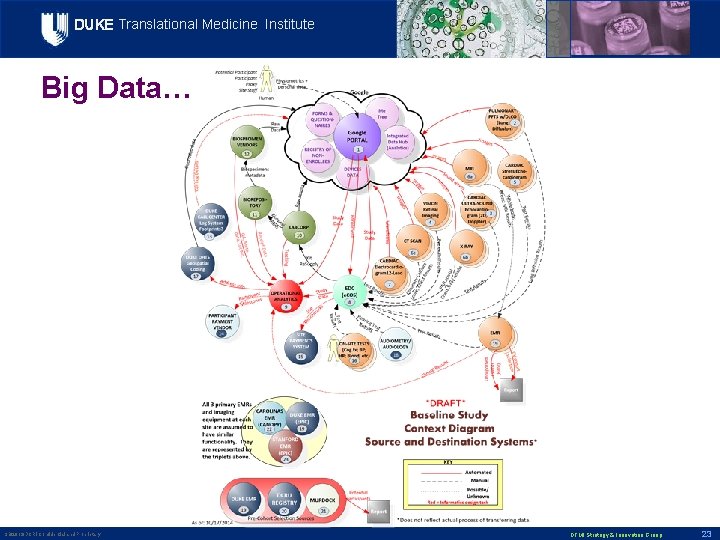
DUKE Translational Medicine Institute DUKE Big Data… SB/2012/DCRI Confidential and Proprietary DTMI Strategy & Innovation Group 23
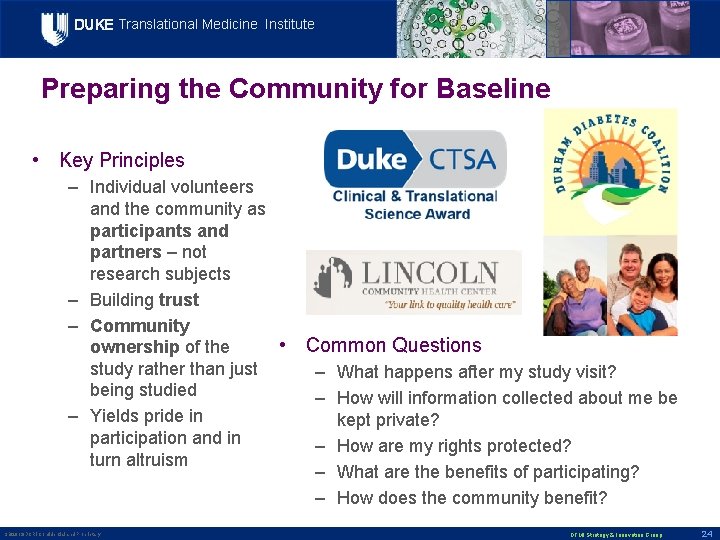
DUKE Translational Medicine Institute DUKE Preparing the Community for Baseline • Key Principles – Individual volunteers and the community as participants and partners – not research subjects – Building trust – Community • ownership of the study rather than just being studied – Yields pride in participation and in turn altruism SB/2012/DCRI Confidential and Proprietary Common Questions – What happens after my study visit? – How will information collected about me be kept private? – How are my rights protected? – What are the benefits of participating? – How does the community benefit? DTMI Strategy & Innovation Group 24
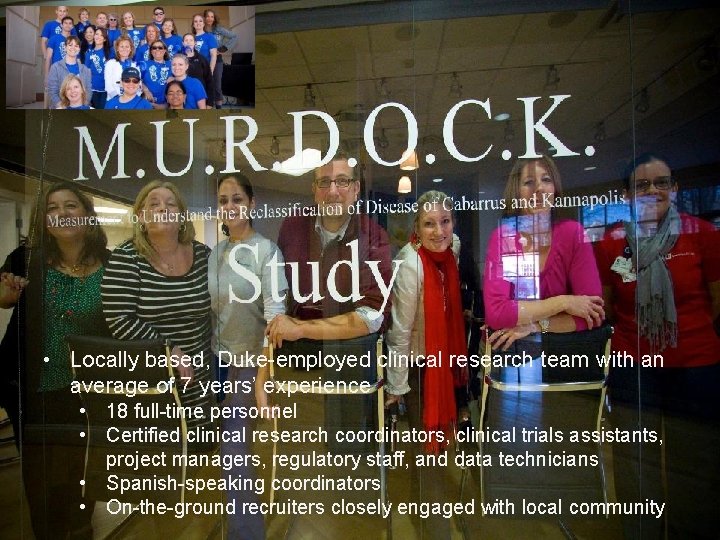
• Locally based, Duke-employed clinical research team with an average of 7 years’ experience • 18 full-time personnel • Certified clinical research coordinators, clinical trials assistants, project managers, regulatory staff, and data technicians • Spanish-speaking coordinators • On-the-ground recruiters closely engaged with local community
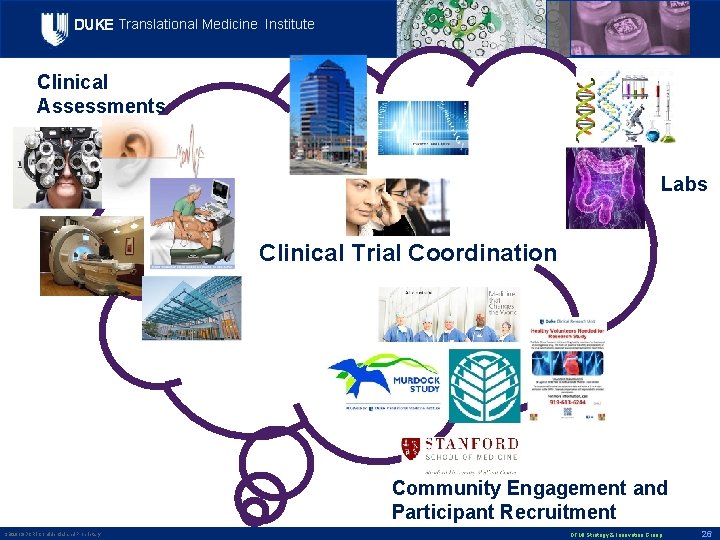
DUKE Translational Medicine Institute DUKE Clinical Assessments Labs Clinical Trial Coordination Community Engagement and Participant Recruitment SB/2012/DCRI Confidential and Proprietary DTMI Strategy & Innovation Group 26