
Duffin Creek WPCP Optimized Renewal Planning Decision Faruque

- Slides: 34
Duffin Creek WPCP Optimized Renewal Planning & Decision. Faruque Mia: Infrastructure Engineer, Region of York Making Aman Singh: Lead Business Consulting, GHD Canada CNAM 2014 Conference Toronto, Ontario May 20 -23, 2014
Agenda • Duffin Creek WPCP Overview • Infrastructure Management Framework • Overview • Processes • Data Requirements • Implementation Plan
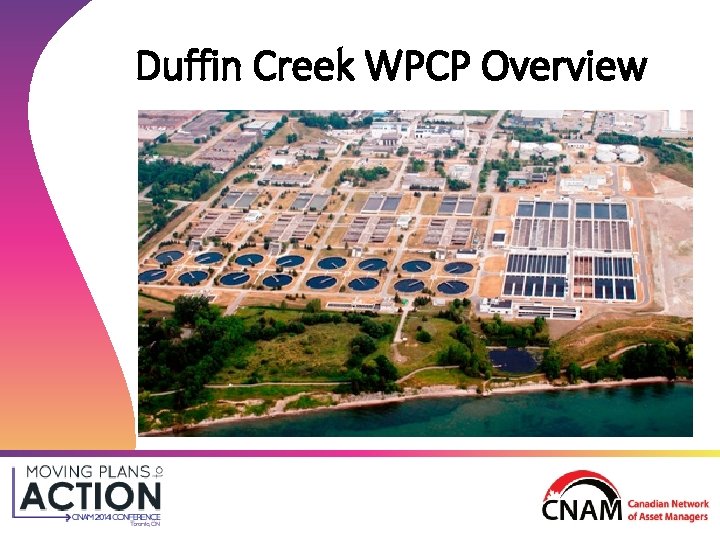
Duffin Creek WPCP Overview
Duffin Creek WPCP Overview • Accepts wastewater flows from both the Regions of York and Durham • Stage 3 built in 2010 to increase treatment capacity to 630 MLD • Stages 1 & 2 undergoing renewal works
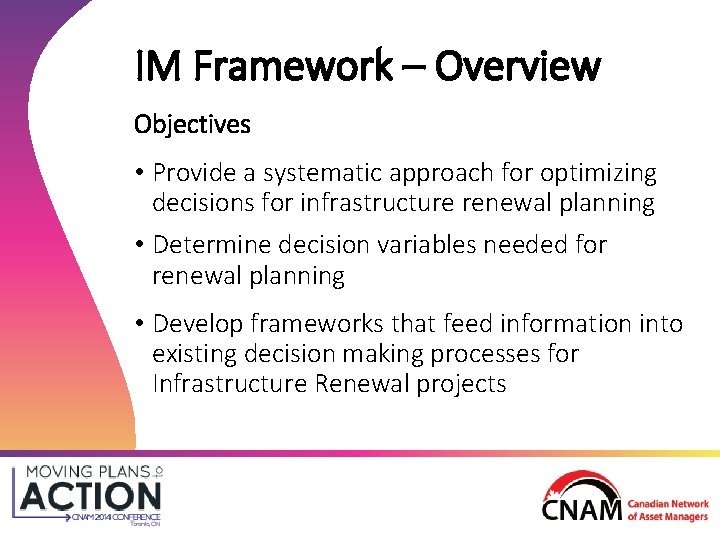
IM Framework – Overview Objectives • Provide a systematic approach for optimizing decisions for infrastructure renewal planning • Determine decision variables needed for renewal planning • Develop frameworks that feed information into existing decision making processes for Infrastructure Renewal projects
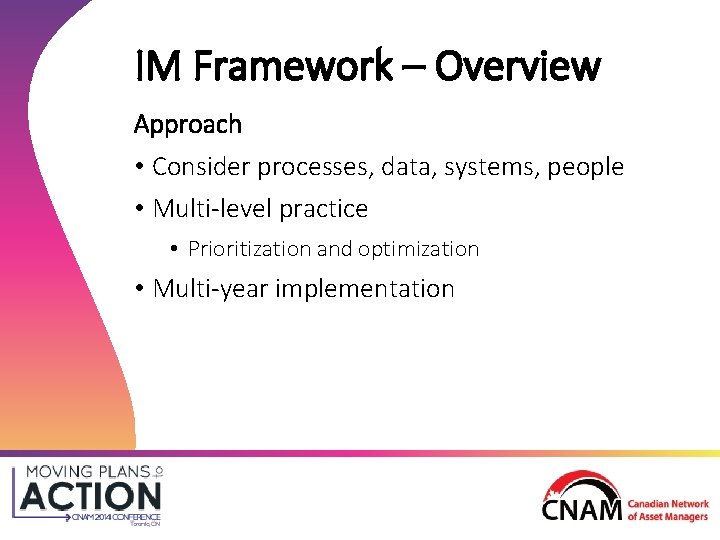
IM Framework – Overview Approach • Consider processes, data, systems, people • Multi-level practice • Prioritization and optimization • Multi-year implementation
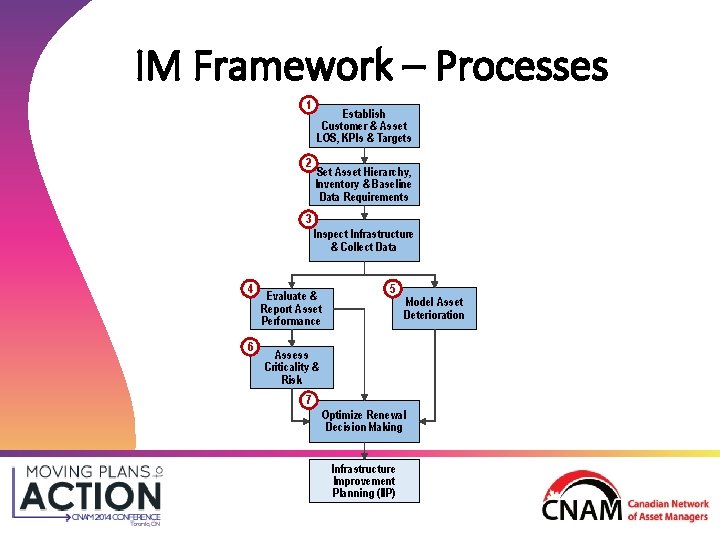
IM Framework – Processes 1 2 Establish Customer & Asset LOS, KPIs & Targets Set Asset Hierarchy, Inventory & Baseline Data Requirements 3 Inspect Infrastructure & Collect Data 4 6 Evaluate & Report Asset Performance 5 Model Asset Deterioration Assess Criticality & Risk 7 Optimize Renewal Decision Making Infrastructure Improvement Planning (IIP)
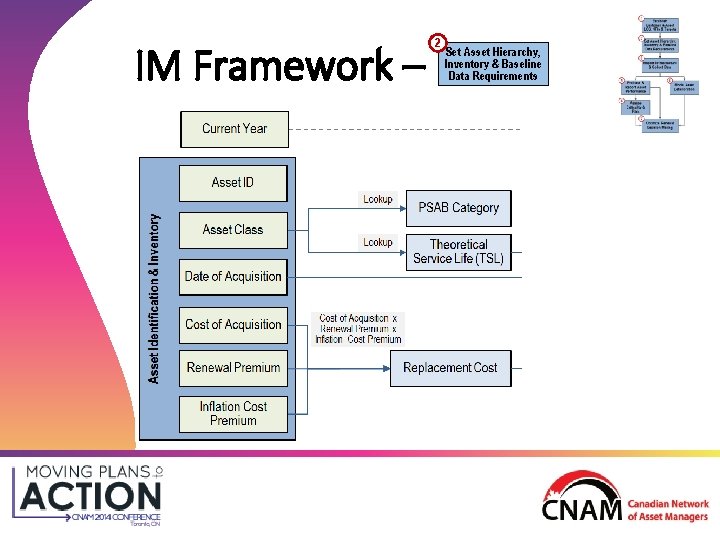
IM Framework – • ? ? 2 Set Asset Hierarchy, Inventory & Baseline Data Requirements
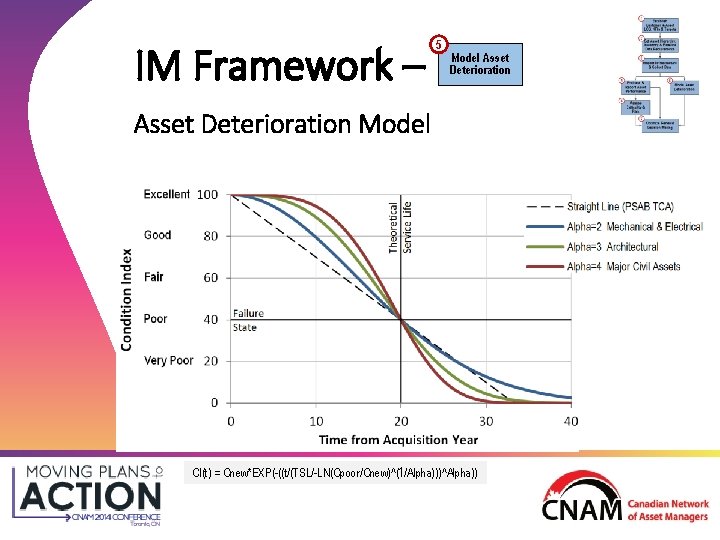
IM Framework – 5 Model Asset Deterioration Model CI(t) = Cnew*EXP(-((t/(TSL/-LN(Cpoor/Cnew)^(1/Alpha)))^Alpha))
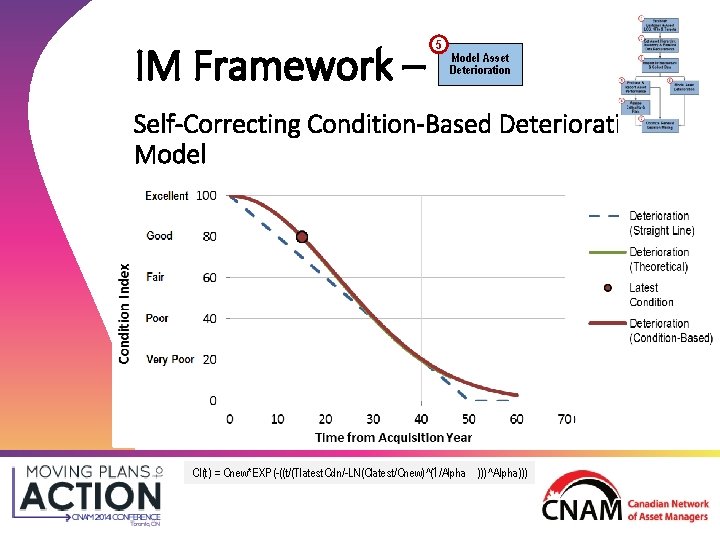
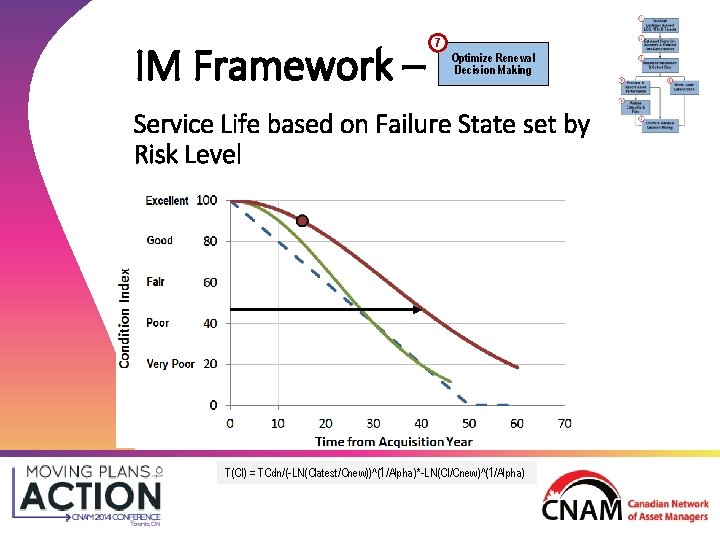
IM Framework – 5 Model Asset Deterioration Self-Correcting Condition-Based Deterioration Model CI(t) = Cnew*EXP(-((t/(Tlatest. Cdn/-LN(Clatest/Cnew)^(1/Alpha )))^Alpha)))
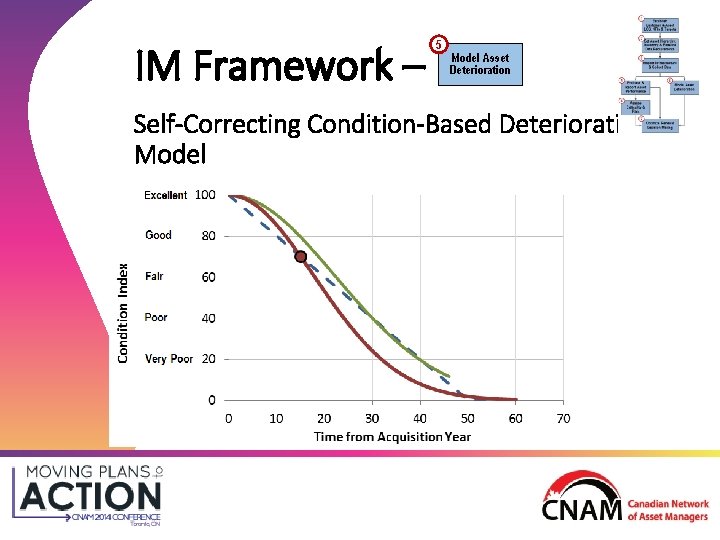
IM Framework – 5 Model Asset Deterioration Self-Correcting Condition-Based Deterioration Model
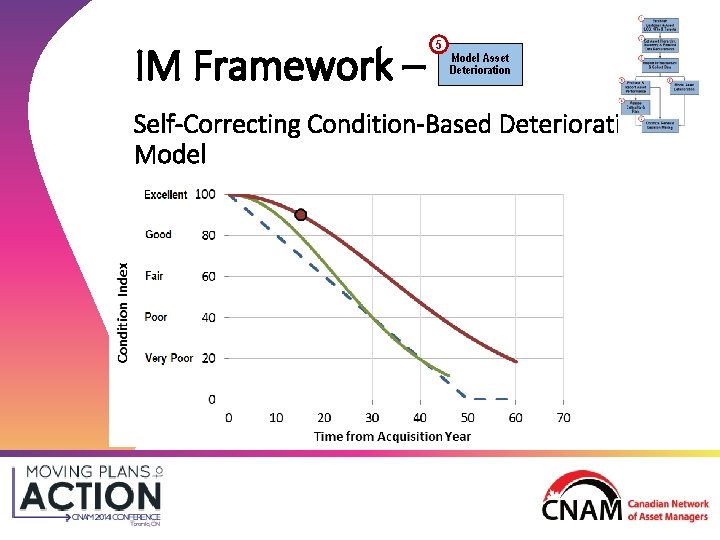
IM Framework – 5 Model Asset Deterioration Self-Correcting Condition-Based Deterioration Model
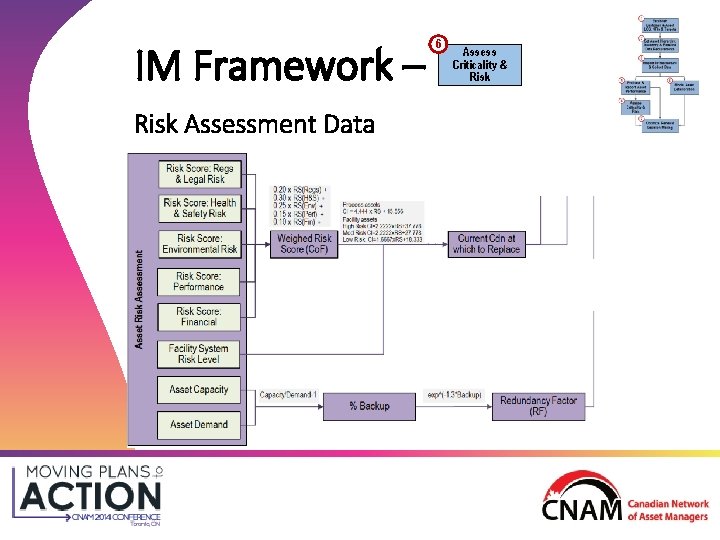
IM Framework – Risk Assessment Data 6 Assess Criticality & Risk
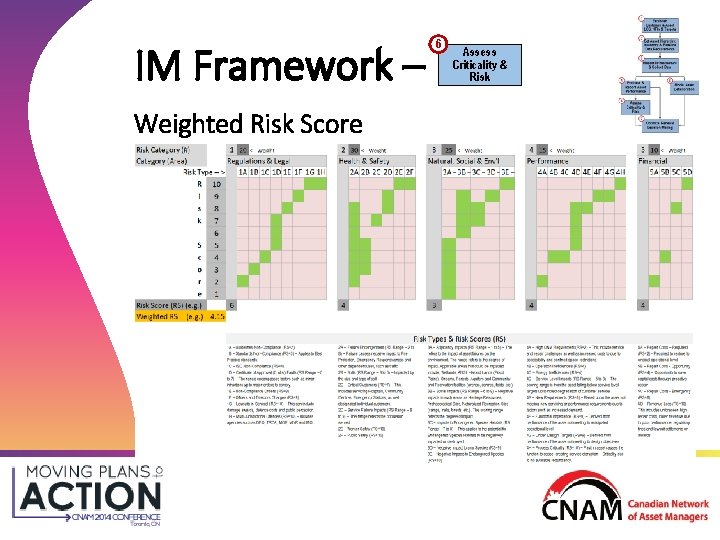
IM Framework – Weighted Risk Score 6 Assess Criticality & Risk
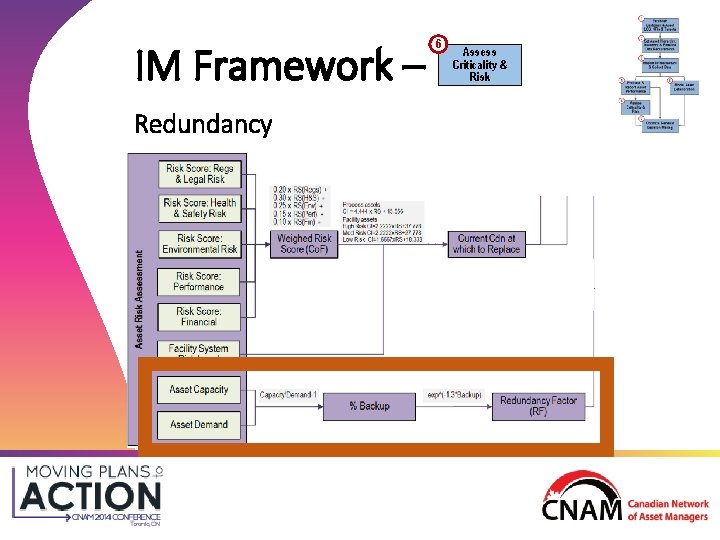
IM Framework – Redundancy 6 Assess Criticality & Risk
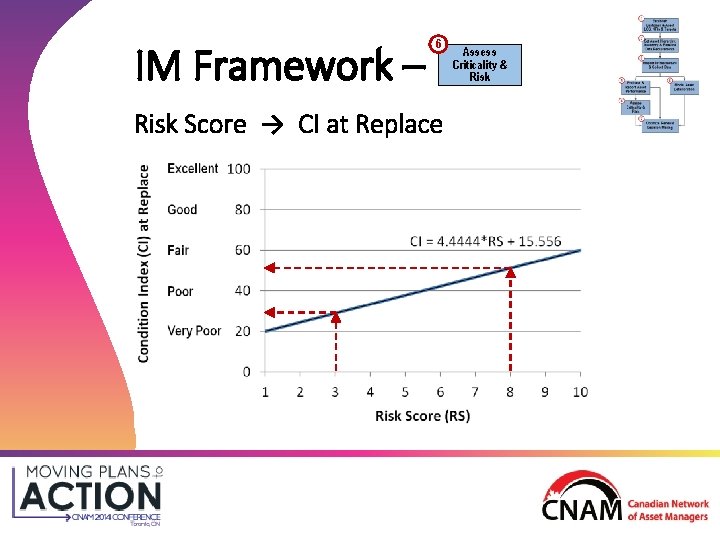
IM Framework – 6 Risk Score → CI at Replace Assess Criticality & Risk
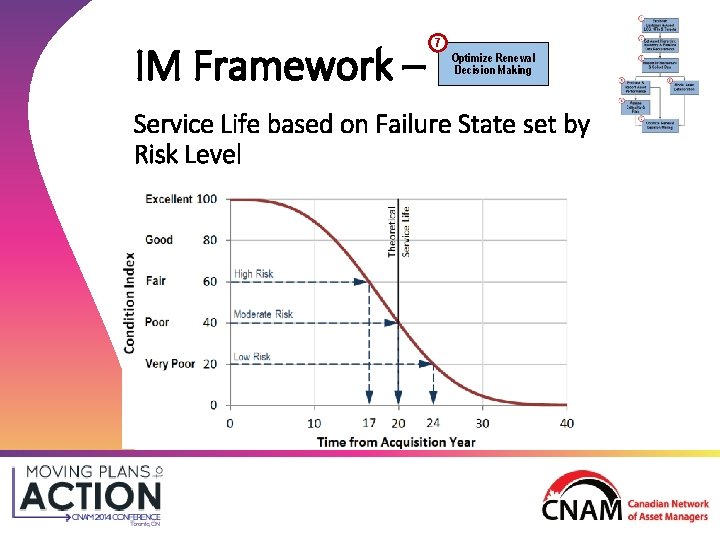
IM Framework – 7 Optimize Renewal Decision Making Service Life based on Failure State set by Risk Level
IM Framework – 7 Optimize Renewal Decision Making Service Life based on Failure State set by Risk Level T(CI) = TCdn/(-LN(Clatest/Cnew))^(1/Alpha)*-LN(CI/Cnew)^(1/Alpha)
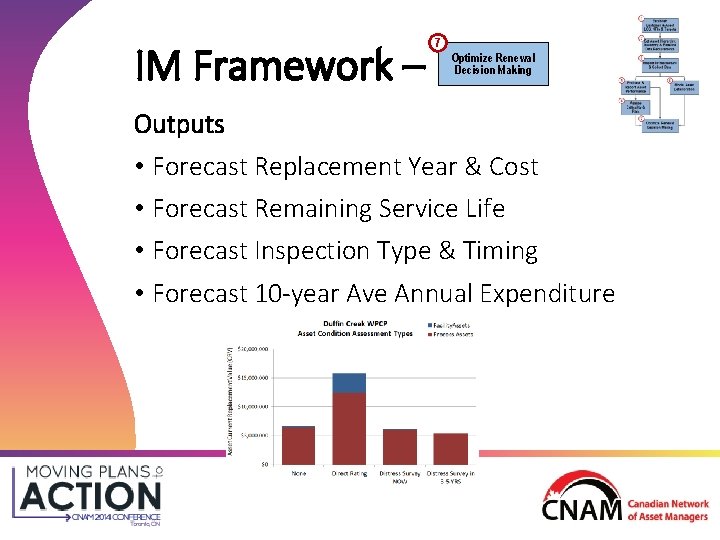
IM Framework – 7 Optimize Renewal Decision Making Outputs • Forecast Replacement Year & Cost • Forecast Remaining Service Life • Forecast Inspection Type & Timing • Forecast 10 -year Ave Annual Expenditure
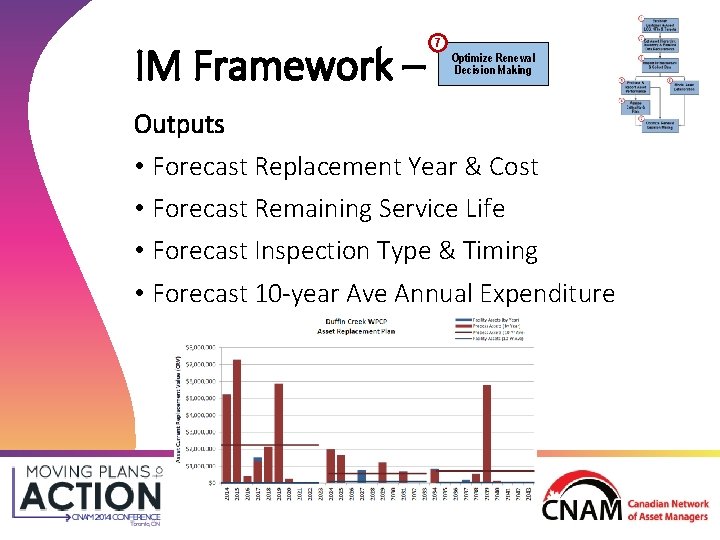
IM Framework – 7 Optimize Renewal Decision Making Outputs • Forecast Replacement Year & Cost • Forecast Remaining Service Life • Forecast Inspection Type & Timing • Forecast 10 -year Ave Annual Expenditure
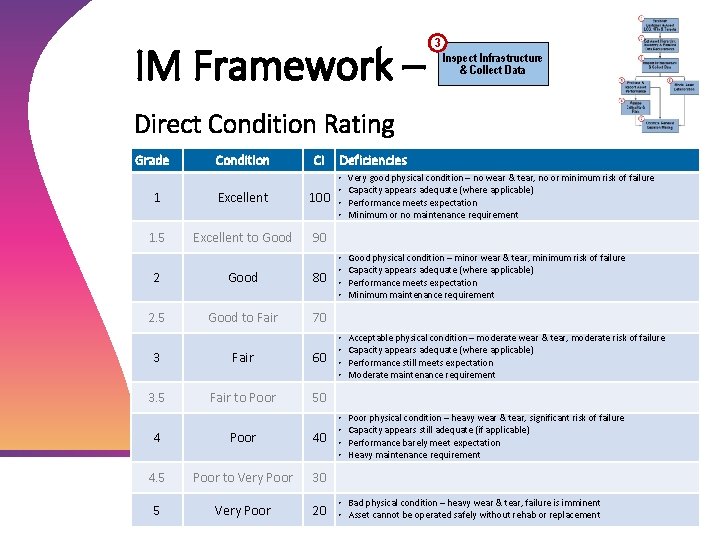
IM Framework – 3 Inspect Infrastructure & Collect Data Direct Condition Rating Grade Condition CI Deficiencies • 1 Excellent 100 • • • 1. 5 Excellent to Good 90 • 2 Good 80 • • • 2. 5 Good to Fair 60 • • • 3. 5 Fair to Poor 50 Poor 40 • • • 4. 5 Poor to Very Poor 30 5 Very Poor 20 Acceptable physical condition – moderate wear & tear, moderate risk of failure Capacity appears adequate (where applicable) Performance still meets expectation Moderate maintenance requirement • 4 Good physical condition – minor wear & tear, minimum risk of failure Capacity appears adequate (where applicable) Performance meets expectation Minimum maintenance requirement 70 • 3 Very good physical condition – no wear & tear, no or minimum risk of failure Capacity appears adequate (where applicable) Performance meets expectation Minimum or no maintenance requirement Poor physical condition – heavy wear & tear, significant risk of failure Capacity appears still adequate (if applicable) Performance barely meet expectation Heavy maintenance requirement • • Bad physical condition – heavy wear & tear, failure is imminent Asset cannot be operated safely without rehab or replacement
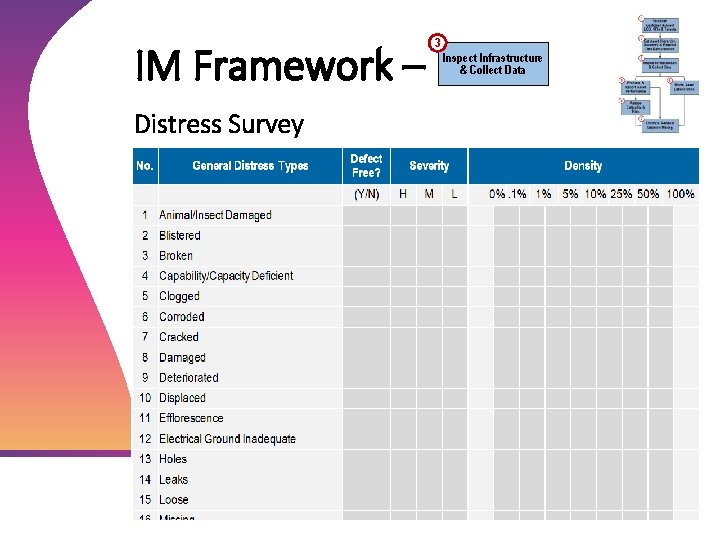
IM Framework – Distress Survey 3 Inspect Infrastructure & Collect Data
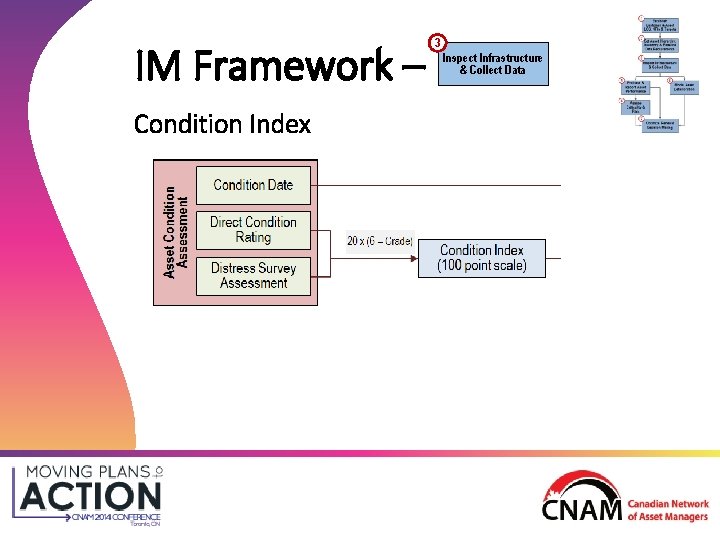
IM Framework – Condition Index 3 Inspect Infrastructure & Collect Data
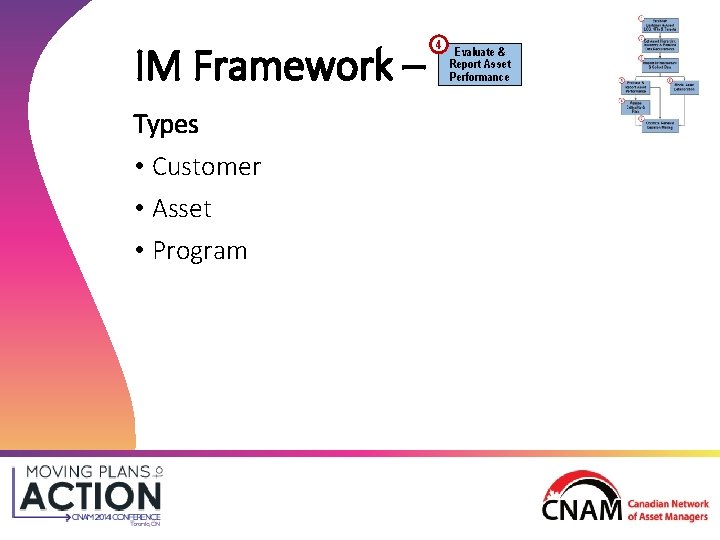
IM Framework – Types • Customer • Asset • Program 4 Evaluate & Report Asset Performance
IM Framework – 4 Evaluate & Report Asset Performance Customer • Cost of Wastewater Treatment & Disposal per Megalitre (at Duffin Creek WPCP) • 5 Year Running Average Capital Reinvestment / Replacement Value • • Capital Reinvestment / 1, 000 ML Treated
IM Framework – 4 Evaluate & Report Asset Performance Asset • Are we keeping our assets in the appropriate condition to adequately manage risk? • Catastrophic Co. F Assets: % of assets that exceed Cdn Grade 2 (worse than Good) • For Major Co. F Assets: % of assets that exceed Cdn Grade 3 (are worse than Fair) • For Moderate Co. F Assets: % of assets that exceed Cdn Grade 4 (are worse than Poor)
IM Framework – 4 Evaluate & Report Asset Performance Program • Consistency in Renewal Cost Modeling • Cost of Asset Renewal: Actual vs Budget • Effectiveness of Asset End of Life Prediction • Reactive Maintenance Ratio
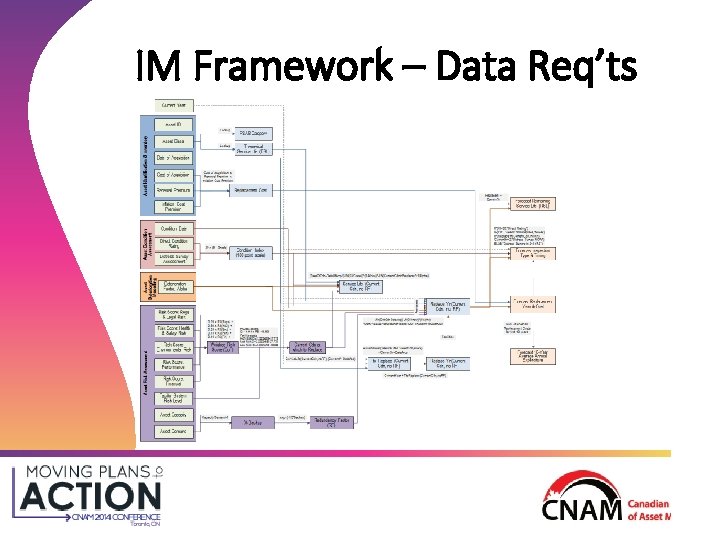
IM Framework – Data Req’ts
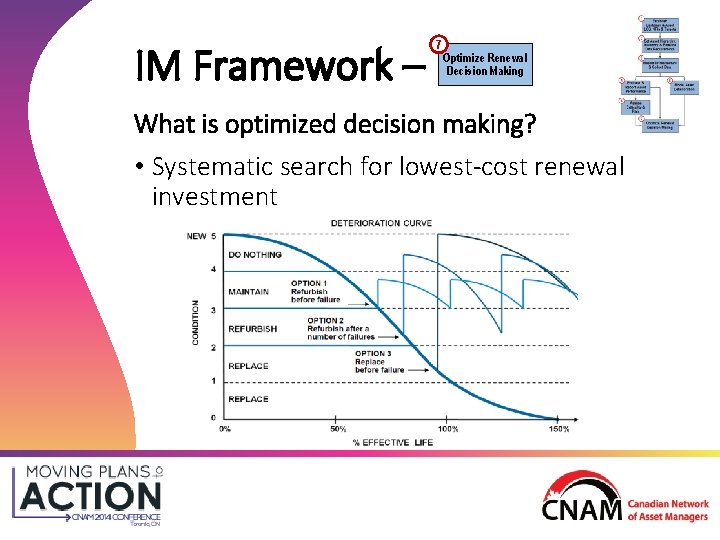
IM Framework – 7 Optimize Renewal Decision Making What is optimized decision making? • Systematic search for lowest-cost renewal investment
IM Framework – 7 Optimize Renewal Decision Making What is optimized decision making? • Based on interaction of • Cost trends (direct O&M, indirect) • Condition trends (decay/survivor curve) • Risk-consequence trends
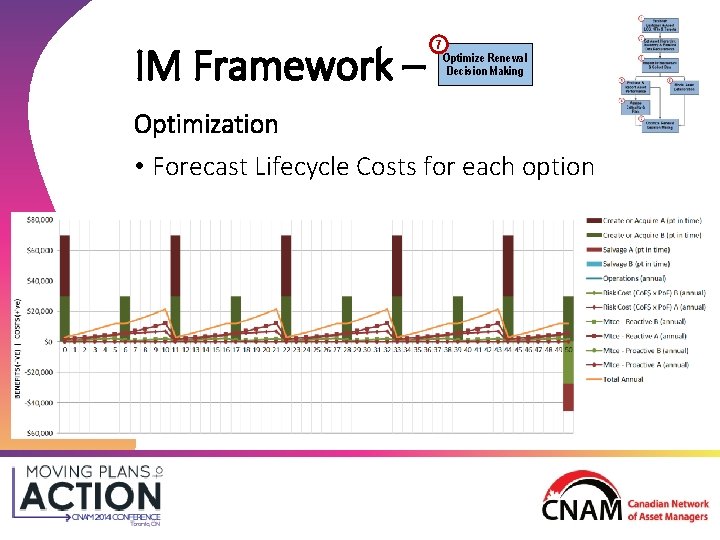
IM Framework – 7 Optimize Renewal Decision Making Optimization • Forecast Lifecycle Costs for each option
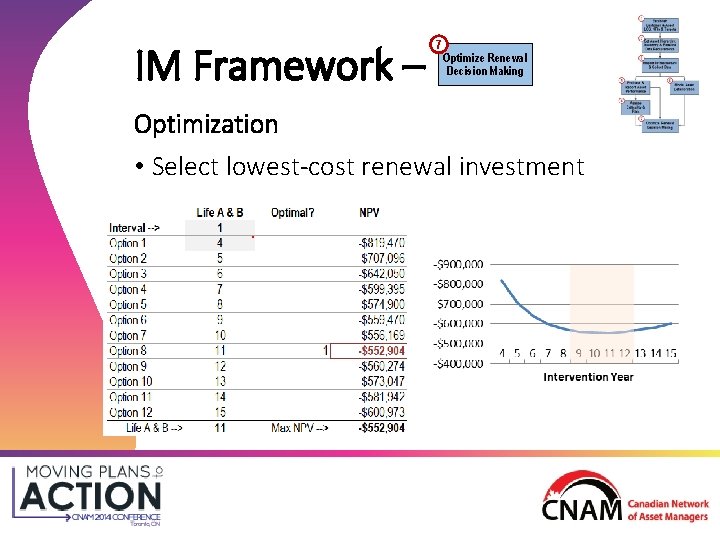
IM Framework – 7 Optimize Renewal Decision Making Optimization • Select lowest-cost renewal investment
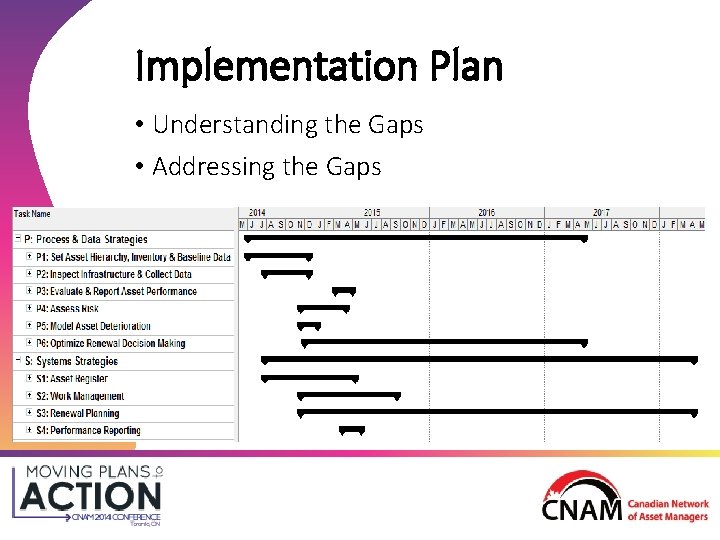
Implementation Plan • Understanding the Gaps • Addressing the Gaps
Questions? Contact Us: Faruque Mia Infrastructure Engineer, Region of York Faruque. mia@york. ca Aman Singh Lead Business Consulting, GHD Canada aman. singh@ghd. com