
Ductile shear zone beneath strikeslip faults Implications for

Ductile shear zone beneath strike-slip faults: Implications for thermomechanics of the San Andreas fault zone Wayne Thatcher, Philip C. England Yihe Huang Ge 277 02/10/2011
• Outline Introduction Physics What is ductile shear zone (DSZ)? 1 -D ductile shear zone 2 -D ductile shear zone Physics Application End Let’s go to San Andreas Fault Zone. Conclusion and Discussion
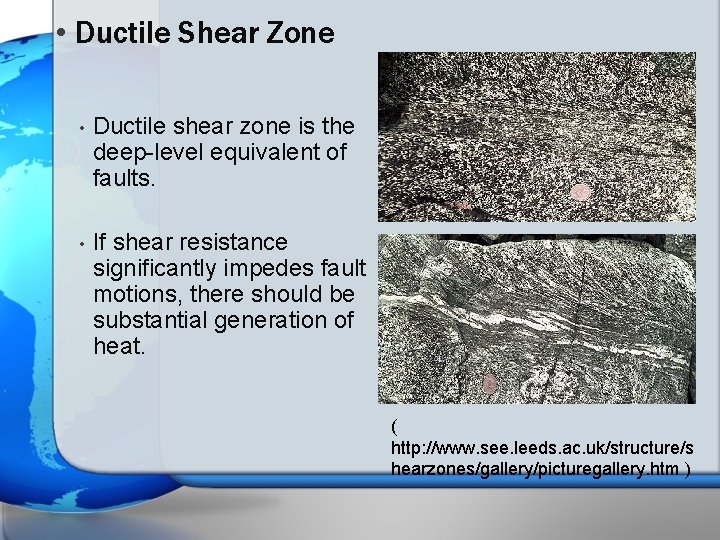
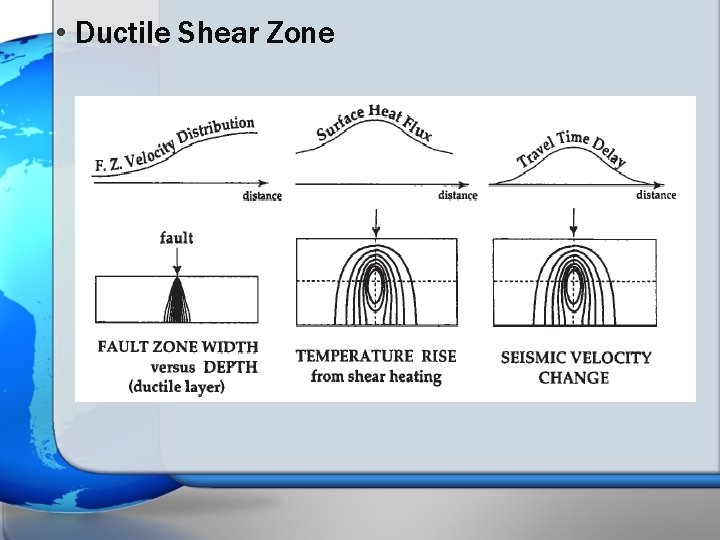
• Ductile Shear Zone • Ductile shear zone is the deep-level equivalent of faults. • If shear resistance significantly impedes fault motions, there should be substantial generation of heat. ( http: //www. see. leeds. ac. uk/structure/s hearzones/gallery/picturegallery. htm )
• Ductile Shear Zone
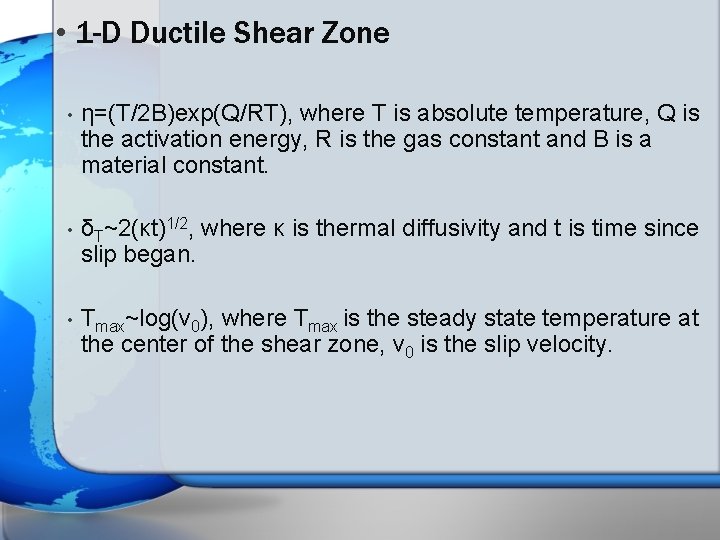
• 1 -D Ductile Shear Zone • η=(T/2 B)exp(Q/RT), where T is absolute temperature, Q is the activation energy, R is the gas constant and B is a material constant. • δT~2(κt)1/2, where κ is thermal diffusivity and t is time since slip began. • Tmax~log(v 0), where Tmax is the steady state temperature at the center of the shear zone, v 0 is the slip velocity.
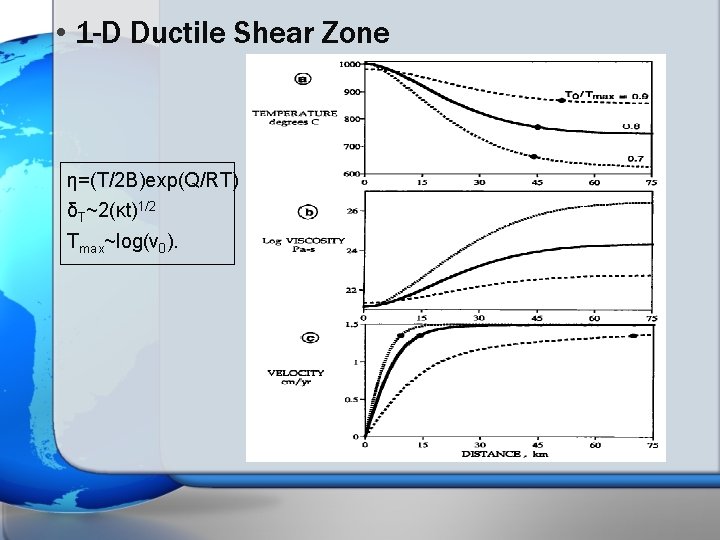
• 1 -D Ductile Shear Zone η=(T/2 B)exp(Q/RT) δT~2(κt)1/2 Tmax~log(v 0).
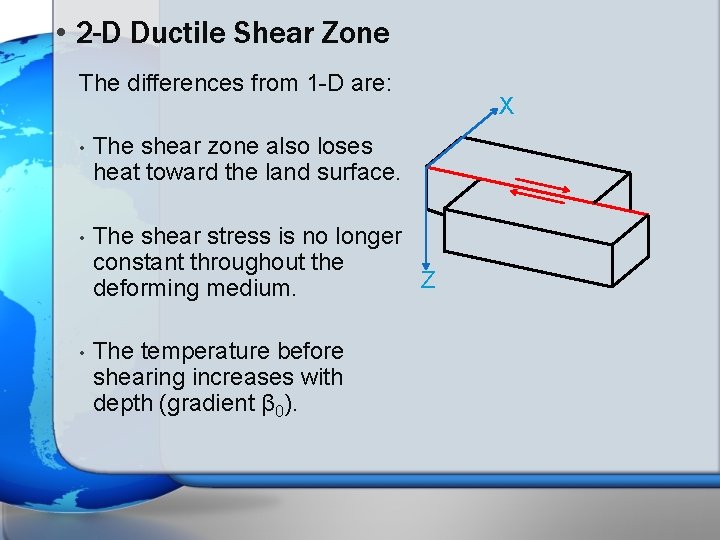
• 2 -D Ductile Shear Zone The differences from 1 -D are: • The shear zone also loses heat toward the land surface. • The shear stress is no longer constant throughout the Z deforming medium. • The temperature before shearing increases with depth (gradient β 0). X
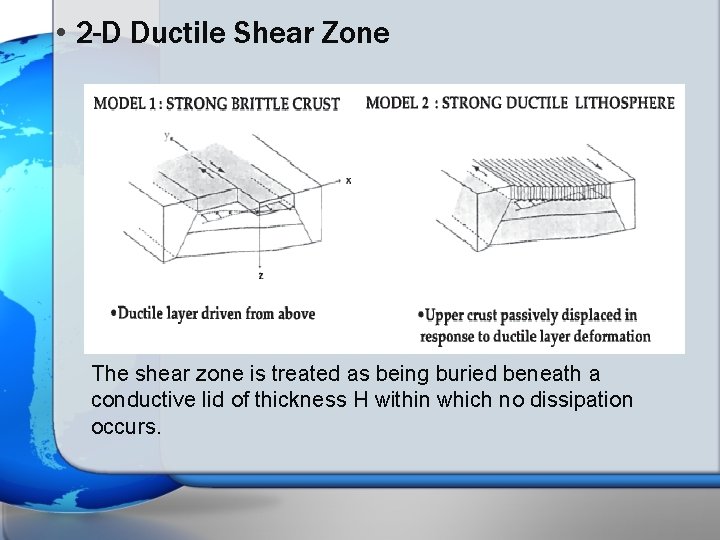
• 2 -D Ductile Shear Zone The shear zone is treated as being buried beneath a conductive lid of thickness H within which no dissipation occurs.
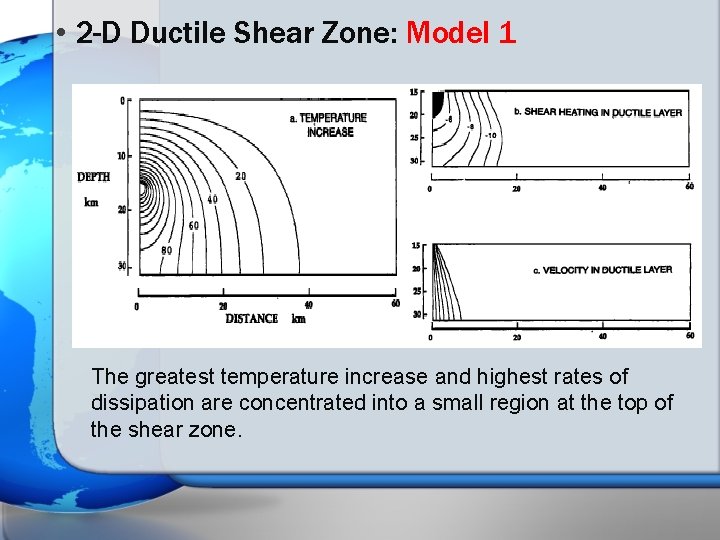
• 2 -D Ductile Shear Zone: Model 1 The greatest temperature increase and highest rates of dissipation are concentrated into a small region at the top of the shear zone.
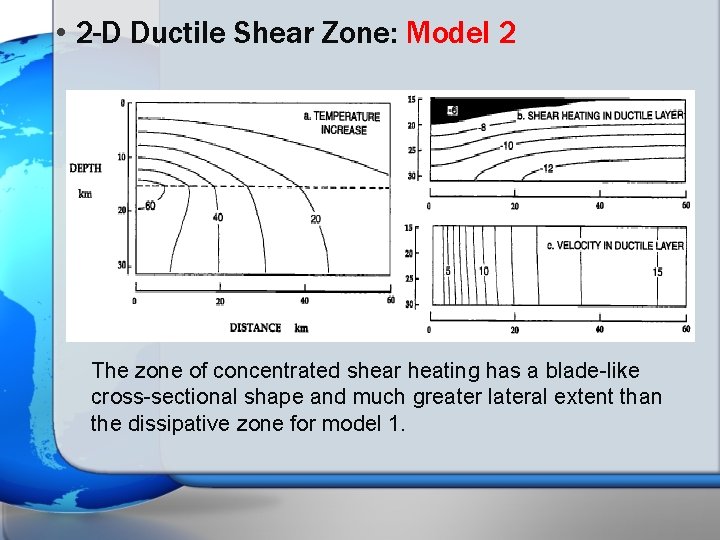
• 2 -D Ductile Shear Zone: Model 2 The zone of concentrated shear heating has a blade-like cross-sectional shape and much greater lateral extent than the dissipative zone for model 1.
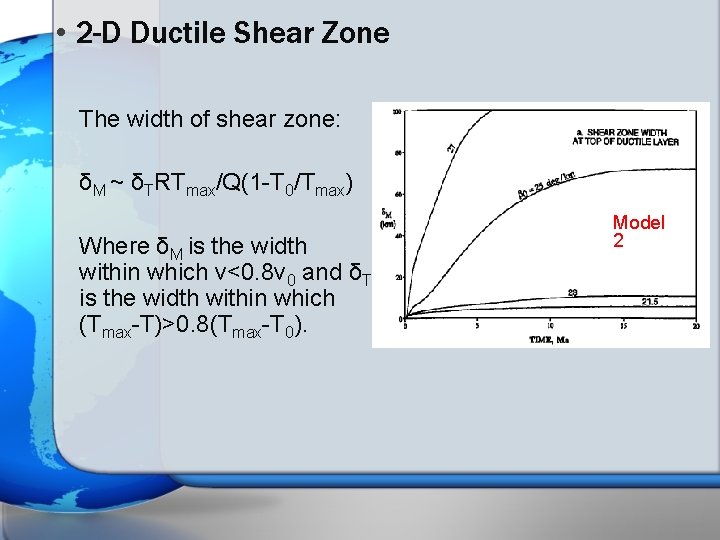
• 2 -D Ductile Shear Zone The width of shear zone: Model 1 δM ~ δTRTmax/Q(1 -T 0/Tmax) Where δM is the width within which v<0. 8 v 0 and δT is the width within which (Tmax-T)>0. 8(Tmax-T 0). Model 2
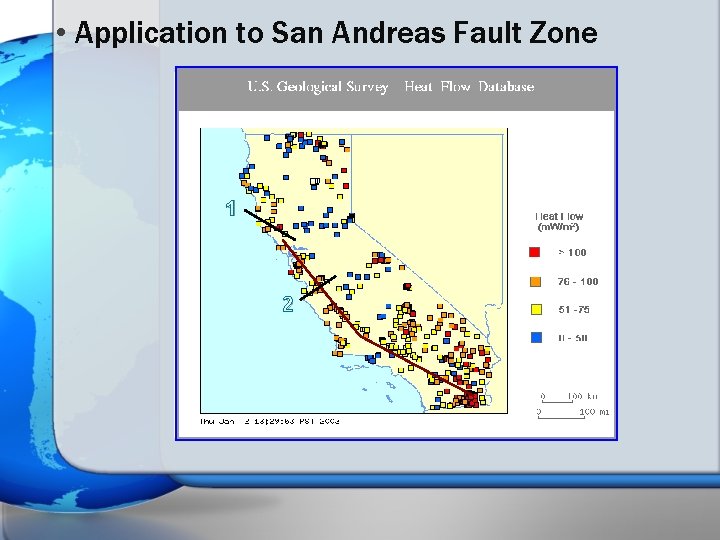
• Application to San Andreas Fault Zone 1 2
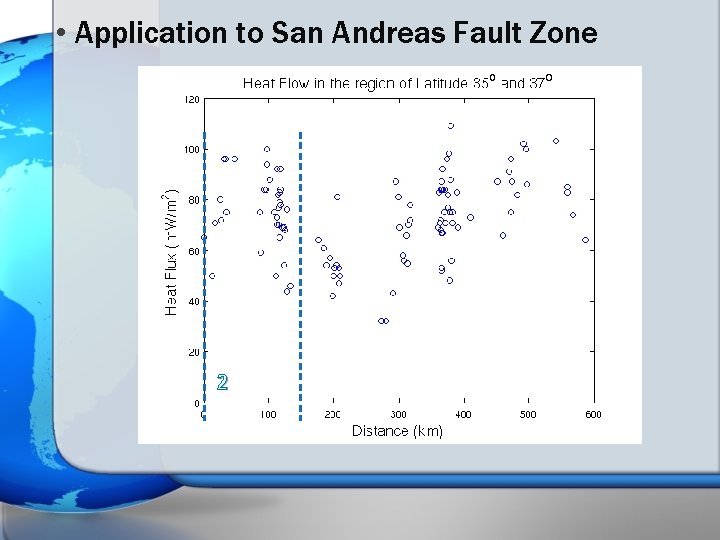
• Application to San Andreas Fault Zone 2
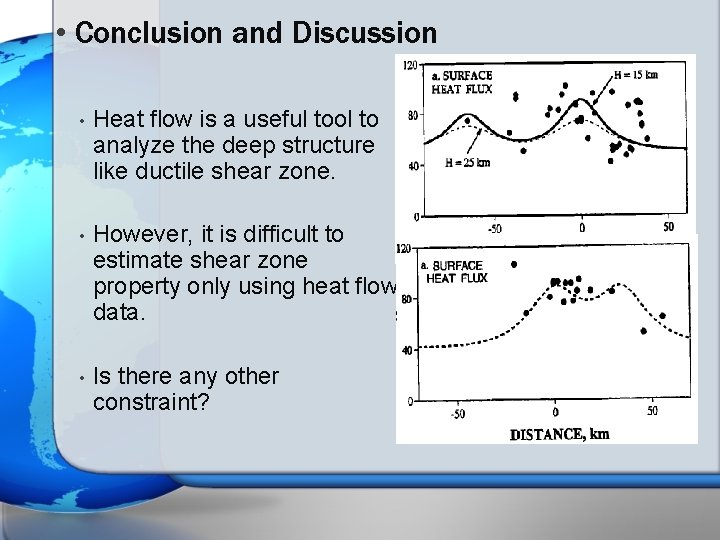
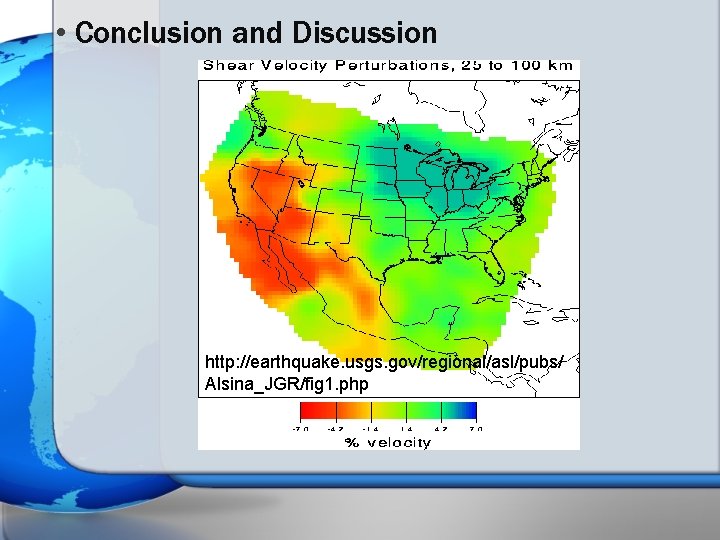
• Conclusion and Discussion • Heat flow is a useful tool to analyze the deep structure like ductile shear zone. • However, it is difficult to estimate shear zone property only using heat flow data. • Is there any other constraint?
• Conclusion and Discussion http: //earthquake. usgs. gov/regional/asl/pubs/ Alsina_JGR/fig 1. php
- Slides: 15