
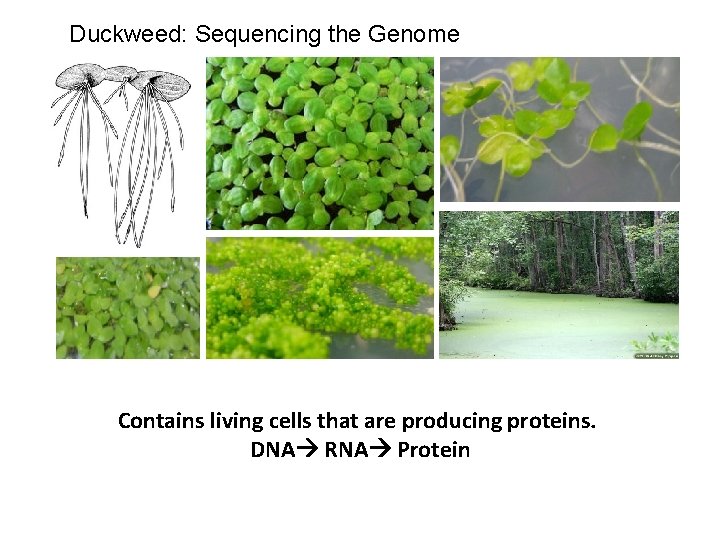
Duckweed Sequencing the Genome Contains living cells that
- Slides: 20
Duckweed: Sequencing the Genome Contains living cells that are producing proteins. DNA RNA Protein
Through "Molecular Cloning“ or "Genetic Engineering“ or "Recombinant DNA Technology“ we can sequence the DNA of Duckweed DNA RNA Protein
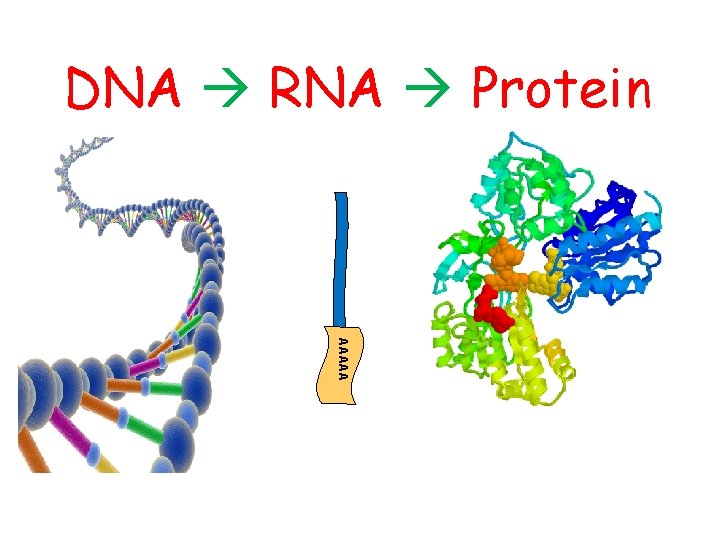
DNA RNA Protein AAAAA
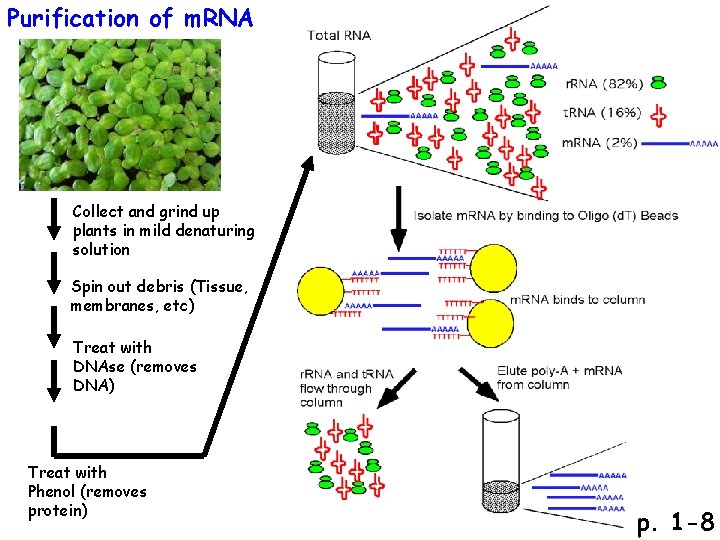
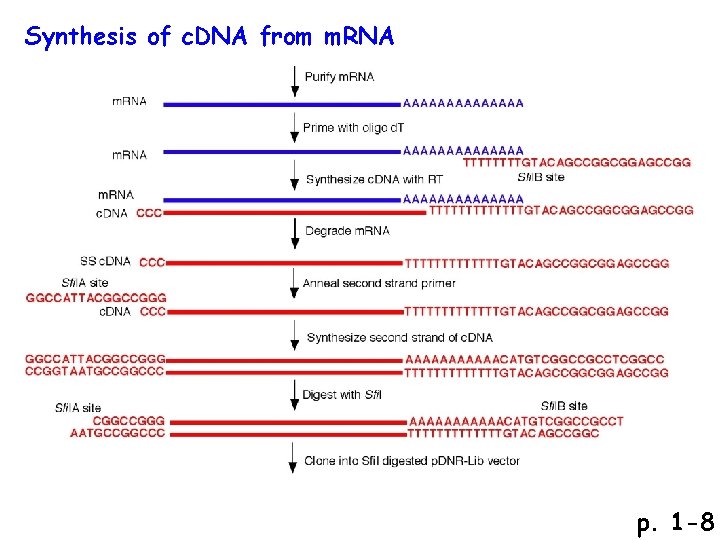
Purification of m. RNA Collect and grind up plants in mild denaturing solution Spin out debris (Tissue, membranes, etc) Treat with DNAse (removes DNA) Treat with Phenol (removes protein) p. 1 -8
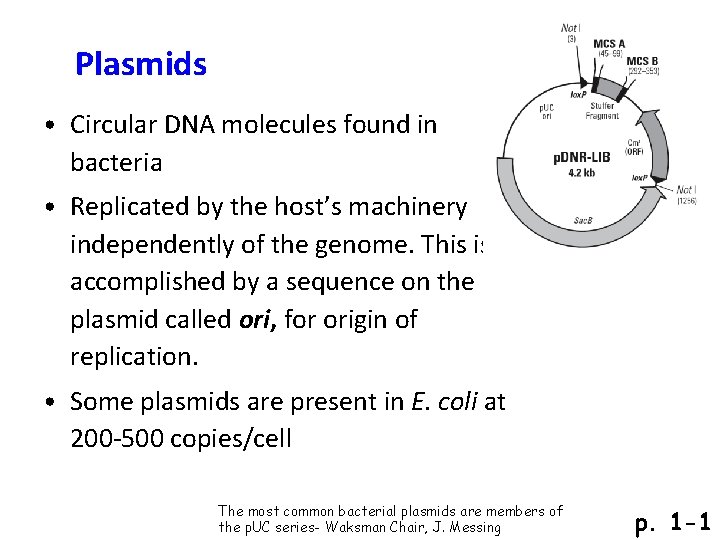
Plasmids • Circular DNA molecules found in bacteria • Replicated by the host’s machinery independently of the genome. This is accomplished by a sequence on the plasmid called ori, for origin of replication. • Some plasmids are present in E. coli at 200 -500 copies/cell The most common bacterial plasmids are members of the p. UC series- Waksman Chair, J. Messing p. 1 -1
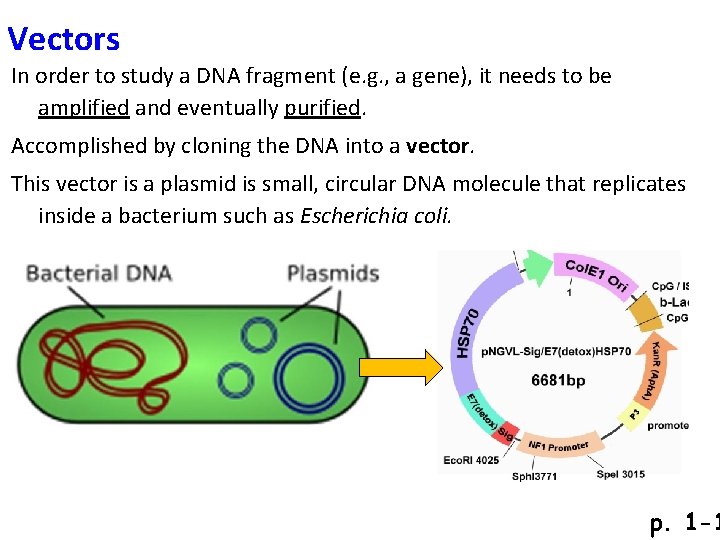
Vectors In order to study a DNA fragment (e. g. , a gene), it needs to be amplified and eventually purified. Accomplished by cloning the DNA into a vector. This vector is a plasmid is small, circular DNA molecule that replicates inside a bacterium such as Escherichia coli. p. 1 -1
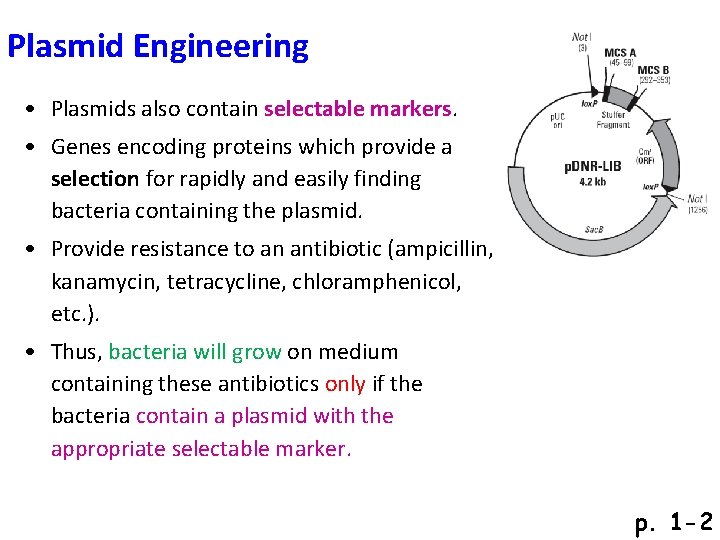
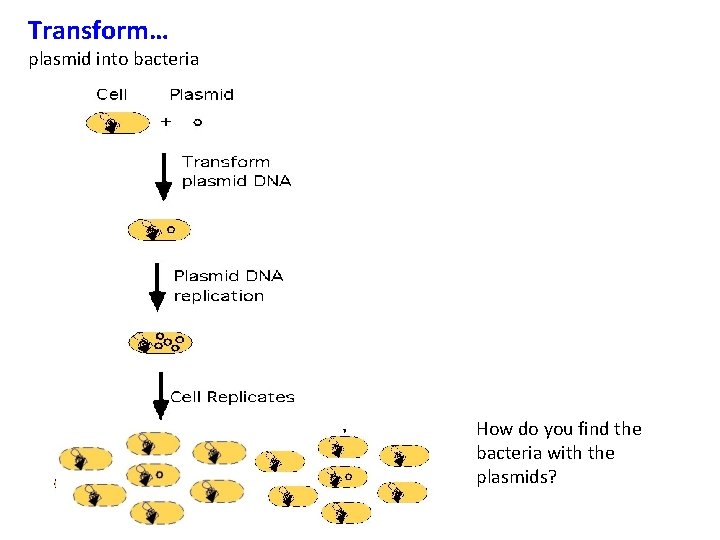
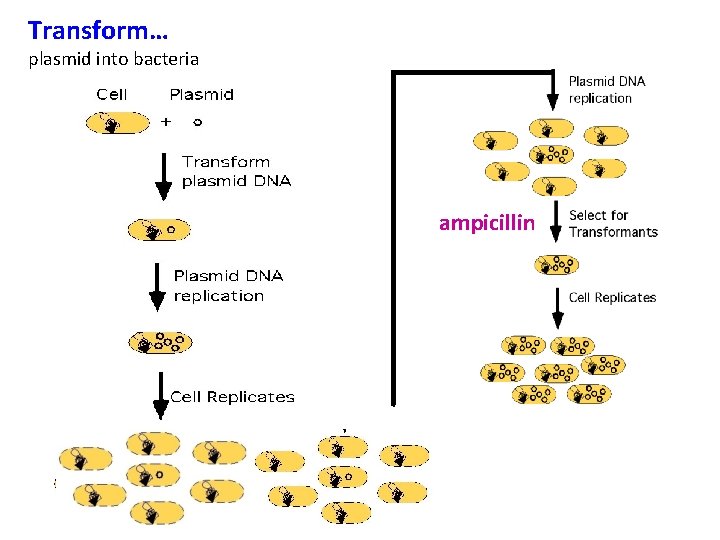
Plasmid Engineering • Plasmids also contain selectable markers. • Genes encoding proteins which provide a selection for rapidly and easily finding bacteria containing the plasmid. • Provide resistance to an antibiotic (ampicillin, kanamycin, tetracycline, chloramphenicol, etc. ). • Thus, bacteria will grow on medium containing these antibiotics only if the bacteria contain a plasmid with the appropriate selectable marker. p. 1 -2
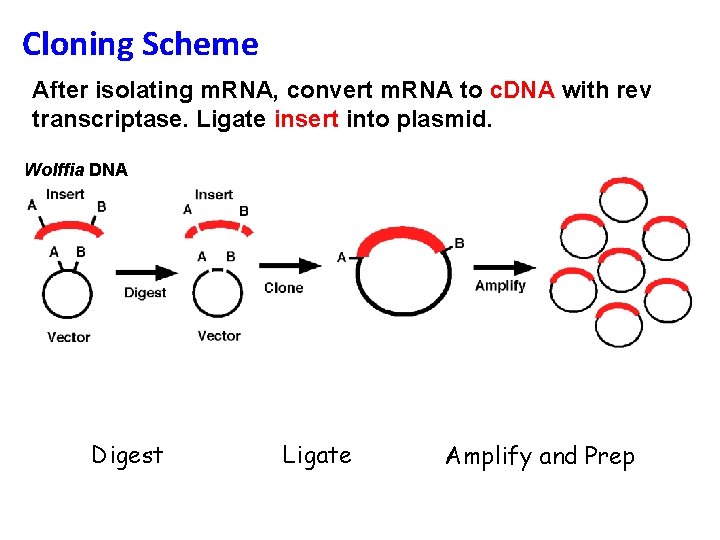
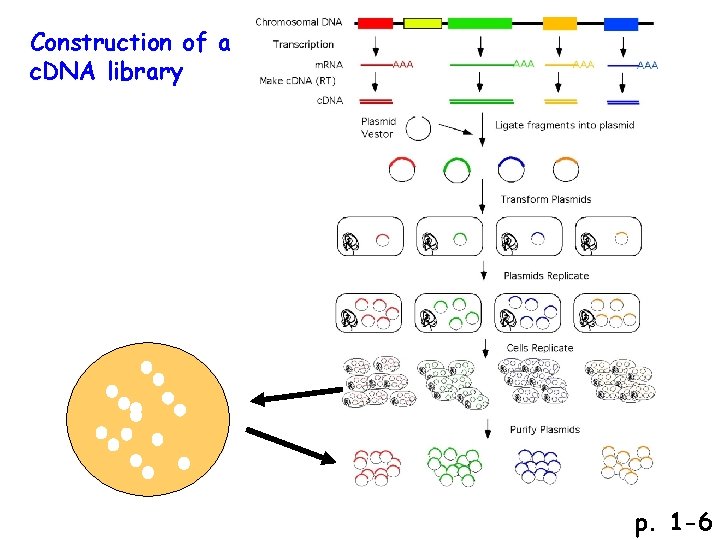
Cloning Scheme After isolating m. RNA, convert m. RNA to c. DNA with rev transcriptase. Ligate insert into plasmid. Wolffia DNA Digest Ligate Amplify and Prep
Transform… plasmid into bacteria How do you find the bacteria with the plasmids?
Transform… plasmid into bacteria ampicillin
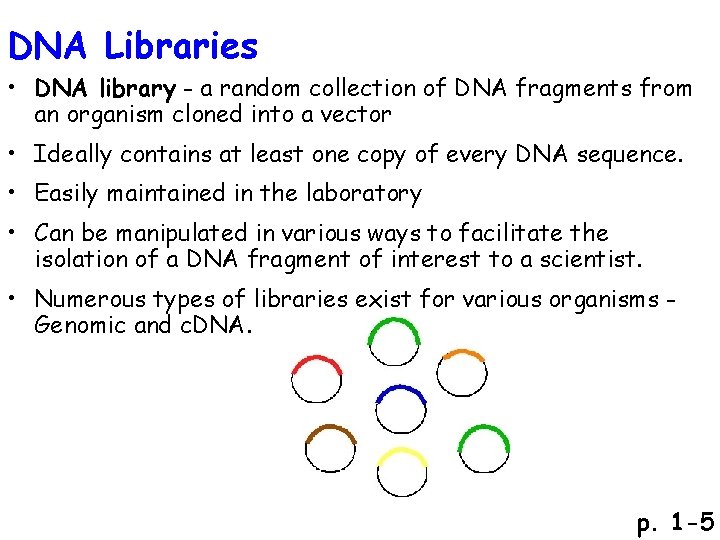
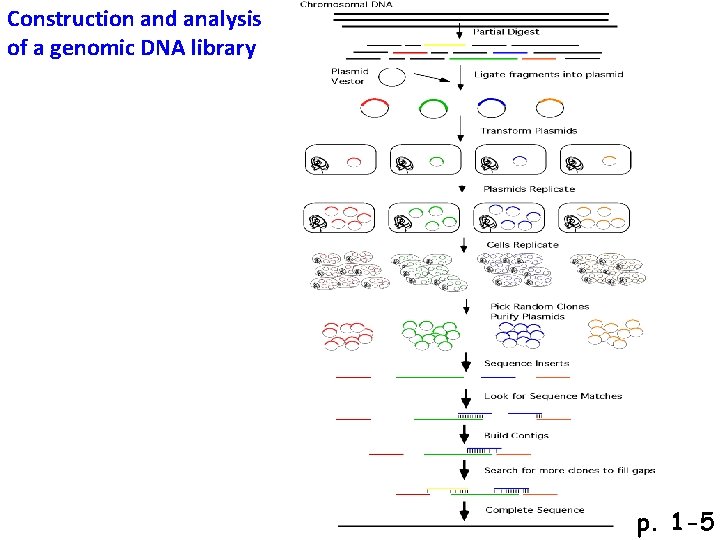
DNA Libraries • DNA library - a random collection of DNA fragments from an organism cloned into a vector • Ideally contains at least one copy of every DNA sequence. • Easily maintained in the laboratory • Can be manipulated in various ways to facilitate the isolation of a DNA fragment of interest to a scientist. • Numerous types of libraries exist for various organisms Genomic and c. DNA. p. 1 -5
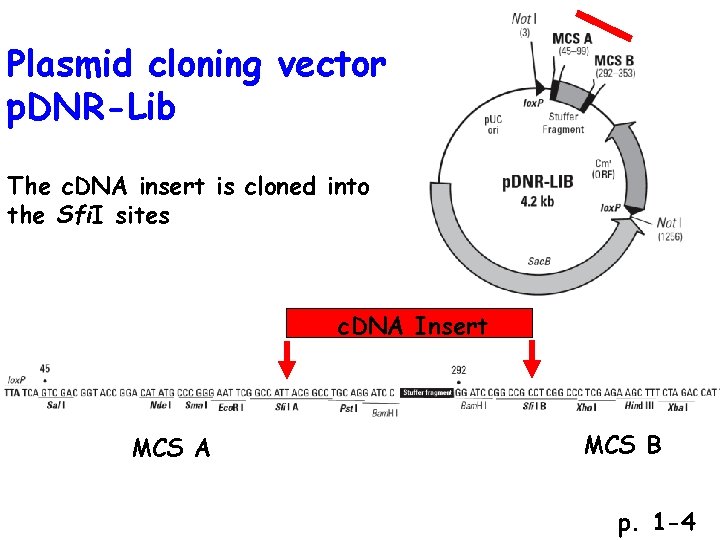
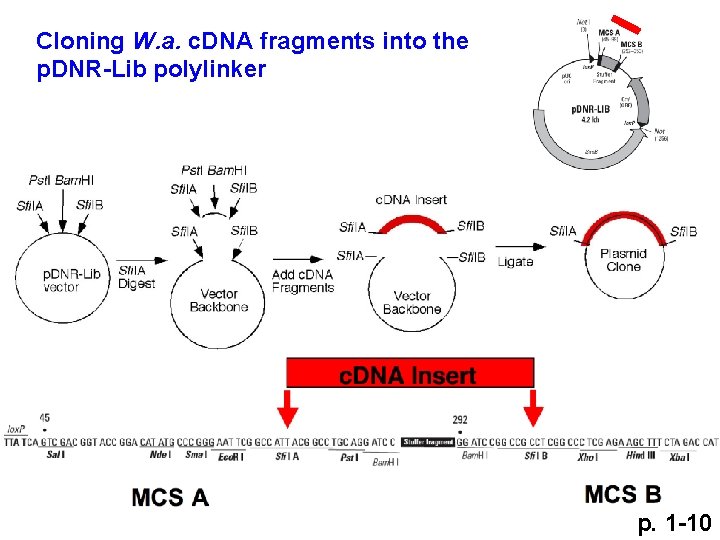
Plasmid cloning vector p. DNR-Lib The c. DNA insert is cloned into the Sfi. I sites c. DNA Insert MCS A MCS B p. 1 -4
Construction of a c. DNA library p. 1 -6
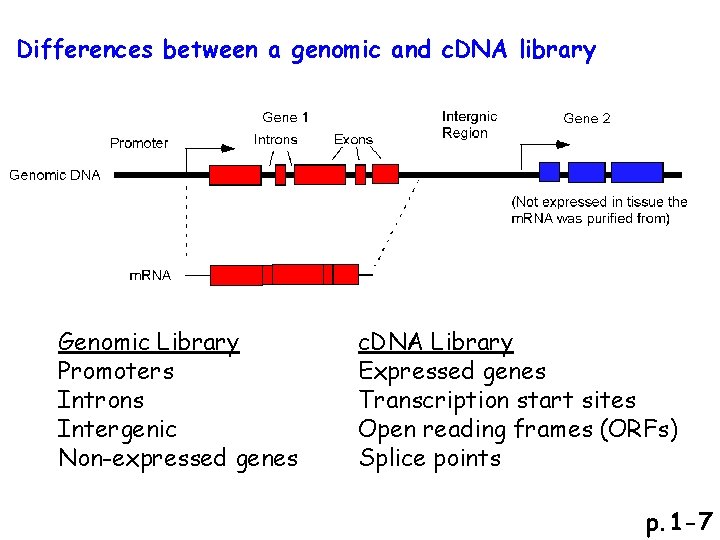
Differences between a genomic and c. DNA library Genomic Library Promoters Introns Intergenic Non-expressed genes c. DNA Library Expressed genes Transcription start sites Open reading frames (ORFs) Splice points p. 1 -7
Construction and analysis of a genomic DNA library p. 1 -5
Synthesis of c. DNA from m. RNA p. 1 -8
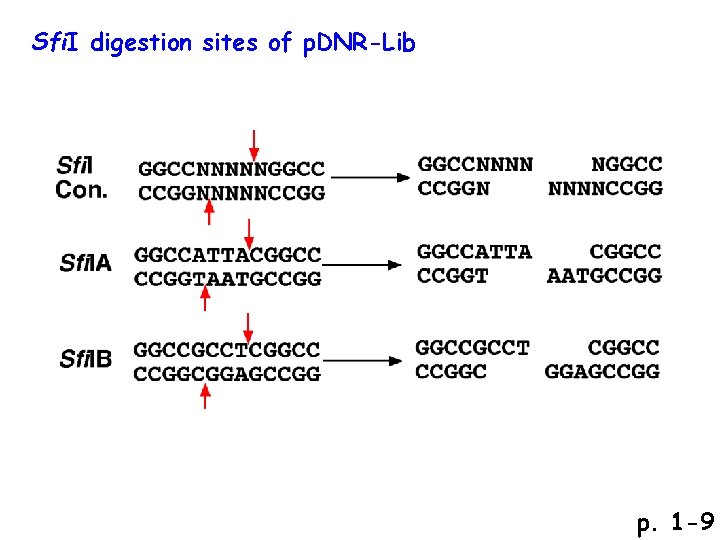
Sfi. I digestion sites of p. DNR-Lib p. 1 -9
Cloning W. a. c. DNA fragments into the p. DNR-Lib polylinker p. 1 -10
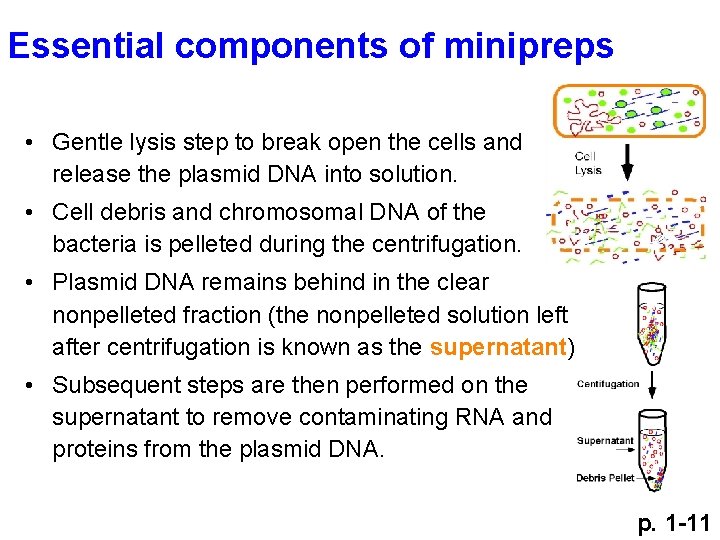
Essential components of minipreps • Gentle lysis step to break open the cells and release the plasmid DNA into solution. • Cell debris and chromosomal DNA of the bacteria is pelleted during the centrifugation. • Plasmid DNA remains behind in the clear nonpelleted fraction (the nonpelleted solution left after centrifugation is known as the supernatant). • Subsequent steps are then performed on the supernatant to remove contaminating RNA and proteins from the plasmid DNA. p. 1 -11
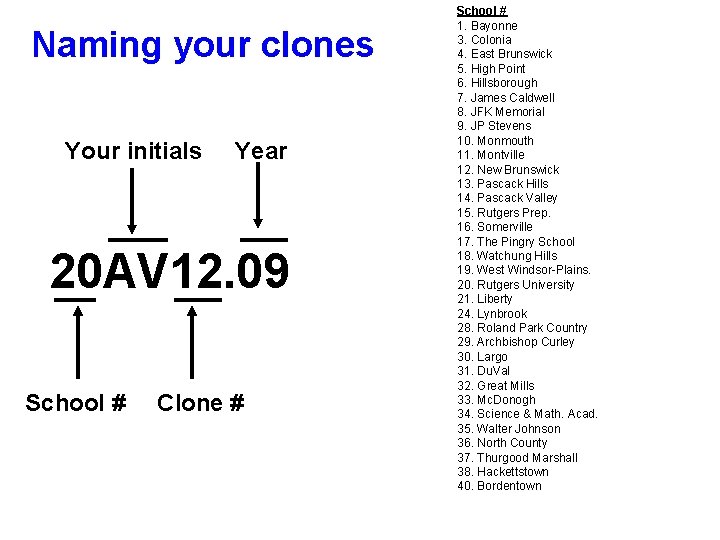
Naming your clones Your initials Year 20 AV 12. 09 School # Clone # School # 1. Bayonne 3. Colonia 4. East Brunswick 5. High Point 6. Hillsborough 7. James Caldwell 8. JFK Memorial 9. JP Stevens 10. Monmouth 11. Montville 12. New Brunswick 13. Pascack Hills 14. Pascack Valley 15. Rutgers Prep. 16. Somerville 17. The Pingry School 18. Watchung Hills 19. West Windsor-Plains. 20. Rutgers University 21. Liberty 24. Lynbrook 28. Roland Park Country 29. Archbishop Curley 30. Largo 31. Du. Val 32. Great Mills 33. Mc. Donogh 34. Science & Math. Acad. 35. Walter Johnson 36. North County 37. Thurgood Marshall 38. Hackettstown 40. Bordentown