
DUAL PROCESS THEORY JGIM EXERCISES IN CLINICAL REASONING

- Slides: 24
DUAL PROCESS THEORY JGIM EXERCISES IN CLINICAL REASONING Teacher’s Guide: Gabrielle Berger MD, Juan Lessing MD A 60 -Year-Old Woman with Chorea and Weight Loss J Gen Intern Med. 2012 Jun; 27(6): 747 -51. Amanda Vick, MD, Ryan R. Kraemer, MD, Jason L. Morris, MD, Lisa L. Willett, MD, Robert M. Centor, MD, Carlos A. Estrada, MD, MS, and J. Martin Rodriguez, MD. University of Alabama and Veterans Affairs Medical Center, Birmingham
Objectives 1. Define Dual Process Theory. 2. Describe the application of System 1 and System 2 thinking to clinical reasoning.
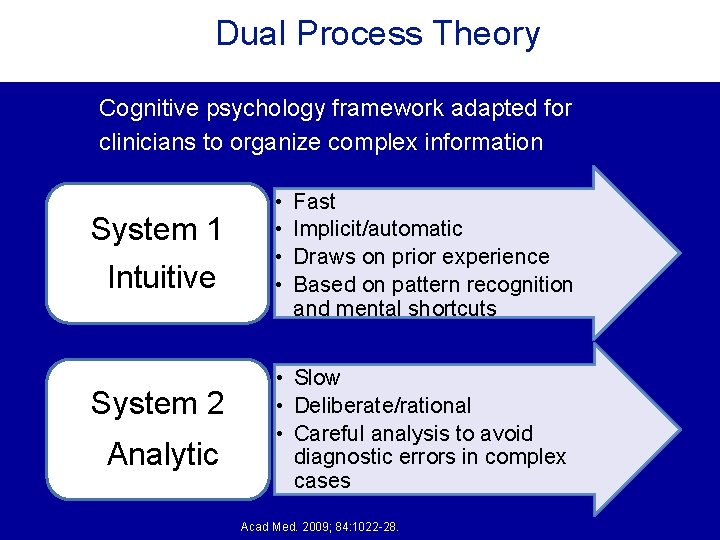
Dual Process Theory Cognitive psychology framework adapted for clinicians to organize complex information System 1 Intuitive System 2 Analytic • • Fast Implicit/automatic Draws on prior experience Based on pattern recognition and mental shortcuts • Slow • Deliberate/rational • Careful analysis to avoid diagnostic errors in complex cases Acad Med. 2009; 84: 1022 -28.
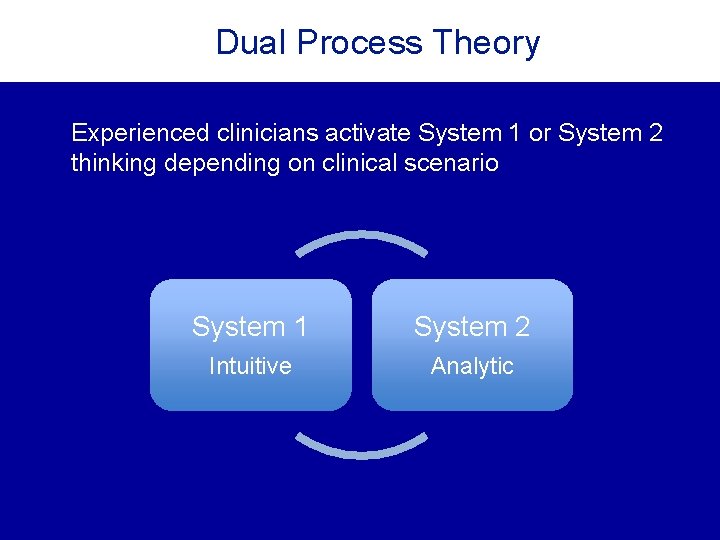
Dual Process Theory Experienced clinicians activate System 1 or System 2 thinking depending on clinical scenario System 1 System 2 Intuitive Analytic
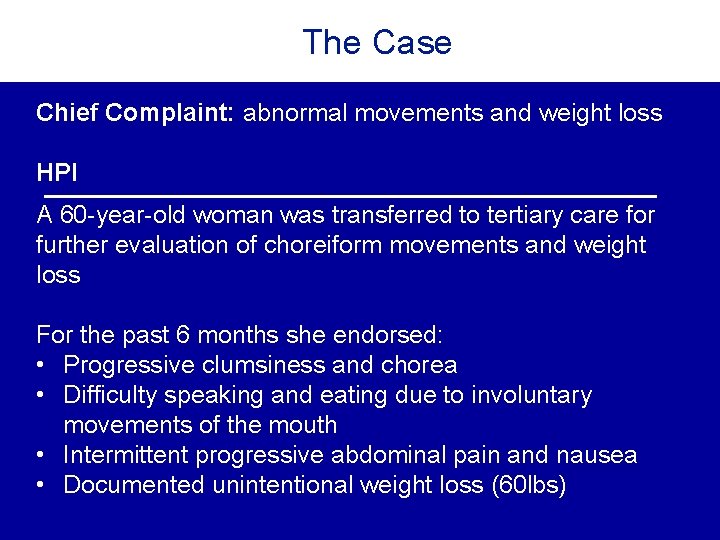
The Case Chief Complaint: abnormal movements and weight loss HPI A 60 -year-old woman was transferred to tertiary care for further evaluation of choreiform movements and weight loss For the past 6 months she endorsed: • Progressive clumsiness and chorea • Difficulty speaking and eating due to involuntary movements of the mouth • Intermittent progressive abdominal pain and nausea • Documented unintentional weight loss (60 lbs)
Discussion What do you know/remember about chorea? What diagnoses come to mind (System 1)? What organizational approach would help you broaden your differential diagnosis (System 2)?
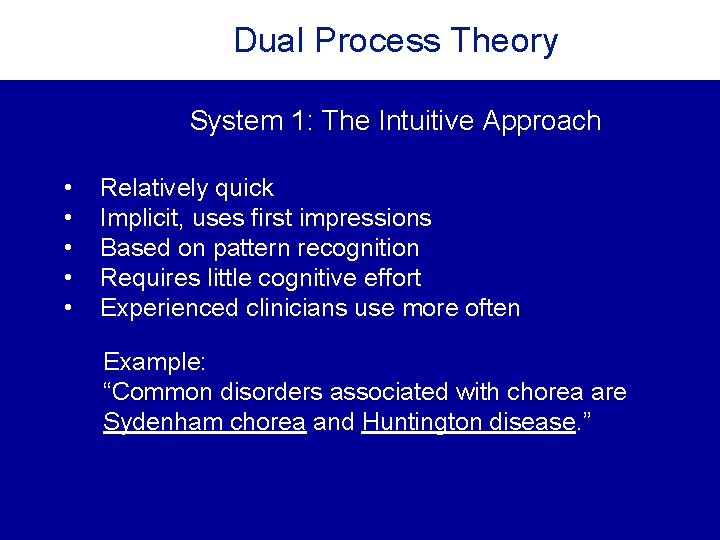
Dual Process Theory System 1: The Intuitive Approach • • • Relatively quick Implicit, uses first impressions Based on pattern recognition Requires little cognitive effort Experienced clinicians use more often Example: “Common disorders associated with chorea are Sydenham chorea and Huntington disease. ”
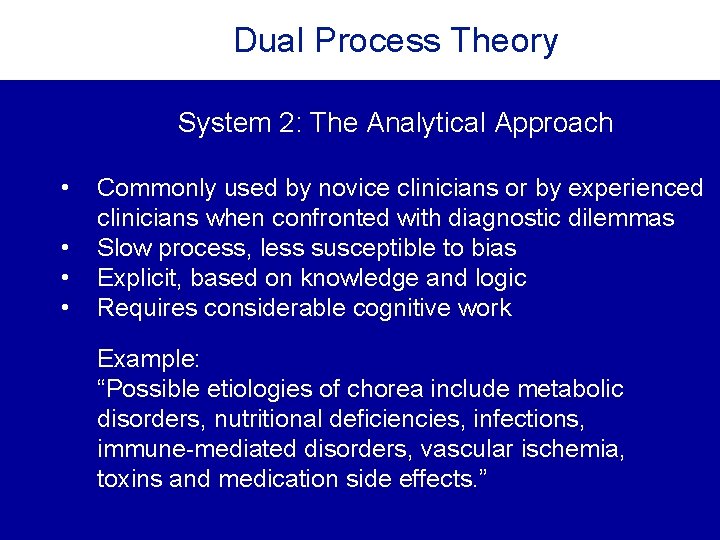
Dual Process Theory System 2: The Analytical Approach • • Commonly used by novice clinicians or by experienced clinicians when confronted with diagnostic dilemmas Slow process, less susceptible to bias Explicit, based on knowledge and logic Requires considerable cognitive work Example: “Possible etiologies of chorea include metabolic disorders, nutritional deficiencies, infections, immune-mediated disorders, vascular ischemia, toxins and medication side effects. ”
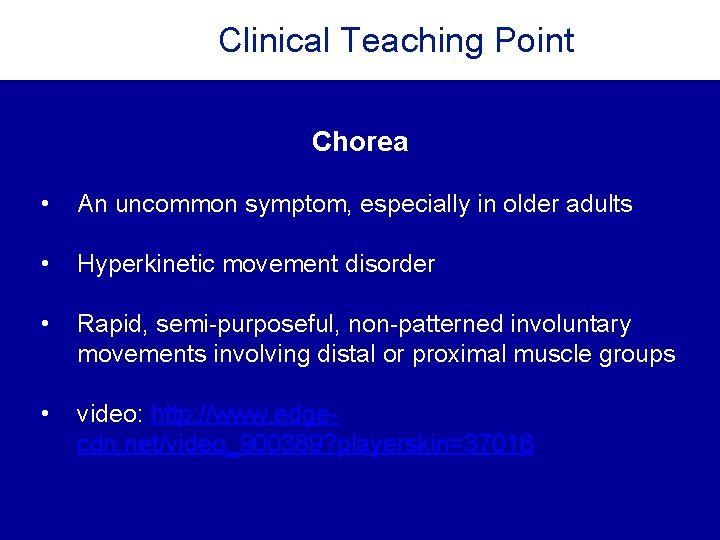
Clinical Teaching Point Chorea • An uncommon symptom, especially in older adults • Hyperkinetic movement disorder • Rapid, semi-purposeful, non-patterned involuntary movements involving distal or proximal muscle groups • video: http: //www. edgecdn. net/video_900389? playerskin=37016
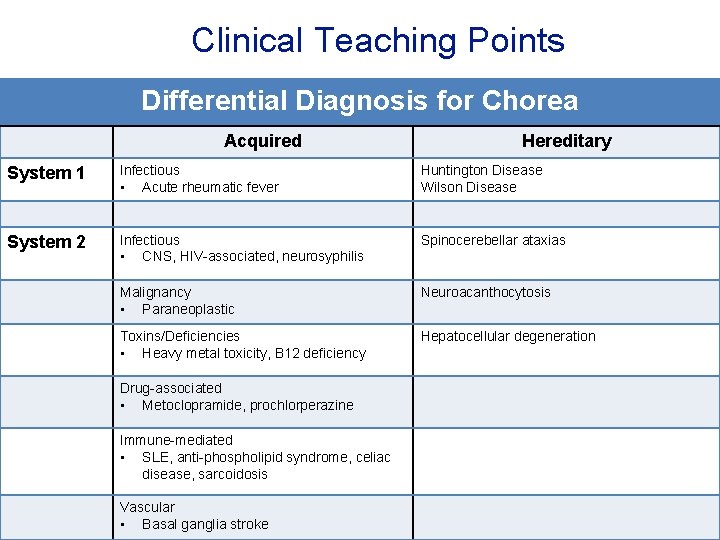
Clinical Teaching Points Differential Diagnosis for Chorea Acquired Hereditary System 1 Infectious • Acute rheumatic fever Huntington Disease Wilson Disease System 2 Infectious • CNS, HIV-associated, neurosyphilis Spinocerebellar ataxias Malignancy • Paraneoplastic Neuroacanthocytosis Toxins/Deficiencies • Heavy metal toxicity, B 12 deficiency Hepatocellular degeneration Drug-associated • Metoclopramide, prochlorperazine Immune-mediated • SLE, anti-phospholipid syndrome, celiac disease, sarcoidosis Vascular • Basal ganglia stroke
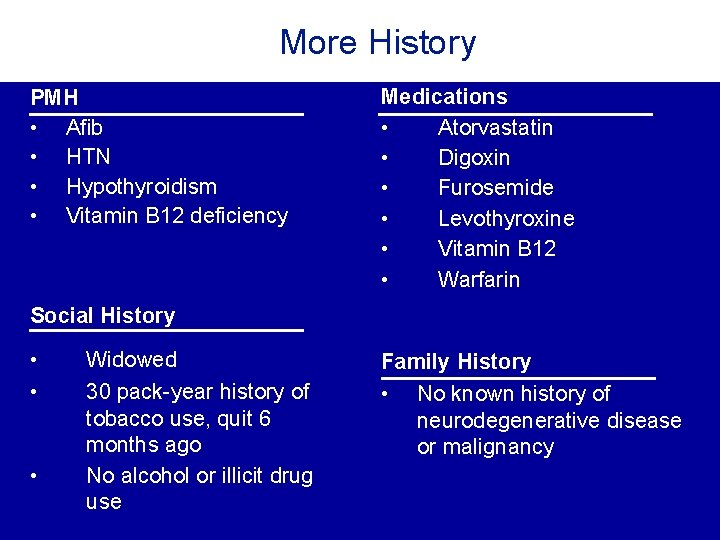
More History PMH • Afib • HTN • Hypothyroidism • Vitamin B 12 deficiency Medications • Atorvastatin • Digoxin • Furosemide • Levothyroxine • Vitamin B 12 • Warfarin Social History • • • Widowed 30 pack-year history of tobacco use, quit 6 months ago No alcohol or illicit drug use Family History • No known history of neurodegenerative disease or malignancy
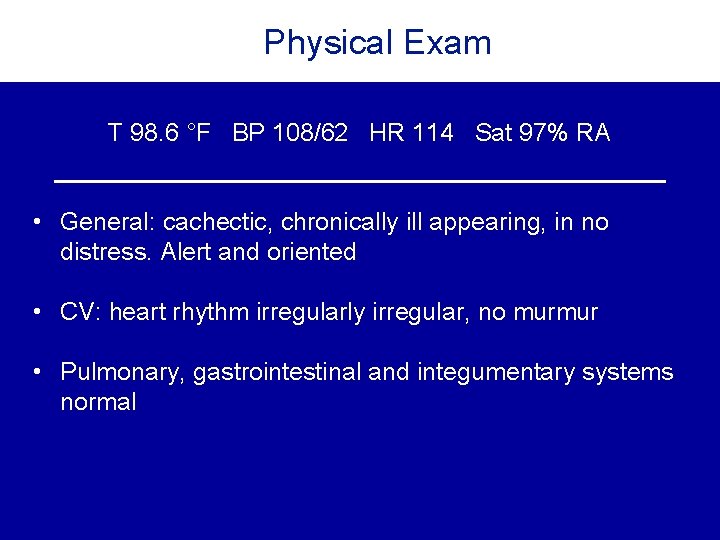
Physical Exam T 98. 6 °F BP 108/62 HR 114 Sat 97% RA • General: cachectic, chronically ill appearing, in no distress. Alert and oriented • CV: heart rhythm irregularly irregular, no murmur • Pulmonary, gastrointestinal and integumentary systems normal
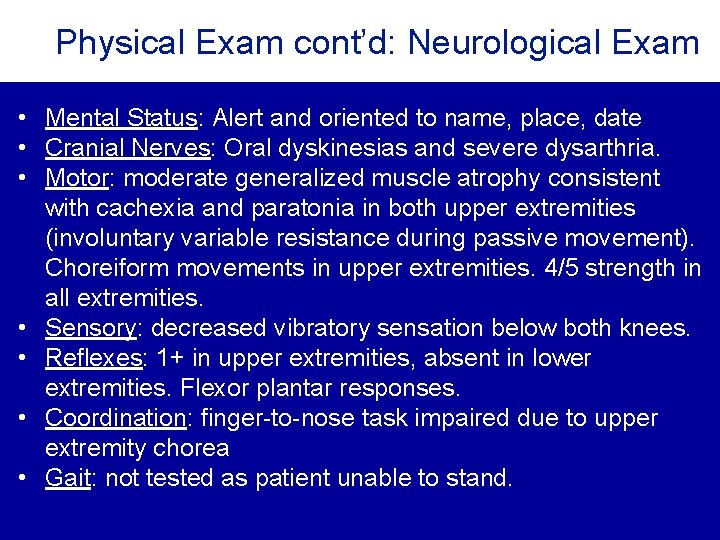
Physical Exam cont’d: Neurological Exam • Mental Status: Alert and oriented to name, place, date • Cranial Nerves: Oral dyskinesias and severe dysarthria. • Motor: moderate generalized muscle atrophy consistent with cachexia and paratonia in both upper extremities (involuntary variable resistance during passive movement). Choreiform movements in upper extremities. 4/5 strength in all extremities. • Sensory: decreased vibratory sensation below both knees. • Reflexes: 1+ in upper extremities, absent in lower extremities. Flexor plantar responses. • Coordination: finger-to-nose task impaired due to upper extremity chorea • Gait: not tested as patient unable to stand.
Discussion What studies do you want and why?
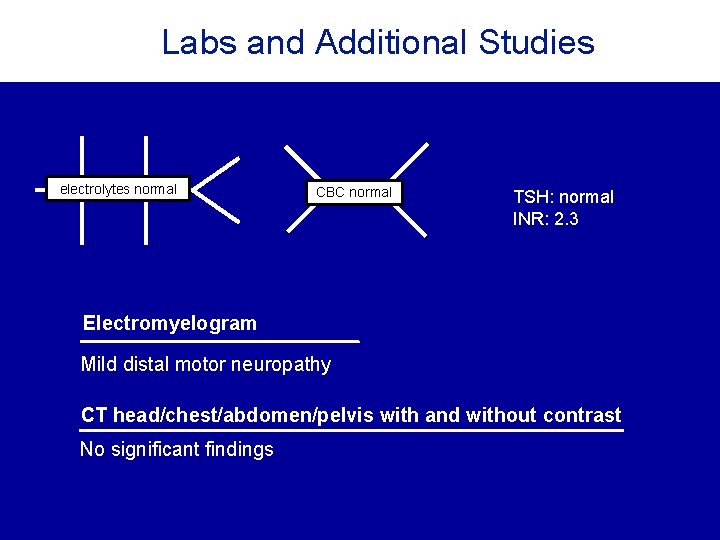
Labs and Additional Studies electrolytes normal CBC normal TSH: normal INR: 2. 3 Electromyelogram Mild distal motor neuropathy CT head/chest/abdomen/pelvis with and without contrast No significant findings
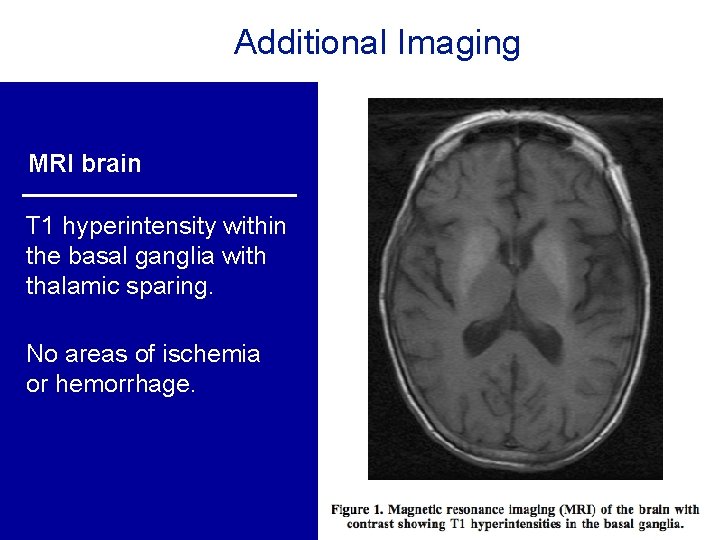
Additional Imaging MRI brain T 1 hyperintensity within the basal ganglia with thalamic sparing. No areas of ischemia or hemorrhage.
Discussion Based on this new information, what is your problem representation* for this patient? Use your problem representation to refine your differential diagnosis. Are you using intuitive (System 1) or analytical (System 2) reasoning? What would you do next? *Problem representation: a summary sentence that highlights the defining features of a case
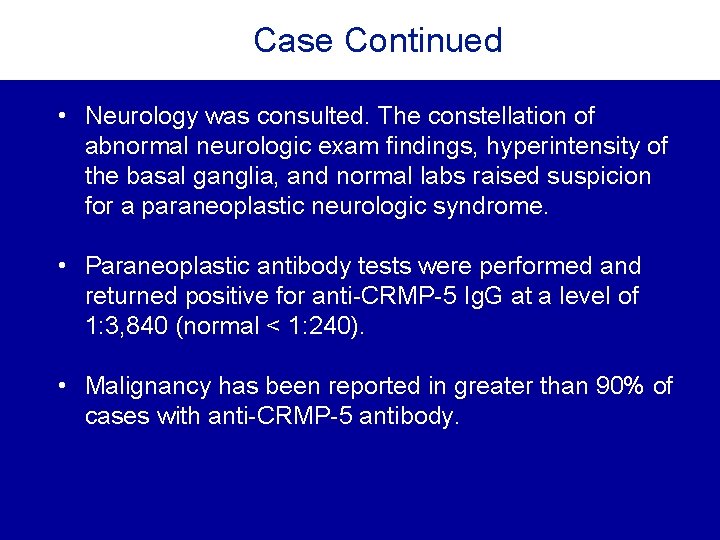
Case Continued • Neurology was consulted. The constellation of abnormal neurologic exam findings, hyperintensity of the basal ganglia, and normal labs raised suspicion for a paraneoplastic neurologic syndrome. • Paraneoplastic antibody tests were performed and returned positive for anti-CRMP-5 Ig. G at a level of 1: 3, 840 (normal < 1: 240). • Malignancy has been reported in greater than 90% of cases with anti-CRMP-5 antibody.
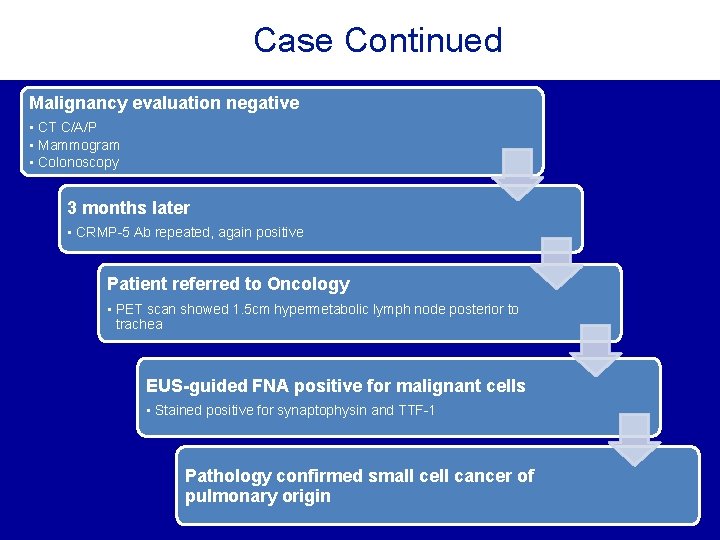
Case Continued Malignancy evaluation negative • CT C/A/P • Mammogram • Colonoscopy 3 months later • CRMP-5 Ab repeated, again positive Patient referred to Oncology • PET scan showed 1. 5 cm hypermetabolic lymph node posterior to trachea EUS-guided FNA positive for malignant cells • Stained positive for synaptophysin and TTF-1 Pathology confirmed small cell cancer of pulmonary origin
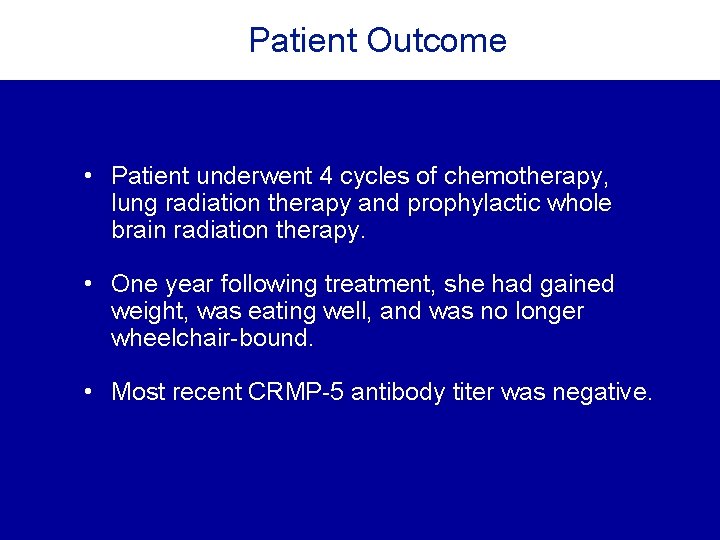
Patient Outcome • Patient underwent 4 cycles of chemotherapy, lung radiation therapy and prophylactic whole brain radiation therapy. • One year following treatment, she had gained weight, was eating well, and was no longer wheelchair-bound. • Most recent CRMP-5 antibody titer was negative.
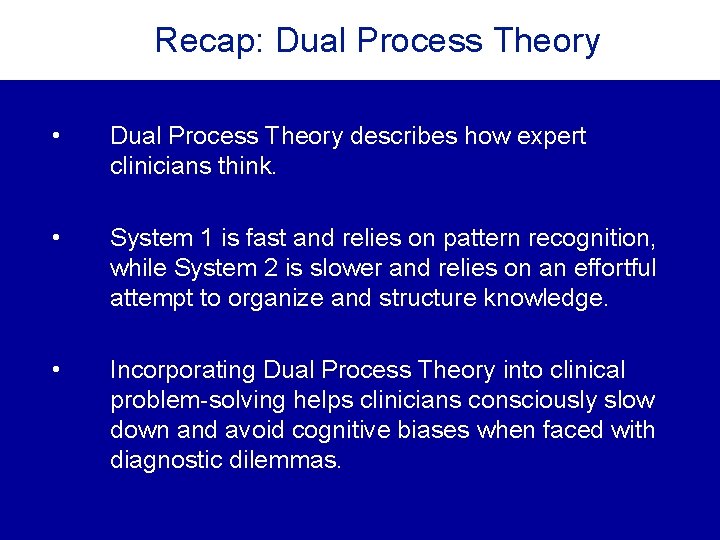
Recap: Dual Process Theory • Dual Process Theory describes how expert clinicians think. • System 1 is fast and relies on pattern recognition, while System 2 is slower and relies on an effortful attempt to organize and structure knowledge. • Incorporating Dual Process Theory into clinical problem-solving helps clinicians consciously slow down and avoid cognitive biases when faced with diagnostic dilemmas.
Teaching Point • Underlying malignancy with paraneoplastic syndromes should be considered for patients with clinical syndromes that do not fit with common illness scripts. • The CRMP-5 antibody can produce chorea and seems to be associated with malignancy in greater than 90% of cases.
Acknowledgements • Teaching slides are based on: Vick A, Kraemer RR, Morris JL, Willett LL, Centor RM, Estrada CA, Rodriguez JM. A 60 -Year-Old Woman with Chorea and Weight Loss. J Gen Intern Med. 2012; 27(6): 747 -51. • This work, assisted by editorial group Drs. Carlos Estrada, Amanda Vick and Jeff Kohlwes, is licensed under a Creative Commons Attribution. Non. Commercial-Share. Alike 4. 0 International License
References • Bhatnagar D, Morris JL, Rodriguez M, Centor RM, Estrada CA, Willett LL. A middle-age woman with sudden onset dyspnea. J Gen Intern Med. 2011; 26: 551 -4. • Dhaliwal G. Going with Your Gut. J Gen Intern Med 26: 107– 109. • Henderson MC, Dhaliwal G, Jones SR, Culbertson C, Bowen JL. Doing what comes naturally. J Gen Intern Med. 2010; 25: 84 -7. • Croskerry P. A universal model of diagnostic reasoning. Acad Med. 2009; 84: 1022– 1028. • Norman G. Dual processing and diagnostic errors. Adv Health Sci Educ Theory Pract. 2009. Suppl 1: 37 -49. • Eva KW, Hatala RM, Le. Blanc VR, Brooks LR. Teaching from the clinical reasoning literature: combined reasoning strategies help novice diagnosticians overcome misleading information. Med Educa 2007; 41: 1152– 1158. 10. 1111/j. 1365 -2923. 2007. 02923. x • Bowen, JL. Educational Strategies to Promote Clinical Diagnostic Reasoning. N Engl J Med 2006; 355: 2217 -2225. • Gozzard P, Maddison P. Which antibody and which cancer in which paraneoplastic syndromes? Pract Neurol. 2010; 10: 260 -70. • Pellacia T, Tardif J, Triby E, Charlin B. An analysis of clinical reasoning through a recent and comprehensive approach: the dual process theory. Med Educ Online 2011; 16: 5890. doi: 10. 3402/meo. v 16 i 0. 5890.