
DUAL ANTIPLATELET THERAPY DAPT BHAVI SHAH DNP APRN

DUAL ANTIPLATELET THERAPY (DAPT) BHAVI SHAH, DNP, APRN, ANP-C UNIVERSITY OF OKLAHOMA HEALTH SCIENCES CENTER DEPARTMENT OF MEDICINE CARDIOLOGY SECTION
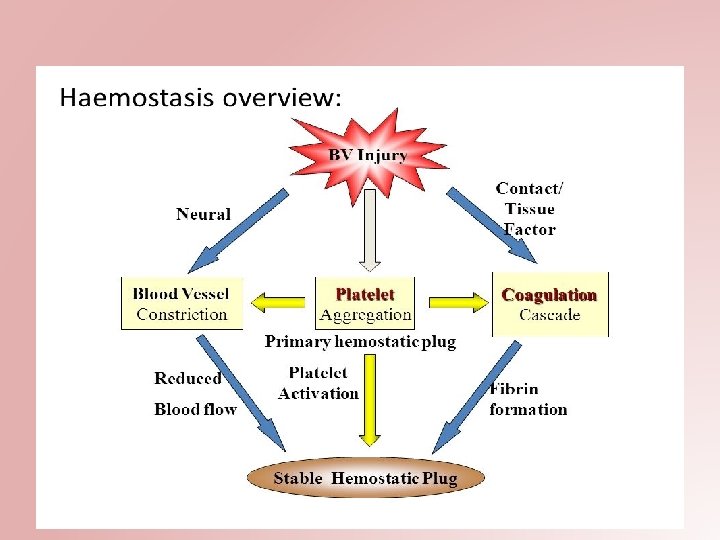
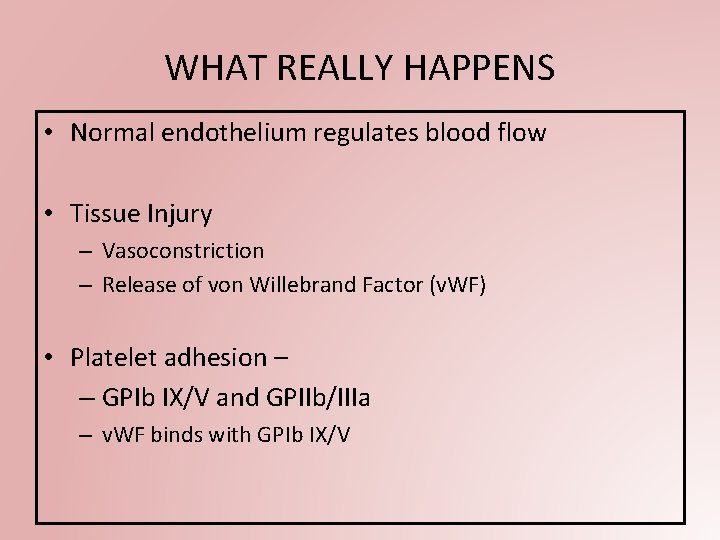
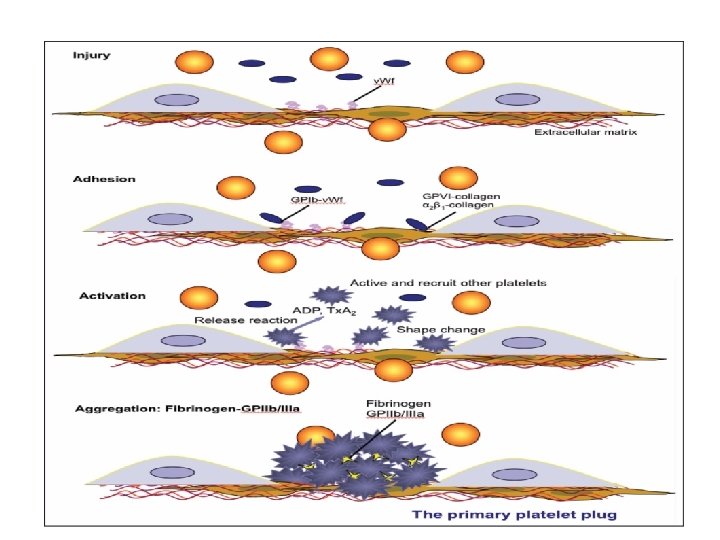
WHAT REALLY HAPPENS • Normal endothelium regulates blood flow • Tissue Injury – Vasoconstriction – Release of von Willebrand Factor (v. WF) • Platelet adhesion – – GPIb IX/V and GPIIb/IIIa – v. WF binds with GPIb IX/V
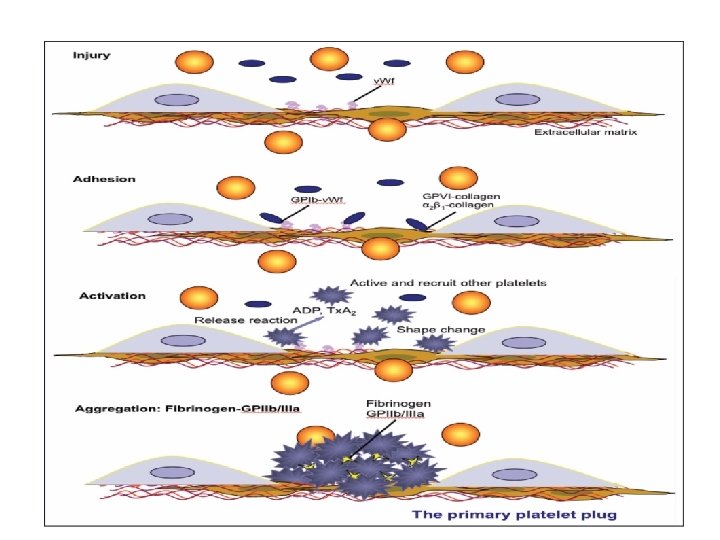
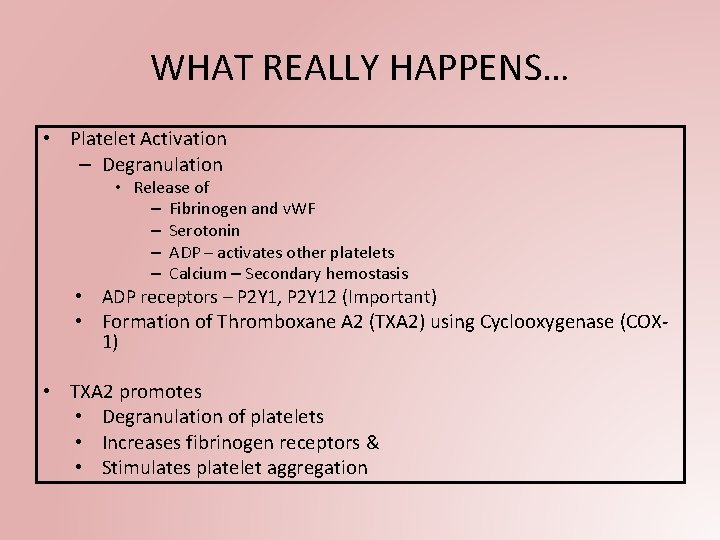
WHAT REALLY HAPPENS… • Platelet Activation – Degranulation • Release of – Fibrinogen and v. WF – Serotonin – ADP – activates other platelets – Calcium – Secondary hemostasis • ADP receptors – P 2 Y 1, P 2 Y 12 (Important) • Formation of Thromboxane A 2 (TXA 2) using Cyclooxygenase (COX 1) • TXA 2 promotes • Degranulation of platelets • Increases fibrinogen receptors & • Stimulates platelet aggregation

WHAT REALLY HAPPENS… • Platelet aggregation – TXA 2 and ADP • Activate/express the GPIIb/IIIa receptors on the platelets – GPIIb/IIIa binds with fibrinogen • Binds with receptors on other platelets – Platelet mesh with GPIIb/IIIa – Fibrinogen bond • GPIIb/IIIa – Fibrinogen – important target for antiplatelet medications
ANTIPLATELET MEDICATIONS COX-1 INHIBITOR • ASPIRIN THIENOPYRIDINE • PLAVIX (CLOPIDOGREL) • EFFIENT (PRASUGREL) • TICLOPIDINE (TICLID) P 2 Y 12 RECEPTOR BLOCKER • BRILLINTA (TICAGRELOR) DUAL ANTIPLATELET MEDICATIONS COX-1 INHIBITOR + THIENOPYRIDINES/P 2 Y 12 RECEPTOR BLOCKER
ASPIRIN • Irreversibly inactivates COX-1, which decreases the synthesis of TXA 2 and PGI 2 • Decrease in platelet activation • Analgesic, Anti-inflammatory and Antipyretic effect DOSE Antiplatelet maintenance dose – 81 mg Acute Coronary Syndrome/PCI loading – 160 mg – 325 mg DURATION Maintenance dose - Indefinite
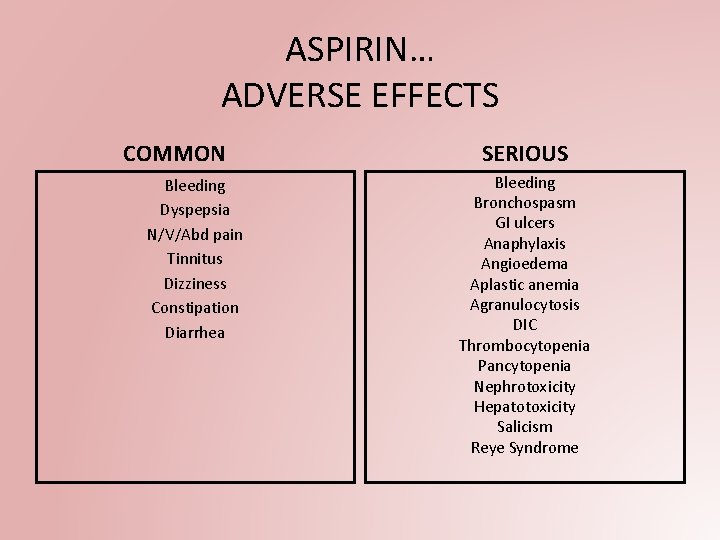
ASPIRIN… ADVERSE EFFECTS COMMON Bleeding Dyspepsia N/V/Abd pain Tinnitus Dizziness Constipation Diarrhea SERIOUS Bleeding Bronchospasm GI ulcers Anaphylaxis Angioedema Aplastic anemia Agranulocytosis DIC Thrombocytopenia Pancytopenia Nephrotoxicity Hepatotoxicity Salicism Reye Syndrome

ASPIRIN…. • Half life – 15 -20 min (parent drug) 2 -12 h (active metabolite) • Onset – Non EC - 30 – 60 min • Onset – EC - 3 -4 hours • Post D/C – 1 -4 days • Metabolism – Gut CYP 450 system • Excretion – Urine • Pregnancy – Risks not observed with low dose • Ask for any existing bleeding disorders • Ask for any episodes of GI bleeding, hematuria
PATIENT EDUCATION • Take the medication with food to avoid GI side effects • Inform healthcare provider in case of shortness of breath • Avoid concomitant use of NSAIDs with Aspirin

PLAVIX (CLOPIDOGREL) • Prodrug • Irreversibly binds to P 2 Y 12 ADP receptor – Inhibits Platelet aggregation in response to ADP DOSE Loading dose - Revascularization – 300 mg-600 mg Maintenance dose – 75 mg PO daily DURATION Varies according to the cardiac event and type of stent

PLAVIX (CLOPIDOGREL) ADVERSE EFFECTS COMMON Bleeding Pruritis SERIOUS Bleeding – Hemorrhage TTP Agranulocytosis Pancytopenia Aplastic Anemia Exfoliative dermatitis Stevens-Johnsons syndrome Erythema multiforme Toxic epidermal necrolysis Exanthematous pustulosis Pneumonia

PLAVIX (CLOPIDOGREL)… Half life – 8 hours Onset – 24 -48 hours. Max Effect – 4 -6 days Post D/C – 4 -10 days Metabolism – Liver, CYP 450 (CYP 2 C 19 – primary) Excretion – Urine (50%) Feces (46%) Pregnancy – Benefits outweigh Risks D/C medication at least 5 days prior to any elective surgical procedure • Consult prescribing provider prior to modification in regimen • •
PATIENT EDUCATION • Take uninterrupted at about the same time daily • Take with food to avoid GI complications • Talk to your provider prior to scheduling any elective surgeries/dental procedures • Seek emergency attention in case of unexplained/ prolonged bleeding • Avoid concomitant use of Omeprazole with Plavix
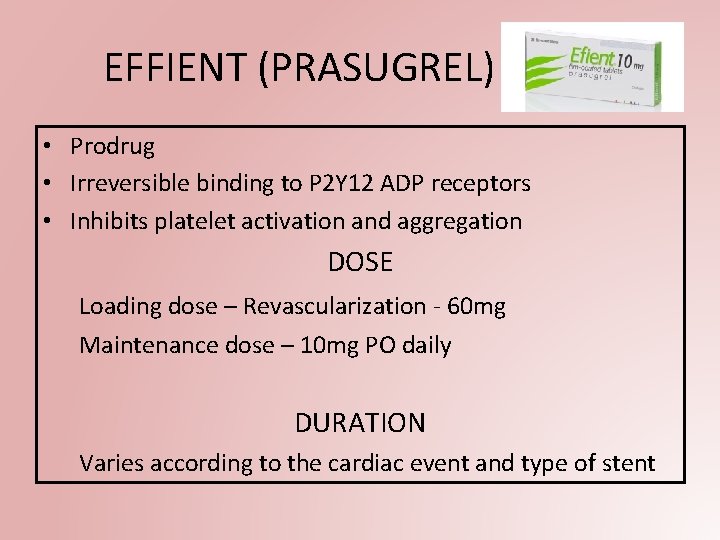
EFFIENT (PRASUGREL) • Prodrug • Irreversible binding to P 2 Y 12 ADP receptors • Inhibits platelet activation and aggregation DOSE Loading dose – Revascularization - 60 mg Maintenance dose – 10 mg PO daily DURATION Varies according to the cardiac event and type of stent
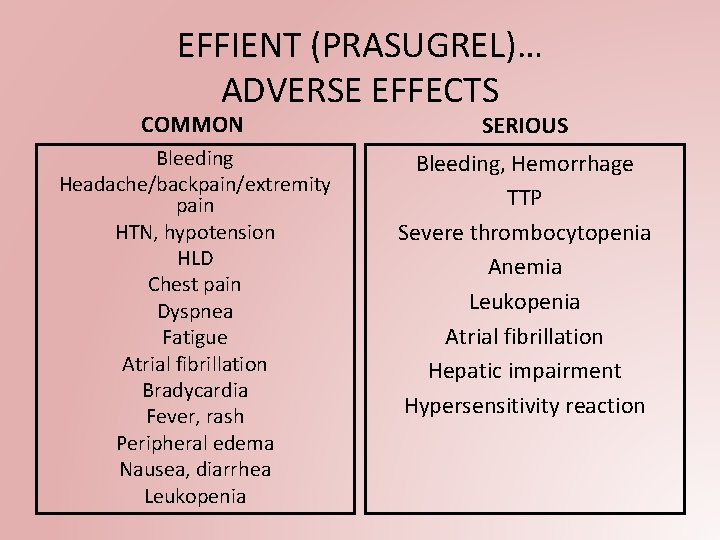
EFFIENT (PRASUGREL)… ADVERSE EFFECTS COMMON SERIOUS Bleeding Headache/backpain/extremity pain HTN, hypotension HLD Chest pain Dyspnea Fatigue Atrial fibrillation Bradycardia Fever, rash Peripheral edema Nausea, diarrhea Leukopenia Bleeding, Hemorrhage TTP Severe thrombocytopenia Anemia Leukopenia Atrial fibrillation Hepatic impairment Hypersensitivity reaction

EFFIENT (PRASUGREL)… • • • Half life – 7 hours Metabolism – Liver, CYP 450: 2 B 6 Excretion – Urine (68%) Feces (27%) Pregnancy – Benefits outweigh Risks D/C medication at least 7 days prior to any elective surgical procedure Consult prescribing provider prior to modification in regimen Not recommended for patients >75 yrs Increased bleeding risk in patient <60 kg In case of bleeding – manage without D/C medication due to high risk of cardiovascular events especially in first few weeks after ACS
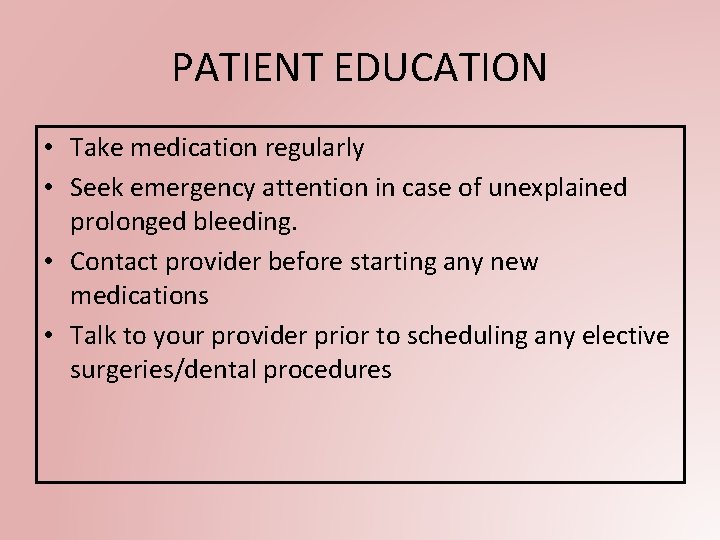
PATIENT EDUCATION • Take medication regularly • Seek emergency attention in case of unexplained prolonged bleeding. • Contact provider before starting any new medications • Talk to your provider prior to scheduling any elective surgeries/dental procedures
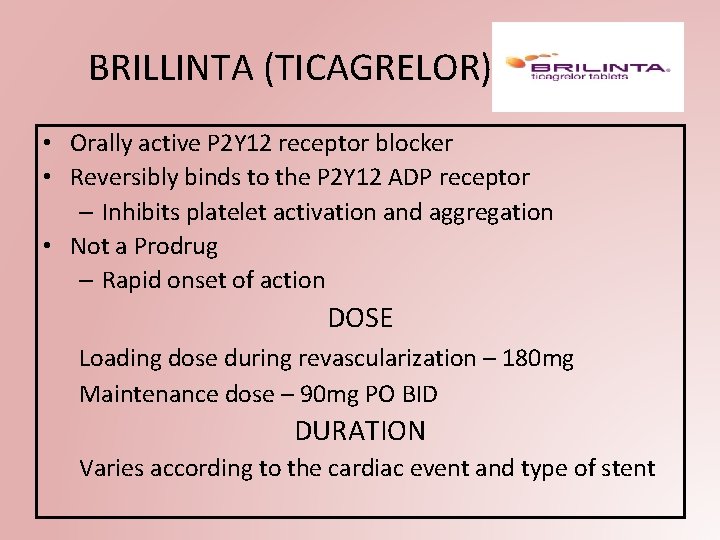
BRILLINTA (TICAGRELOR) • Orally active P 2 Y 12 receptor blocker • Reversibly binds to the P 2 Y 12 ADP receptor – Inhibits platelet activation and aggregation • Not a Prodrug – Rapid onset of action DOSE Loading dose during revascularization – 180 mg Maintenance dose – 90 mg PO BID DURATION Varies according to the cardiac event and type of stent
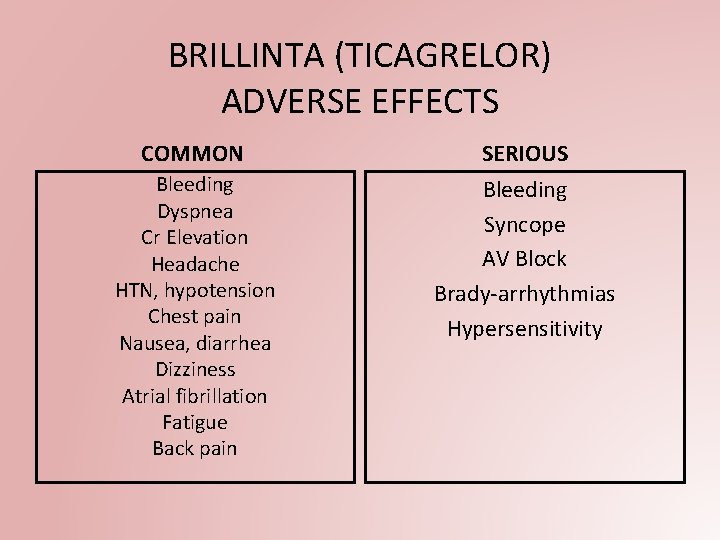
BRILLINTA (TICAGRELOR) ADVERSE EFFECTS COMMON SERIOUS Bleeding Dyspnea Cr Elevation Headache HTN, hypotension Chest pain Nausea, diarrhea Dizziness Atrial fibrillation Fatigue Back pain Bleeding Syncope AV Block Brady-arrhythmias Hypersensitivity

BRILLINTA (TICAGRELOR) • • • Half life – 7 hours Metabolism – Liver CYP 450: 3 A 4 (primary) Excretion – Urine (26%) Feces (58%) Pregnancy – Benefits outweigh Risks D/C medication at least 5 days prior to any elective surgical procedure Consult prescribing provider prior to modification in regimen Do not start on patients undergoing urgent CABG Contraindicated in case of severe liver disease In case of bleeding – manage without D/C medication due to high risk of cardiovascular events
PATIENT EDUCATION • Take medication uninterrupted regularly • Seek emergency attention in case of unexplained prolonged bleeding. • Contact provider before starting any new medications
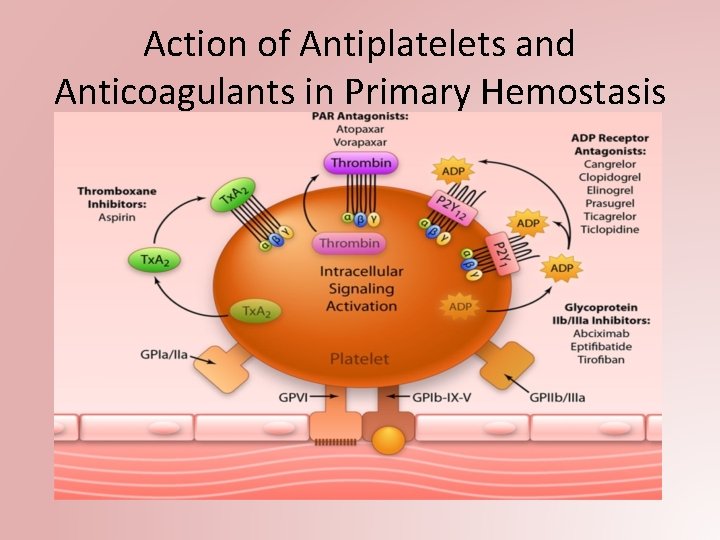
Action of Antiplatelets and Anticoagulants in Primary Hemostasis
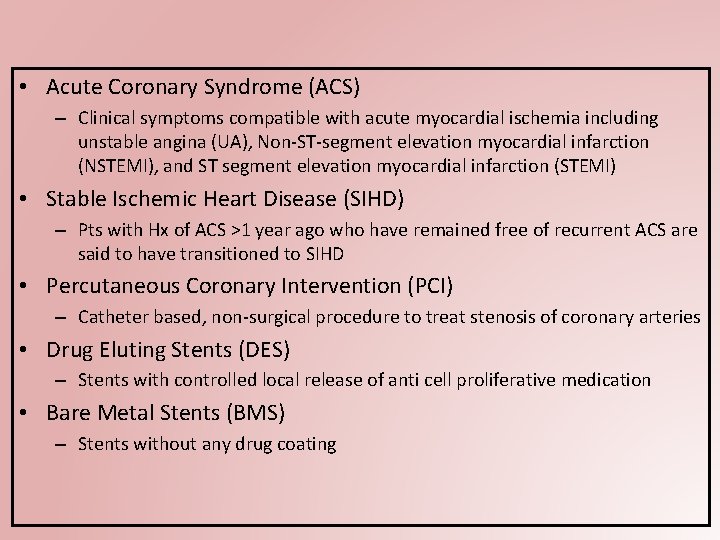
• Acute Coronary Syndrome (ACS) – Clinical symptoms compatible with acute myocardial ischemia including unstable angina (UA), Non-ST-segment elevation myocardial infarction (NSTEMI), and ST segment elevation myocardial infarction (STEMI) • Stable Ischemic Heart Disease (SIHD) – Pts with Hx of ACS >1 year ago who have remained free of recurrent ACS are said to have transitioned to SIHD • Percutaneous Coronary Intervention (PCI) – Catheter based, non-surgical procedure to treat stenosis of coronary arteries • Drug Eluting Stents (DES) – Stents with controlled local release of anti cell proliferative medication • Bare Metal Stents (BMS) – Stents without any drug coating

DAPT Guidelines for SIHD • SIHD treated with PCI Level of Evidence DES BMS I ASA (75 mg -100 mg) PO daily I P 2 Y 12 Inhibitor (CLOPIDOGREL) 6 months P 2 Y 12 Inhibitor (CLOPIDOGREL) 1 month III No Benefit Pts with SIHD without Hx of ACS, PCI, or recent CABG (within 12 months) => DAPT is not beneficial

DAPT Guidelines for ACS (NSTEMI/STEMI) • ACS treated with PCI Level of Evidence DES BMS I ASA (75 mg -100 mg) PO daily I P 2 Y 12 Inhibitor (CLOPIDOGREL/TICAGRELO R/PRASUGREL) 12 months P 2 Y 12 Inhibitor CLOPIDOGREL/TICAGRELOR /PRASUGREL) 12 months III HARM PRASUGREL should NOT be administered in patients with a prior history of stroke or TIA

DAPT Guidelines for ACS… Level of Evidence I ACS => Medical therapy w/ Fibrinolytics DAPT (CLOPIDOGREL) minimum for 14 days and ideally for 12 months I ACS => Medical therapy w/o PCI or Fibrinolytics DAPT (TICAGRELOR/CLOPIDO GREL) for 12 months I ASA (75 mg -100 mg) PO daily
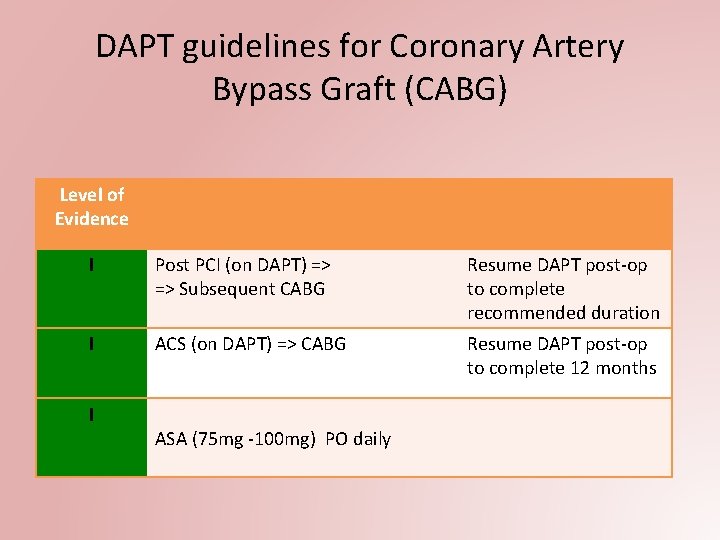
DAPT guidelines for Coronary Artery Bypass Graft (CABG) Level of Evidence I Post PCI (on DAPT) => => Subsequent CABG Resume DAPT post-op to complete recommended duration I ACS (on DAPT) => CABG Resume DAPT post-op to complete 12 months I ASA (75 mg -100 mg) PO daily
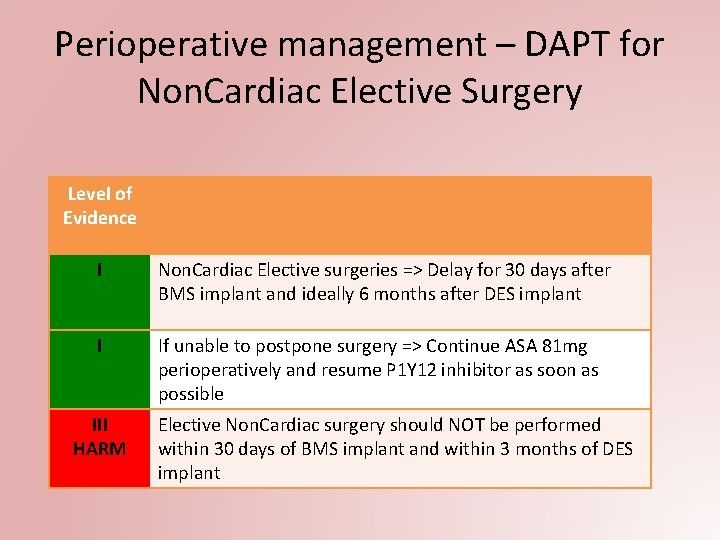
Perioperative management – DAPT for Non. Cardiac Elective Surgery Level of Evidence I Non. Cardiac Elective surgeries => Delay for 30 days after BMS implant and ideally 6 months after DES implant I If unable to postpone surgery => Continue ASA 81 mg perioperatively and resume P 1 Y 12 inhibitor as soon as possible III HARM Elective Non. Cardiac surgery should NOT be performed within 30 days of BMS implant and within 3 months of DES implant

MEDICATION COMPLIANCE • Importance of DAPT in case of coronary artery revascularization – Adherence is critical – Stent thrombosis/In stent restenosis – Acute Coronary Syndrome – BMS vs DES
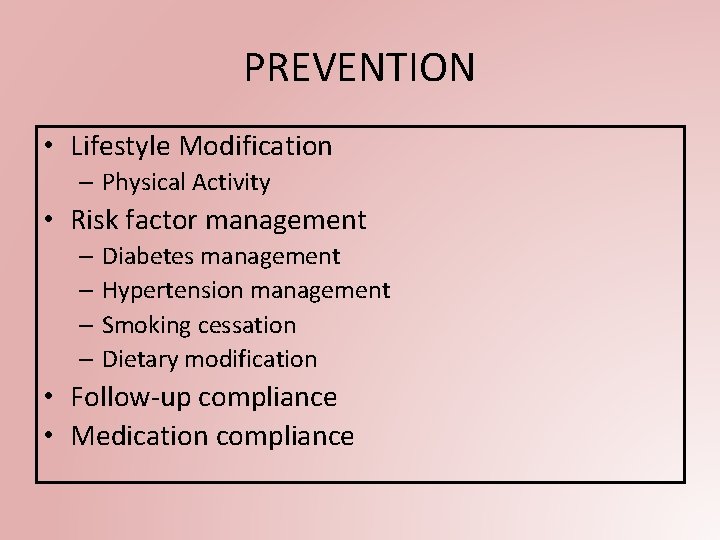
PREVENTION • Lifestyle Modification – Physical Activity • Risk factor management – Diabetes management – Hypertension management – Smoking cessation – Dietary modification • Follow-up compliance • Medication compliance
DAPT Questions? ?

References • • • Kumar, A. , & Cannon, C. P. (2009). Acute coronary syndromes: Diagnosis and management, Part I. , Mayo Clinic Proceedings, 84(10), 917 -938 Buchanan, G. , Basavarajaiah, S. , & Chieffo, A. (2012). Stent thrombosis: Incidence, predictors, and new technologies. Thrombosis. DOI: http: //dx. doi. org/10. 1155/2012/956962 Airoldi, A. , Colombo, N. , Morici. , et al. (2007). Incidence and predictors of drug-eluting stent thrombosis during and after discontinuation of theinophylline treatment. Circulation, 16(7), 745754 Stefanini, G. , & Holmes, D. (2013). Drug-eluting coronary artery stents. New England Journal of Medicine. 368, 254 -265. DOI: 10. 1056/NEJMra 1210816 Maisel, W. , & Laskey, W. (2007). Drug-eluting stents. Circulation. 115, 426 -427. https: //doi. org/10. 1161/CIRCULATIONAHA. 107. 688176 Levine, G. , Bates, E. , Bittl, J. Brindis, R. , Fihn, S. , Fleisher, L. , ……& Smith, S. (2016). 2016 ACC/AHA guidelines focused update on duration of dual antiplatelet therapy in patients with coronary artery disease. Journal of American College of Cardiology. 68(10). DOI: 10. 1016/j. jacc. 2016. 03. 513 Sofi, M. (N. D. ). Bleeding & clotting disorders. Retrieved from http: //slideplayer. com/slide/8856458/ Bhatt, D. , Hulot, J. , Moliterno, D. , & Harrington, R. (2014). Antiplatelet and anticoagulation therapy for acute coronary syndromes. Circulation Research. 114(12). DOI: https: //doi. org/10. 1161/CIRCRESAHA. 114. 302737 Meek, I. , Vonkeman, H. , Kasemier, J. , Movig, K. , van de Laar, M. (2012). Interference of NSAIDs with the thrombocyte inhibitory effect of aspirin: A placebo-controlled, ex vivo, serial placebo-controlled serial crossover study. European Journal of Clinical Pharmacy, 69(3), 365 -371
- Slides: 36