
DSRC WAVE 1 Overview DSRC Dedicated ShortRange Communications

- Slides: 41
DSRC & WAVE 1
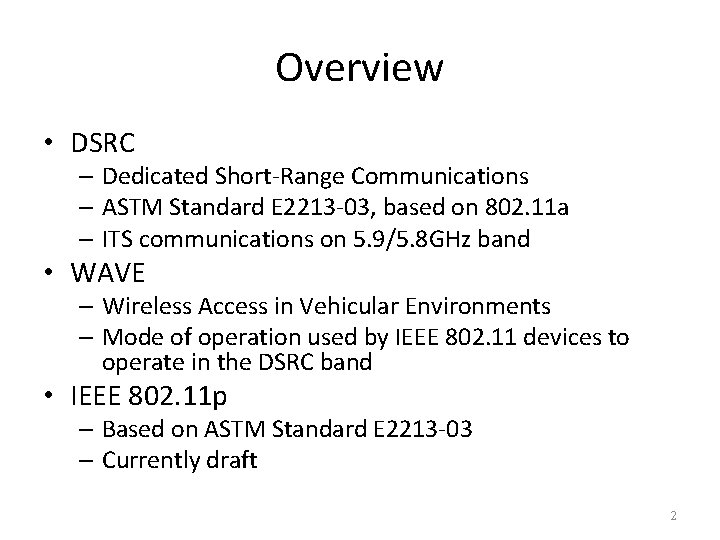
Overview • DSRC – Dedicated Short-Range Communications – ASTM Standard E 2213 -03, based on 802. 11 a – ITS communications on 5. 9/5. 8 GHz band • WAVE – Wireless Access in Vehicular Environments – Mode of operation used by IEEE 802. 11 devices to operate in the DSRC band • IEEE 802. 11 p – Based on ASTM Standard E 2213 -03 – Currently draft 2
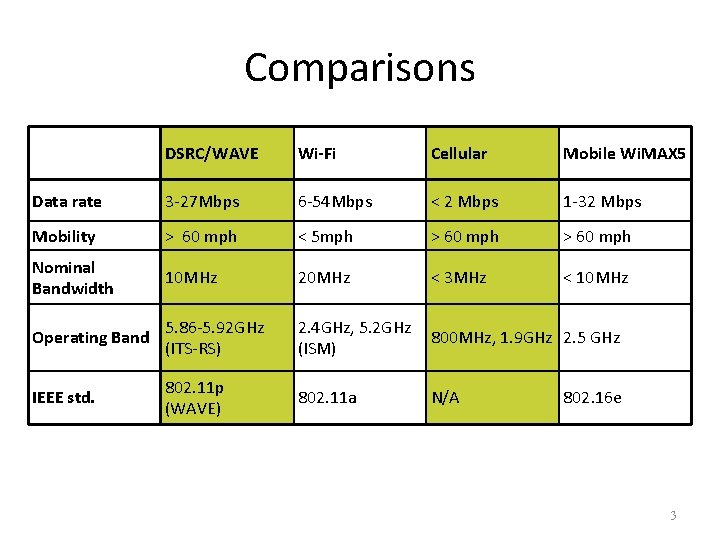
Comparisons DSRC/WAVE Wi-Fi Cellular Mobile Wi. MAX 5 Data rate 3 -27 Mbps 6 -54 Mbps < 2 Mbps 1 -32 Mbps Mobility > 60 mph < 5 mph > 60 mph Nominal Bandwidth 10 MHz 20 MHz < 3 MHz < 10 MHz Operating Band 5. 86 -5. 92 GHz (ITS-RS) 2. 4 GHz, 5. 2 GHz 800 MHz, 1. 9 GHz 2. 5 GHz (ISM) IEEE std. 802. 11 p (WAVE) 802. 11 a N/A 802. 16 e 3
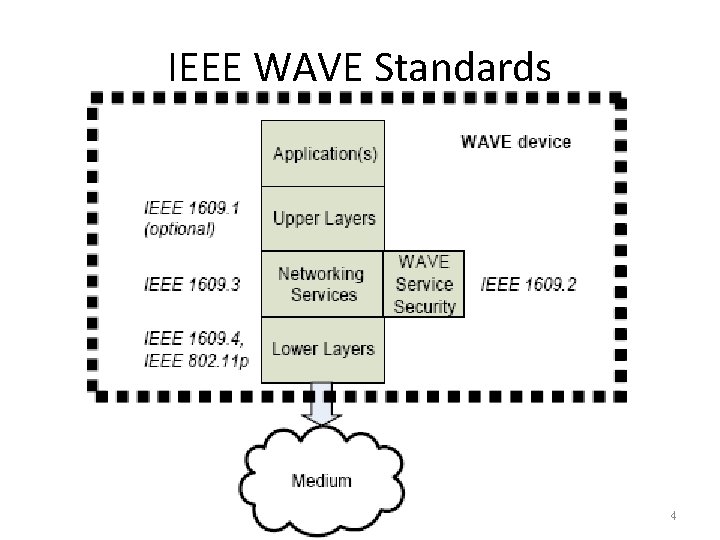
IEEE WAVE Standards 4
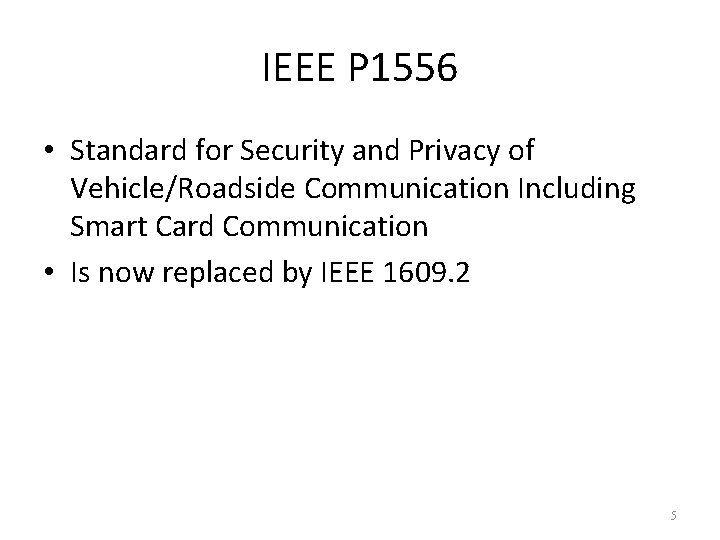
IEEE P 1556 • Standard for Security and Privacy of Vehicle/Roadside Communication Including Smart Card Communication • Is now replaced by IEEE 1609. 2 5
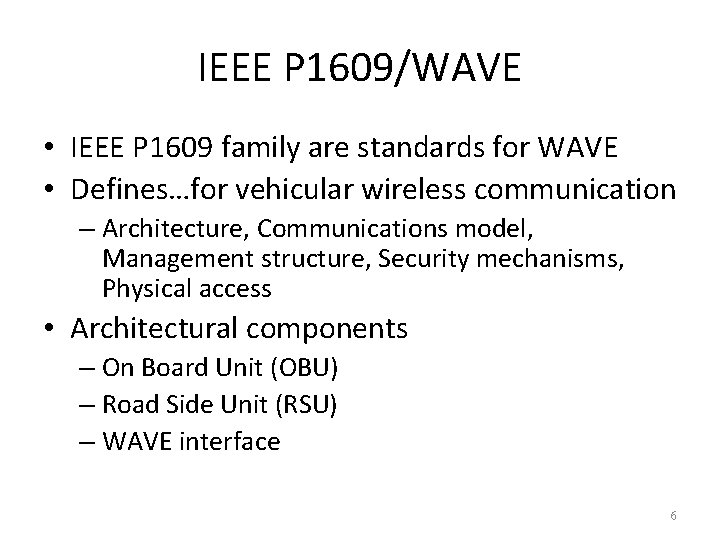
IEEE P 1609/WAVE • IEEE P 1609 family are standards for WAVE • Defines…for vehicular wireless communication – Architecture, Communications model, Management structure, Security mechanisms, Physical access • Architectural components – On Board Unit (OBU) – Road Side Unit (RSU) – WAVE interface 6
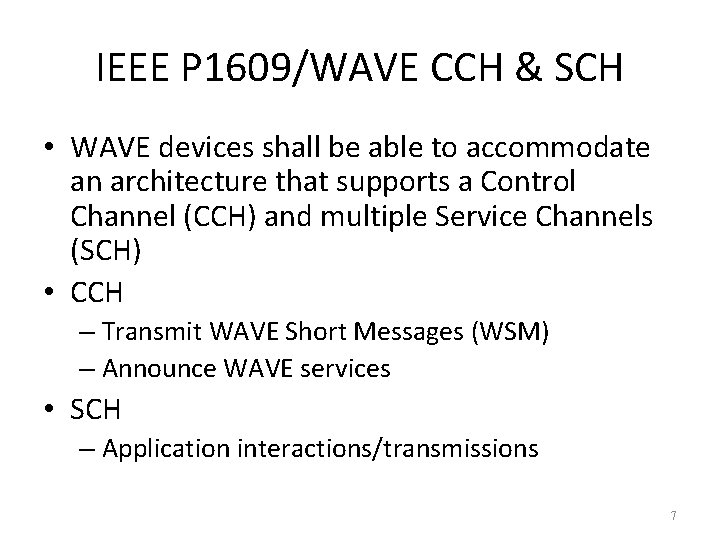
IEEE P 1609/WAVE CCH & SCH • WAVE devices shall be able to accommodate an architecture that supports a Control Channel (CCH) and multiple Service Channels (SCH) • CCH – Transmit WAVE Short Messages (WSM) – Announce WAVE services • SCH – Application interactions/transmissions 7
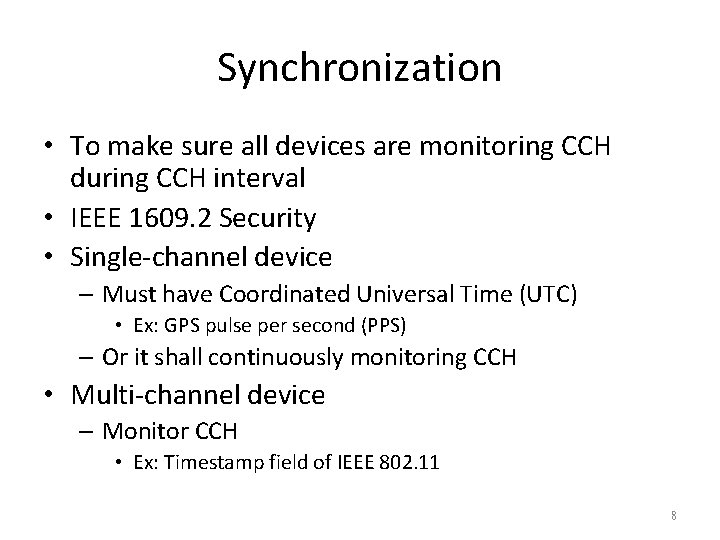
Synchronization • To make sure all devices are monitoring CCH during CCH interval • IEEE 1609. 2 Security • Single-channel device – Must have Coordinated Universal Time (UTC) • Ex: GPS pulse per second (PPS) – Or it shall continuously monitoring CCH • Multi-channel device – Monitor CCH • Ex: Timestamp field of IEEE 802. 11 8
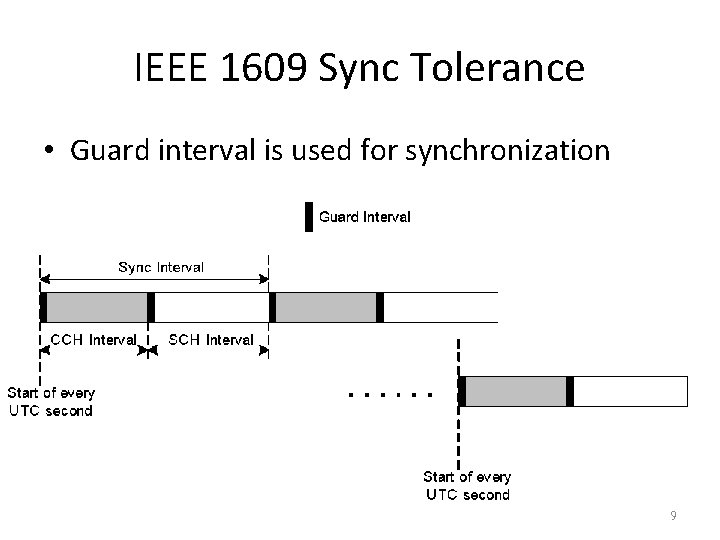
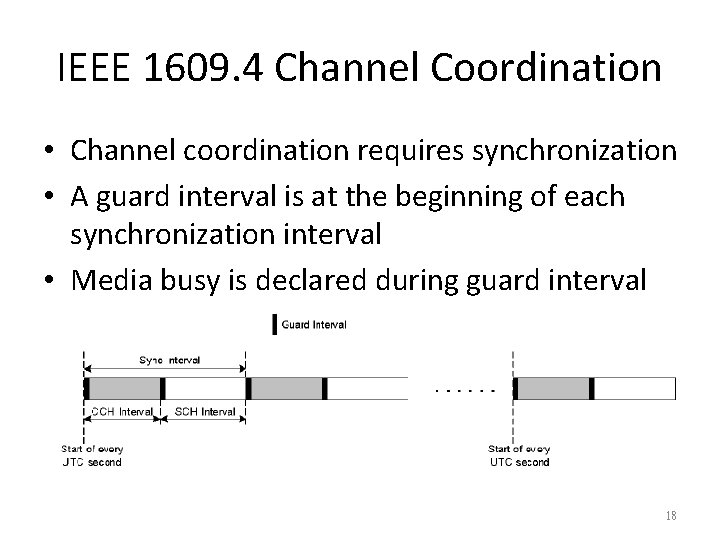
IEEE 1609 Sync Tolerance • Guard interval is used for synchronization 9
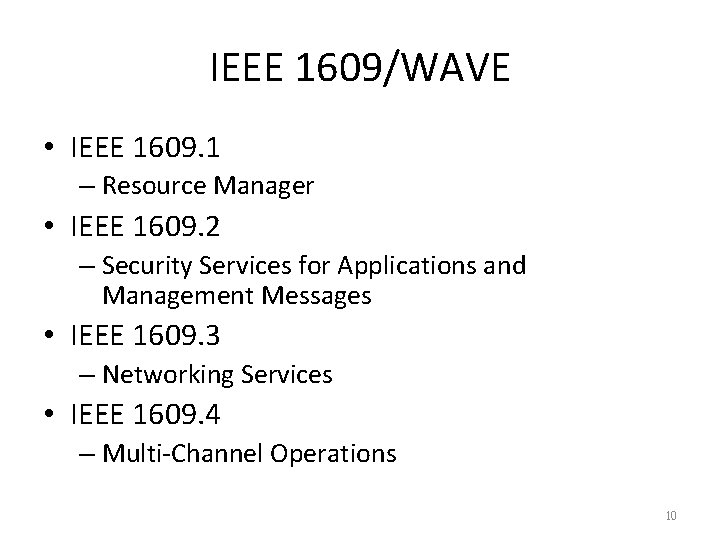
IEEE 1609/WAVE • IEEE 1609. 1 – Resource Manager • IEEE 1609. 2 – Security Services for Applications and Management Messages • IEEE 1609. 3 – Networking Services • IEEE 1609. 4 – Multi-Channel Operations 10
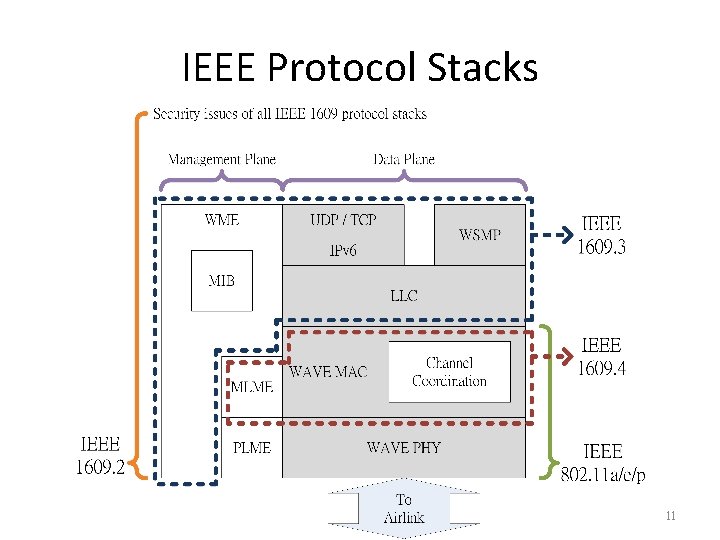
IEEE Protocol Stacks 11
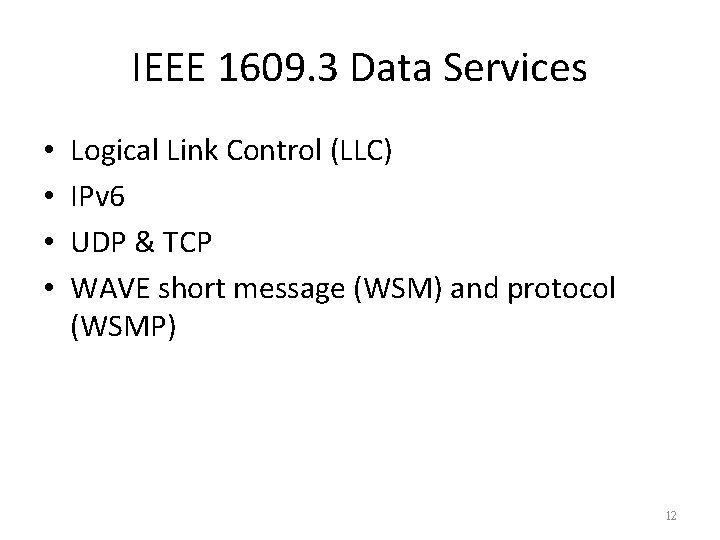
IEEE 1609. 3 Data Services • • Logical Link Control (LLC) IPv 6 UDP & TCP WAVE short message (WSM) and protocol (WSMP) 12
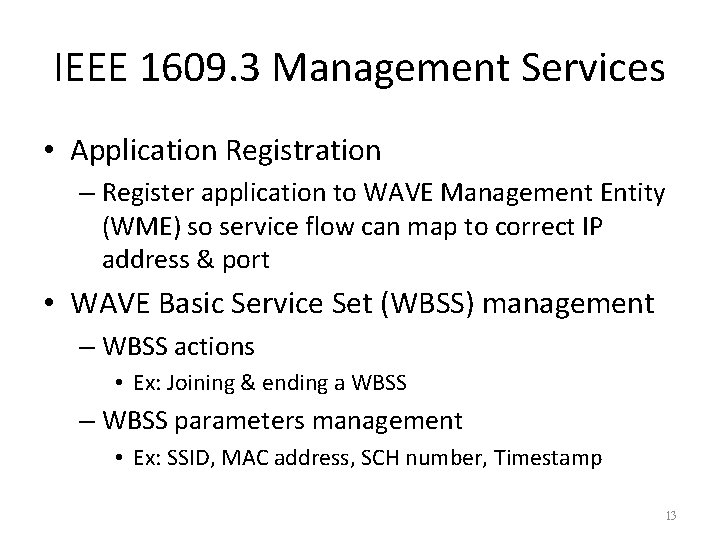
IEEE 1609. 3 Management Services • Application Registration – Register application to WAVE Management Entity (WME) so service flow can map to correct IP address & port • WAVE Basic Service Set (WBSS) management – WBSS actions • Ex: Joining & ending a WBSS – WBSS parameters management • Ex: SSID, MAC address, SCH number, Timestamp 13
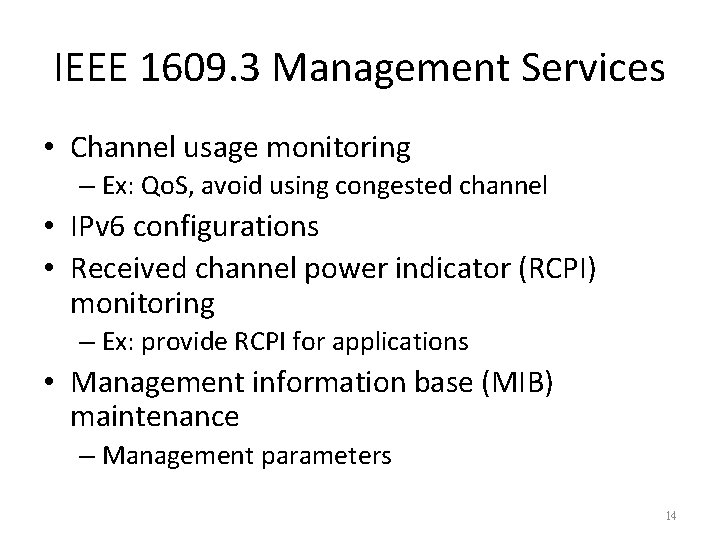
IEEE 1609. 3 Management Services • Channel usage monitoring – Ex: Qo. S, avoid using congested channel • IPv 6 configurations • Received channel power indicator (RCPI) monitoring – Ex: provide RCPI for applications • Management information base (MIB) maintenance – Management parameters 14
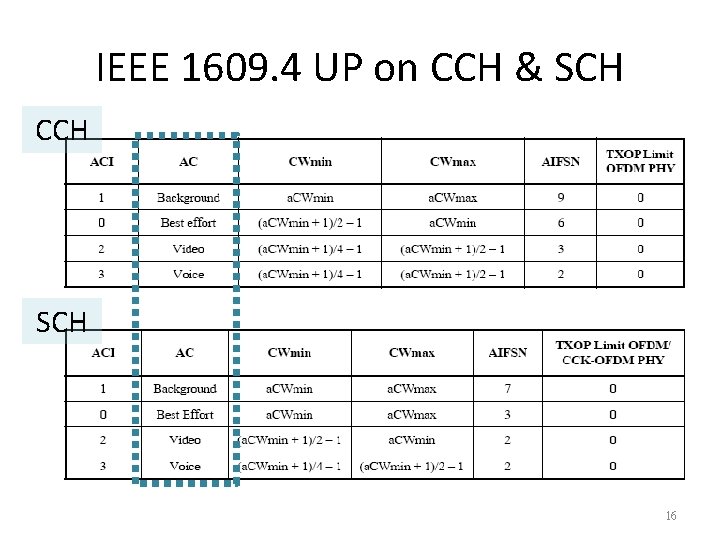
IEEE 1609. 4 User Priority (UP) • Use IEEE 802. 11 e EDCA mechanism • Mapping UP to Access Category Index (ACI) 15
IEEE 1609. 4 UP on CCH & SCH CCH SCH 16
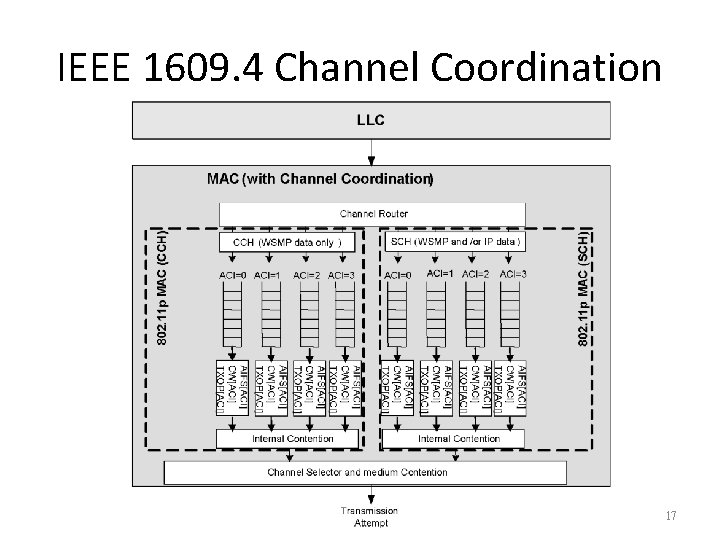
IEEE 1609. 4 Channel Coordination 17
IEEE 1609. 4 Channel Coordination • Channel coordination requires synchronization • A guard interval is at the beginning of each synchronization interval • Media busy is declared during guard interval 18
IEEE 802. 11 p • Define enhancements to 802. 11 required to support ITS applications • Lower layer of WAVE • Supports two different stacks – IPv 6 • only on SCHs (not CCH) – WAVE Short Message Protocol (WSMP) • can be sent on any channel • allows applications to directly control physical characteristics 19
IEEE 802. 11 p • Communication between 802. 11 STAs … – Without becoming a member of a BSS is possible – Direct & Immediate – Avoid the latency caused by BSS association – May use a dedicated frequency band 20
IEEE 802. 11 p MAC • DCF – CSMA/CA – IBSS & Infrastructure – Communication outside BSS • HCF contention-based channel access (EDCA) – EDCA is an enhanced variant of DCF – EDCA parameters • Outside BSS: default • Inside BSS: given by associated BSS or AP 21
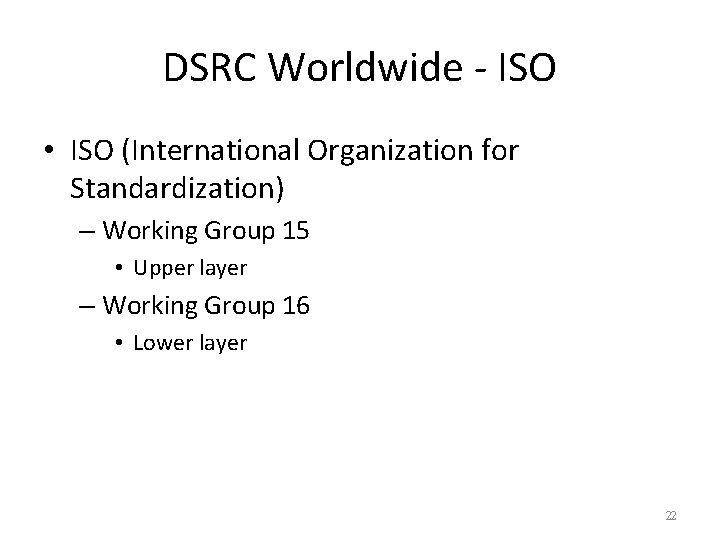
DSRC Worldwide - ISO • ISO (International Organization for Standardization) – Working Group 15 • Upper layer – Working Group 16 • Lower layer 22
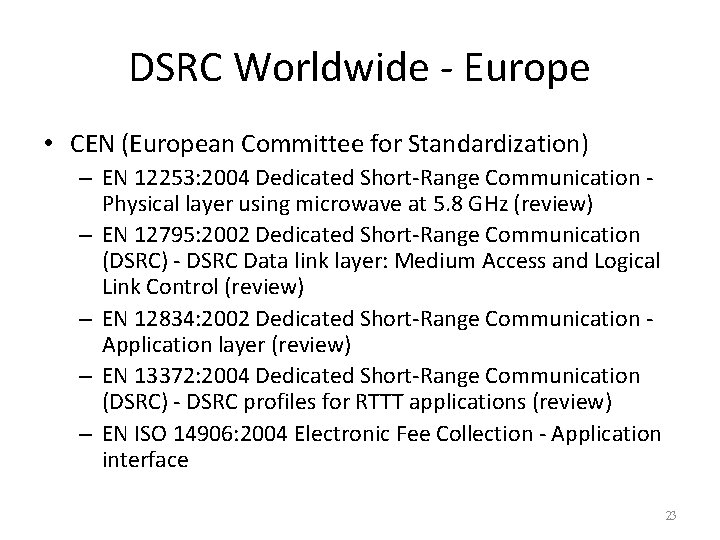
DSRC Worldwide - Europe • CEN (European Committee for Standardization) – EN 12253: 2004 Dedicated Short-Range Communication - Physical layer using microwave at 5. 8 GHz (review) – EN 12795: 2002 Dedicated Short-Range Communication (DSRC) - DSRC Data link layer: Medium Access and Logical Link Control (review) – EN 12834: 2002 Dedicated Short-Range Communication - Application layer (review) – EN 13372: 2004 Dedicated Short-Range Communication (DSRC) - DSRC profiles for RTTT applications (review) – EN ISO 14906: 2004 Electronic Fee Collection - Application interface 23
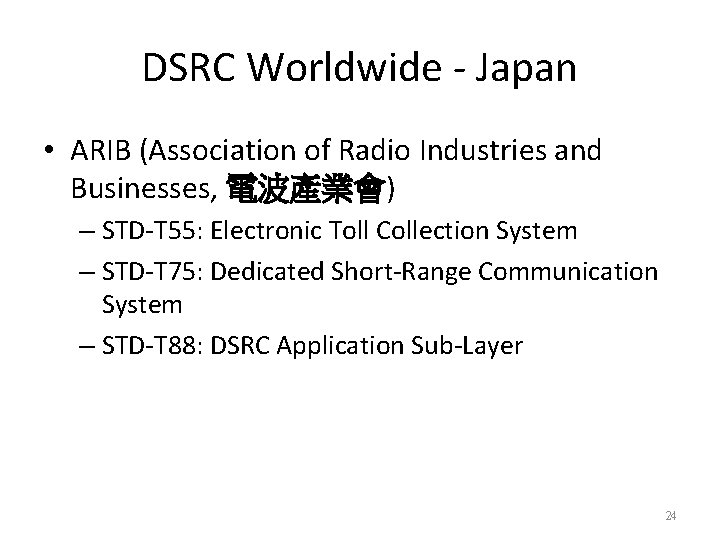
DSRC Worldwide - Japan • ARIB (Association of Radio Industries and Businesses, 電波產業會) – STD-T 55: Electronic Toll Collection System – STD-T 75: Dedicated Short-Range Communication System – STD-T 88: DSRC Application Sub-Layer 24
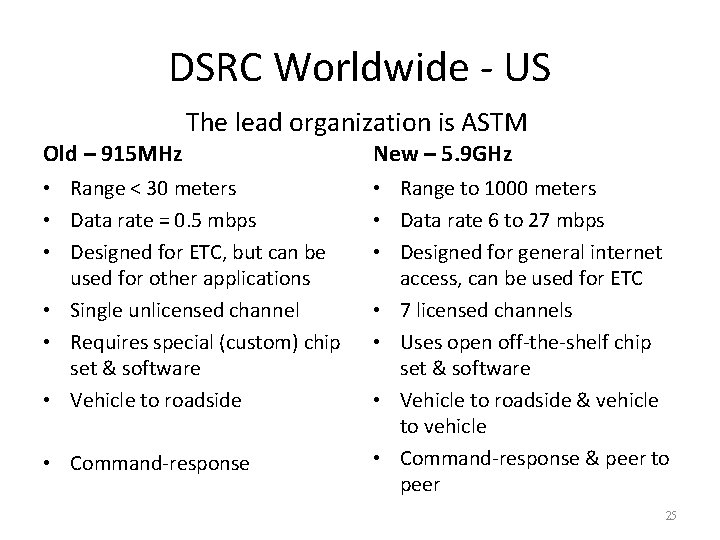
DSRC Worldwide - US Old – 915 MHz The lead organization is ASTM • Range < 30 meters • Data rate = 0. 5 mbps • Designed for ETC, but can be used for other applications • Single unlicensed channel • Requires special (custom) chip set & software • Vehicle to roadside • Command-response New – 5. 9 GHz • Range to 1000 meters • Data rate 6 to 27 mbps • Designed for general internet access, can be used for ETC • 7 licensed channels • Uses open off-the-shelf chip set & software • Vehicle to roadside & vehicle to vehicle • Command-response & peer to peer 25
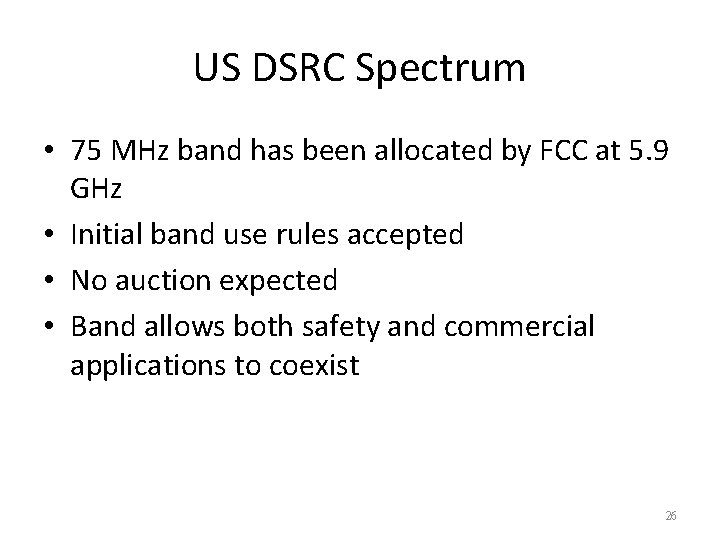
US DSRC Spectrum • 75 MHz band has been allocated by FCC at 5. 9 GHz • Initial band use rules accepted • No auction expected • Band allows both safety and commercial applications to coexist 26
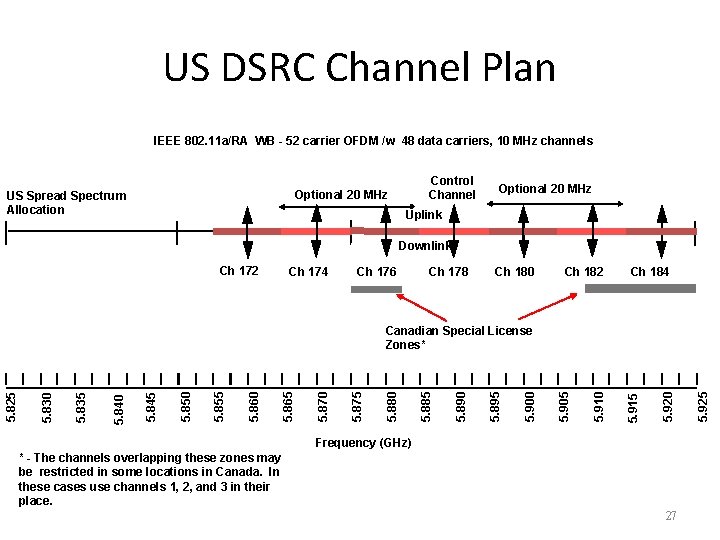
US DSRC Channel Plan IEEE 802. 11 a/RA WB - 52 carrier OFDM /w 48 data carriers, 10 MHz channels Control Channel Optional 20 MHz US Spread Spectrum Allocation Optional 20 MHz Uplink Downlink Ch 172 Ch 174 Ch 176 Ch 178 Ch 180 Ch 182 Ch 184 Frequency (GHz) * - The channels overlapping these zones may be restricted in some locations in Canada. In these cases use channels 1, 2, and 3 in their place. 27 5. 925 5. 920 5. 915 5. 910 5. 905 5. 900 5. 895 5. 890 5. 885 5. 880 5. 875 5. 870 5. 865 5. 860 5. 855 5. 850 5. 845 5. 840 5. 835 5. 830 5. 825 Canadian Special License Zones*
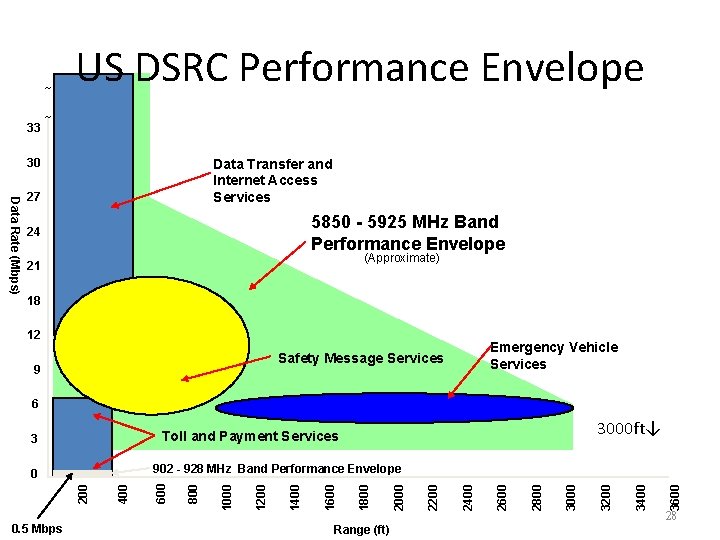
~ 33 US DSRC Performance Envelope ~ 30 Data Rate (Mbps) Data Transfer and Internet Access Services 27 5850 - 5925 MHz Band Performance Envelope 24 (Approximate) 21 18 12 Emergency Vehicle Services Safety Message Services 9 6 Range (ft) 3600 3400 3200 3000 2800 2600 2400 2200 2000 1800 1600 1400 1200 1000 800 400 200 600 902 - 928 MHz Band Performance Envelope 0 0. 5 Mbps 3000 ft↓ Toll and Payment Services 3 28
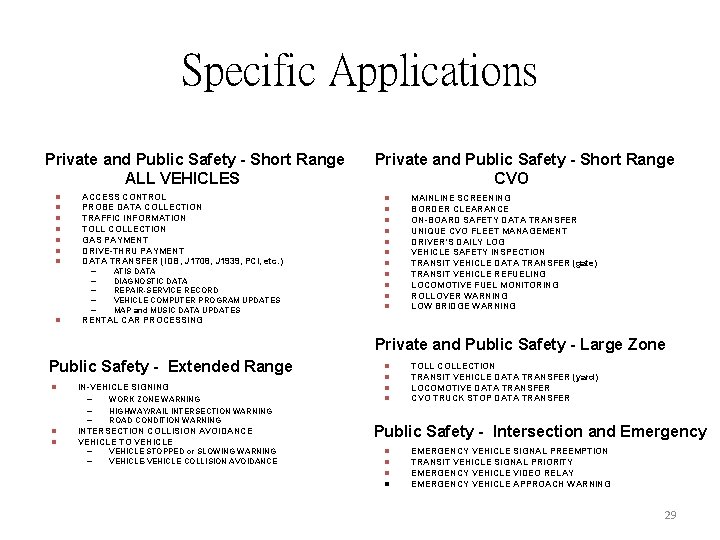
Specific Applications Private and Public Safety - Short Range ALL VEHICLES l l l l ACCESS CONTROL PROBE DATA COLLECTION TRAFFIC INFORMATION TOLL COLLECTION GAS PAYMENT DRIVE-THRU PAYMENT DATA TRANSFER (IDB, J 1708, J 1939, PCI, etc. ) – – – l ATIS DATA DIAGNOSTIC DATA REPAIR-SERVICE RECORD VEHICLE COMPUTER PROGRAM UPDATES MAP and MUSIC DATA UPDATES Private and Public Safety - Short Range CVO l l l MAINLINE SCREENING BORDER CLEARANCE ON-BOARD SAFETY DATA TRANSFER UNIQUE CVO FLEET MANAGEMENT DRIVER’S DAILY LOG VEHICLE SAFETY INSPECTION TRANSIT VEHICLE DATA TRANSFER (gate) TRANSIT VEHICLE REFUELING LOCOMOTIVE FUEL MONITORING ROLLOVER WARNING LOW BRIDGE WARNING RENTAL CAR PROCESSING Private and Public Safety - Large Zone Public Safety - Extended Range l IN-VEHICLE SIGNING – – – l l WORK ZONE WARNING HIGHWAY/RAIL INTERSECTION WARNING ROAD CONDITION WARNING INTERSECTION COLLISION AVOIDANCE VEHICLE TO VEHICLE – – VEHICLE STOPPED or SLOWING WARNING VEHICLE-VEHICLE COLLISION AVOIDANCE l l TOLL COLLECTION TRANSIT VEHICLE DATA TRANSFER (yard) LOCOMOTIVE DATA TRANSFER CVO TRUCK STOP DATA TRANSFER Public Safety - Intersection and Emergency l l EMERGENCY VEHICLE SIGNAL PREEMPTION TRANSIT VEHICLE SIGNAL PRIORITY EMERGENCY VEHICLE VIDEO RELAY EMERGENCY VEHICLE APPROACH WARNING 29
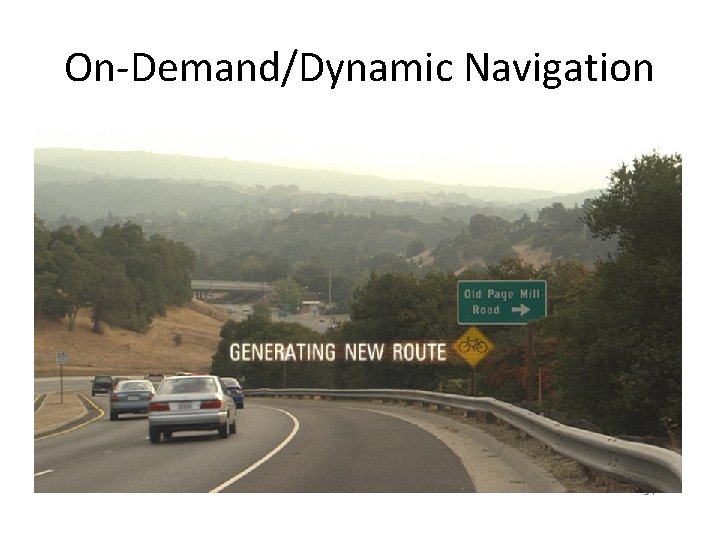
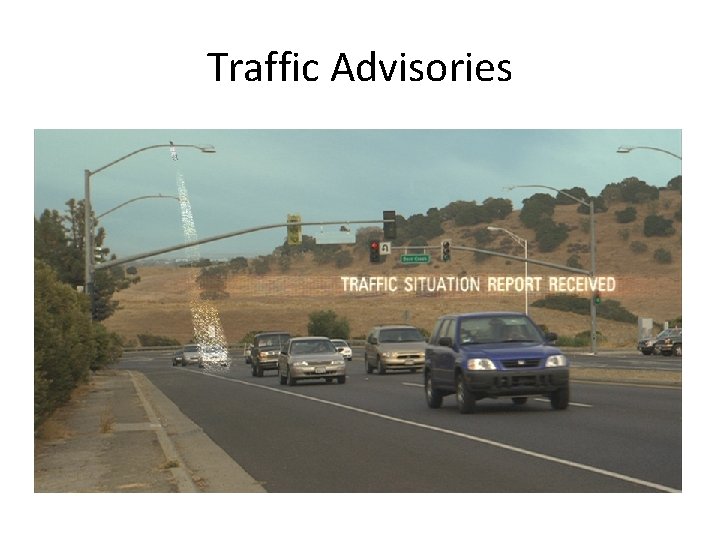
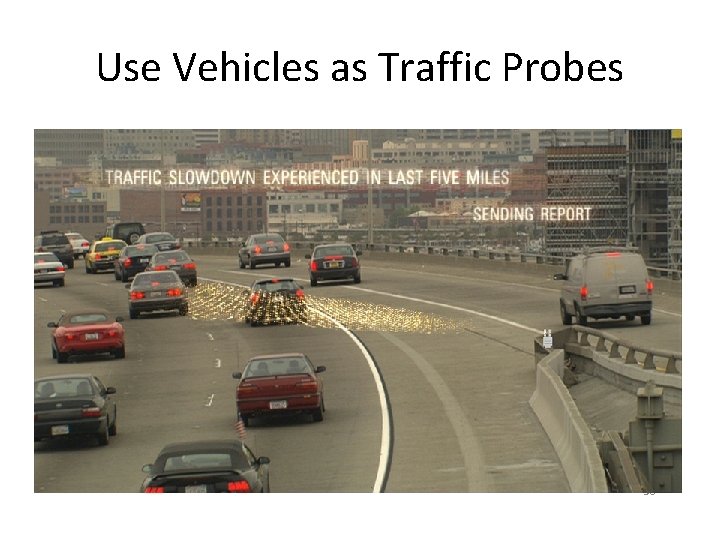
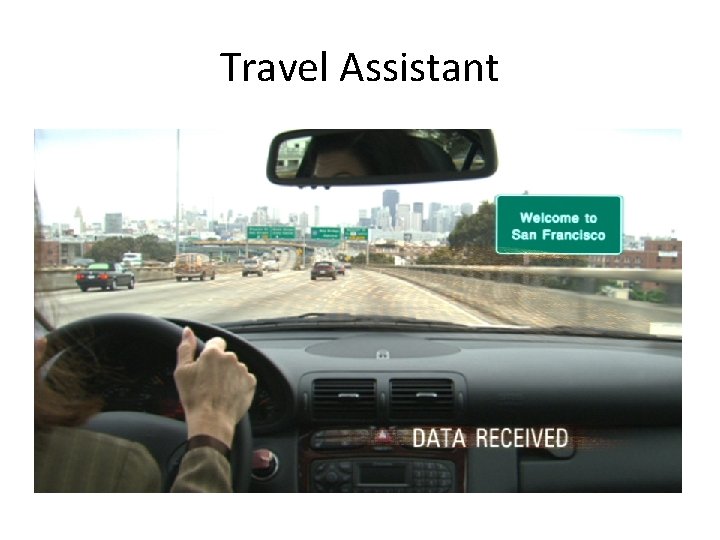
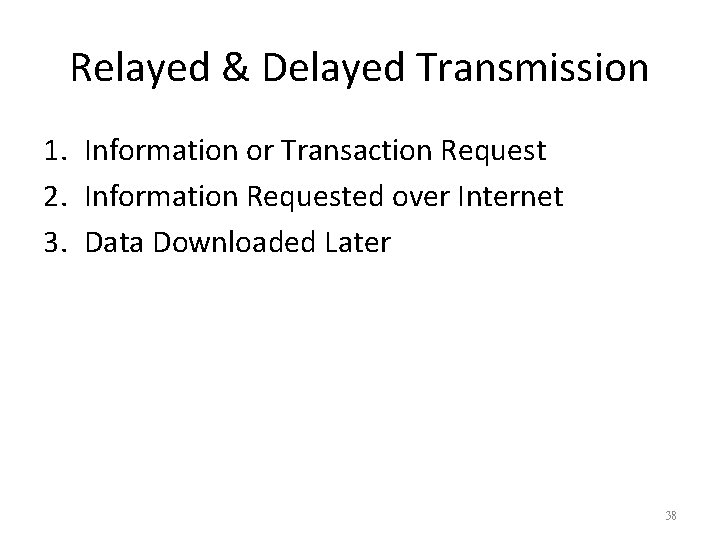
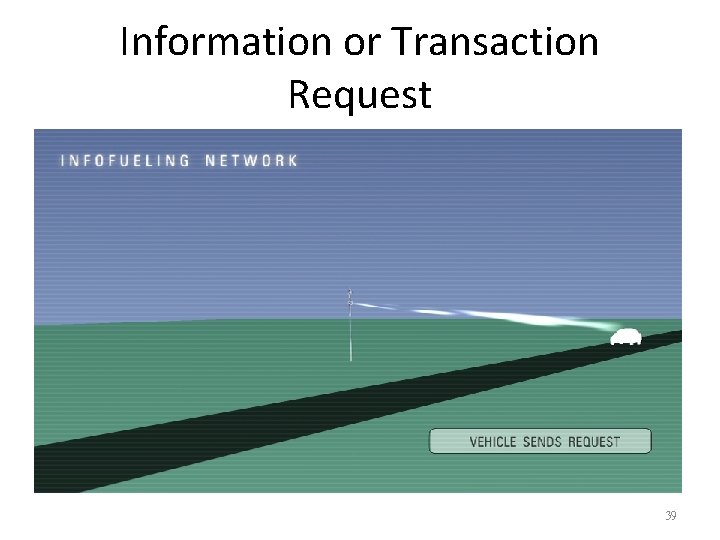
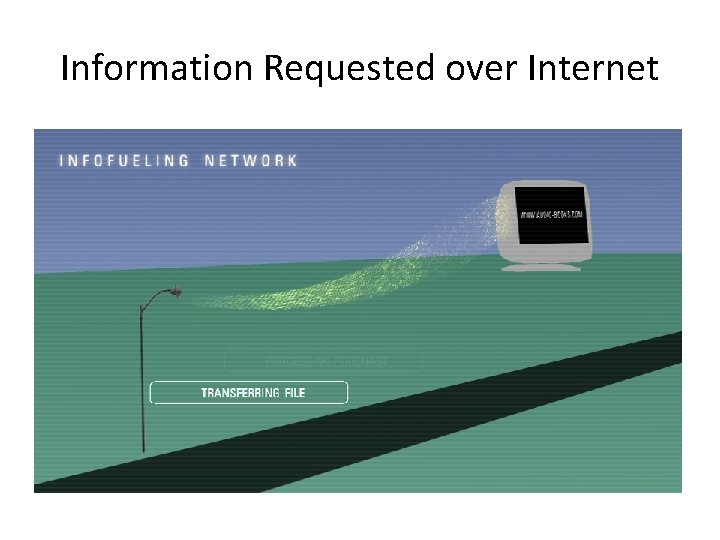
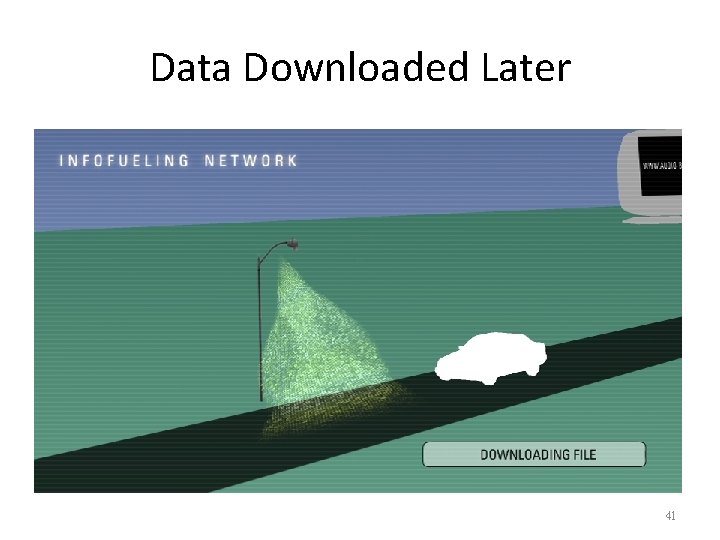
Illustrations of some US DSRC APPs • • Roadside Unit Placement Good News/ Bad News General Internet Access On-Demand/Dynamic Navigation Traffic Advisories Use Vehicles as Traffic Probes Travel Assistant Relayed & Delayed Transmission 1. Information or Transaction Request 2. Information Requested over Internet 3. Data Downloaded Later Pictures of these applications are selected from Lee Armstrong’s DSRC introduction website 30
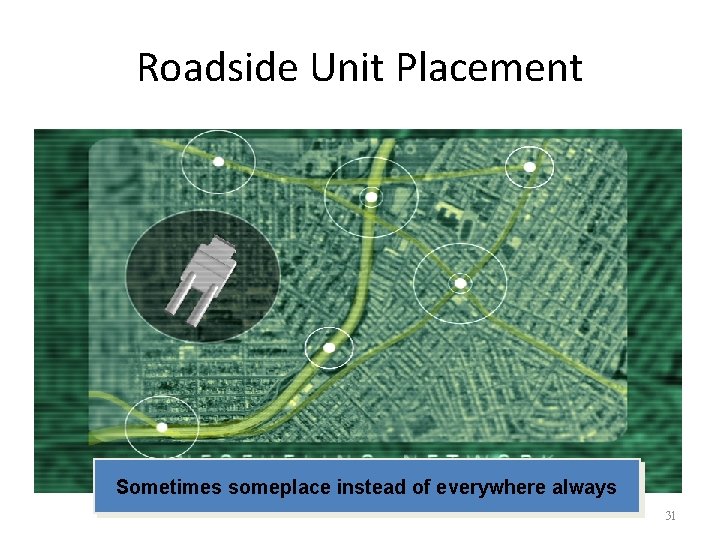
Roadside Unit Placement Sometimes someplace instead of everywhere always 31
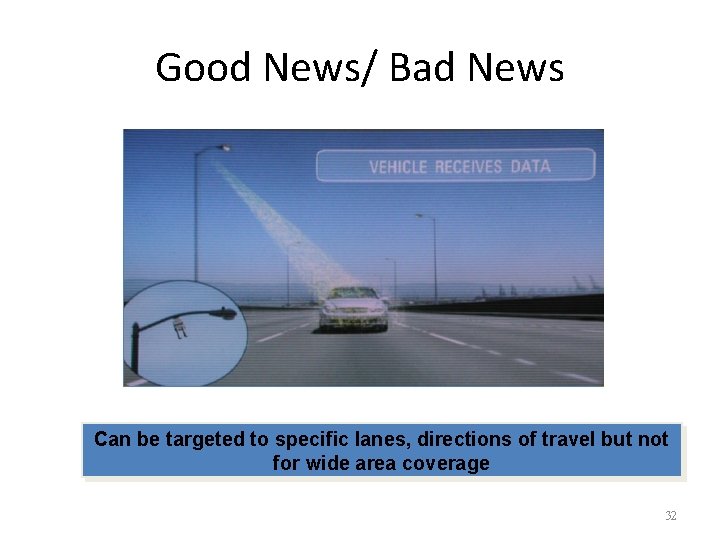
Good News/ Bad News Can be targeted to specific lanes, directions of travel but not for wide area coverage 32
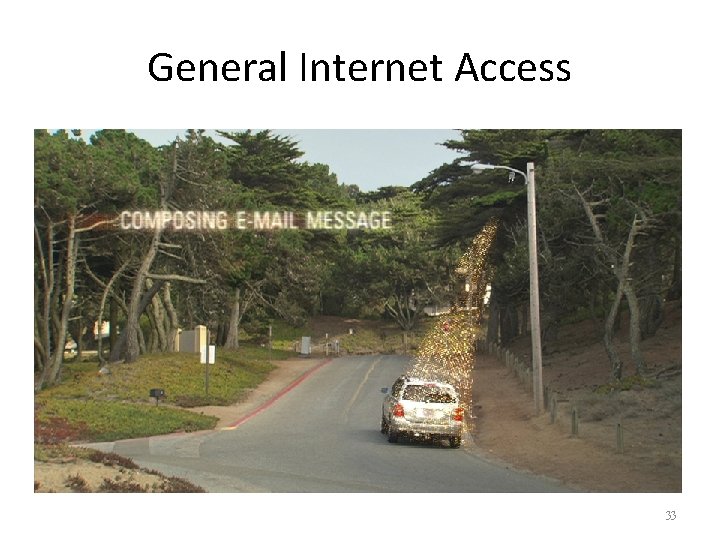
General Internet Access 33
On-Demand/Dynamic Navigation 34
Traffic Advisories 35
Use Vehicles as Traffic Probes 36
Travel Assistant 37
Relayed & Delayed Transmission 1. Information or Transaction Request 2. Information Requested over Internet 3. Data Downloaded Later 38
Information or Transaction Request 39
Information Requested over Internet 40
Data Downloaded Later 41