
DSP training session Culture of Error Excavating the








- Slides: 20
DSP training session Culture of Error: Excavating the error
Do Now Question: Checking for understanding can be problematic if: A. Students are slow to answer correctly. B. It embarrasses students. C. Students make mistakes. D. We are unsure how to respond to student misconceptions 3
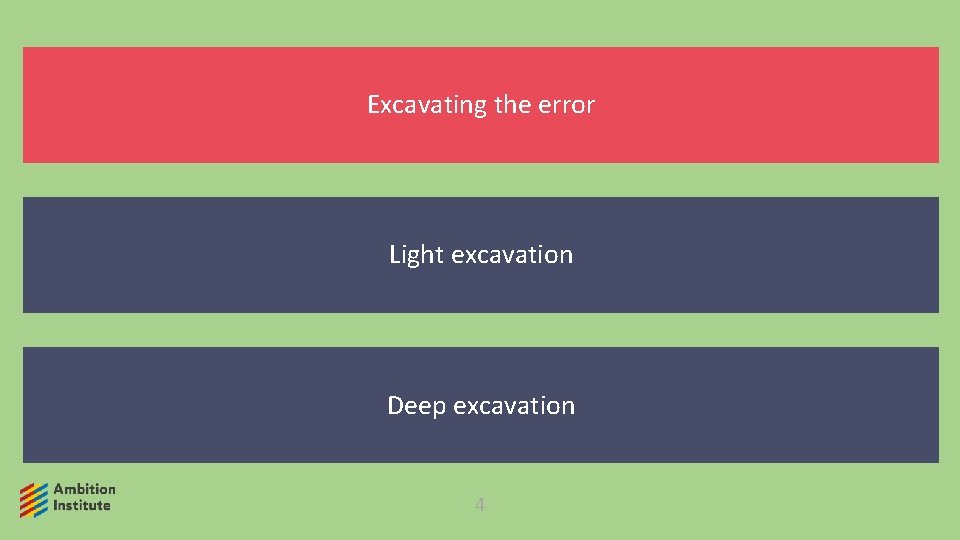
Excavating the error Light excavation Deep excavation 4
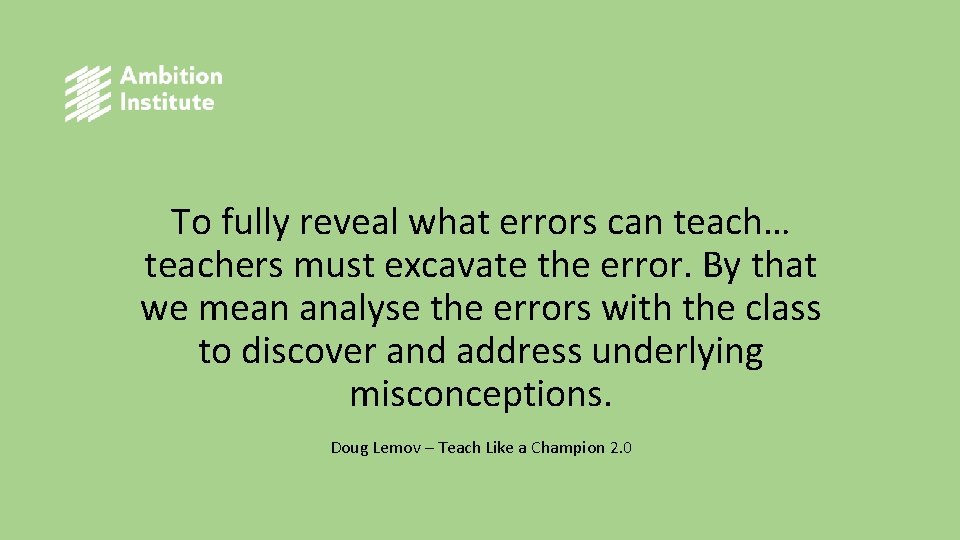
To fully reveal what errors can teach… teachers must excavate the error. By that we mean analyse the errors with the class to discover and address underlying misconceptions. Doug Lemov – Teach Like a Champion 2. 0
Excavating error – where does it come in? Excavating error – where does it come in Normalise error (presentence) Question How will you Withhold the collect manage answer and responses? your tell? excavate the error Normalise error (after you have addressed mistake) Can you think of any examples of misconceptions your pupils might have in certain lessons? 6
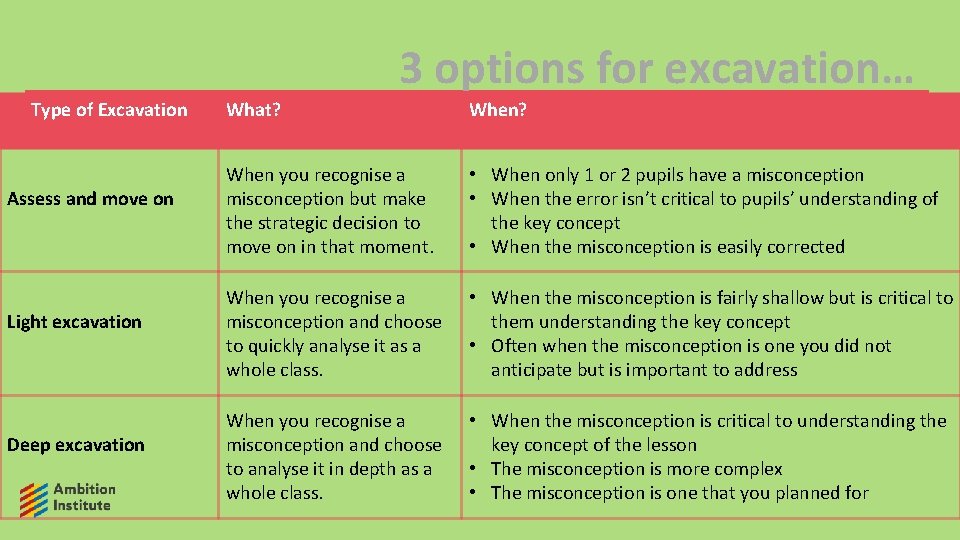
3 options for excavation… Type of Excavation Assess and move on Light excavation Deep excavation What? When you recognise a misconception but make the strategic decision to move on in that moment. • When only 1 or 2 pupils have a misconception • When the error isn’t critical to pupils’ understanding of the key concept • When the misconception is easily corrected When you recognise a misconception and choose to quickly analyse it as a whole class. • When the misconception is fairly shallow but is critical to them understanding the key concept • Often when the misconception is one you did not anticipate but is important to address When you recognise a misconception and choose to analyse it in depth as a whole class. • When the misconception is critical to understanding the key concept of the lesson • The misconception is more complex • The misconception is one that you planned for
Type of Excavation Assess and move on Light excavation Deep excavation What? Why is it important 3 options for excavation… to use each type of When? When you recognise a misconception but make the strategic decision to move on in that moment. excavation in the circumstances specified? • When only 1 or 2 pupils have a misconception • When the error isn’t critical to pupils’ understanding of the key concept • When the misconception is easily corrected When you recognise a misconception and choose to quickly analyse it as a whole class. • When the misconception is fairly shallow but is critical to them understanding the key concept • Often when the misconception is one you did not anticipate but is important to address When you recognise a misconception and choose to analyse it in depth as a whole class. • When the misconception is critical to understanding the key concept of the lesson • The misconception is more complex • The misconception is one that you planned for
Excavating the error Light excavation Deep excavation 9
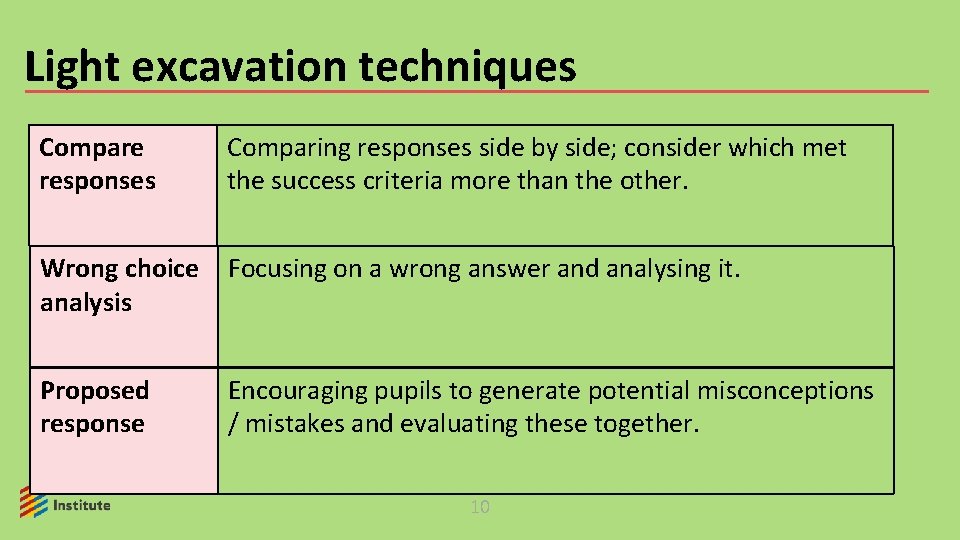
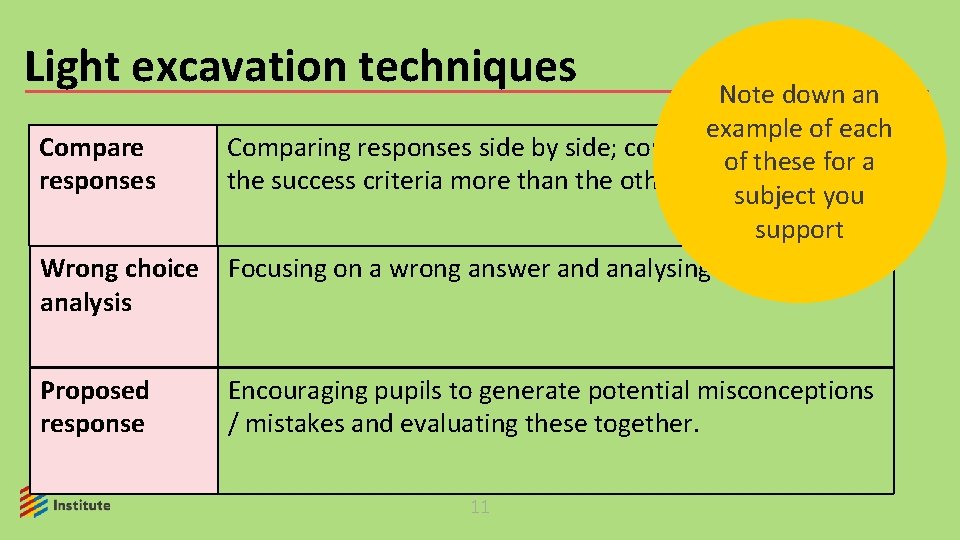
Light excavation techniques Compare responses Comparing responses side by side; consider which met the success criteria more than the other. Wrong choice analysis Focusing on a wrong answer and analysing it. Proposed response Encouraging pupils to generate potential misconceptions / mistakes and evaluating these together. 10
Light excavation techniques Note down an example of each Compare Comparing responses side by side; consider which met of these for a responses the success criteria more than the other. subject you support Wrong choice Focusing on a wrong answer and analysing it. analysis Proposed response Encouraging pupils to generate potential misconceptions / mistakes and evaluating these together. 11
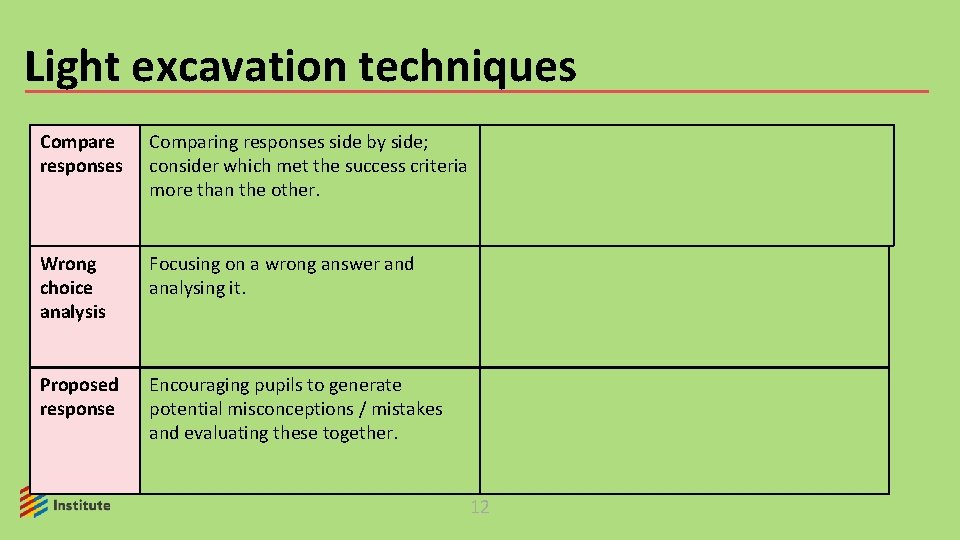
Light excavation techniques Compare responses Comparing responses side by side; consider which met the success criteria more than the other. Wrong choice analysis Focusing on a wrong answer and analysing it. Proposed response Encouraging pupils to generate potential misconceptions / mistakes and evaluating these together. 12
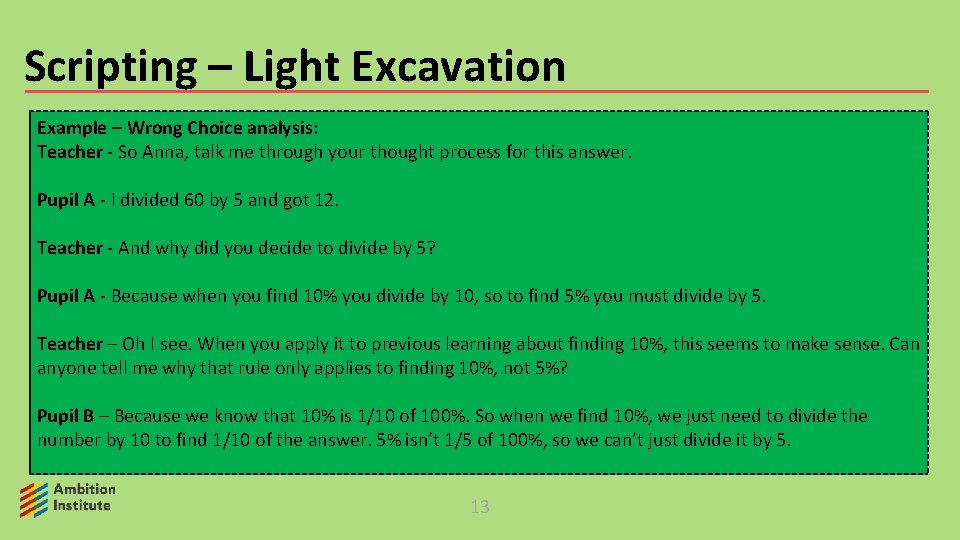
Scripting – Light Excavation Example – Wrong Choice analysis: Teacher - So Anna, talk me through your thought process for this answer. Pupil A - I divided 60 by 5 and got 12. Teacher - And why did you decide to divide by 5? Pupil A - Because when you find 10% you divide by 10, so to find 5% you must divide by 5. Teacher – Oh I see. When you apply it to previous learning about finding 10%, this seems to make sense. Can anyone tell me why that rule only applies to finding 10%, not 5%? Pupil B – Because we know that 10% is 1/10 of 100%. So when we find 10%, we just need to divide the number by 10 to find 1/10 of the answer. 5% isn’t 1/5 of 100%, so we can’t just divide it by 5. 13
Sharing Good Practice > Choose a common misconception/s from a subject that students you support might have. > Choose the two most appropriate techniques for your errors/misconceptions. > Share some examples of how you could do this / or have done it with everyone else. 14
Excavating the error Light excavation Deep excavation 15
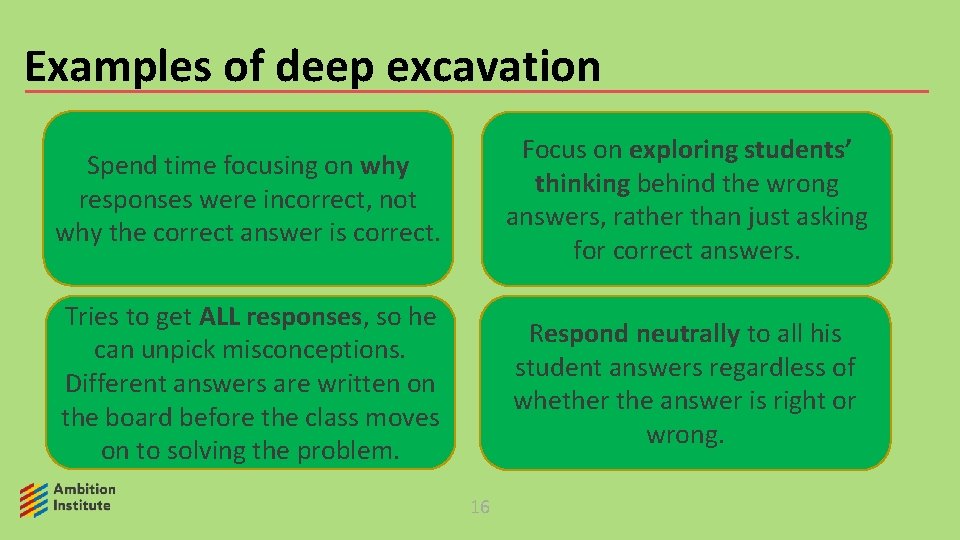
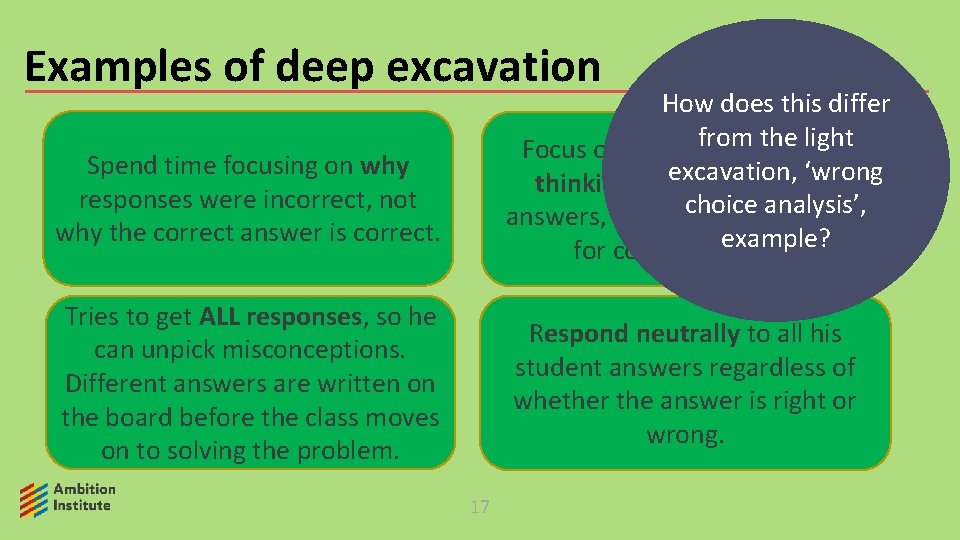
Examples of deep excavation Spend time focusing on why responses were incorrect, not why the correct answer is correct. Focus on exploring students’ thinking behind the wrong answers, rather than just asking for correct answers. Tries to get ALL responses, so he can unpick misconceptions. Different answers are written on the board before the class moves on to solving the problem. Respond neutrally to all his student answers regardless of whether the answer is right or wrong. 16
Examples of deep excavation How does this differ fromstudents’ the light Focus on exploring excavation, ‘wrong thinking behind the wrong analysis’, answers, rather choice than just asking example? for correct answers. Spend time focusing on why responses were incorrect, not why the correct answer is correct. Tries to get ALL responses, so he can unpick misconceptions. Different answers are written on the board before the class moves on to solving the problem. Respond neutrally to all his student answers regardless of whether the answer is right or wrong. 17
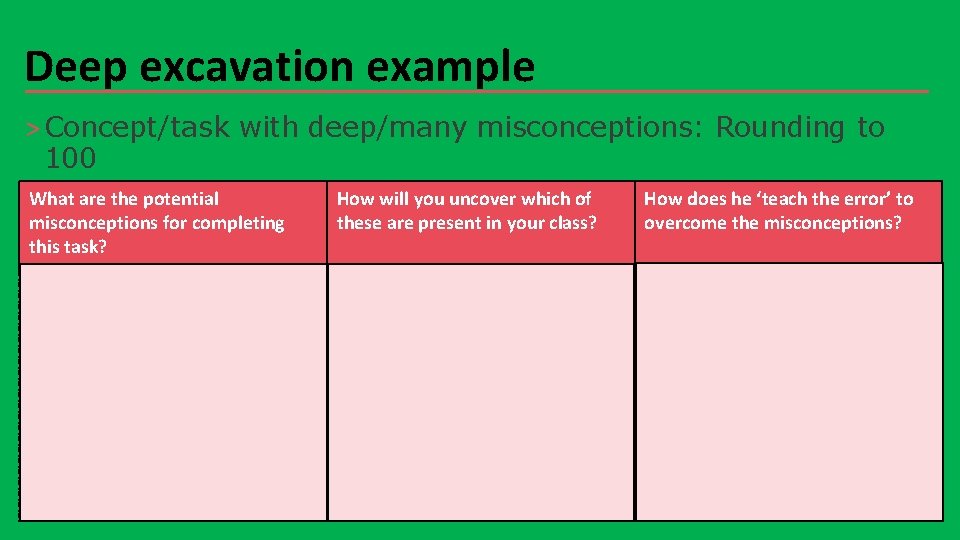
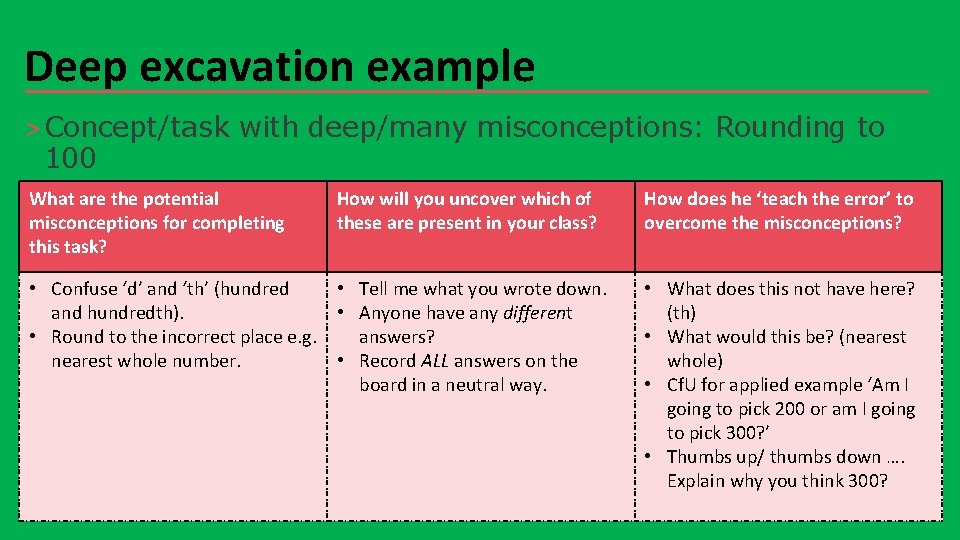
Deep excavation example > Concept/task with deep/many misconceptions: Rounding to 100 What are the potential misconceptions for completing this task? How will you uncover which of these are present in your class? • Confuse ‘d’ and ‘th’ (hundred • Tell me what you wrote down. and hundredth). • Anyone have any different • Round to the incorrect place e. g. answers? nearest whole number. • Record ALL answers on the board in a neutral way. 18 How does he ‘teach the error’ to overcome the misconceptions? • What does this not have here? (th) • What would this be? (nearest whole) • Cf. U for applied example ‘Am I going to pick 200 or am I going to pick 300? ’ • Thumbs up/ thumbs down …. Explain why you think 300?
Deep excavation example > Concept/task with deep/many misconceptions: Rounding to 100 What are the potential misconceptions for completing this task? How will you uncover which of these are present in your class? • Confuse ‘d’ and ‘th’ (hundred • Tell me what you wrote down. and hundredth). • Anyone have any different • Round to the incorrect place e. g. answers? nearest whole number. • Record ALL answers on the board in a neutral way. 19 How does he ‘teach the error’ to overcome the misconceptions? • What does this not have here? (th) • What would this be? (nearest whole) • Cf. U for applied example ‘Am I going to pick 200 or am I going to pick 300? ’ • Thumbs up/ thumbs down …. Explain why you think 300?
Worked example – Deep Excavation What is the fundamental misconception that needs to be addressed? How will you know which misconceptions are generating errors in your class? 20 What will you do to teach the error to ensure pupils overcome misconceptions?
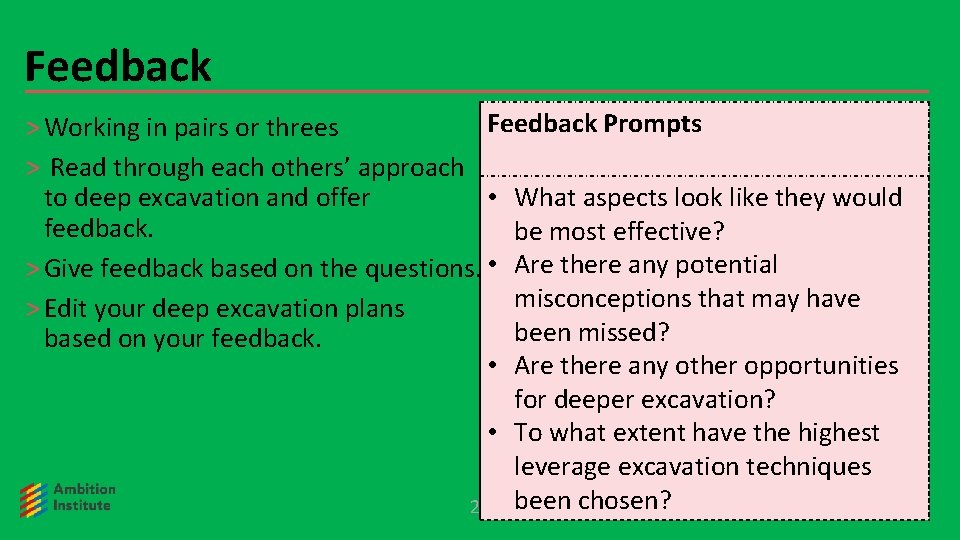
Feedback Prompts > Working in pairs or threes > Read through each others’ approach • What aspects look like they would to deep excavation and offer feedback. be most effective? > Give feedback based on the questions. • Are there any potential misconceptions that may have > Edit your deep excavation plans been missed? based on your feedback. • Are there any other opportunities for deeper excavation? • To what extent have the highest leverage excavation techniques 21 been chosen?