
DSLR FUNdamentals How Does it Work Single Lens
- Slides: 10
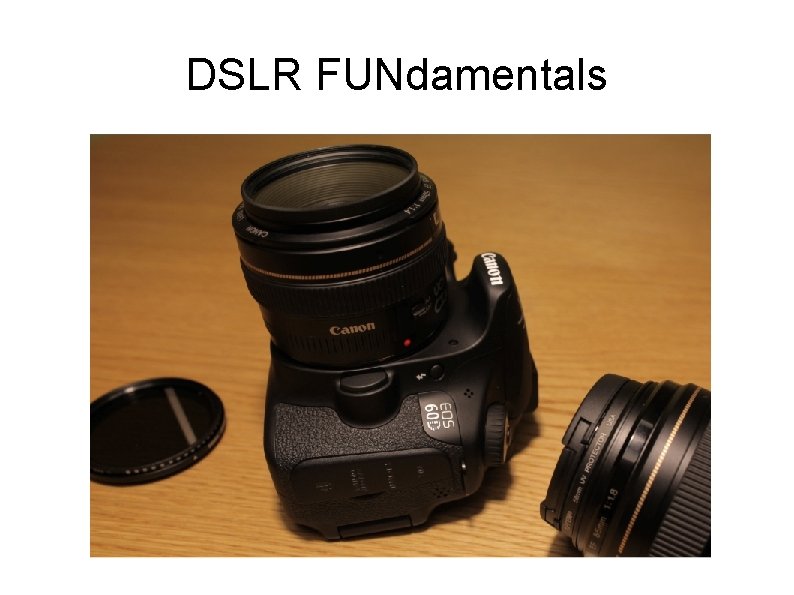
DSLR FUNdamentals
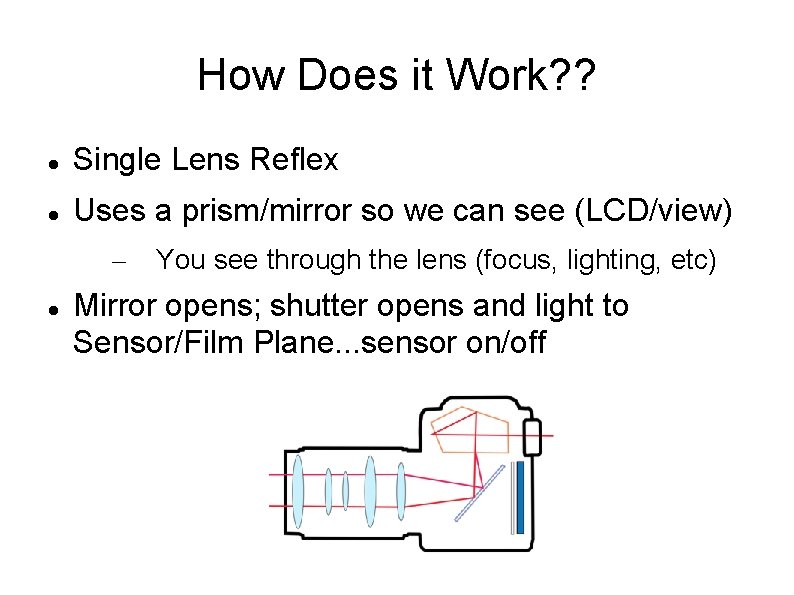
How Does it Work? ? Single Lens Reflex Uses a prism/mirror so we can see (LCD/view) – You see through the lens (focus, lighting, etc) Mirror opens; shutter opens and light to Sensor/Film Plane. . . sensor on/off
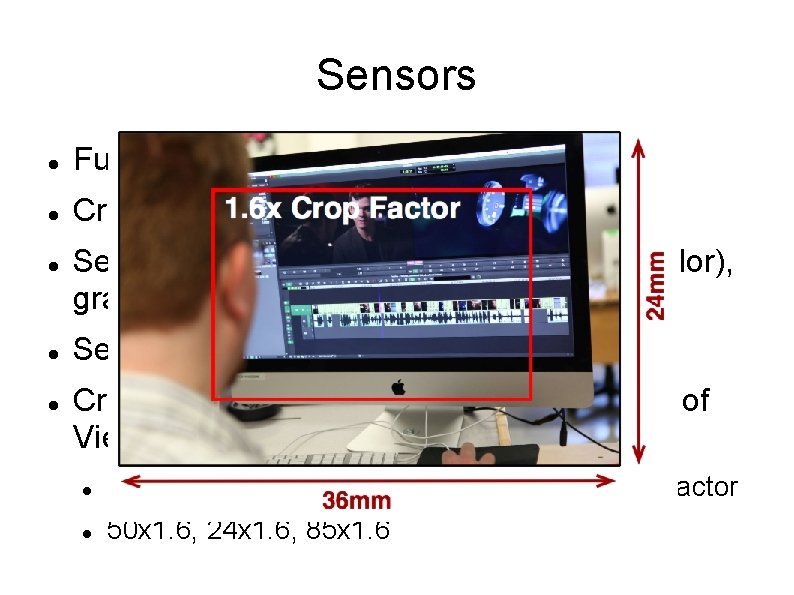
Sensors Full Frame (5 D)= 35 mm Crop Sensor (APS-C) Sensor affects: DOF, dynamic range (of color), grain (noise), field of view Sensor=Format Crop factor (sensor) x Focal Length= Field of View 60 D or 70 D= 1. 6 crop factor; C 100= 1. 5 crop factor 50 x 1. 6, 24 x 1. 6, 85 x 1. 6
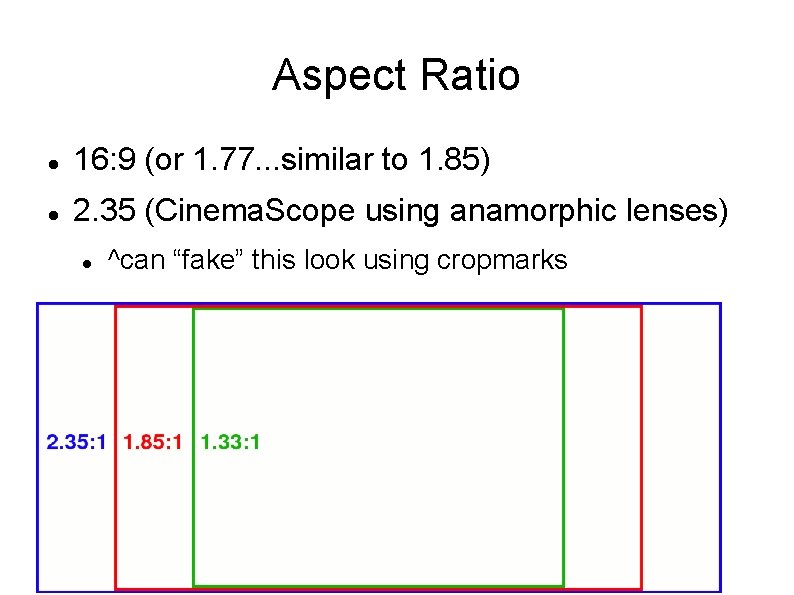
Aspect Ratio 16: 9 (or 1. 77. . . similar to 1. 85) 2. 35 (Cinema. Scope using anamorphic lenses) ^can “fake” this look using cropmarks
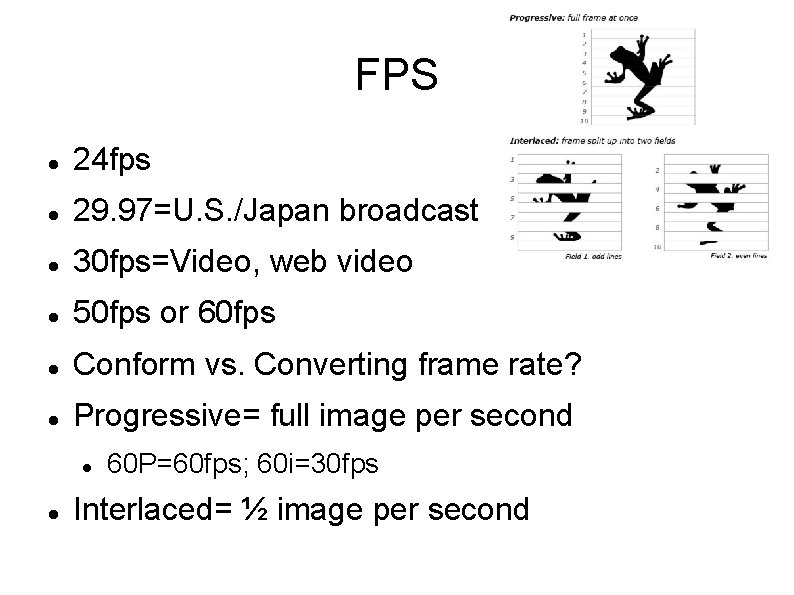
FPS 24 fps 29. 97=U. S. /Japan broadcast 30 fps=Video, web video 50 fps or 60 fps Conform vs. Converting frame rate? Progressive= full image per second 60 P=60 fps; 60 i=30 fps Interlaced= ½ image per second
Lenses Focal Length: distance from lens to film plane where light comes into focus (sensor) – Field of View/Angle of View (format + focal length). . What we see Prime v. Zoom DOF/Focus. . . field of view Fast/Slow lenses (low f/number) Bokeh What type of lens has great DOF? Shallow?
ISO/ASA Based on film speeds speed=light sensitivity Gain (fake light) High ISO=noise Try and stay under 800 (never over 1600) – Outside, shoot under 300 Native ISOs 160, 320, 640, 1250 Full stop (100 to 200) halving light
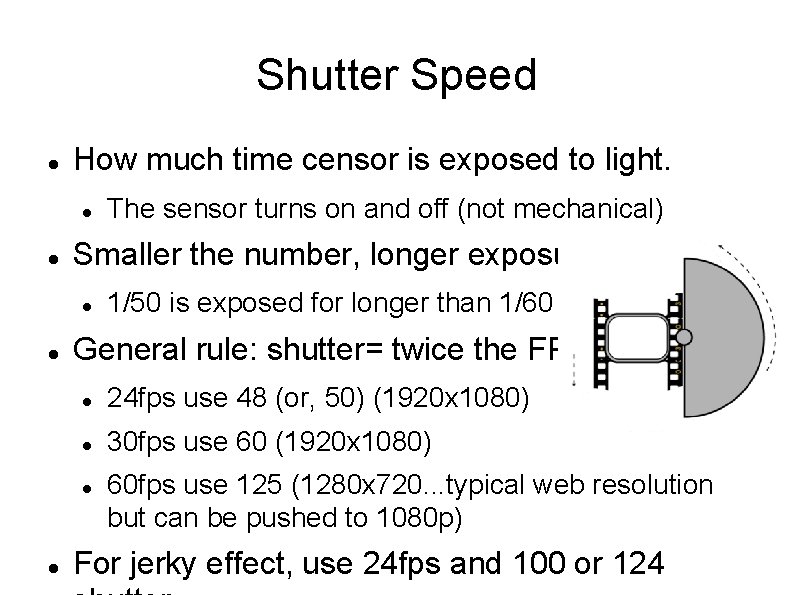
Shutter Speed How much time censor is exposed to light. Smaller the number, longer exposures 1/50 is exposed for longer than 1/60 General rule: shutter= twice the FPS 24 fps use 48 (or, 50) (1920 x 1080) 30 fps use 60 (1920 x 1080) The sensor turns on and off (not mechanical) 60 fps use 125 (1280 x 720. . . typical web resolution but can be pushed to 1080 p) For jerky effect, use 24 fps and 100 or 124
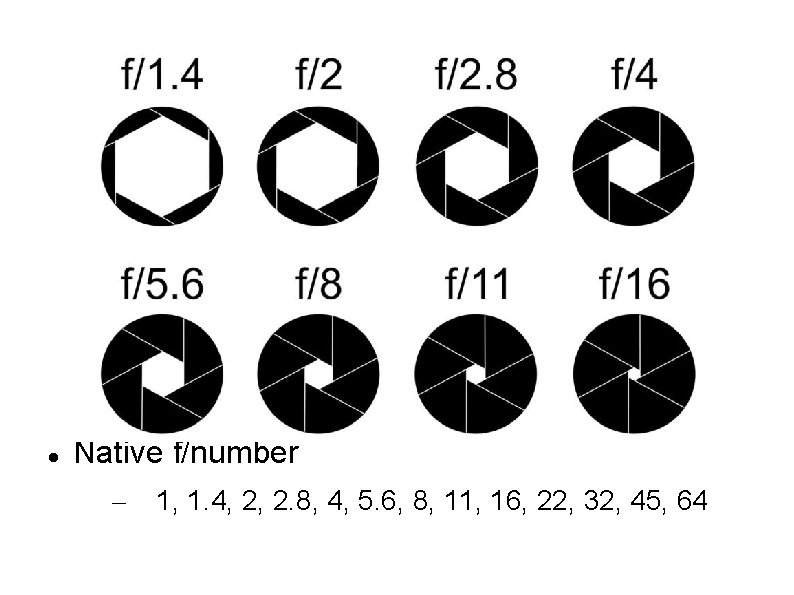
F-stop / Aperture Lets in “clean” light; Main control of DOF Smaller #=more light; bigger#=less light Ratio (aperture size and light let in). . . T-Stop measures light Open up/stop down Most films shot in f/4 -f/5. 6 Native f/number – 1, 1. 4, 2, 2. 8, 4, 5. 6, 8, 11, 16, 22, 32, 45, 64
Exposure Basics • Shutter: (set and forget at 1/48 or 1/50) • Aperture: Lets in clean light, but will alter your DOF. For moving subjects, f/4 or slower • ISO: controls only sensor's sensitivity to light; only affects exposure (aesthetically) • The key if not bright enough: add or bounce light • If possible, underexpose a bit; NEVER overexpose