
DSLab The Data Science Lab Stream Processing Spring
DSLab The Data Science Lab Stream Processing Spring 2020 – week #9
Stream Processing Module • Objectives • Review concepts of stream processing • Experiment with typical tools for • Data ingestion and processing • Week 9 • Concepts • Experiments • Week 10 • Advanced topics • Operations on streaming data (joins) • Time constraints • Homework
Why Stream Processing? • Reminder from module 2 (Big Data) • Batch vs Stream • Can wait until all information is available for a more accurate answer? batch • AKA: Data at rest • Operates on finite size data sets, and terminate when all data has been processed • You want an updated answer as more information becomes available? streams • AKA: Data in motion, or Fast data • Continuous computation that never stop, process infinite amount of data on the fly • Designed to keep size of in-memory state bounded, regardless of how much data is processed • Update the answer as more data becomes available • Operate on small time windows
Why Stream Processing? • Relevance (vs batch) • Insight more valuable shortly after events happen • (Near) real-time: from milliseconds to seconds, or minutes • It allows faster reaction • Detecting patterns, setting alerts • Some data is naturally unbounded (e. g. sensor data) • Resource constraints (storage and compute) • process large volumes of data arriving at high velocities • Retain only what is useful • Continuous processing
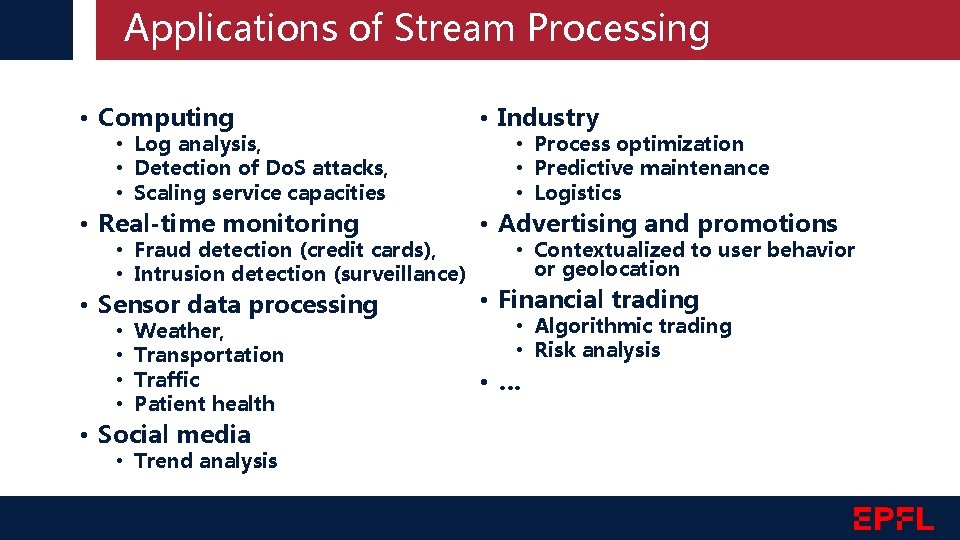
Applications of Stream Processing • Computing • Industry • Real-time monitoring • Advertising and promotions • Sensor data processing • Financial trading • Log analysis, • Detection of Do. S attacks, • Scaling service capacities • Fraud detection (credit cards), • Intrusion detection (surveillance) • • Weather, Transportation Traffic Patient health • Social media • Trend analysis • Process optimization • Predictive maintenance • Logistics • Contextualized to user behavior or geolocation • Algorithmic trading • Risk analysis • …
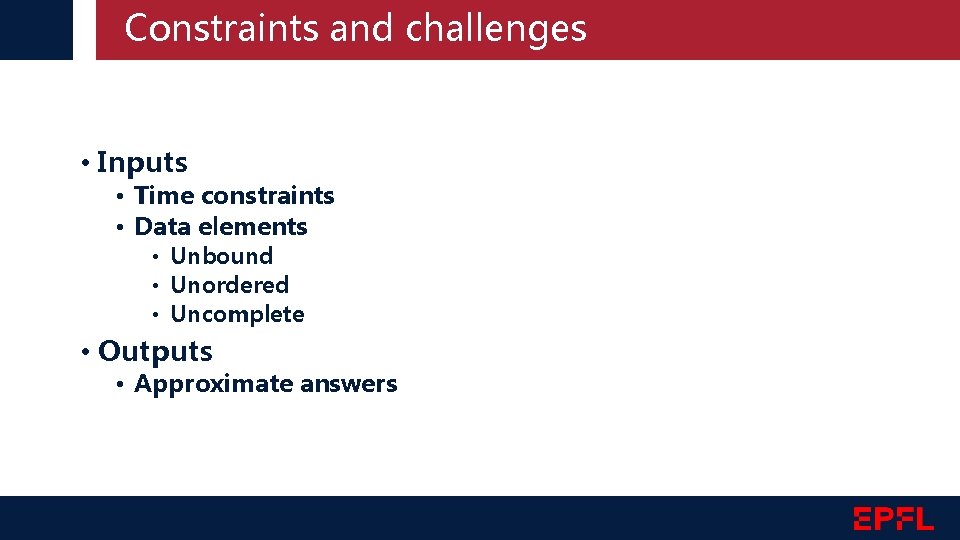
Constraints and challenges • Inputs • Time constraints • Data elements • Unbound • Unordered • Uncomplete • Outputs • Approximate answers
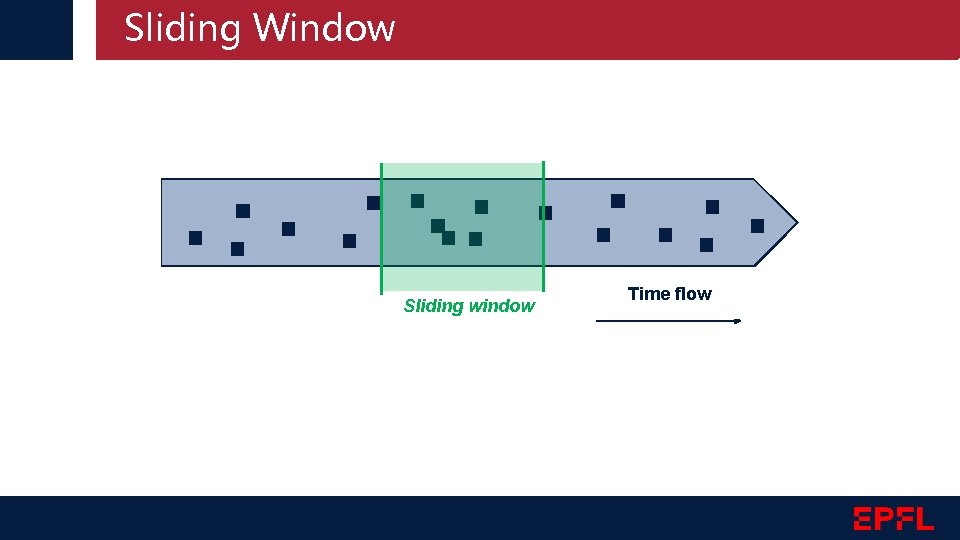
7 Sliding Window Sliding window Time flow
Related Concepts • Event Time vs Processing Time • Types of Windows • Sliding • Tambling • Time-based vs count-based • Window Operations (transformations) • Stateful / Stateless Operations (transormations)
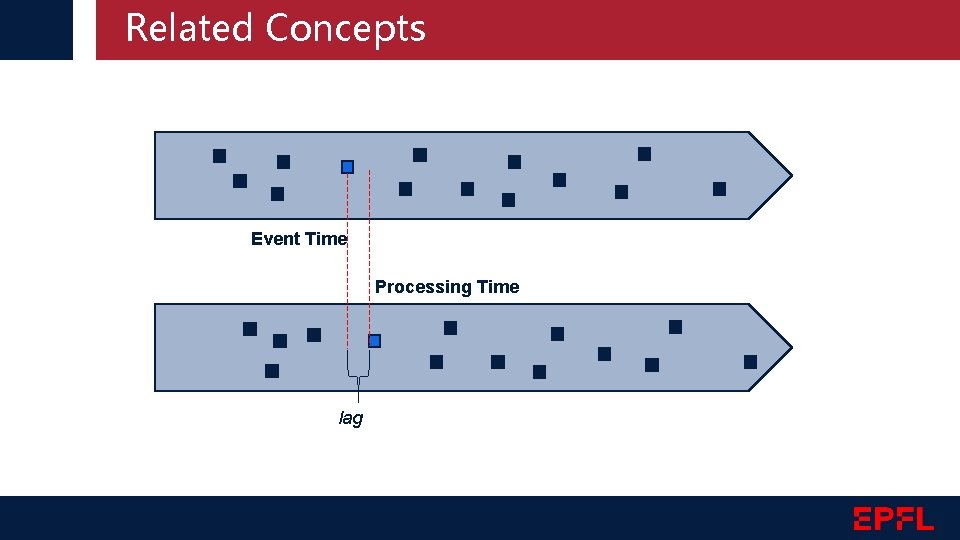
Related Concepts Event Time Processing Time lag
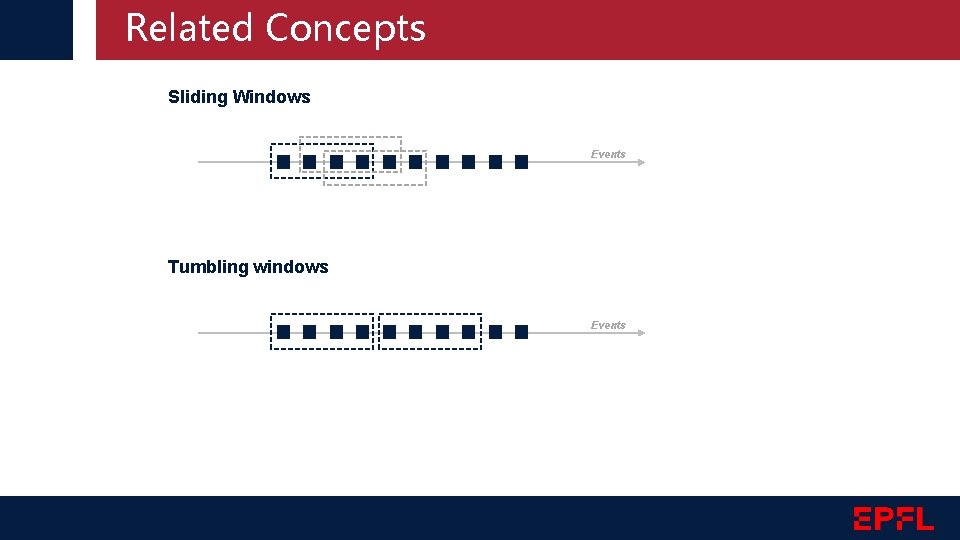
Related Concepts Sliding Windows Events Tumbling windows Events
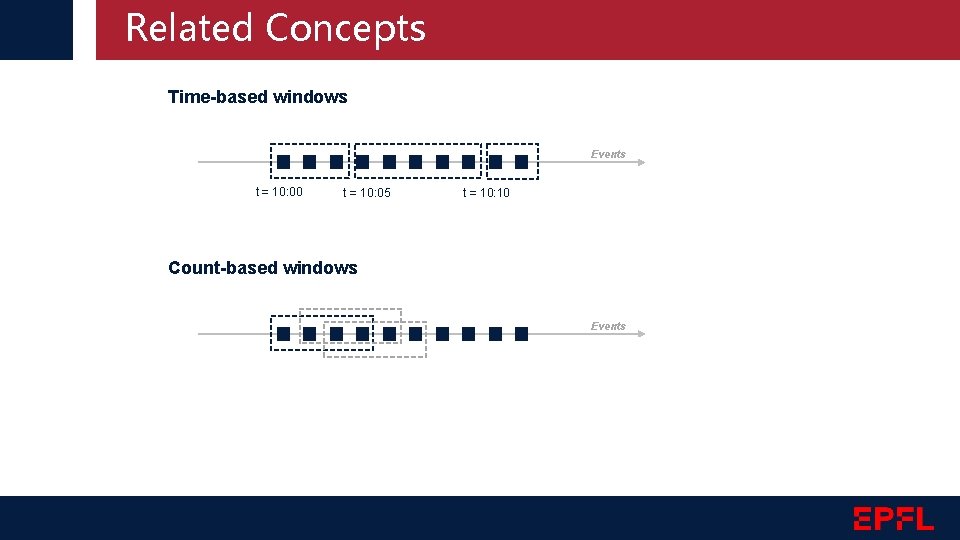
Related Concepts Time-based windows Events t = 10: 00 t = 10: 05 t = 10: 10 Count-based windows Events
Related Concepts • Window Operations (transformations) • Aggregations • Sums, averages, counts, maximum, … • Filtering • By type, IDs, … • …
Related Concepts • Stateful vs Stateless Operations (Transformations) • Stateful: need to memorize records or partial results • e. g. Min, Max and average temperature of a sensor • Stateless: rely on information within the window • e. g. Average temperature of sensor over last 5 minutes
Stream Processing - Tools
Stream Processing - Tools
Stream Processing - Tools
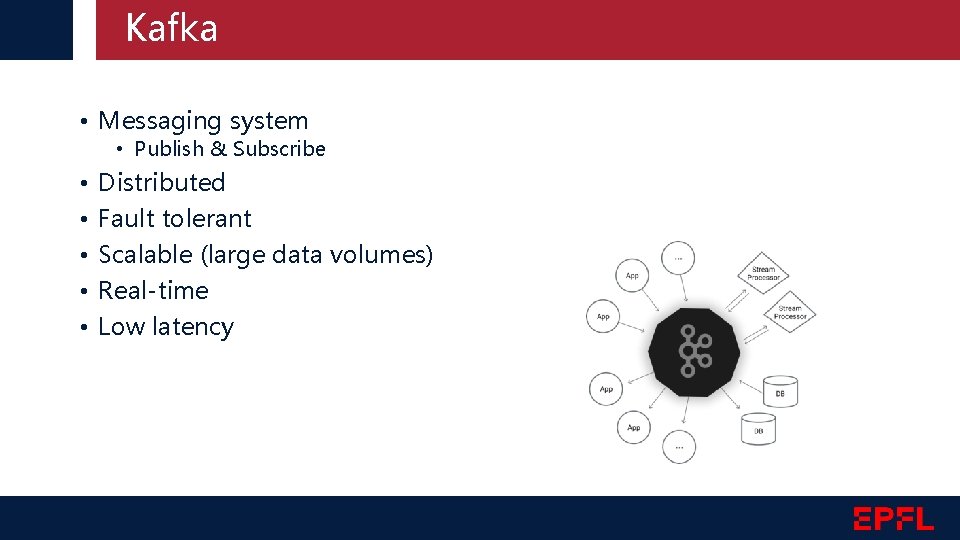
Kafka • Messaging system • Publish & Subscribe • • • Distributed Fault tolerant Scalable (large data volumes) Real-time Low latency
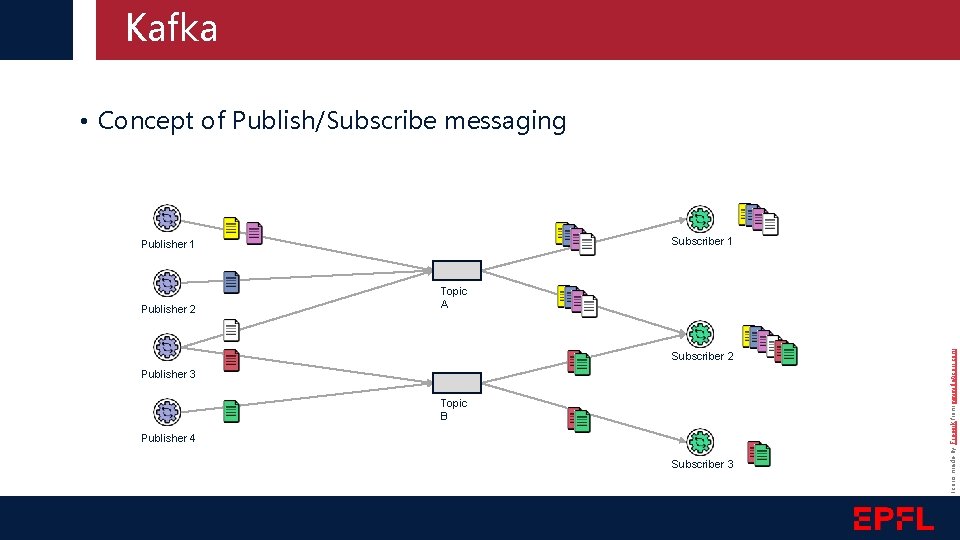
Kafka • Concept of Publish/Subscribe messaging Subscriber 1 Publisher 1 Subscriber 2 Publisher 3 Topic B Publisher 4 Subscriber 3 Icons made by Freepik from www. flaticon. com Publisher 2 Topic A
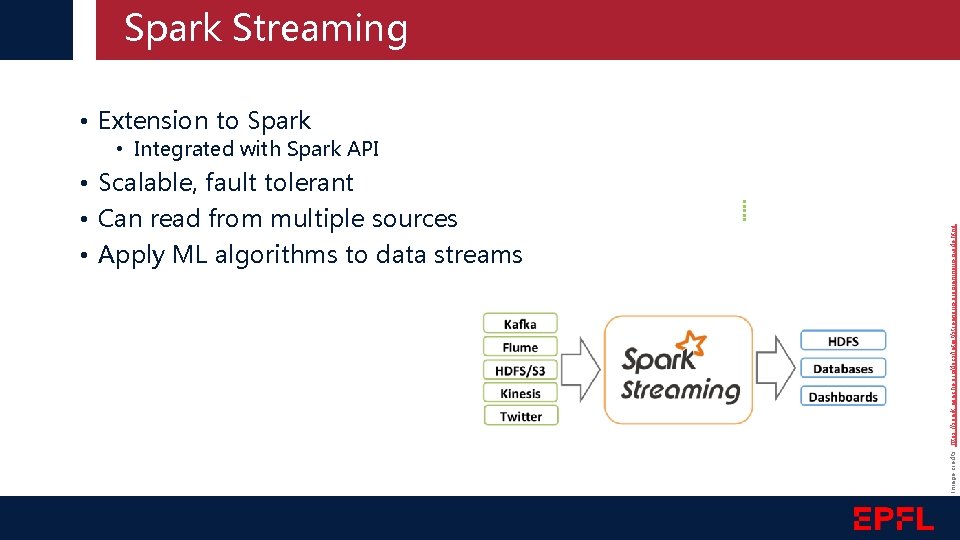
Spark Streaming • Extension to Spark • Scalable, fault tolerant • Can read from multiple sources • Apply ML algorithms to data streams Image credits: https: //spark. apache. org/docs/latest/streaming-programming-guide. html • Integrated with Spark API
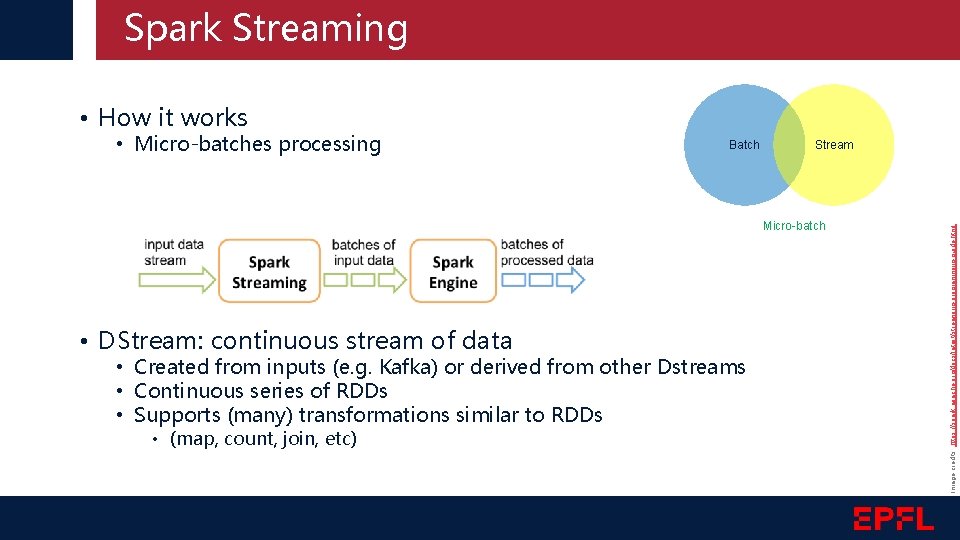
Spark Streaming • How it works Batch Stream Micro-batch • DStream: continuous stream of data • Created from inputs (e. g. Kafka) or derived from other Dstreams • Continuous series of RDDs • Supports (many) transformations similar to RDDs • (map, count, join, etc) Image credits: https: //spark. apache. org/docs/latest/streaming-programming-guide. html • Micro-batches processing
![Exercise • Documentation and Resources • Spark Streaming Programming Guide [1] • Kafka Documentation](http://slidetodoc.com/presentation_image_h2/a41d1f982b59bc69d6e8ea482f41e202/image-21.jpg "Exercise • Documentation and Resources • Spark Streaming Programming Guide [1] • Kafka Documentation")
Exercise • Documentation and Resources • Spark Streaming Programming Guide [1] • Kafka Documentation [2] • Practical Exercise • See course website: https: //epfl-dslab 2020. github. io/ (week 9) [1] https: //spark. apache. org/docs/latest/streaming-programming-guide. html [2] https: //kafka. apache. org/documentation/
2 2 Exercise 1. Message queue • Introduction to Apache Kafka • Topics • Creation • Publish • Subscribe • Synthetic example
2 3 Exercise 2. Stream Processing with Spark Streaming and Kafka • How to properly setup Spark Streaming • Resume synthetic exercise • Connect to Kafka and consume stream • Window operations • Use real public stream
- Slides: 23