
DSD and TBHIV services in Zimbabwe Dr Tsitsi
DSD and TB/HIV services in Zimbabwe Dr. Tsitsi Apollo, MBCh. B, MPH, MBA Deputy Director HIV/AIDS and STI, MOHCC 22 July 2019
Presentation Outline • Background • Progress in Implementing TPT • DSD for TB/HIV Opportunities and Challenges • Conclusions
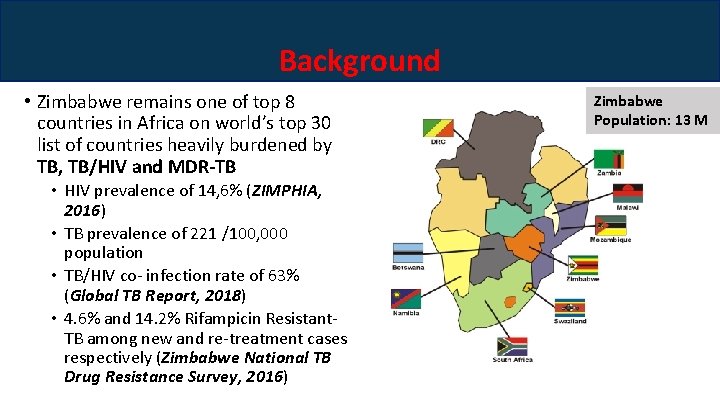
Background • Zimbabwe remains one of top 8 countries in Africa on world’s top 30 list of countries heavily burdened by TB, TB/HIV and MDR-TB • HIV prevalence of 14, 6% (ZIMPHIA, 2016) • TB prevalence of 221 /100, 000 population • TB/HIV co- infection rate of 63% (Global TB Report, 2018) • 4. 6% and 14. 2% Rifampicin Resistant. TB among new and re-treatment cases respectively (Zimbabwe National TB Drug Resistance Survey, 2016) Zimbabwe Population: 13 M
TB/HIV Country Context • Country adapted 2004 WHO interim policy on collaborative TB/HIV activities • Strengthening collaborative mechanisms between national TB and AIDS programmes • Reduction of TB burden among PLHIV (3 I’s) • Reduction of HIV burden among TB patients The CQUIN Learning Network 4
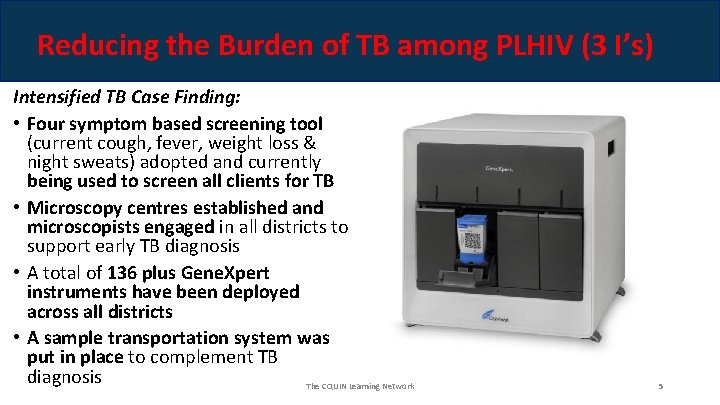
Reducing the Burden of TB among PLHIV (3 I’s) Intensified TB Case Finding: • Four symptom based screening tool (current cough, fever, weight loss & night sweats) adopted and currently being used to screen all clients for TB • Microscopy centres established and microscopists engaged in all districts to support early TB diagnosis • A total of 136 plus Gene. Xpert instruments have been deployed across all districts • A sample transportation system was put in place to complement TB diagnosis The CQUIN Learning Network 5
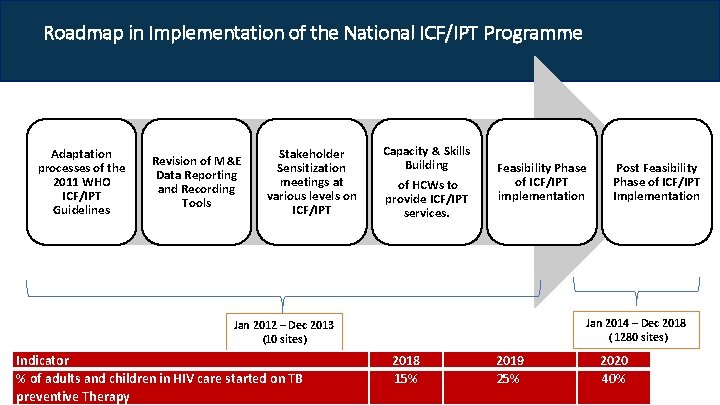
Roadmap in Implementation of the National ICF/IPT Programme Adaptation processes of the 2011 WHO ICF/IPT Guidelines Revision of M&E Data Reporting and Recording Tools Stakeholder Sensitization meetings at various levels on ICF/IPT Capacity & Skills Building of HCWs to provide ICF/IPT services. Feasibility Phase of ICF/IPT implementation Jan 2014 – Dec 2018 ( 1280 sites) Jan 2012 – Dec 2013 (10 sites) Indicator % of adults and children in HIV care started on TB preventive Therapy Post Feasibility Phase of ICF/IPT Implementation 2018 15% 2019 25% 2020 40%
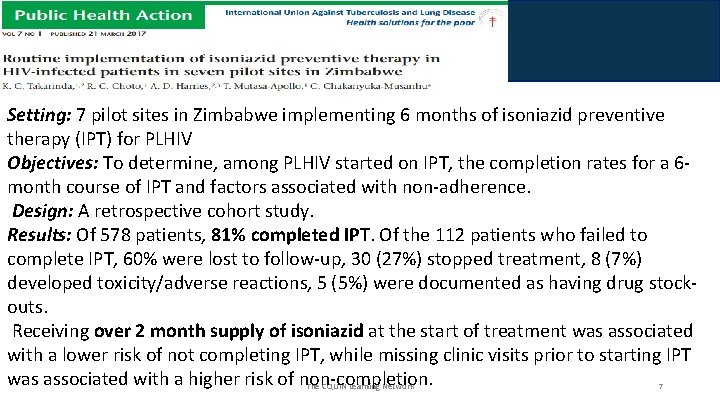
Setting: 7 pilot sites in Zimbabwe implementing 6 months of isoniazid preventive therapy (IPT) for PLHIV Objectives: To determine, among PLHIV started on IPT, the completion rates for a 6 month course of IPT and factors associated with non-adherence. Design: A retrospective cohort study. Results: Of 578 patients, 81% completed IPT. Of the 112 patients who failed to complete IPT, 60% were lost to follow-up, 30 (27%) stopped treatment, 8 (7%) developed toxicity/adverse reactions, 5 (5%) were documented as having drug stockouts. Receiving over 2 month supply of isoniazid at the start of treatment was associated with a lower risk of not completing IPT, while missing clinic visits prior to starting IPT was associated with a higher risk of non-completion. The CQUIN Learning Network 7
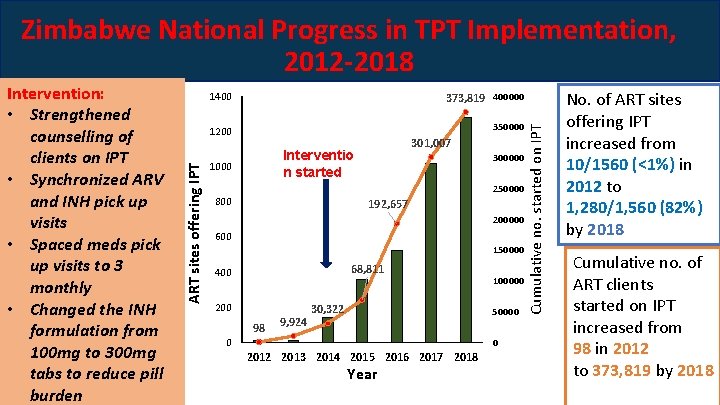
1400 373, 819 400000 1200 350000 301, 007 Interventio n started 1000 300000 250000 800 192, 657 200000 600 150000 68, 811 400 200 98 9, 924 30, 322 100000 50000 0 0 2012 2013 2014 2015 2016 2017 2018 Year Cumulative no. started on IPT Intervention: • Strengthened counselling of clients on IPT • Synchronized ARV and INH pick up visits • Spaced meds pick up visits to 3 monthly • Changed the INH formulation from 100 mg to 300 mg tabs to reduce pill burden ART sites offering IPT Zimbabwe National Progress in TPT Implementation, 2012 -2018 No. of ART sites offering IPT increased from 10/1560 (<1%) in 2012 to 1, 280/1, 560 (82%) by 2018 Cumulative no. of ART clients started on IPT increased from 98 in 2012 to 373, 819 by 2018
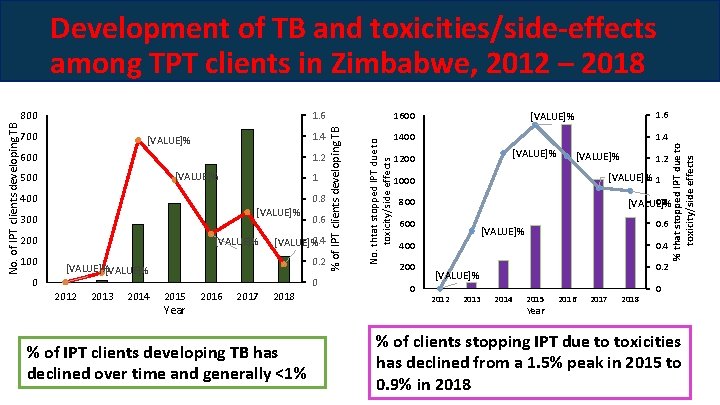
Development of TB and toxicities/side-effects among TPT clients in Zimbabwe, 2012 – 2018 1. 4 [VALUE]% 600 1. 2 [VALUE]% 500 1 400 0. 8 [VALUE]% 300 200 100 0 [VALUE]% 0. 4 [VALUE]% 0. 2 [VALUE]% 2012 2013 2014 0. 6 0 2015 Year 2016 2017 2018 % of IPT clients developing TB has declined over time and generally <1% No. thtat stopped IPT due to toxicity/side effects 700 1600 1. 6 [VALUE]% 1400 1. 4 [VALUE]% 1200 [VALUE]% 1. 2 [VALUE]% 1 1000 800 0. 8 [VALUE]% 600 0. 6 [VALUE]% 400 200 0 % that stopped IPT due to toxicity/side effects 1. 6 % of IPT clients developing TB No. of IPT clients developing TB 800 0. 4 0. 2 [VALUE]% 2012 2013 2014 2015 Year 2016 2017 2018 0 % of clients stopping IPT due to toxicities has declined from a 1. 5% peak in 2015 to 0. 9% in 2018
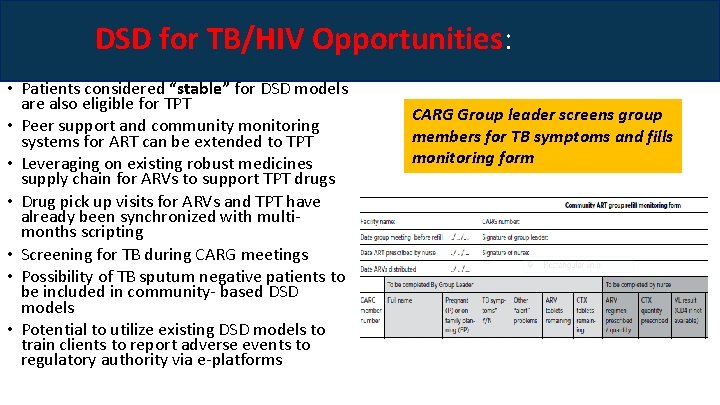
DSD for TB/HIV Opportunities: • Patients considered “stable” for DSD models are also eligible for TPT • Peer support and community monitoring systems for ART can be extended to TPT • Leveraging on existing robust medicines supply chain for ARVs to support TPT drugs • Drug pick up visits for ARVs and TPT have already been synchronized with multimonths scripting • Screening for TB during CARG meetings • Possibility of TB sputum negative patients to be included in community- based DSD models • Potential to utilize existing DSD models to train clients to report adverse events to regulatory authority via e-platforms CARG Group leader screens group members for TB symptoms and fills monitoring form
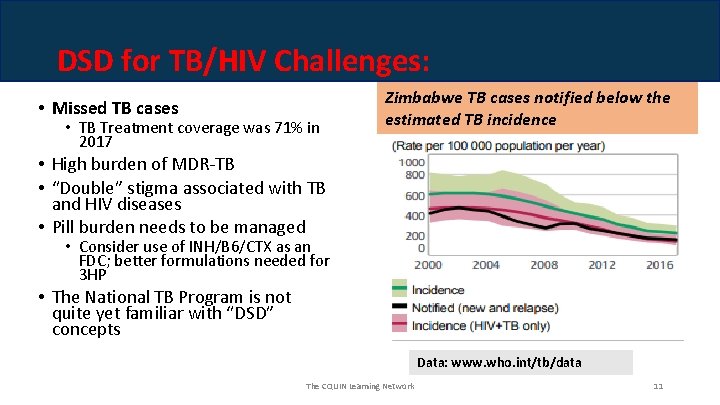
DSD for TB/HIV Challenges: • Missed TB cases • TB Treatment coverage was 71% in 2017 Zimbabwe TB cases notified below the estimated TB incidence • High burden of MDR-TB • “Double” stigma associated with TB and HIV diseases • Pill burden needs to be managed • Consider use of INH/B 6/CTX as an FDC; better formulations needed for 3 HP • The National TB Program is not quite yet familiar with “DSD” concepts Data: www. who. int/tb/data The CQUIN Learning Network 11
Conclusion: • DSD models for TB/HIV are needed especially in high burden TB/HIV countries to address the needs of PLHIV and at high risk of developing TB • Opportunities and challenges exist in developing effective models that provide client-centred services that meet the expectations and preferences of clients without compromising their treatment outcomes • Investments in operations research are needed to further understand what would be required to inform policy and practice The CQUIN Learning Network 12
Acknowledgements: • HIV and TB Department, Zimbabwe, MOHCC • Dr Regis Choto, Dr Kudakwashe Takarinda • HIV and TB Technical and Funding Partners The CQUIN Learning Network 13
- Slides: 13