
Dry Mouth Medications as a Cause Emerson Robinson
Dry Mouth — Medications as a Cause Emerson Robinson, DDS, MPH Regional Dental Consultant Region V Health Conference June 4 -6, 2008 Minneapolis, MN
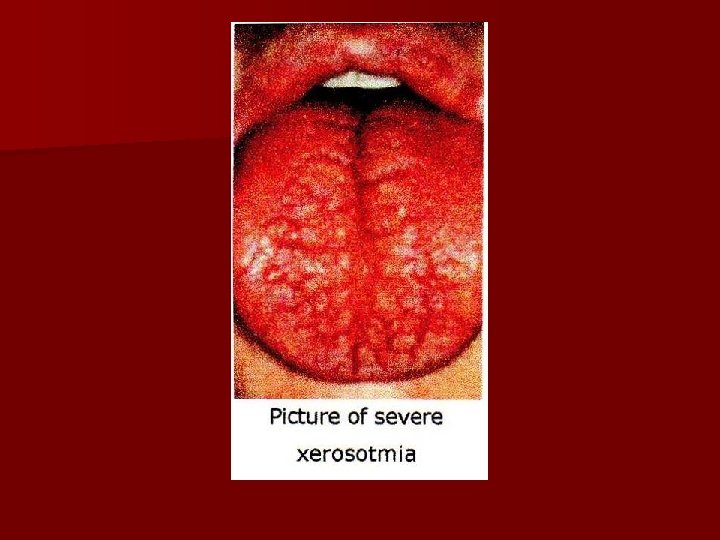
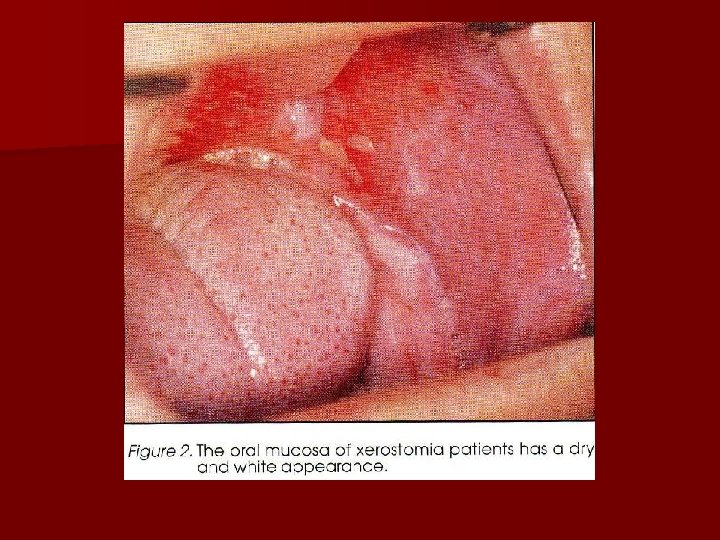
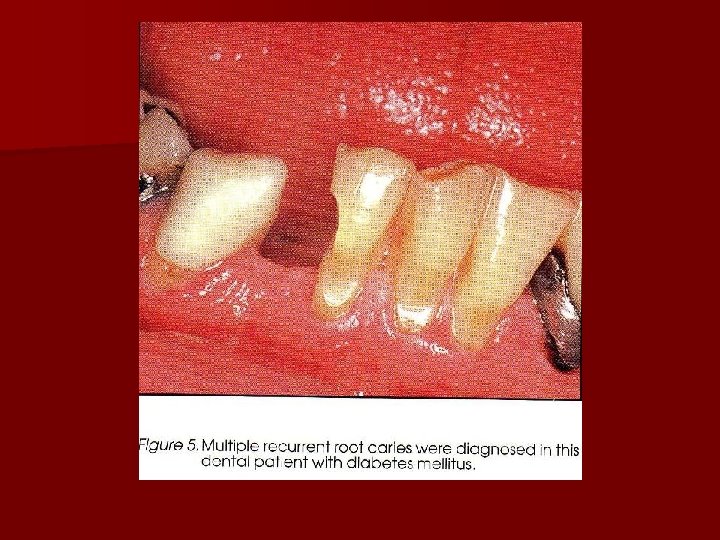
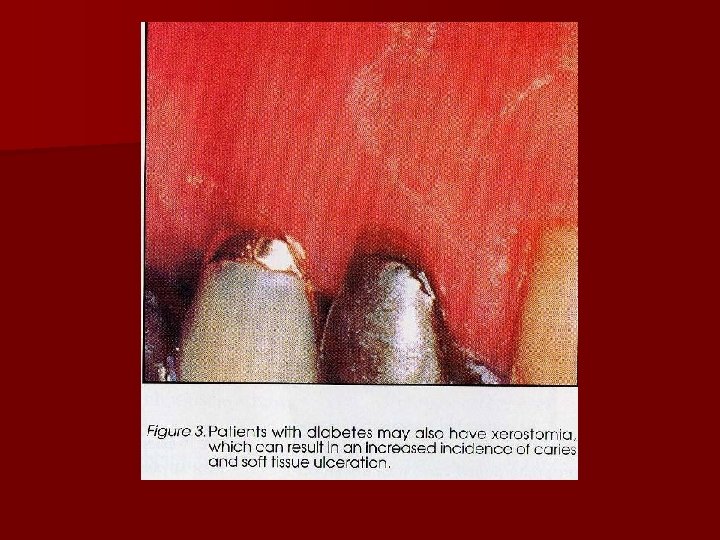
Dry Mouth (Xerostomia) n n Dry mouth also called xerostomia (er-oh-STOH-meeah), is the condition of not having enough saliva or spit to keep the mouth moist Dry mouth can happen to anyone occasionally, for example, when nervous or stressed When dry mouth persists, it can make chewing, eating, swallowing, and even talking difficult Dry mouth increases the risk for tooth decay because saliva helps to keep harmful germs that cause cavities and other oral infections in check
The Complexities of the Drug-Dry Mouth Relationship… n Dry mouth is a subjective symptom. n Quantitative objective data regarding the capacity of drugs to induce dryness are usually obtained from responses given by patients in clinical studies. n Unfortunately, few such studies have been conducted, but is hardly surprising.
The Complexities of the Drug-Dry Mouth Relationship Dry mouth is often regarded as a petty complaint, so there is allegedly no compelling health-related reason to assess its presence n Most medical clinicians and pharmacologists place “dry mouth” in a category which usually does not require the care of a physician n So the urgency to obtain specific information about the frequency are severity of oral dryness is simply not there n
Saliva n Saliva is a very important part of Oral Health. Saliva provides three important functions: 1. Provides enzymes to help with digestion of food. 2. Provides a method to stabilize the p. H that keeps the acid levels in check. 3. Provides high levels of oxygen in order to keep oral tissues healthy and fresh. n Saliva is nature’s way of protecting us from bad breath because healthy saliva contains high concentrations of oxygen—the nature enemy of anaerobic bacteria.
What Saliva Does The average healthy mouth produces about 600 milliliters of saliva each day. That is enough to fill a 12 -ounce soda bottle. n Saliva functions in many ways that we may not even be aware of. Some of those functions are: n § § § § § Lubricates oral tissue Cleanses the mouth Begins the digestive process with enzymes Maintains a neutral oral p. H Protects oral tissue against microorganism invasion Helps remineralize the teeth Prevents decay Facilitates swallowing Acts as a solvent to enhance taste stimuli
Reasons for Salivary Glands To Under Function n n n Medications—over 400 medicines can cause dry mouth Diseases such as diabetes, Hodgkin's, Parkinson’s disease, HIV/AIDS, and Sjogens syndrome may lead to dry mouth Radiation therapy Chemotherapy Menopause Smoking
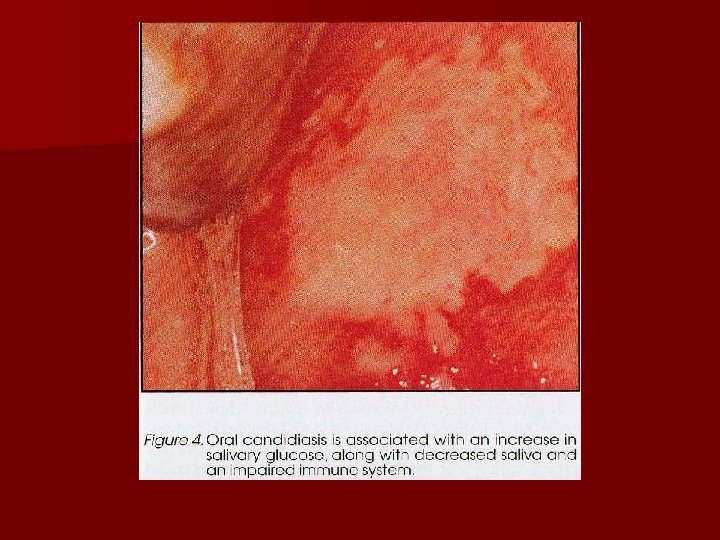
Signs and Symptoms A patient with xerostomia may be asymptomatic and not aware that their oral health has been affected n In the absence of complaints of a dry mouth, the history or presence of several conditions can be diagnostic: n § Sudden increase in dental caries § Oral yeast infection (candidiasis) § Inflamed soft tissue § Painful oral tissue § Chapped or cracked lips and tongue § Swollen salivary glands § Bad breath
Problems Caused by Dry Mouth n n n Dental Cavities – Damage to the structure of teeth Gingivitis – Involves inflammation of the gums Periodontitis – Progression of gingivitis, involving inflammation and infection of the ligaments and bone support of the teeth Tooth Abscess – Collection of infected material resulting from bacterial infection of the nerve Halitosis – Bad breath odor that is caused by bacterial growth in the mouth
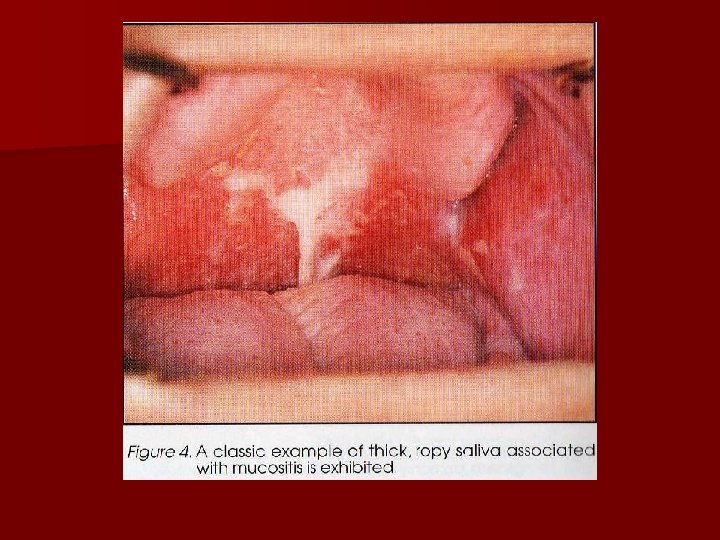
Medications… n n The most common cause of drug-induced dry mouth is the altering of neural pathways that stimulate salivary secretion. These drugs that have either an anticholinergic or sympathomimetic effect. Stimualtion of the parasympathetic nerves (cholinergic action) produces an increase in fluid volume (serous saliva). Stimulation by the sympathetic nerves (sympathomimetic action) produces less volume and viscous saliva.
Medications… n Drugs that have an anticholinergic action reduce the volume of serous saliva includes: § Antihypertensive drugs § Antihistamine drugs § Antidepressant drugs § Antipsychotic drugs § Antiemetic drugs § Antispasmodic drugs § Anti-Parkinsonian drugs
Medications n Drugs with sympathomimetic actions produce a more viscous, mucinous saliva with less volume such as: § Decongestants § Bronchodilators § Appetite suppressants § Amphetamines n The list of medications associated with xerostomia continues to grow as new drugs are released.
Types of Medications That Will Often Produce Dry Mouth n n n n n Antihistamines Decongestants Pain killers Diuretics High blood pressure medications Antidepressants Some anti-diarrhea medications Some antipsychotic medications Tranquilizers
How to Know if a Student has Dry Mouth Everyone’s mouth feels dry from time to time. It is when this feeling doesn’t go away that one may have a problem with saliva production. n Symptoms of dry mouth includes: n § § § § § A sticky, dry feeling in your mouth Trouble swallowing A burning sensation of the tongue A dry feeling in the throat Cracked lips Reduced ability to taste things or a metallic taste in the mouth Mouth sores Frequent bad breath Difficulty chewing/speaking
How is Dry Mouth Treated… n The only permanent way to cure dry mouth is to treat its cause n If dry mouth is the result of MEDICATION, the physician might change the prescription or the dosage n If the salivary glands are not working properly but still produce some saliva, the physician might prescribe a medicine that helps the glands work better such as parasympathtic stimulating agents called Pilocarpine
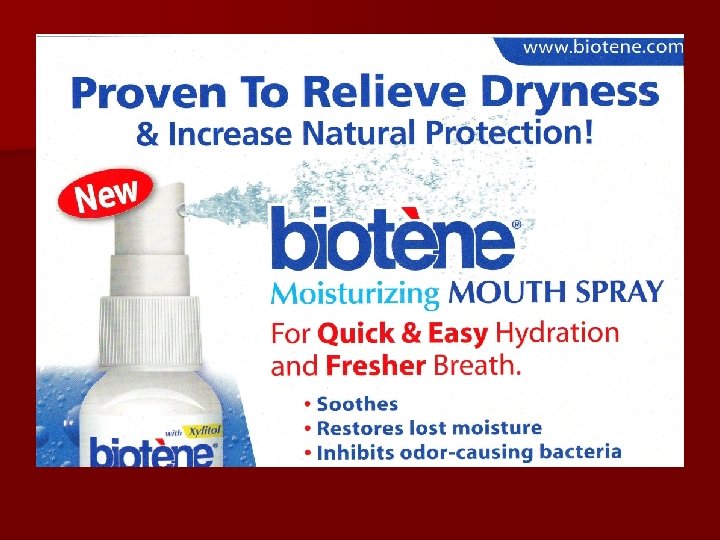
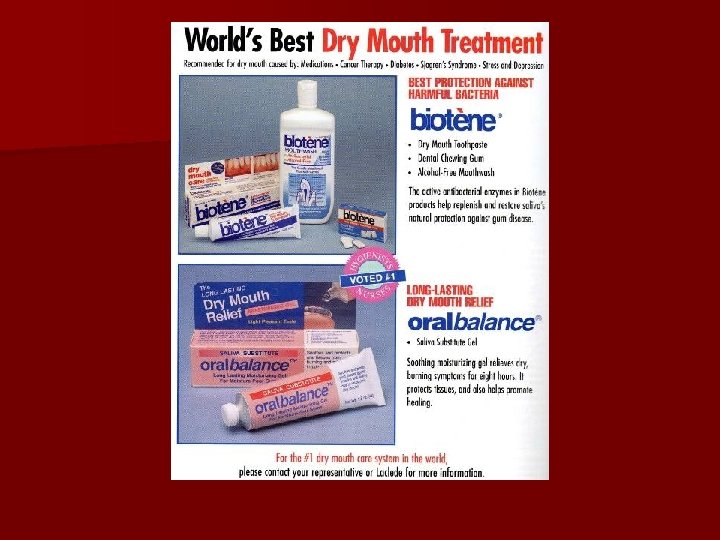
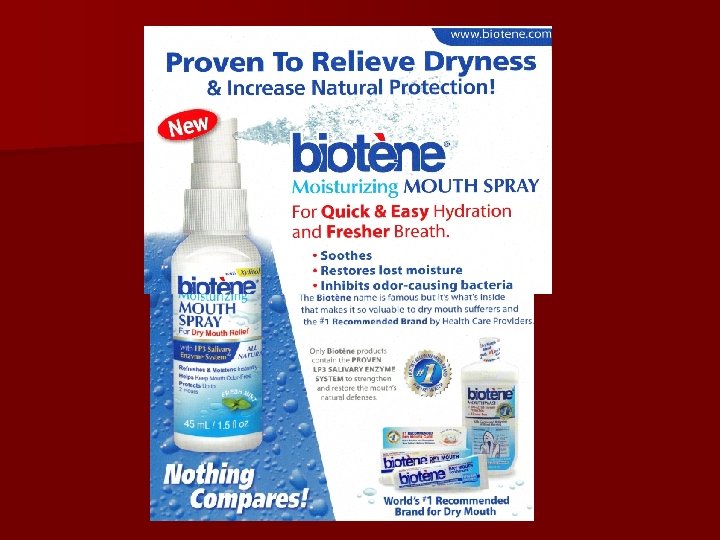
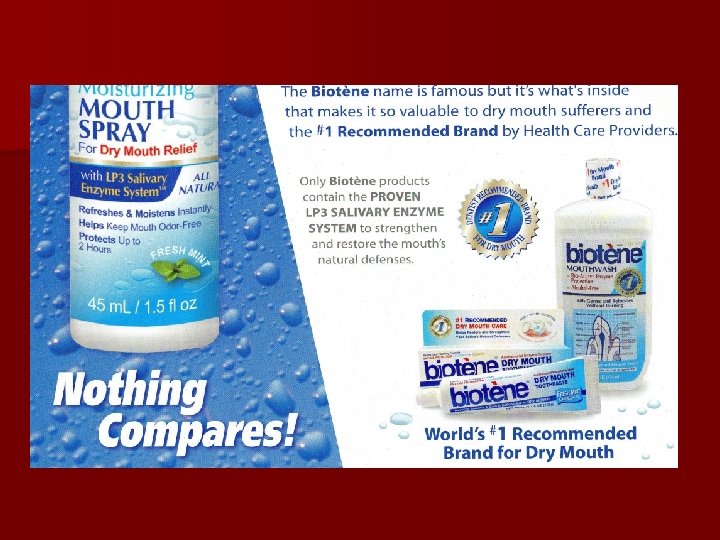
How is Dry Mouth Treated? If the cause cannot be eliminated, or until it can be, moisture can be restored to the mouth in a number of different ways n A dentist may recommend mouth moisturizers such a saliva substitute n Rinsing with mouthwashes specially formulated to help dry the mouth may also bring relief n
How is Dry Mouth Treated n The patient can also: § Sip water or sugarless drinks often § Avoid drinks with caffeine, such as coffee, tea, and some sodas § Chew sugarless gum § Suck on sugarless hard candy to stimulate saliva flow (if some salivary function exists) § Do not use tobacco or alcohol § Be aware that spicy or salty foods can cause pain in a dry mouth § Use a humidifier at night
Maintaining Good Oral Health With Dry Mouth n Gently brush teeth at least twice a day n Floss teeth every day n Use toothpaste with fluoride n Avoid sticky, sugary foods—if eaten, brush immediately afterwards n Have bi-yearly dental check-ups n Can use special fluoride solutions to rinse with to help keep teeth healthy
Overview of Drugs and Dry Mouth… The sensation of oral dryness is primary due to salivary gland hypo function n The changes are mainly caused by systemic diseases and by the intake of dryness-inducing xerogenic medications n Of the 24 most frequently prescribed drugs in the U. S. in 2001, 63% of the generics and 52% of the brand name drugs were xerogenic n
Overview of Drugs and Dry Mouth It has been shown that the prevalence of dry mouth is directly proportional to the total number of drugs taken per day. n There about 1800 drugs in 80 drug classes which have the capacity to induce dry mouth. n
What Concerns Us n n Dry mouth is not new; it is a problem every dentists understands, but patients may or may not be aware of the devastating affects of oral health Dentists see it as a problem that is worsening as patients in general are keeping their natural teeth for longer periods or time From the dentist’s perspective, the treatment of dry mouth depends on identifying the most likely cause More often than not, it is a side effect of medications



- Slides: 35