
Dry Bulk Terminals Introduction to Safety Paul Goris

Dry Bulk Terminals Introduction to Safety Paul Goris 6 October 2020
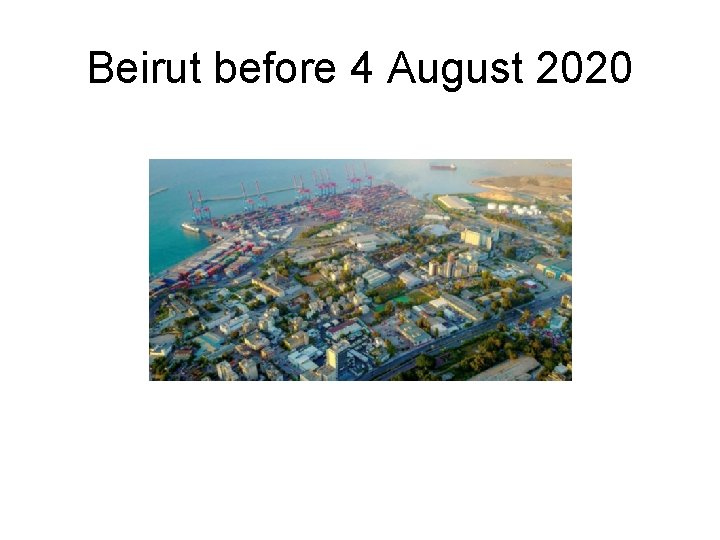
Beirut before 4 August 2020
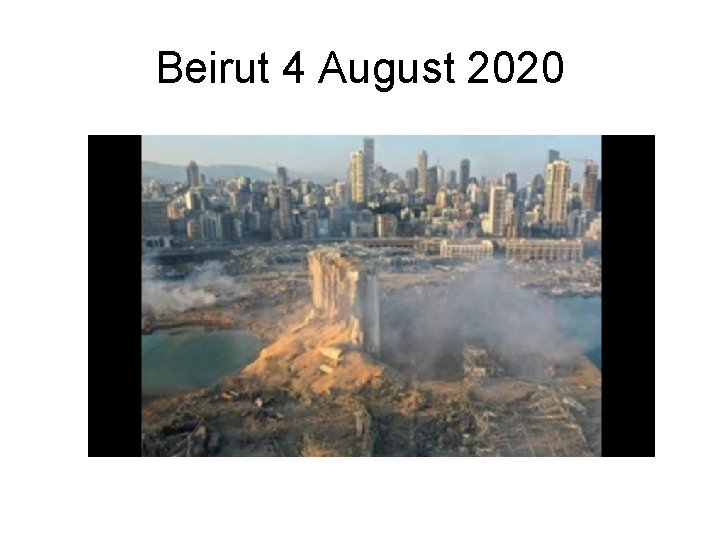
Beirut 4 August 2020
Accidents ‘around the corner’ Article in August Newsletter by Captain Kevin Cribbin • • • 4 August 2020 in Beirut Ammonium Nitrate based fertilizer Demonstration of what can happen Unsafe handling / storage of goods Other solid bulk cargoes, particularly those liable to emit hydrogen gas, have also been responsible for fatal explosions.
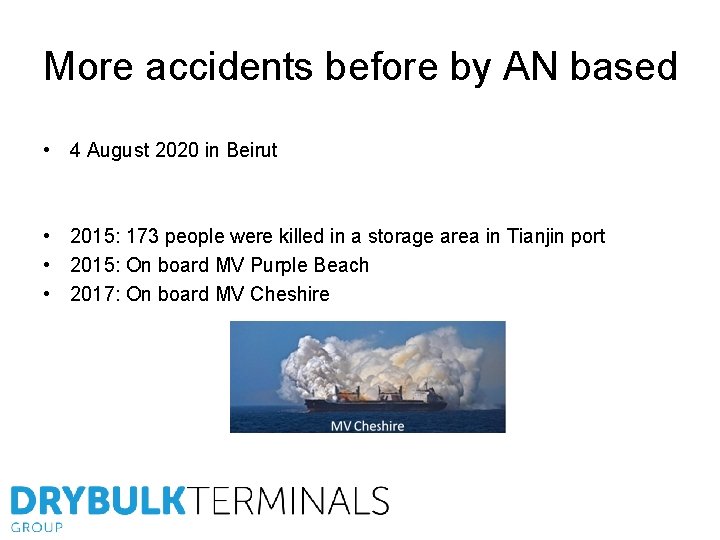
More accidents before by AN based • 4 August 2020 in Beirut • 2015: 173 people were killed in a storage area in Tianjin port • 2015: On board MV Purple Beach • 2017: On board MV Cheshire

IMSBC CODE • IMSBC Code provides Individual Schedules for four ammonium nitrate based cargoes • Three of these are Group B i. e. possess chemical hazards which could lead to a dangerous situation on a ship • One is Group C (non-hazardous), summarized as follows 1. Ammonium Nitrate UN 1942: Group B (Class 5. 1) – risk of decomposition, fire, toxic gasses and explosion, particularly if contaminated e. g. by fuel oil, and if heated and/or confined. 2. Ammonium Nitrate Based Fertiliser UN 2067: Group B (Class 5. 1) – supports combustion with similar risks as Ammonium Nitrate UN 1942 3. Ammonium Nitrate Based Fertiliser UN 2071: Group B (Class 9) – may be subject to decomposition and self-sustaining combustion if heated, with generation of toxic gasses. Not subject to an explosion hazard. 4. Ammonium Nitrate Based Fertilisers (non-hazardous): Group C: non-combustible or has a low fire risk. Even though classified as non-hazardous, may decompose and give off toxic gasses if heated strongly, in same way as a UN 2071 cargo.
Cargo handling • • Group B cargoes can only be accepted for loading when the competent authority is satisfied regarding the detonation risk of the material The Shipper must also provide the master with a certificate stating that the cargo is compliant with these requirements, together with the Shipper’s Form for Cargo Information The port/terminal at which the cargo is being loaded is required to confirm that the master has received both this certificate and the Shipper’s Form. An SDS is always a requirement • Specific requirements also apply to the loading of the Group C cargo, as well as to the discharge of all four cargoes. • Storage for these products require additional regulations.
Conclusion The use of the descriptor “non-hazardous” is now recognized as misleading and, arising from the fire on the MV Cheshire, is likely to be changed.
- Slides: 8