
Drugs used in schizophrenia Objectives At the end
Drugs used in schizophrenia
Objectives At the end of the lecture , students should be able to : Ø List the classification of antipsychotic drugs used in schizophrenia. Describe briefly the mechanism of antipsychotic action of these drugs. Describe the pharmacological actions of antipsychotic drugs.
Objectives ( con. ) Relate between pharmacological actions & adverse effects of antipsychotic drugs. Enumerate the clinical uses of antipsychotic drugs. Describe the advantages of atypical antipsychotic drugs over typical drugs.
Prof. Abdulrahman Almotrefi Prof. Azza Hafiz El-Medany
Drugs used in the treatment of schizophrenia are called : Antipsychotic drugs old name ( neuroleptic drugs)
PSYCHOSES 1 - Affective Psychoses: a- Mania b- Depression c- Manic-depressive illness ( bipolar affective disorder ) 2 - Schizophrenia
Schizophrenia DEFINITION: - It is a thought disorder characterized by a divorcement from reality in the mind of the patient - It may involve hallucinations, delusions, intense suspicion, feelings of persecution or control by external forces (paranoia)
Schizophrenia Positive Symptoms Hallucinations Delusions Paranoia
Schizophrenia Negative Symptoms Social withdrawal Anhedonia (absence of pleasure ) Emotional blunting
Dopamine System Dopaminergic pathways in the brain : 1 - Mesolimbic - mesocortical pathway (behavior) 2 - Nigrostriatal pathway (co-ordination of voluntary movements) 3 - Tuberoinfundibular pathway (endocrine effects) 4 - Medullary - periventricular pathway (metabolic effects)
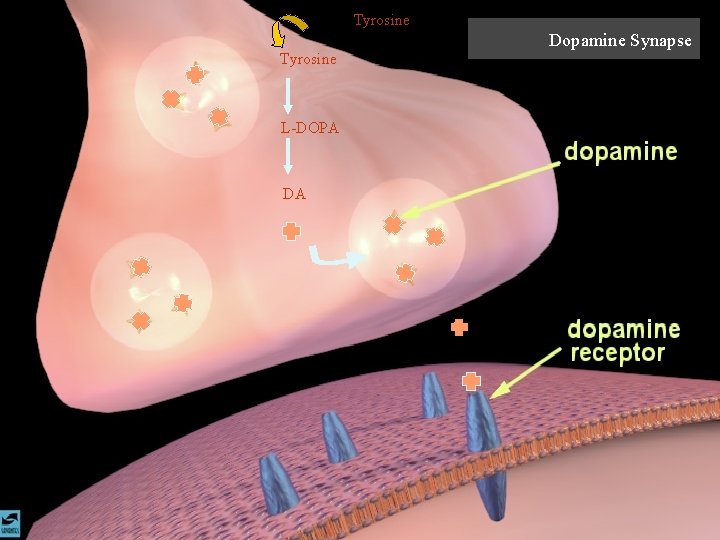
Tyrosine L-DOPA DA Dopamine Synapse
Dopamine System DOPAMINE RECEPTORS There at least five subtypes of receptors: D 1, D 2, D 3, D 4, D 5
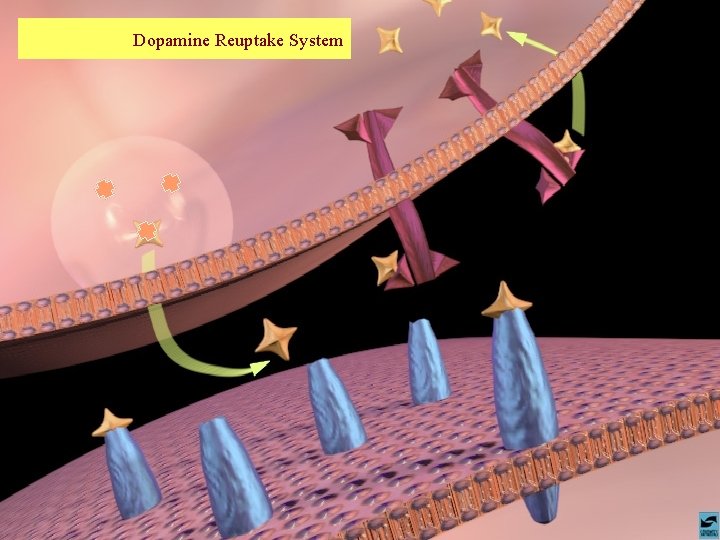
Dopamine Reuptake System
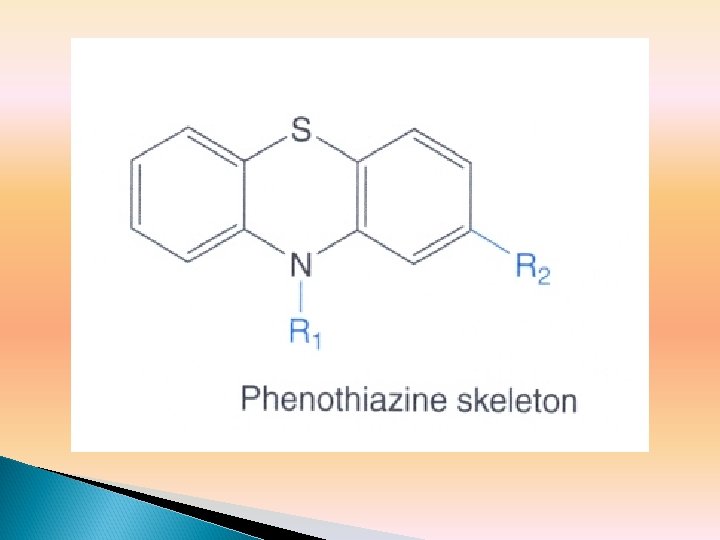
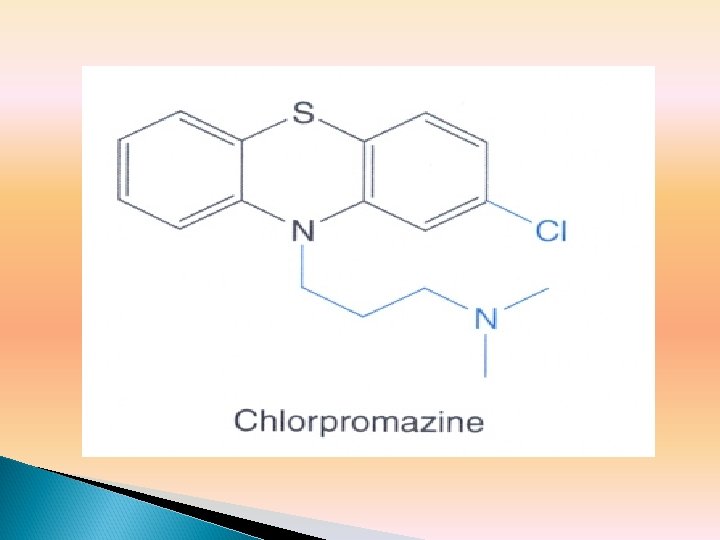
Antipsychotic drugs Classification : According to chemical structure into : Typical Antipsychotic Drugs : 1 -Phenothiazine derivatives Ø Chlorpromazine Ø Thioridazine 2 - Butyrophenones 3 - Thioxanthene Ø Haloperidol Ø Thiothixene
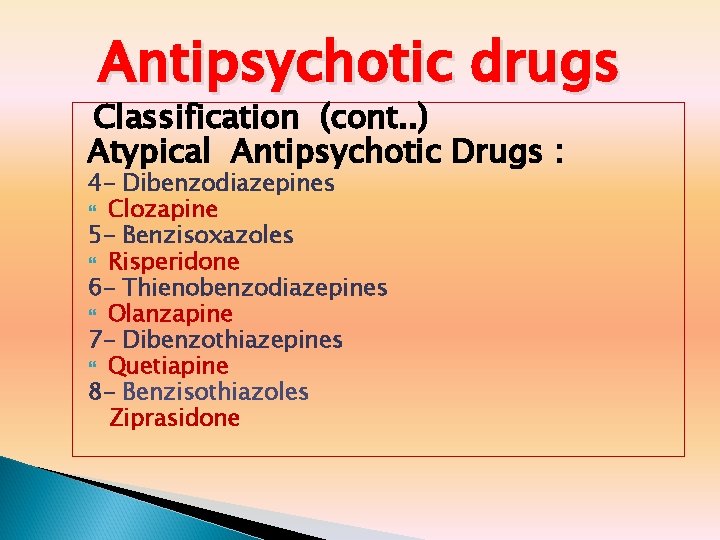
Antipsychotic drugs Classification (cont. . ) Atypical Antipsychotic Drugs : 4 - Dibenzodiazepines Clozapine 5 - Benzisoxazoles Risperidone 6 - Thienobenzodiazepines Olanzapine 7 - Dibenzothiazepines Quetiapine 8 - Benzisothiazoles Ziprasidone
Pharmacological Actions C. N. S : 1 - Antipsychotic effect : v Produce emotional quieting and psychomotor slowing v Decrease hallucinations, delusions and agitation. Mechanism: v Blockade of dopamine receptors in the mesolimbic system.
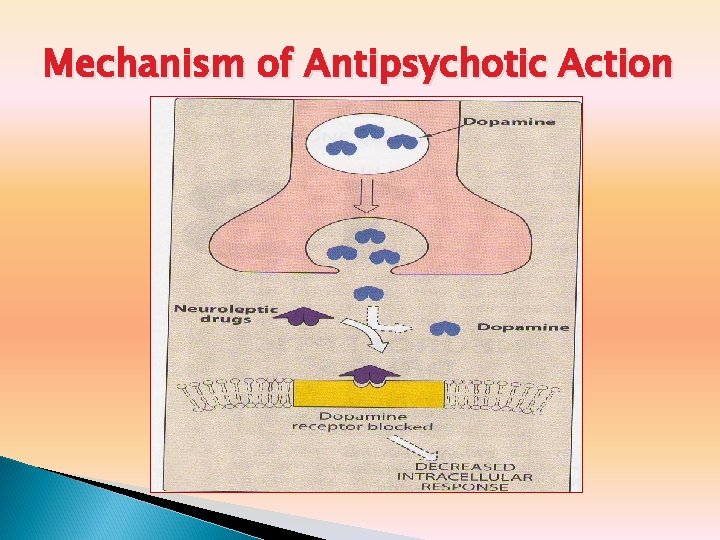
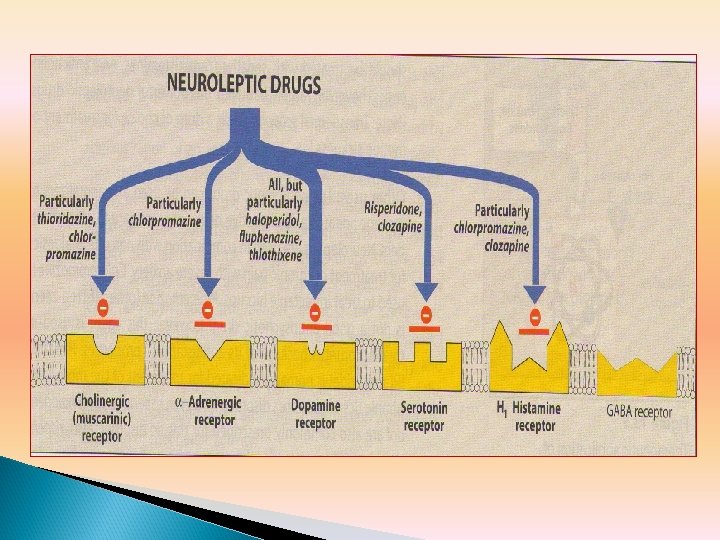
Mechanism of Antipsychotic Action
Atypical drugs exert their antipsychotic action through blocking serotonergic ( 5 HT 2) & dopaminergic receptors.
Phrmacological actions ( con. ) 2 - Extrapyramidal Symptoms : Abnormal involuntary movements such as tremors, parkinsonism & tardive dyskinesia. Mechanism : Blockade of dopamine receptors in the nigrostriatum
3 - Endocrine effects Galactorrhea, amenorrhea, gynecomastia & impotence. Mechanism : Prevent dopamine inhibition of prolactin release from pituitry→ Hyperprolactinemia
Pharmacological Actions ( cont. ) 4 - Metabolic effects : Changes in eating behavior and weight gain Mechanism : Blockade of dopamine receptors in the medullary – periventricular pathway
Pharmacological Actions ( cont. ) 5 - Anti-emetic effect : Effective against drug & disease- induced vomiting ( not- motion sickness) Mechanism : Blockade of dopamine receptors in the CTZ of the medulla
Pharmacological Actions ( con. ) A. N. S 1 - Anticholinergic Effects : - Blurred vision - Dry mouth - Urinary retention - Constipation Mechanism Blockade of muscarinic receptors
Pharmacological Actions ( con. ) 2 - Antiadrenergic Effects : - Postural hypotension - Impotence - Failure of ejaculation Mechanism : Blockade of α- adrenergic receptors
Pharmacological Actions ( con. ) Other Actions : 1 - Temperature regulation : May cause lowering of body temperature Mechanism : Heat loss as a result of vasodilation ( α- blocking ) Or due to central effect
Other Actions ( con. ) 2 - ECG changes : Prolongation of QT interval Abnormal configuration of ST- segment & T wave. 3 - Antihistaminic effect : Sedation due to H 1 receptor blockade 4 - Quinidine –like actions
Therapeutic Uses PSYCHIATRIC : Schizophrenia ( primary indication) Acute mania Manic-depressive illness ( bipolar affective disorder ) during the manic phase
THERAPEUTIC USES: NON-PSYCHIATRIC: 1 - Nausea and vomiting - prochlorperazine and benzquinamide are only used as antiemetics 2 - Pruritis 3 - Preoperative sedation ( rare use )
ADVERSE EFFECTS C. N. S. 1 - Sedation, drowsiness, fatigue ( haloperidol , Risperidone ) 2 - Extrapyramidal symptoms : Some occurring early in treatment as : Parkinson’s syndrome
Adverse Effects ( con. ) Other Extrapyramidal Symptoms are late – occurring : 1 - Tardive Dyskinesia (from Latin tardus, slow or late coming) it is a disorder of involuntary movements (choreoathetoid movements of lips, tongue, face, jaws, and limbs ) Choreoathetosis : combination of chorea (irregular migrating contractions) and athetosis (twisting)
Adverse Effects ( con. ) 2 - Neuroleptic Malignant Syndrome ♦ Rare but life threatening. ♦ Symptoms are muscle rigidity and high fever ( clinically similar to anaesthetic malignant hyperthermia ). ♦ The stress leukocytosis and high fever associated with this syndrome may wrongly suggest an infection.
Adverse Effects ( con. ) A. N. S. 1 - Anticholinergic Effects : - Blurred vision - Dry mouth - Urinary retention - Constipation ( Clozapine, Chlorpromazine )
Adverse Effects ( con) 2 - Antiadrenergic Effects : - Postural hypotension - Impotence - Failure of ejaculation ( Chlopromazine , Thioridazine )
Adverse Effects ( con. ) Endocrine Effects : - Gynecomastia - Galactorrhoea - Amenorrhoea
Adverse Effects ( con. ) - Miscellaneous Effects : Obstrucive jaundice Granular deposits in cornea Retinal deposits ( thioridazine) Weight gain
Adverse Effects ( con. ) - Agranulocytosis ( Clozapine ) about 1 -2% usually happen after 6 -18 weeks Weekly WBC is mandatory - Seizures ( Clozapine )
PHARMACOKINETICS Incompletely absorbed Highly lipid soluble Highly bound to plasma proteins Undergo extensive first-pass hepatic metabolism. Excretion by the kidney
Atypical Antipsychotics Ø 2 nd Generation antipsychotics Ø Are now considered to be first line treatments for schizophrenia Ø Little or no extrapyramidal side effects Ø Effective in treatment of resistant schizophrenia
Are effective on both positive & negative symptoms. Block both dopaminergic & serotonergic receptors.
CLINICAL USES Refractory cases of schizophrenia. To reduce the risk of recurrent suicidal behavior in patients with schizophrenia
CLOZAPINE Blocks both D 4 & 5 HT 2 receptors Main adverse effects Agranulocytosis Seizures Myocarditis Excessive salivation ( during sleep )
RISPERIDONE Blocks D 2 & 5 HT 2 receptors Main adverse effects - Postural hypotension - QT prolongation - Weight gain Contraindicated in patients with long QT interval
OLANZAPINE Blocks D 1 - D 4 & 5 HT 2 receptors Main adverse effects - Weight gain - Sedation - Flatulence , increased salivation & thirst - Postural hypotension
QUETIAPINE Blocks D 1 -D 2 & 5 HT 2 receptors Main adverse effects - Sedation - Hypotension - Sluggishness - Dry mouth
QUETIAPINE adverse effects ( continued. . ) - Increased appetite ( weight gain) - Abdominal pain - Constipation
Ziprasidone - Blocks D 2 & 5 HT 2 receptors Main adverse effects - Drowsiness - Akathisia - Headache - Dizziness - Weight gain
Ziprasidone Drug interactions should not be used with any drug that prolongs the QT interval - - Activity decreased by carbamazepine ( inducer of CYP 3 A 4 ) - Activity increased by ketoconazole ( inhibitor of CYP 3 A 4 )
Ziprasidone WARNING INCREASE MORTALITY IN ELDERLY PATIENTS WITH DEMENTIA-RELATED PSYCHOSIS
Summary Drugs used in schizophrenia are classified according to chemical structures. The advantages of atypical drugs include : They block both dopaminergic & serotonergic drugs. They are effective in refractory cases of schizophrenia They produce few extrapyramidal effects
Summary (con. ) The pharmacological actions of antipsychotic drugs result from : Blocking dopamine receptors at different areas in the brain. Blocking muscarinic receptors Blocking α-adrenergic receptors Blocking H 1 receptors Adverse effects on CNS are due to blocking dopamine receptors at areas other than mesolimbic area
Summary ( con. ) Blockade of H 1, muscarinic & α- adrenergic receptors. The main clinical use is in schizophrenia Examples of atypical drugs includes : Clozapine Risperidone Olanzapine Quetiapine Ziprasidone
- Slides: 54