
DRUGS USED FOR THE TREATMENT OF SYPHILIS GONORRHEA


- Slides: 43
DRUGS USED FOR THE TREATMENT OF SYPHILIS & GONORRHEA
Prof. Mohammad Alhumayyd
OBJECTIVES At the end of lecture, the students should : n List the drugs used in the treatment of syphilis & gonorrhea. n Describe the mechanism of action and adverse effects of each drug n
OBJECTIVES ( continue) Describe the contraindications of drugs used n Describe the recommended regimens used for treatment of syphilis & gonorrhaea n Know the alternative treatments in allergic patients n
SYPHILIS What is Syphilis? n Sexually transmitted disease caused by bacterium Treponema Pallidum
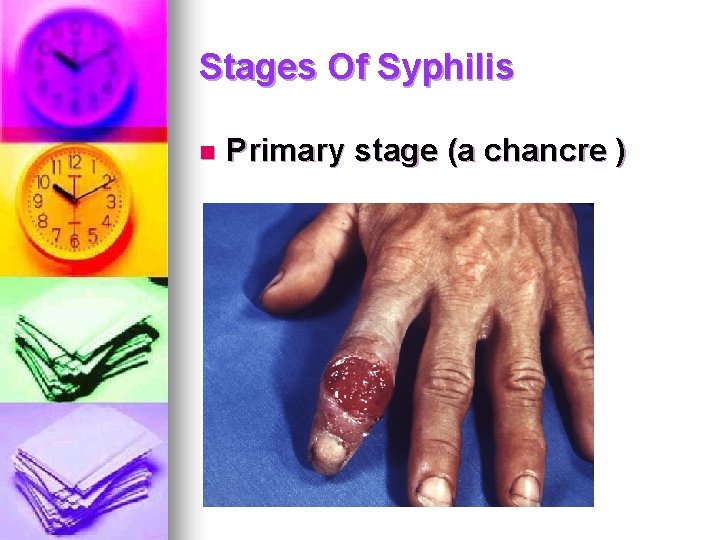
Stages Of Syphilis n Primary stage (a chancre )
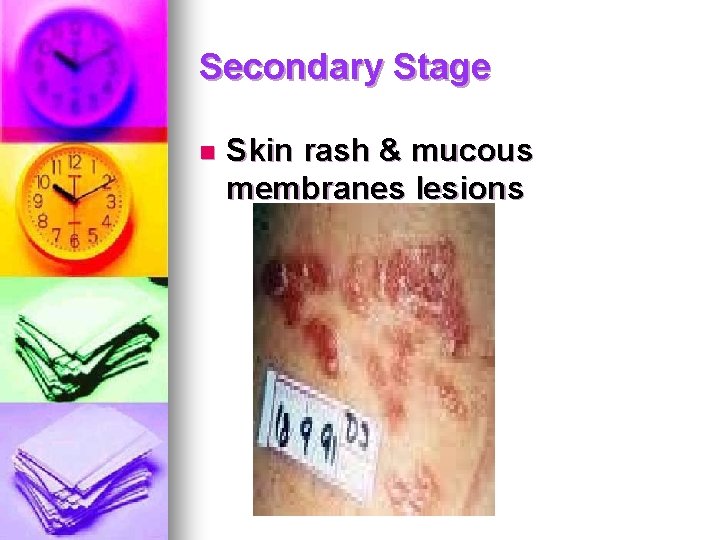
Secondary Stage n Skin rash & mucous membranes lesions
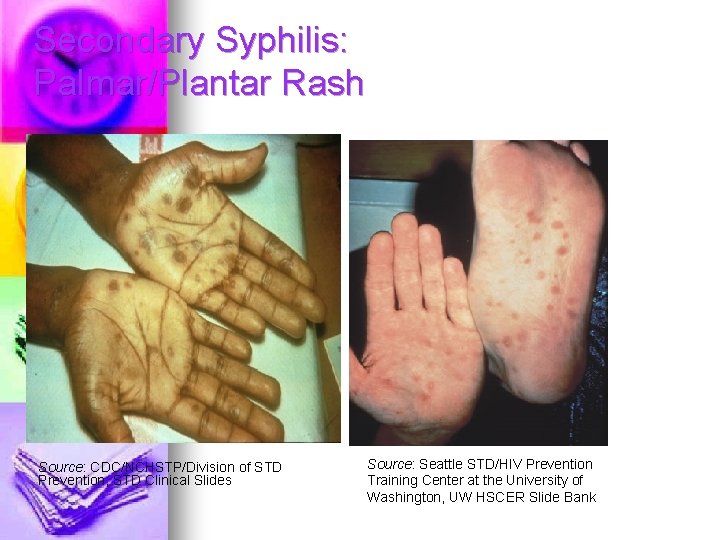
Secondary Syphilis: Palmar/Plantar Rash Source: CDC/NCHSTP/Division of STD Prevention, STD Clinical Slides Source: Seattle STD/HIV Prevention Training Center at the University of Washington, UW HSCER Slide Bank
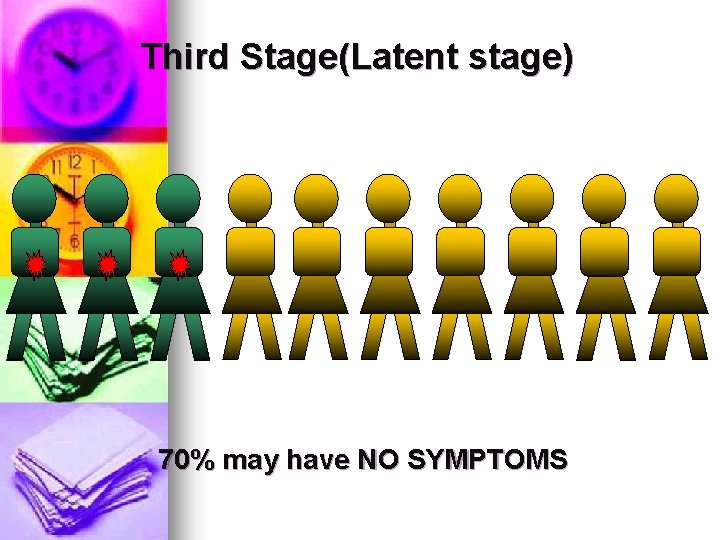
Third Stage(Latent stage) 70% may have NO SYMPTOMS
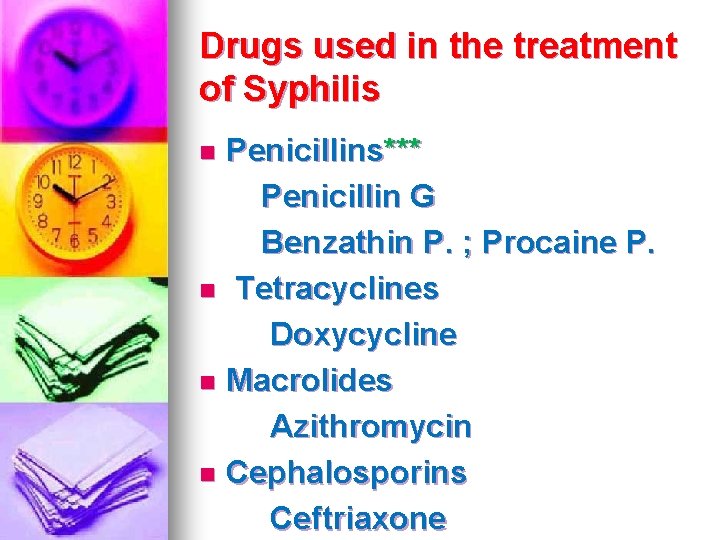
Drugs used in the treatment of Syphilis Penicillins*** Penicillin G Benzathin P. ; Procaine P. n Tetracyclines Doxycycline n Macrolides Azithromycin n Cephalosporins Ceftriaxone n
PENICILLINS n Mechanism of action n Inhibit the synthesis of bacterial cell wall. These drugs are bactericidal
Preparations of penicillins used for the treatment of syphilis n n n Penicillin G, i. v(Short duration of action) Procaine P, i. m (Long acting(24 -48 hrs) Benzathine P, i. m(Long acting(every 3 -4 weeks) All are: Acid unstable Penicillinase sensitive
Adverse effects of penicillins n Hypersensitivity n Convulsions with high doses or in renal failure n Super infections
Drugs used in Allergic Patients To Penicillins n Tetracyclines such as: Doxycycline n Macrolides such as: Azithromycin n Cephalosprins such as : Ceftriaxone cefixime
TETRACYCLINES e. g, Doxycycline (100 mg BD for 14 days) Well absorbed orally n Long-acting n
Mechanism of action n Inhibit bacterial protein synthesis by reversibly binding to 30 S bacterial ribosomal subunits.
Side effects 1. nausea, vomiting , diarrhea & epigastric pain(give with food) 2. Hepatic toxicity ( prolonged therapy with high dose ) 3. Brown discolouration of teeth – children 4. Deformity or growth inhibition of bones – children 5. Phototoxicity 6. Vertigo 7. Superinfections.
Contraindications n Pregnancy n Breast feeding n Children(below 10 yrs) 18
MACROLIDES e. g. , Azithromycin Mechanism of action n Inhibits bacterial protein synthesis by binding to bacterial 50 S ribosomal subunits
Pharmacokinetics Acid stable n Penetrates into most tissues except CSF n T 1/2 2 -4 days n Once daily dose n Should be given 1 hour before or 2 hours after meals n No effect on cytochrome P 450 n
Side Effects Nausea, vomiting, abdominal pain & diarrhea. Allergic reactions- urticaria, mild skin rashes.
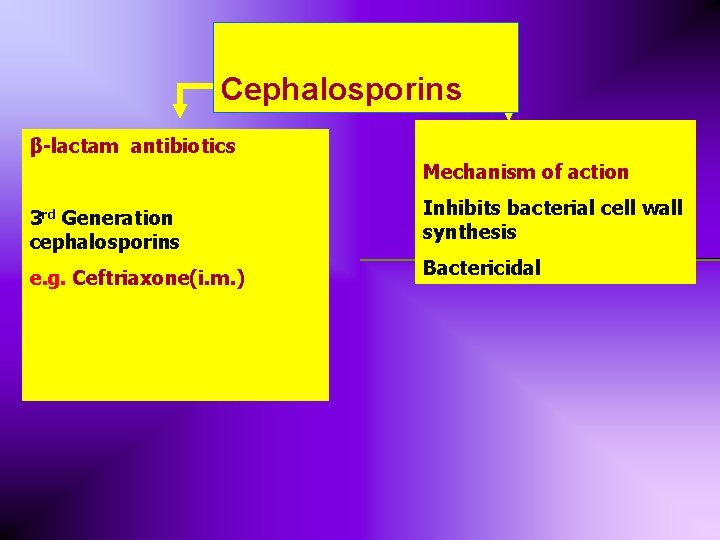
Cephalosporins β-lactam antibiotics Mechanism of action 3 rd Generation cephalosporins Inhibits bacterial cell wall synthesis e. g. Ceftriaxone(i. m. ) Bactericidal
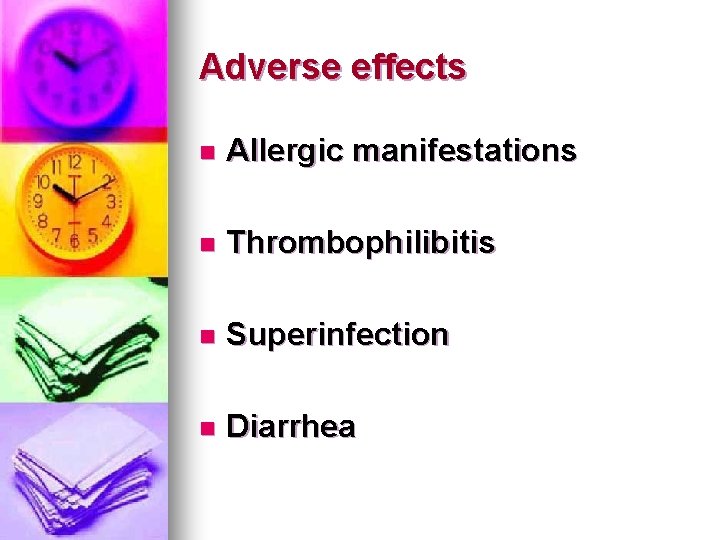
Adverse effects n Allergic manifestations n Thrombophilibitis n Superinfection n Diarrhea
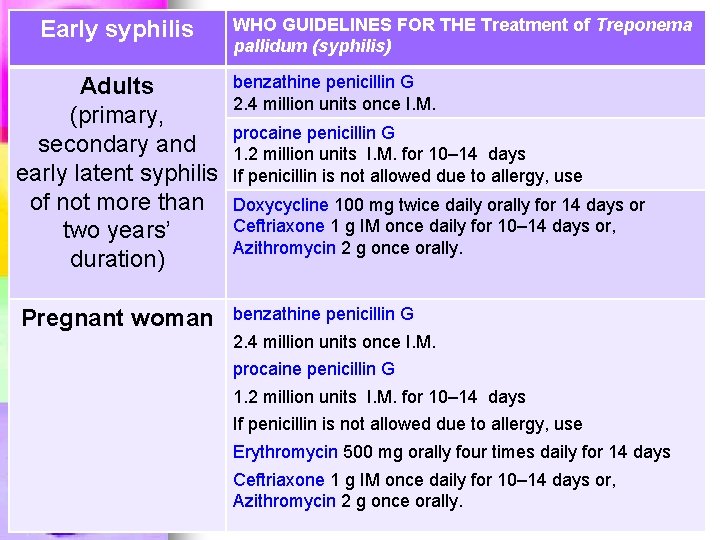
Early syphilis WHO GUIDELINES FOR THE Treatment of Treponema pallidum (syphilis) Adults (primary, secondary and early latent syphilis of not more than two years’ duration) benzathine penicillin G 2. 4 million units once I. M. Pregnant woman benzathine penicillin G procaine penicillin G 1. 2 million units I. M. for 10– 14 days If penicillin is not allowed due to allergy, use Doxycycline 100 mg twice daily orally for 14 days or Ceftriaxone 1 g IM once daily for 10– 14 days or, Azithromycin 2 g once orally. 2. 4 million units once I. M. procaine penicillin G 1. 2 million units I. M. for 10– 14 days If penicillin is not allowed due to allergy, use Erythromycin 500 mg orally four times daily for 14 days Ceftriaxone 1 g IM once daily for 10– 14 days or, Azithromycin 2 g once orally.
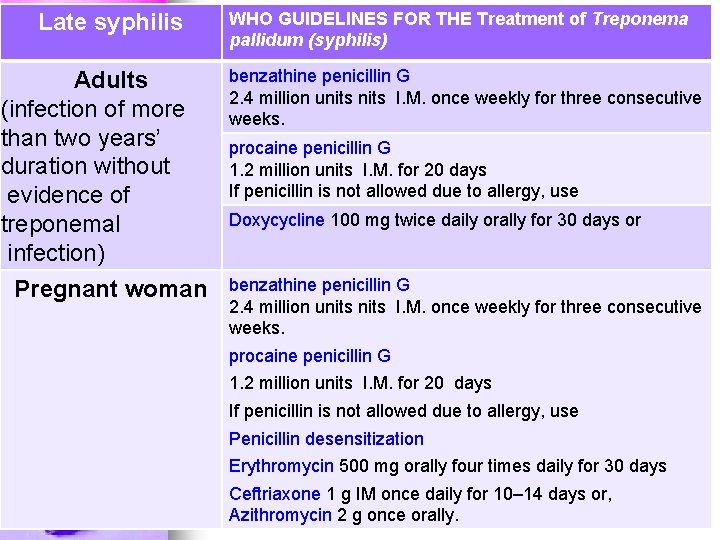
Late syphilis Adults (infection of more than two years’ duration without evidence of treponemal infection) Pregnant woman WHO GUIDELINES FOR THE Treatment of Treponema pallidum (syphilis) benzathine penicillin G 2. 4 million units I. M. once weekly for three consecutive weeks. procaine penicillin G 1. 2 million units I. M. for 20 days If penicillin is not allowed due to allergy, use Doxycycline 100 mg twice daily orally for 30 days or benzathine penicillin G 2. 4 million units I. M. once weekly for three consecutive weeks. procaine penicillin G 1. 2 million units I. M. for 20 days If penicillin is not allowed due to allergy, use Penicillin desensitization Erythromycin 500 mg orally four times daily for 30 days Ceftriaxone 1 g IM once daily for 10– 14 days or, Azithromycin 2 g once orally.
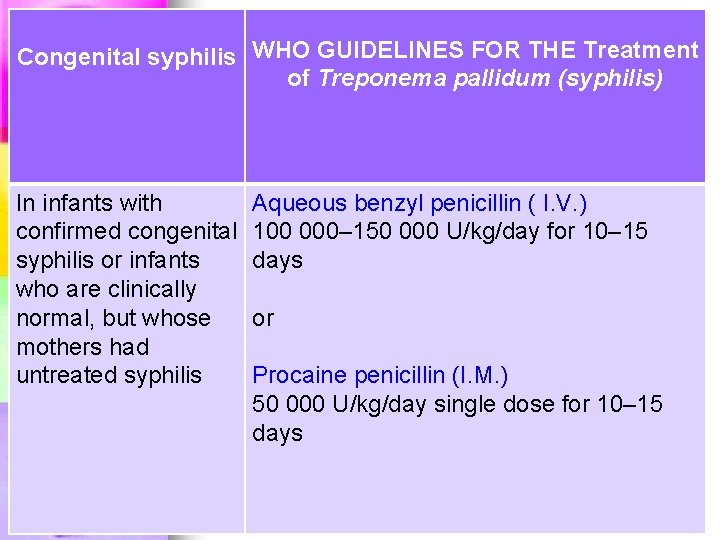
Congenital syphilis WHO GUIDELINES FOR THE Treatment of Treponema pallidum (syphilis) In infants with confirmed congenital syphilis or infants who are clinically normal, but whose mothers had untreated syphilis Aqueous benzyl penicillin ( I. V. ) 100 000– 150 000 U/kg/day for 10– 15 days or Procaine penicillin (I. M. ) 50 000 U/kg/day single dose for 10– 15 days
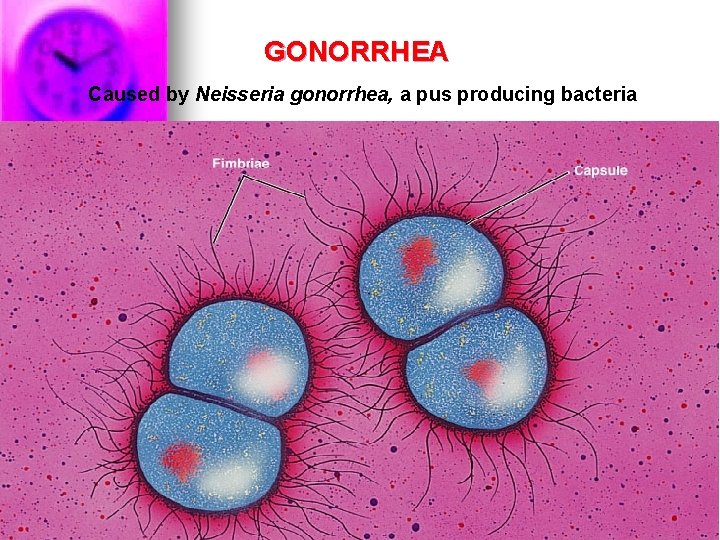
GONORRHEA Caused by Neisseria gonorrhea, a pus producing bacteria Up to 1 MILLION people affected each year Teenagers (15 -19) have the highest rate if infection
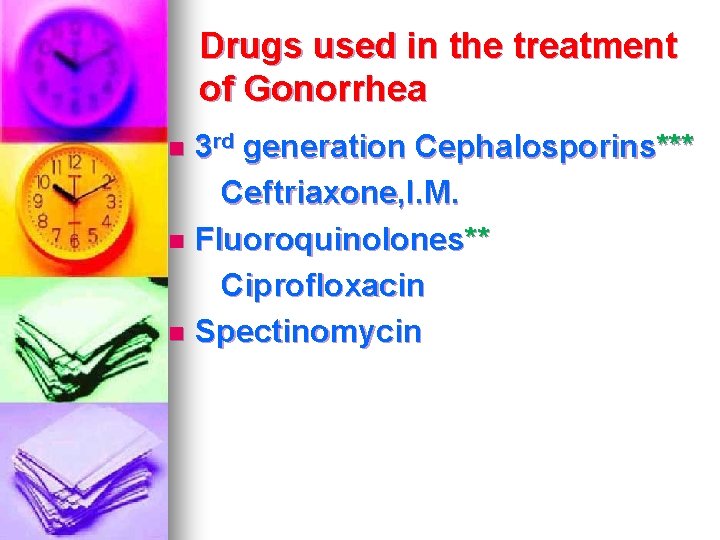
Drugs used in the treatment of Gonorrhea 3 rd generation Cephalosporins*** Ceftriaxone, I. M. n Fluoroquinolones** Ciprofloxacin n Spectinomycin n
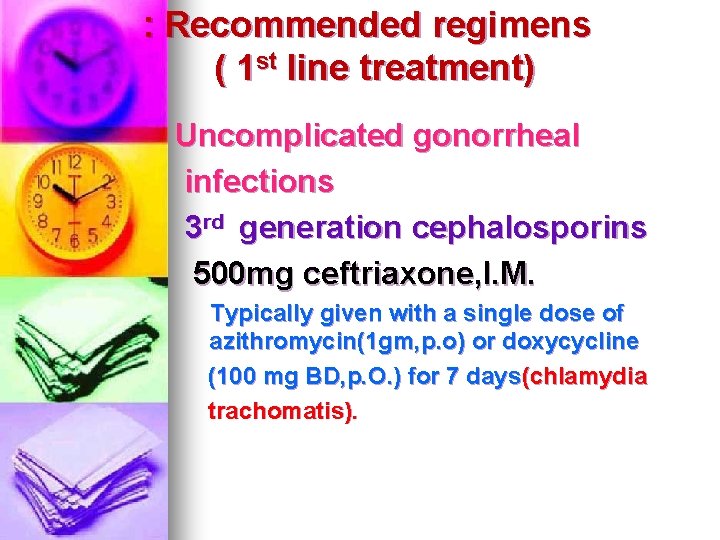
: Recommended regimens ( 1 st line treatment) Uncomplicated gonorrheal infections 3 rd generation cephalosporins 500 mg ceftriaxone, I. M. Typically given with a single dose of azithromycin(1 gm, p. o) or doxycycline (100 mg BD, p. O. ) for 7 days(chlamydia trachomatis).
FLUOROQUINOLONES Single oral dose of : Ciprofloxacin(500 mg) Ofloxacin(400 mg)
MECHANISM OF ACTION of fluoroquinolones n All are bactericidal n Inhibit DNA synthesis by inhibiting DNA gyrase enzyme
Side effects Nausea , vomiting & diarrhoea Headache & dizziness May damage growing cartilage &cause arthropathy. Phototoxicity – avoid excessive sunlight
CONTRAINDICATIONS n Pregnancy n Nursing mothers n Children under 18 years
Alternative treatment in pts cannot tolerate or be treated with cephalosporins or quinolones Spectinomycin n 2 g , IM
Mechanism of action n Inhibits protein synthesis by binding to 30 S ribosomal subunits
Adverse Effects 1. Pain at the site of injection 2. Fever Nausea Nephrotoxicity (not common)
CONTINUE Complicated gonorrheal infections Spread through blood stream q EYE n Joints n Heart valves n Brain
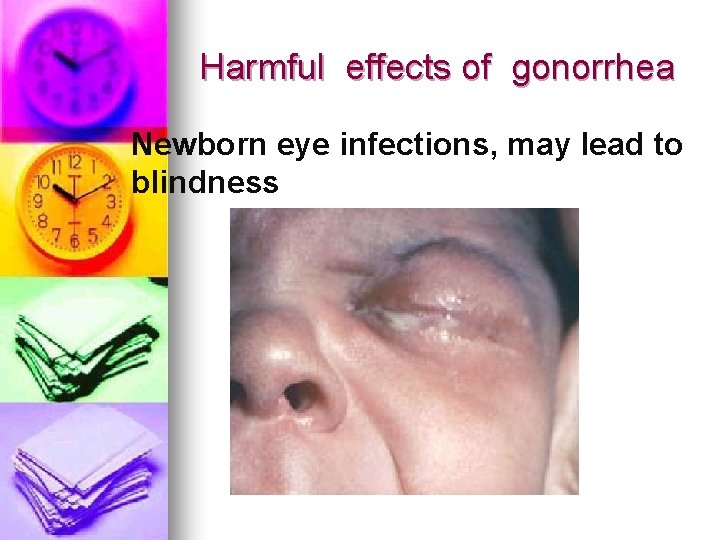
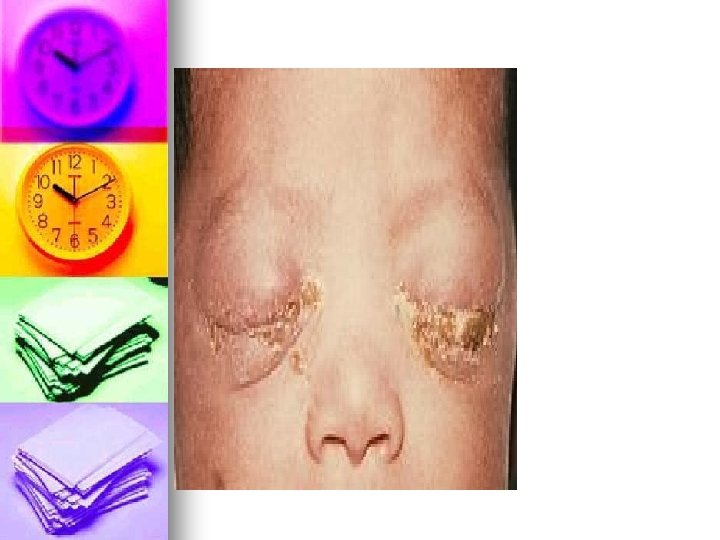
Harmful effects of gonorrhea Newborn eye infections, may lead to blindness
Treatment of Complicated infections n With conjunctivitis in new born Silver nitrate 1% solution Germicidal effects are due to precipitation of bacterial proteins by liberated silver ions. Put into conjunctival sac once immediately after birth (no later than 1 h after birth).
ERYTHROMYCIN n 0. 5% ointement for teatment & prevention of corneal & conjunctival infections. n Put into conjunctival sac immediately after birth (no later than 1 hr after delivery )
WHO Guidelines For ocular prophylaxis in newborns WHO guidelines suggest one of the following options for topical application to both eyes immediately after birth: n Silver nitrate 1% solution or n Tetracycline hydrochloride 1% eye ointment or n Erythromycin 0. 5% eye ointment or n Povidone iodine 2. 5% solution (water-based) or n Chloramphenicol 1% eye ointment n