
Drugs Related to Balance System The overall incidence
Drugs Related to Balance System The overall incidence of dizziness, vertigo, and imbalance is 5 -10% It reaches 40% in patients older than 40 years. Accounts for 3% of total visits to emergency department The incidence of falling due to imbalance is 25% in subjects older than 65 years. 1% of falls results in hip fracture Roughly 50% of fractured hips will not function normally.
Drugs Related to Balance System ILOS To differentiate between classes of drugs used to control or to prevent vertigo To hint on some disorders of balance To detail on some drugs used to control or to prevent vertigo To identify drugs that can precipitate vertigo

Drugs Related to Balance System Definition of terms related to balance Dizziness Vertigo Light headedness
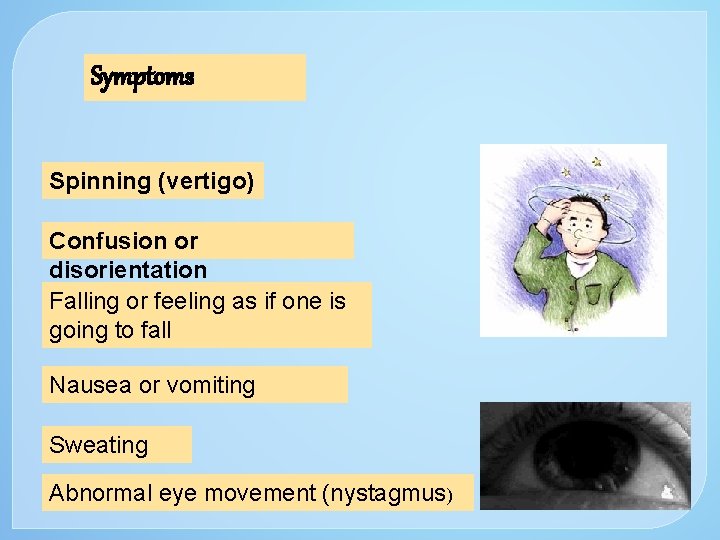
Symptoms Spinning (vertigo) Confusion or disorientation Falling or feeling as if one is going to fall Nausea or vomiting Sweating Abnormal eye movement (nystagmus)
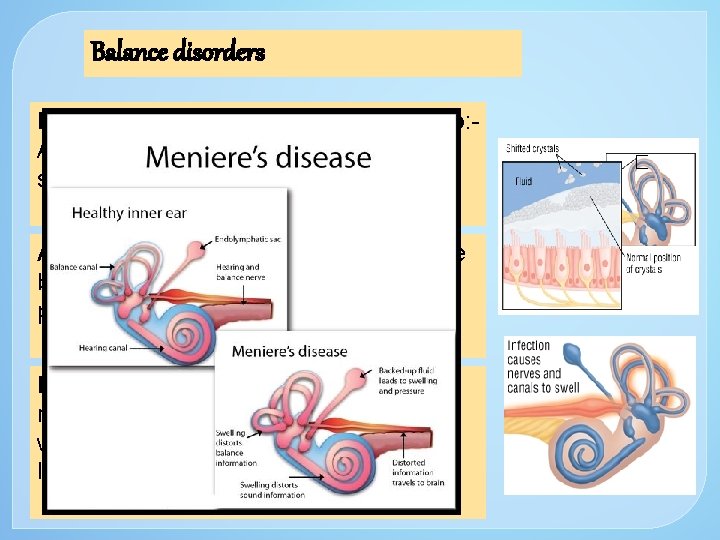
Balance disorders Benign paroxysmal positional vertigo: A change in head position causes a sudden sensation of spinning. Acute labyrinthitis: -Inflammation of the balance apparatus of the inner ear, probably caused by a viral infection. Ménière's disease: -This causes repeated episodes of dizziness, usually with ringing in the ear and progressive low-frequency hearing loss.

Pharmacologic approach Involves targeting the Specific treatment underlying cause of the vertigo (e. g. , ear infection). Symptomatic treatment Involves controlling the acute symptoms and Prophylactic treatment autonomic complaints vertigo and vomiting) Aims to (e. g. , reduce the recurrence of specific vertiginous conditions. Diuretics (but not loop diuretics) Corticosteroid s Ca /K Channel Blockers Cinnarizine, Verapamil
Symptomatic control Vestibular suppressants Antiemetics are drugs that reduce the intensity of vertigo and nystagmus evoked by a vestibular imbalance. 1 -Anticholinergics 2 -Benzodiazepines 3 -Betahistine
1 -Anticholinergics 2 -Benzodiazepines Anticholinergics inhibit firing in vestibular nucleus neurons In small dosages useful for the management of acute vertigo Reduce the velocity of vestibular nystagmus Minimize anxiety and panic associated with vertigo e. g. hyoscine, also useful in motion sickness, sedation ADRs: - dry mouth, blurred vision, sedation Lorazepam, Clonzepam, Diazepam ADRs: - Dependence, impaired memory, increased risk of falling.
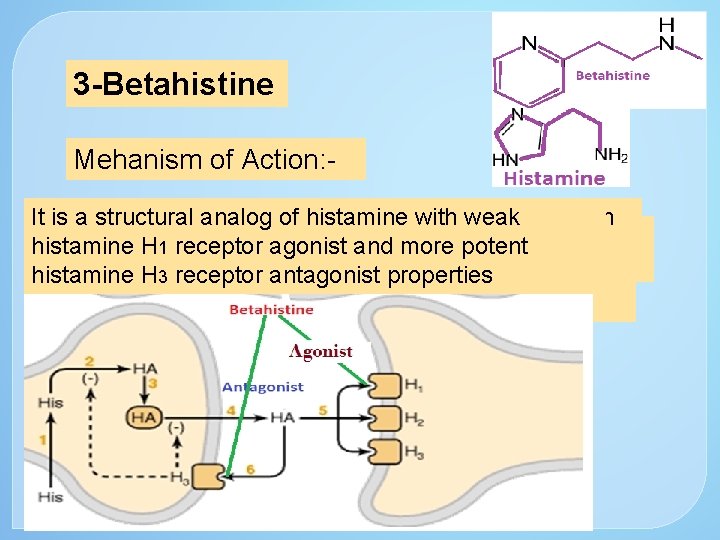
3 -Betahistine Mehanism of Action: It isstimulating Betahistine By a structural increases Hanalog the of histamine level located of serotonin on with blood weak invessels the in 1 receptors By bloking H 3 receptors, Betahistine increases brainstem the inner ear→ →↓the local activity vasodilation of vestibular increased nuclei. histamine H 1 receptor agonist andand more potent the local concentration of histamine the inner permeability, histamine H 3 which receptor helps antagonist toinreverse properties theear. underlying problem of endolymphatic hydrops.
Pharmacokinetics Formulated as tablet or oral solution Contraindications ADRs: Rapidly Phaeochromocytoma Headache and completely absorbed. Nausea t½= 3 -4 hours excreted in urine within 24 hours Bronchial asthma Low protein binding GIT side History ofeffects peptic ulcer Hypersensitivity reactions

Betahistine Clinical ADRs: - indication Betahistine Efficacy evidence and is indicated safetyisoflimited for Current as treatment betahistine of Ménière's treatmentsyndrome. in to whether betahistine patients with Meniere’s prevents vertigo attacks 94% of ENT surgeons in Britain disease: primary results of a caused by Meniere’s disease, prescribe betahistine for Ménière's long term, multicentre, disease, while in USA they think it compared with placebo double blind, randomised, is no better than a placebo reactions placebo controlled, dose. defining trial (BEMED trial) BMJ 2016; 352

Antiemetics are drugs used to control vomiting and nausea Antihistamines e. g. diminhydrinate Phenothiazines e. g. prochlorperazine Dopamine antagonists e. g. metoclopramide
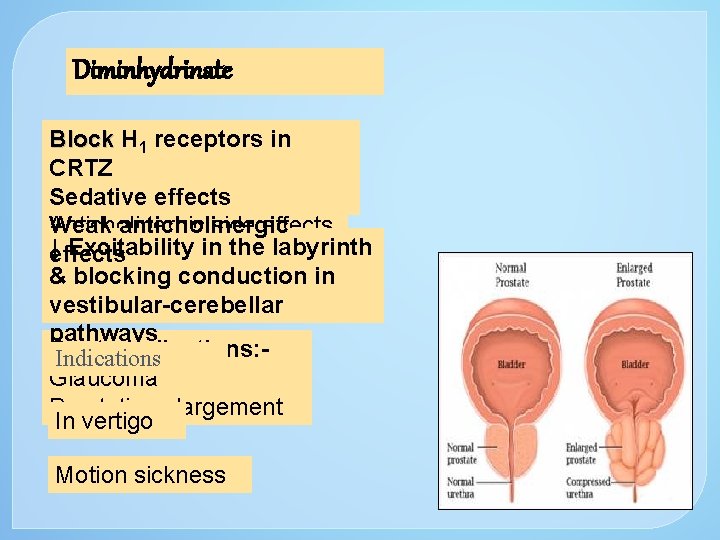
Diminhydrinate ADRs: -H 1 receptors in Block Sedation CRTZ Diziness effects Sedative Anticholinergic side effects Weak anticholinergic ↓effects Excitability in the labyrinth & blocking conduction in vestibular-cerebellar pathways Contraindications: Indications Glaucoma Prostatic enlargement In vertigo Motion sickness
Prochlorperazine Blocks dopamine receptors at CRTZ Antipsychotic , some sedation + antiemetic Indications One of the best antiemetics in vertigo, has some vestibular suppressant action
Metoclopramide A potent central antiemetic acting on CRTZ Has some sedative action Has potent gastroprokinetic effect ADRS: Restlessness or drowsiness Extrapyramidal manifestations on prolonged use
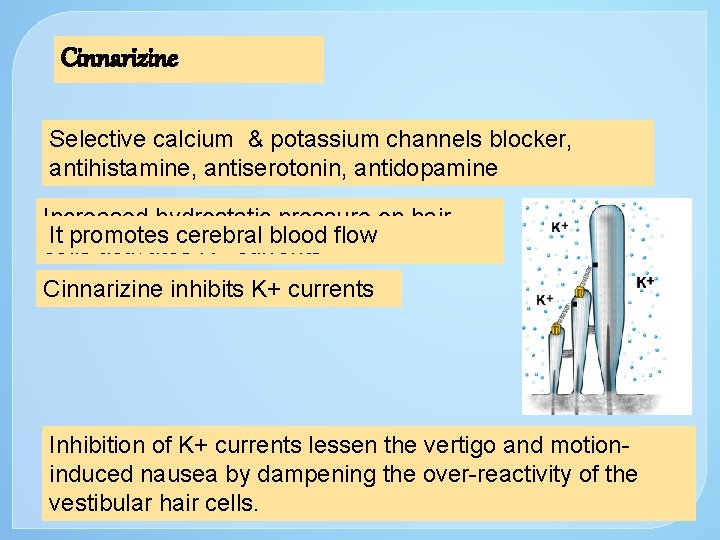
Cinnarizine Selective calciumof & potassium Mechanism action channels blocker, antihistamine, antiserotonin, antidopamine Increased hydrostatic pressure on hair It promotes cerebral blood flow cells activates K+ currents Cinnarizine inhibits K+ currents Inhibition of K+ currents lessen the vertigo and motioninduced nausea by dampening the over-reactivity of the vestibular hair cells.
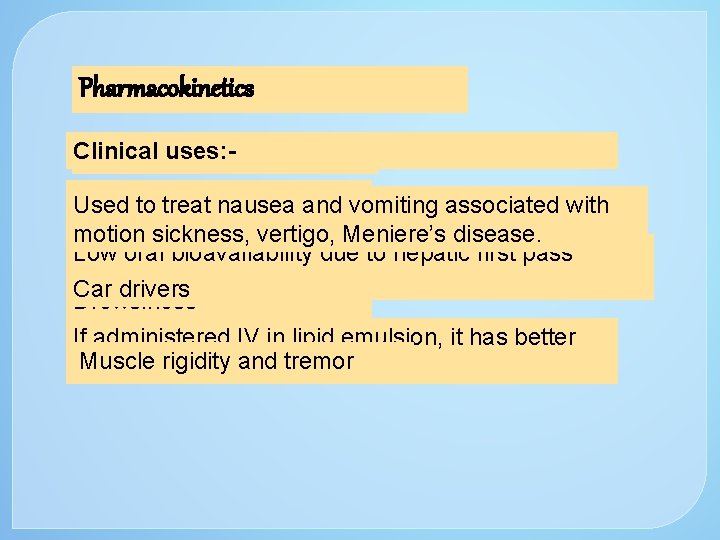
Pharmacokinetics Taken Clinical Contraindications orally uses: in tablet form ADRS: Sweating Rapidly Used to absorbed treat nausea and vomiting associated with Parkinsonism motion sickness, vertigo, Meniere’s disease. Headache Low oral bioavailability due to hepatic first pass metabolism Car drivers Drowsiness If administered IV in lipid emulsion, it has better Muscle rigidity and tremor bioavailability
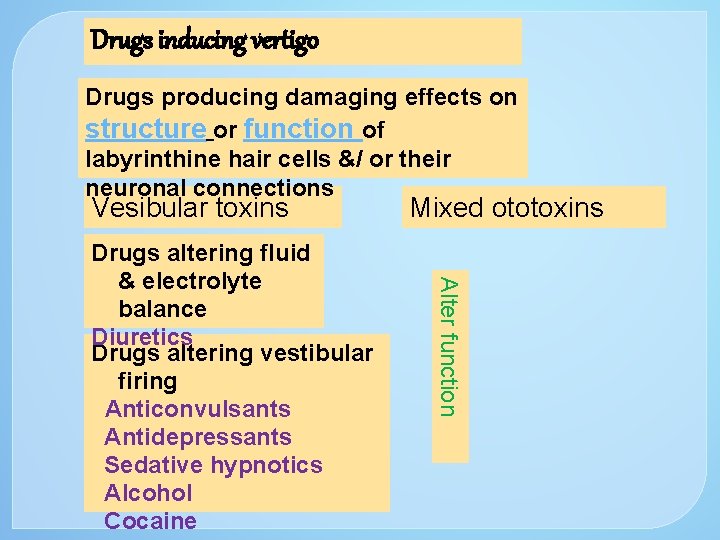
Drugs inducing vertigo Drugs producing damaging effects on structure or function of labyrinthine hair cells &/ or their neuronal connections Vesibular toxins Alter function Drugs altering fluid & electrolyte balance Diuretics Drugs altering vestibular firing Anticonvulsants Antidepressants Sedative hypnotics Alcohol Cocaine Mixed ototoxins
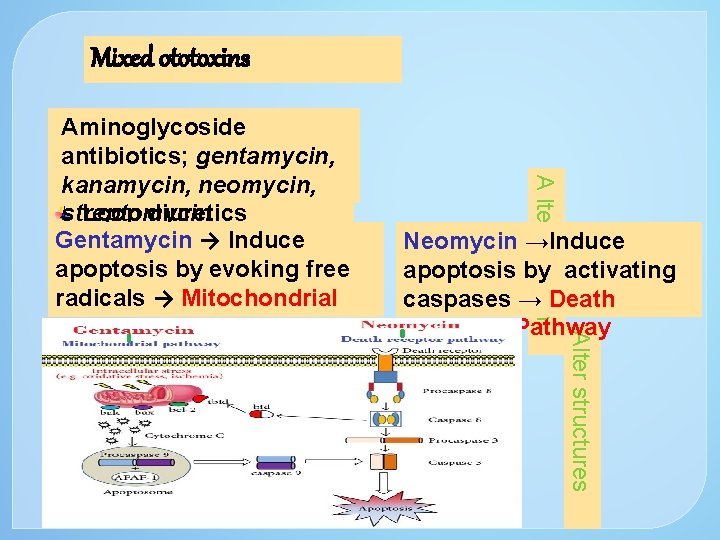
Mixed ototoxins A lter function Neomycin →Induce apoptosis by activating caspases → Death Receptor Pathway Alter structures Aminoglycoside Quinine, chloroquine, antibiotics; quinidine gentamycin, kanamycin, neomycin, Nitrogen mustard streptomycin Loop diuretics Gentamycin NSAIDs → Induce apoptosis Tobaccoby evoking free radicals → Mitochondrial Pathway ↓Local blood flow → biochemical changes → ↓ electromechanical transduction → ↓firing of impulse
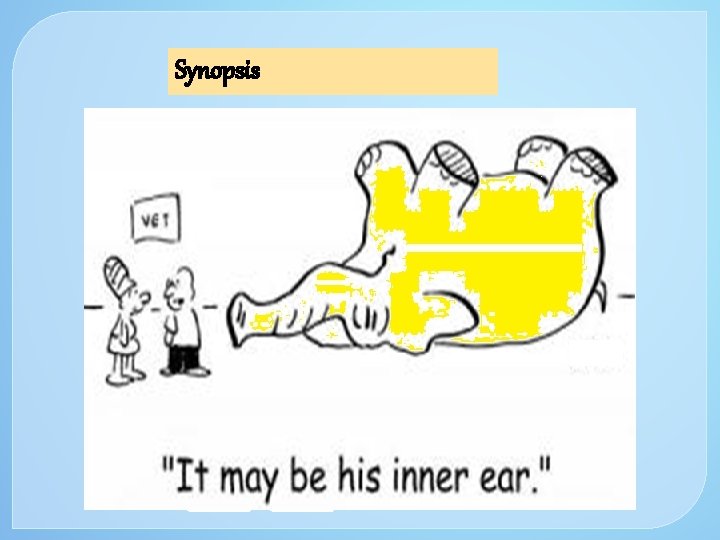
Synopsis Drugs Affecting Balance Drugs to treat vertigo Specific eg Antibiotics Symptomatic Drugs inducing vertigo Prophylactic Vestibular suppressants Antiemetics Diuretics Anticholin ergics Antihistami nes Corticoste roids Benzodia zepines Phenothia zines Calcium/potassium antagonists Betahistine Dopamine antagonist Vestibular toxinss Mixed ototoxins
- Slides: 20