
DRUGS HOW DOES ADDICTION WORK Target the Limbic
DRUGS
HOW DOES ADDICTION WORK? � Target the Limbic System (Emotions & Primary reward circuit) Primary Neurotransmitter is Dopamine. (Normally rewards natural behavior-Evolutionary Operant Conditioning) � Drugs ↑ Dopamine 2 -10 x more than natural rewards (Addiction!) � Brain produces ↓ dopamine in response to surges caused by drugs. Causes tolerance, & causes flat/lifeless feeling
TYPES OF DEPENDENCE � Psychological Dependence You use a drug to maintain a sense of well-being. � Physical Dependence You use a drug to avoid physical symptoms of withdrawal.
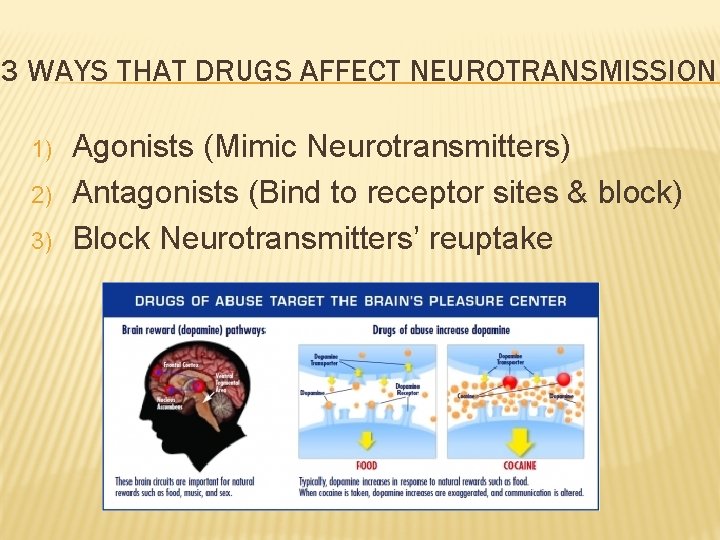
3 WAYS THAT DRUGS AFFECT NEUROTRANSMISSION 1) 2) 3) Agonists (Mimic Neurotransmitters) Antagonists (Bind to receptor sites & block) Block Neurotransmitters’ reuptake
DEPRESSANTS Inhibit brain function & slow body functioning
ALCOHOL � 2 nd Most Used Drug � Impairs frontal lobe of cerebral cortex Reduces inhibitions & affects judgment Less Self-Control & More aggressive � Impairs Cerebellum (Balance & Movement) � Impairs Hippocampus (Can’t encode memories) � Prevents REM Sleep (Hangovers) � Impairs speech � Elevated levels impair Medulla (Breathing)
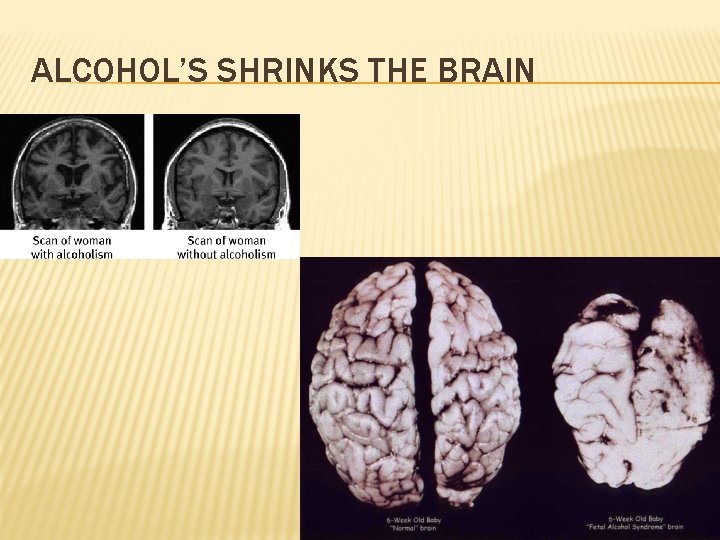
ALCOHOL’S SHRINKS THE BRAIN
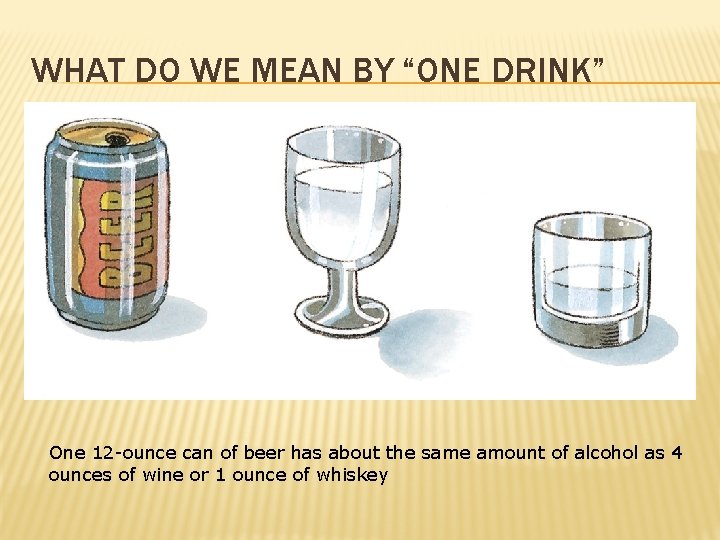
WHAT DO WE MEAN BY “ONE DRINK” One 12 -ounce can of beer has about the same amount of alcohol as 4 ounces of wine or 1 ounce of whiskey
BARBITUATES “DOWNERS” � Depress actions of central nervous system. � Reduce anxiety & act as sedatives. � Can cause lethal interaction w/ alcohol. � Impairs both memory and judgment. � Used in general anesthesia, Epilepsy (Anticonvulsant), Capital Punishment, & assisted suicide. � Very addicting & withdrawal can cause REM rebound nightmares, hallucinations, disorientation and even life-threatening convulsions. � Largely replaced by Tranquilizers (Fewer side
OPIATES “NARCOTICS” � Morphine, Codeine, Opium, & Heroin � Very addictive. � Depress Neural Activity & reduce pain. � Agonists for Endorphins. � Reliance on Opiates reduces natural production of endorphins.
STIMULANTS Excite brain activity and all are at least mildly addictive
CAFFEINE � Most commonly used drug. � Stimulant found in coffee, chocolate, tea, and some soft drinks � Provides user with a sense of increased energy, mental alertness, and forced wakefulness � Blocks GABA receptor sites that if activated, sedate the central nervous system � Withdrawal symptoms are sleepiness, fatigue, anxiety, insomnia, increased heart rate
NICOTINE � Stimulant found in tobacco � Stimulates Autonomic Nervous System � Effects similar to those of caffeine – reduces fatigue & drowsiness and increases mental alertness � Decreases anxiety � Affects various areas in the brain affecting mood, attention & arousal � Very addictive and does not stay in the body very long Nicotine Addiction CNN Video
COCAINE Stimulant derived from leaves of the coca plant � Crack – cocaine crystals � Blocks the reuptake of dopamine. � Dependency is quick and severe; places extreme strain on cardiovascular system (Heart problems) � Can cause cocaine psychosis – schizophrenia-like symptoms including auditory hallucinations & paranoia, “cocaine bugs” or tactile hallucinations � Crack Smoking Veteran
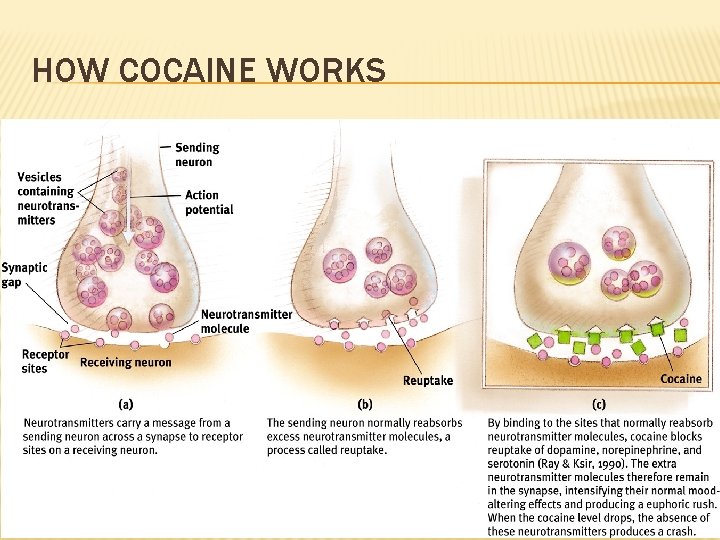
HOW COCAINE WORKS
AMPHETIMINES � Includes: speed, “uppers”, and methamphetamines � Drugs that stimulate neural activity, speeding up body functions, with associated energy and mood changes � Agonist for adrenaline (norepinephrine) Higher heart rate, reduced appetite, More alert, Aggressiveness � Gets reuptaken with dopamine & causes neurons to then release enormous amounts of dopamine. � Can cause irreversible changes in mood & function � Withdrawal causes fatigue, deep sleep, intense depression, increase in appetite. Faces of Meth Ads Meth Fact Sheet Meth Video
MORE ON METH…. � How does Jessie exploit the symptoms of Meth?

DOES THIS AD WORK?

WHAT ABOUT THIS ONE?

AND YET ANOTHER ONE…

ECSTASY (MMDA) � Part-stimulant & part-hallucinogenic drug that produces lower inhibitions, pleasant feelings, and greater acceptance of others � Blocks serotonin reuptake prolonging its “good” feeling � Even moderate users may experience permanent brain damage to serotonin nerve endings & even memory and verbal reasoning problems up to a year later. � Dehydration, rapid heartbeat, tremors, muscle tension, teeth clenching & high body temp can result. � Doesn’t seem to be physically addictive. Peter Griffin on Ecstasy
HALLUCINOGENS Distort Sensory Perceptions.
LYSERGIC ACID DIETHYLAMIDE (LSD) � Powerful hallucinogenic drug (also causes euphoria) � Also known as “acid” � Not addictive, but tolerance does develop. � The effects vary from person to person � Users can be dangerous to themselves and others. � Similar to neurotransmitter, serotonin. � Causes excessive release of Dopamine: flashbacks, & psychotic reactions can occur. LSD Documentary (3: 55) (9: 25) LSD Simulator
MARIJUANA (CANNABIS) � Leaves, stems, resin, and flowers form the hemp plant � When smoked, lower inhibitions and produce feelings of relaxation and mild euphoria � THC (delta-9 -tetrahydrocannabinol) is the active ingredient. Receptors in the brain for Anandamide also accept THC � Disrupts memory; lung damage from smoke � Long-term use impairs intellectual functioning. � Withdrawal may cause insomnia, tremors and decreased appetite. � Is helpful in decreasing nausea and reducing effects of glaucoma. � Smoking it can increase chance of developing schizophrenia if genetically disposed to the disorder.
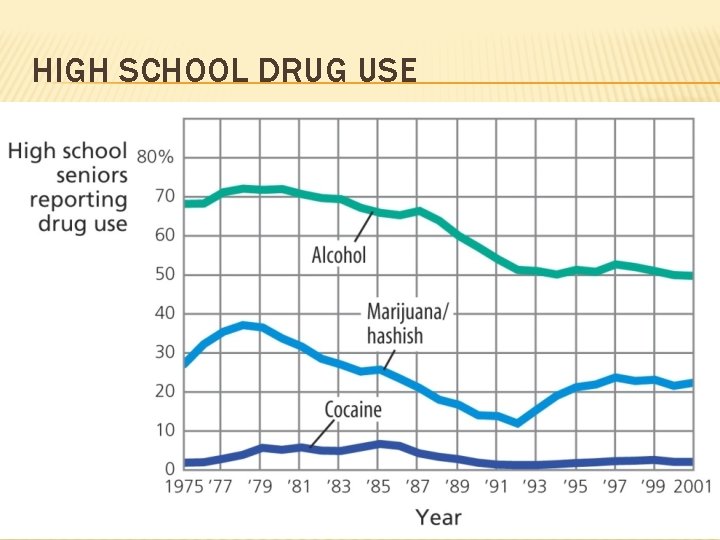
HIGH SCHOOL DRUG USE
- Slides: 26