
Drugs For Peptic Ulcer Disease PUD Peptic ulcers


- Slides: 16
Drugs For Peptic Ulcer Disease (PUD) ● Peptic ulcers commonly involve stomach (gastric) ulcer or duodenum (duodenal) ulcer ● The most common symptom is burning stomach pain ● Complications is bleeding ● Relapse is common when treatment is stopped 1
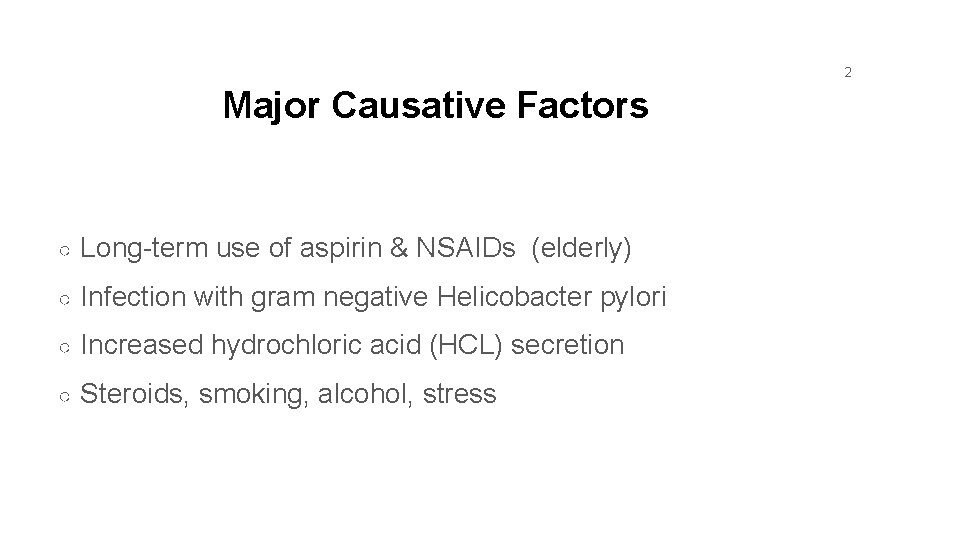
2 Major Causative Factors ○ Long-term use of aspirin & NSAIDs (elderly) ○ Infection with gram negative Helicobacter pylori ○ Increased hydrochloric acid (HCL) secretion ○ Steroids, smoking, alcohol, stress
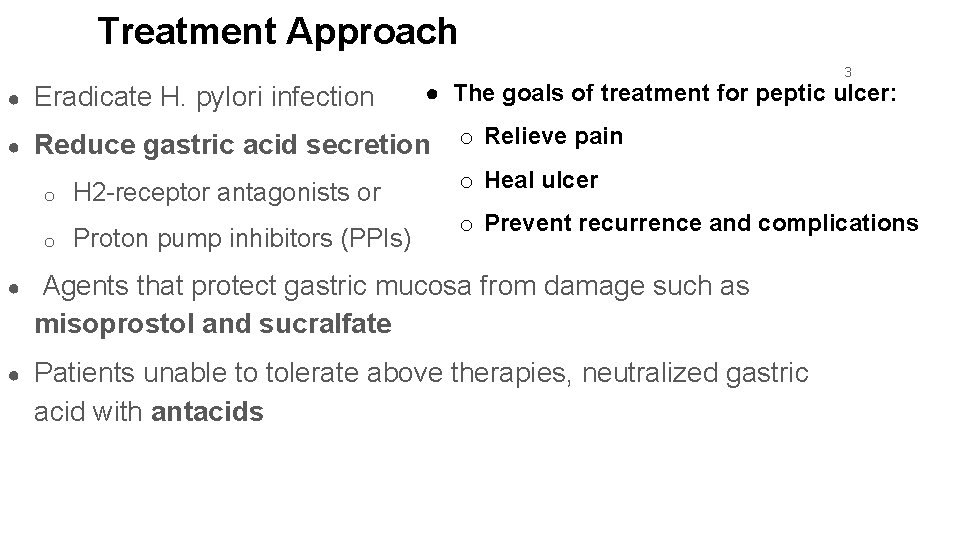
Treatment Approach 3 ● The goals of treatment for peptic ulcer: ● Eradicate H. pylori infection ● Reduce gastric acid secretion o o H 2 -receptor antagonists or Proton pump inhibitors (PPIs) o Relieve pain o Heal ulcer o Prevent recurrence and complications ● Agents that protect gastric mucosa from damage such as misoprostol and sucralfate ● Patients unable to tolerate above therapies, neutralized gastric acid with antacids
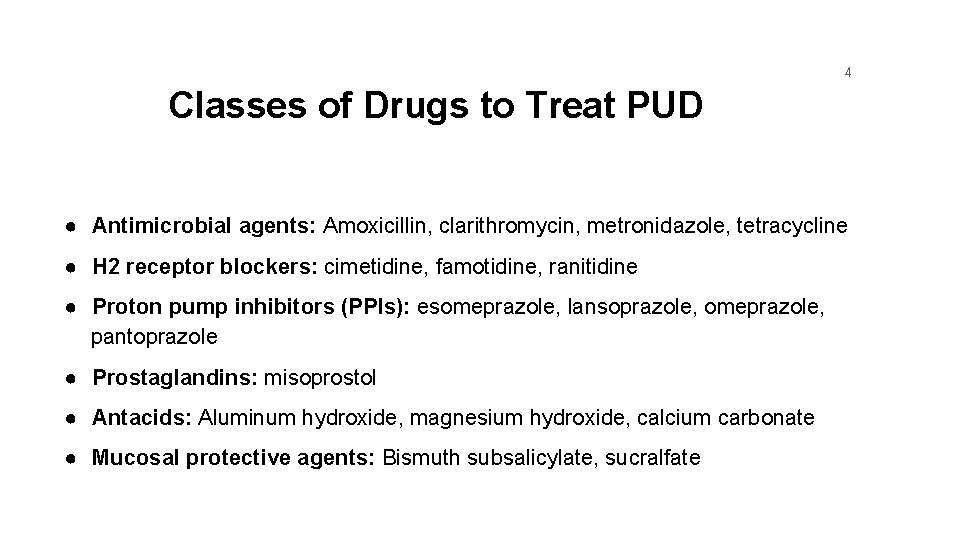
4 Classes of Drugs to Treat PUD ● Antimicrobial agents: Amoxicillin, clarithromycin, metronidazole, tetracycline ● H 2 receptor blockers: cimetidine, famotidine, ranitidine ● Proton pump inhibitors (PPIs): esomeprazole, lansoprazole, omeprazole, pantoprazole ● Prostaglandins: misoprostol ● Antacids: Aluminum hydroxide, magnesium hydroxide, calcium carbonate ● Mucosal protective agents: Bismuth subsalicylate, sucralfate
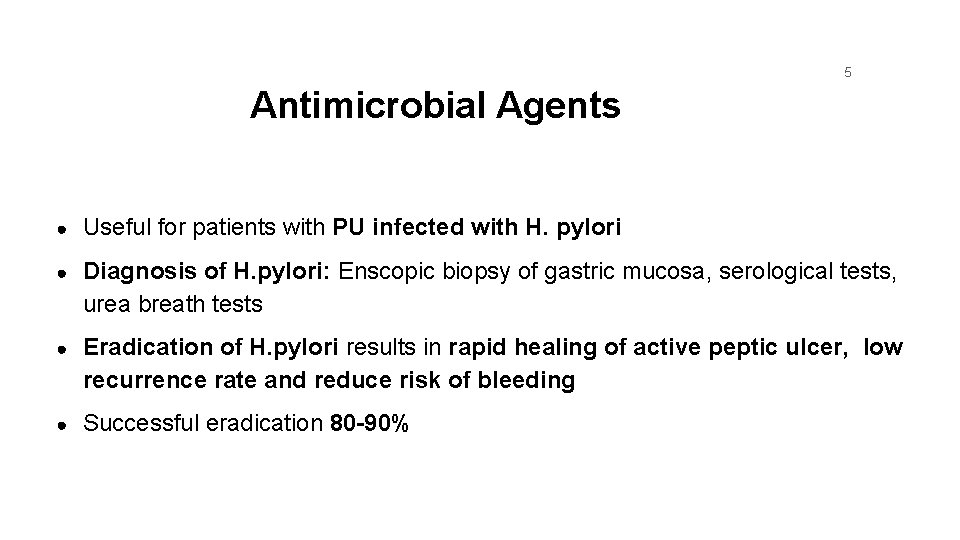
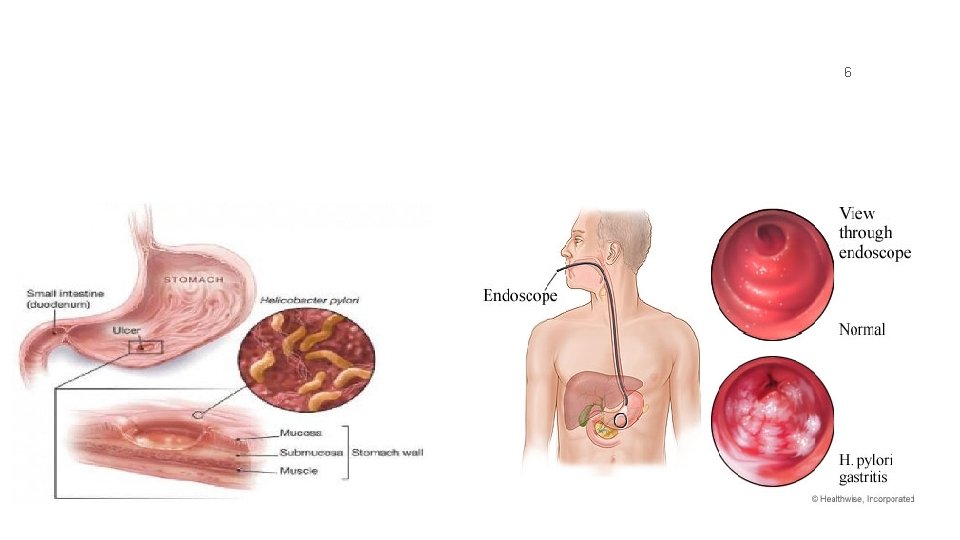
5 Antimicrobial Agents ● Useful for patients with PU infected with H. pylori ● Diagnosis of H. pylori: Enscopic biopsy of gastric mucosa, serological tests, urea breath tests ● Eradication of H. pylori results in rapid healing of active peptic ulcer, low recurrence rate and reduce risk of bleeding ● Successful eradication 80 -90%
6
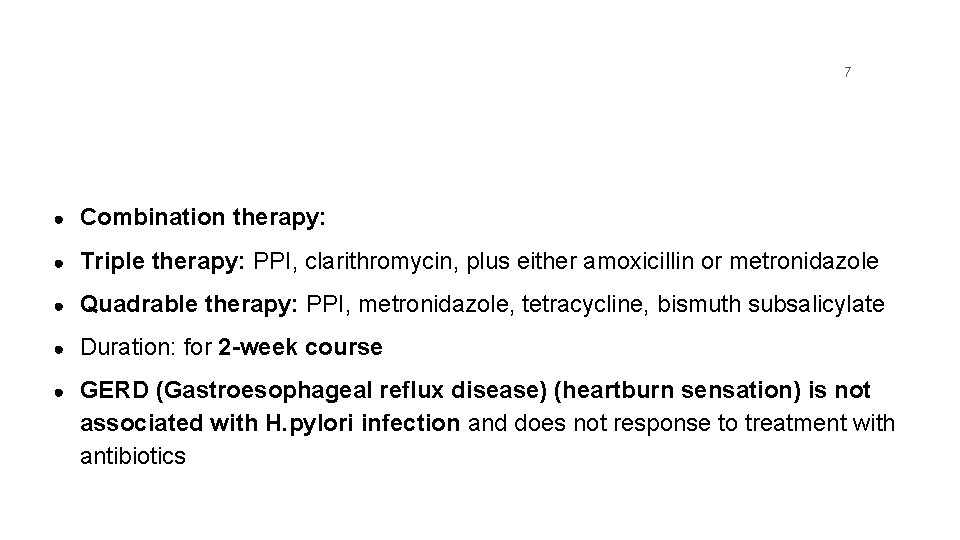
7 ● Combination therapy: ● Triple therapy: PPI, clarithromycin, plus either amoxicillin or metronidazole ● Quadrable therapy: PPI, metronidazole, tetracycline, bismuth subsalicylate ● Duration: for 2 -week course ● GERD (Gastroesophageal reflux disease) (heartburn sensation) is not associated with H. pylori infection and does not response to treatment with antibiotics
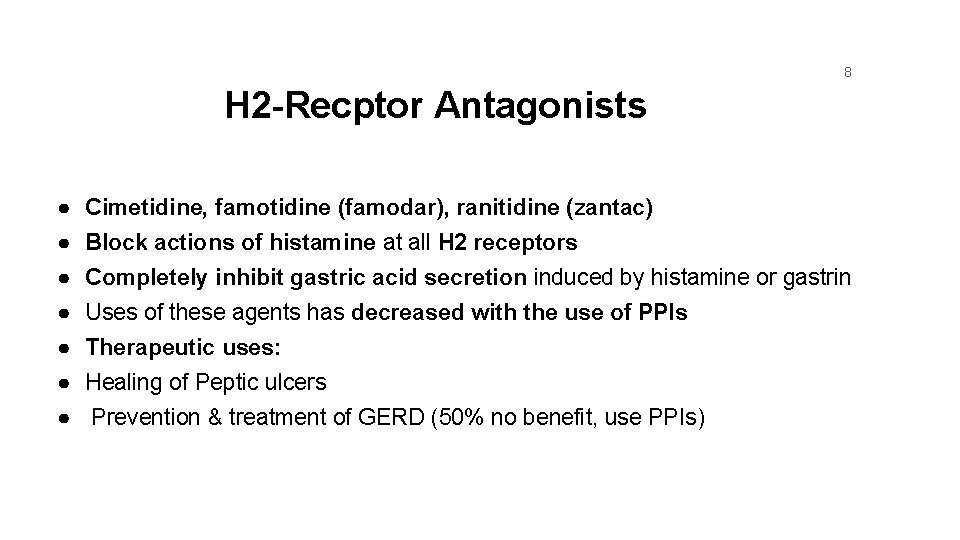
8 H 2 -Recptor Antagonists ● Cimetidine, famotidine (famodar), ranitidine (zantac) ● Block actions of histamine at all H 2 receptors ● Completely inhibit gastric acid secretion induced by histamine or gastrin ● Uses of these agents has decreased with the use of PPIs ● Therapeutic uses: ● Healing of Peptic ulcers ● Prevention & treatment of GERD (50% no benefit, use PPIs)
● All H 2 antagonists can be given orally or IV ● Cimetidine: short half-life, inhibits CYP P 450 (slow metabolism of warfarin, diazepam, phenytoin, carbamazepine) ● Ranitidine: longer half-life, more potent than cimetidine ● Famotidine: similar to ranitidine, 20 -50 more potent than cimetidine ● They need 45 mins to relieve symptoms ● Dose should be reduced in hepatic and renal failure ● Side effects: ● Headache, dizziness, diarrhea, muscular pain ● CNS: confusion, hallucinations (elderly, after IV administration) ● Cimetidine: Endocrine (antiandrogen) effects (gynecomastia, galactorrhea, reduced sperm count, impotence) (limited use) 9
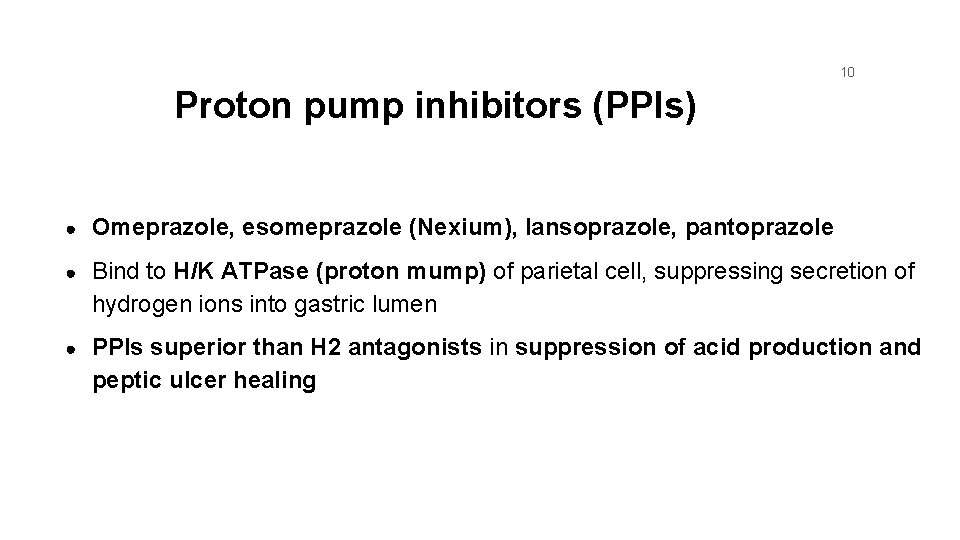
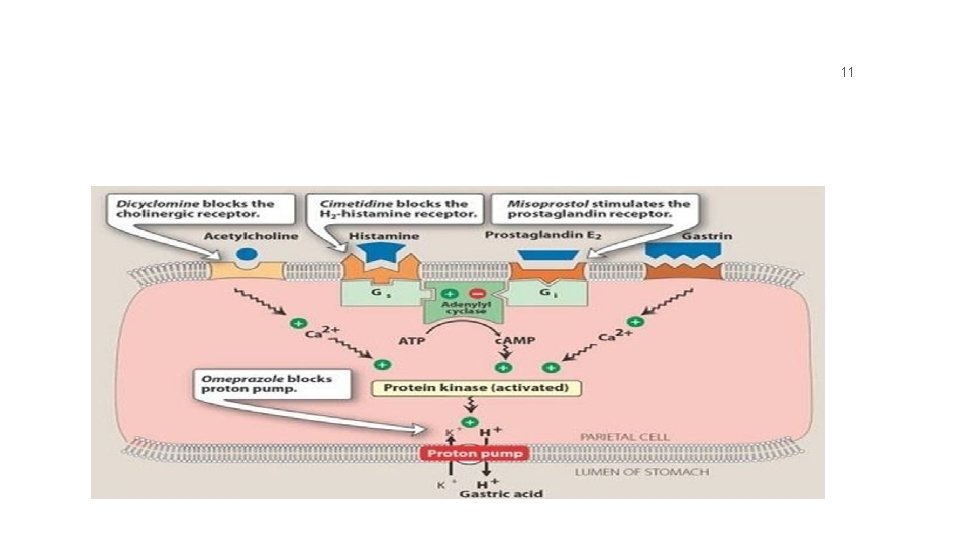
10 Proton pump inhibitors (PPIs) ● Omeprazole, esomeprazole (Nexium), lansoprazole, pantoprazole ● Bind to H/K ATPase (proton mump) of parietal cell, suppressing secretion of hydrogen ions into gastric lumen ● PPIs superior than H 2 antagonists in suppression of acid production and peptic ulcer healing
11
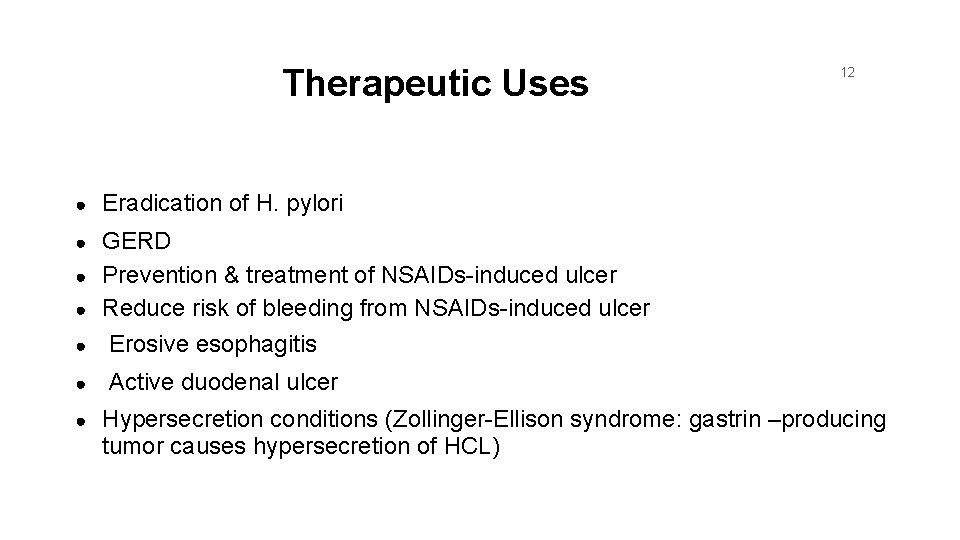
Therapeutic Uses ● 12 Eradication of H. pylori GERD ● Prevention & treatment of NSAIDs-induced ulcer ● Reduce risk of bleeding from NSAIDs-induced ulcer ● ● Erosive esophagitis ● Active duodenal ulcer ● Hypersecretion conditions (Zollinger-Ellison syndrome: gastrin –producing tumor causes hypersecretion of HCL)
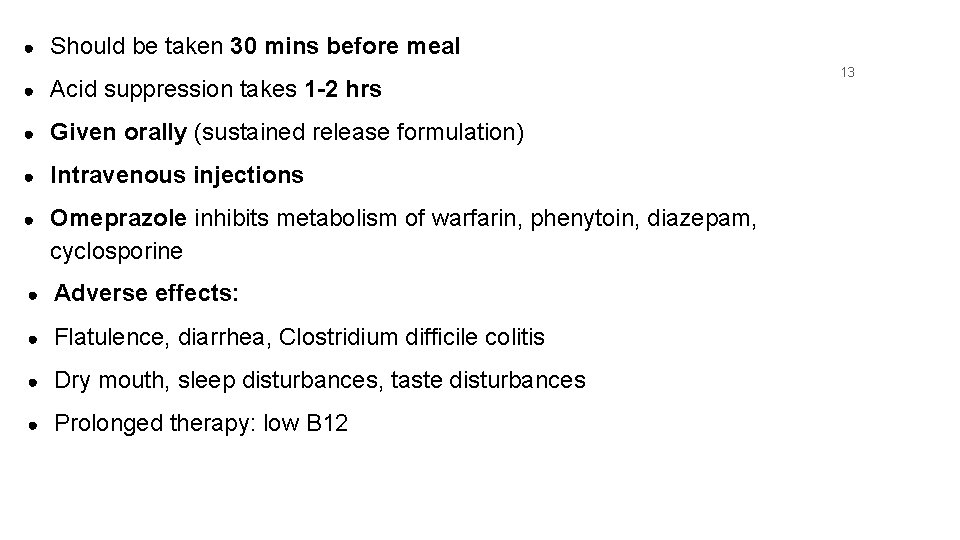
● Should be taken 30 mins before meal ● Acid suppression takes 1 -2 hrs ● Given orally (sustained release formulation) ● Intravenous injections ● Omeprazole inhibits metabolism of warfarin, phenytoin, diazepam, cyclosporine ● Adverse effects: ● Flatulence, diarrhea, Clostridium difficile colitis ● Dry mouth, sleep disturbances, taste disturbances ● Prolonged therapy: low B 12 13
Prostaglandins ● ● Prostaglandins E 2, produced by gastric mucosa, inhibits secretion of HCL, stimulates secretion of mucus and bicarbonate (cytoprotective effect) Misoprostol (Cytotec) is analog of prostaglandin E 1 ● Uses: prevention of NSAID-induced ulcers (elderly, patients with ulcer complications) ● Less effective than H 2 antagonists and PPIs for acute treatment of peptic ulcer ● Adverse effects: Diarrhea, nausea, abdominal pain ● Misoprostol produces uterine contractions, contraindicated during pregnancy 14
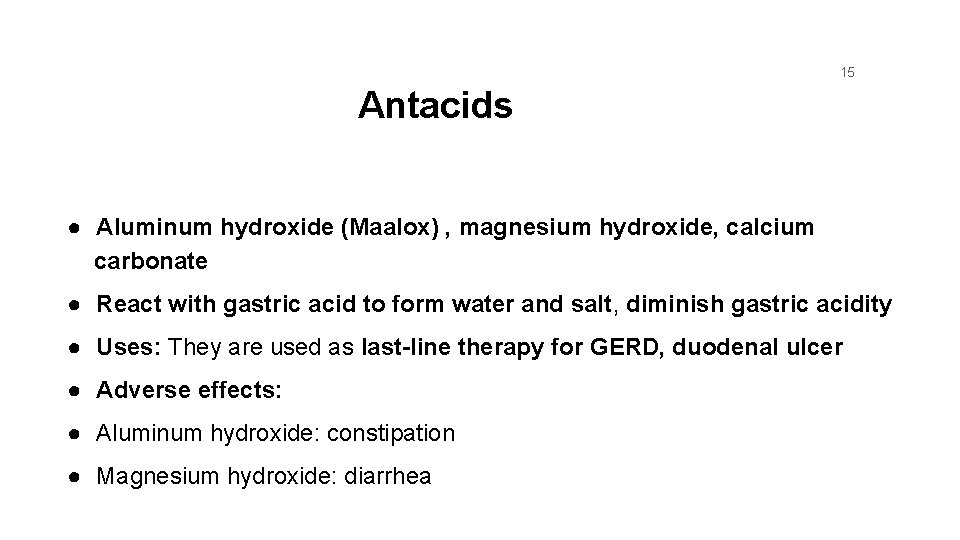
15 Antacids ● Aluminum hydroxide (Maalox) , magnesium hydroxide, calcium carbonate ● React with gastric acid to form water and salt, diminish gastric acidity ● Uses: They are used as last-line therapy for GERD, duodenal ulcer ● Adverse effects: ● Aluminum hydroxide: constipation ● Magnesium hydroxide: diarrhea
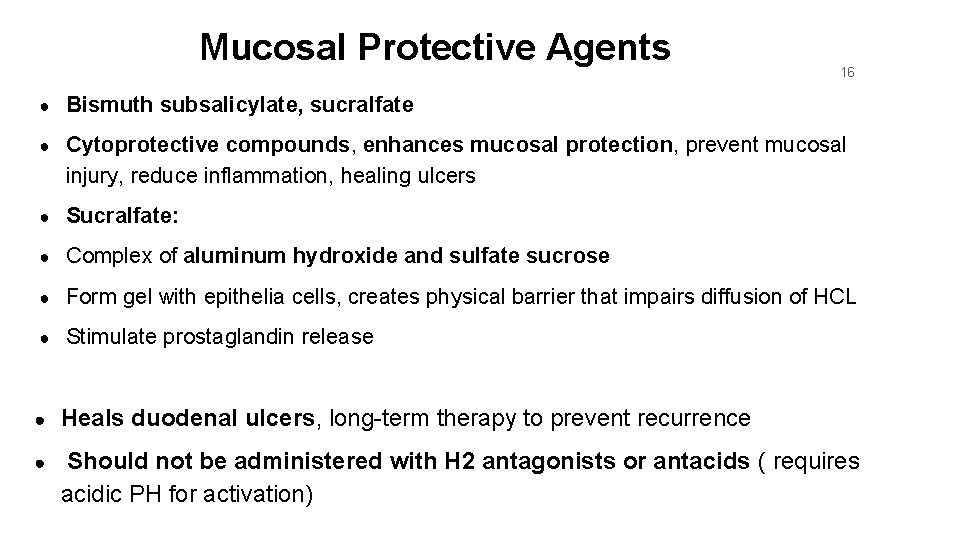
Mucosal Protective Agents 16 ● Bismuth subsalicylate, sucralfate ● Cytoprotective compounds, enhances mucosal protection, prevent mucosal injury, reduce inflammation, healing ulcers ● Sucralfate: ● Complex of aluminum hydroxide and sulfate sucrose ● Form gel with epithelia cells, creates physical barrier that impairs diffusion of HCL ● Stimulate prostaglandin release ● Heals duodenal ulcers, long-term therapy to prevent recurrence ● Should not be administered with H 2 antagonists or antacids ( requires acidic PH for activation)