
Drugs for asthma COPD Objectives Different types of
Drugs for asthma & COPD Objectives: • Different types of drugs used for treatment of asthma. • Differentiate between treatment and prophylactic therapy for asthma. • Recognize the different types of bronchodilators regarding pharmacokinetics, pharmacodynamics, uses and side effects. • Identify the different anti-inflammatory drugs for asthma in respect to kinetics, dynamics, uses and side effects. Don’t be mean. Be above average. Titles Very important Extra information Doctor’s notes 1
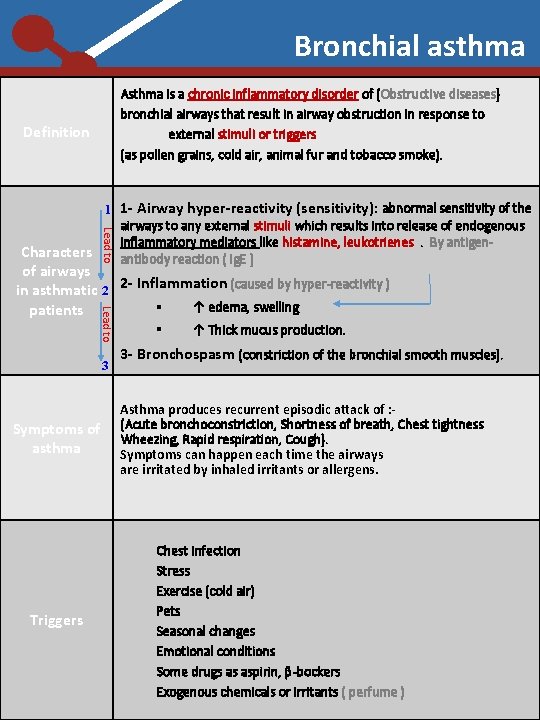
Bronchial asthma Asthma is a chronic inflammatory disorder of (Obstructive diseases) bronchial airways that result in airway obstruction in response to external stimuli or triggers (as pollen grains, cold air, animal fur and tobacco smoke). Definition 1 Lead to 1 - Airway hyper-reactivity (sensitivity): abnormal sensitivity of the airways to any external stimuli which results into release of endogenous inflammatory mediators like histamine, leukotrienes. By antigenantibody reaction ( Ig. E ) Lead to Characters of airways in asthmatic 2 2 - Inflammation (caused by hyper-reactivity ) § ↑ edema, swelling patients 3 Symptoms of asthma Triggers 2 § ↑ Thick mucus production. 3 - Bronchospasm (constriction of the bronchial smooth muscles). Asthma produces recurrent episodic attack of : (Acute bronchoconstriction, Shortness of breath, Chest tightness Wheezing, Rapid respiration, Cough). Symptoms can happen each time the airways are irritated by inhaled irritants or allergens. Chest Infection Stress Exercise (cold air) Pets Seasonal changes Emotional conditions Some drugs as aspirin, β-bockers Exogenous chemicals or irritants ( perfume )
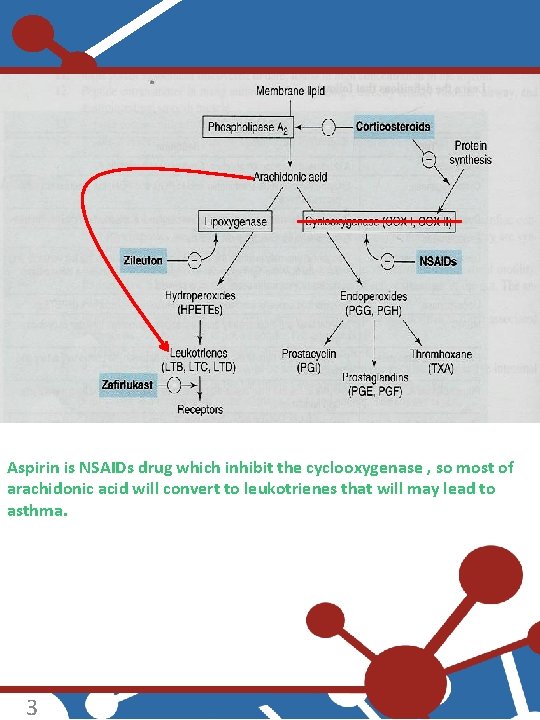
Aspirin is NSAIDs drug which inhibit the cyclooxygenase , so most of arachidonic acid will convert to leukotrienes that will may lead to asthma. 3
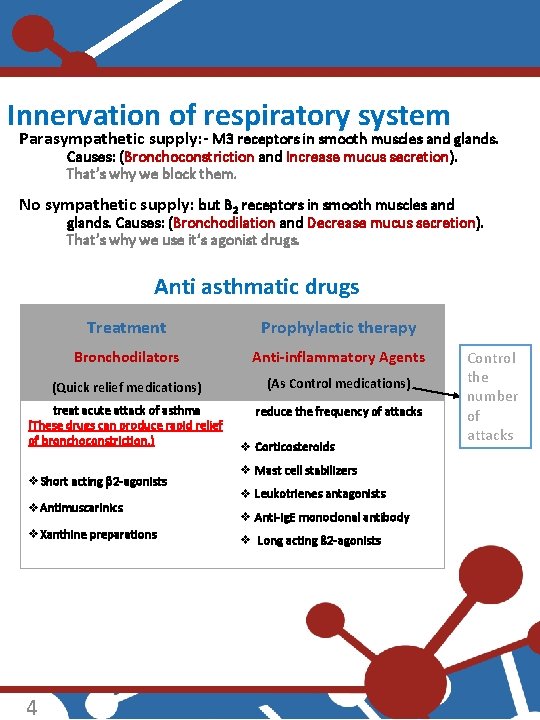
Innervation of respiratory system Parasympathetic supply: - M 3 receptors in smooth muscles and glands. Causes: (Bronchoconstriction and Increase mucus secretion). That’s why we block them. No sympathetic supply: but B 2 receptors in smooth muscles and glands. Causes: (Bronchodilation and Decrease mucus secretion). That’s why we use it’s agonist drugs. Anti asthmatic drugs Treatment Prophylactic therapy Bronchodilators Anti-inflammatory Agents (Quick relief medications) (As Control medications) treat acute attack of asthma (These drugs can produce rapid relief of bronchoconstriction. ) reduce the frequency of attacks v. Short acting 2 -agonists v. Antimuscarinics v. Xanthine preparations 4 v Corticosteroids v Mast cell stabilizers v Leukotrienes antagonists v Anti-Ig. E monoclonal antibody v Long acting ß 2 -agonists Control the number of attacks

Quick relief medications Bronchodilators (Quick relief medications) treat acute attack of asthma (These drugs can produce rapid relief of bronchoconstriction. ) v. Short acting 2 - adrenoreceptor agonists ( sympathetic output ) 1 st choice of drugs v. Antimuscarinics ( parasympathetic output ) 2 nd choice v. Xanthine preparations 3 rd choice - adrenoceptor agonists ( Sympathomimetics ) Non selective agonists: Selective 2 – agonists (Preferable). Epinephrine Salbutamol (albuterol) Isoprenaline doesn't work on a receptors Isoprenaline Terbutaline Salmeterol Formeterol Mechanism of Action: direct 2 stimulation stimulate adenyl cyclase c. AMP bronchodilation. Increase mucus clearance by (increasing ciliary activity). Stabilization of mast cell membrane. 5
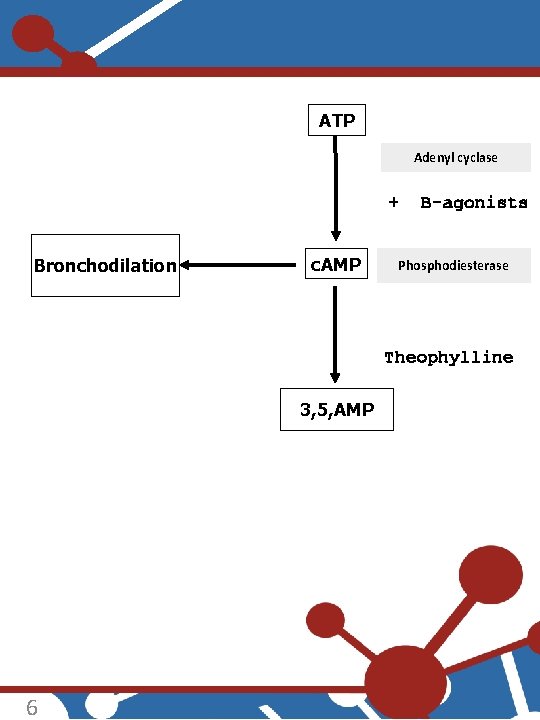
ATP Adenyl cyclase + Bronchodilation c. AMP B-agonists Phosphodiesterase Theophylline 3, 5, AMP 6
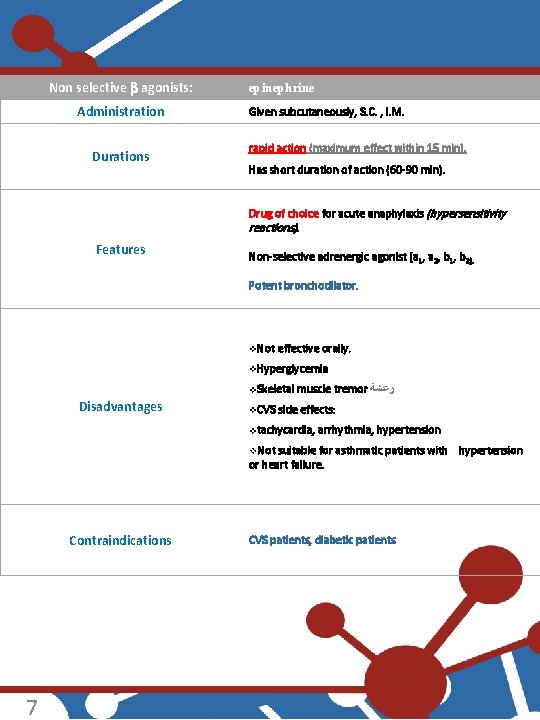
Non selective agonists: Administration Durations epinephrine Given subcutaneously, S. C. , I. M. rapid action (maximum effect within 15 min). Has short duration of action (60 -90 min). Drug of choice for acute anaphylaxis (hypersensitivity reactions). Features Non-selective adrenergic agonist (a 1, a 2, b 1, b 2). Potent bronchodilator. v. Not effective orally. v. Hyperglycemia v. Skeletal Disadvantages v. CVS muscle tremor ﺭﻋﺸﺔ side effects: vtachycardia, arrhythmia, hypertension v. Not suitable for asthmatic patients with or heart failure. Contraindications 7 CVS patients, diabetic patients hypertension
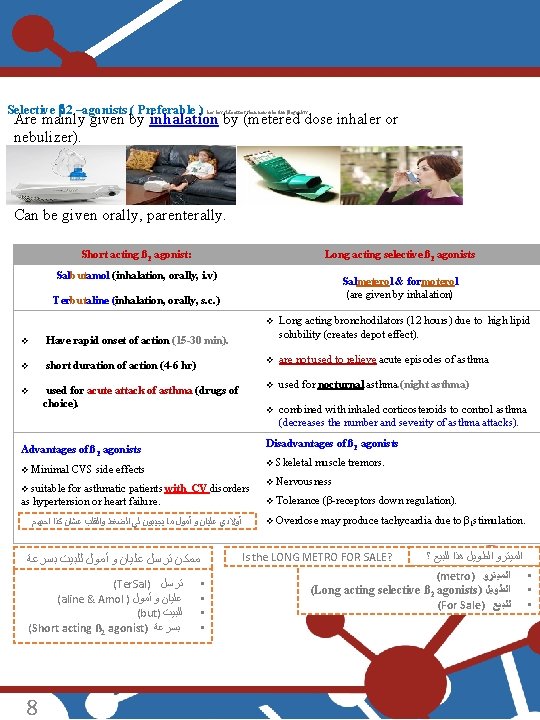
Selective 2 –agonists ( Preferable ) has less side effect than non-selective agonists. Are mainly given by inhalation by (metered dose inhaler or nebulizer). Can be given orally, parenterally. Short acting ß 2 agonist: Long acting selective ß 2 agonists Salbutamol (inhalation, orally, i. v) Salmeterol & formoterol (are given by inhalation) Terbutaline (inhalation, orally, s. c. ) v Long acting bronchodilators (12 hours) due to high lipid solubility (creates depot effect). v Have rapid onset of action (15 -30 min). v short duration of action (4 -6 hr) v are not used to relieve acute episodes of asthma v used for acute attack of asthma (drugs of choice). v used for nocturnal asthma. (night asthma) v combined with inhaled corticosteroids to control asthma (decreases the number and severity of asthma attacks). Disadvantages of ß 2 agonists Advantages of ß 2 agonists v Skeletal muscle tremors. v Minimal CVS side effects v suitable for asthmatic patients with CV disorders v Tolerance (β-receptors down regulation). as hypertension or heart failure. ﺍﺣﺒﻬﻢ ﻛﺬﺍ ﻋﺸﺎﻥ ﻭﺍﻟﻘﻠﺐ ﺍﻟﻀﻐﻂ ﻟﻲ ﻳﺠﻴﺒﻮﻥ ﻣﺎ ﺃﻤﻮﻝ ﻭ ﻋﻠﻴﺎﻥ ﺃﻮﻻﺩﻱ 8 v Overdose may produce tachycardia due to β 1 stimulation. Is the LONG METRO FOR SALE? ﺑﺴﺮﻋﺔ ﻟﻠﺒﻴﺖ ﺃﻤﻮﻝ ﻭ ﻋﻠﻴﺎﻥ ﺗﺮﺳﻞ ﻣﻤﻜﻦ (Ter. Sal) ﺗﺮﺳﻞ (aline & Amol ) ﺃﻤﻮﻝ ﻭ ﻋﻠﻴﺎﻥ (but) ﻟﻠﺒﻴﺖ (Short acting ß 2 agonist) ﺑﺴﺮﻋﺔ v Nervousness • • ؟ ﻟﻠﺒﻴﻊ ﻫﺬﺍ ﺍﻟﻄﻮﻳﻞ ﺍﻟﻤﻴﺘﺮﻭ (metro) ﺍﻟﻤﻴﺘﺮﻭ (Long acting selective ß 2 agonists) ﺍﻟﻄﻮﻳﻞ (For Sale) ﻟﻠﺒﻴﻊ • • •
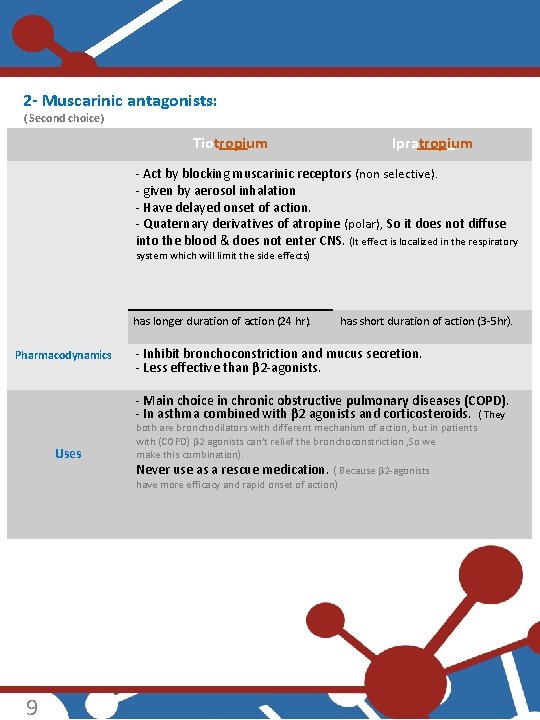
2 - Muscarinic antagonists: ( Second choice) Tiotropium Ipratropium - Act by blocking muscarinic receptors (non selective). - given by aerosol inhalation - Have delayed onset of action. - Quaternary derivatives of atropine (polar), So it does not diffuse into the blood & does not enter CNS. (It effect is localized in the respiratory system which will limit the side effects) has longer duration of action (24 hr). Pharmacodynamics has short duration of action (3 -5 hr). - Inhibit bronchoconstriction and mucus secretion. - Less effective than β 2 -agonists. - Main choice in chronic obstructive pulmonary diseases (COPD). - In asthma combined with β 2 agonists and corticosteroids. ( They Uses 9 both are bronchodilators with different mechanism of action, but in patients with (COPD) β 2 agonists can’t relief the bronchoconstriction , So we make this combination). Never use as a rescue medication. ( Because β 2 -agonists have more efficacy and rapid onset of action)
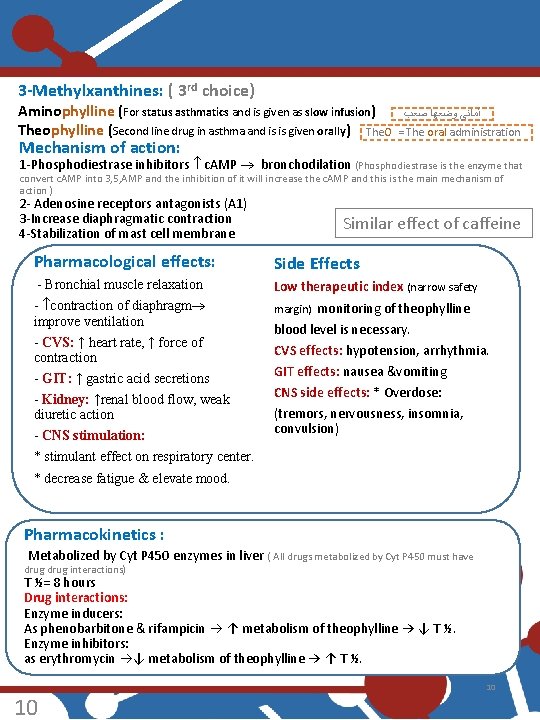
3 -Methylxanthines: ( 3 rd choice) Aminophylline (For status asthmatics and is given as slow infusion ) ﺻﻌﺐ ﻭﺿﻌﻬﺎ ﺃﻤﺎﻧﻲ Theophylline (Second line drug in asthma and is is given orally) The. O = The oral administration Mechanism of action: 1 -Phosphodiestrase inhibitors c. AMP bronchodilation (Phosphodiestrase is the enzyme that convert c. AMP into 3, 5, AMP and the inhibition of it will increase the c. AMP and this is the main mechanism of action ) 2 - Adenosine receptors antagonists (A 1) 3 -Increase diaphragmatic contraction 4 -Stabilization of mast cell membrane Similar effect of caffeine Pharmacological effects: Side Effects - Bronchial muscle relaxation Low therapeutic index (narrow safety - contraction of diaphragm improve ventilation margin) monitoring of theophylline - CVS: ↑ heart rate, ↑ force of contraction CVS effects: hypotension, arrhythmia. - GIT: ↑ gastric acid secretions - Kidney: ↑renal blood flow, weak diuretic action - CNS stimulation: blood level is necessary. GIT effects: nausea &vomiting CNS side effects: * Overdose: (tremors, nervousness, insomnia, convulsion) * stimulant effect on respiratory center. * decrease fatigue & elevate mood. Pharmacokinetics : Metabolized by Cyt P 450 enzymes in liver ( All drugs metabolized by Cyt P 450 must have drug interactions) T ½= 8 hours Drug interactions: Enzyme inducers: As phenobarbitone & rifampicin ↑ metabolism of theophylline → ↓ T ½. Enzyme inhibitors: as erythromycin ↓ metabolism of theophylline → ↑ T ½. 10 10
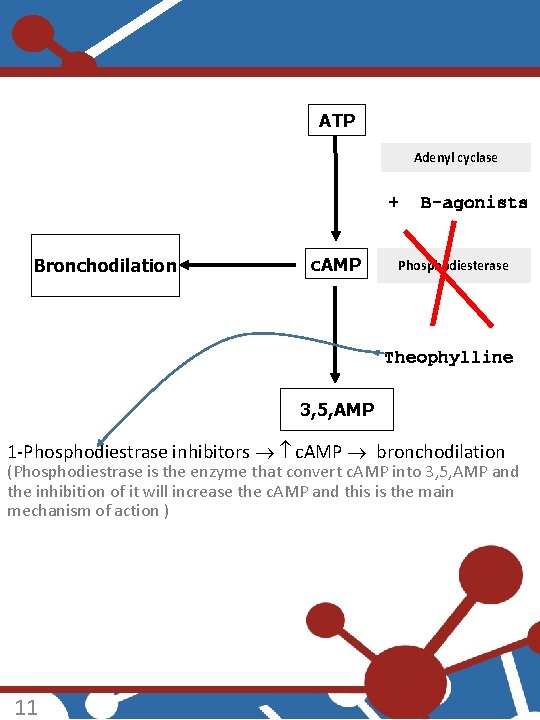
ATP Adenyl cyclase + Bronchodilation c. AMP B-agonists Phosphodiesterase Theophylline 3, 5, AMP 1 -Phosphodiestrase inhibitors c. AMP bronchodilation (Phosphodiestrase is the enzyme that convert c. AMP into 3, 5, AMP and the inhibition of it will increase the c. AMP and this is the main mechanism of action ) 11
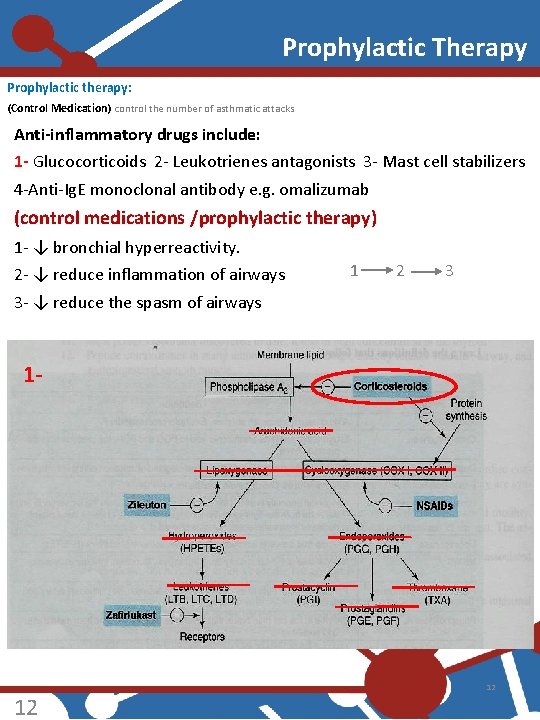
Prophylactic Therapy Prophylactic therapy: (Control Medication) control the number of asthmatic attacks Anti-inflammatory drugs include: 1 - Glucocorticoids 2 - Leukotrienes antagonists 3 - Mast cell stabilizers 4 -Anti-Ig. E monoclonal antibody e. g. omalizumab (control medications /prophylactic therapy) 1 - ↓ bronchial hyperreactivity. 2 - ↓ reduce inflammation of airways 1 2 3 3 - ↓ reduce the spasm of airways 1 - 12 12
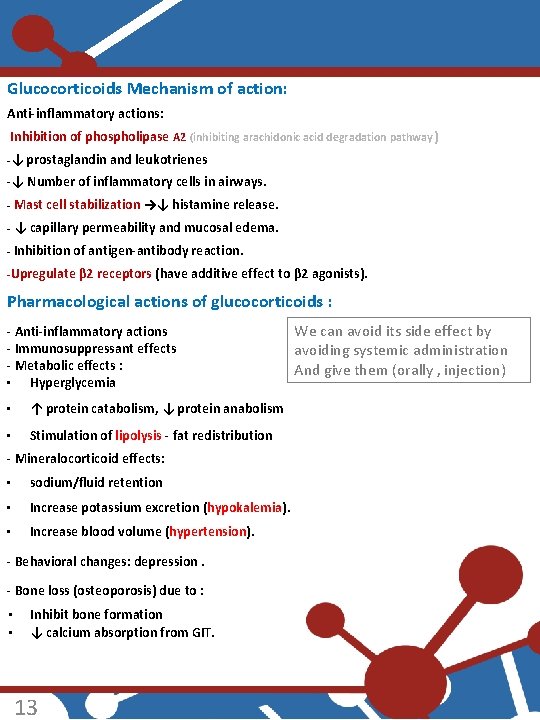
Glucocorticoids Mechanism of action: Anti-inflammatory actions: Inhibition of phospholipase A 2 (inhibiting arachidonic acid degradation pathway ) -↓ prostaglandin and leukotrienes -↓ Number of inflammatory cells in airways. - Mast cell stabilization →↓ histamine release. - ↓ capillary permeability and mucosal edema. - Inhibition of antigen-antibody reaction. -Upregulate β 2 receptors (have additive effect to β 2 agonists). Pharmacological actions of glucocorticoids : - Anti-inflammatory actions - Immunosuppressant effects - Metabolic effects : • Hyperglycemia • ↑ protein catabolism, ↓ protein anabolism • Stimulation of lipolysis - fat redistribution - Mineralocorticoid effects: • sodium/fluid retention • Increase potassium excretion (hypokalemia). • Increase blood volume (hypertension). - Behavioral changes: depression. - Bone loss (osteoporosis) due to : • • Inhibit bone formation ↓ calcium absorption from GIT. 13 We can avoid its side effect by avoiding systemic administration And give them (orally , injection)
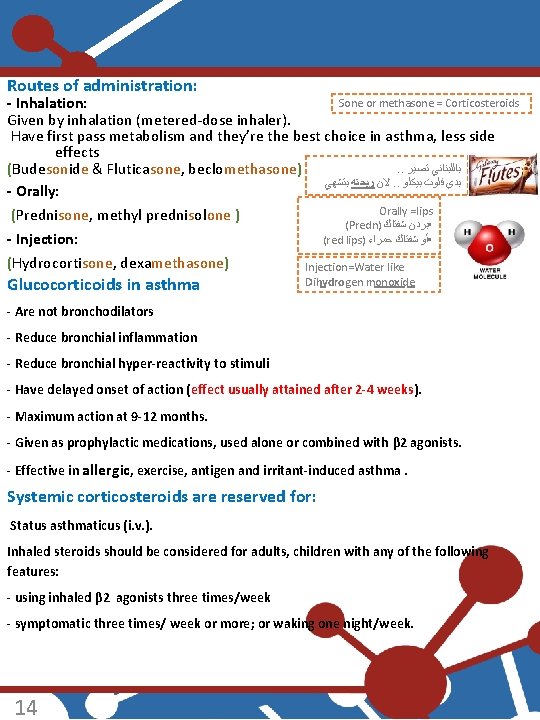
Routes of administration: Sone or methasone = Corticosteroids - Inhalation: Given by inhalation (metered-dose inhaler). Have first pass metabolism and they’re the best choice in asthma, less side effects. . ﺗﺼﻴﺮ ﺑﺎﻟﻠﺒﻨﺎﻧﻲ (Budesonide & Fluticasone, beclomethasone) ﺑﺘﺸﻬﻲ ﺭﻳﺤﺘﻪ ﻻﻥ. . ﺑﻴﻜﻠﻮ ﻓﻠﻮﺕ ﺑﺪﻱ - Orally: Orally =lips (Prednisone, methyl prednisolone ) (Predn) ﺷﻔﺘﺎﻙ • ﺑﺮﺩﻥ (red lips) ﺣﻤﺮﺍﺀ ﺷﻔﺘﺎﻙ • ﺃﻮ - Injection: (Hydrocortisone, dexamethasone) Injection=Water like Glucocorticoids in asthma Dihydrogen monoxide - Are not bronchodilators - Reduce bronchial inflammation - Reduce bronchial hyper-reactivity to stimuli - Have delayed onset of action (effect usually attained after 2 -4 weeks). - Maximum action at 9 -12 months. - Given as prophylactic medications, used alone or combined with β 2 agonists. - Effective in allergic, exercise, antigen and irritant-induced asthma. Systemic corticosteroids are reserved for: Status asthmaticus (i. v. ). Inhaled steroids should be considered for adults, children with any of the following features: - using inhaled β 2 agonists three times/week - symptomatic three times/ week or more; or waking one night/week. 14
Clinical Uses of glucocorticoids : 1. 2. 3. Treatment of inflammatory disorders (asthma, rheumatoid arthritis). Treatment of autoimmune disorders (ulcerative colitis, psoriasis) and after organ or bone marrow transplantation as immunosuppressants. Antiemetics in cancer chemotherapy. Side effects due to systemic corticosteroids : - Adrenal suppression - Growth retardation in children - Susceptibility to infections - Osteoporosis - Fluid retention, weight gain, hypertension - Hyperglycemia - Fat distribution - Cataract - Psychosis Inhalation has very less side effects: Washing mouth after inhalation will decrease the side effect - Oropharyngeal candidiasis (thrush). - Dysphonia (voice hoarseness). Withdrawal of systemic corticosteroids : - Abrupt stop of corticosteroids should be avoided and dose should be tapered (adrenal insufficiency syndrome). 15
Mast cell stabilizers e. g. Cromoglycate – Nedocromil § given by inhalation (aerosol, nebulizer). §Have poor oral absorption (10%). Its good thing because we just need it in respiratory system ﺣﺒﻴﺒﺎﺕ ﺗﺸﺒﻪ ﺑﻮﺩﺭﺓ ﻛﺎﻧﺖ ﻛﻠﻬﺎ (Cromo cromil) ﻛﺮﺍﻣﻴﻞ ﻭﺍﻟﻜﺮﻳﻢ (Gly) ﻭﺍﻟﺠﻠﻲ (Nedo) ﻧﻴﺪﻭ ﺣﻠﻴﺐ (Mast cell stabilizers) ﻭﺗﺜﺒﺖ ﺗﺘﻤﺎﺳﻚ ﺗﺒﺪﺍ ﺑﺎﻟﺜﻼﺟﺔ ﻭﻧﺤﻄﻬﺎ ﺍﻟﻤﻮﻳﻪ ﻧﻀﻴﻒ ﻣﺎ ﻭﺑﻌﺪ (Histamine) Mechanism of action: § act by stabilization of mast cell membrane > release of inflammatory mediators > Inflammation > Bronchospasm. Pharmacodynamics: §Are Not bronchodilators § Not effective in acute attack of asthma. § Prophylactic anti-inflammatory drug § Reduce bronchial hyper-reactivity. § Effective in exercise, antigen and irritant-induced asthma. § Children respond better than adults Uses: Prophylactic therapy in asthma especially in children. ﻏﺎﻟﺒ ﺍﻷﻄﻔﺎﻝ ﻳﺤﺒﻮﻧﻬﺎ ﻛﻠﻬﺎ (Cromo cromil) ﻛﺮﺍﻣﻴﻞ ﻭﺍﻟﻜﺮﻳﻢ (Gly) ﻭﺍﻟﺠﻠﻲ (Nedo) ﻧﻴﺪﻭ ﺣﻠﻴﺐ Allergic rhinitis. Conjunctivitis. § § § Side effects : Bitter taste. ( ﻣﺮ )ﻃﻌﻤﻪ minor upper respiratory tract irritation (burning sensation, nasal congestion) § § 16
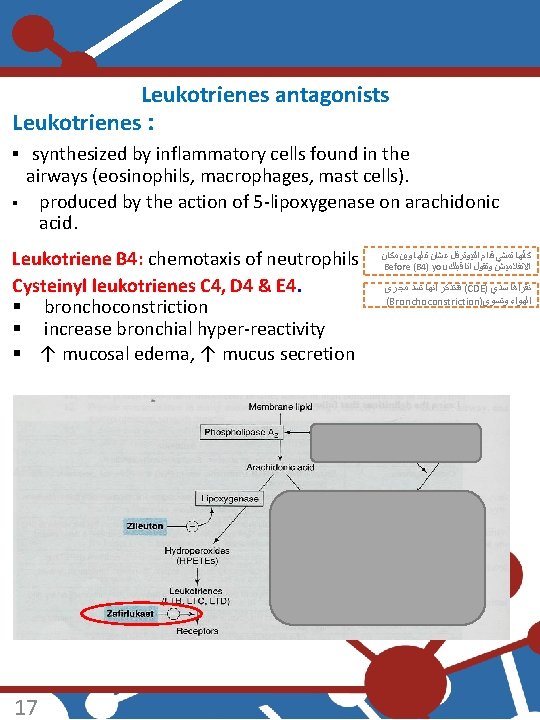
Leukotrienes antagonists Leukotrienes : § synthesized by inflammatory cells found in the § airways (eosinophils, macrophages, mast cells). produced by the action of 5 -lipoxygenase on arachidonic acid. Leukotriene B 4: chemotaxis of neutrophils Cysteinyl leukotrienes C 4, D 4 & E 4. § bronchoconstriction § increase bronchial hyper-reactivity § ↑ mucosal edema, ↑ mucus secretion 17 ﻣﻜﺎﻥ ﻭﻳﻦ ﺗﺪﻟﻬﺎ ﻋﺸﺎﻥ ﺍﻟﻨﻴﻮﺗﺮﻓﻞ ﻗﺪﺍﻡ ﺗﻤﺸﻲ ﻛﺄﻨﻬﺎ Before (B 4) you ﻗﺒﻠﻚ ﺍﻧﺎ ﻭﺗﻘﻮﻝ ﺍﻻﻧﻔﻼﻣﻴﺸﻦ ﻣﺠﺮﻯ ﺗﺴﺪ ﺍﻧﻬﺎ ﻓﻨﺘﺬﻛﺮ (CDE) ﺳﺪﻱ ﻧﻘﺮﺍﻫﺎ (Bronchoconstriction) ﻭﺗﺴﻮﻱ ﺍﻟﻬﻮﺍﺀ
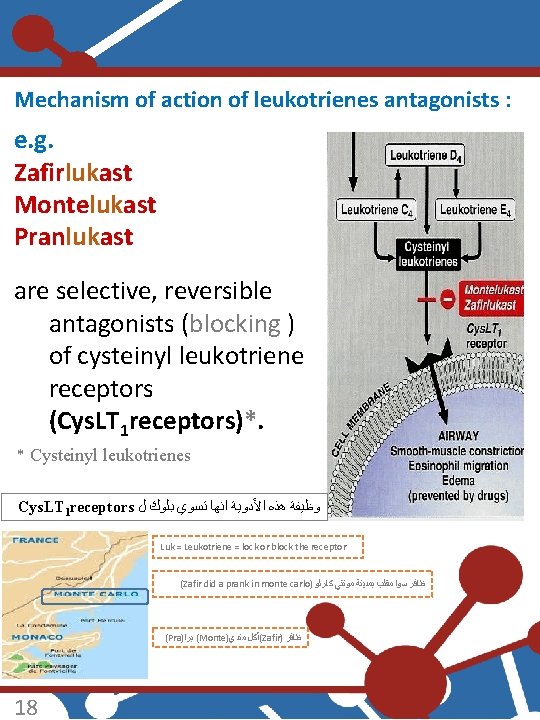
Mechanism of action of leukotrienes antagonists : e. g. Zafirlukast Montelukast Pranlukast are selective, reversible antagonists (blocking ) of cysteinyl leukotriene receptors (Cys. LT 1 receptors)*. * Cysteinyl leukotrienes Cys. LT 1 receptors ﻝ ﺑﻠﻮﻙ ﺗﺴﻮﻱ ﺍﻧﻬﺎ ﺍﻷﺪﻭﻳﺔ ﻫﺬﻩ ﻭﻇﻴﻔﺔ Luk = Leukotriene = lock or block the receptor (Zafir did a prank in monte carlo) ﻛﺎﺭﻟﻮ ﻣﻮﻧﺘﻲ ﺑﻤﺪﻳﻨﺔ ﻣﻘﻠﺐ ﺳﻮﺍ ﻇﺎﻓﺮ (Pra) ﺑﺮﺍ (Monte) ﻣﻨﺪﻱ (ﺃﻜﻞ Zafir) ﻇﺎﻓﺮ 18
Leukotriene receptor antagonists : § Taken orally. § Are bronchodilators § Have anti-inflammatory action § Less effective than inhaled corticosteroids. § Have glucocorticoids sparing effect. Uses of leukotriene receptor antagonists : § § Not effective in acute attack of asthma. Prophylaxis of mild to moderate asthma. § § § e. g. aspirin-induced asthma e. g. antigen and exercise-induced asthma. Can be combined with glucocorticoids (additive effects, low dose of glucocorticoids can be used). Side effects: Elevation of liver enzymes, headache, dyspepsia 19
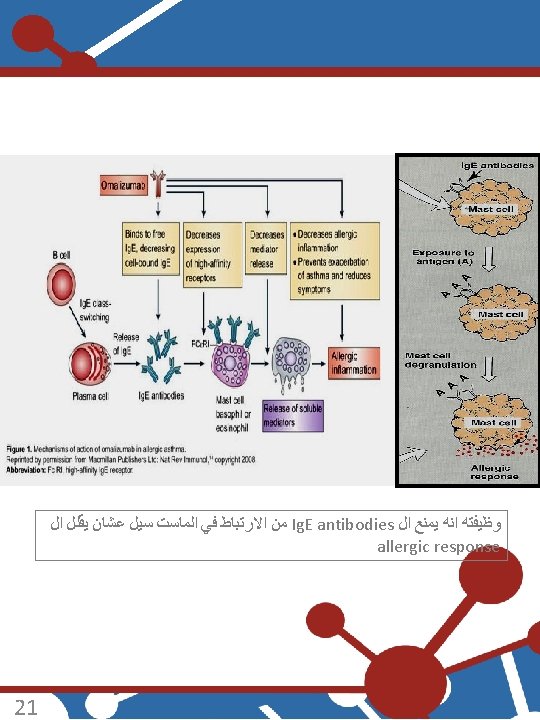
Anti-Ig. E monoclonal antibody e. g. Omalizumab (Zumab) ﻋﺎﺋﻠﺔ ﻣﻦ (Om Ali) ﻋﻠﻲ ﺃﻢ ﺃﻌﺮﻑ (Ig. E) ﺃﻲ § is a monoclonal antibody directed against human Ig. E – given by injection (s. c. ) § prevents Ig. E binding with its receptors on mast cells & basophiles. § ↓ release of allergic mediators. § Expensive-not first line therapy. § used for treatment of moderate to severe allergic asthma which does not respond to high doses of corticosteroids. We cant use it orally because it is a protein , so it will destroy easily before giving its effect 20
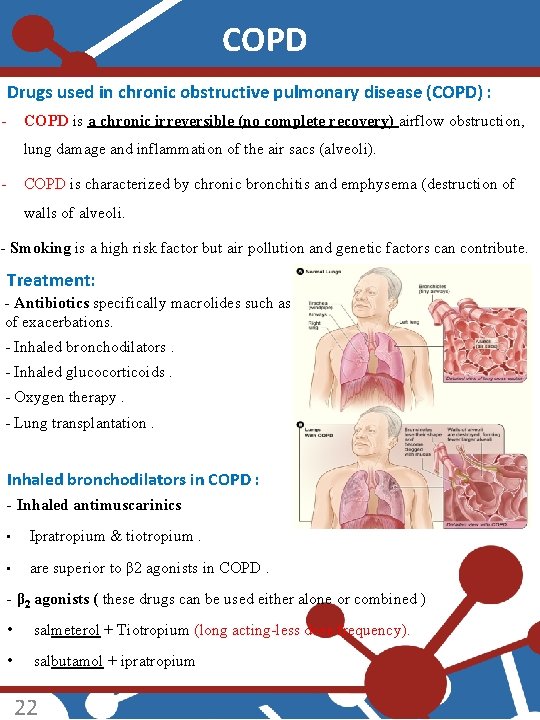
COPD Drugs used in chronic obstructive pulmonary disease (COPD) : - COPD is a chronic irreversible (no complete recovery) airflow obstruction, lung damage and inflammation of the air sacs (alveoli). - COPD is characterized by chronic bronchitis and emphysema (destruction of walls of alveoli. - Smoking is a high risk factor but air pollution and genetic factors can contribute. Treatment: - Antibiotics specifically macrolides such as azithromycin to reduce the number of exacerbations. - Inhaled bronchodilators. - Inhaled glucocorticoids. - Oxygen therapy. - Lung transplantation. Inhaled bronchodilators in COPD : - Inhaled antimuscarinics • Ipratropium & tiotropium. • are superior to β 2 agonists in COPD. - β 2 agonists ( these drugs can be used either alone or combined ) • salmeterol + Tiotropium (long acting-less dose frequency). • salbutamol + ipratropium 22
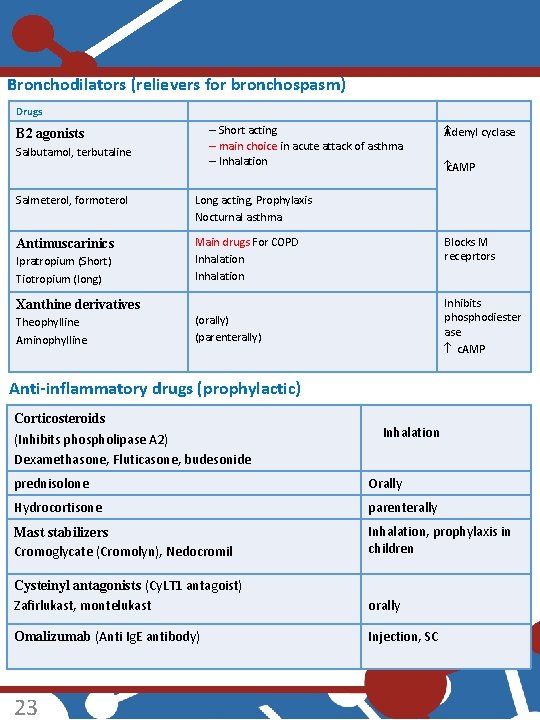
Bronchodilators (relievers for bronchospasm) Drugs – Short acting – main choice in acute attack of asthma – Inhalation B 2 agonists Salbutamol, terbutaline Salmeterol, formoterol Long acting, Prophylaxis Nocturnal asthma Antimuscarinics Main drugs For COPD Inhalation Ipratropium (Short) Tiotropium (long) c. AMP Blocks M receprtors Inhibits phosphodiester ase c. AMP Xanthine derivatives Theophylline Aminophylline Adenyl cyclase (orally) (parenterally) Anti-inflammatory drugs (prophylactic) Corticosteroids (Inhibits phospholipase A 2) Dexamethasone, Fluticasone, budesonide Inhalation prednisolone Orally Hydrocortisone parenterally Mast stabilizers Cromoglycate (Cromolyn), Nedocromil Inhalation, prophylaxis in children Cysteinyl antagonists (Cy. LT 1 antagoist) Zafirlukast, montelukast orally Omalizumab (Anti Ig. E antibody) Injection, SC 23
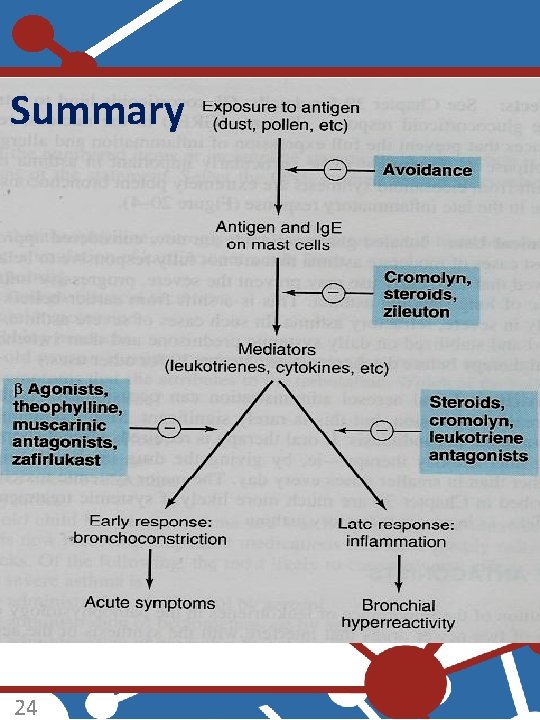
Summary 24
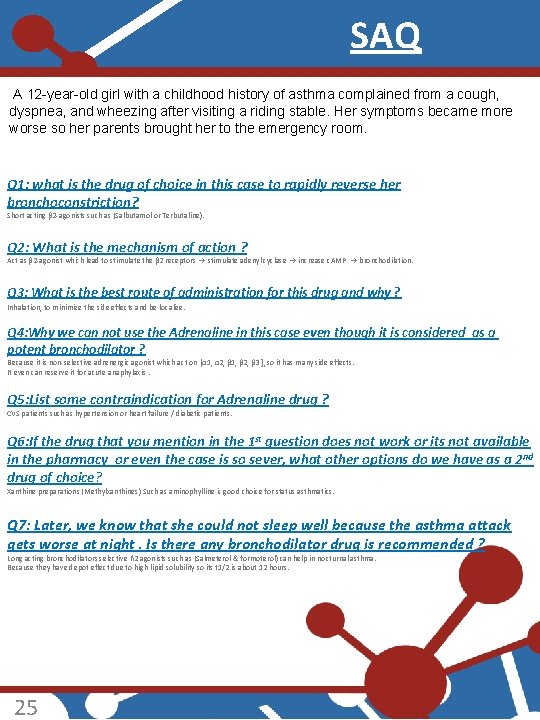
SAQ A 12 -year-old girl with a childhood history of asthma complained from a cough, dyspnea, and wheezing after visiting a riding stable. Her symptoms became more worse so her parents brought her to the emergency room. Q 1: what is the drug of choice in this case to rapidly reverse her bronchoconstriction? Short acting β 2 -agonists such as (Salbutamol or Terbutaline). Q 2: What is the mechanism of action ? Act as β 2 -agonist which lead to stimulate the β 2 receptors stimulate adenyl cyclase increase c. AMP bronchodilation. Q 3: What is the best route of administration for this drug and why ? Inhalation, to minimize the side effects and be localize. Q 4: Why we can not use the Adrenaline in this case even though it is considered as a potent bronchodilator ? Because it is non-selective adrenergic agonist which act on [α 1, α 2, β 1, β 2, β 3 ], so it has many side effects. It even can reserve it for acute anaphylaxis. Q 5: List some contraindication for Adrenaline drug ? CVS patients such as hypertension or heart failure / diabetic patients. Q 6: If the drug that you mention in the 1 st question does not work or its not available in the pharmacy or even the case is so sever, what other options do we have as a 2 nd drug of choice? Xanthine preparations (Methylxanthines) Such as aminophylline is good choice for status asthmatics. Q 7: Later, we know that she could not sleep well because the asthma attack gets worse at night. Is there any bronchodilator drug is recommended ? Long acting bronchodilators selective ß 2 agonists such as (Salmeterol & formoterol) can help in nocturnal asthma. Because they have depot effect due to high lipid solubility so its t 1/2 is about 12 hours. 25
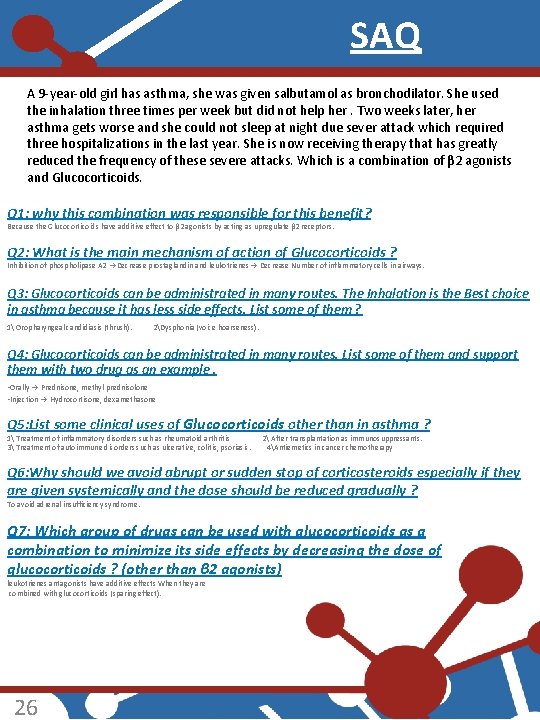
SAQ A 9 -year-old girl has asthma, she was given salbutamol as bronchodilator. She used the inhalation three times per week but did not help her. Two weeks later, her asthma gets worse and she could not sleep at night due sever attack which required three hospitalizations in the last year. She is now receiving therapy that has greatly reduced the frequency of these severe attacks. Which is a combination of β 2 agonists and Glucocorticoids. Q 1: why this combination was responsible for this benefit? Because the Glucocorticoids have additive effect to β 2 agonists by acting as upregulate β 2 receptors. Q 2: What is the main mechanism of action of Glucocorticoids ? Inhibition of phospholipase A 2 Decrease prostaglandin and leukotrienes Decrease Number of inflammatory cells in airways. Q 3: Glucocorticoids can be administrated in many routes. The Inhalation is the Best choice in asthma because it has less side effects. List some of them ? 1 Oropharyngeal candidiasis (thrush). 2Dysphonia (voice hoarseness). Q 4: Glucocorticoids can be administrated in many routes. List some of them and support them with two drug as an example. • Orally Prednisone, methyl prednisolone • Injection Hydrocortisone, dexamethasone Q 5: List some clinical uses of Glucocorticoids other than in asthma ? 1 Treatment of inflammatory disorders such as rheumatoid arthritis 2 After transplantation as immunosuppressants. 3 Treatment of autoimmune disorders such as ulcerative, colitis, psoriasis. 4Antiemetics in cancer chemotherapy Q 6: Why should we avoid abrupt or sudden stop of corticosteroids especially if they are given systemically and the dose should be reduced gradually ? To avoid adrenal insufficiency syndrome. Q 7: Which group of drugs can be used with glucocorticoids as a combination to minimize its side effects by decreasing the dose of glucocorticoids ? (other than β 2 agonists) leukotrienes antagonists have additive effects When they are combined with glucocorticoids (sparing effect). 26
- Slides: 27