
Drugs Chapter 5 What is a Drug What
- Slides: 26
Drugs Chapter 5
What is a Drug? • • What makes a chemical a “drug”? Are drugs natural? Are they organic? What do we mean when we say “don’t do drugs”? • What makes a drug dangerous? • What makes a drug beneficial?
Types of Dependence • • • Physical and psychological What is the difference? Can it be both? Is alcohol a drug? What type of dependence does it cause? Does its legality / social acceptance mean that it is “safe”?
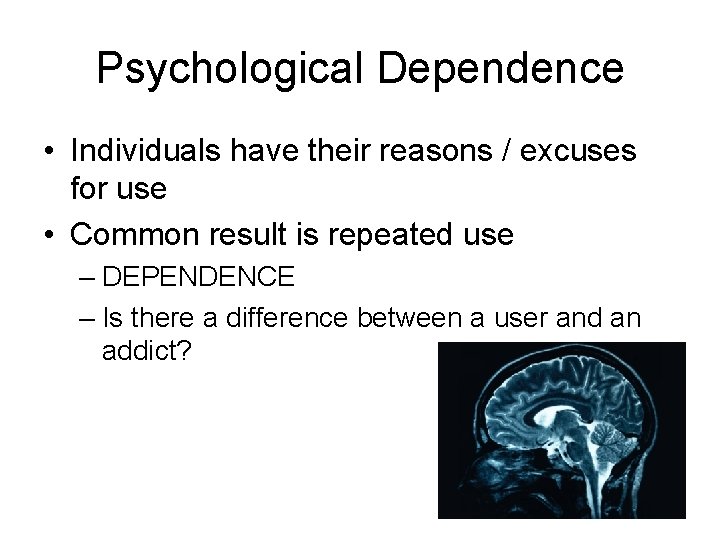
Psychological Dependence • Individuals have their reasons / excuses for use • Common result is repeated use – DEPENDENCE – Is there a difference between a user and an addict?
Physical Dependence • Addiction – Changes occur in your body / brain • Abstinence syndrome or withdraw sickness – Uncomfortable with not doing the drug – Can have withdraw symptoms continuously • Heroin must be taken every 6 – 8 hours to avoid symptoms of withdraw
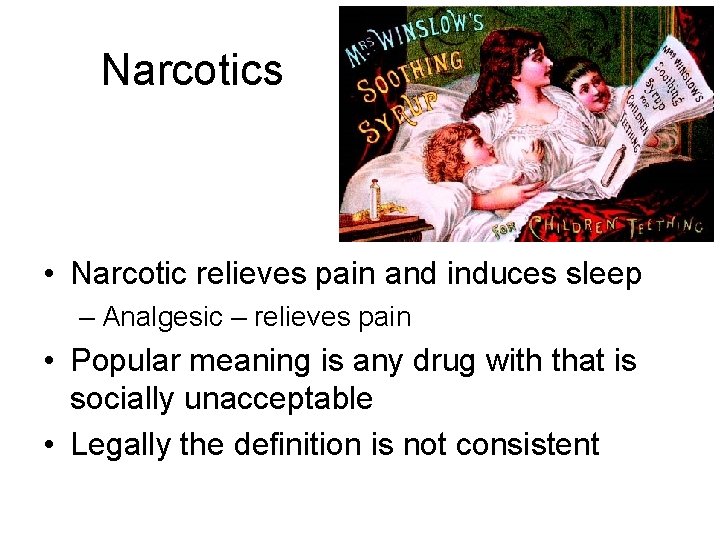
Narcotics • Narcotic relieves pain and induces sleep – Analgesic – relieves pain • Popular meaning is any drug with that is socially unacceptable • Legally the definition is not consistent
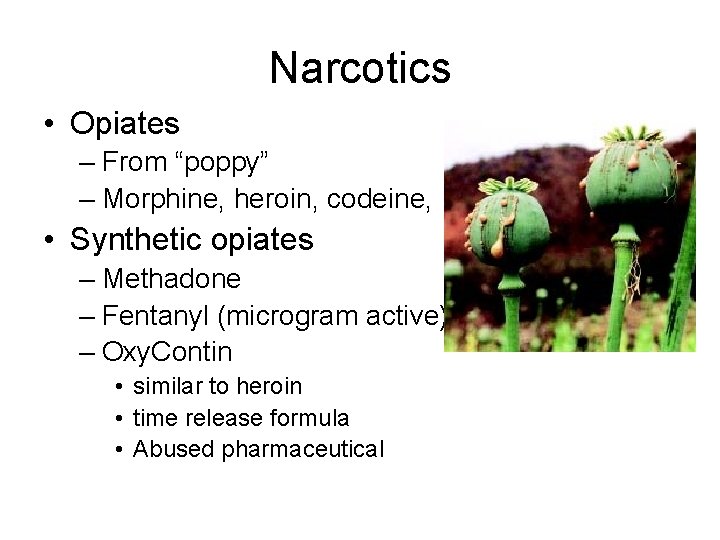
Narcotics • Opiates – From “poppy” – Morphine, heroin, codeine, • Synthetic opiates – Methadone – Fentanyl (microgram active) – Oxy. Contin • similar to heroin • time release formula • Abused pharmaceutical
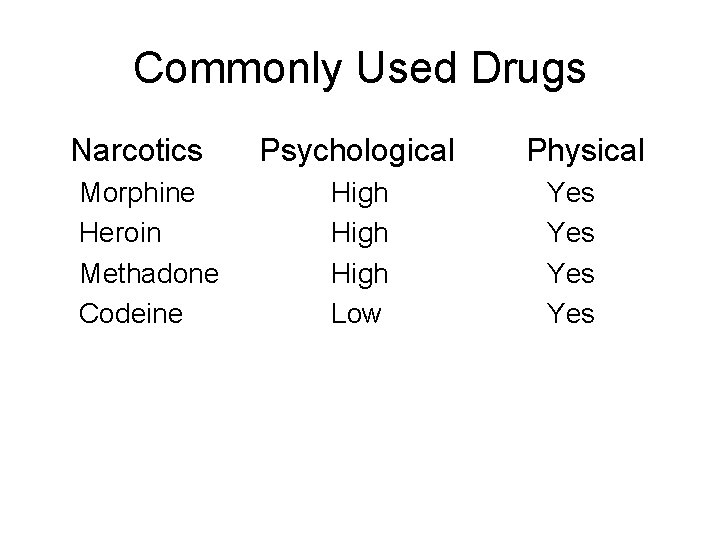
Commonly Used Drugs Narcotics Morphine Heroin Methadone Codeine Psychological High Low Physical Yes Yes
Hallucinogens • Hallucinogens are drugs that cause marked changes in normal thought processes, perceptions and moods.
Marijuana • Cannabis Sativa • THC – tetrahydocannabinol • Heavy use associated with psychological dependence • Synthetic Cannabinoids – Analogs created in labs. – Analogs are slightly modified structures creating new names and slight changes to properties and functions. – Many untested and unknown effects.
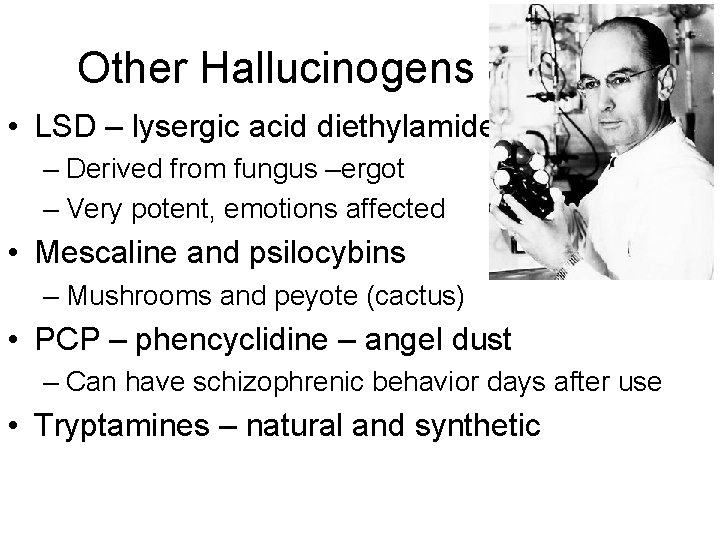
Other Hallucinogens • LSD – lysergic acid diethylamide – Derived from fungus –ergot – Very potent, emotions affected • Mescaline and psilocybins – Mushrooms and peyote (cactus) • PCP – phencyclidine – angel dust – Can have schizophrenic behavior days after use • Tryptamines – natural and synthetic
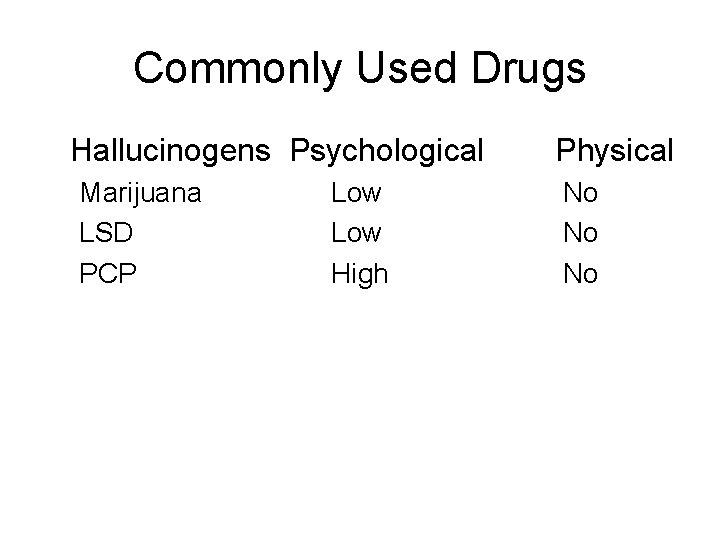
Commonly Used Drugs Hallucinogens Psychological Marijuana LSD PCP Low High Physical No No No
Depressants – Suppress brain’s control of thoughts and muscle coordination
Alcohol (ethyl alcohol) • Low dose – inhibit mental process of judgment, memory and concentration. • Moderate dose – reduces coordination substantially, inhibits orderly thought processes and speech patterns, and slows reaction time • Higher Doses – highly irritable and emotional, displays of anger / crying not uncommon • Extremely High Dose – lapse into unconsciousness, can lead to a fatal depression of circulatory and respiratory functions.
Barbiturates • “Downers” • Suppress the vital functions of central nervous system • long acting – Phenobarbital (seizure or daytime sedative) • Fast acting – Secobarbital (anesthesia)
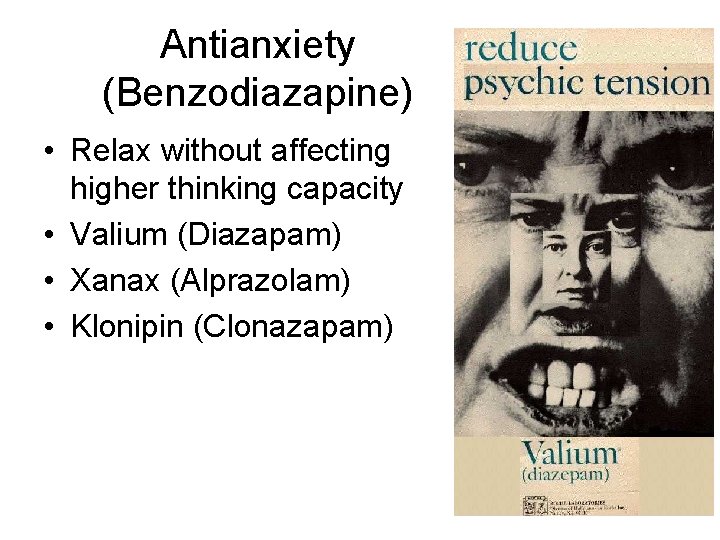
Antianxiety (Benzodiazapine) • Relax without affecting higher thinking capacity • Valium (Diazapam) • Xanax (Alprazolam) • Klonipin (Clonazapam)
Huffing • Solvents such as toluene, naphtha, methyl ketone, gasoline, trichoroehtylene • Psychological issues • Overdose can cause brain damage or death
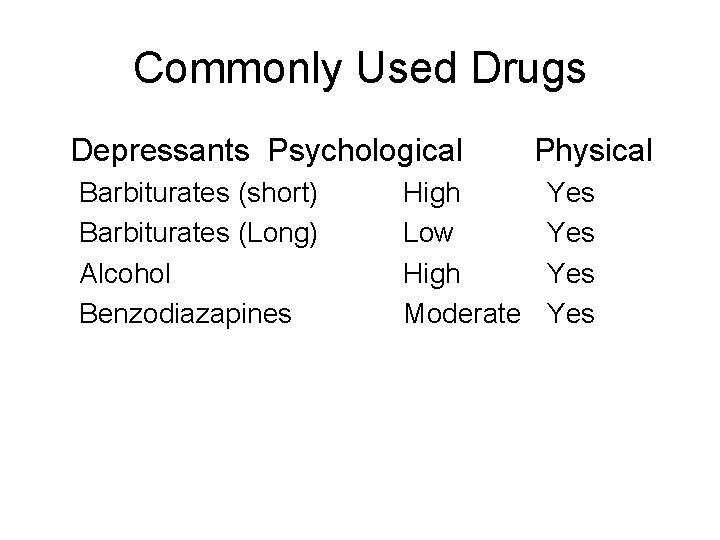
Commonly Used Drugs Depressants Psychological Barbiturates (short) Barbiturates (Long) Alcohol Benzodiazapines High Low High Moderate Physical Yes Yes
Stimulants • Speed up the central nervous system. • Synthetic Cathinones – Natural in Middle Eastern “Khat” plants. (chewed) – Synthesized analogs – some scheduled – Advertised as “Bath Salts” or “Plant Food” – Many untested and unknown effects.
Amphetamines • Speed or uppers – Provide a feeling of well being and alertness, followed by fatigue and loss of appetite. After use depression is a common side effect • Methamphetamine – High purity – “ice” – Chronic users exhibit violent destructive behavior and acute psychosis. – Strong physical dependence (sometimes after one use!)
Cocaine • Source of “exhilaration and lasting euphoria” – Sigmund Freud • Central nervous system stimulant • Stimulates pleasure pathways far more than they can be normally • Smokable form = crack – Small percent of addicts are cured – Strongest psychological addiction of street drugs • Euphoria fades – depression, anxious and pleasure less
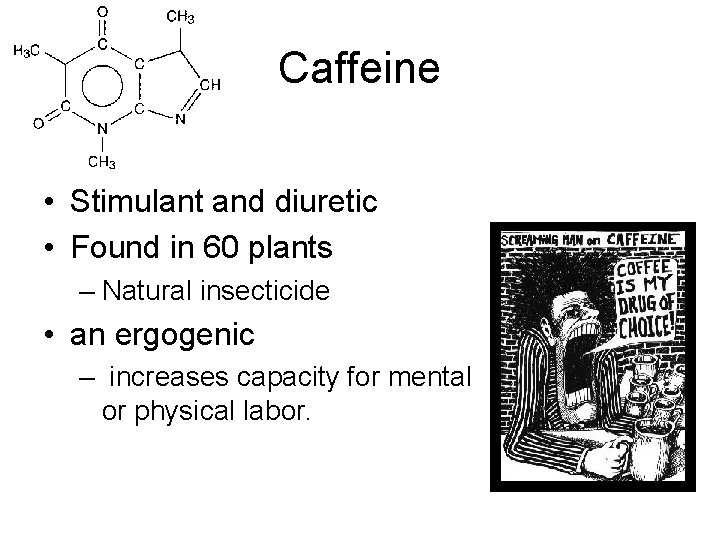
Caffeine • Stimulant and diuretic • Found in 60 plants – Natural insecticide • an ergogenic – increases capacity for mental or physical labor.
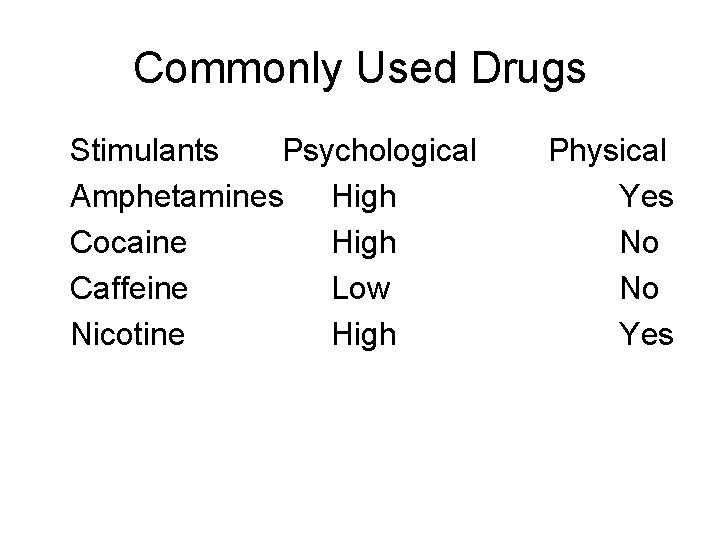
Commonly Used Drugs Stimulants Psychological Amphetamines High Cocaine High Caffeine Low Nicotine High Physical Yes No No Yes
Club Drugs • Ecstacy – MDMA - stimulant – Brain damage to hypothalmus • GHB – gamma hydroxybutyrate • Rohypnol – depressant (potent Benzo) – Date rape drug • Ketamine – depressant (anesthetic) – Date rape drug
Anabolic Steroids • Synthetic steroids (hormones) that resemble testosterone • Androgenic effects – secondary male characteristics – hair, aggressive behavior • Anabolic effects – accelerates muscle growth • Liver cancer and liver abnormalities • Masculinizing females, infertility • Reduced sex drive for males • Teenagers premature halting of bone growth, mood effects including anger / depression / destructive behavior
Why does one person become an addict when another can be casual user? – Personal predispositions • Genetic • Psychological