
Drugs affecting breast milk and lactation Prof Hanan
Drugs affecting breast milk and lactation Prof. Hanan Hagar Dr. Abdul latif Mahesar Pharmacology Department College of Medicine
Intended learning issues • • • Relation of drugs and lactation Factors modifying passage of drugs in milk Effects of drugs on milk production Role of lactation on drugs excretion Drug safety during lactation / use of safe drugs Drugs contraindicated during lactation
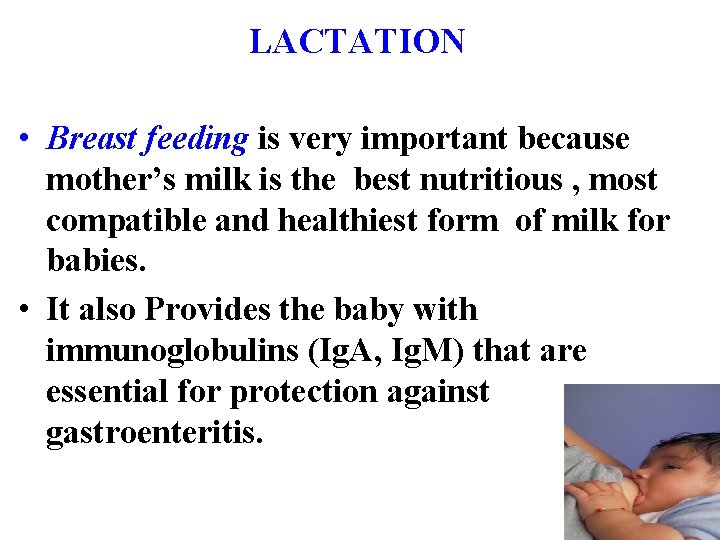
LACTATION • Breast feeding is very important because mother’s milk is the best nutritious , most compatible and healthiest form of milk for babies. • It also Provides the baby with immunoglobulins (Ig. A, Ig. M) that are essential for protection against gastroenteritis.
DRUGS AND LACTATION • Most drugs administered to breast feeding woman are detectable in her milk. • The concentration of drugs achieved in breast milk is usually low. • Even small amounts however may be of significance for the suckling child because his drug metabolic and eliminating mechanisms are immature.
• • • Neonates have very limited rate of metabolism due to immaturity of liver enzymes that is not fully developed until 8 weeks of age. Renal clearance is less efficient: well developed after 3 -5 months. Premature babies and newborn (less than 1 month of age) have much more limited capacity for metabolism and excretion.
• The epithelium of the breast alveolar cells is most permeable to drugs during the 1 st week postpartum, so drug transfer to milk may be greater during the 1 st week of an infants life.

Factors controlling passage of drugs into breast milk 1. Physiochemical character of the drug Ø Lipid solubility of the drug: lipid soluble drugs pass more freely in the breast milk Ø Molecular weight: low molecular weight drugs are more likely to get transferred to breast milk than high molecular weight • e. g. • Insulin: MW > 6, 000 daltons • Heparin: MW 40, 000 daltons • Ethanol: MW 200
Factors controlling passage of drugs into breast milk continued Ø Degree of ionization: nonionized form of drugs are more likely to be transferred into breast milk. Ø p. H of the plasma and milk: ØWeakly alkaline drugs tend to be concentrated in milk. ØWeakly acidic drugs don't enter the milk to a significant extent and tend to be concentrated in plasma.
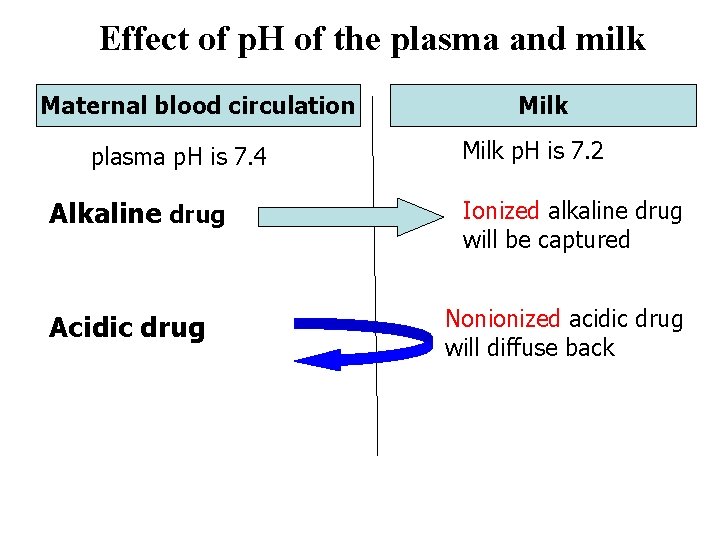
Effect of p. H of the plasma and milk Maternal blood circulation plasma p. H is 7. 4 Alkaline drug Acidic drug Milk p. H is 7. 2 Ionized alkaline drug will be captured Nonionized acidic drug will diffuse back

2. Plasma protein binding of drugs highly plasma protein-bound drugs pass less into milk. anti diabetic 3. Drug concentration in maternal serum Transfer of drug from mother’s blood to milk is passive and is low with drugs that have Ølarge volume of distribution (Vd). Ø short half life (t ½).
The amount of a drug to which the baby is exposed as a result of breast feeding depends on: • The concentration of the drug in the milk at the time of feeding. • The amount of milk consumed. • The amount of drug absorbed. • The ability of the baby to eliminate the drug.
General considerations to minimize risk to nursing infant • The safest drug should be chosen. e. g. Acetaminophen than aspirin for analgesia • Route of administration (topical, local, inhalation) instead of an oral form. • • Poorest oral bioavailability Lowest lipid solubility. Shortest half-life Highest protein-binding ability.
General considerations to minimize risk to nursing infant • Lactating mother should take medication just after nursing and 3 -4 hours before the next feeding. • Infants should be monitored for adverse effects e. g. feeding, sedation, irritability, rash, etc. • Drugs with no safety data should be avoided or lactation should be discontinued.
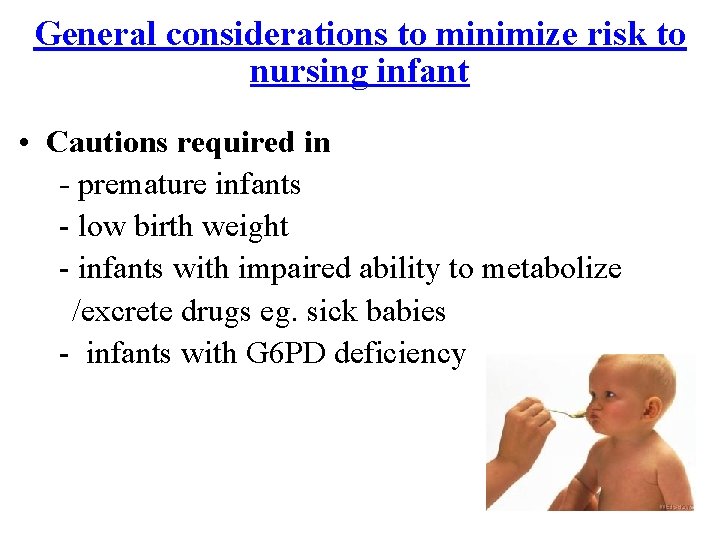
General considerations to minimize risk to nursing infant • Cautions required in - premature infants - low birth weight - infants with impaired ability to metabolize /excrete drugs eg. sick babies - infants with G 6 PD deficiency
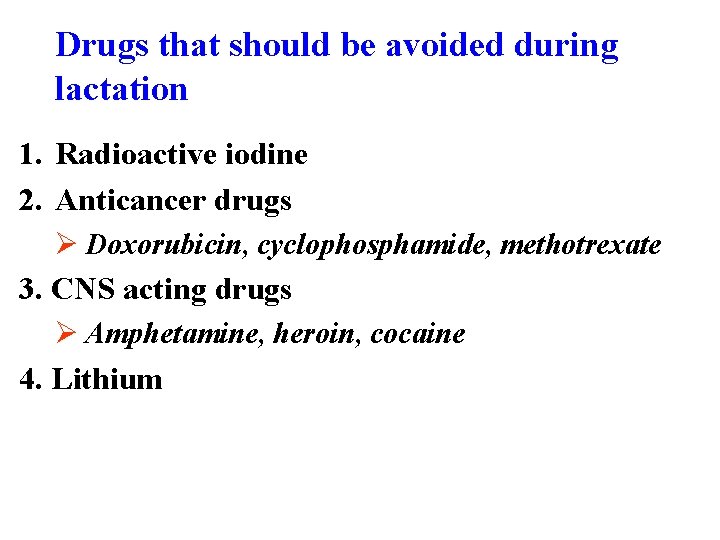
Drugs that should be avoided during lactation 1. Radioactive iodine 2. Anticancer drugs Ø Doxorubicin, cyclophosphamide, methotrexate 3. CNS acting drugs Ø Amphetamine, heroin, cocaine 4. Lithium

Drugs that can suppress lactation • • • Thiazide diuretics Levodopa (dopamine precursor) Bromocriptine (dopamine agonist) Ergot derivatives Androgens Estrogen, oral contraceptives that contain high-dose estrogen and a progestin.
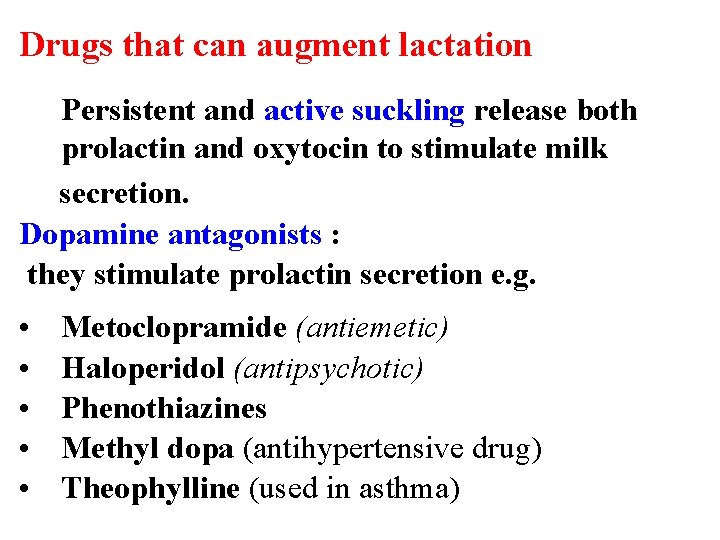
Drugs that can augment lactation Persistent and active suckling release both prolactin and oxytocin to stimulate milk secretion. Dopamine antagonists : they stimulate prolactin secretion e. g. • • • Metoclopramide (antiemetic) Haloperidol (antipsychotic) Phenothiazines Methyl dopa (antihypertensive drug) Theophylline (used in asthma)
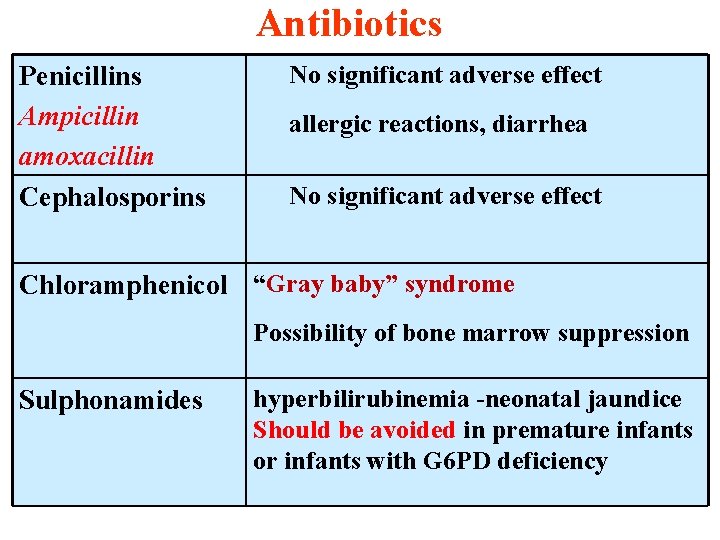
Antibiotics Penicillins Ampicillin amoxacillin Cephalosporins No significant adverse effect allergic reactions, diarrhea No significant adverse effect Chloramphenicol “Gray baby” syndrome Possibility of bone marrow suppression Sulphonamides hyperbilirubinemia -neonatal jaundice Should be avoided in premature infants or infants with G 6 PD deficiency
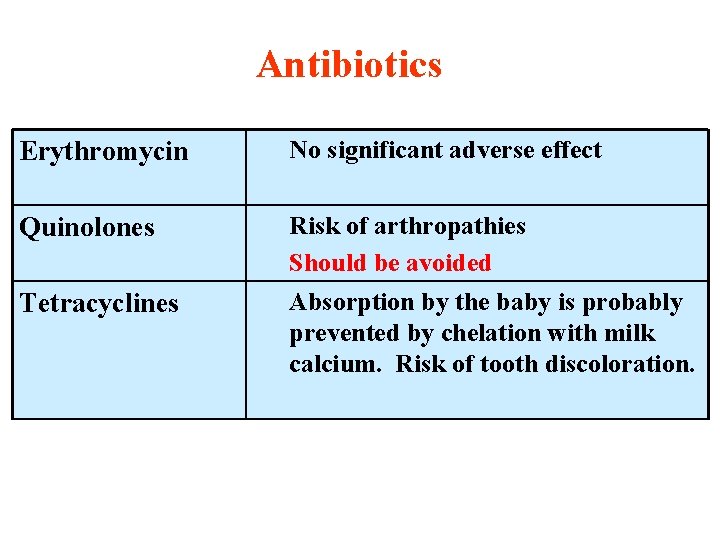
Antibiotics Erythromycin No significant adverse effect Quinolones Risk of arthropathies Should be avoided Absorption by the baby is probably prevented by chelation with milk calcium. Risk of tooth discoloration. Tetracyclines
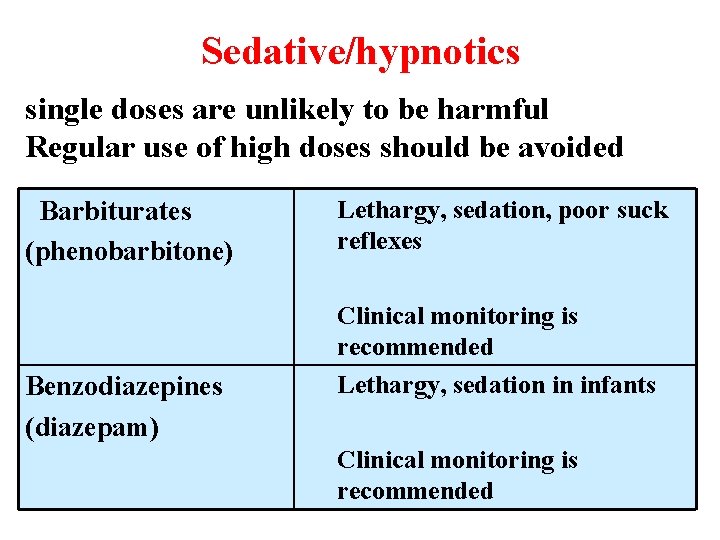
Sedative/hypnotics single doses are unlikely to be harmful Regular use of high doses should be avoided Barbiturates (phenobarbitone) Benzodiazepines (diazepam) Lethargy, sedation, poor suck reflexes Clinical monitoring is recommended Lethargy, sedation in infants Clinical monitoring is recommended
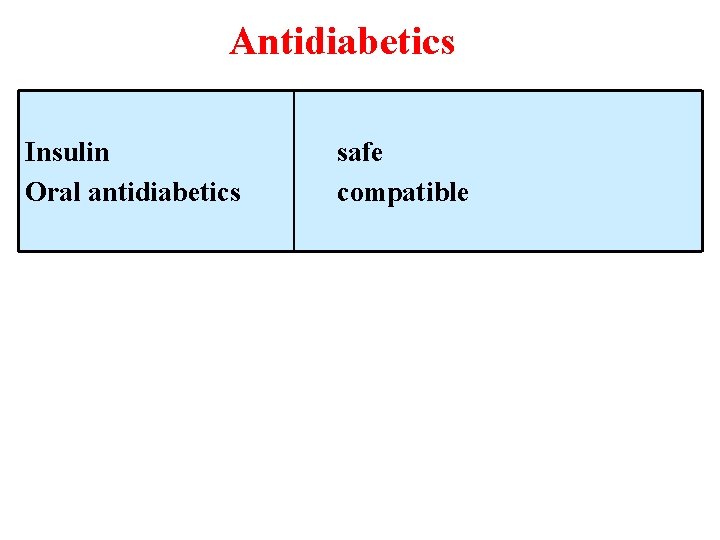
Antidiabetics Insulin Oral antidiabetics safe compatible
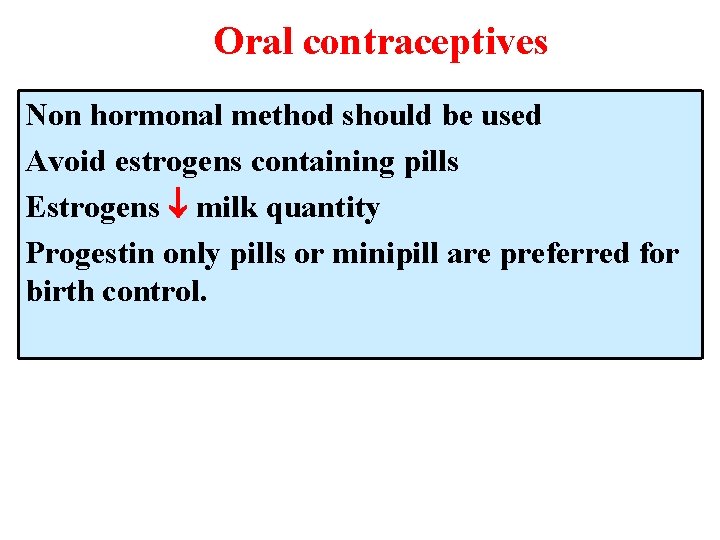
Oral contraceptives Non hormonal method should be used Avoid estrogens containing pills Estrogens milk quantity Progestin only pills or minipill are preferred for birth control.
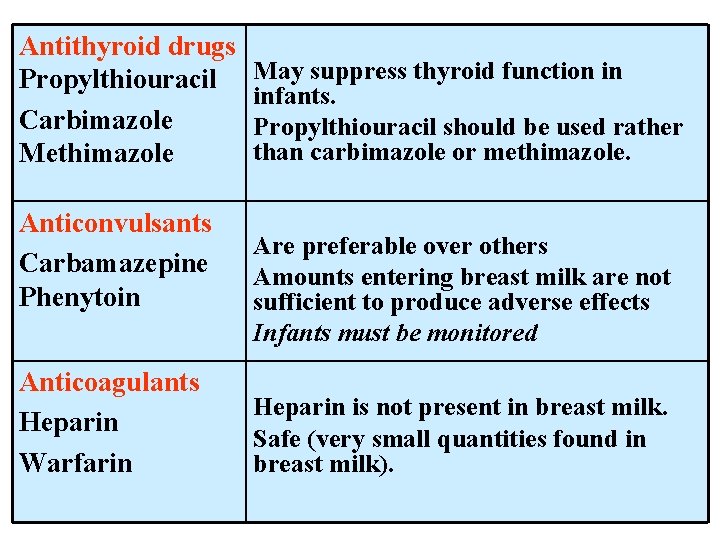
Antithyroid drugs Propylthiouracil Carbimazole Methimazole Anticonvulsants Carbamazepine Phenytoin Anticoagulants Heparin Warfarin May suppress thyroid function in infants. Propylthiouracil should be used rather than carbimazole or methimazole. Are preferable over others Amounts entering breast milk are not sufficient to produce adverse effects Infants must be monitored Heparin is not present in breast milk. Safe (very small quantities found in breast milk).
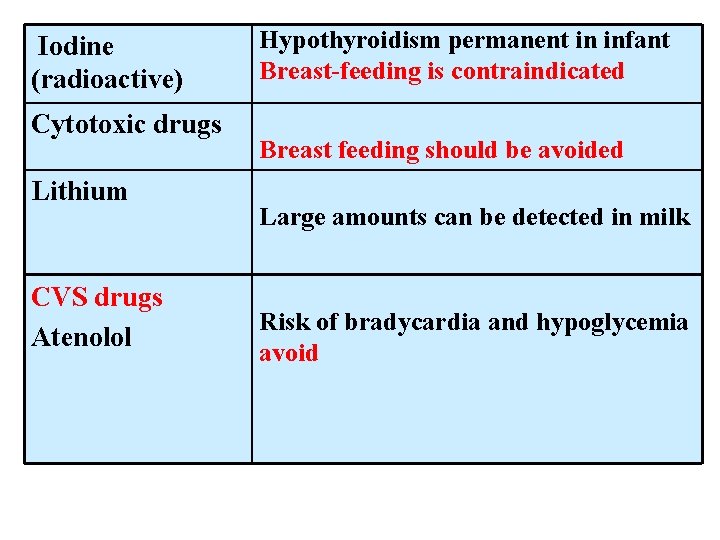
Iodine (radioactive) Cytotoxic drugs Lithium CVS drugs Atenolol Hypothyroidism permanent in infant Breast-feeding is contraindicated Breast feeding should be avoided Large amounts can be detected in milk Risk of bradycardia and hypoglycemia avoid
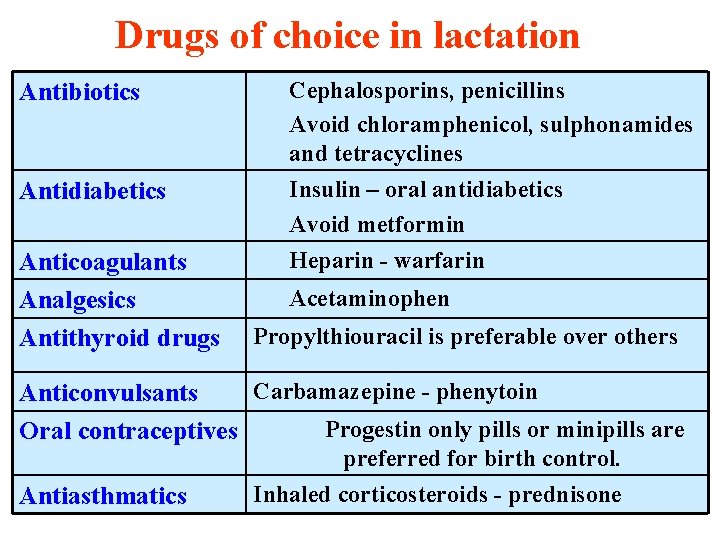
Drugs of choice in lactation Antibiotics Antidiabetics Anticoagulants Analgesics Antithyroid drugs Cephalosporins, penicillins Avoid chloramphenicol, sulphonamides and tetracyclines Insulin – oral antidiabetics Avoid metformin Heparin - warfarin Acetaminophen Propylthiouracil is preferable over others Carbamazepine - phenytoin Anticonvulsants Progestin only pills or minipills are Oral contraceptives preferred for birth control. Antiasthmatics Inhaled corticosteroids - prednisone
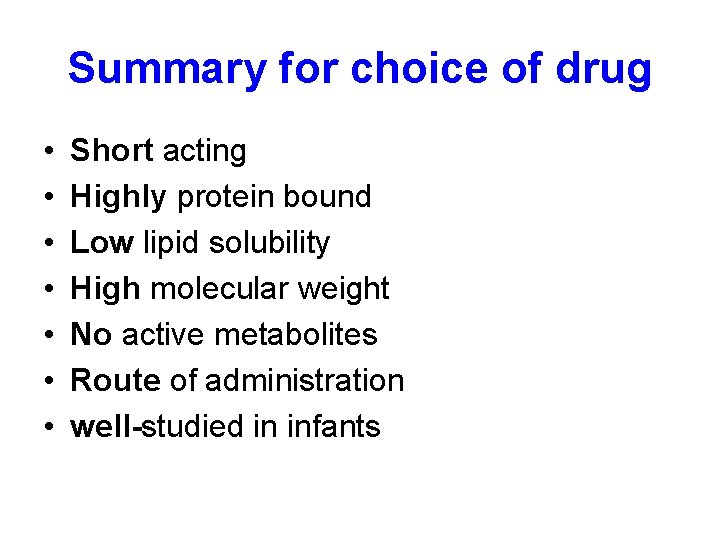
Summary for choice of drug • • Short acting Highly protein bound Low lipid solubility High molecular weight No active metabolites Route of administration well-studied in infants
- Slides: 26