
DrugDrug Interactions Inhibition and Induction Michael W Sinz
Drug-Drug Interactions: Inhibition and Induction Michael W. Sinz, Ph. D. Metabolism and Pharmacokinetics Bristol Myers Squibb Pharmaceutical Research Institute Wallingford, CT michael. sinz@bms. com
Potential Impact on Drug Label Typical Television Advertisement TV announcer: “Ask your doctor about our new drug Varvacron. Don’t’ wait until your get boils the size of fondue pots. ” Consumer: “Boy, that Varvacron sounds pretty good. ” Then the TV announcer lists the potential side effects and drug interactions. TV announcer: “In some patients, Varvacron causes stomach discomfort and growth of an extra hand coming out of the forehead. Also, one patient turned into a chipmumk. Do not take Varvacron if you are now taking or have recently shaken hands with anybody taking Lavadil, Havadam, Clamadam, Gungadin or breath mints. Discontinue use of Varvacron if your eyeballs become way smaller. Pregnant women should not even be watching this commercial. ” Dave Barry
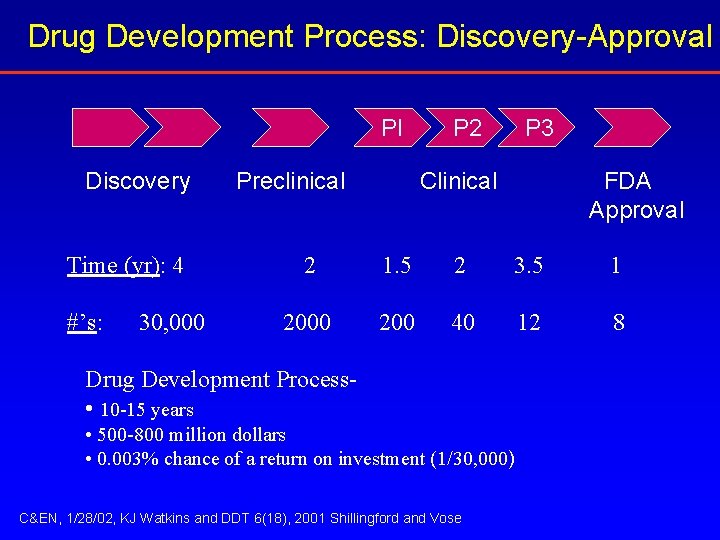
Drug Development Process: Discovery-Approval PI Discovery Time (yr): 4 #’s: 30, 000 Preclinical P 2 P 3 Clinical FDA Approval 2 1. 5 2 3. 5 1 2000 200 40 12 8 Drug Development Process • 10 -15 years • 500 -800 million dollars • 0. 003% chance of a return on investment (1/30, 000) C&EN, 1/28/02, KJ Watkins and DDT 6(18), 2001 Shillingford and Vose
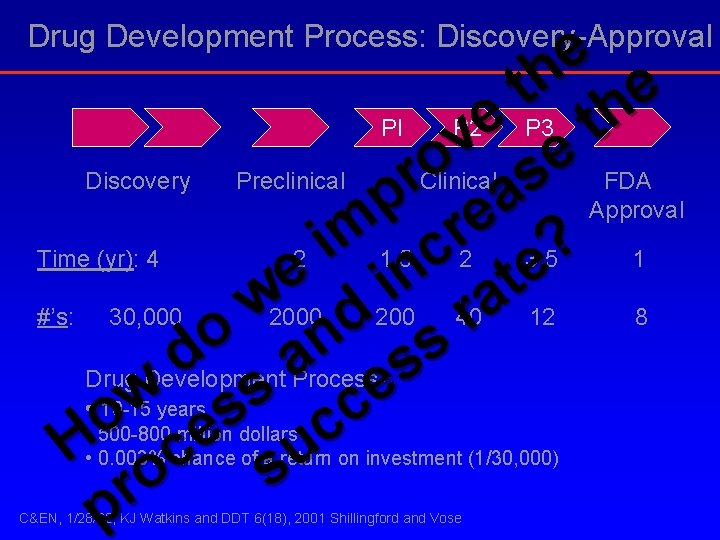
Drug Development Process: Discovery-Approval e th he e t v e o s r p ea im cr e? e n t i a w d r o n d a ess s • w c s o c e H c su o r p PI Discovery Time (yr): 4 #’s: 30, 000 Preclinical P 2 P 3 Clinical FDA Approval 2 1. 5 2 3. 5 1 2000 200 40 12 8 Drug Development Process- 10 -15 years • 500 -800 million dollars • 0. 003% chance of a return on investment (1/30, 000) C&EN, 1/28/02, KJ Watkins and DDT 6(18), 2001 Shillingford and Vose
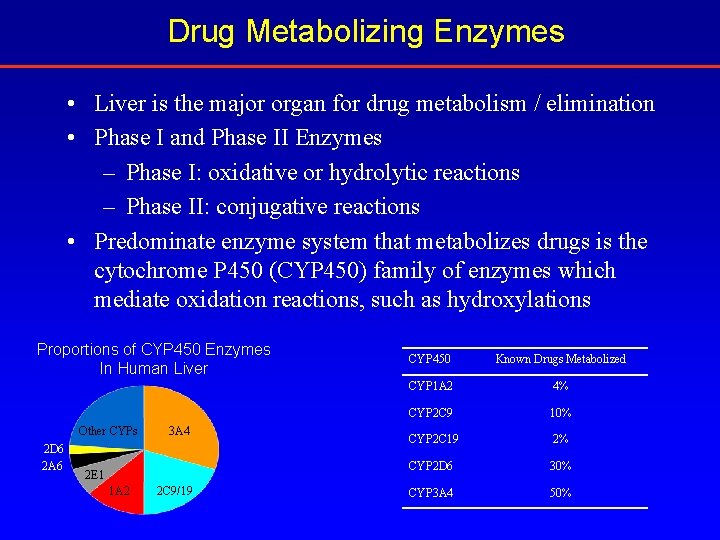
Drug Metabolizing Enzymes • Liver is the major organ for drug metabolism / elimination • Phase I and Phase II Enzymes – Phase I: oxidative or hydrolytic reactions – Phase II: conjugative reactions • Predominate enzyme system that metabolizes drugs is the cytochrome P 450 (CYP 450) family of enzymes which mediate oxidation reactions, such as hydroxylations Proportions of CYP 450 Enzymes In Human Liver Other CYPs 2 D 6 2 A 6 3 A 4 2 E 1 1 A 2 2 C 9/19 CYP 450 Known Drugs Metabolized CYP 1 A 2 4% CYP 2 C 9 10% CYP 2 C 19 2% CYP 2 D 6 30% CYP 3 A 4 50%
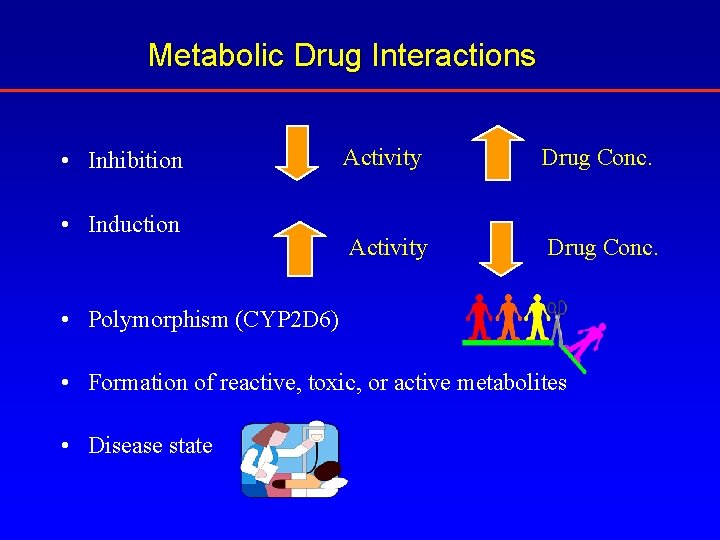
Metabolic Drug Interactions • Inhibition • Induction Activity Drug Conc. • Polymorphism (CYP 2 D 6) • Formation of reactive, toxic, or active metabolites • Disease state

Withdrawn Examples of “Undesirable” Drugs Mibefradil (Posicor) > Cytochrome P 450 3 A 4 (CYP 3 A 4) inhibitor Terfenadine (Seldane) Cisapride (Propulsid) Astemizole (Hismanal) > Extensive metabolism (primarily CYP 3 A 4) > QT prolongation Troglitazone (Rezulin) > Hepatotoxic > Metabolism to reactive intermediates Ritonavir (Norvir) > Potent CYP 3 A 4 inhibitor > Potent P-glycoprotein inhibitor > Broad spectrum inducer Recognized issue with regulatory agencies and the pharmaceutical industry. Predict early and eliminate such compounds to avoid safety issues, regulatory obstacles, and market pressures.
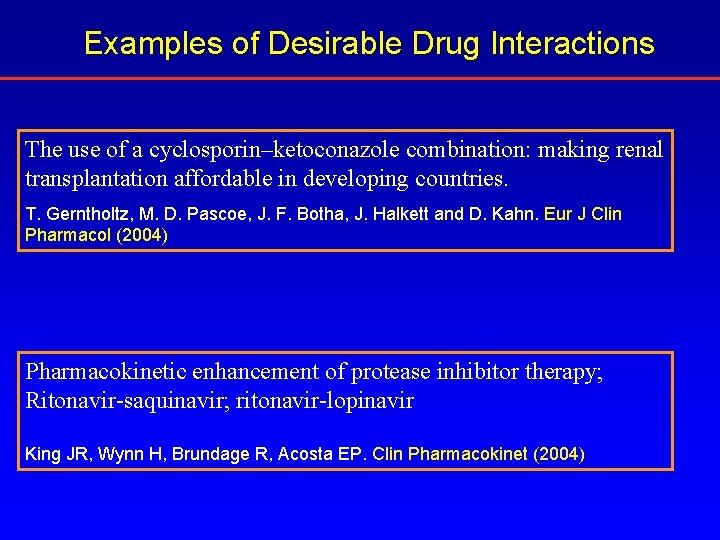
Examples of Desirable Drug Interactions The use of a cyclosporin–ketoconazole combination: making renal transplantation affordable in developing countries. T. Gerntholtz, M. D. Pascoe, J. F. Botha, J. Halkett and D. Kahn. Eur J Clin Pharmacol (2004) Pharmacokinetic enhancement of protease inhibitor therapy; Ritonavir-saquinavir; ritonavir-lopinavir King JR, Wynn H, Brundage R, Acosta EP. Clin Pharmacokinet (2004)
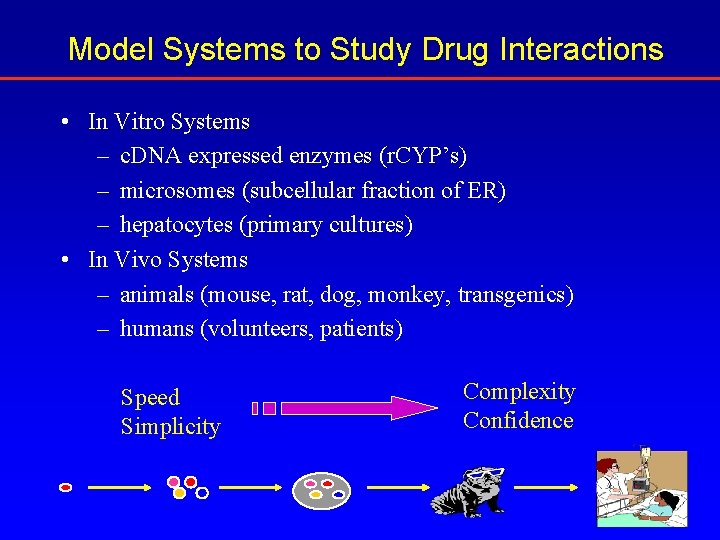
Model Systems to Study Drug Interactions • In Vitro Systems – c. DNA expressed enzymes (r. CYP’s) – microsomes (subcellular fraction of ER) – hepatocytes (primary cultures) • In Vivo Systems – animals (mouse, rat, dog, monkey, transgenics) – humans (volunteers, patients) Speed Simplicity Complexity Confidence

CYP 450 - Mediated Interactions CYP 450 Inhibition Reversible Inhibition Irreversible Inhibition
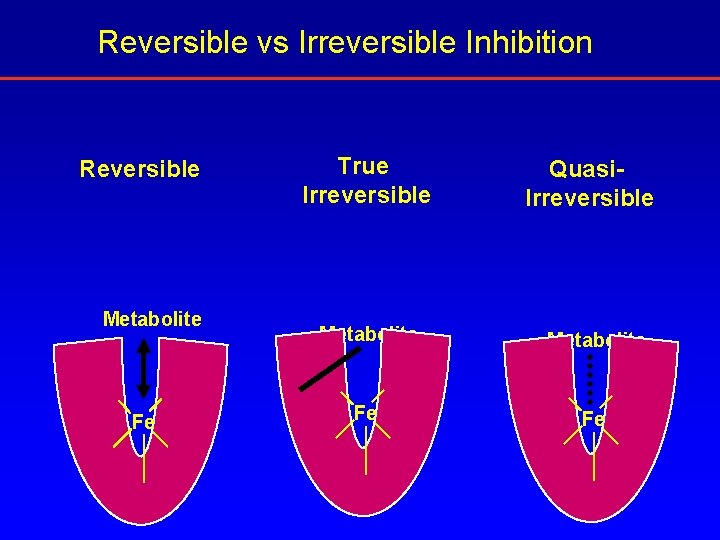
Reversible vs Irreversible Inhibition Reversible Metabolite Fe True Irreversible Quasi. Irreversible Metabolite Fe Fe
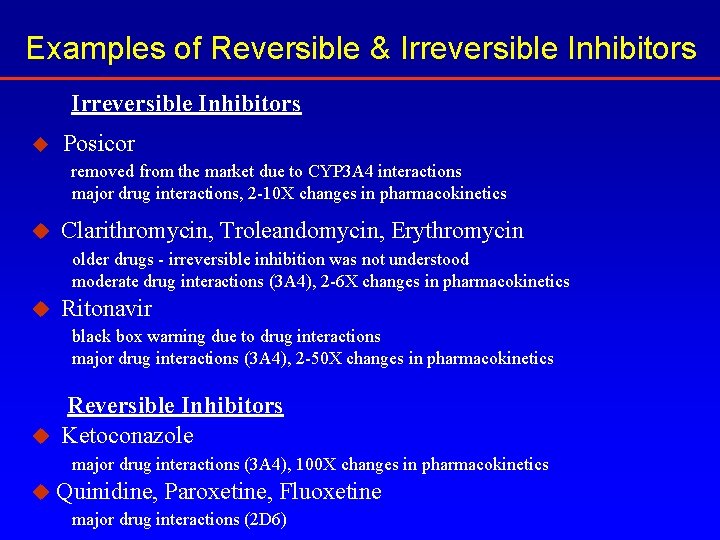
Examples of Reversible & Irreversible Inhibitors u Posicor removed from the market due to CYP 3 A 4 interactions major drug interactions, 2 -10 X changes in pharmacokinetics u Clarithromycin, Troleandomycin, Erythromycin older drugs - irreversible inhibition was not understood moderate drug interactions (3 A 4), 2 -6 X changes in pharmacokinetics u Ritonavir black box warning due to drug interactions major drug interactions (3 A 4), 2 -50 X changes in pharmacokinetics Reversible Inhibitors u Ketoconazole major drug interactions (3 A 4), 100 X changes in pharmacokinetics u Quinidine, Paroxetine, Fluoxetine major drug interactions (2 D 6)
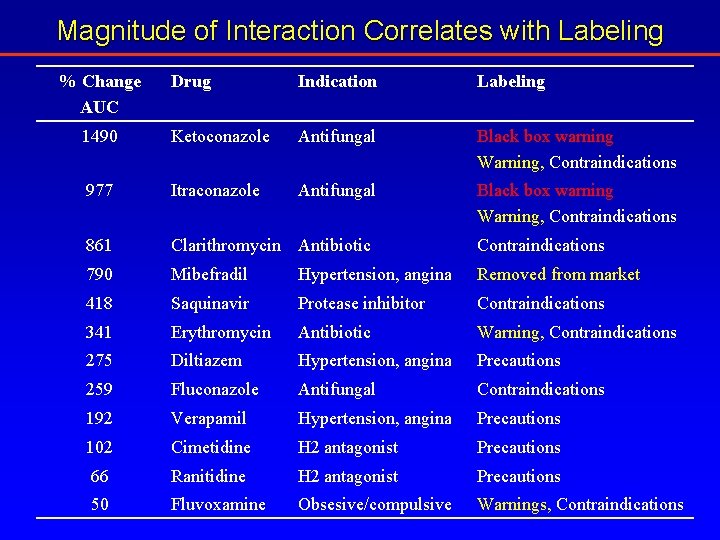
Magnitude of Interaction Correlates with Labeling % Change AUC Drug Indication Labeling 1490 Ketoconazole Antifungal Black box warning Warning, Contraindications 977 Itraconazole Antifungal Black box warning Warning, Contraindications 861 Clarithromycin Antibiotic Contraindications 790 Mibefradil Hypertension, angina Removed from market 418 Saquinavir Protease inhibitor Contraindications 341 Erythromycin Antibiotic Warning, Contraindications 275 Diltiazem Hypertension, angina Precautions 259 Fluconazole Antifungal Contraindications 192 Verapamil Hypertension, angina Precautions 102 Cimetidine H 2 antagonist Precautions 66 Ranitidine H 2 antagonist Precautions 50 Fluvoxamine Obsesive/compulsive Warnings, Contraindications
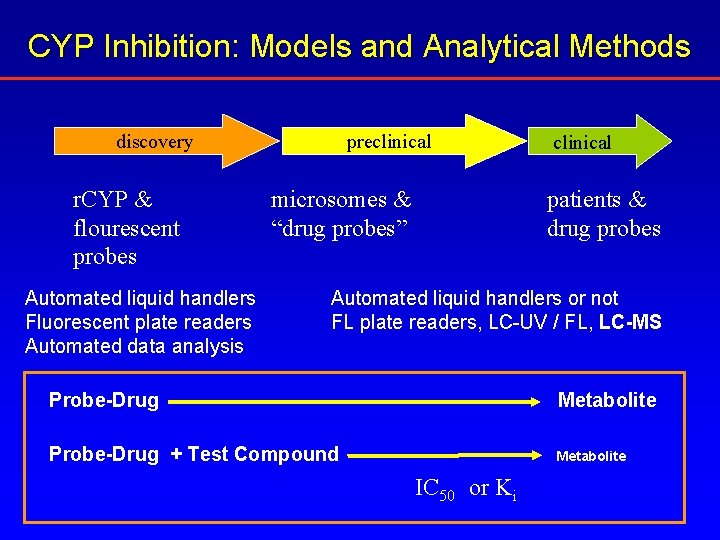
CYP Inhibition: Models and Analytical Methods discovery r. CYP & flourescent probes Automated liquid handlers Fluorescent plate readers Automated data analysis preclinical microsomes & “drug probes” clinical patients & drug probes Automated liquid handlers or not FL plate readers, LC-UV / FL, LC-MS Probe-Drug Metabolite Probe-Drug + Test Compound Metabolite IC 50 or Ki
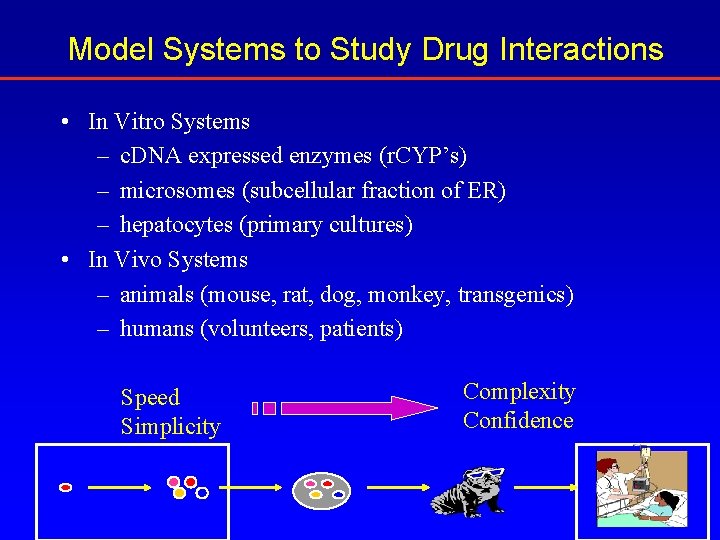
Model Systems to Study Drug Interactions • In Vitro Systems – c. DNA expressed enzymes (r. CYP’s) – microsomes (subcellular fraction of ER) – hepatocytes (primary cultures) • In Vivo Systems – animals (mouse, rat, dog, monkey, transgenics) – humans (volunteers, patients) Speed Simplicity Complexity Confidence
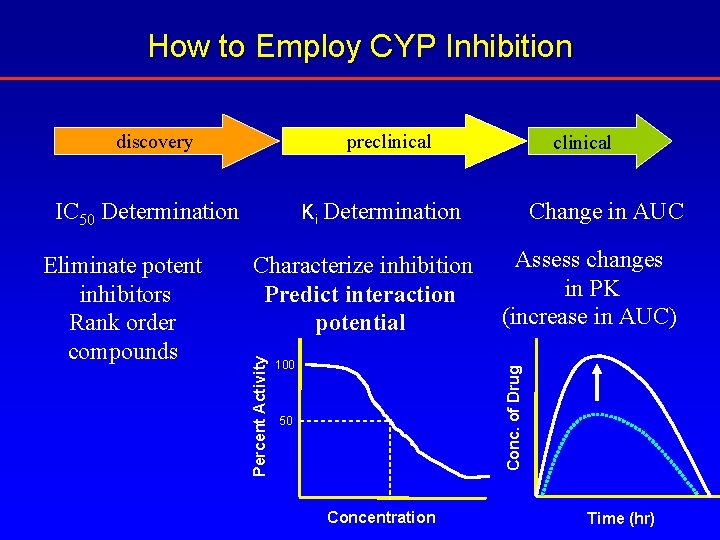
How to Employ CYP Inhibition discovery preclinical Change in AUC Characterize inhibition Predict interaction potential Assess changes in PK (increase in AUC) Conc. of Drug Eliminate potent inhibitors Rank order compounds Ki Determination Percent Activity IC 50 Determination clinical 100 50 Concentration Time (hr)
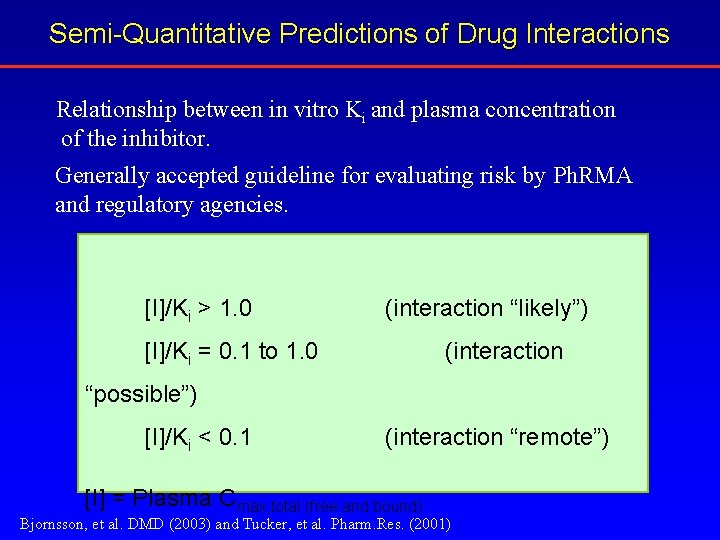
Semi-Quantitative Predictions of Drug Interactions Relationship between in vitro Ki and plasma concentration of the inhibitor. Generally accepted guideline for evaluating risk by Ph. RMA and regulatory agencies. [I]/Ki > 1. 0 (interaction “likely”) [I]/Ki = 0. 1 to 1. 0 (interaction “possible”) [I]/Ki < 0. 1 (interaction “remote”) [I] = Plasma Cmax, total (free and bound) Bjornsson, et al. DMD (2003) and Tucker, et al. Pharm. Res. (2001)
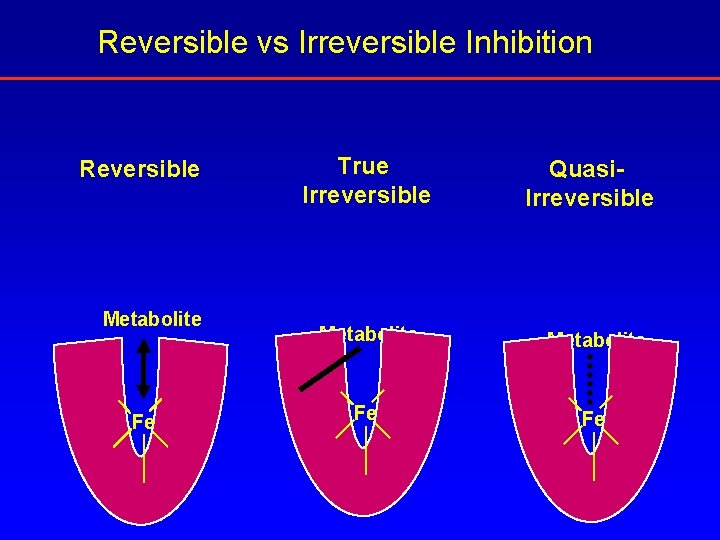
Reversible vs Irreversible Inhibition Reversible Metabolite Fe True Irreversible Quasi. Irreversible Metabolite Fe Fe
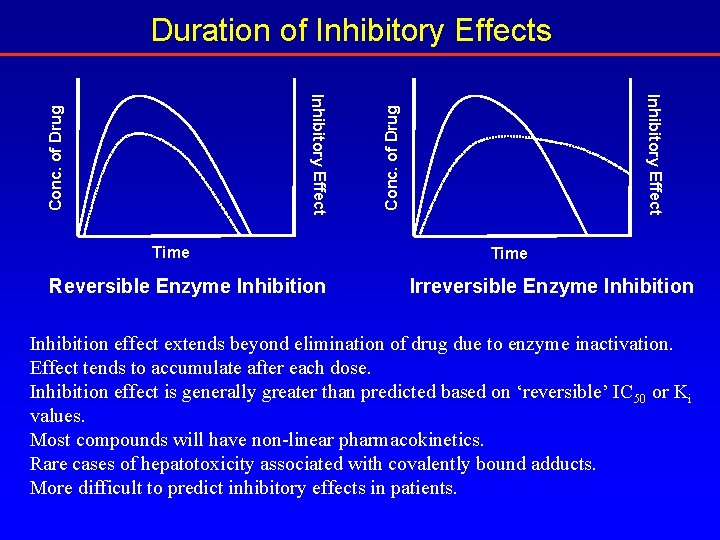
Duration of Inhibitory Effects Conc. of Drug Reversible Enzyme Inhibition Inhibitory Effect Time Irreversible Enzyme Inhibition effect extends beyond elimination of drug due to enzyme inactivation. Effect tends to accumulate after each dose. Inhibition effect is generally greater than predicted based on ‘reversible’ IC 50 or Ki values. Most compounds will have non-linear pharmacokinetics. Rare cases of hepatotoxicity associated with covalently bound adducts. More difficult to predict inhibitory effects in patients.
CYP 450 - Mediated Interactions CYP 450 Induction Autoinduction
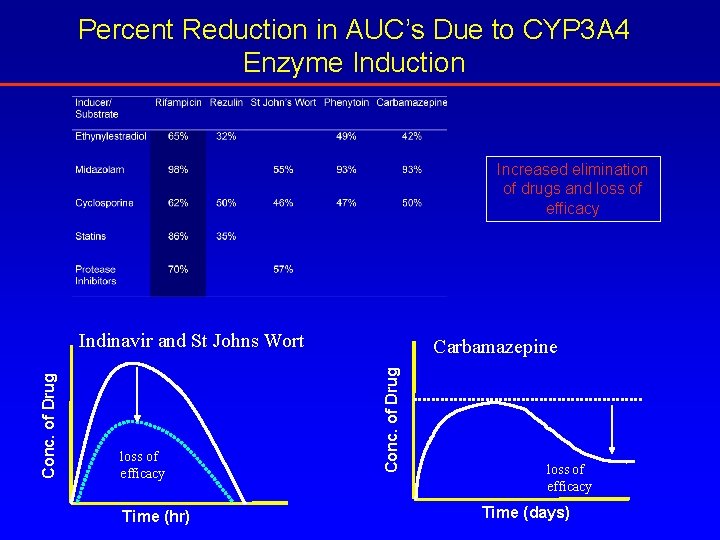
Percent Reduction in AUC’s Due to CYP 3 A 4 Enzyme Induction Increased elimination of drugs and loss of efficacy Time (hr) Carbamazepine Conc. of Drug Indinavir and St Johns Wort loss of efficacy Time (days)
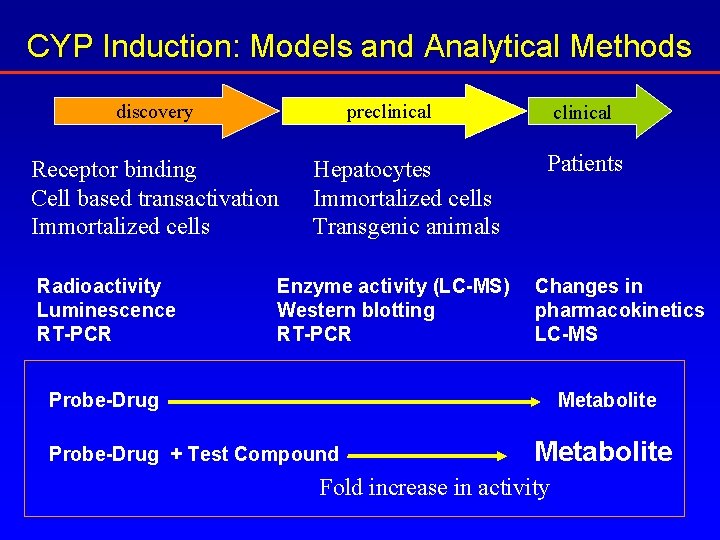
CYP Induction: Models and Analytical Methods discovery preclinical Receptor binding Cell based transactivation Immortalized cells Radioactivity Luminescence RT-PCR Hepatocytes Immortalized cells Transgenic animals Enzyme activity (LC-MS) Western blotting RT-PCR clinical Patients Changes in pharmacokinetics LC-MS Probe-Drug Metabolite Probe-Drug + Test Compound Metabolite Fold increase in activity
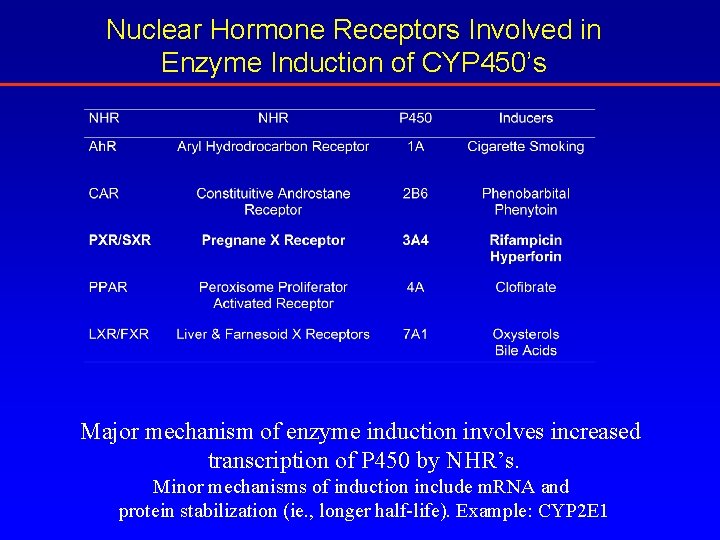
Nuclear Hormone Receptors Involved in Enzyme Induction of CYP 450’s Major mechanism of enzyme induction involves increased transcription of P 450 by NHR’s. Minor mechanisms of induction include m. RNA and protein stabilization (ie. , longer half-life). Example: CYP 2 E 1
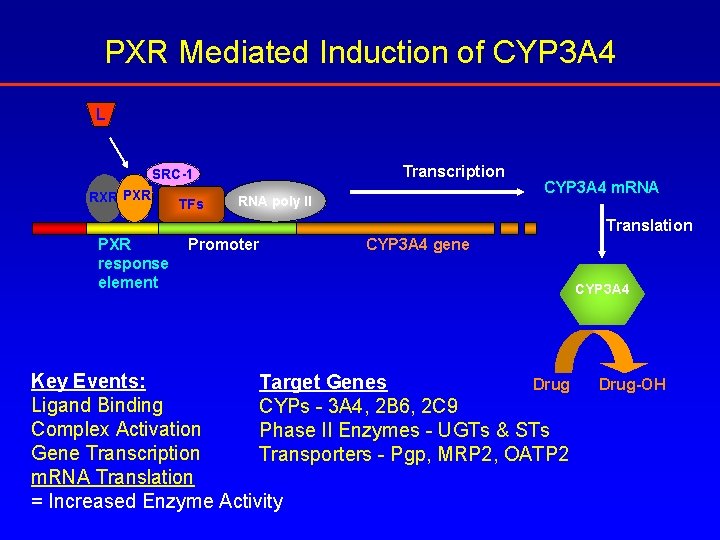
PXR Mediated Induction of CYP 3 A 4 L Transcription SRC-1 RXR PXR TFs RNA poly II CYP 3 A 4 m. RNA Translation PXR response element Promoter CYP 3 A 4 gene Key Events: Target Genes Drug Ligand Binding CYPs - 3 A 4, 2 B 6, 2 C 9 Complex Activation Phase II Enzymes - UGTs & STs Gene Transcription Transporters - Pgp, MRP 2, OATP 2 m. RNA Translation = Increased Enzyme Activity CYP 3 A 4 Drug-OH
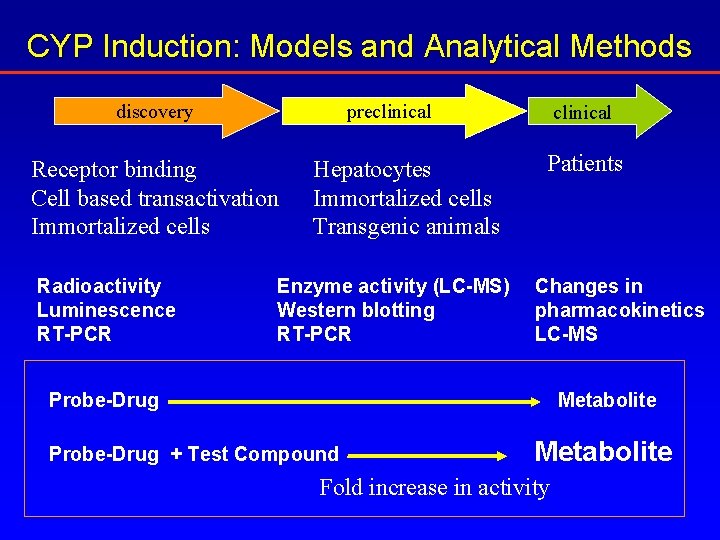
CYP Induction: Models and Analytical Methods discovery preclinical Receptor binding Cell based transactivation Immortalized cells Radioactivity Luminescence RT-PCR Hepatocytes Immortalized cells Transgenic animals Enzyme activity (LC-MS) Western blotting RT-PCR clinical Patients Changes in pharmacokinetics LC-MS Probe-Drug Metabolite Probe-Drug + Test Compound Metabolite Fold increase in activity
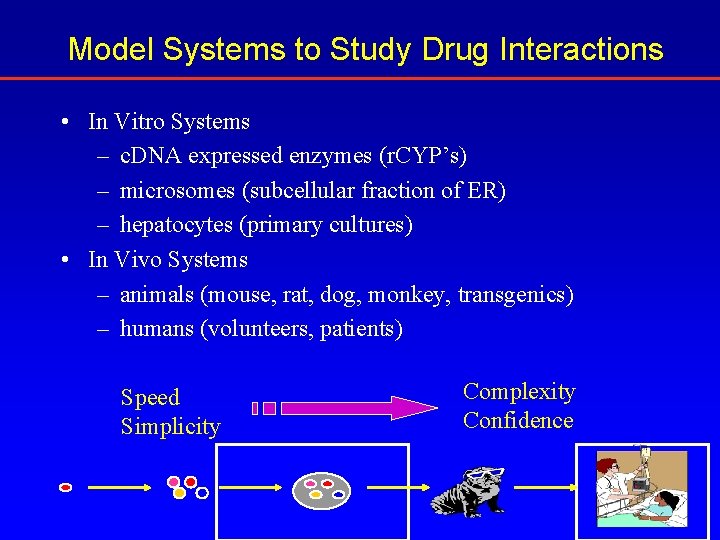
Model Systems to Study Drug Interactions • In Vitro Systems – c. DNA expressed enzymes (r. CYP’s) – microsomes (subcellular fraction of ER) – hepatocytes (primary cultures) • In Vivo Systems – animals (mouse, rat, dog, monkey, transgenics) – humans (volunteers, patients) Speed Simplicity Complexity Confidence
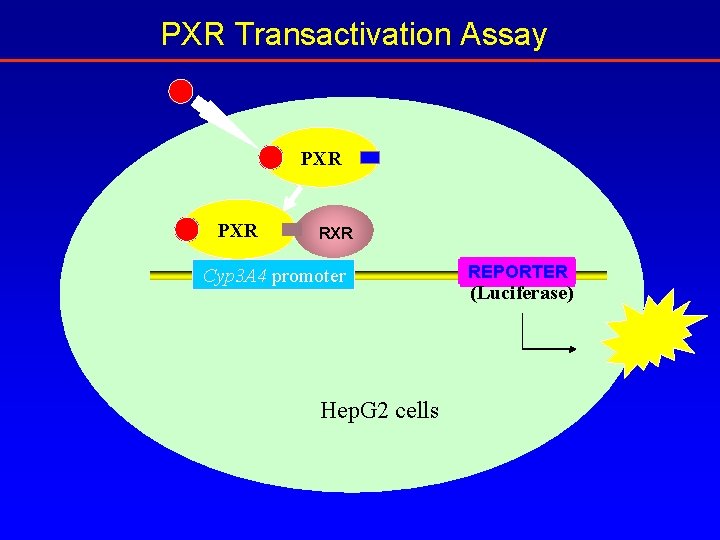
PXR Transactivation Assay PXR RXR Cyp 3 A 4 promoter Hep. G 2 cells REPORTER (Luciferase)
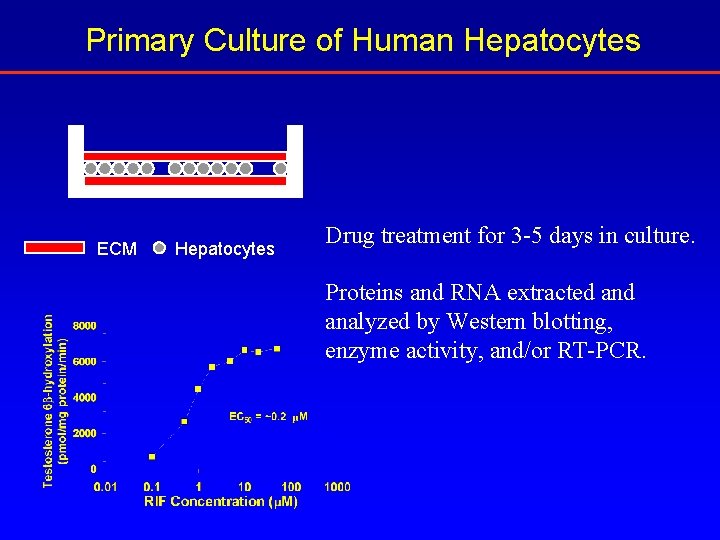
Primary Culture of Human Hepatocytes ECM Hepatocytes Drug treatment for 3 -5 days in culture. Proteins and RNA extracted analyzed by Western blotting, enzyme activity, and/or RT-PCR.
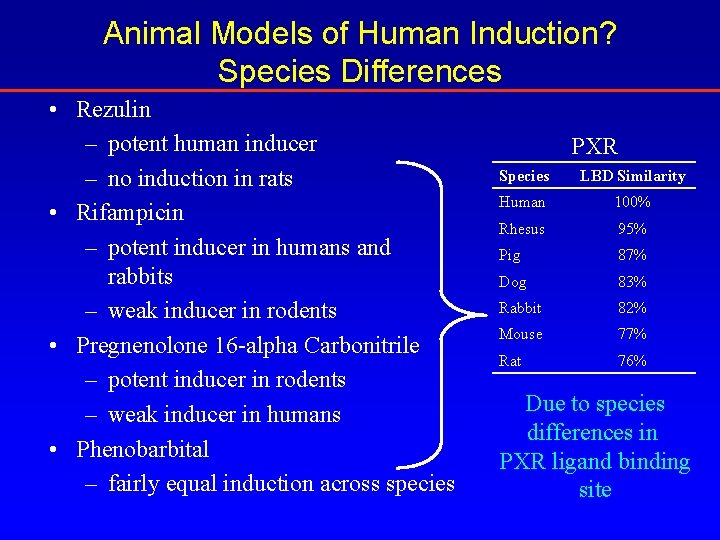
Animal Models of Human Induction? Species Differences • Rezulin – potent human inducer – no induction in rats • Rifampicin – potent inducer in humans and rabbits – weak inducer in rodents • Pregnenolone 16 -alpha Carbonitrile – potent inducer in rodents – weak inducer in humans • Phenobarbital – fairly equal induction across species PXR Species LBD Similarity Human 100% Rhesus 95% Pig 87% Dog 83% Rabbit 82% Mouse 77% Rat 76% Due to species differences in PXR ligand binding site
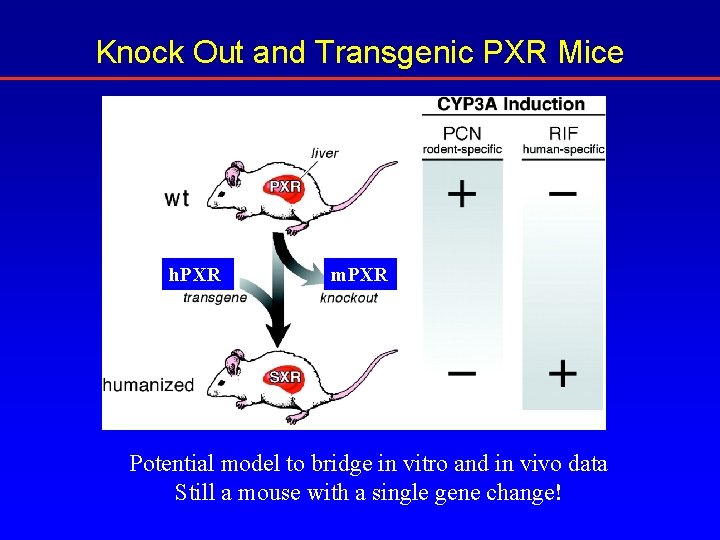
Knock Out and Transgenic PXR Mice h. PXR m. PXR Potential model to bridge in vitro and in vivo data Still a mouse with a single gene change!
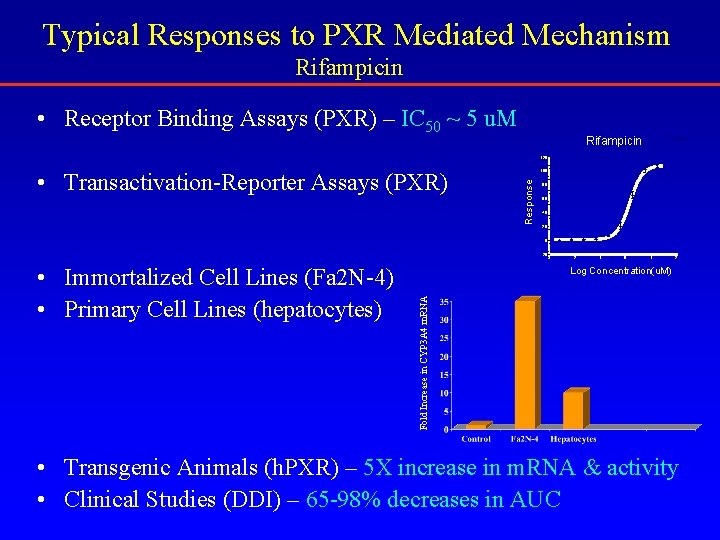
Typical Responses to PXR Mediated Mechanism Rifampicin • Receptor Binding Assays (PXR) – IC 50 ~ 5 u. M Rifampicin Untitled 120 Response • Transactivation-Reporter Assays (PXR) 100 80 60 40 20 0 -20 -3 -1 0 1 2 Log Concentration(u. M) Fold Increase in CYP 3 A 4 m. RNA • Immortalized Cell Lines (Fa 2 N-4) • Primary Cell Lines (hepatocytes) -2 • Transgenic Animals (h. PXR) – 5 X increase in m. RNA & activity • Clinical Studies (DDI) – 65 -98% decreases in AUC
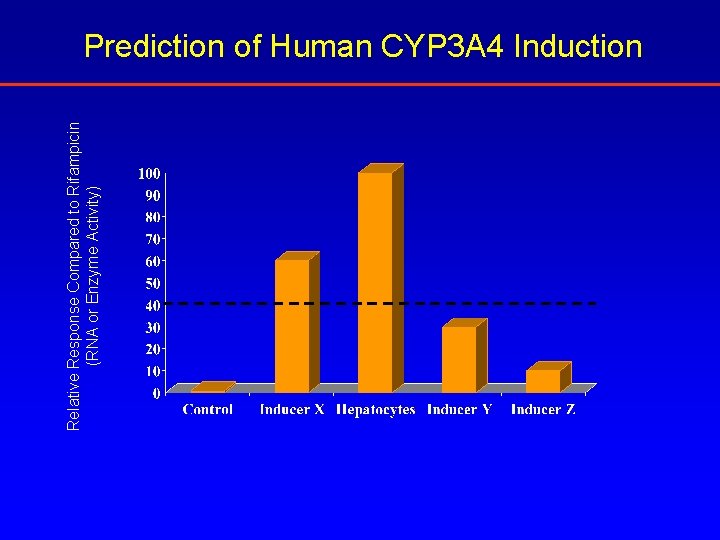
Relative Response Compared to Rifampicin (RNA or Enzyme Activity) Prediction of Human CYP 3 A 4 Induction
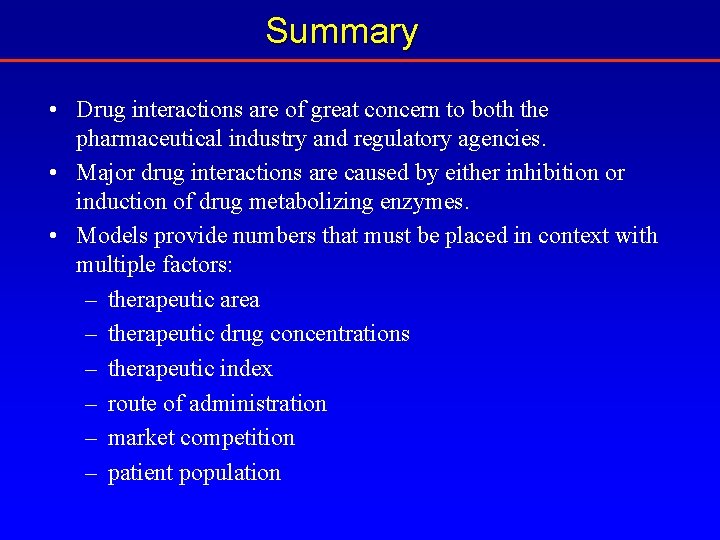
Summary • Drug interactions are of great concern to both the pharmaceutical industry and regulatory agencies. • Major drug interactions are caused by either inhibition or induction of drug metabolizing enzymes. • Models provide numbers that must be placed in context with multiple factors: – therapeutic area – therapeutic drug concentrations – therapeutic index – route of administration – market competition – patient population
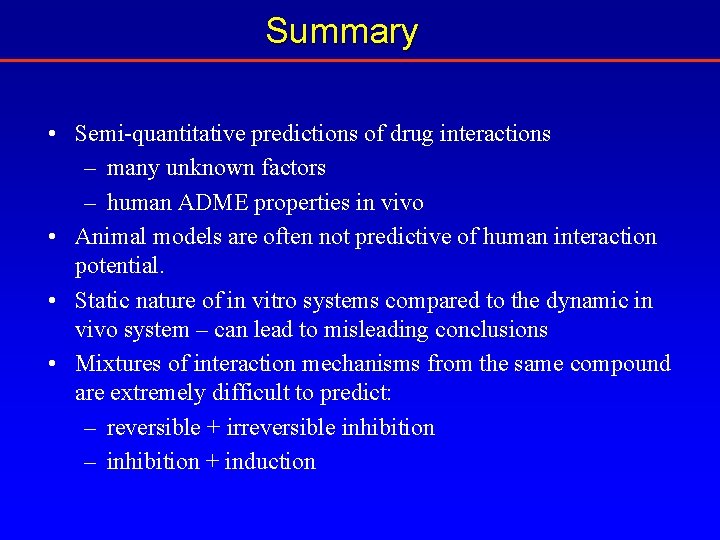
Summary • Semi-quantitative predictions of drug interactions – many unknown factors – human ADME properties in vivo • Animal models are often not predictive of human interaction potential. • Static nature of in vitro systems compared to the dynamic in vivo system – can lead to misleading conclusions • Mixtures of interaction mechanisms from the same compound are extremely difficult to predict: – reversible + irreversible inhibition – inhibition + induction
Key Points • Drug interactions are serious liabilities that pharmaceutical companies avoid by screening, eliminating, and predicting human outcomes • The most common type of drug interaction is inhibition followed by induction • Most inhibition or induction models are built upon human systems due to species difference in enzymes and receptors • Predictions of interaction potential in patient is semiquantitative because most systems employ in vitro systems – future improvements based on in vivo models that mimic the human situation
References Journal Articles R. S. Obach, et al. , Mechanism-based inactivation of human cytochrome P 450 enzymes and the prediction of drug-drug interactions. Drug Met. Dispos. 35: 246 (2007) T. D. Bjornsson, et al, The conduct of in vitro and in vivo drug-drug interaction studies: A pharmaceutical research and manufacturers of America perspective, Drug Met. Dispos. 31: 815 (2003). J. H. Lin, Sense and nonsense in the prediction of drug-drug interactions, Curr. Drug Met. 1: 305 (2000). Ito, et al, Prediction of pharmacokinetic alterations caused by drug-drug interactions: Metabolic interaction in the liver, Pharmacol. Rev. 50: 387 (1998). Regulatory Guidance US FDA CDER, Guidance for industry: Drug metabolism/drug interaction studies in the drug development process: Studies in vitro, www. fda. gov/cder/guidance. European agency for the evaluation of medicinal products, committee for proprietary medicinal products, Note for guidance on the investigation of drug interactions. CPMP/EWP/560/95, www. eudra. org. Books Drug Metabolizing Enzymes: Cytochrome P 450 and other enzymes in drug discovery and development. Editors J. S. Lee, R. S. Obach, M. B. Fisher, Marcel Dekker, New York (2003). Drug Interactions, editor A. D. Rodrigues, Marcel Dekker, New York (2002). Metabolic Drug Interactions, editors R. H. Levy, K. E. Thummel, W. F. Trager, P. D. Hansten, M. Eichelbaum, Lippincot Williams & Wilkines, New York (2000). Handbook of Drug Metabolism, editor T. F. Woolf, Marcel Dekker, New York (1999).
- Slides: 36