
Drug Therapy for Diabetes Mellitus Drug Therapy in
Drug Therapy for Diabetes Mellitus
Drug Therapy in Diabetes Mellitus: Learning objectives
1 Overview: prevalence, types, pathology, S/S, patient & disease characteristics
Diabetes: a global problem for the 21 st century overview • Diabetes mellitus – Greek word “fountain” – Latin word “honey” • Primarily a disorder of carbohydrate metabolism – Deficiency of insulin – Resistance to action of insulin – Both of which lead to hyperglycemia and glucosuria • But protein and lipid metabolism are also affected • Demographics: – Global epidemic: 10% of the world’s adult population has T 2 DM – Risk factors are not consistent around the world – very expensive in real terms and in human costs – 21 st century challenge
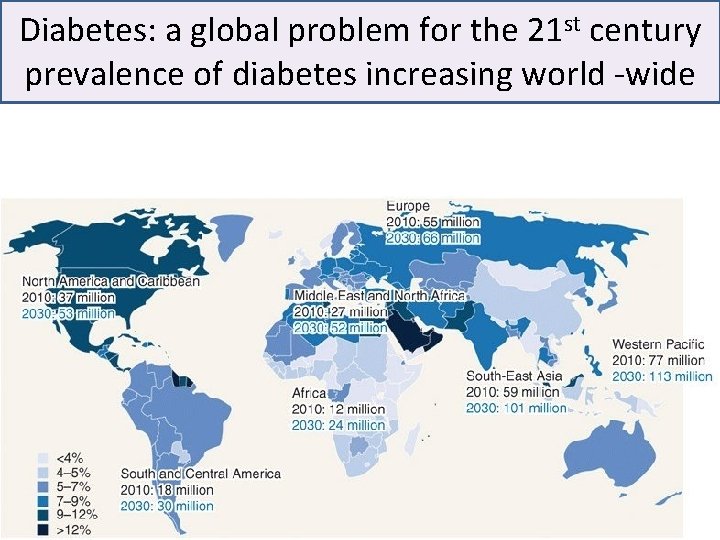
Diabetes: a global problem for the 21 st century prevalence of diabetes increasing world -wide
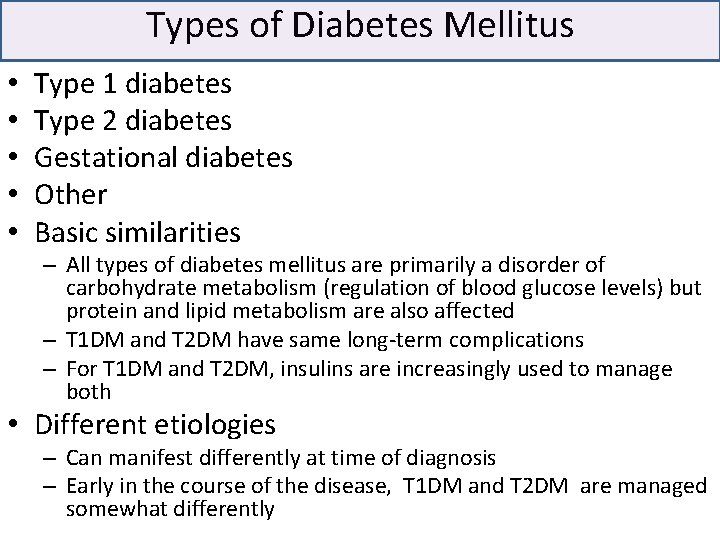
Types of Diabetes Mellitus • • • Type 1 diabetes Type 2 diabetes Gestational diabetes Other Basic similarities – All types of diabetes mellitus are primarily a disorder of carbohydrate metabolism (regulation of blood glucose levels) but protein and lipid metabolism are also affected – T 1 DM and T 2 DM have same long-term complications – For T 1 DM and T 2 DM, insulins are increasingly used to manage both • Different etiologies – Can manifest differently at time of diagnosis – Early in the course of the disease, T 1 DM and T 2 DM are managed somewhat differently
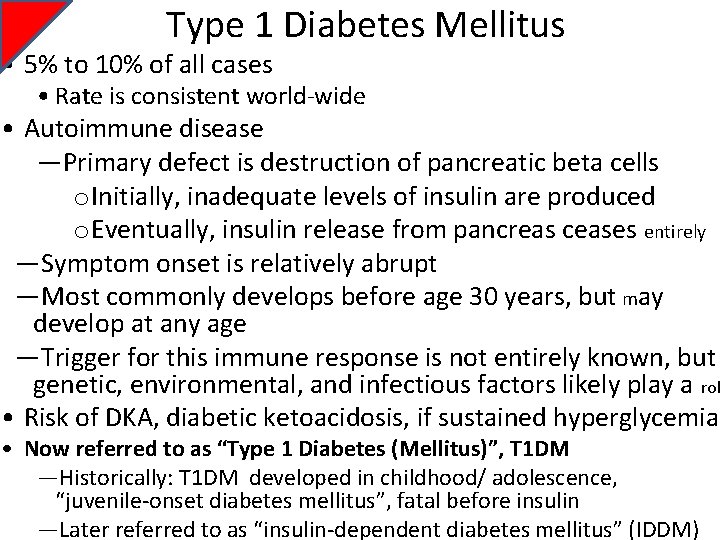
Type 1 Diabetes Mellitus • 5% to 10% of all cases • Rate is consistent world-wide • Autoimmune disease —Primary defect is destruction of pancreatic beta cells o Initially, inadequate levels of insulin are produced o Eventually, insulin release from pancreas ceases entirely —Symptom onset is relatively abrupt —Most commonly develops before age 30 years, but may develop at any age —Trigger for this immune response is not entirely known, but genetic, environmental, and infectious factors likely play a rol • Risk of DKA, diabetic ketoacidosis, if sustained hyperglycemia • Now referred to as “Type 1 Diabetes (Mellitus)”, T 1 DM —Historically: T 1 DM developed in childhood/ adolescence, “juvenile-onset diabetes mellitus”, fatal before insulin —Later referred to as “insulin-dependent diabetes mellitus” (IDDM)
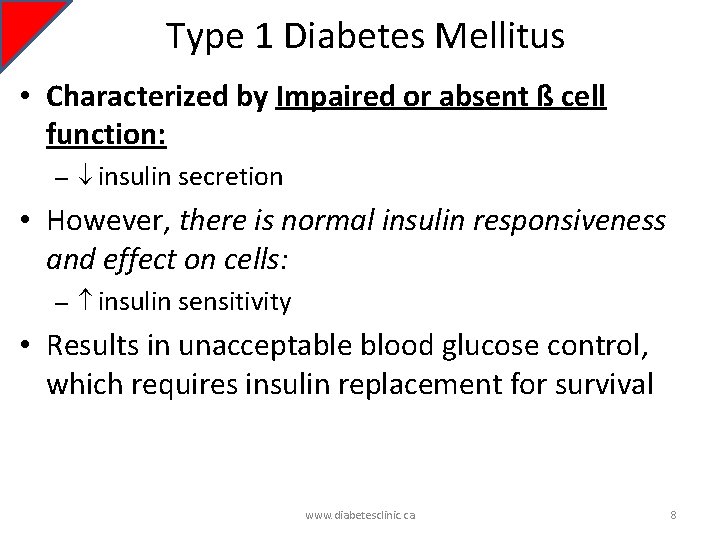
Type 1 Diabetes Mellitus • Characterized by Impaired or absent ß cell function: – insulin secretion • However, there is normal insulin responsiveness and effect on cells: – insulin sensitivity • Results in unacceptable blood glucose control, which requires insulin replacement for survival www. diabetesclinic. ca 8
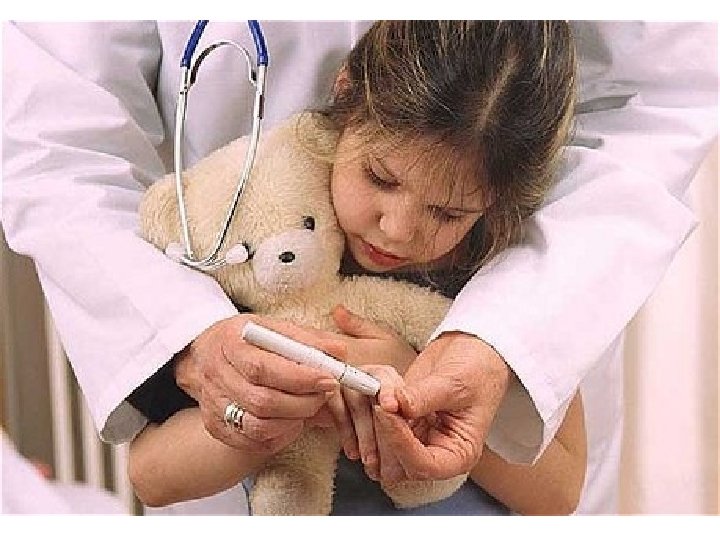
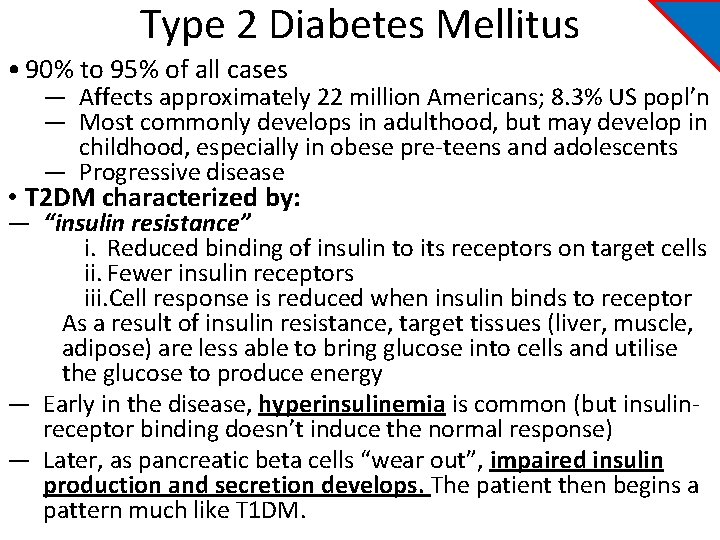
Type 2 Diabetes Mellitus • 90% to 95% of all cases — Affects approximately 22 million Americans; 8. 3% US popl’n — Most commonly develops in adulthood, but may develop in childhood, especially in obese pre-teens and adolescents — Progressive disease • T 2 DM characterized by: — “insulin resistance” i. Reduced binding of insulin to its receptors on target cells ii. Fewer insulin receptors iii. Cell response is reduced when insulin binds to receptor As a result of insulin resistance, target tissues (liver, muscle, adipose) are less able to bring glucose into cells and utilise the glucose to produce energy — Early in the disease, hyperinsulinemia is common (but insulinreceptor binding doesn’t induce the normal response) — Later, as pancreatic beta cells “wear out”, impaired insulin production and secretion develops. The patient then begins a pattern much like T 1 DM.
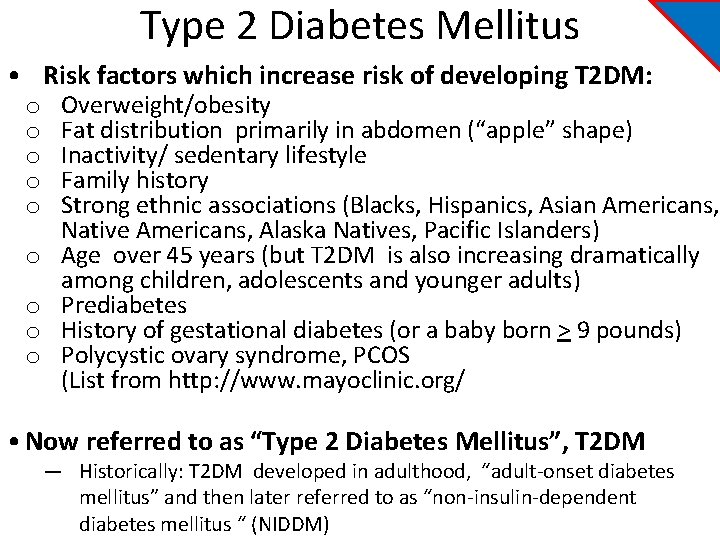
Type 2 Diabetes Mellitus • Risk factors which increase risk of developing T 2 DM: o o o o o Overweight/obesity Fat distribution primarily in abdomen (“apple” shape) Inactivity/ sedentary lifestyle Family history Strong ethnic associations (Blacks, Hispanics, Asian Americans, Native Americans, Alaska Natives, Pacific Islanders) Age over 45 years (but T 2 DM is also increasing dramatically among children, adolescents and younger adults) Prediabetes History of gestational diabetes (or a baby born > 9 pounds) Polycystic ovary syndrome, PCOS (List from http: //www. mayoclinic. org/ • Now referred to as “Type 2 Diabetes Mellitus”, T 2 DM — Historically: T 2 DM developed in adulthood, “adult-onset diabetes mellitus” and then later referred to as “non-insulin-dependent diabetes mellitus “ (NIDDM)
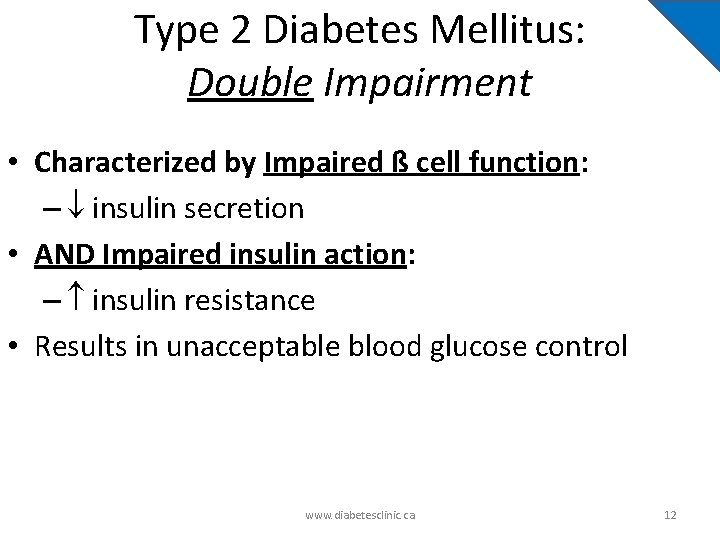
Type 2 Diabetes Mellitus: Double Impairment • Characterized by Impaired ß cell function: – insulin secretion • AND Impaired insulin action: – insulin resistance • Results in unacceptable blood glucose control www. diabetesclinic. ca 12

Gestational Diabetes Ø Develops in pregnant woman during the pregnancy (4% ) Ø Diabetic state usually resolves almost immediately after delivery Ø If diabetic state persists beyond delivery, it is no longer considered gestational, and should be rediagnosed and treated accordingly Ø Managed in much the same manner as a diabetic woman who becomes pregnant Except all newly diagnosed diabetics need tremendous support, education, guidance, mentorship Ø Blood glucose should be monitored closely (checking BG 6 -7 times daily), and BG managed using insulin Ø Proper glucose levels are needed in the pregnant patient and in the fetus Ø Hyperglycemia and hyperinsulinism are unhealthy and teratogenic to the fetus Ø Fetal death frequently occurs near term Ø Earlier delivery is desirable 14
2 Complications
T 1 DM and T 2 DM have the same complications • Short-term – Hyperglycemia – Hypoglycemia • Long-term – Macrovascular – Hypertension – Microvascular
S/S of Hyperglycemia: BG greater than 180 mg/d. L. http: //www. mayoclinic. org/diseases-conditions/hyperglycemia/basics/symptoms/con-20034795 Hyperglycemia doesn't cause symptoms until glucose values are significantly elevated — above 200 mg/d. L Symptoms of hyperglycemia develop slowly over several days or weeks. The longer blood sugar levels stay high, the more serious the symptoms become. However, some people who've had type 2 diabetes for a long time may not show any symptoms despite elevated blood sugars. Early signs and symptoms Later signs and symptoms If hyperglycemia goes untreated, it can cause • Frequent urination toxic acids (ketones) to build up in blood and • Increased thirst urine (ketoacidosis). Signs and symptoms include: • Blurred vision § Fruity-smelling breath • Fatigue § Nausea / vomiting • Headache § Shortness of breath § Dry mouth § Weakness, Confusion § Coma § Abdominal pain
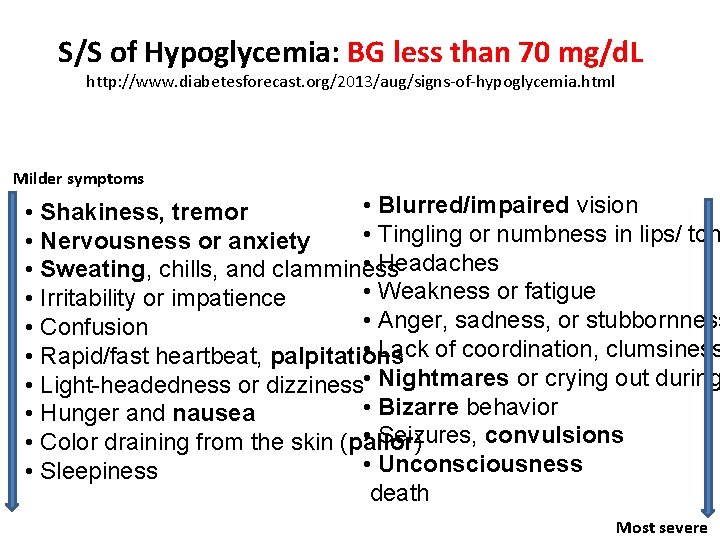
S/S of Hypoglycemia: BG less than 70 mg/d. L http: //www. diabetesforecast. org/2013/aug/signs-of-hypoglycemia. html Milder symptoms • Blurred/impaired vision • Shakiness, tremor • Tingling or numbness in lips/ ton • Nervousness or anxiety • Headaches • Sweating, chills, and clamminess • Weakness or fatigue • Irritability or impatience • Anger, sadness, or stubbornness • Confusion • Lack of coordination, clumsiness • Rapid/fast heartbeat, palpitations • Light-headedness or dizziness • Nightmares or crying out during • Bizarre behavior • Hunger and nausea • Seizures, convulsions • Color draining from the skin (pallor) • Unconsciousness • Sleepiness death Most severe
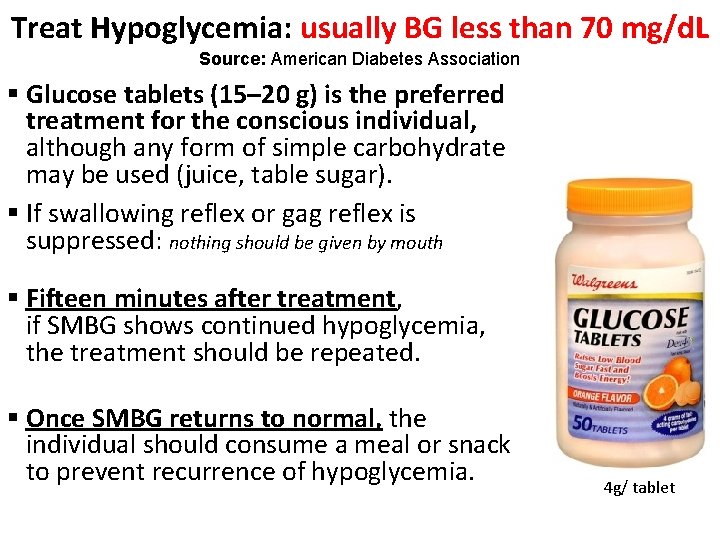
Treat Hypoglycemia: usually BG less than 70 mg/d. L Source: American Diabetes Association § Glucose tablets (15– 20 g) is the preferred treatment for the conscious individual, although any form of simple carbohydrate may be used (juice, table sugar). § If swallowing reflex or gag reflex is suppressed: nothing should be given by mouth § Fifteen minutes after treatment, if SMBG shows continued hypoglycemia, the treatment should be repeated. § Once SMBG returns to normal, the individual should consume a meal or snack to prevent recurrence of hypoglycemia. 4 g/ tablet
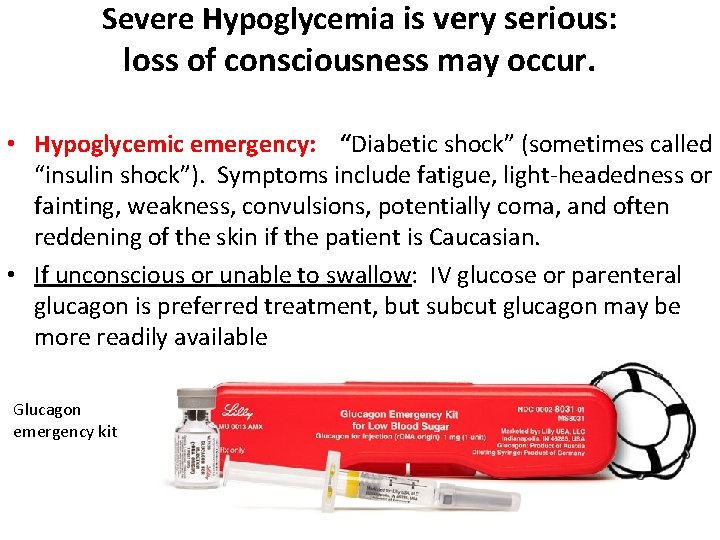
Severe Hypoglycemia is very serious: loss of consciousness may occur. • Hypoglycemic emergency: “Diabetic shock” (sometimes called “insulin shock”). Symptoms include fatigue, light-headedness or fainting, weakness, convulsions, potentially coma, and often reddening of the skin if the patient is Caucasian. • If unconscious or unable to swallow: IV glucose or parenteral glucagon is preferred treatment, but subcut glucagon may be more readily available Glucagon emergency kit
Hypoglycemia: Fear • As a group, people with diabetes fear hypoglycemia more than they fear the long-term complications of diabetes. • The rational fear of hypoglycemia can lead to worsening of metabolic control as well as tension with, and a restriction of, personal freedoms and responsibilities by anxious and overprotective loved ones, colleagues, or employers. • The psychological reactions can be quite frightening and can extend beyond the patient to include family, friends, and coworkers. • If neuroglycopenia occurs while the individual is performing a critical task, such as driving, the individual and others are placed at risk of injury and death.
Hypoglycemia: Unawareness • Hypoglycemia unawareness (by reducing the sympathoadrenal and the resulting symptomatic responses) can initiate a vicious cycle of recurrent hypoglycemia. • …concept has been extended recently to include exercise- and sleep-related hypoglycemia-associated autonomic failure. • Hypoglycemia unawareness is reversible in most affected patients, and the reduced epinephrine component of defective glucose counter-regulation is variably improved, by as little as 2– 3 weeks of scrupulous avoidance of iatrogenic hypoglycemia. Importantly, antecedent plasma glucose levels as high as 70 mg/dl cause reduced sympathoadrenal responses to subsequent hypoglycemia. http: //care. diabetesjournals. org/content/28/5/1245. full
Short-term Complications of Diabetes: Recap • Short-term complications: glycemic control is imperfect – Hyperglycemia • Def: • Symptoms: • Tx: • Hyperglycemic emergencies: DKA and HHS/HHNS result from sustained insulin deficiency… ending in confusion, coma, death – Hypoglycemia • Def: • Symptoms: • Tx: • Hypoglycemic emergency: Diabetic shock (“insulin shock”) usually result from administering too much insulin, or (drug) interactions. … ending in fainting, weakness, fatigue, bizarre/ confused behavior, potentially convulsions, coma, and death.
Long-term complications
Long-term complications of Diabetes: Macrovascular • MACROvascular complications of diabetes: − Due to hyperglycemia, altered lipid metabolism − Atherosclerosis develops earlier and progresses faster in diabetics • Ischemic heart disease: —Cardiovascular disease is #1 cause of death in diabetics − MI, angina, cardiac failure − Risk of CVD 2 – 4 times higher for those with diabetes − Higher case fatality as compared to non diabetic individuals. − Reduced survival post-MI, post-CABG, and esp post-PTCA • Cerebrovascular disease: Cerebrovascular Accident (CVA) − Diabetics have a 2 -4 times higher risk for stroke • Peripheral arterial disease − 60% of nontraumatic lower-extremity amputations; claudication • Hypertension; very common comorbidity; accelerates disease • Treatment: Lifestyle + glycemic control CV exercise. Healthy diet. No smoking. Control of blood pressure, blood lipids, blood glucose.
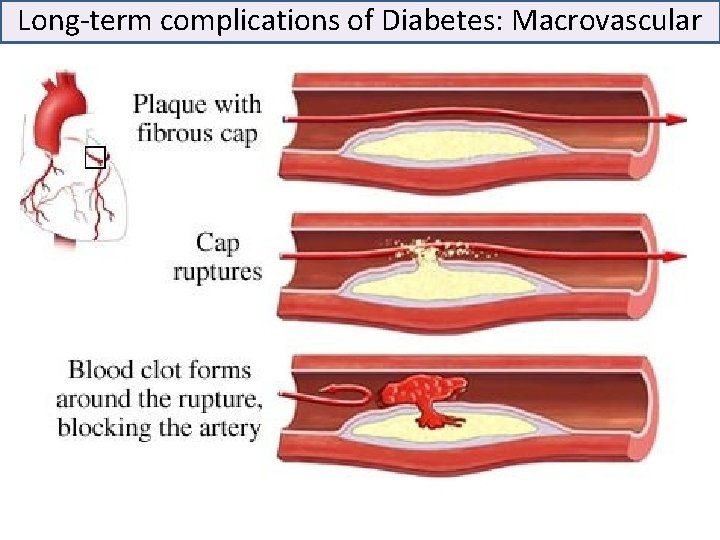
Long-term complications of Diabetes: Macrovascular
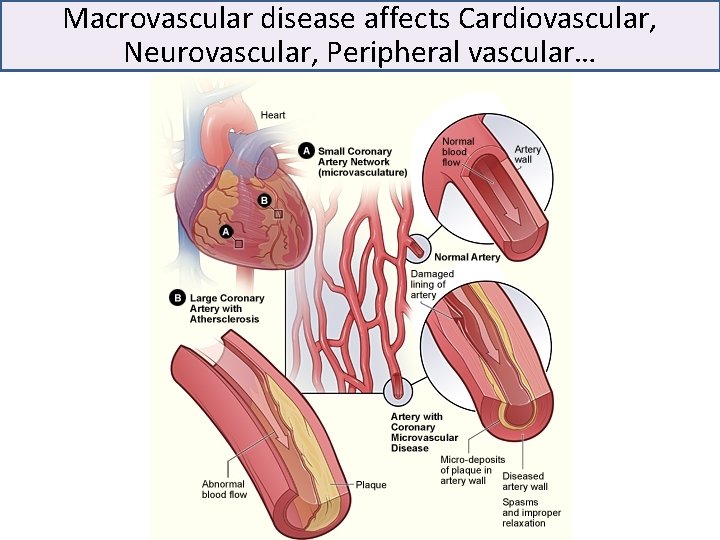
Macrovascular disease affects Cardiovascular, Neurovascular, Peripheral vascular…
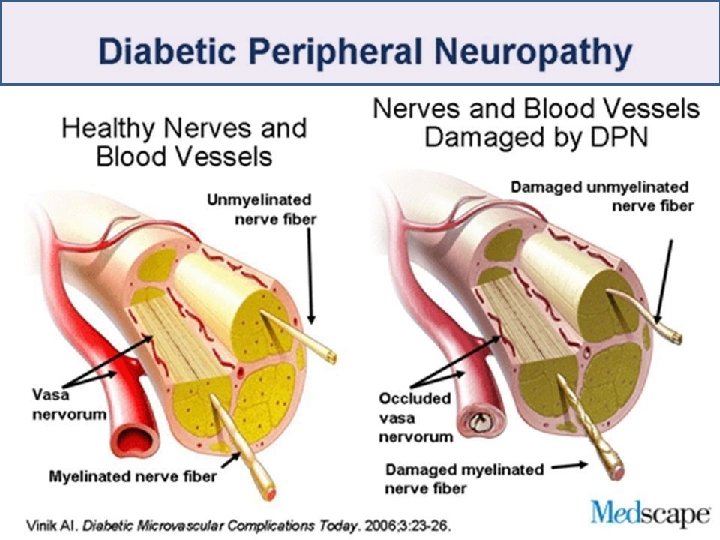
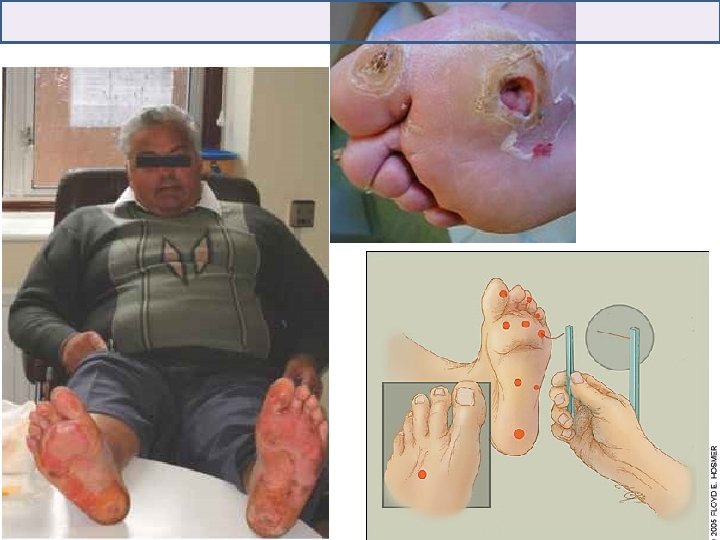
Long-term complications of Diabetes: Microvascular Long-term complications are the same for T 1 DM and T 2 DM MICROvascular disease: • Destruction of small blood vessels, leads to ischemia, dysfunction, and cell death. • Directly related to degree & duration of hyperglycemic episodes. • Microvascular injury likely reducible by optimal glycemic control over the long-term. − Retinopathy (Blindness) − Nephropathy (Renal disease) − Neuropathy (Sensory and motor neurons. Lower extremity injuries and poor wound healing. ) − Amputations (secondary to infection, poor wound healing) − Gastroparesis (Autonomic neuropathy to GI causes dysfunction such as delayed gastric emptying) − Erectile dysfunction (Autonomic neuropathy to GU causes dysfunction such as ED; sildenafil)
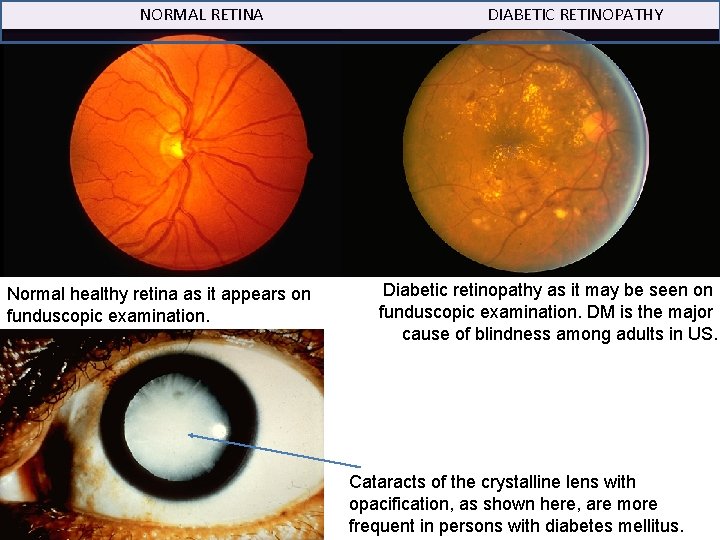
NORMAL RETINA Normal healthy retina as it appears on funduscopic examination. DIABETIC RETINOPATHY Diabetic retinopathy as it may be seen on funduscopic examination. DM is the major cause of blindness among adults in US. Cataracts of the crystalline lens with opacification, as shown here, are more frequent in persons with diabetes mellitus.

• DN begins as a glomerular disease: results in proteinuria, reduced GFR, and increased blood pressure. ® Screen for microalbuminuria. • Nephropathy is the primary cause of morbidity and mortality in T 1 DM ® T 1 DM rate of DN is 12 x higher than T 2 DM • DN = #1 cause of End Stage Renal Disease.
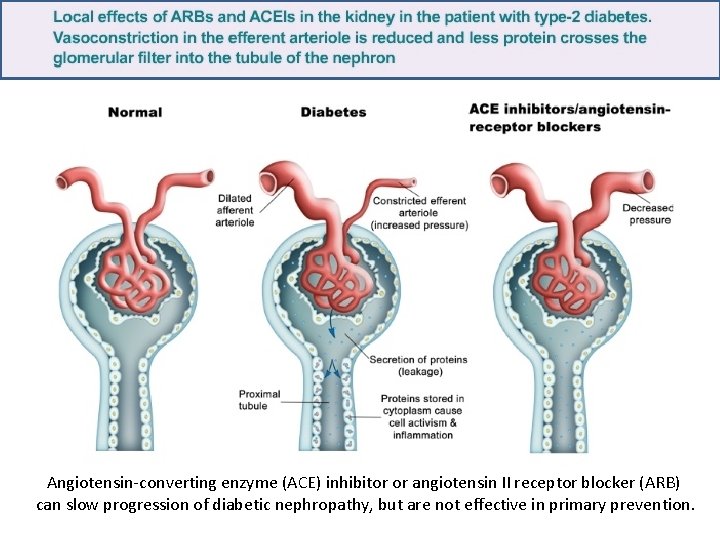
Angiotensin-converting enzyme (ACE) inhibitor or angiotensin II receptor blocker (ARB) can slow progression of diabetic nephropathy, but are not effective in primary prevention.
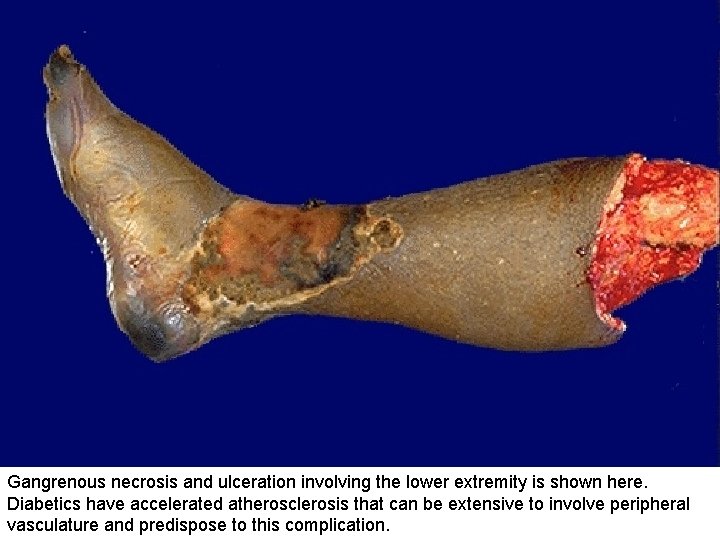
Gangrenous necrosis and ulceration involving the lower extremity is shown here. Diabetics have accelerated atherosclerosis that can be extensive to involve peripheral vasculature and predispose to this complication.
3 Healthy pancreas and glycemic norms
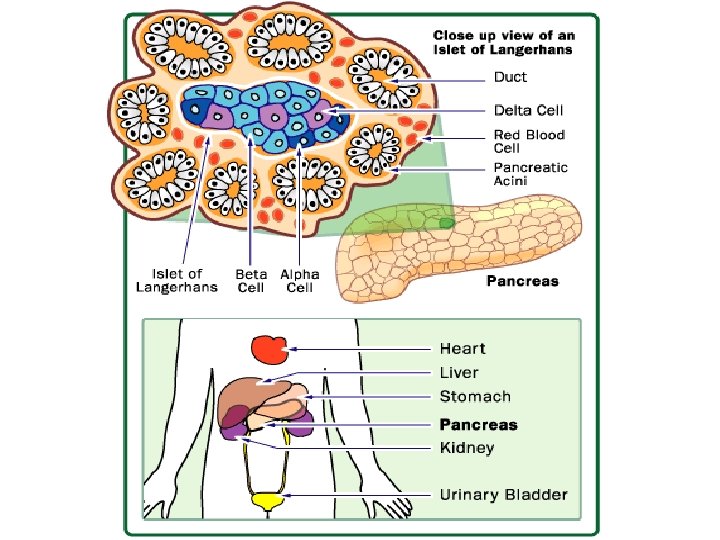
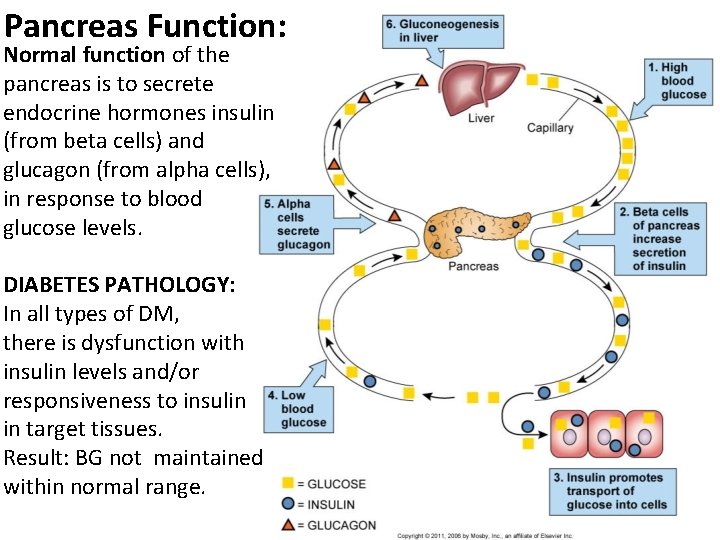
Pancreas Function: Normal function of the pancreas is to secrete endocrine hormones insulin (from beta cells) and glucagon (from alpha cells), in response to blood glucose levels. DIABETES PATHOLOGY: In all types of DM, there is dysfunction with insulin levels and/or responsiveness to insulin in target tissues. Result: BG not maintained within normal range.
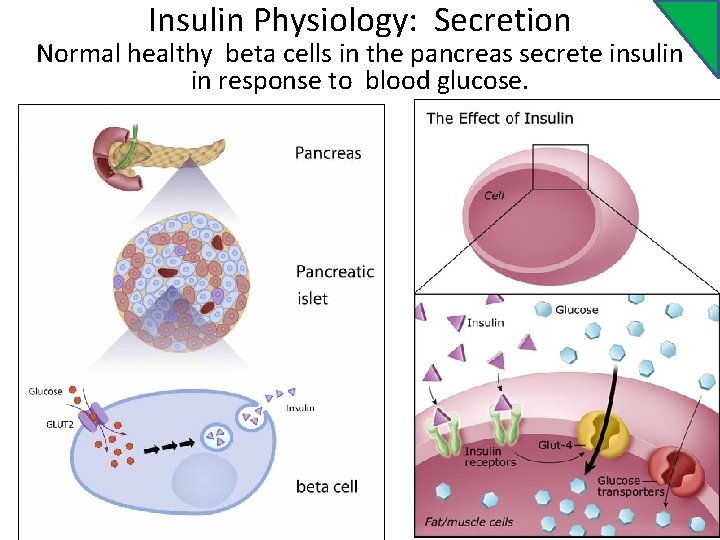
Insulin Physiology: Secretion Normal healthy beta cells in the pancreas secrete insulin in response to blood glucose.
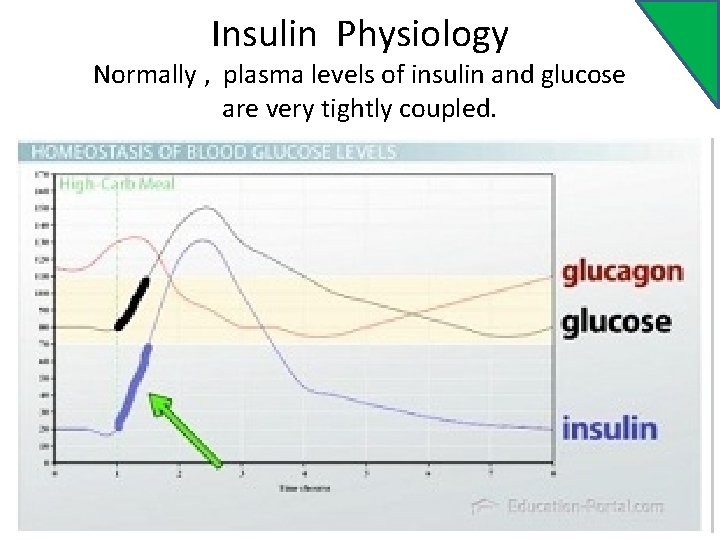
Insulin Physiology Normally , plasma levels of insulin and glucose are very tightly coupled.
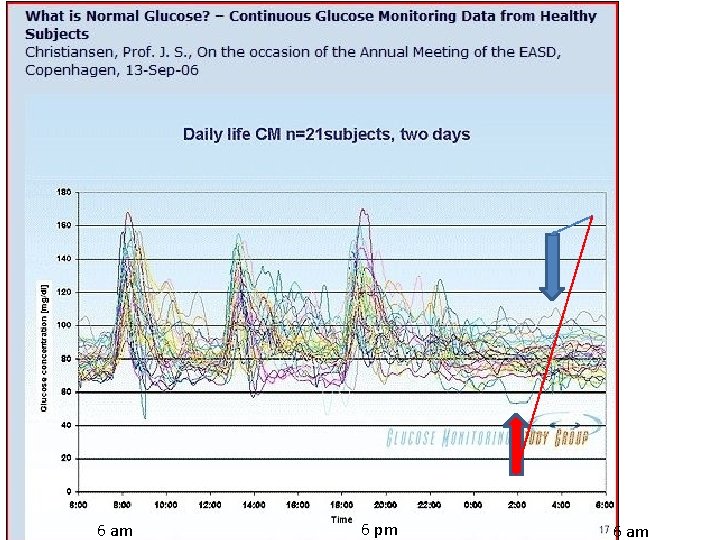
Normal blood glucose levels • In a person without diabetes, homeostatic mechanisms normally maintain fasting blood sugar levels to a narrow range of about 60 to 110 mg/d. L most of the time. • Overnight and between meals, the normal, non-diabetic (fasting blood glucose) levels range 60 -100 mg/dl. • Shortly after meals or snacks, the BG may temporarily rise to 140 mg/dl (or less. ) • Despite widely variable intervals between meals, or the occasional consumption of meals with a substantial carbohydrate load, human blood glucose levels tend to remain within the normal range. http: //dtc. ucsf. edu/, www. diabetes. org
6 am 6 pm 6 am
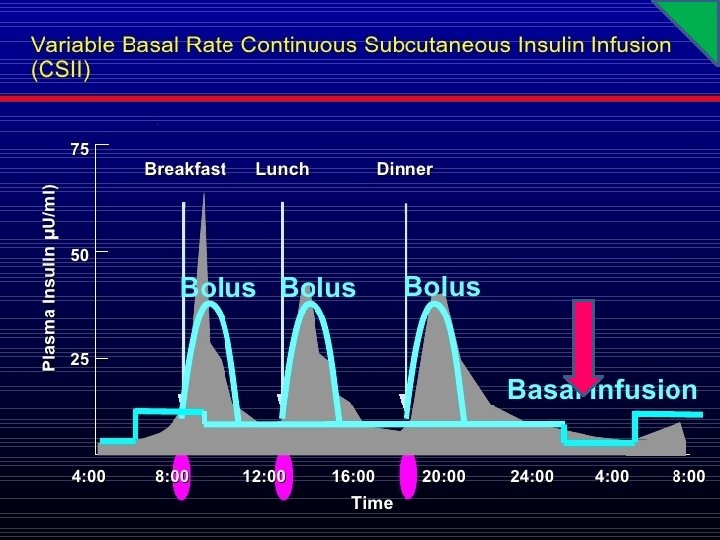
• In a nondiabetic, the pancreas secretes a small amount of insulin continuously (about 0. 5 to 1 unit per hour) to cover the body’s non-food related insulin needs. • This is the human body’s basal insulin release • www. diabetesclinic. ca 42
4 Monitoring • Self- monitoring of blood glucose (SMBG) − to adjust/ evaluate insulin, diet, and exercise • Urine testing for both glucose and ketones prn • Hb. A 1 c = best index for evaluating long-term glycemic control
Monitoring: SMBG • All pts using insulin, and most pts with T 2 DM should check SMBG. Ideal Testing Frequency • Stable T 2 DM: 1 -2 readings/ day • Unstable T 2 DM: 3 -8 readings/ day • Patients on multiple-dose insulin (MDI) or insulin pump therapy should check SMBG at varying times: (maintain logbook) – prior to meals and snacks; occasionally postprandially – prn during day or night – when they suspect low blood glucose; after treating low blood glucose until they are normoglycemic; – pre- and post-exercise – Prior to critical tasks (eg driving and ideally 1 hour later) – Perform two SMBG 30 minutes apart prior to bedtime (confirming rising or falling BG) – Identify individual’s glycemic profile – Typically 6 -8 times daily Monitoring Treatment: SMBG p 673
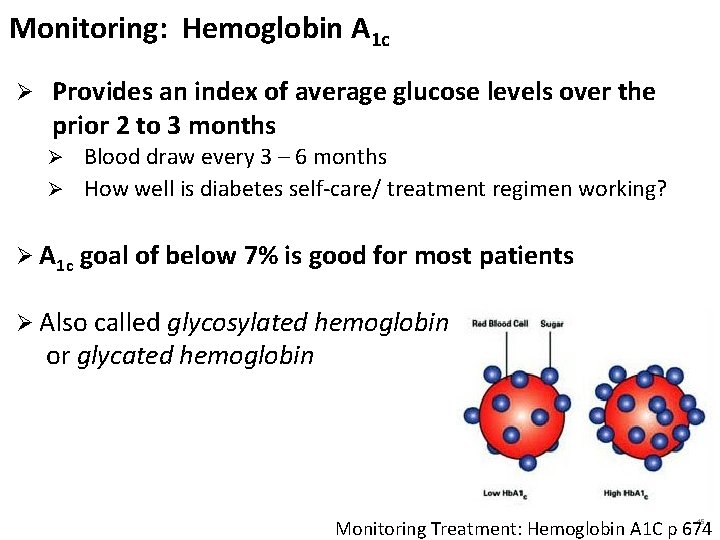
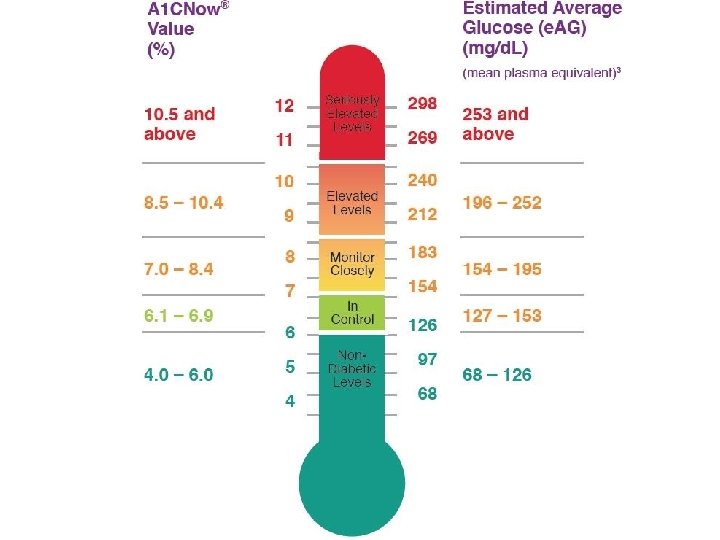
Monitoring: Hemoglobin A 1 c Ø Provides an index of average glucose levels over the prior 2 to 3 months Blood draw every 3 – 6 months Ø How well is diabetes self-care/ treatment regimen working? Ø Ø A 1 c goal of below 7% is good for most patients Ø Also called glycosylated hemoglobin or glycated hemoglobin Monitoring Treatment: Hemoglobin A 1 C p 674 45
Hemoglobin A 1 c goals (“BG targets”) are individualized Ø Tight glycemic control (such as <6. 5%) may be appropriate for selected individual patients, if this can be achieved without significant hypoglycemia or other adverse effects of treatment • Appropriate patients might include those with short duration of diabetes, long life expectancy, and no significant CVD Ø Tight glycemic control may be inappropriate in some populations. Goal below 8% may be appropriate for patients with: • History of long-standing diabetes in whom the general goal is difficult to attain • History of severe hypoglycemia • Limited life expectancy/ advanced age • Severe or advanced microvascular or macrovascular complications • Extensive comorbid conditions • Hypoglycemia unawareness • Other individual patient considerations 46
5 Diabetes: Diagnostic criteria & Targets
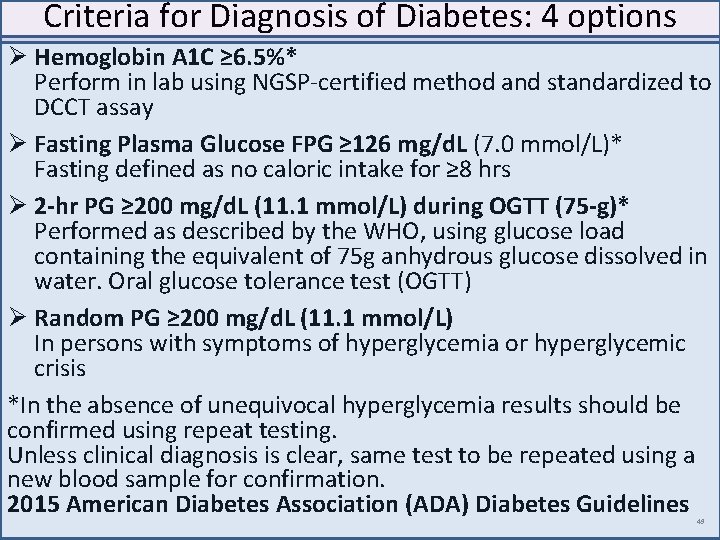
Criteria for Diagnosis of Diabetes: 4 options Ø Hemoglobin A 1 C ≥ 6. 5%* Perform in lab using NGSP-certified method and standardized to DCCT assay Ø Fasting Plasma Glucose FPG ≥ 126 mg/d. L (7. 0 mmol/L)* Fasting defined as no caloric intake for ≥ 8 hrs Ø 2 -hr PG ≥ 200 mg/d. L (11. 1 mmol/L) during OGTT (75 -g)* Performed as described by the WHO, using glucose load containing the equivalent of 75 g anhydrous glucose dissolved in water. Oral glucose tolerance test (OGTT) Ø Random PG ≥ 200 mg/d. L (11. 1 mmol/L) In persons with symptoms of hyperglycemia or hyperglycemic crisis *In the absence of unequivocal hyperglycemia results should be confirmed using repeat testing. Unless clinical diagnosis is clear, same test to be repeated using a new blood sample for confirmation. 2015 American Diabetes Association (ADA) Diabetes Guidelines 49
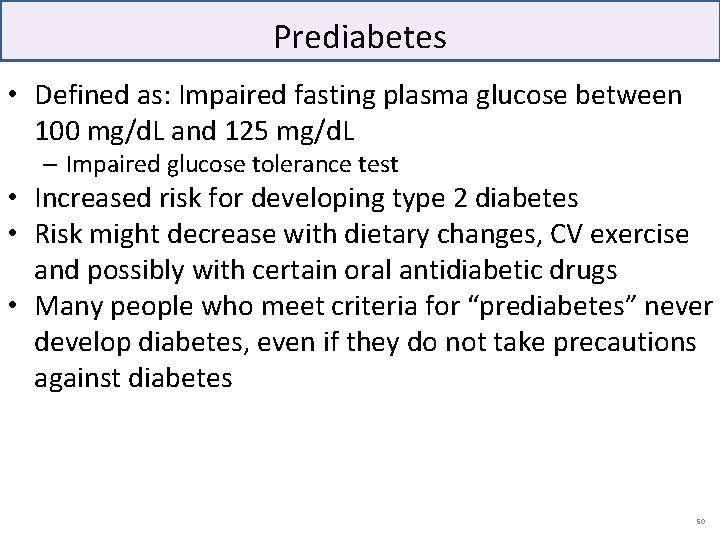
Prediabetes • Defined as: Impaired fasting plasma glucose between 100 mg/d. L and 125 mg/d. L – Impaired glucose tolerance test • Increased risk for developing type 2 diabetes • Risk might decrease with dietary changes, CV exercise and possibly with certain oral antidiabetic drugs • Many people who meet criteria for “prediabetes” never develop diabetes, even if they do not take precautions against diabetes 50
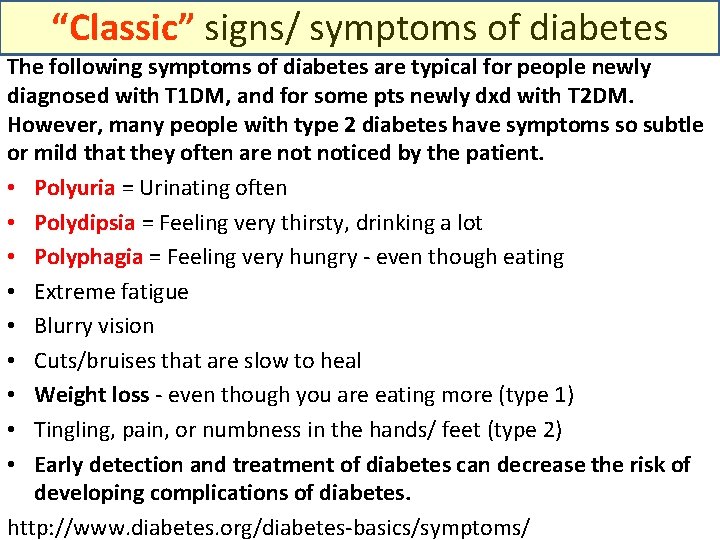
“Classic” signs/ symptoms of diabetes The following symptoms of diabetes are typical for people newly diagnosed with T 1 DM, and for some pts newly dxd with T 2 DM. However, many people with type 2 diabetes have symptoms so subtle or mild that they often are noticed by the patient. • Polyuria = Urinating often • Polydipsia = Feeling very thirsty, drinking a lot • Polyphagia = Feeling very hungry - even though eating • Extreme fatigue • Blurry vision • Cuts/bruises that are slow to heal • Weight loss - even though you are eating more (type 1) • Tingling, pain, or numbness in the hands/ feet (type 2) • Early detection and treatment of diabetes can decrease the risk of developing complications of diabetes. http: //www. diabetes. org/diabetes-basics/symptoms/
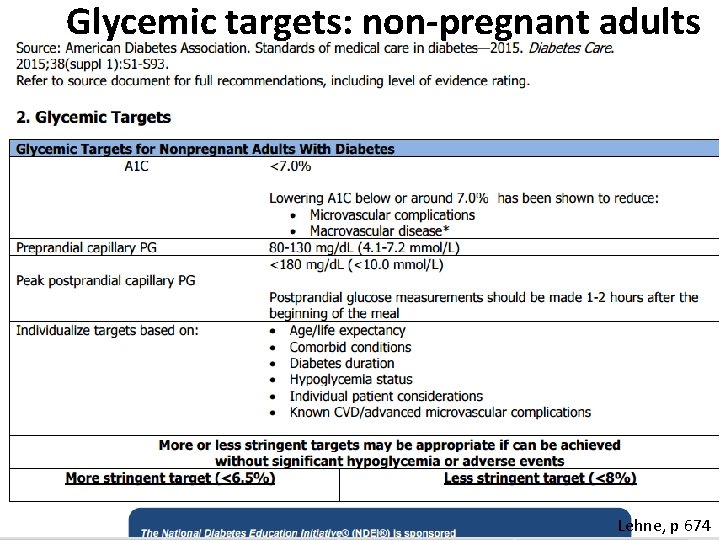
Glycemic targets: non-pregnant adults Lehne, p 674
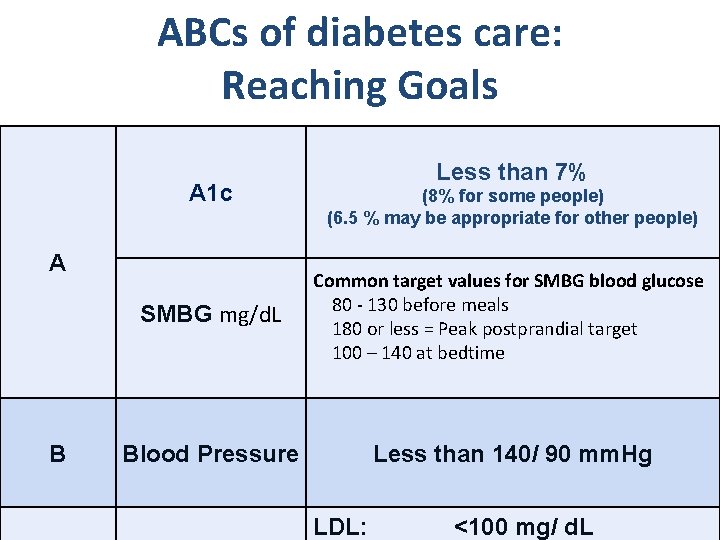
ABCs of diabetes care: Reaching Goals A 1 c A B Less than 7% (8% for some people) (6. 5 % may be appropriate for other people) SMBG mg/d. L Common target values for SMBG blood glucose 80 - 130 before meals 180 or less = Peak postprandial target 100 – 140 at bedtime Blood Pressure Less than 140/ 90 mm. Hg LDL: <100 mg/ d. L
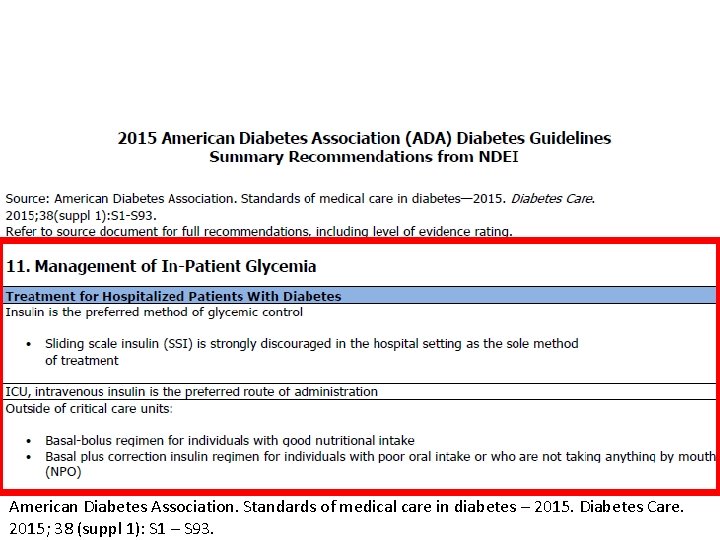
American Diabetes Association. Standards of medical care in diabetes – 2015. Diabetes Care. 2015; 38 (suppl 1): S 1 – S 93.
6 management
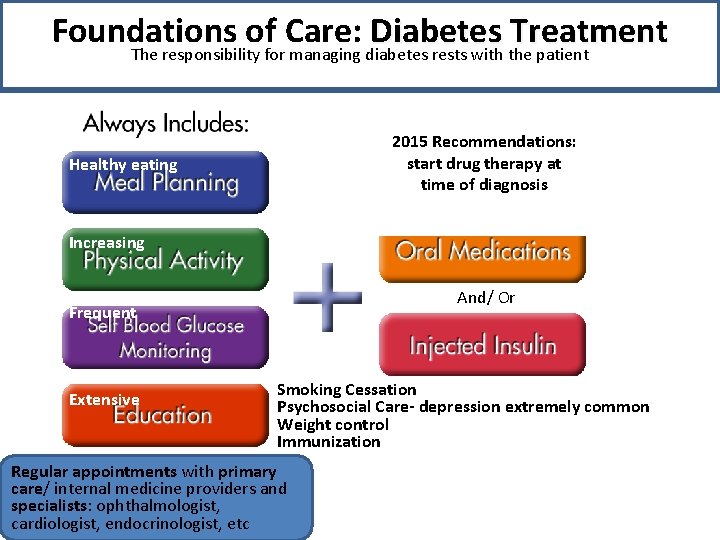
Foundations of Care: Diabetes Treatment The responsibility for managing diabetes rests with the patient 2015 Recommendations: start drug therapy at time of diagnosis Healthy eating Increasing And/ Or Frequent Extensive Smoking Cessation Psychosocial Care- depression extremely common Weight control Immunization Regular appointments with primary care/ internal medicine providers and specialists: ophthalmologist, cardiologist, endocrinologist, etc
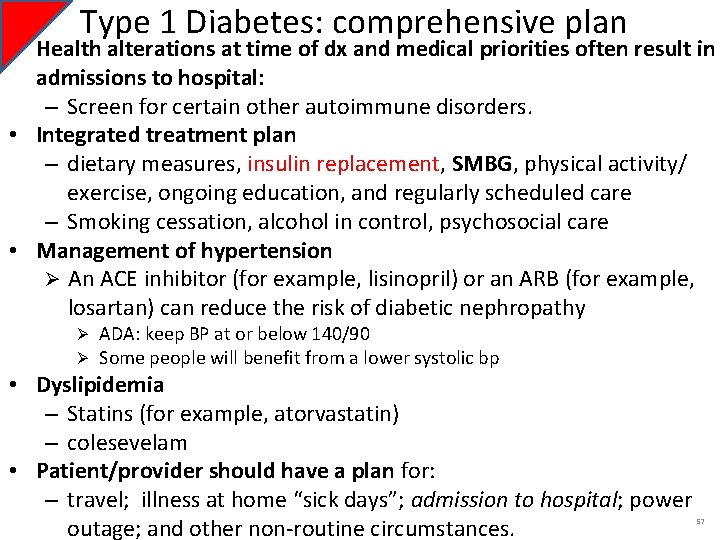
Type 1 Diabetes: comprehensive plan • Health alterations at time of dx and medical priorities often result in admissions to hospital: – Screen for certain other autoimmune disorders. • Integrated treatment plan – dietary measures, insulin replacement, SMBG, physical activity/ exercise, ongoing education, and regularly scheduled care – Smoking cessation, alcohol in control, psychosocial care • Management of hypertension Ø An ACE inhibitor (for example, lisinopril) or an ARB (for example, losartan) can reduce the risk of diabetic nephropathy Ø Ø ADA: keep BP at or below 140/90 Some people will benefit from a lower systolic bp • Dyslipidemia – Statins (for example, atorvastatin) – colesevelam • Patient/provider should have a plan for: – travel; illness at home “sick days”; admission to hospital; power outage; and other non-routine circumstances. 57
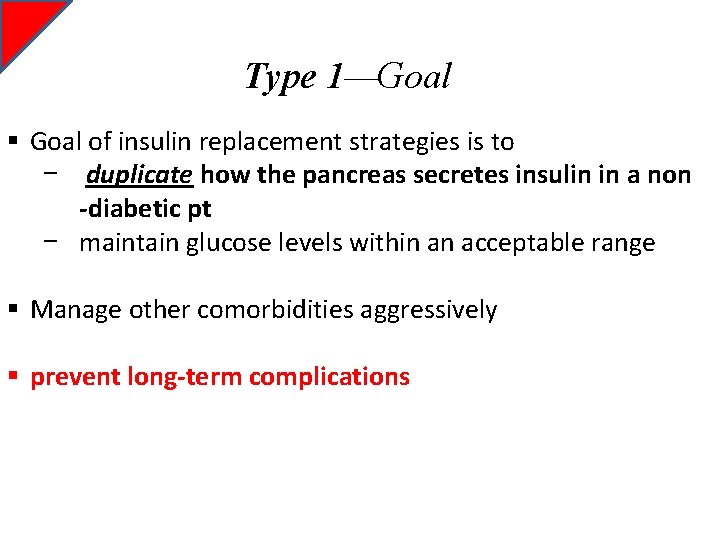
Type 1—Goal § Goal of insulin replacement strategies is to − duplicate how the pancreas secretes insulin in a non -diabetic pt − maintain glucose levels within an acceptable range § Manage other comorbidities aggressively § prevent long-term complications
Type 2 Diabetes: comprehensive plan • Priorities of care at time of dx vary. • All require integrated treatment plan – dietary measures, physical activity, ongoing education , regularly scheduled care, oral and/or injectables if needed – Smoking cessation, alcohol in control, psychosocial care, weight management • Patient should be screened and treated for: – Hypertension, dyslipidemias (HDL, LDL, triglycerides) – nephropathy, retinopathy, neuropathy • Manage other comorbidities aggressively • Patient/ provider should have a plan for travel; illness at home “sick days”; admission to hospital; power outage; and other non -routine circumstances. § Goal is to maintain glucose levels within an acceptable range using diet, blood glucose monitoring, exercise, and step-wise increases in oral antidiabetic agents or injectables including insulin if needed § prevent long-term complications 59
Type 2—Strategy and Goal Step-wise advances in therapy until glycemic control is attained: p. 672 Step 1: Treatment is started with lifestyle measures (modified diet, physical activity) PLUS drug therapy. Metformin, if not contraindicated and if tolerated, is the preferred initial pharmacological agent for type 2 diabetes. In patients with newly diagnosed type 2 diabetes and markedly symptomatic and/or elevated blood glucose levels or A 1 C, consider initiating insulin therapy (with or without additional agents). Adding agents is more effective than switching agents. Step 2. Continue lifestyle changes plus metformin, and add a second drug: either an antidiabetic agent or basal insulin. Step 3. Continue lifestyle changes plus metformin, and progress to a three drug regimen. switch from basal insulin or a sulfonylurea to intensive insulin therapy. Step 4. If three-drug combination therapy (that includes basal insulin) fails to achieve treatment goals after 3 – months, proceed to a more complex insulin regimen usually in combination with one or more noninsulin medications. • prevent long-term complications
7 Drug Therapy: insulin replacement – must always be paired with monitoring – T 1 DM and some T 2 DM
Insulin: Therapeutic Uses Indications for insulin: • Principal – diabetes mellitus as insulin replacement therapy • Required by all type 1 and some type 2 patients • Some faster-acting insulins can be administered IV in emergency or intensive care settings (eg DKA) • Regular is usually the only insulin administered IV • NEVER give highly concentrated insulin intravenously • Hyperkalemia – can promote uptake of potassium. • Glucose and potassium enter the cell in response to insulin Potassium must be co-administered or carefully monitored • Gestational diabetes • Aids in the diagnosis of growth hormone (GH) deficiency
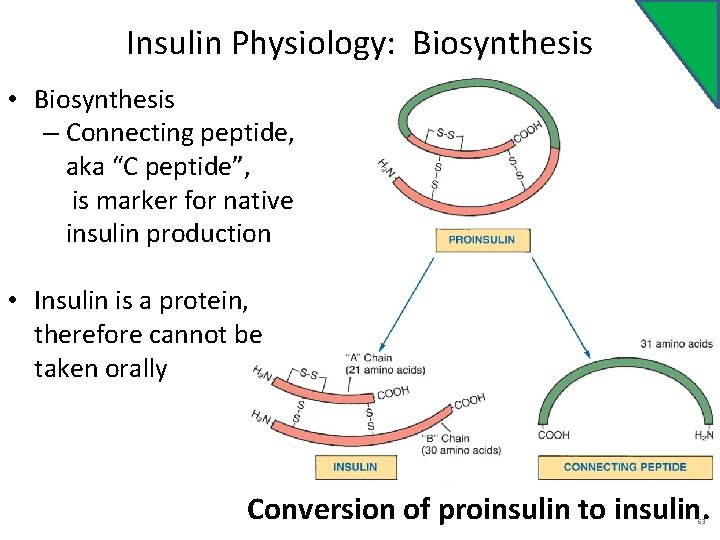
Insulin Physiology: Biosynthesis • Biosynthesis – Connecting peptide, aka “C peptide”, is marker for native insulin production • Insulin is a protein, therefore cannot be taken orally Conversion of proinsulin to insulin. 63
Insulin Physiology: Metabolic Actions • Metabolic actions of insulin are primarily anabolic – What does this mean? • Insulin stimulates cellular transport (uptake) of glucose, amino acids, nucleotides, and potassium • Insulin promotes synthesis of complex organic molecules – Glucose is converted into glycogen – Amino acids are assembled into proteins – Fatty acids are incorporated into triglycerides
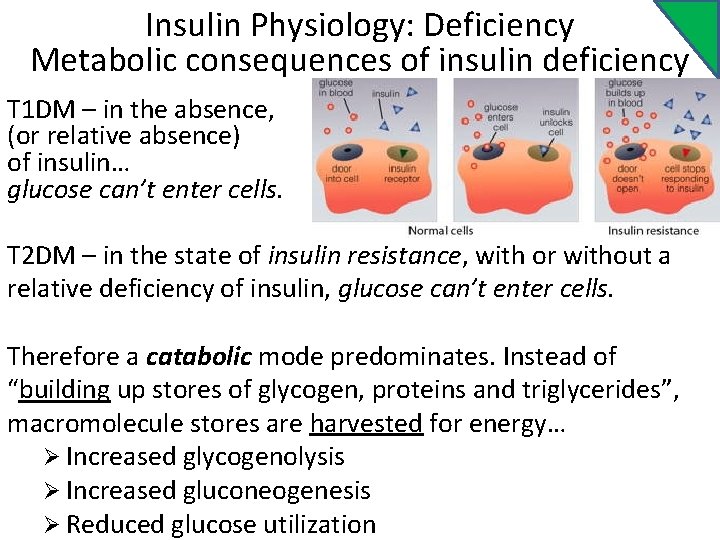
Insulin Physiology: Deficiency Metabolic consequences of insulin deficiency T 1 DM – in the absence, (or relative absence) of insulin… glucose can’t enter cells. T 2 DM – in the state of insulin resistance, with or without a relative deficiency of insulin, glucose can’t enter cells. Therefore a catabolic mode predominates. Instead of “building up stores of glycogen, proteins and triglycerides”, macromolecule stores are harvested for energy… Ø Increased glycogenolysis Ø Increased gluconeogenesis Ø Reduced glucose utilization
Insulin: Types of Insulin: Rate of onset, peak & duration • Short duration: Rapid acting – Insulin lispro [Humalog] – Insulin aspart [Novo. Log] – Insulin glulisine [Apidra] • Short duration: Slower acting – Regular insulin [Humulin R, Novolin R] Human insulin has less allergy or lipoatrophy. • Intermediate duration – Neutral protamine Hagedorn (NPH) insulin – Insulin detemir [Levemir] • DURATION of detemir is DOSE-DEPENDENT. • Duration of detemir can range from 12 -24 hours • Long duration – Insulin glargine 66
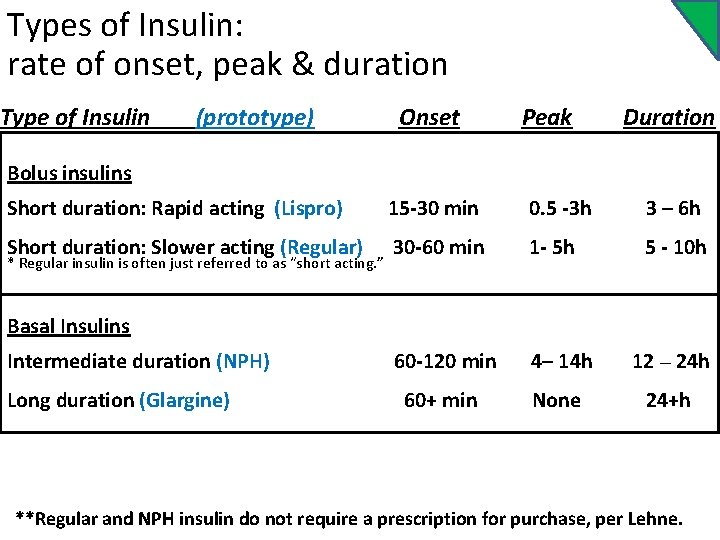
Types of Insulin: rate of onset, peak & duration Type of Insulin (prototype) Onset Peak Duration Bolus insulins Short duration: Rapid acting (Lispro) 15 -30 min 0. 5 -3 h 3 – 6 h Short duration: Slower acting (Regular) 30 -60 min 1 - 5 h 5 - 10 h 60 -120 min 4– 14 h 12 – 24 h 60+ min None 24+h * Regular insulin is often just referred to as “short acting. ” Basal Insulins Intermediate duration (NPH) Long duration (Glargine) **Regular and NPH insulin do not require a prescription for purchase, per Lehne.
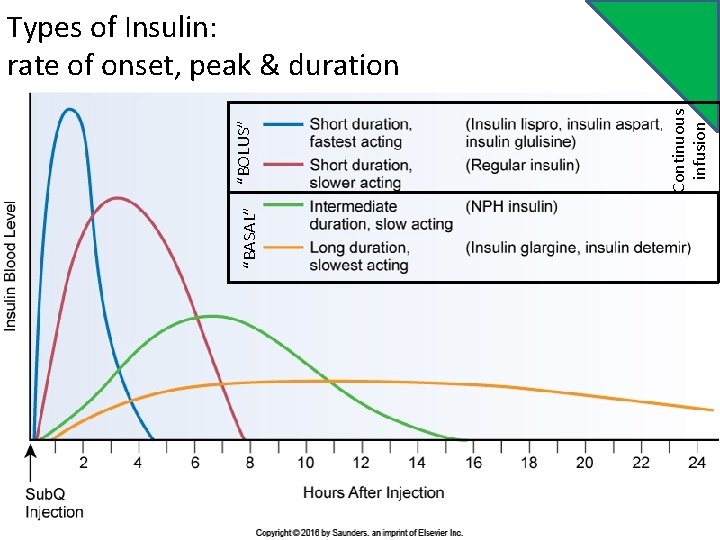
“BASAL” Continuous infusion “BOLUS” Types of Insulin: rate of onset, peak & duration
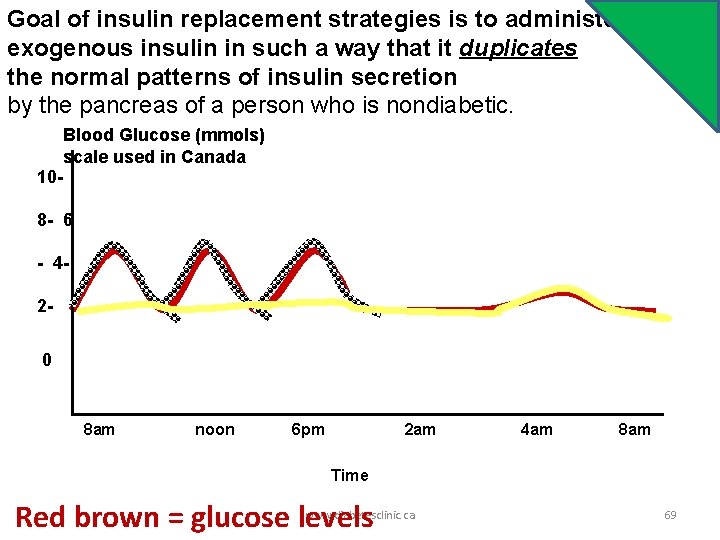
Goal of insulin replacement strategies is to administer exogenous insulin in such a way that it duplicates the normal patterns of insulin secretion by the pancreas of a person who is nondiabetic. Blood Glucose (mmols) scale used in Canada 108 - 6 - 420 8 am noon 6 pm 2 am 4 am 8 am Time Red brown = glucose levels www. diabetesclinic. ca 69
examples of insulin replacement strategies – must always be paired with SMBG – T 1 DM and some T 2 DM
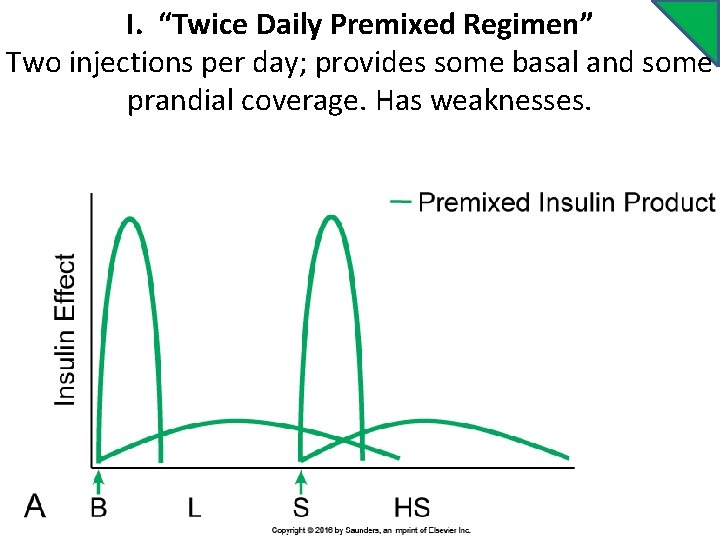
I. “Twice Daily Premixed Regimen” Two injections per day; provides some basal and some prandial coverage. Has weaknesses.
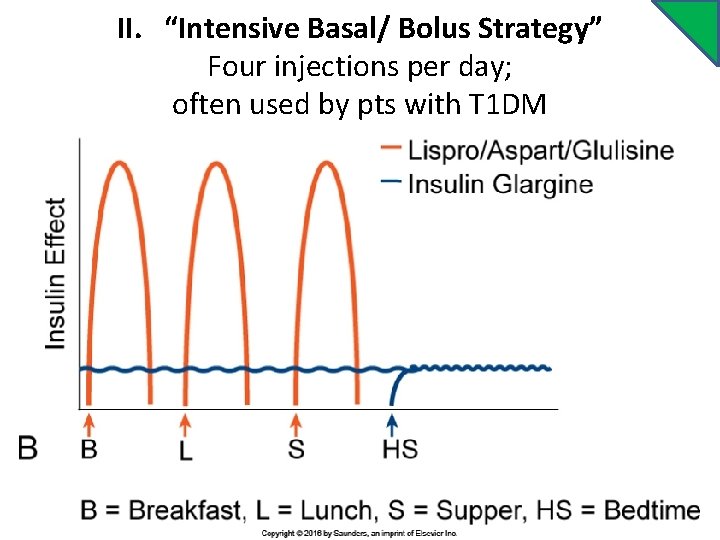
II. “Intensive Basal/ Bolus Strategy” Four injections per day; often used by pts with T 1 DM
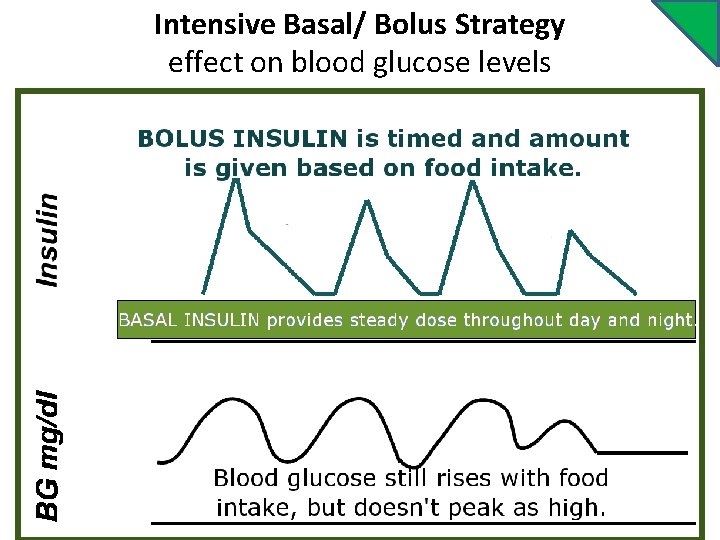
Intensive Basal/ Bolus Strategy effect on blood glucose levels
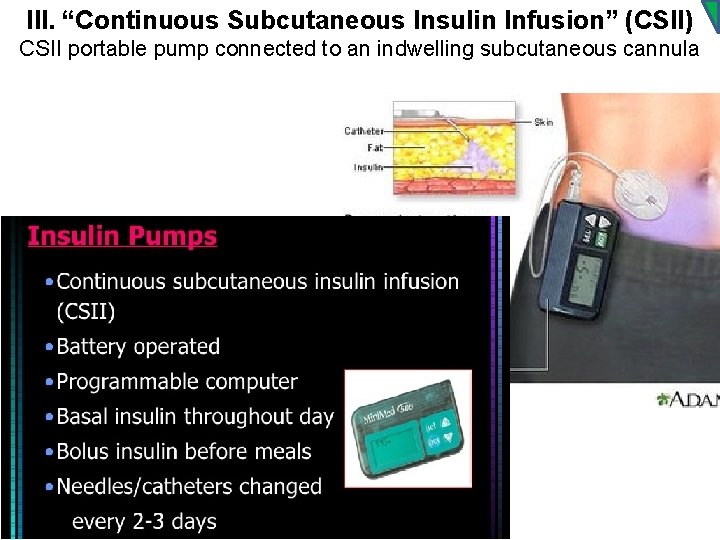
III. “Continuous Subcutaneous Insulin Infusion” (CSII) CSII portable pump connected to an indwelling subcutaneous cannula
Drug Therapy: types of insulin
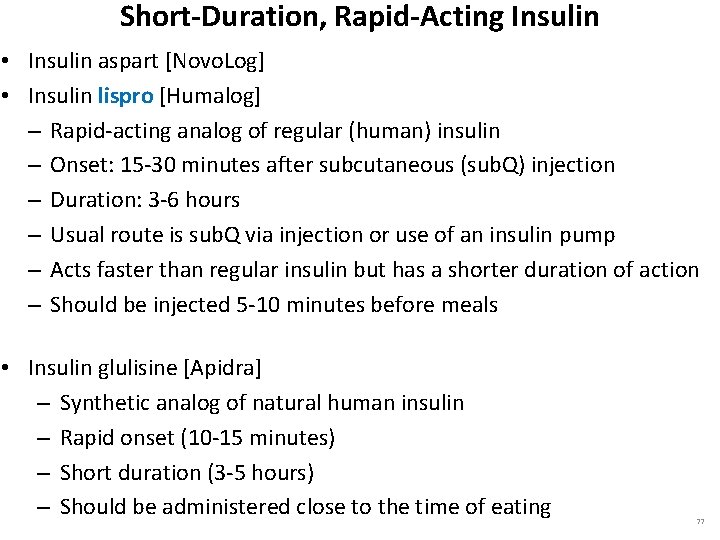
Short-Duration, Rapid-Acting Insulin • Insulin aspart [Novo. Log] • Insulin lispro [Humalog] – Rapid-acting analog of regular (human) insulin – Onset: 15 -30 minutes after subcutaneous (sub. Q) injection – Duration: 3 -6 hours – Usual route is sub. Q via injection or use of an insulin pump – Acts faster than regular insulin but has a shorter duration of action – Should be injected 5 -10 minutes before meals • Insulin glulisine [Apidra] – Synthetic analog of natural human insulin – Rapid onset (10 -15 minutes) – Short duration (3 -5 hours) – Should be administered close to the time of eating 77
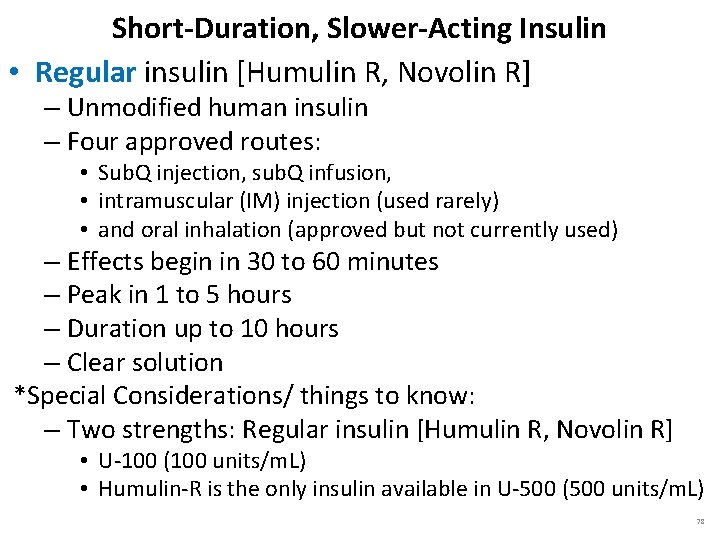
Short-Duration, Slower-Acting Insulin • Regular insulin [Humulin R, Novolin R] – Unmodified human insulin – Four approved routes: • Sub. Q injection, sub. Q infusion, • intramuscular (IM) injection (used rarely) • and oral inhalation (approved but not currently used) – Effects begin in 30 to 60 minutes – Peak in 1 to 5 hours – Duration up to 10 hours – Clear solution *Special Considerations/ things to know: – Two strengths: Regular insulin [Humulin R, Novolin R] • U-100 (100 units/m. L) • Humulin-R is the only insulin available in U-500 (500 units/m. L) 78
Intermediate-Duration Insulin • NPH insulin [Humulin N, Novolin N] – Drug is injected twice or three times daily to provide glycemic control between meals and during the night – NPH insulin is the only one suitable for mixing with shortacting insulins – Allergic reactions are possible – NPH insulins are cloudy suspensions that must be gently agitated before administration – NPH insulins are administered by sub. Q injection only – NPH, Neutral protamine Hagedorn. 79
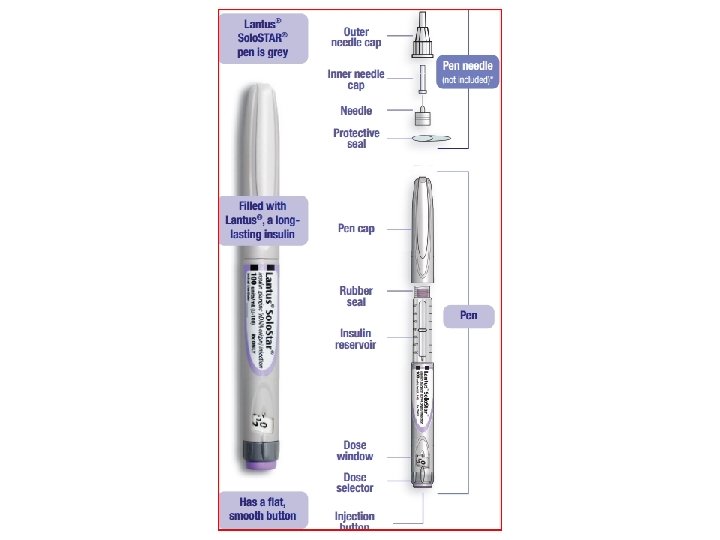
Long-Duration Insulin • Insulin glargine [Lantus] – Modified human insulin – Prolonged duration of action (up to 24 hours) – Once-daily sub. Q dosing to treat adults and children with type 1 diabetes and adults with type 2 diabetes – Clear solution 80
Long-Duration Insulin • Insulin detemir [Levemir] – Human insulin analog – Slow onset – dose-dependent duration of action • At 0. 2 units/kg, effects persist about 12 hours • At 0. 4 units/kf, effects persist about 24 hours • Used only for basal glycemic control – Clear, colorless solution – Dosing: Once or twice daily by sub. Q injection – Do not mix with other insulins – Must not be given IV 81
Additional clinical considerations - adverse effects - complications of insulin drug therapy Ø problem-solve case-by-case
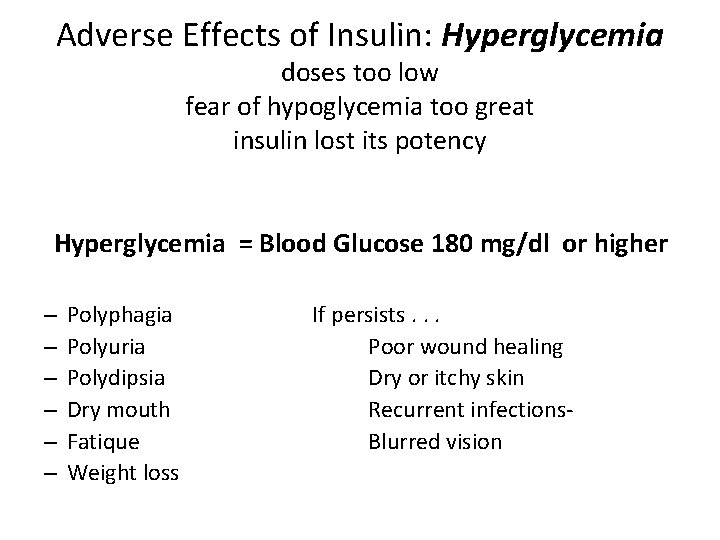
Adverse Effects of Insulin: Hyperglycemia doses too low fear of hypoglycemia too great insulin lost its potency Hyperglycemia = Blood Glucose 180 mg/dl or higher – – – Polyphagia Polyuria Polydipsia Dry mouth Fatique Weight loss If persists. . . Poor wound healing Dry or itchy skin Recurrent infections. Blurred vision
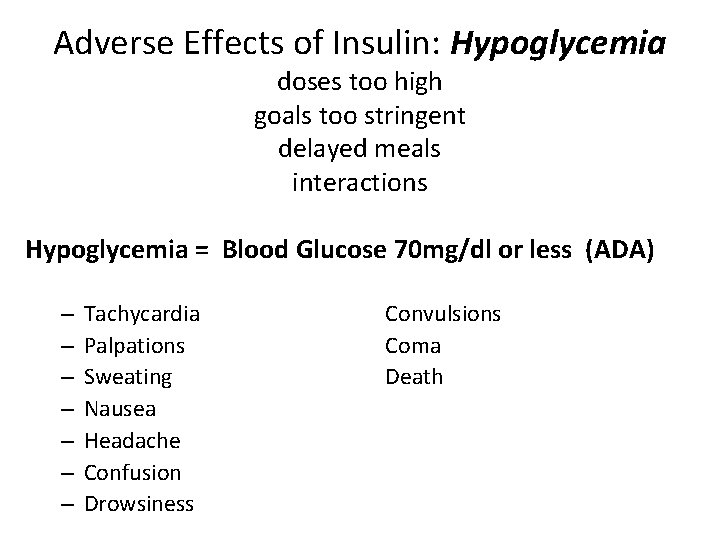
Adverse Effects of Insulin: Hypoglycemia doses too high goals too stringent delayed meals interactions Hypoglycemia = Blood Glucose 70 mg/dl or less (ADA) – – – – Tachycardia Palpations Sweating Nausea Headache Confusion Drowsiness Convulsions Coma Death
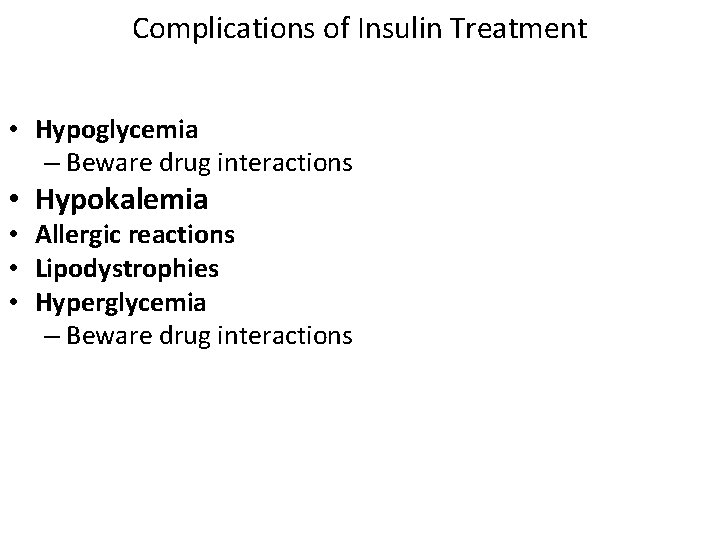
Complications of Insulin Treatment • Hypoglycemia – Beware drug interactions • Hypokalemia • Allergic reactions • Lipodystrophies • Hyperglycemia – Beware drug interactions
More on insulin
Insulin: Just the Facts, please • • • Sources of insulin Appearance Concentration Mixing insulins in the same syringe Delivery Methods & Administration Storage
Sources of Insulin • Sources of insulin – Recombinant DNA technology – Derived from common bacteria (e-coli) or yeast cells – Previously derived from beef and pork pancreas, but high level of allergic reactions
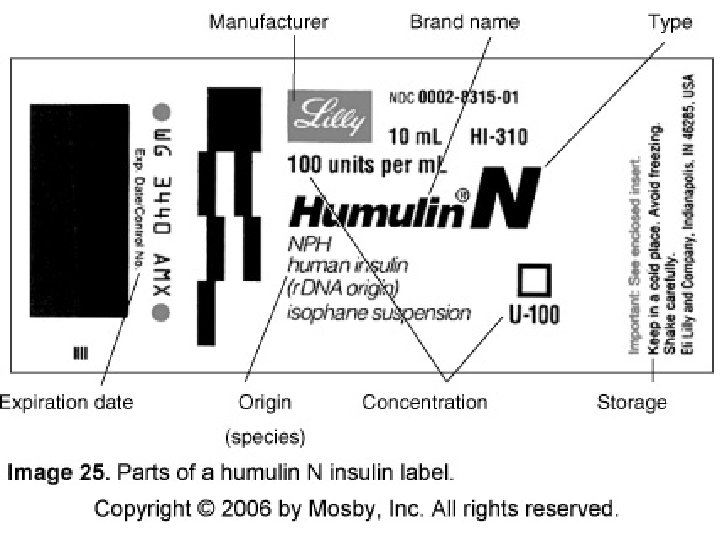
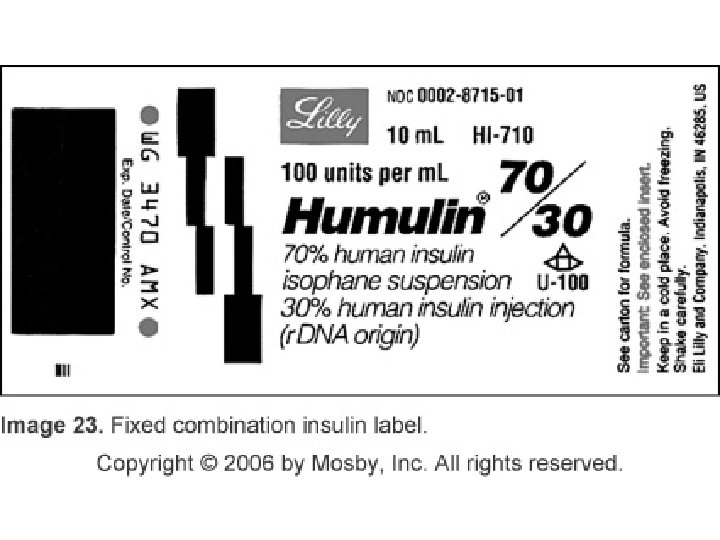
• Appearance- Insulin – ALL insulins (made in the United States) are formulated as clear, colorless solutions (except NPH) – NPH is a cloudy suspension that should be gently agitated before use: • equally distribute all components • don’t make frothy bubbles – Patients should inspect their insulin before using it and discard the vial if the insulin looks abnormal. See table 57 -8 • Concentration – 100 units/m. L (U-100) ; standard concentration – 500 units/m. L (U-500)- only for select pts with needs for high doses of insulin; high concentration vial should never be stored where it can get mixed up with any other insulin; only the Humulin- R brand of regular insulin; NEVER IV • Mixing insulins in the same syringe – ONLY NPH can be mixed with a shorter-acting insulin – Short-acting insulin drawn first
Insulin Delivery Methods & Administration • Subcutaneous injection – Syringe and needle – Pen injectors – Jet injectors • Inhalation – Exubera – now off market • Subcutaneous infusion (continuous delivery) – Portable insulin pumps – Implantable insulin pumps – Insulin pod • Intravenous infusion- ONLY PER HOSPITAL PROTOCOL 90
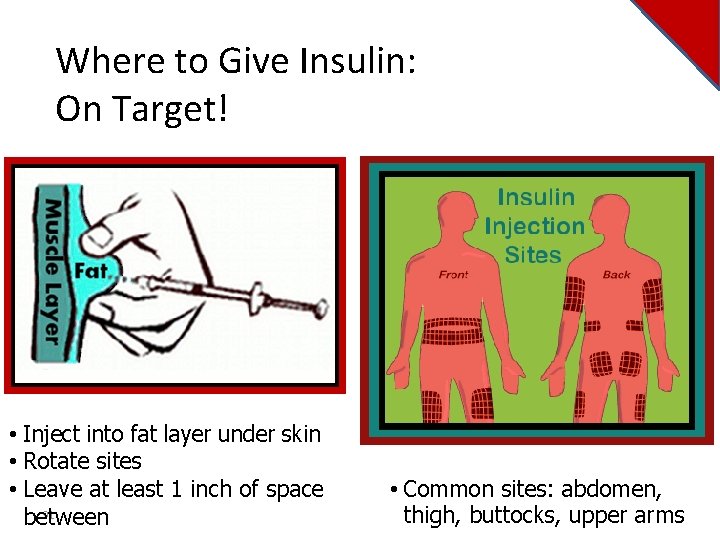
Where to Give Insulin: On Target! • Inject into fat layer under skin • Rotate sites • Leave at least 1 inch of space 91 between • Common sites: abdomen, thigh, buttocks, upper arms
Storing Insulin • Always review product storage instructions; check expiration date – Unopened vials or pens should be stored under refrigeration until needed. Properly stored insulin should retain potency through expiration date on the vial. Do NOT freeze. – Read package insert for safe temperature range; place thermometer in fridge near insulin. • After opening, the vial in current use can be kept at room temperature (less than 86 degrees) for up to one month without significant loss of activity. Keep out of direct sunlight and away from extreme heat. Date the vial when opened. • Mixtures of insulin, and pre-filled syringes containing mixtures of insulin- read package insert, or Lehne p 681 92
Examples of Storage Information • Mixtures of insulin in vials are stable for 1 month at room temperature and 3 months under refrigeration • Mixtures in prefilled syringes should be stored in refrigerator for up to 1 week and should be stored vertically – needle pointing up

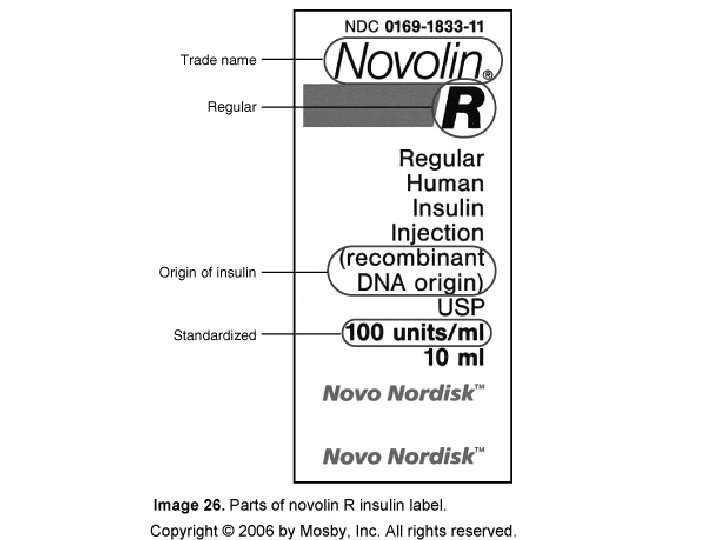
Let’s talk labels. .

Let’s talk syringes. .
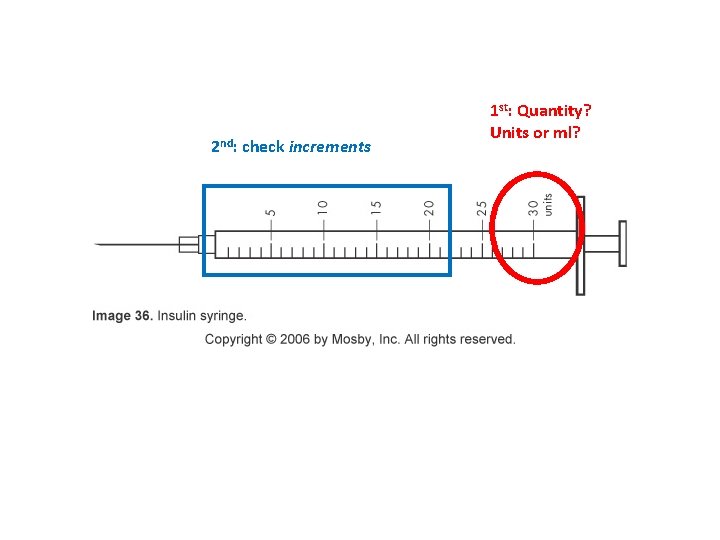
2 nd: check increments 1 st: Quantity? Units or ml?
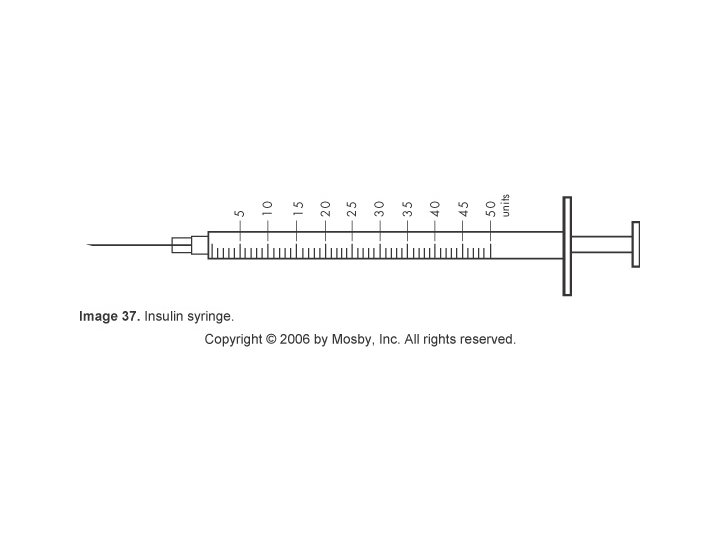
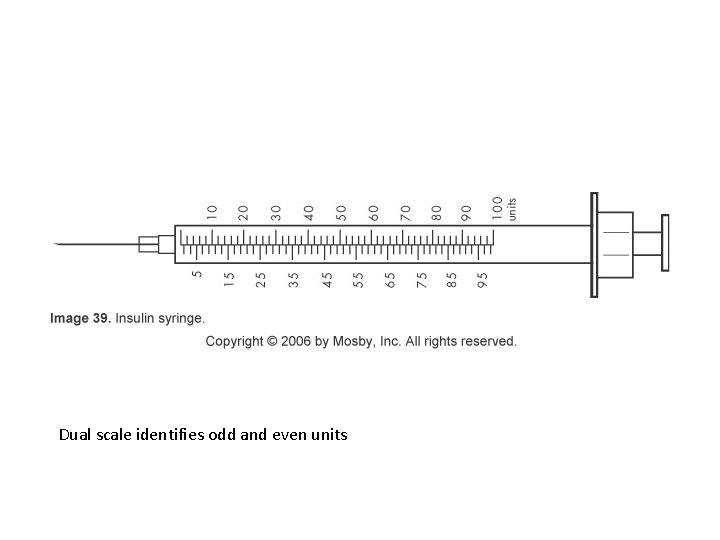
Dual scale identifies odd and even units
Let’s talk concentrations. .
U-500 What is it? When is it used? What special considerations must be followed? What syringe is used for U-500 concentration insulin?
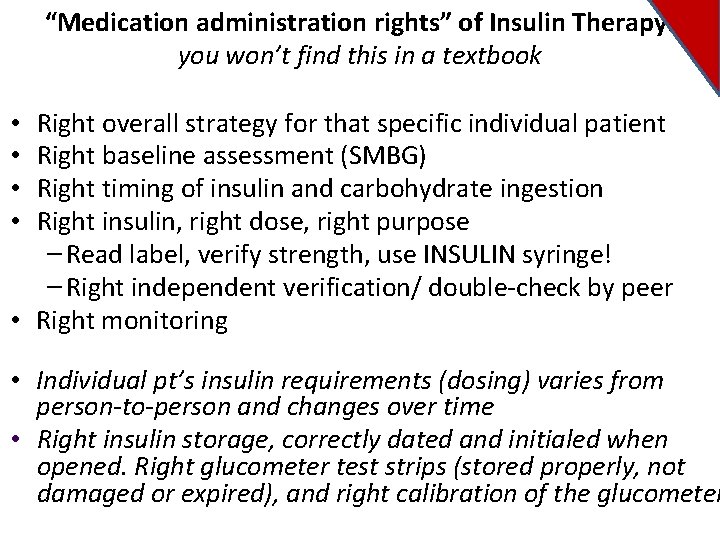
“Medication administration rights” of Insulin Therapy: you won’t find this in a textbook Right overall strategy for that specific individual patient Right baseline assessment (SMBG) Right timing of insulin and carbohydrate ingestion Right insulin, right dose, right purpose −Read label, verify strength, use INSULIN syringe! −Right independent verification/ double-check by peer • Right monitoring • • • Individual pt’s insulin requirements (dosing) varies from person-to-person and changes over time • Right insulin storage, correctly dated and initialed when opened. Right glucometer test strips (stored properly, not damaged or expired), and right calibration of the glucometer
8 Drug Therapy Oral antidiabetic agents and non-insulin injectables
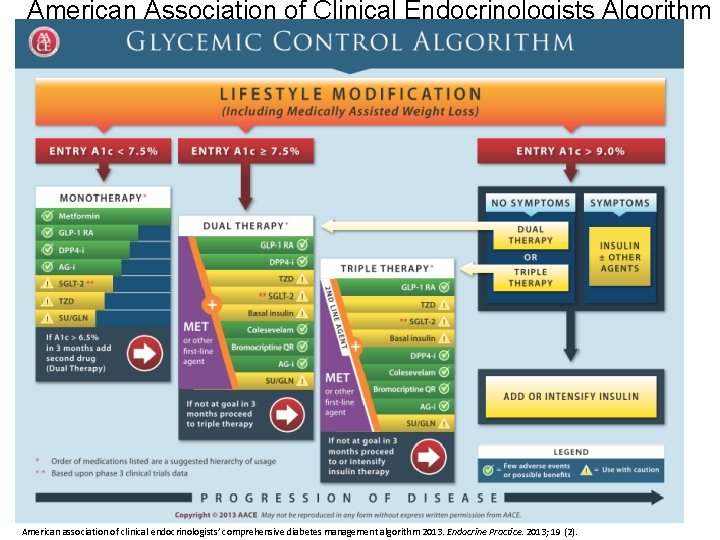
American Association of Clinical Endocrinologists Algorithm 107 American association of clinical endocrinologists’ comprehensive diabetes management algorithm 2013. Endocrine Practice. 2013; 19 (2).
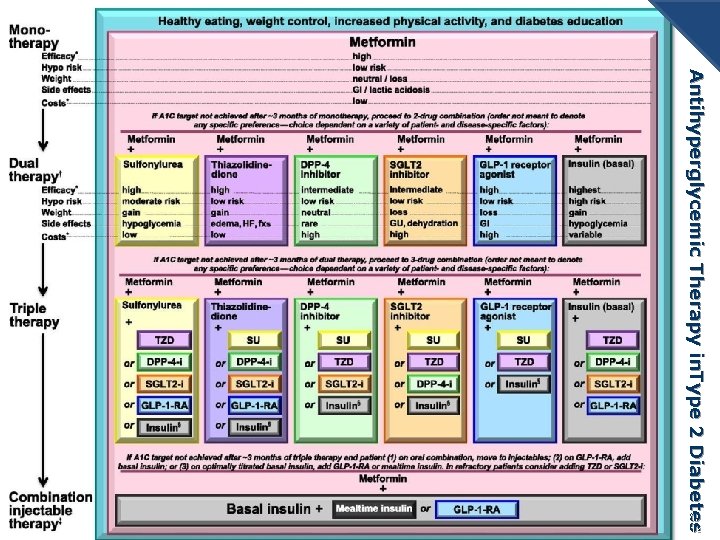
Antihyperglycemic Therapy in. Type 2 Diabetes ADA. 7. Approaches to Glycemic Treatment. Diabetes Care 2015; 38(suppl 1): S 43. Figure 7. 1; adapted with permission from Inzucchi SE, et al. Diabetes Care, 2015; 38: 140 -149
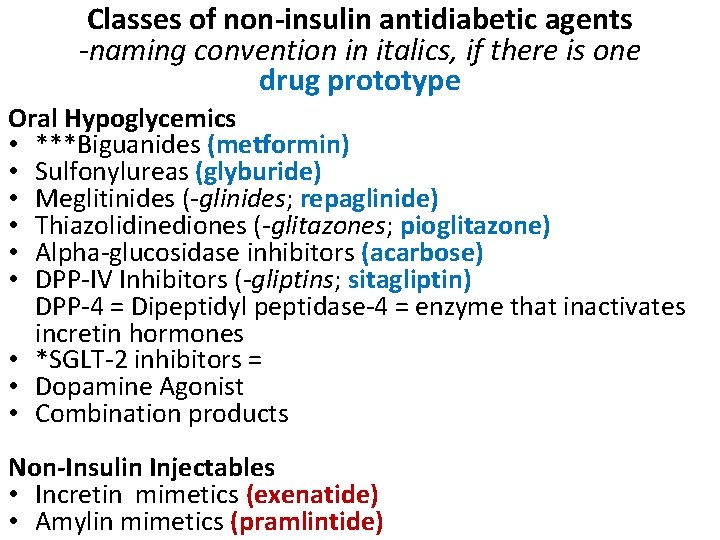
Classes of non-insulin antidiabetic agents -naming convention in italics, if there is one drug prototype Oral Hypoglycemics • ***Biguanides (metformin) • Sulfonylureas (glyburide) • Meglitinides (-glinides; repaglinide) • Thiazolidinediones (-glitazones; pioglitazone) • Alpha-glucosidase inhibitors (acarbose) • DPP-IV Inhibitors (-gliptins; sitagliptin) DPP-4 = Dipeptidyl peptidase-4 = enzyme that inactivates incretin hormones • *SGLT-2 inhibitors = • Dopamine Agonist • Combination products Non-Insulin Injectables • Incretin mimetics (exenatide) • Amylin mimetics (pramlintide)
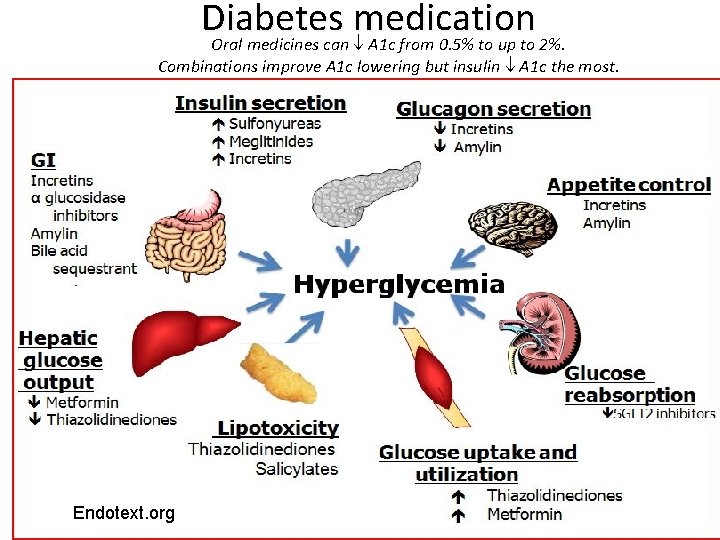
Diabetes medication Oral medicines can A 1 c from 0. 5% to up to 2%. Combinations improve A 1 c lowering but insulin A 1 c the most. Endotext. org

Table 57 -10
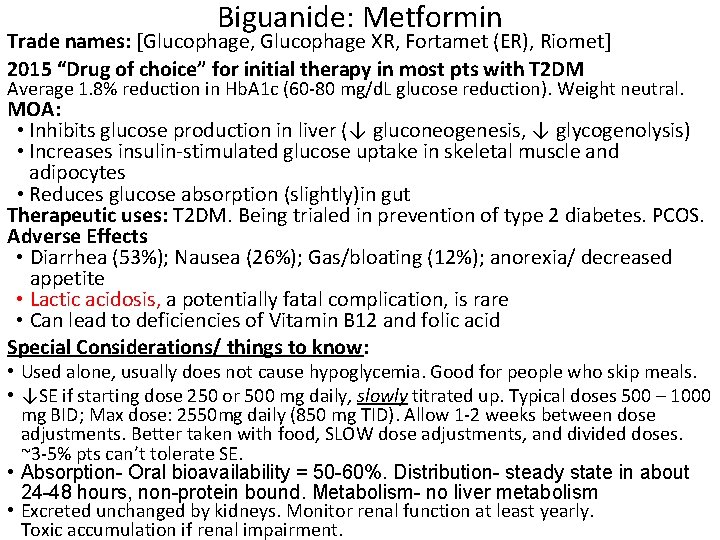
Biguanide: Metformin Trade names: Glucophage, Glucophage XR, Fortamet (ER), Riomet 2015 “Drug of choice” for initial therapy in most pts with T 2 DM Average 1. 8% reduction in Hb. A 1 c (60 -80 mg/d. L glucose reduction). Weight neutral. MOA: • Inhibits glucose production in liver (↓ gluconeogenesis, ↓ glycogenolysis) • Increases insulin-stimulated glucose uptake in skeletal muscle and adipocytes • Reduces glucose absorption (slightly)in gut Therapeutic uses: T 2 DM. Being trialed in prevention of type 2 diabetes. PCOS. Adverse Effects • Diarrhea (53%); Nausea (26%); Gas/bloating (12%); anorexia/ decreased appetite • Lactic acidosis, a potentially fatal complication, is rare • Can lead to deficiencies of Vitamin B 12 and folic acid Special Considerations/ things to know: • Used alone, usually does not cause hypoglycemia. Good for people who skip meals. • ↓SE if starting dose 250 or 500 mg daily, slowly titrated up. Typical doses 500 – 1000 mg BID; Max dose: 2550 mg daily (850 mg TID). Allow 1 -2 weeks between dose adjustments. Better taken with food, SLOW dose adjustments, and divided doses. ~3 -5% pts can’t tolerate SE. • Absorption- Oral bioavailability = 50 -60%. Distribution- steady state in about 24 -48 hours, non-protein bound. Metabolism- no liver metabolism • Excreted unchanged by kidneys. Monitor renal function at least yearly. Toxic accumulation if renal impairment.
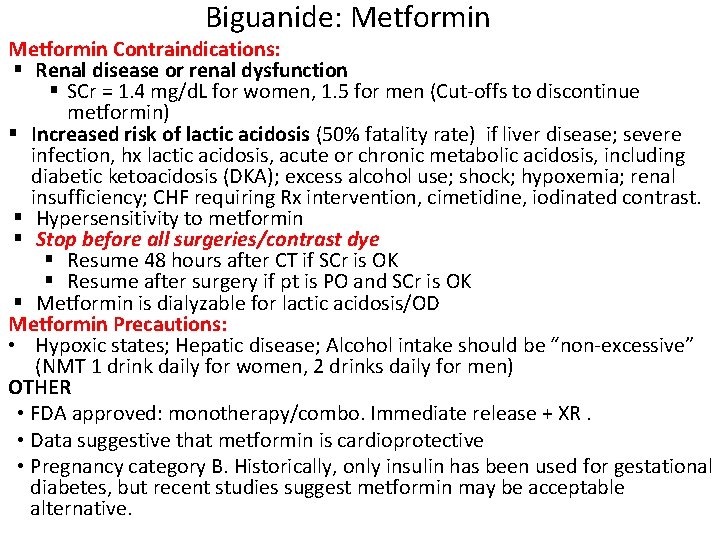
Biguanide: Metformin Contraindications: § Renal disease or renal dysfunction § SCr = 1. 4 mg/d. L for women, 1. 5 for men (Cut-offs to discontinue metformin) § Increased risk of lactic acidosis (50% fatality rate) if liver disease; severe infection, hx lactic acidosis, acute or chronic metabolic acidosis, including diabetic ketoacidosis (DKA); excess alcohol use; shock; hypoxemia; renal insufficiency; CHF requiring Rx intervention, cimetidine, iodinated contrast. § Hypersensitivity to metformin § Stop before all surgeries/contrast dye § Resume 48 hours after CT if SCr is OK § Resume after surgery if pt is PO and SCr is OK § Metformin is dialyzable for lactic acidosis/OD Metformin Precautions: • Hypoxic states; Hepatic disease; Alcohol intake should be “non-excessive” (NMT 1 drink daily for women, 2 drinks daily for men) OTHER • FDA approved: monotherapy/combo. Immediate release + XR. • Data suggestive that metformin is cardioprotective • Pregnancy category B. Historically, only insulin has been used for gestational diabetes, but recent studies suggest metformin may be acceptable alternative.
Sulfonylureas (SFU’s) • (First-generation: First oral antidiabetics available. Cardiovascular Warning. ) Second-generation agents: significant drug-drug intx are much less common – Glipizide (Glucotrol or Glucotrol XL) – Glyburide ( Diabeta, Micronase)- Pregnancy Category B – Glimepiride (Amaryl)- has dft MOA, may not impair CV ischemic preconditioning post MI (like glipizide and glyburide) MOA: – Stimulate insulin release from pancreas – With prolonged use, SFU may enhance target cell sensitivity to insulin Therapeutic uses: only useful for T 2 DM Adverse effects: Weight gain. Hypoglycemia (esp with alcohol or other predisposing factors. ) Hypoglycemia incidence: glimepiride<glipizide<glyburide
Sulfonylureas (SFU’s) Second-generation agents, continued: PK: Absorption: 100% § Glipizide: 30 minutes onset, peak 2 -3 hours § Glipizide XL: 2 -3 hours onset, peak 6 -12 hours § Glyburide: 1 hour onset, peak 4 hours § Glimepiride: 2 -3 hours peak, 24 hour duration § Distribution: 97 -99% protein bound § Metabolism: extensively liver § Excretion: renal and feces as metabolites, less than 10% unchanged (parent) drug. Extensive metabolism in the liver (avoided post-transplant). If renal dysfunction, then no glyburide. Special Considerations/ things to know: Hemoglobin A 1 c lowering 1 -2%. Numerous precautions. drug intx. Possible risk of sudden cardiac death (controversial. ). Pregnancy: Avoid. Teratogenic in animals; risk of severe ↓BG nearterm/birth. Do not use in lactation: excretion in breastmilk poses risk of ↓BG to infant. (Glyburide Pregnancy Category B). Contraindications: hypersensitivity
Meglitinides (Glinides) • Repaglinide (Prandin) MOA: – Stimulate insulin release from pancreas – same MOA as SFU’S, but dft PK: glinides are more short-acting and pt must eat within 30 minutes of taking a dose Therapeutic uses: only useful for TT 2 DM Adverse effect: hypoglycemia; liver dysfunction increases risk of ↓BG PK: ADME blood levels peak within 1 hour; return to baseline ~4 hours later. T½ = 1 hour. Highly protein bound. Hepatic metabolism followed by biliary excretion. Special Considerations/ things to know: • Generally well tolerated • Drug interactions: gemfibrozil [Lopid] incresses hypoglycemia. • Pts who do not respond to SFU’S will not trespond to glinides either
Thiazolidinediones TZD’s (Glitazones) • Rosiglitazone [Avandia]: Restricted use (Are restrictions lifted? ) Stigma r/t 2010 data re ↑MI; REMS = prescriber training; 2013 data = no increased risk • Pioglitazone (Actos): Generally well tolerated MOA: • reduces insulin resistance in skeletal muscle by activating increased glucose and lipid metabolism • decreases endogenous glucose production Therapeutic uses: T 2 DM; Also as add-on to metformin. Note: any med in T 2 DM is ALWAYS an adjunct to diet and exercise. Adverse Effects: hypoglycemia, upper respiratory tract infection, URI, headache, sinusitis, and myalgia; Heart Failure r/t renal retention of fluid, bladder cancer. Precautions: Concurrent use of insulin (possible increased risk of cardiovascular events). Concurrent use of other hypoglycemic agents PK: Hepatic metabolism by CYP 2 C 8 Special Considerations/ things to know: Drug intx with other drugs metab’d by CYP 2 C 8; and drugs that induce or inhibit CYP 2 C 8. *Black box warning*. “Troubled past, uncertain future. ”
Alpha-Glucosidase Inhibitors Acarbose (Precose) * MOA: – delay the intestinal absorption of carbohydrates through inhibition of the brush-border enzymes that breakdown polysaccharides to glucose – ↓ rise in blood glucose after meals – Does not depend on the presence of insulin Therapeutic Use: T 2 DM Adverse Effects − Frequently causes flatulence, cramps, abdominal distention, borborygmus, and diarrhea. Decreased iron absorption. PK: minimal absorption; Special Considerations/ things to know: – Monotherapy or combination. Increased risk of ↓BG if combined with SFU or insulin. Longterm high dose tx may cause liver dysfunction; therefore LFT’S Q 3 mos x 1 year, then prn. Not used much in US per Lehne.
DPP-4 Inhibitors (Gliptins) • • Sitagliptin (Januvia) Linagliptin (Tradjendta) Saxagliptine (Onglyza) Alogliptine (Nesina) *DPP-4 = Dipeptidyl peptidase-4= enzyme that inactivates incretin hormones Therefore, DPP-4 Inhibitors prevent the breakdown of incretins MOA - Inhibits the breakdown of incretin hormones, therefore enhancing the following effects induced by incretins: - Stimulate glucose-dependent release of insulin from pancreas - Decreases hepatic glucose production Therapeutic Use: T 2 DM Adverse effects: URI, headache. Rare pancreatitis. Serious hypersensitivity similar to Stevens-Johnson PK: rapid, nearly complete absorption; Peak 1 -4 hours after dosing; excreted unchanged in urine. T 1/2 = 12 hours. Special Considerations/ things to know: When added on to metformin tx, A 1 c deceases ~0. 5%. No known drug intx or contraindications, including pregnancy. Take with or without food. Reduce dose if decreased renal clearance.
SGLT 2 Inhibitors • Sodium-glucose co-transporter 2 (SGLT-2) inhibitors • Canagliflozin (Invokana) • MOA: blocks reabsorption of filtered glucose by the renal tubules, thereby increasing the amount of glucose excreted in the urine (glucosuria) • Adverse effects: Genital fungal infections in female patients, urinary tract infections, increased urination, dehydration • Special Considerations/ things to know:
Non-Insulin Injectable Drugs
“GLP-1 receptor agonists” (aka incretin mimetics) (non-insulin injectable) Glucagon-like peptide-1 receptor agonists (GLP-1 receptor agonists) Exenatide (Byetta = twice daily) (Budureon ER = once weekly, inj site rx) MOA: structurally similar to incretin hormones (thereby activating incretin receptors) but are resistant to metabolism by DPP-4. Incretin effects: – slow gastric emptying, thereby causing ↑satiety – stimulates glucose-dependent insulin release – Inhibit post-prandial release of glucagon – Suppress appetite and can induce weight loss – and increases insulin biosynthesis? Suppresses hepatic production of glucose? true? Therapeutic uses: T 2 DM Adverse effects – Nausea is common; vomiting, diarrhea. Hypoglycemia, esp if given with SFU – Risk of acute pancreatitis. Risk of renal failure, esp if dehydrated. – Risk of serious hypersensitivity rxs, angioedema, anaphylaxis. PK: Byetta levels peak 2 hrs after subcut. T 1/2 = 2. 4 hrs. Excreted unchanged in the urine. Do not use with severe renal impairment. Special Considerations/ things to know: four GLP-1 on market, more in dev’t Must take 0 – 60 minutes BEFORE a meal, morning and evening. Pregnancy Category C.
Amylin Mimetics (non-insulin injectable) • Pramlintide (Symlin) – first drug in this new class • * amylin is a peptide hormone produced in the pancreas and coreleased with insulin • MOA: – slows gastric emptying, thereby causing ↑satiety; – Increases release of insulin, – Decrease glucagon secretion, – Increase satiety • Therapeutic uses: supplement to mealtime insulin in T 1 DM or T 2 DM • Adverse effects − Severe hypoglycemia is a concern, and nausea is common, early satiety, injection site reactions • PK: • Special Considerations/ things to know:
9 Diabetic emergencies
Diabetic Emergencies • Hyperglycemic emergencies – DKA = Diabetic Ketoacidosis – HHS or HHNS = Hyperglycemic Hyperosmolar (Nonketotic) State – Advanced state = coma • Hypoglycemic emergency Insulin overdose or “diabetic shock” can quickly lead to brain injury or death − Advanced state = coma
Diabetic Emergency: hyperglycemia • • • Severe manifestation of insulin deficiency Symptoms evolve quickly – period of hours or days Most common complication in pediatric patients and leading cause of death Diabetic ketoacidosis (DKA) and the hyperosmolar hyperglycemic state (HHS) are the two most serious acute metabolic complications of diabetes. DKA is characterized by the triad of uncontrolled hyperglycemia, metabolic acidosis, and increased total body ketone concentration. HHS/HHNS is characterized by severe hyperglycemia, hyperosmolality, and dehydration in the absence of significant ketoacidosis. These metabolic derangements result from the combination of absolute or relative insulin deficiency and an increase in counter-regulatory hormones (glucagon, catecholamines, cortisol, and growth hormone). Most patients with DKA have autoimmune type 1 diabetes; however, patients with type 2 diabetes are also at risk during the catabolic stress of acute illness such as trauma, surgery, or infections. Kitabchi, et al (2009). Hyperglycemic Crises in Adult Patients With Diabetes. American Diabetes Association. USA. http: //www. ncbi. nlm. nih. gov/pmc/articles/PMC 2699725/pdf/zdc 1335. pdf
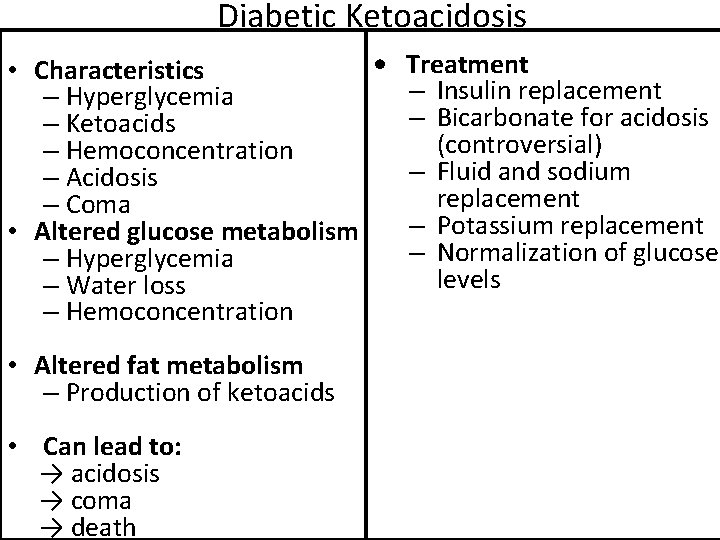
Diabetic Ketoacidosis • Treatment • Characteristics – Insulin replacement – Hyperglycemia – Bicarbonate for acidosis – Ketoacids (controversial) – Hemoconcentration – Fluid and sodium – Acidosis replacement – Coma – Potassium replacement • Altered glucose metabolism – Normalization of glucose – Hyperglycemia levels – Water loss – Hemoconcentration • Altered fat metabolism – Production of ketoacids • Can lead to: → acidosis → coma → death
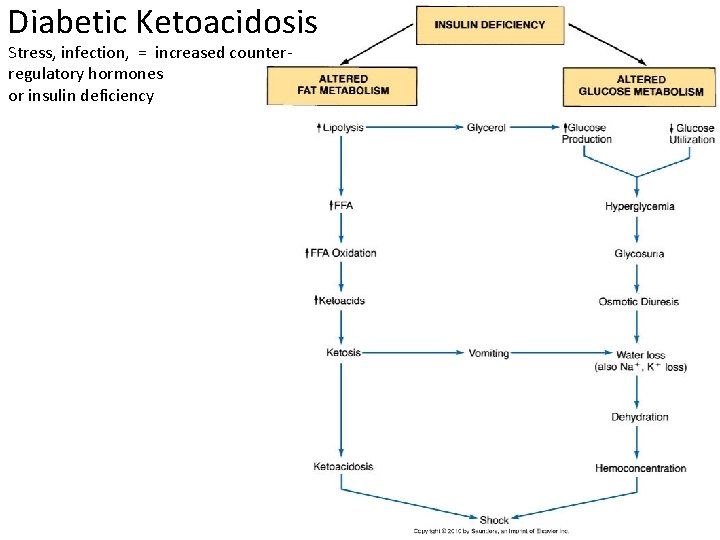
Diabetic Ketoacidosis Stress, infection, = increased counterregulatory hormones or insulin deficiency
Diabetic Emergency: Severe hypoglycemia • Insulin overdose may rapidly lead to unconscious patient. Take immediate efforts to raise blood glucose levels. • Preferred treatment is IV glucose – Immediately raises blood glucose level • Glucagon can be used if IV glucose is not available – Delayed elevation of blood glucose
10 Resources and appendix
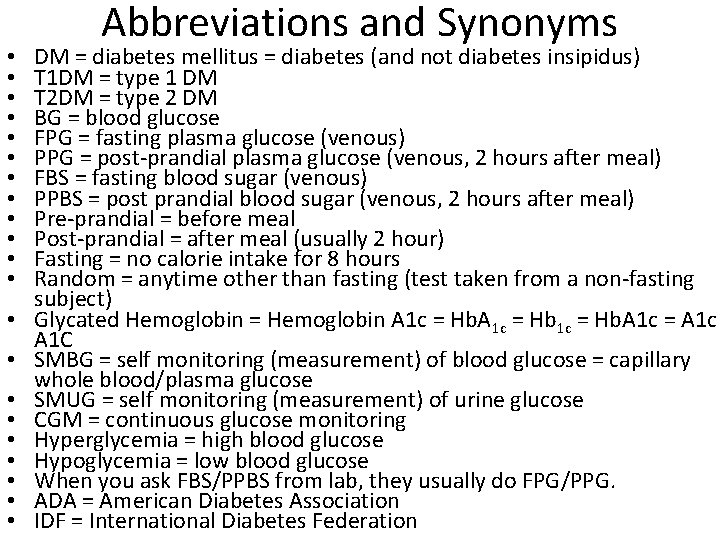
• • • • • • Abbreviations and Synonyms DM = diabetes mellitus = diabetes (and not diabetes insipidus) T 1 DM = type 1 DM T 2 DM = type 2 DM BG = blood glucose FPG = fasting plasma glucose (venous) PPG = post-prandial plasma glucose (venous, 2 hours after meal) FBS = fasting blood sugar (venous) PPBS = post prandial blood sugar (venous, 2 hours after meal) Pre-prandial = before meal Post-prandial = after meal (usually 2 hour) Fasting = no calorie intake for 8 hours Random = anytime other than fasting (test taken from a non-fasting subject) Glycated Hemoglobin = Hemoglobin A 1 c = Hb. A 1 c = A 1 c A 1 C SMBG = self monitoring (measurement) of blood glucose = capillary whole blood/plasma glucose SMUG = self monitoring (measurement) of urine glucose CGM = continuous glucose monitoring Hyperglycemia = high blood glucose Hypoglycemia = low blood glucose When you ask FBS/PPBS from lab, they usually do FPG/PPG. ADA = American Diabetes Association IDF = International Diabetes Federation
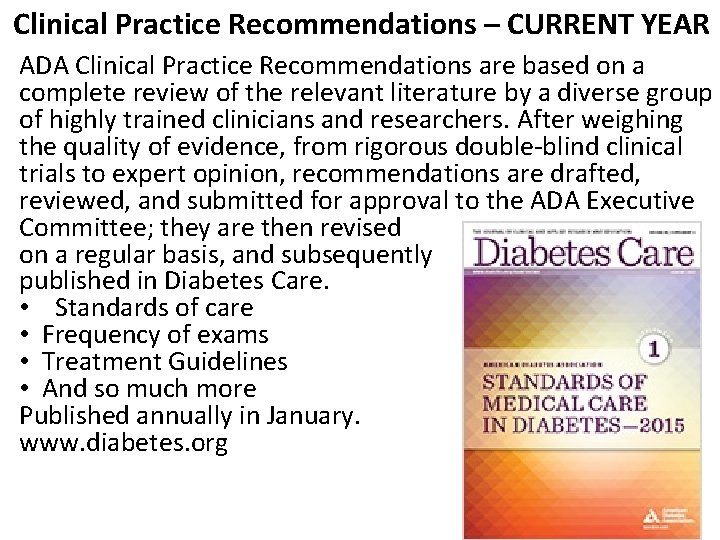
Clinical Practice Recommendations – CURRENT YEAR ADA Clinical Practice Recommendations are based on a complete review of the relevant literature by a diverse group of highly trained clinicians and researchers. After weighing the quality of evidence, from rigorous double-blind clinical trials to expert opinion, recommendations are drafted, reviewed, and submitted for approval to the ADA Executive Committee; they are then revised on a regular basis, and subsequently published in Diabetes Care. • Standards of care • Frequency of exams • Treatment Guidelines • And so much more Published annually in January. www. diabetes. org
UWCNE Conference 2016 | Diabetes Update Tuesday - February 23, 2016 Learning Objectives • Review the advantages and limitations of hemoglobin A 1 c. • Discuss the harmful effects of prolonged hyperglycemia on the systems that support human movement. • Identify educational resources available to use during discussions with patients about carbohydrates and blood glucose that reflect common dietary practices and foods commonly consumed in particular ethnic populations. • Identify new diabetes agents that have been approved recently and the evidence behind them. • Discuss what can be done to reduce the burden of insulin cost for patients with type 2 diabetes. • Explain the bi-directional impact of periodontal disease and diabetes on oral and overall health. • Discuss/understand/practice engaging patients in their own self-management and goal-setting. • Describe strategies for nutrition and lifestyle treatment for women with diabetes. Topics • A 1 C Is Not the “Be-All and End-All” • Exercise for Glycemic Control, an Evidence-Based Approach • Culturally-Tailored Nutrition Education for Patients with Diabetes • Reconciling Higher Drug Costs with Optimal Diabetes Agent Selection (Rx) • The Cost of Insulin in 2016: How Did We Get Here and What Can We Do? • Diabetes and Oral Health: A Two-Way Street • Goal-Setting: Developing Relevant, Practical, Effective & Meaningful Plans with Your Patients • Nutrition Challenges for Women with Diabetes
• Videos from Kahn Academy developed in collaboration with the American Association of Colleges of Nursing: (AACN) • Many helpful vignettes on diabetes- pathophysiology, diagnosis, pharmacological management and more • • Pathophysiology of Type 1 Diabetes Treating Type 1 Diabetes Pathophysiology of Type 2 Diabetes Treating Type 2 Diabetes
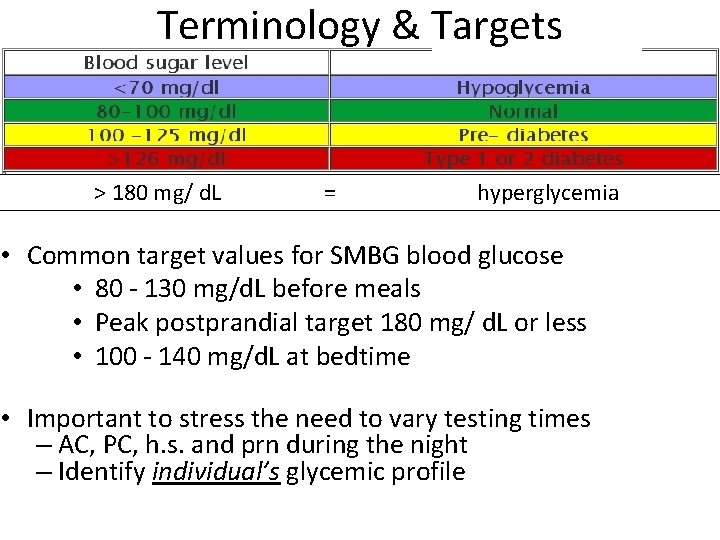
Terminology & Targets > 180 mg/ d. L = hyperglycemia • Common target values for SMBG blood glucose • 80 - 130 mg/d. L before meals • Peak postprandial target 180 mg/ d. L or less • 100 - 140 mg/d. L at bedtime • Important to stress the need to vary testing times – AC, PC, h. s. and prn during the night – Identify individual’s glycemic profile
- Slides: 135