
DRUG INTERACTIONS with TOBACCO SMOKE PHARMACOKINETIC DRUG INTERACTIONS
DRUG INTERACTIONS with TOBACCO SMOKE
PHARMACOKINETIC DRUG INTERACTIONS with TOBACCO SMOKE Drugs that may have a decreased effect due to induction of CYP 1 A 2: § § § Bendamustine § Haloperidol § Tasimelteon Caffeine § Olanzapine § Theophylline Clozapine § Pirfenidone Erlotinib § Riociguat Fluvoxamine § Ropinirole Irinotecan (clearance increased and systemic exposure decreased, due to increased glucuronidation of its active metabolite) Smoking cessation will reverse these effects.
DRUG INTERACTION: TOBACCO SMOKE and CAFFEINE § Constituents in tobacco smoke induce CYP 1 A 2 enzymes, which metabolize caffeine § Caffeine levels increase ~56% upon quitting § Challenges: § Nicotine withdrawal effects might be enhanced by increased caffeine levels § Insomnia can be due to ↑ caffeine levels or a side effect of a smoking cessation drug (e. g. , varenicline or bupropion) § Decrease caffeine intake by about half when quitting § For individuals with a typical bedtime, suggest eliminating caffeine by early afternoon
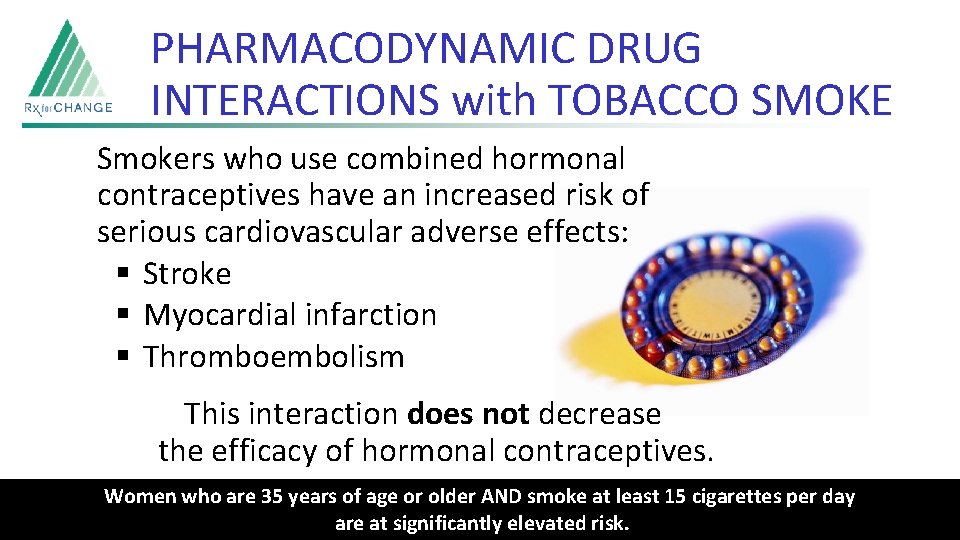
PHARMACODYNAMIC DRUG INTERACTIONS with TOBACCO SMOKE Smokers who use combined hormonal contraceptives have an increased risk of serious cardiovascular adverse effects: § Stroke § Myocardial infarction § Thromboembolism This interaction does not decrease the efficacy of hormonal contraceptives. Women who are 35 years of age or older AND smoke at least 15 cigarettes per day are at significantly elevated risk.
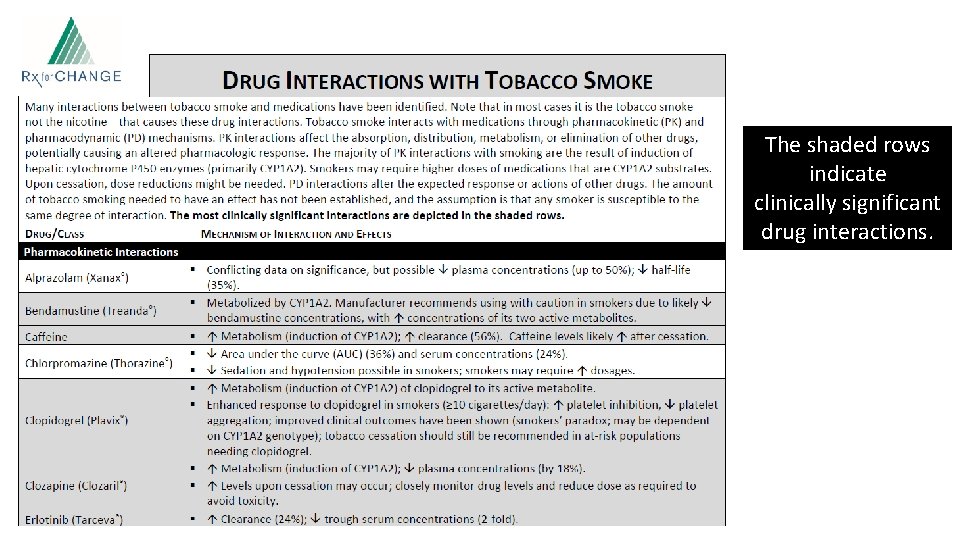
The shaded rows indicate clinically significant drug interactions.
DRUG INTERACTIONS with TOBACCO SMOKE: SUMMARY Clinicians should be aware of their patients’ smoking status: § Clinically significant interactions result the combustion products of tobacco smoke, not from nicotine. § Constituents in tobacco smoke (e. g. , polycyclic aromatic hydrocarbons; PAHs) may enhance the metabolism of other drugs, resulting in an altered pharmacologic response. § Changes in smoking status might alter the clinical response to the treatment of a wide variety of conditions. § Drug interactions with smoking should be considered when patients start smoking, quit smoking, or markedly alter their levels of smoking.
- Slides: 6