
Drug distribution in hospital pharmacy DR J DOMENECH

Drug distribution in hospital pharmacy DR. J. DOMENECH
contents v definitions v. In-patient v. Out-patient v. Ambulatory -patient v. Control drugs
Hospital pharmacy hospital pharmacy may be defined as that department of the hospital witch deals with procurement , storage , compounding , dispensing , manufacturing , testing , packing , and distribution of drugs. Functions v Providing specifications for the purchase of drugs , chemicals. v Proper storing of drugs. v Manufacturing &distribution of medicaments such as paranteral products , tablets , capsules , ointments & stock mix
In-patient
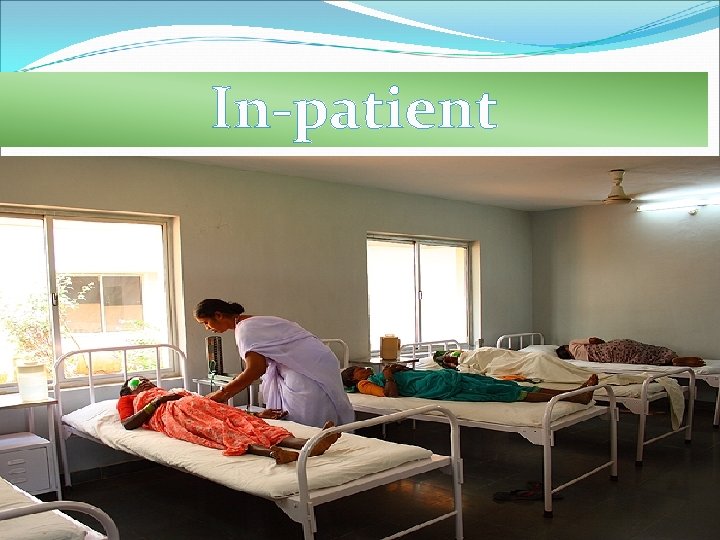
In-patient: In-patients are those patients , who require hospitalization i. e get themselves admitted in the hospital, stay there for treatment till they are discharged. They are four systems in general use for dispensing drugs for inpatients. They may be classified as follows; 1. Individual prescription order 2. Complete floor stock system 3. Combination of individual &floor stock system 4. Unit dose system
1. Individual prescription order system: It is a type of prescription system where the physician writes the prescription for individual patient who obtains the drug prescribed from any medical store or hospital dispensary by paying own charges. Advantages: q All medication orders are directly reviewed by pharmacists. q It provides the interaction of pharmacist-doctor, nurse and the patient. q It provides clear control of inventory.
2. Complete floor stock system: Under this system , the drugs are given to the patient through the nursing station and the pharmacy supplies from the drug store of a hospital. • Drugs on the nursing station or ward may be divided in to. A. Charge floor stock drugs B. Non charge floor stock drugs.
a. Charge floor stock system: Medicines which are stocked on the nursing station at all times and charged to the patient’s account after they have been administered to them. Dispensing of floor stock drugs. Ø The patient is charged for every single dose administered to him. Ø Selection of these drugs in various wards is decided by PTC Ø Once the floor stock list is prepared , it becomes the responsibility of the hospital pharmacist to make the drugs available
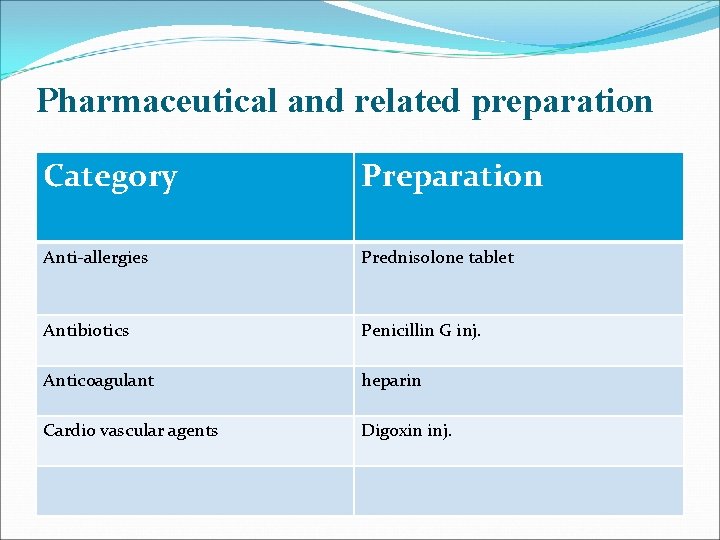
Pharmaceutical and related preparation Category Preparation Anti-allergies Prednisolone tablet Antibiotics Penicillin G inj. Anticoagulant heparin Cardio vascular agents Digoxin inj.
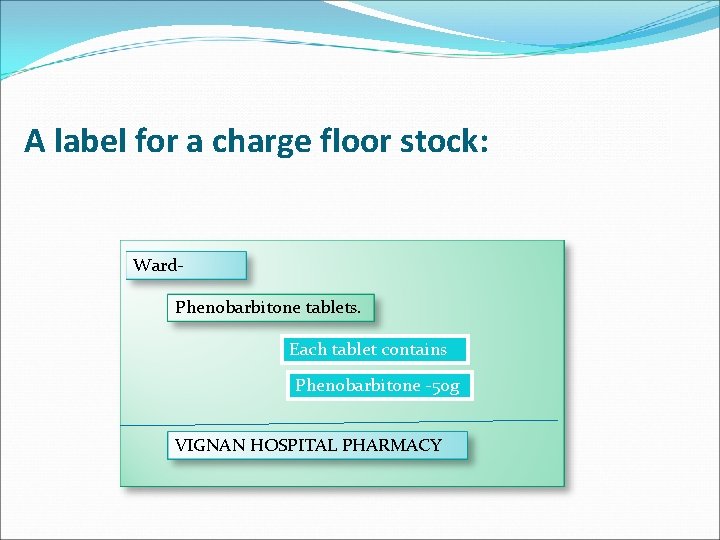
A label for a charge floor stock: Ward. Phenobarbitone tablets. Each tablet contains Phenobarbitone -50 g VIGNAN HOSPITAL PHARMACY
b. Non-charge floor stock drugs: Non charge floor stock drugs are the medicaments that are placed at the nursing station for the use of all patients on the floor. q These drugs , there shall be no direct charge from the patients account. It is divided in to two methods. a. Drug basket method. b. Mobile dispensary unit.
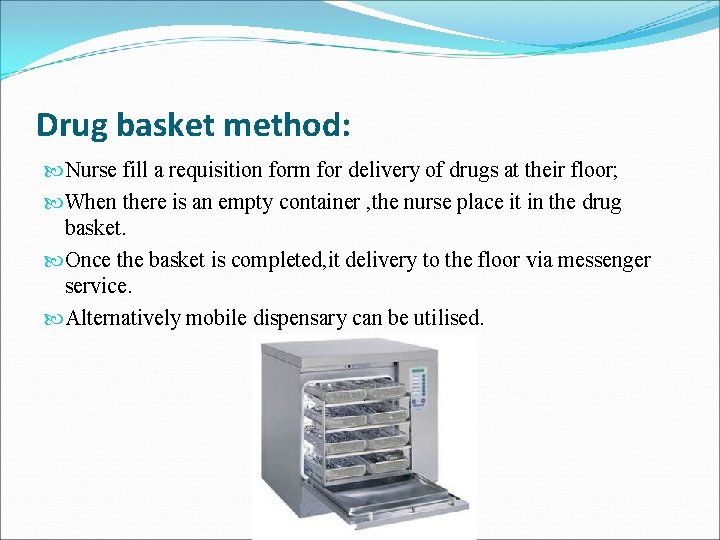
Drug basket method: Nurse fill a requisition form for delivery of drugs at their floor; When there is an empty container , the nurse place it in the drug basket. Once the basket is completed, it delivery to the floor via messenger service. Alternatively mobile dispensary can be utilised.
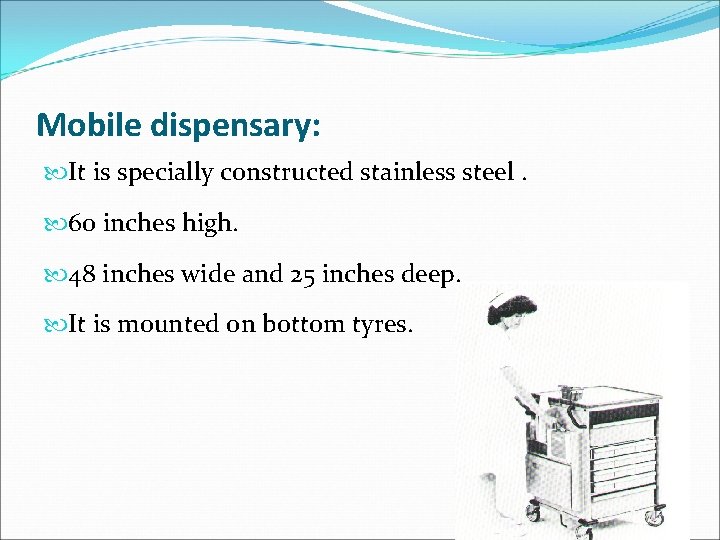
Mobile dispensary: It is specially constructed stainless steel. 60 inches high. 48 inches wide and 25 inches deep. It is mounted on bottom tyres.
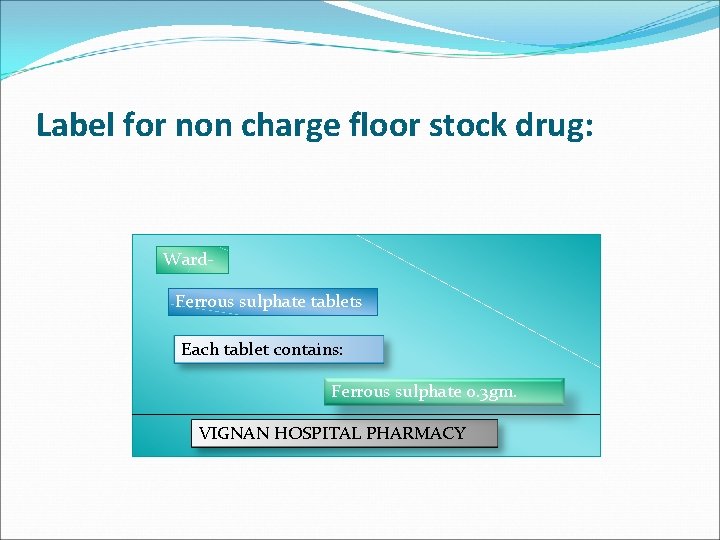
Label for non charge floor stock drug: Ward. Ferrous sulphate tablets Each tablet contains: Ferrous sulphate 0. 3 gm. VIGNAN HOSPITAL PHARMACY
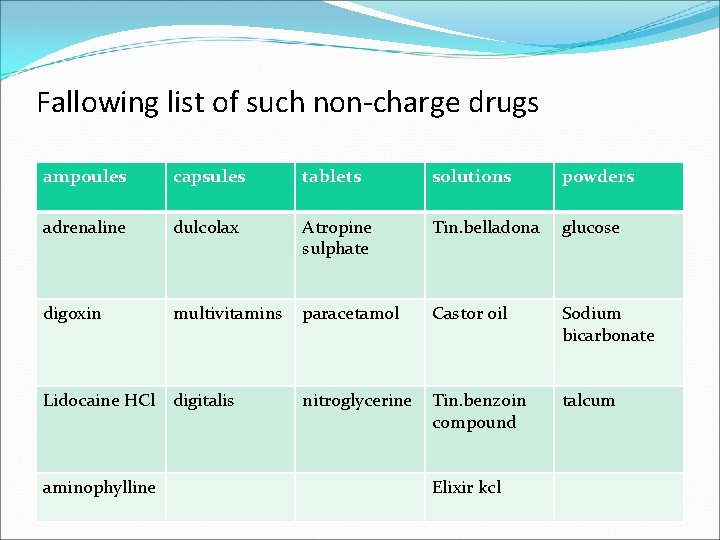
Fallowing list of such non-charge drugs ampoules capsules tablets solutions powders adrenaline dulcolax Atropine sulphate Tin. belladona glucose digoxin multivitamins paracetamol Castor oil Sodium bicarbonate Lidocaine HCl digitalis nitroglycerine Tin. benzoin compound talcum aminophylline Elixir kcl
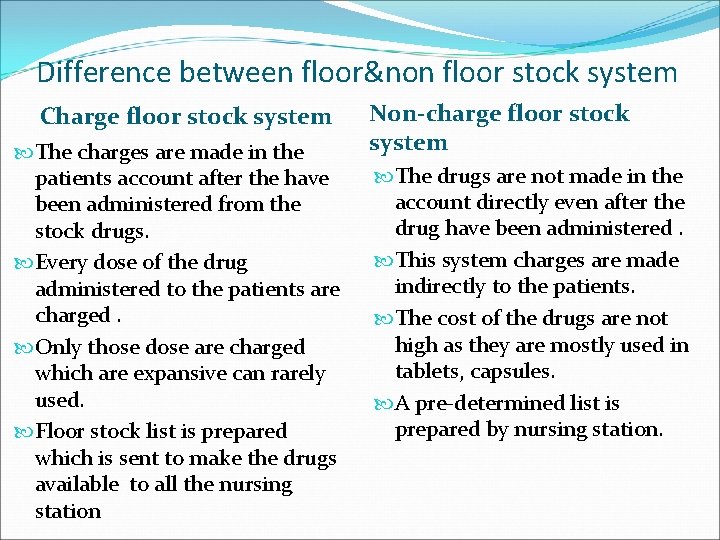
Difference between floor&non floor stock system Charge floor stock system The charges are made in the patients account after the have been administered from the stock drugs. Every dose of the drug administered to the patients are charged. Only those dose are charged which are expansive can rarely used. Floor stock list is prepared which is sent to make the drugs available to all the nursing station Non-charge floor stock system The drugs are not made in the account directly even after the drug have been administered. This system charges are made indirectly to the patients. The cost of the drugs are not high as they are mostly used in tablets, capsules. A pre-determined list is prepared by nursing station.
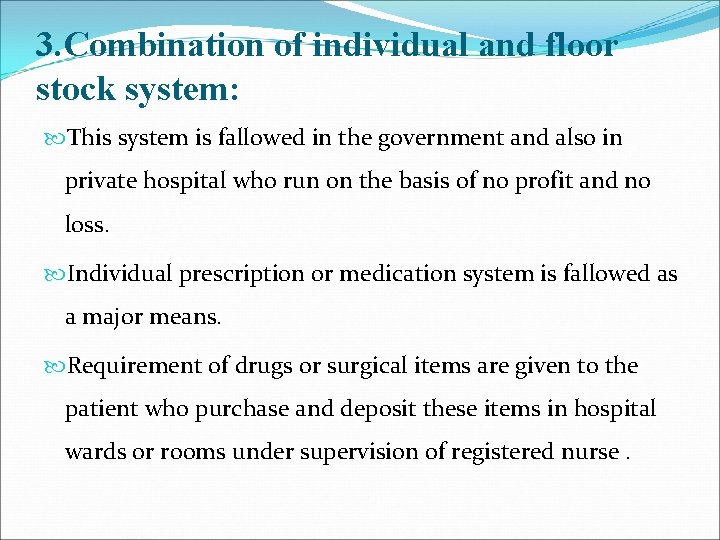
3. Combination of individual and floor stock system: This system is fallowed in the government and also in private hospital who run on the basis of no profit and no loss. Individual prescription or medication system is fallowed as a major means. Requirement of drugs or surgical items are given to the patient who purchase and deposit these items in hospital wards or rooms under supervision of registered nurse.

4. Unit dose dispensing: Those medications which are ordered , packed , handled administered and charged in multiples of single dose units containing a predetermined amount of drug or supply sufficient for one regular dose. q A single unit package is one witch contains one complete pharmaceutical dosage forms Ex-one tablet, capsul.
Advantages : Better financial control. It prevents the loss of partially used medications. It does not require storage facilities at the nursing station.
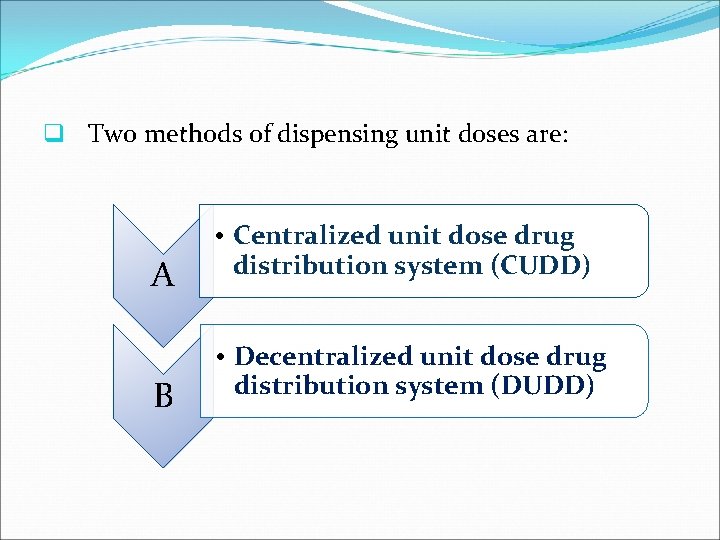
q Two methods of dispensing unit doses are: A B • Centralized unit dose drug distribution system (CUDD) • Decentralized unit dose drug distribution system (DUDD)
A. Centralised unit-dose drug distribution system(CUDD): q All in-patient drugs are dispensed in unit doses and all the drugs are stored in central area of the pharmacy and dispensed at the time the dose is due to be given to the patient. q. Drugs re transferred from the pharmacy to the indoor patient by medication cards.
B. Decentralized unit dose dispensing: This operates through small satellite pharmacies located on each floor of the hospital. Procedure: § Patient profile card containing full date , disease , diagnosis is prepared. § Prescription are sent directly to the pharmacist witch are then entered in the patient profile card. § Pharmacist checks medication order. § Patient profile card and prescription order is filled by pharmacy technicians. § The nurses administer the drugs and make the entry in their records.
Advantages: q Easy for the administration staff. q accounting becomes easier in certain cases. q better stability of the products Ex-Eno-fruit salt in sachets.
Disadvantages: q High cost. q consumes more time and doubtful. q will occupy more space for storing. q ledger posting and inventory control problem.
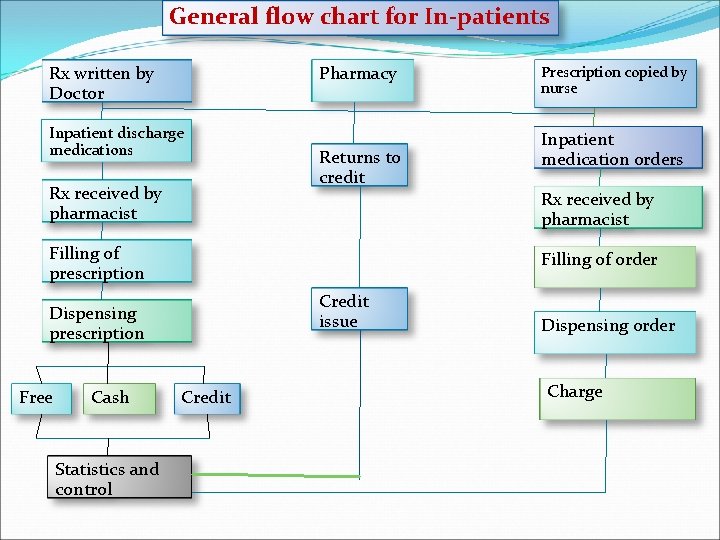
General flow chart for In-patients Rx written by Doctor Pharmacy Inpatient discharge medications Rx received by pharmacist Returns to credit Filling of prescription Cash Statistics and control Inpatient medication orders Rx received by pharmacist Filling of order Credit issue Dispensing prescription Free Prescription copied by nurse Credit Dispensing order Charge

OUTPATIENT
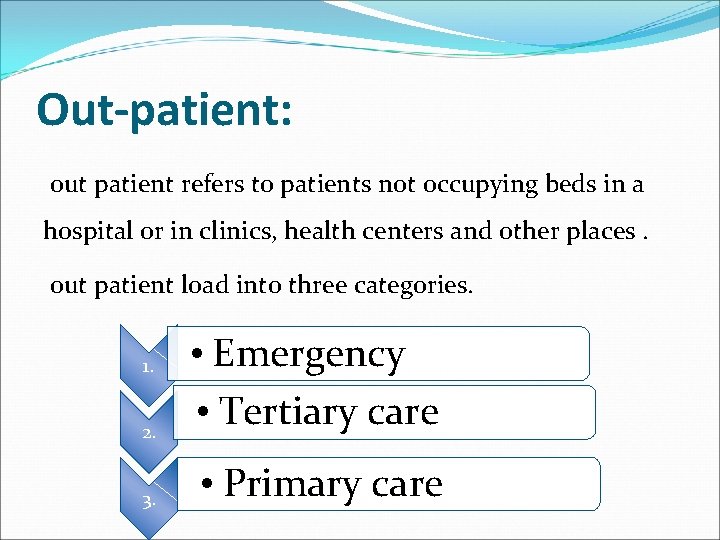
Out-patient: out patient refers to patients not occupying beds in a hospital or in clinics, health centers and other places. out patient load into three categories. 2. • Emergency • Tertiary care 3. • Primary care 1.
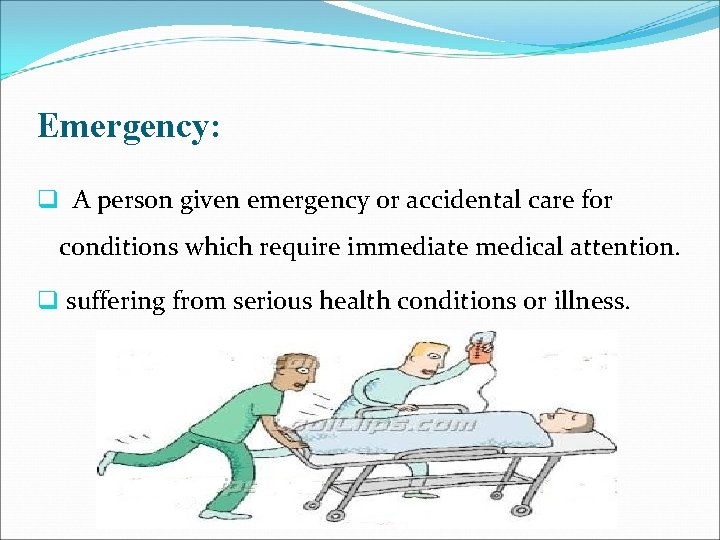
Emergency: q A person given emergency or accidental care for conditions which require immediate medical attention. q suffering from serious health conditions or illness.

Tertiary care: He is directly to outpatient department by his attending medical practitioner for specific treatment other than an emergency treatment.
Primary care. • primary care is majority care. • It describe a range of services adequate for meeting • Most primary care is used by patients who are ambulatory i. e are able to move about freely.
Location of out-patient dispensing: It should be located on the ground floor of the building. The out patient dispensing area should be provided with proper seating arrangement. The pharmacy receives its supplies from medical stores weekly but emergency supplies can be obtained at any time.
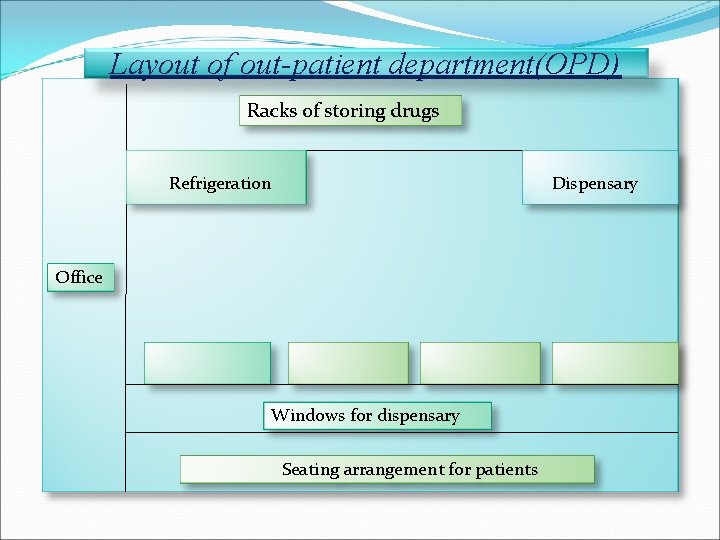
Layout of out-patient department(OPD) Racks of storing drugs Refrigeration Dispensary Office Windows for dispensary Seating arrangement for patients
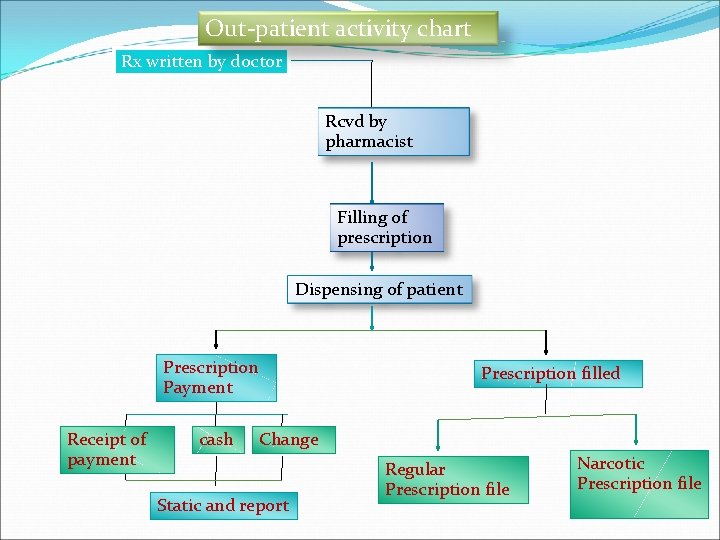
Out-patient activity chart Rx written by doctor Rcvd by pharmacist Filling of prescription Dispensing of patient Prescription Payment Receipt of payment cash Prescription filled Change Static and report Regular Prescription file Narcotic Prescription file
Drug distribution to out-patient: q No medicaments should be issued without the prescription. q After the issue has been made the quantities supplied must be recorded. q Medicines are given to the out- patients from the pharmacy situated in the out patient block.

9/11/12
Dispensing of control drugs: Hospital control procedures: 1. Responsibility for controlled substance in the hospital. 2. Ordering ward stock of the controlled substances from the pharmacy. 3. Doctros orders for administration of controlled drugs.
Responsibility for controlled substances: The administrative head of the hospital is responsible for the proper safeguarding and the handling of controlled substances within the hospital.
Ordering ward stock of the controlled substances from the pharmacy: a. A requisition for ward stock controlled substances is completed by insertion a check mark opposite the name , strength from of controlled substance desired. b. Before any new controlled substances are issued to a ward
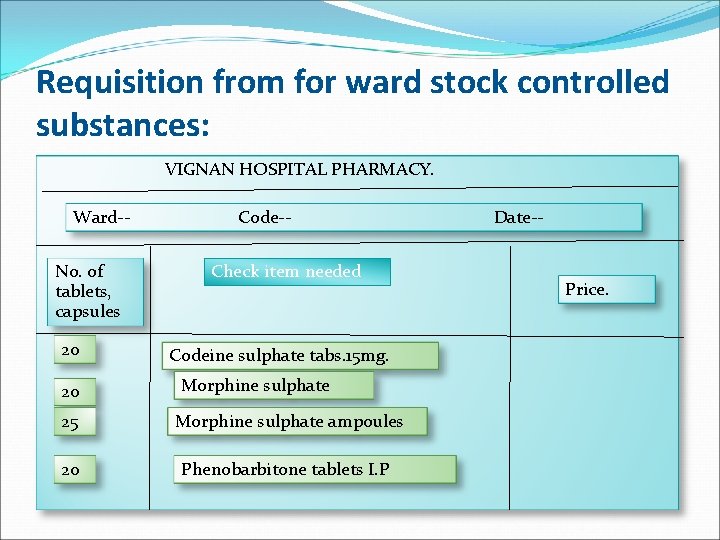
Requisition from for ward stock controlled substances: VIGNAN HOSPITAL PHARMACY. Ward-No. of tablets, capsules 20 20 Code-Check item needed Codeine sulphate tabs. 15 mg. Morphine sulphate 25 Morphine sulphate ampoules 20 Phenobarbitone tablets I. P Date-- Price.
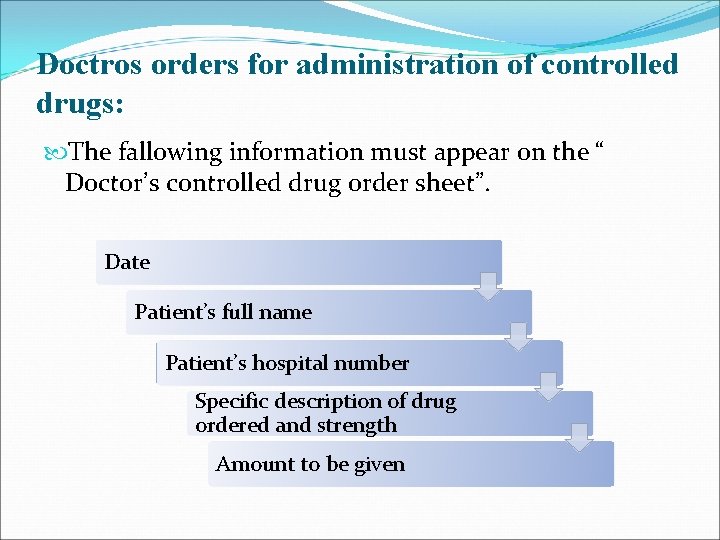
Doctros orders for administration of controlled drugs: The fallowing information must appear on the “ Doctor’s controlled drug order sheet”. Date Patient’s full name Patient’s hospital number Specific description of drug ordered and strength Amount to be given
PRESCRIPTIONS: In dispensing of controlled substances, the following requirements should be with prescriptions: 1. Except when dispensed 2. Drugs may be dispensed on the oral prescription in an emergency situation. 3. Prescription shall be retained in conformity with the requirements of this law.
4. No prescription for a controlled substance in Schedule II may be refilled. 5. Controlled substances in Schedule III or IV may not be dispensed a written or oral prescription in conformity.
Information on daily controlled drug administration sheet: The full information required on the Daily Controlled Drugs Administration Sheet is as follows: 1. Date. 2. Amount given. 3. Patient’s full name 4. Patient’s hospital number. 5. Name of doctor ordering. 6. Signature of nurse administering. 7. Frequency and route of administration
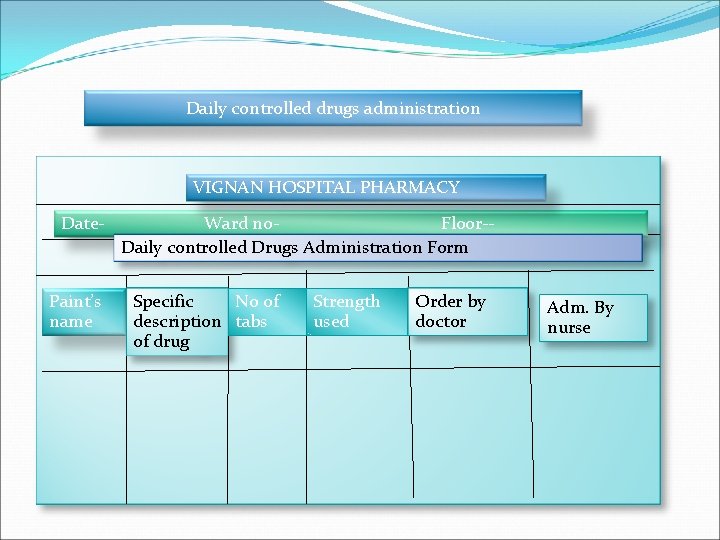
Daily controlled drugs administration VIGNAN HOSPITAL PHARMACY Date- Paint’s name Ward no. Floor-Daily controlled Drugs Administration Form Specific No of description tabs of drug Strength used Order by doctor Adm. By nurse
Most Commonly Abused Rx Drugs: Pain relievers (opioids, narcotics) Oxycodone (e. g. , Oxy. Contin, Percocet), hydrocodone, codeine, and morphine Central nervous system depressants (sedatives, tranquilizers, hypnotics) Barbiturates (e. g. , Mebaral, Nembutal) and benzodiazepines (e. g. , Valium, Xanax) Stimulants (used to treat attention deficit disorders, narcolepsy, and weight loss) Dextroamphetamine (e. g. , Dexedrine, ) and methylphenidate (e. g. , Ritalin, )
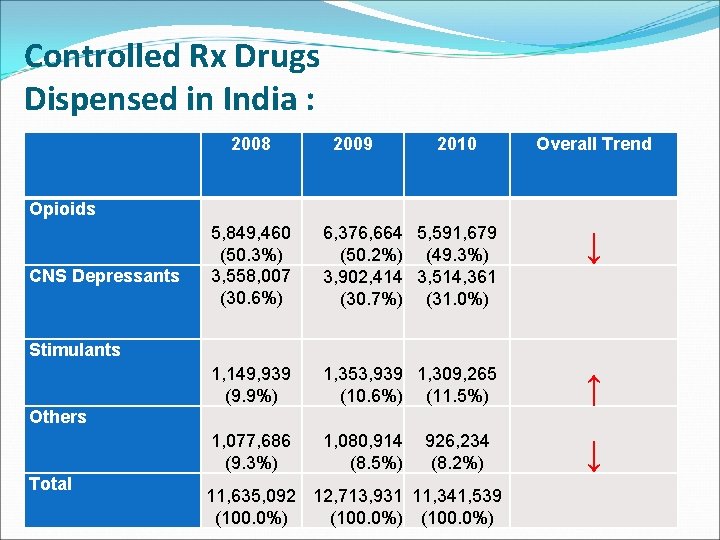
Controlled Rx Drugs Dispensed in India : 2008 2009 2010 Overall Trend Opioids CNS Depressants 5, 849, 460 (50. 3%) 3, 558, 007 (30. 6%) 6, 376, 664 5, 591, 679 (50. 2%) (49. 3%) 3, 902, 414 3, 514, 361 (30. 7%) (31. 0%) ↓ 1, 149, 939 (9. 9%) 1, 353, 939 1, 309, 265 (10. 6%) (11. 5%) ↑ Stimulants Others Source: Indiana Board of Pharmacy, 2011 1, 077, 686 (9. 3%) Total 1, 080, 914 (8. 5%) 926, 234 (8. 2%) 11, 635, 092 12, 713, 931 11, 341, 539 (100. 0%) ↓
- Slides: 46