
Drug Abuse Addiction Research Progress Priorities and Opportunities
Drug Abuse & Addiction Research: Progress, Priorities, and Opportunities at NIDA National Institute on Drug Abuse Bringing the full power of science to bear on drug abuse and addiction Nora D. Volkow, M. D. Director National Institute on Drug Abuse National Institutes of Health
Strategy for Development of Scientific Strategic Plan for New SUD Institute • Identify scientific and public health needs not addressed • by NIH • input from NIH scientific staff • input from external stakeholders (researchers, advocates) Assess suggested scientific opportunities and public health needs, in light of missions of NIDA, NIAAA, NCI & other ICs • Develop a draft scientific strategic plan • Integrate new scientific opportunities identified by NIH & the • public with existing priorities in SUD research Solicit public input on draft plan
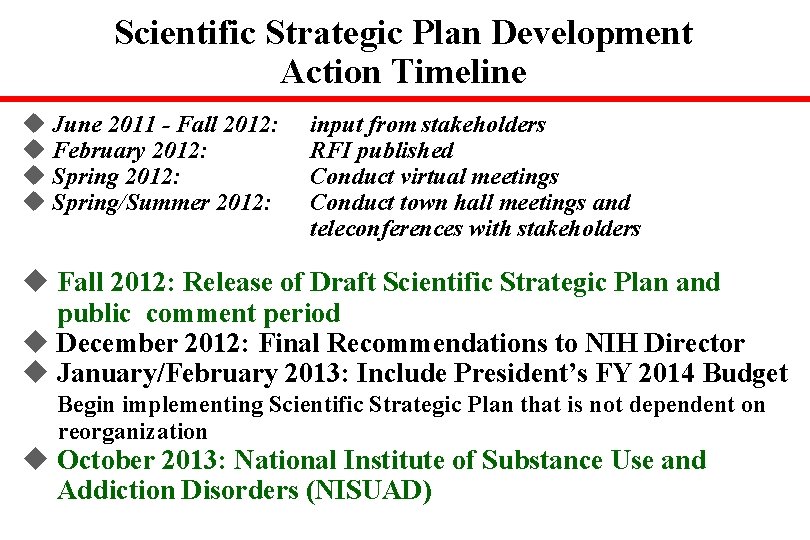
Scientific Strategic Plan Development Action Timeline u June 2011 - Fall 2012: u February 2012: u Spring/Summer 2012: input from stakeholders RFI published Conduct virtual meetings Conduct town hall meetings and teleconferences with stakeholders u Fall 2012: Release of Draft Scientific Strategic Plan and public comment period u December 2012: Final Recommendations to NIH Director u January/February 2013: Include President’s FY 2014 Budget Begin implementing Scientific Strategic Plan that is not dependent on reorganization u October 2013: National Institute of Substance Use and Addiction Disorders (NISUAD)
Solicitation for Public Stakeholder Input § Request for Information § February 8, 2012 § Closing date: May 11, 2012 § How to Submit a Response : All comments must be submitted electronically to: http: //grants. nih. gov/grants/guide/rfi_files/nih_nisua d/add. cfm § Public Meetings § Schedule posted and updated on http: //feedback. nih. gov/index. php/category/suaa/
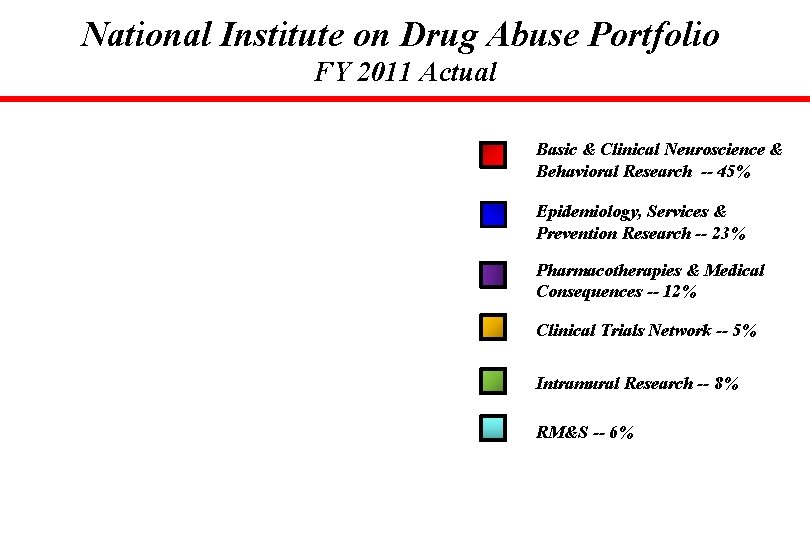
National Institute on Drug Abuse Portfolio FY 2011 Actual Basic & Clinical Neuroscience & Behavioral Research -- 45% Epidemiology, Services & Prevention Research -- 23% Pharmacotherapies & Medical Consequences -- 12% Clinical Trials Network -- 5% Intramural Research -- 8% RM&S -- 6%
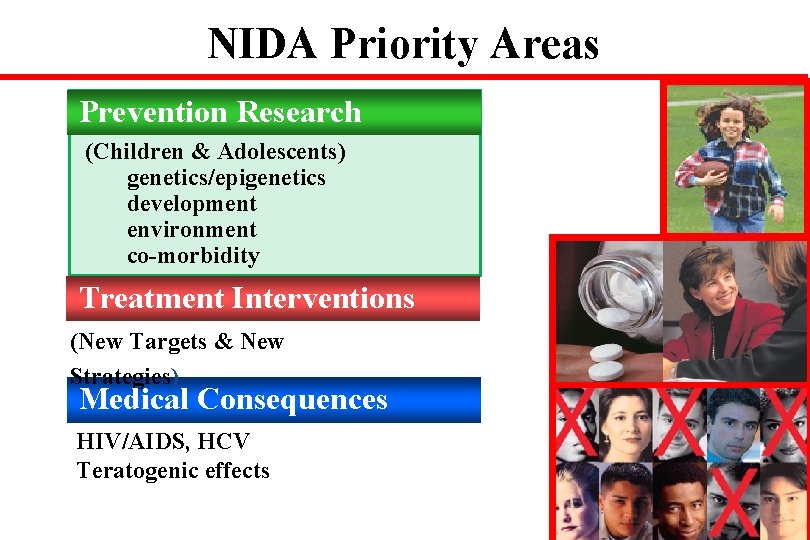
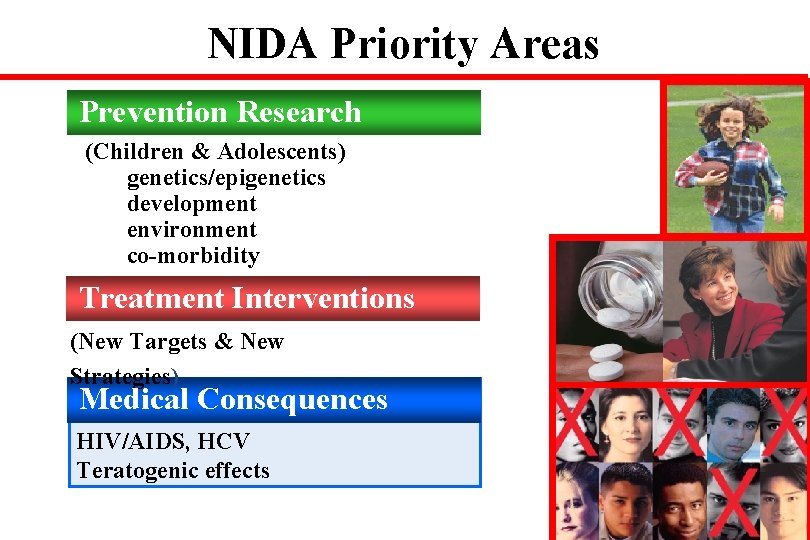
NIDA Priority Areas Prevention Research (Children & Adolescents) genetics/epigenetics development environment co-morbidity Treatment Interventions (New Targets & New Strategies) Medical Consequences HIV/AIDS, HCV Teratogenic effects
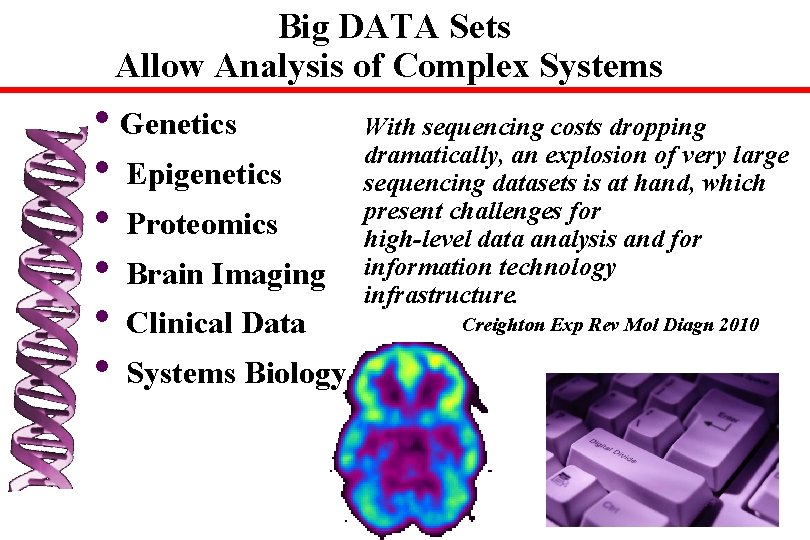
Big DATA Sets Allow Analysis of Complex Systems • Genetics • Epigenetics • Proteomics • Brain Imaging • Clinical Data • Systems Biology With sequencing costs dropping dramatically, an explosion of very large sequencing datasets is at hand, which present challenges for high-level data analysis and for information technology infrastructure. Creighton Exp Rev Mol Diagn 2010
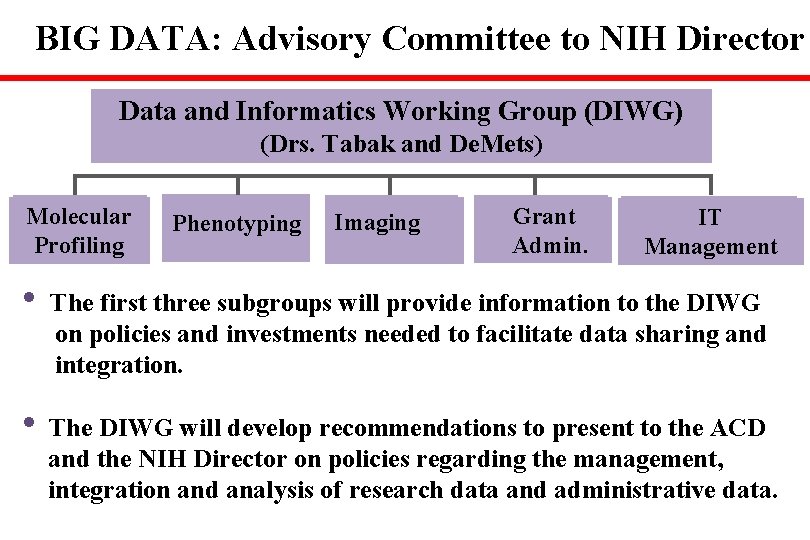
BIG DATA: Advisory Committee to NIH Director Data and Informatics Working Group (DIWG) (Drs. Tabak and De. Mets) Molecular Profiling Phenotyping Imaging Grant Admin. IT Management • The first three subgroups will provide information to the DIWG on policies and investments needed to facilitate data sharing and integration. • The DIWG will develop recommendations to present to the ACD and the NIH Director on policies regarding the management, integration and analysis of research data and administrative data.
NIDA Priority Areas Prevention Research (Children & Adolescents) genetics/epigenetics development environment co-morbidity Treatment Interventions (New Targets & New Strategies) Medical Consequences HIV/AIDS, HCV Teratogenic effects
![Higher Binding of the Dopamine D 3 Receptor. Preferring Ligand [11 C]-PHNO in Methamphetamine](http://slidetodoc.com/presentation_image_h2/5be1f0efee565c90cf750963ac186920/image-10.jpg "Higher Binding of the Dopamine D 3 Receptor. Preferring Ligand [11 C]-PHNO in Methamphetamine")
Higher Binding of the Dopamine D 3 Receptor. Preferring Ligand [11 C]-PHNO in Methamphetamine Polydrug Users METH >Controls METH users had higher [11 C]-(+)-PHNO binding in the D 3 -rich midbrain (SN; +46%), globus pallidus (+9%) and ventral pallidum (+11%), and lower binding in D 2 -rich dorsal striatum (− 4% to − 12%) Boileau et al. , J Neurosci. 2012
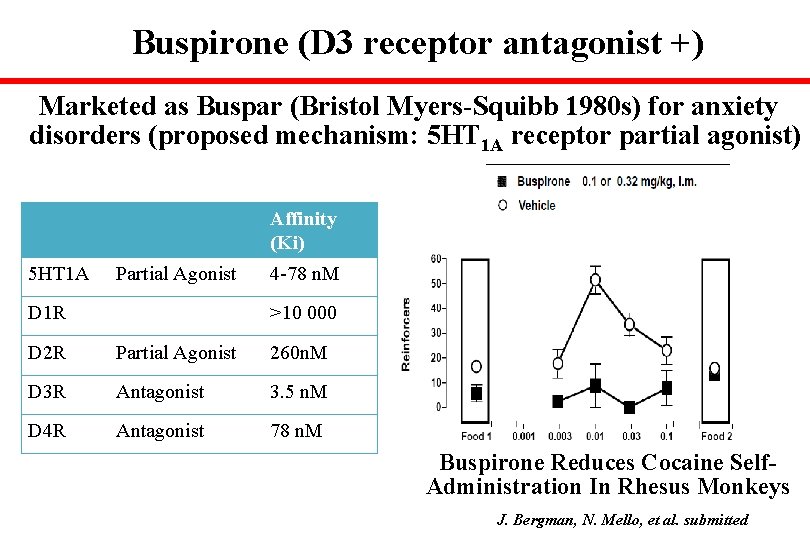
Buspirone (D 3 receptor antagonist +) Marketed as Buspar (Bristol Myers-Squibb 1980 s) for anxiety disorders (proposed mechanism: 5 HT 1 A receptor partial agonist) Affinity (Ki) 5 HT 1 A Partial Agonist D 1 R 4 -78 n. M >10 000 D 2 R Partial Agonist 260 n. M D 3 R Antagonist 3. 5 n. M D 4 R Antagonist 78 n. M Buspirone Reduces Cocaine Self. Administration In Rhesus Monkeys J. Bergman, N. Mello, et al. submitted
![Effects of Buspirone on [11 C]PHNO (D 3/D 2 R Ligand) Binding in the](http://slidetodoc.com/presentation_image_h2/5be1f0efee565c90cf750963ac186920/image-12.jpg "Effects of Buspirone on [11 C]PHNO (D 3/D 2 R Ligand) Binding in the")
Effects of Buspirone on [11 C]PHNO (D 3/D 2 R Ligand) Binding in the Baboon Brain 0. 060 CD dy 2 CB dy 2 0. 050 putamendy 1 Baseline %ID/cc 0. 040 GP dy 1 0. 030 0. 020 0. 010 0. 000 With Buspirone 0. 0 20. 0 40. 0 60. 0 Time (min) Buspirone (0. 17 mg/kg iv over 20 minutes) almost completely blocked D 3 receptors in the monkey brain Kim et al. , unpublished 80. 0
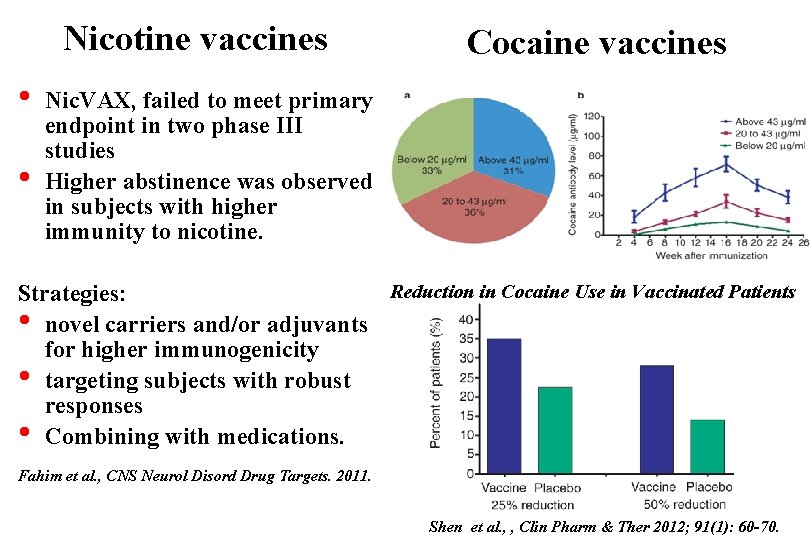
Nicotine vaccines • • Cocaine vaccines Nic. VAX, failed to meet primary endpoint in two phase III studies Higher abstinence was observed in subjects with higher immunity to nicotine. Reduction in Cocaine Use in Vaccinated Patients Strategies: • novel carriers and/or adjuvants for higher immunogenicity • targeting subjects with robust responses • Combining with medications. Fahim et al. , CNS Neurol Disord Drug Targets. 2011. Shen et al. , , Clin Pharm & Ther 2012; 91(1): 60 -70.
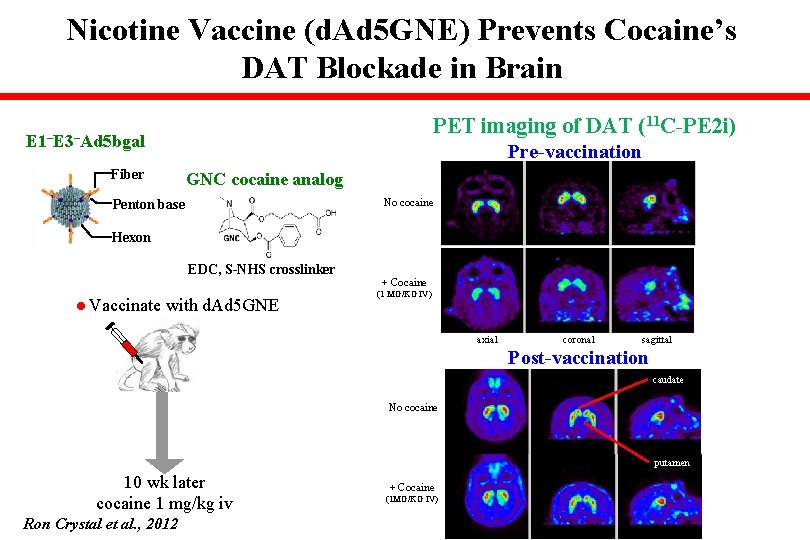
Nicotine Vaccine (d. Ad 5 GNE) Prevents Cocaine’s DAT Blockade in Brain PET imaging of DAT (11 C-PE 2 i) E 1–E 3–Ad 5 bgal Pre-vaccination Fiber GNC cocaine analog No cocaine Penton base Hexon EDC, S-NHS crosslinker l Vaccinate with d. Ad 5 GNE + Cocaine (1 MG/KG IV) axial coronal sagittal Post-vaccination caudate No cocaine putamen 10 wk later cocaine 1 mg/kg iv Ron Crystal et al. , 2012 + Cocaine (1 MG/KG IV)
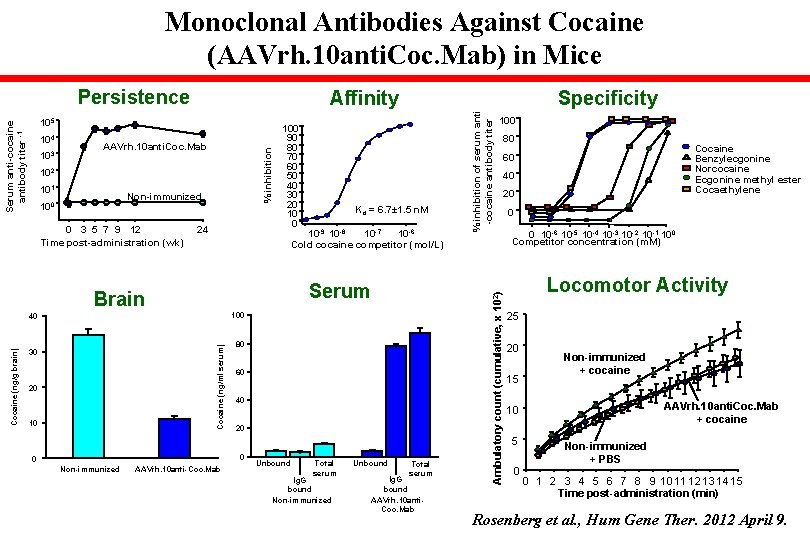
Monoclonal Antibodies Against Cocaine (AAVrh. 10 anti. Coc. Mab) in Mice Persistence 101 Non-immunized 100 0 3 5 7 9 12 Time post-administration (wk) 24 10 -9 10 -8 10 -7 10 -6 Cold cocaine competitor (mol/L) Serum Brain 100 Cocaine (ng/ml serum) 40 Cocaine (ng/g brain) Kd = 6. 7± 1. 5 n. M 30 20 10 80 60 40 20 0 0 Non-immunized AAVrh. 10 anti-Coc. Mab Unbound Total serum Ig. G bound Non-immunized Unbound Total serum Ig. G bound AAVrh. 10 anti. Coc. Mab 100 80 Cocaine Benzylecgonine Norcocaine Ecgonine methyl ester Cocaethylene 60 40 20 Ambulatory count (cumulative, x 102) 102 100 90 80 70 60 50 40 30 20 10 0 % inhibition of serum anti -cocaine antibody titer 103 AAVrh. 10 anti. Coc. Mab % inhibition Serum anti-cocaine antibody titer -1 105 104 Specificity Affinity 0 0 10 -6 10 -5 10 -4 10 -3 10 -2 10 -1 100 Competitor concentration (m. M) Locomotor Activity 25 20 15 Non-immunized + cocaine AAVrh. 10 anti. Coc. Mab + cocaine 10 5 0 Non-immunized + PBS 0 1 2 3 4 5 6 7 8 9 10 11 12 13 14 15 Time post-administration (min) Rosenberg et al. , Hum Gene Ther. 2012 April 9.
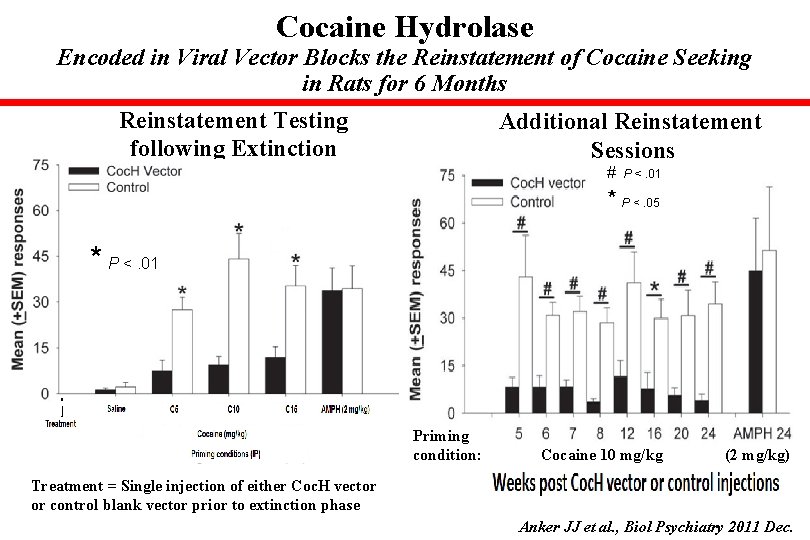
Cocaine Hydrolase Encoded in Viral Vector Blocks the Reinstatement of Cocaine Seeking in Rats for 6 Months Reinstatement Testing following Extinction Additional Reinstatement Sessions # P <. 01 * P <. 05 * P <. 01 Priming condition: Cocaine 10 mg/kg (2 mg/kg) Treatment = Single injection of either Coc. H vector or control blank vector prior to extinction phase Anker JJ et al. , Biol Psychiatry 2011 Dec.
NIDA Priority Areas Prevention Research (Children & Adolescents) genetics/epigenetics development environment co-morbidity Treatment Interventions (New Targets & New Strategies) Medical Consequences HIV/AIDS, HCV Teratogenic effects
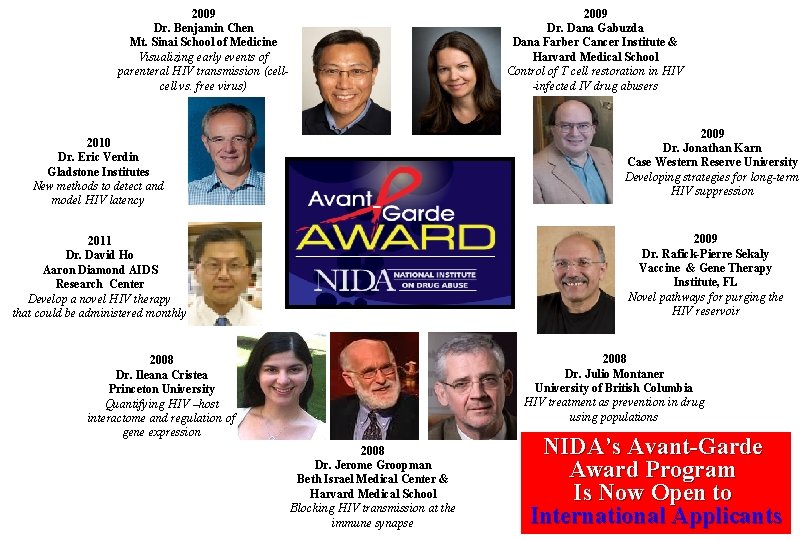
2009 Dr. Benjamin Chen Mt. Sinai School of Medicine Visualizing early events of parenteral HIV transmission (cell vs. free virus) 2009 Dr. Dana Gabuzda Dana Farber Cancer Institute & Harvard Medical School Control of T cell restoration in HIV -infected IV drug abusers 2009 Dr. Jonathan Karn Case Western Reserve University Developing strategies for long-term HIV suppression 2010 Dr. Eric Verdin Gladstone Institutes New methods to detect and model HIV latency 2009 Dr. Rafick-Pierre Sekaly Vaccine & Gene Therapy Institute, FL Novel pathways for purging the HIV reservoir 2011 Dr. David Ho Aaron Diamond AIDS Research Center Develop a novel HIV therapy that could be administered monthly 2008 Dr. Julio Montaner University of British Columbia HIV treatment as prevention in drug using populations 2008 Dr. Ileana Cristea Princeton University Quantifying HIV –host interactome and regulation of gene expression 2008 Dr. Jerome Groopman Beth Israel Medical Center & Harvard Medical School Blocking HIV transmission at the immune synapse NIDA’s Avant-Garde Award Program Is Now Open to International Applicants
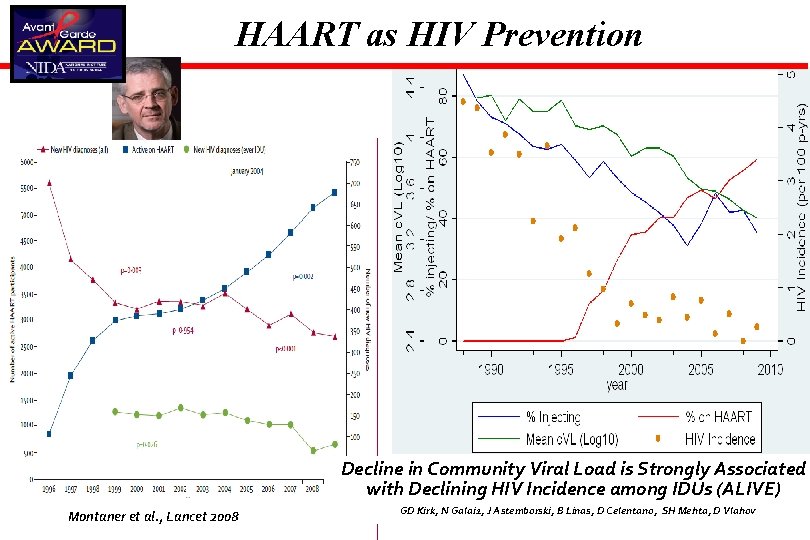
HAART as HIV Prevention Decline in Community Viral Load is Strongly Associated with Declining HIV Incidence among IDUs (ALIVE) Montaner et al. , Lancet 2008 GD Kirk, N Galai 1, J Astemborski, B Linas, D Celentano, SH Mehta, D Vlahov
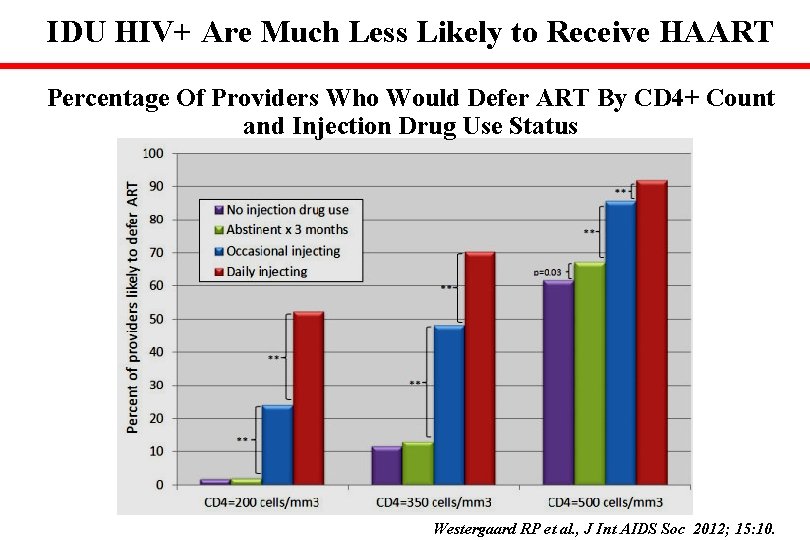
IDU HIV+ Are Much Less Likely to Receive HAART Percentage Of Providers Who Would Defer ART By CD 4+ Count and Injection Drug Use Status Westergaard RP et al. , J Int AIDS Soc 2012; 15: 10.
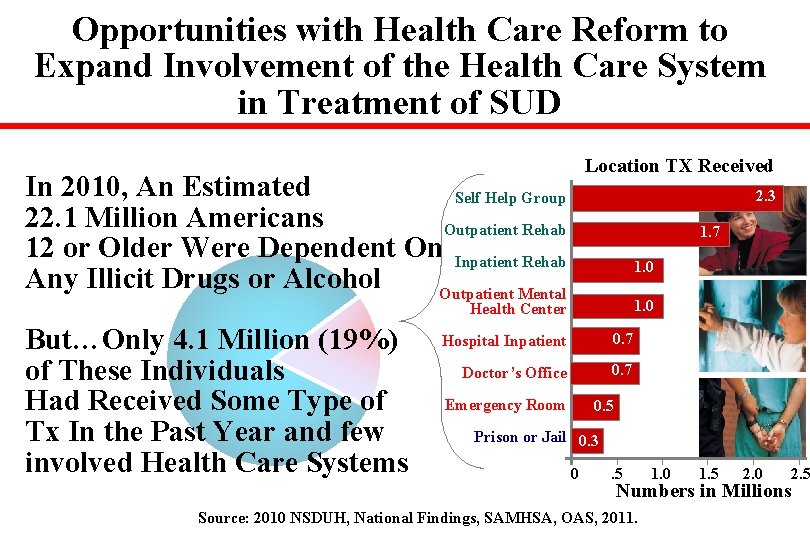
Opportunities with Health Care Reform to Expand Involvement of the Health Care System in Treatment of SUD Location TX Received In 2010, An Estimated Self Help Group 22. 1 Million Americans Outpatient Rehab 12 or Older Were Dependent On Inpatient Rehab Any Illicit Drugs or Alcohol Outpatient Mental 2. 3 1. 7 1. 0 Health Center But…Only 4. 1 Million (19%) of These Individuals Had Received Some Type of Tx In the Past Year and few involved Health Care Systems Hospital Inpatient 0. 7 Doctor’s Office 0. 7 Emergency Room 0. 5 Prison or Jail 0. 3 0 . 5 1. 0 1. 5 2. 0 2. 5 Numbers in Millions Source: 2010 NSDUH, National Findings, SAMHSA, OAS, 2011.

Challenge: How to Integrate Drug Abuse & Addiction Screening, Prevention & Treatment into the Healthcare System
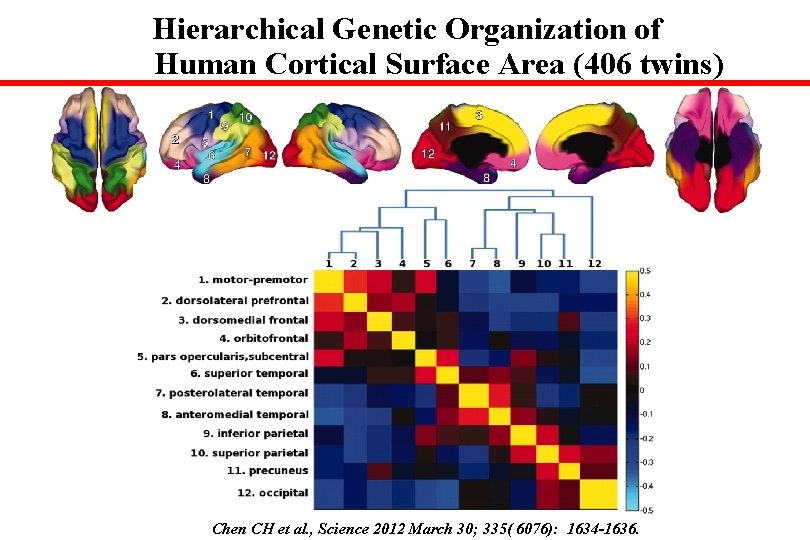
Hierarchical Genetic Organization of Human Cortical Surface Area (406 twins) Chen CH et al. , Science 2012 March 30; 335( 6076): 1634 -1636.
Despite increases in ART incidence of HIV in USA has remained stable at ∼ 56, 300 new infections per year. This is likely to reflect in part failure to treat those with SUD. Of the 1. 1 M individuals living with HIV in the US, 21% are estimated to be unaware of their HIV infection. Undetected cases are likely to be higher among individuals with SUD. Implementation of STTR in Substance Abusers 1. Health Care system (opportunities with Healthcare reform) 2. Criminal Justice system 3. Substance Abuse Treatment
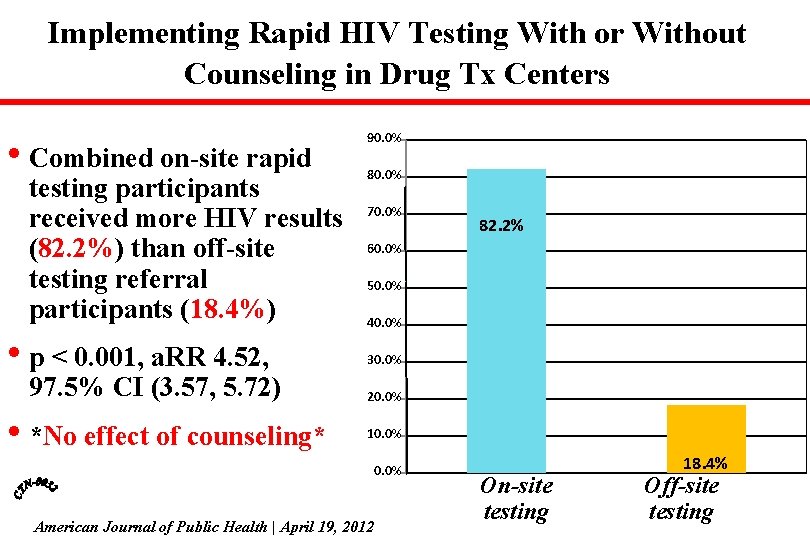
Implementing Rapid HIV Testing With or Without Counseling in Drug Tx Centers • Combined on-site rapid testing participants received more HIV results (82. 2%) than off-site testing referral participants (18. 4%) • p < 0. 001, a. RR 4. 52, 97. 5% CI (3. 57, 5. 72) • *No effect of counseling* 90. 0% 80. 0% 70. 0% 82. 2% 60. 0% 50. 0% 40. 0% 30. 0% 20. 0% 10. 0% American Journal of Public Health | April 19, 2012 On-site testing 18. 4% Off-site testing
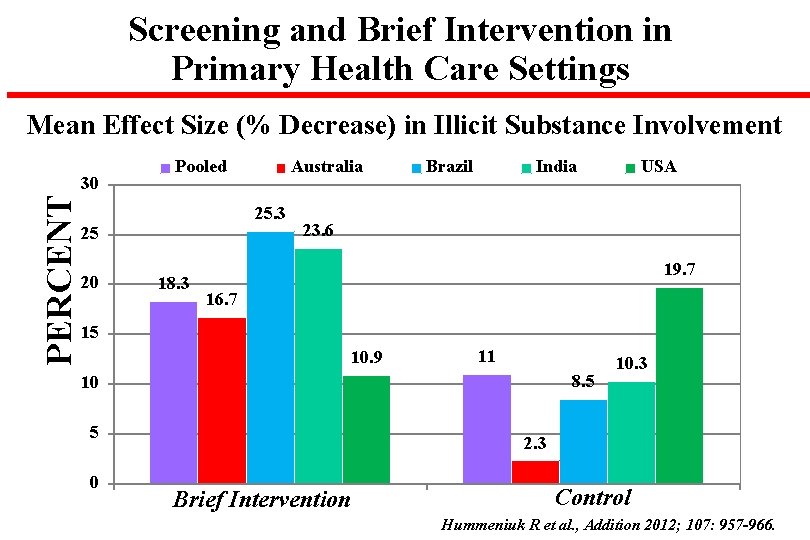
Screening and Brief Intervention in Primary Health Care Settings Mean Effect Size (% Decrease) in Illicit Substance Involvement PERCENT 30 Pooled 25. 3 25 20 Australia 18. 3 Brazil India USA 23. 6 19. 7 16. 7 15 10. 9 11 8. 5 10 5 0 10. 3 2. 3 Brief Intervention Control Hummeniuk R et al. , Addition 2012; 107: 957 -966.
-PK 11195) Microglia are activated](http://slidetodoc.com/presentation_image_h2/5be1f0efee565c90cf750963ac186920/image-27.jpg "Brain Imaging Studies of Microglial Activation (PET and [11 C](R)-PK 11195) Microglia are activated")
Brain Imaging Studies of Microglial Activation (PET and [11 C](R)-PK 11195) Microglia are activated in brains of METH abusers Sekine et al. , J Neurosci. 2008 28(22): 5756 -61 SIV Monkeys with encephalitis show microglia activation Venetti et al. , J Clin Invest. 2004 113(7): 981 -9
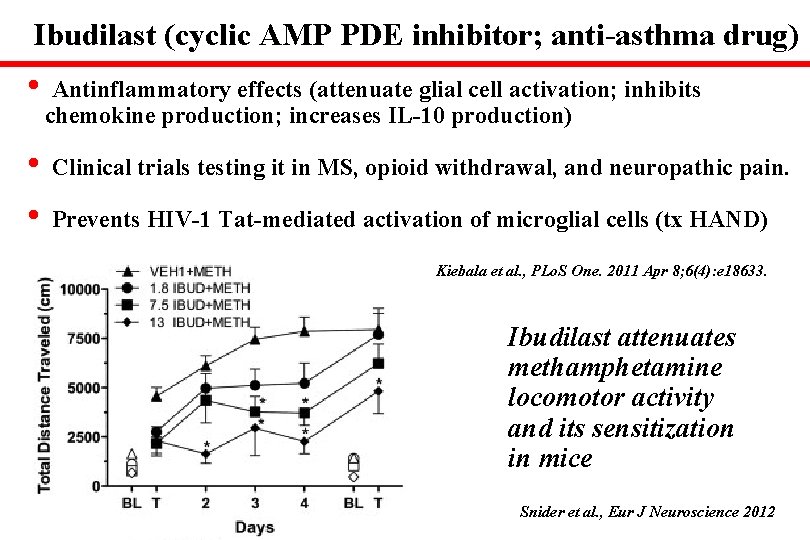
Ibudilast (cyclic AMP PDE inhibitor; anti-asthma drug) • Antinflammatory effects (attenuate glial cell activation; inhibits chemokine production; increases IL-10 production) • • Clinical trials testing it in MS, opioid withdrawal, and neuropathic pain. Prevents HIV-1 Tat-mediated activation of microglial cells (tx HAND) Kiebala et al. , PLo. S One. 2011 Apr 8; 6(4): e 18633. Ibudilast attenuates methamphetamine locomotor activity and its sensitization in mice Snider et al. , Eur J Neuroscience 2012
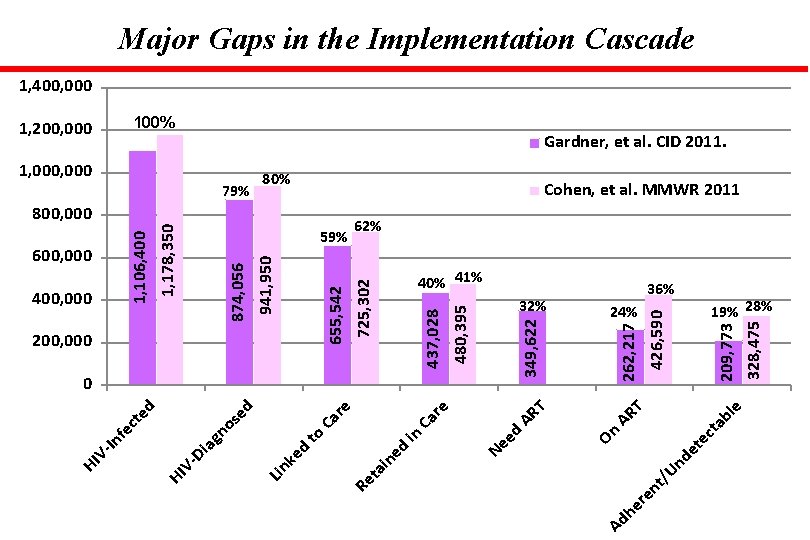
Major Gaps in the Implementation Cascade 1, 400, 000 100% Gardner, et al. CID 2011. 80% Cohen, et al. MMWR 2011 209, 773 426, 590 le T 262, 217 19% 28% ta b AR te c de Un t/ en er T Ne in d ta in e Re ed Ca AR re re Ca Lin ke d to gn ia -D HI V- In fe os ct ed ed 0 24% On 32% 36% 328, 475 40% 41% Ad h 200, 000 62% 349, 622 655, 542 941, 950 400, 000 59% 874, 056 600, 000 1, 178, 350 1, 106, 400 800, 000 480, 395 79% 437, 028 1, 000 725, 302 1, 200, 000
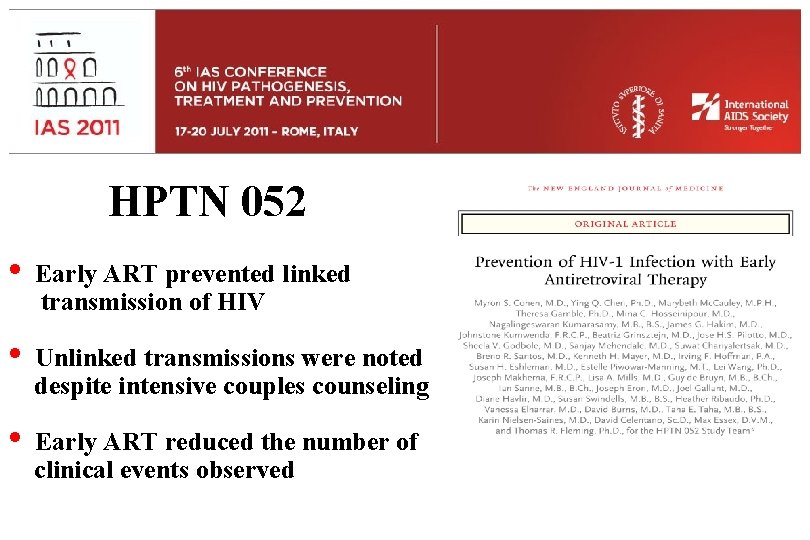
HPTN 052 • Early ART prevented linked transmission of HIV • Unlinked transmissions were noted despite intensive couples counseling • Early ART reduced the number of clinical events observed
- Slides: 30