
Drowning and Near Drowning KH Naghibi MD Drowning
Drowning and Near Drowning KH Naghibi MD
Drowning • Demographics – 6, 000 - 8, 000 deaths per year – The 3 rd leading cause of accidental death in USA – The 2 nd leading cause of death in children – 25, 000 rescues each summer on California beaches
Drowning is. . . • Death secondary to asphyxia while immersed in a liquid, usually water, or within 24 hours of submersion
Drowning • Statistical Risk Factors – Age: Youth 40% under 4 years old – Location: Pools, bathtubs, lakes, rivers – Sex: Male 3: 1 – Time of year: Warm months
Drowning • Unconsciousness – Due to : • • Trauma Seizure Coma Drug/Alcohol abuse
Near Drowning • Statistical Risk Factors – Predisposing Illnesses: Epilepsy, seizures – Trauma: Diving and boating accidents, falls – Mental impairment: Drugs and alcohol
Predisposing Factors • • • Coma, seizures Alcohol/Drugs Exhaustion Hyperventilation Rapidly moving water
Predisposing Factors • • • Poor swimming ability Exhaustion Panic Hypothermia Trauma
In drowning. . . air hunger and usually panic Reflex inspiratory efforts lead to aspiration of water and laryngospasm asphyxia and hypoxaemia / acidosis

Near Drowning • Potential Fresh Water Damage – Hypoxia – Atelectasis – Pulmonary Edema – Hypotonic – Hemolysis • Lowered Na, Cl, and K Strips surfactant
Pathogenesis 1 • Asphyxia, hypoxemia, hypercarbia, & metabolic acidosis • Fresh water vs salt water - little difference (except for drowning in water with very high mineral content, like the Dead Sea) • Hypoxemia – – – Occlusion of airways with water & particulate debris Changes in surfactant activity Bronchospasm Right-to-left shunting increased Physiologic dead space increased
Pathogenesis 2 • • Cardiac arrhythmias Hypoxic encephalopathy Renal insufficiency Global brain anoxia & potential diffuse cerebral edema
Pathophysiologic Changes Neurologic Effects • Cerebral edema 24 - 72 hours following injury • Loss of autoregulation of blood flow • Reperfusion injury
Pathophysiology without aspiration • • • Severe, persistent laryngospasm Anoxic seizures Death
Pathophysiology with aspiration • Hypoxemia – Asphyxia starts the Hypoxia – Intrapulmonary shunting leads to further hypoxemia – Pulmonary damage continues the process
Pathophysiology with aspiration • Hypoxemia – Occurs whether or not patient aspirates – 85 -90% aspirate – 10 -15% DO NOT aspirate
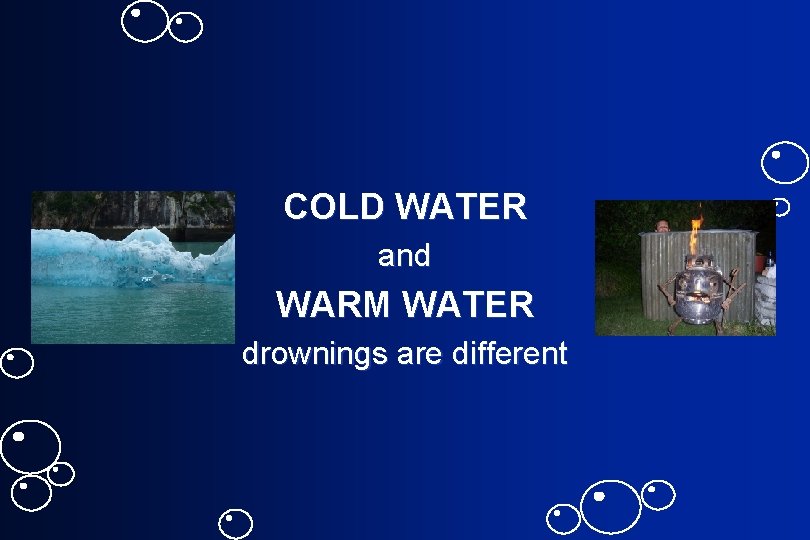
COLD WATER and WARM WATER drownings are different
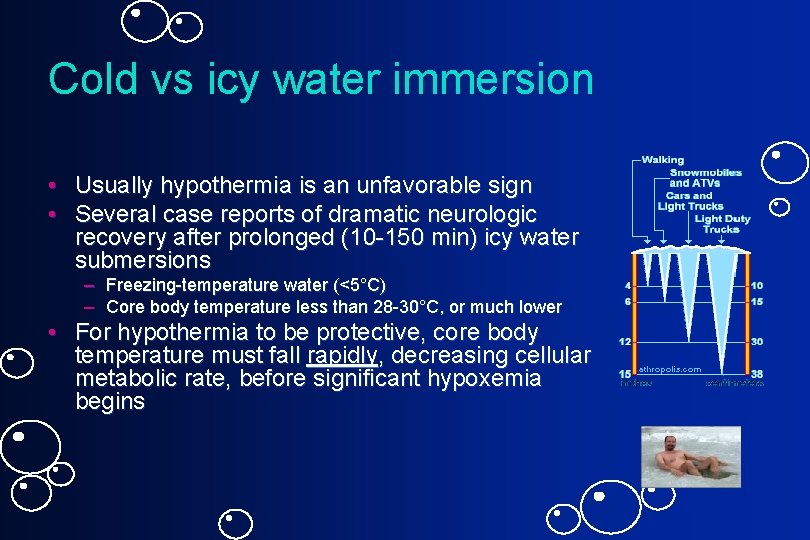
Cold vs icy water immersion • Usually hypothermia is an unfavorable sign • Several case reports of dramatic neurologic recovery after prolonged (10 -150 min) icy water submersions – Freezing-temperature water (<5°C) – Core body temperature less than 28 -30°C, or much lower • For hypothermia to be protective, core body temperature must fall rapidly, decreasing cellular metabolic rate, before significant hypoxemia begins
Warm Water • • • 20 o. C and above 72 o. F and above Lakes, ponds, quarries
Warm Water Submersion Poor Prognosis • In warm water submersion – Submersion > 5 minutes – Fixed and dilated pupils (in the ED) – No CPR for 10 minutes or more – p. H less than 7. 1 on arrival at hospital – Need for in hospital resuscitation or ventilation • Severe neurologic impairment or mortality is likely
Hot Water • Body temperature and above • Hot tubs, bath tubs, hot springs
Salt vs Fresh There are REAL differences
Potential Fresh Water Damage • • • Hypoxia Atelectasis Pathogenic bacteria and impurities lethal • Produces greater long-term damage due to salt in pulmonary edema
Wet Drowning • Approximately 90% of drowning victims – aspirate water – vomit – cough – gasp – flood lungs with water
Drowning Pathophysiology • 3 Major metabolic abnormalities – Anoxia – Acidosis – Hypercapnia
Pathophysiology • Consequences of Aspiration – 2. 2 cc/kg – 11 cc/kg – 22 cc/kg Hypoxia Blood volume changes Electrolyte changes • Average aspiration is only 2 -4 cc/kg
Initial Assessment and Resuscitation Restating the obvious
Initial Assessment and Resuscitation • Specialized issues – No Heimlich maneuver: thought to clear airways of liquid obstruction • Amount of fluid is usually small and nonobstructive • May increase risk of aspiration of gastric contents • Do not waste time, correcting hypoxia is paramount
Initial Assessment and Resuscitation • Threshold for intubation should be very low • Indications for intubation – Arrest – Loss of airway protective reflexes – Deteriorating neurologic exam – Severe respiratory distress or hypoxia despite supplemental oxygen – Hypothermia (core temperature < 30 o. C)
Cold water (<10°C) immersion is different from that in warmer water
Hypothermia • Cerebral blood flow decreases 6 -7% per 1 o. C drop • Negative effects include dysrhythmias, increased blood viscosity • Must be cold before hypoxic
In cold water. . . Cold stress leads to: • Respiratory and cardio-vascular responses • Gasp reflex
Initial Assessment and Resuscitation • • • Hypovolemia Marked vasoconstriction IV fluids
Labs & tests • Very mild electrolyte changes • Moderate leukocytosis • Hct and Hgb usually normal initally – Fresh water aspiration, the Hct may fall slightly in the first 24 hrs due to hemolysis – Increase in free Hgb without a change in Hct is common • DIC occasionally • ABG – metabolic acidosis & hypoxemia • EKG – Sinus tachycardia & nonspecific ST-segment and T-wave changes – Reverts to normal within hours – Ominous - ventricular arrhythmias, complete heart block • CXR – May be normal initially despite severe respiratory disturbances – Patchy infiltrates – Pulmonary edema
Laboratory • • • Arterial blood gases Electrolytes BUN/ Creatinine Platelets/ PT & PTT/ CBC Serum & Urine Hemoglobin
Findings at autopsy • • • Wet, heavy lungs Varying amounts of hemorrhage and edema Disruption of alveolar walls ~70% of victims had aspirated vomitus, Cerebral edema and diffuse neuronal injury Acute tubular necrosis
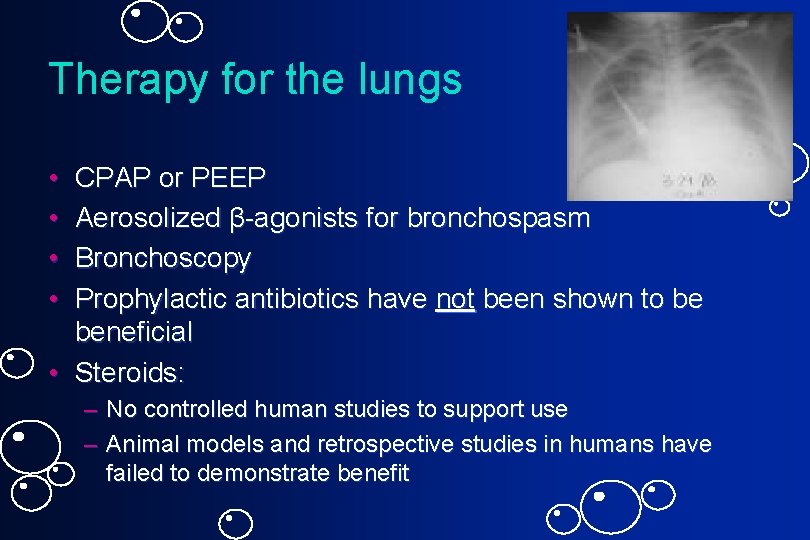
Therapy for the lungs • • CPAP or PEEP Aerosolized β-agonists for bronchospasm Bronchoscopy Prophylactic antibiotics have not been shown to be beneficial • Steroids: – No controlled human studies to support use – Animal models and retrospective studies in humans have failed to demonstrate benefit
Brain therapy • ICP monitoring - not indicated, typically irreversible hypoxic cellular injury • Brain CT – not indicated, unless TBI suspected • Mild hyperventilation? • Osmotherapy – not indicated • Corticosteroids (dexamethasone) - no proven benefit • Seizures - treat aggressively • Shivering or random, purposeless movements can increase ICP • Hypothermia and barbiturate coma - highly controversial & unlikely to benefit the patient (31 comatose kids, J Modell, NEJM 1993)
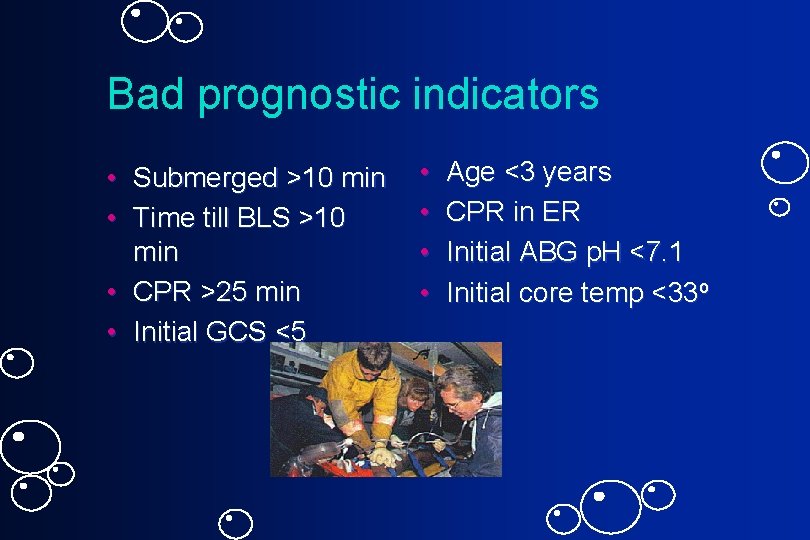
Bad prognostic indicators • Submerged >10 min • Time till BLS >10 min • CPR >25 min • Initial GCS <5 • • Age <3 years CPR in ER Initial ABG p. H <7. 1 Initial core temp <33 o
Recommendations • Pre-hospital resuscitation, including early intubation, ventilation, vascular access, and administration of advanced life support medications • Continued resuscitation and stabilization in the ED • Full supportive care in the ICU for a minimum of 48 hrs • Consider withdrawal of support if no neurologic improvement is detected after 48 hours – Testing such as brainstem evoked responses, EEG, and MRI (not CT) may prove helpful for neurologic examination Pediatrics, 1997 Christenson, Jansen, Perkins
Near Drowning Pulmonary Injury • Aspiration as little as 1 -3 cc/kg can cause significant effect on gas exchange – Increased permeability – Exudation of proteinaceous material in alveoli – Pulmonary edema – decreased compliance
ICU Management Strategies Intubation/Ventilation Indications • • Sp. O 2 < 90% on FIO 2 > 0. 6 Pa. CO 2 > 50 with p. H < 7. 3 Increased work of breathing Abnormal CNS exam
Treatment of near drowning victims, some important points: • Immediate on site CPR is the key to increase the chance of survival. • DO NOT DO any specific maneuvers (Heimlich) to expel water from the lungs. • ED observation for 8 hours to screen for those requiring hospital admission. • Arterial blood gas analysis and chest x-rays are the most reliable parameters. • Warning of any pyrexial illness after discharge (secondary pulmonary infection).
Resuscitation Fluids • Current practice – Normal Saline – 5% Albumin – 25% Albumin – Lactated Ringers Solution – Hypertonic Saline • Choice dependent on provider, cost, habit
Albumin Infusion During Injury Proposed Mechanisms for Protection • Anti-inflammatory agent • Reduction of platelet aggregation – Reduction of microvascular thrombosis • Improved local blood flow
Albumin Infusion During Injury Proposed Mechanisms for Protection • Regulates pyruvate dehydrogenase – Improved cellular bioenergetics • Tabernero et al. Glia 1999 • Binds free calcium – Directly decreases cellular injury • Wortsman et al. Am J Physiol 1980 • Oxygen radical scavenger – Loban et al. Clin Sci 1997 – Kooy et al. Crit Care Med 1995
Outcomes Long Term Prognosis • Overall, >15% survivors with significant neurologic deficits • Children with spontaneous, purposeful movements and had a normal brainstem examination at 24 hours progressed to full recovery • Those without these findings by 24 hours suffered severe neurologic deficits or death
Outcome Measures • Death • Cardiovascular function as measured by: – Blood pressure, heart rate, and initial arterial blood gas measurements – Echocardiogram – Need and duration of inotropic support • Need and duration of mechanical ventilation • Modified Multi-organ Failure Score on Days 1, 2, 3, and 7 – Serum Creatine – Cardiac Troponin I – Total Bilirubin
Outcome Measures • • • Lengths of stay in pediatric intensive care unit Length of stay in hospital. Admission neurologic examination as measured by the: – – Glasgow Coma Scale score pupillary reactivity other brain stem reflexes presence of apnea • Magnetic resonance imaging and spectroscopy abnormalities at post-arrest day 7. • Pediatric Cerebral Performance Category Scale Score (PCPCS) at 6 to 12 months post injury. • Glasgow Outcome Score (GOS) on discharge from PICU GOS on discharge from hospital
Factors increasing the risk of drowning Toddler and adolescent age groups Pools / dams / drains etc in children Water with currents / rips / waves Colder water Alcohol and drugs (esp. in men) Associated head and neck injury Fatigue
• In warm water – death from drowning, slow onset hypothermia • In cold water – stress response may cause early death, so too can drowning, hypothermia may be protective in total immersion, hypothermia is a late (>30 mins ) cause of death
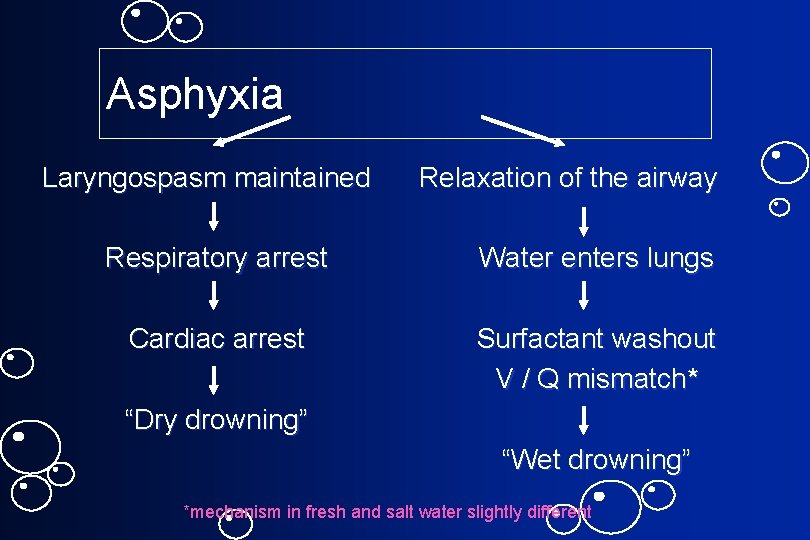
Asphyxia Laryngospasm maintained Relaxation of the airway Respiratory arrest Water enters lungs Cardiac arrest Surfactant washout V / Q mismatch* “Dry drowning” “Wet drowning” *mechanism in fresh and salt water slightly different
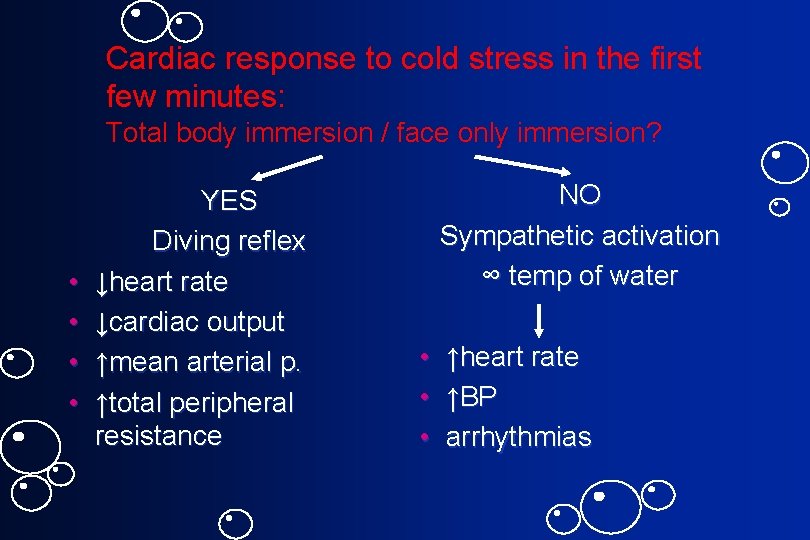
Cardiac response to cold stress in the first few minutes: Total body immersion / face only immersion? • • YES Diving reflex ↓heart rate ↓cardiac output ↑mean arterial p. ↑total peripheral resistance NO Sympathetic activation ∞ temp of water • ↑heart rate • ↑BP • arrhythmias
The problem with looking well. . . Aspiration of water can cause late complications: • Neurogenic pulmonary oedema, Pneumonia, SIRS, DIC, Haemolysis, Hepatic & renal failure, bowel necrosis • Plus complications of hypothermia
Assessing aspiration: Historical factors Prolonged head immersion Period of apnoea CPR required Symptoms / signs Cough, breathlessness, Retrosternal discomfort Cyanosis, tachycardia Tachypnoea, wheeze or Crackles in chest Pink frothy sputum
Immediate hospital management • • Assess and manage ABC 100% oxygen Pulse oximetry (watch for false readings caused by peripheral shutdown and acidosis) ABGs, FBC, U&E CXR Observation Management of associated hypothermia
Pathophysiology with aspiration • Pulmonary Edema – Damage to Alveolar membrane – Damage to pulmonary microcirculation
Clinical Manifestations • Radiographic Changes – Non-cardiac pulmonary edema with normal heart size – Perihilar pattern – Seen in 1/3 to 2/3 of patients initially
Hypoxia • Respiratory Management Objective – Try to achieve a Pa O 2 of 70 -100 mm Hg – 70% will require more aggressive therapy
PEEP • • • Indicated when p. O 2 < 60 and FIO 2 > 50 Try to keep the p. O 2 at 75 -90 This prevents pulmonary edema and ARDS ? ? ? (acute respiratory distress syndrome)
Experimental Therapies • • • ? Controlled hypothermia ? Calcium channel blockers ? Barbiturate coma therapy ? Hyperbaric oxygenation ? Hyperventilation
Prognosis • Survival depends upon a variety of interrelated factors – Age – Underlying disease – Water type and temperature – Duration of submersion – Degree of hypothermia
Bad Prognostic Factors • • Older age Warm water Spinal cord damage Inadequate CPR Decorticate / Decerebrate Unconscious Septic tank
Good Prognostic Factors • • • Older child or young adult Cold water Adequate CPR/on scene ACLS/BLS Conscious Short submersion Healthy
- Slides: 64