
Driving Theory Preparation Course Multiple choice 57 minutes
- Slides: 44
Driving Theory Preparation Course
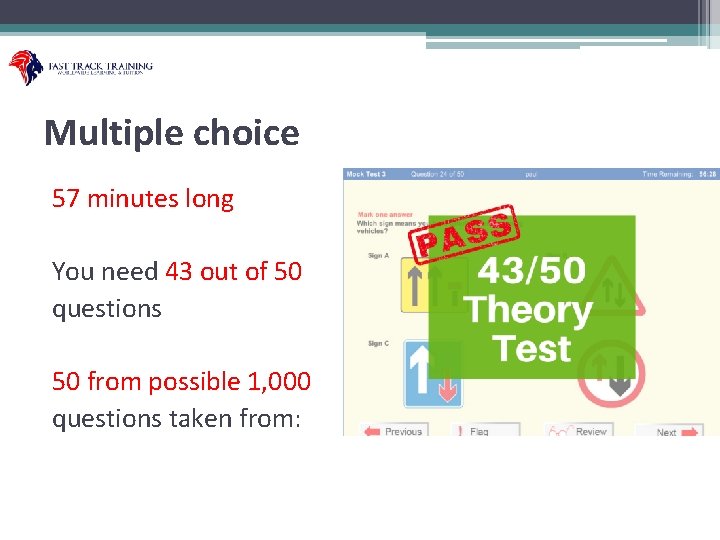
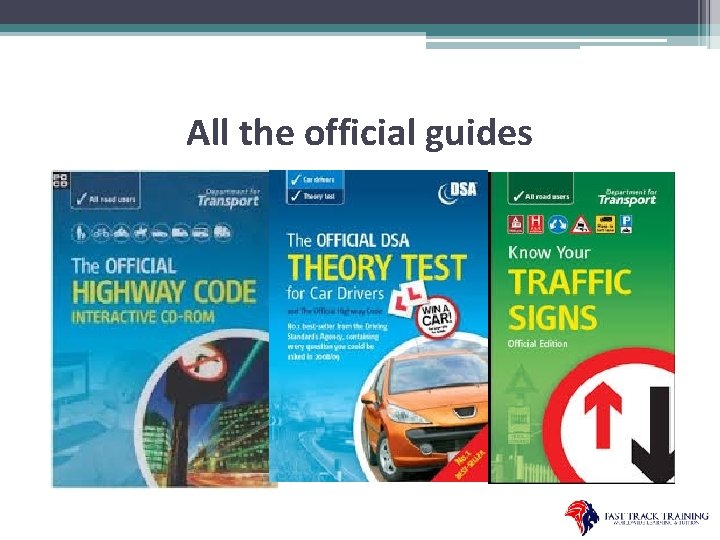
Multiple choice 57 minutes long You need 43 out of 50 questions 50 from possible 1, 000 questions taken from:
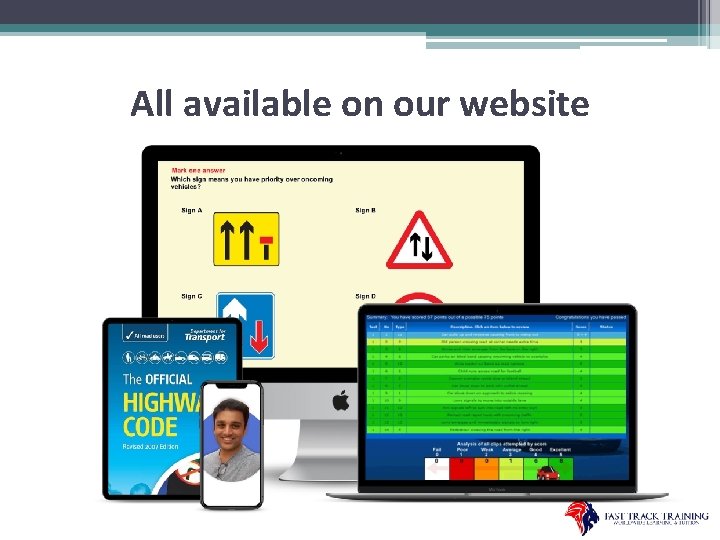
All available on our website
What will you be learning today? Overview of the test about the multiple choice practice questions about the hazard perception test practice session summary, tips and questions
All the official guides
You will be tested on: alertness attitude safety and your vehicle safety margins hazard awareness vulnerable road users other types of vehicles
You will be tested on: road conditions and vehicle handling motorway driving rules of road and traffic signs essential documents incidents accidents and emergencies vehicle loading
Alertness Observation - making sure you know what other road users are in your vicinity Anticipation - thinking well in advance about what other road users may do next Concentration - understanding the actions of other road users whilst driving
Attitude Consideration - treating other road users in a polite and correct manner Positioning - knowing vehicle road positions Courtesy - treating other drivers with respect Priority - understanding the rules of priority when driving.
Safety and your vehicle Fault Detection - being able to detect vehicle problems real or potential and the consequences of them. Vehicle Defects - understanding how and why a vehicle that isn't roadworthy vehicle can endanger life. Emissions - understanding the regulations that govern vehicle emissions.
Vulnerable Road Users Animals - understanding that animals can be unpredictable and may move slowly. Motorcyclists - be aware of their presence on the road. Elderly Drivers - be aware that they may be slower to make decisions
Vulnerable Road Users Children - be aware that they are particularly unpredictable on and around roads. Pedestrians - be aware of their actions as they cross the road. New Drivers - understanding that they may be more hesitant, allow for this and be patient. Cyclists - be aware that they may swerve to avoid obstructions and are often affected by weather conditions.
Other types of vehicles Motorcycles - knowing the problems facing motorcyclists Lorries - understanding the potential hazards larger vehicles can cause Buses & Trams - understanding the potential hazards larger vehicles can cause
Vehicle handling The questions deal with how external factors, such as the weather, can affect the handling of your vehicle and overall road safety
Motorway rules Weather Conditions - knowing motorway speed restrictions Road Surfaces - using the left-hand lane unless overtaking Time of Day - knowing where you can and can't stop Speed - when and where to use lights to see and be seen Traffic Calming - knowing that you can only stop on a motorway in an emergency and how to use hard shoulder emergency phones
Rules of the road Speed Limits - knowing the different speed limits and when to use these speed limits. Lighting - using car lighting effectively and safely to see and be seen when driving. Lane Discipline - know and understanding lane rule regulations. Parking - where to safely park and knowing the different parking restrictions and regulations.
Road and traffic signs Road Signs - knowing the meanings of different road signs Speed Limits - being aware of and planning for speed limit signs Road Markings - knowing the meanings of road markings Regulations - knowing the regulations associated with road signs & markings
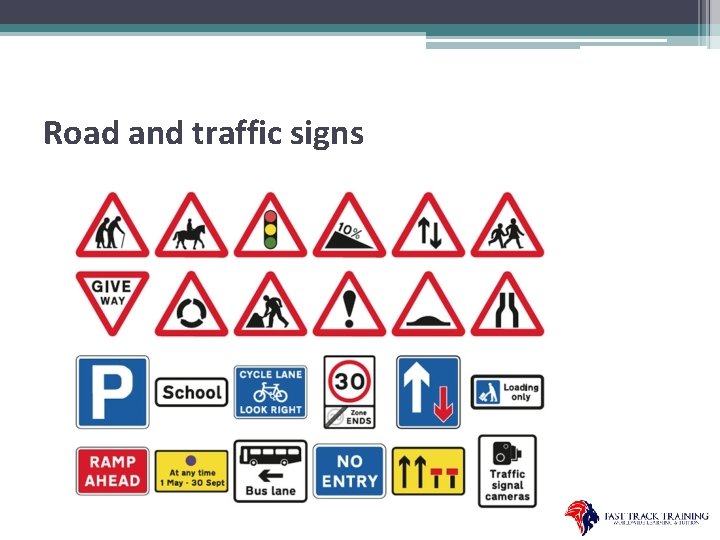
Road and traffic signs
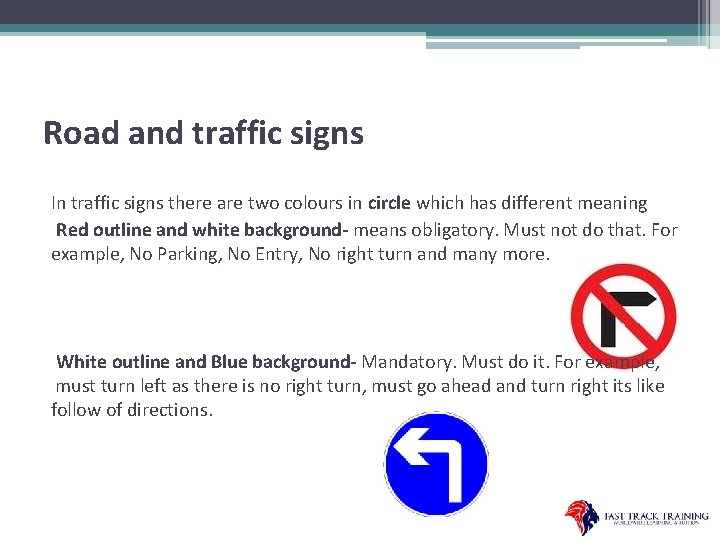
Road and traffic signs In traffic signs there are two colours in circle which has different meaning Red outline and white background- means obligatory. Must not do that. For example, No Parking, No Entry, No right turn and many more. White outline and Blue background- Mandatory. Must do it. For example, must turn left as there is no right turn, must go ahead and turn right its like follow of directions.
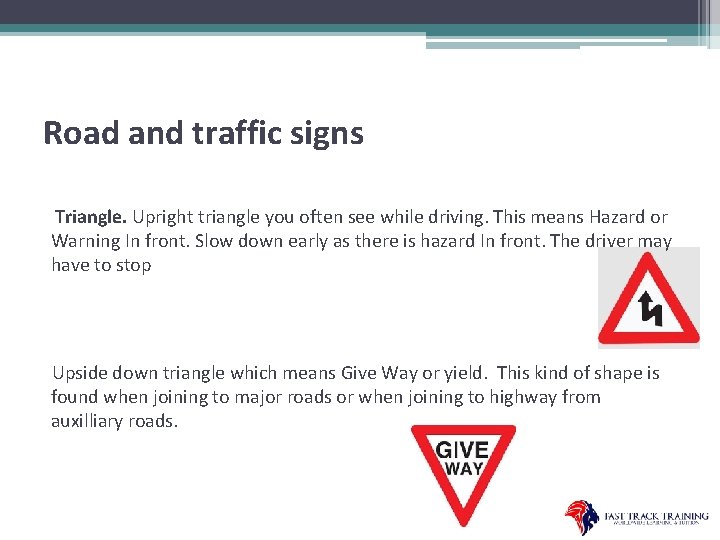
Road and traffic signs Triangle. Upright triangle you often see while driving. This means Hazard or Warning In front. Slow down early as there is hazard In front. The driver may have to stop Upside down triangle which means Give Way or yield. This kind of shape is found when joining to major roads or when joining to highway from auxilliary roads.
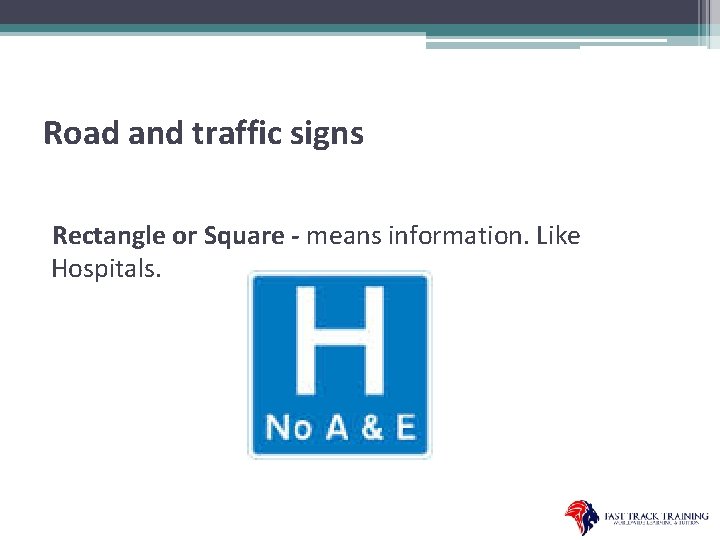
Road and traffic signs Rectangle or Square - means information. Like Hospitals.
Documents Licenses - knowing what type of driving licenses you need. Insurance - car insurance cover types and what you need to drive legally MOT Certificate - know the legal requirements for vehicle testing and what the test covers Vehicle Excise Duty (tax disc) Vehicle Registration Document/Certificate
Accidents First Aid - basic first aid and dealing with road accidents Warning Devices - knowing how to warn other road users of an accident Reporting Procedures - knowing how and when to call the emergency services and knowing when you must report road accidents Safety Regulations - understanding the warning signs and dangers for vehicles carrying hazardous loads.
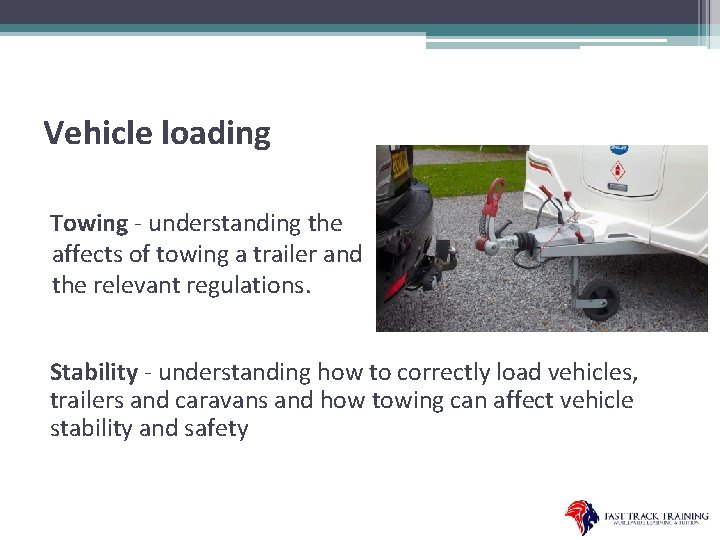
Vehicle loading Towing - understanding the affects of towing a trailer and the relevant regulations. Stability - understanding how to correctly load vehicles, trailers and caravans and how towing can affect vehicle stability and safety
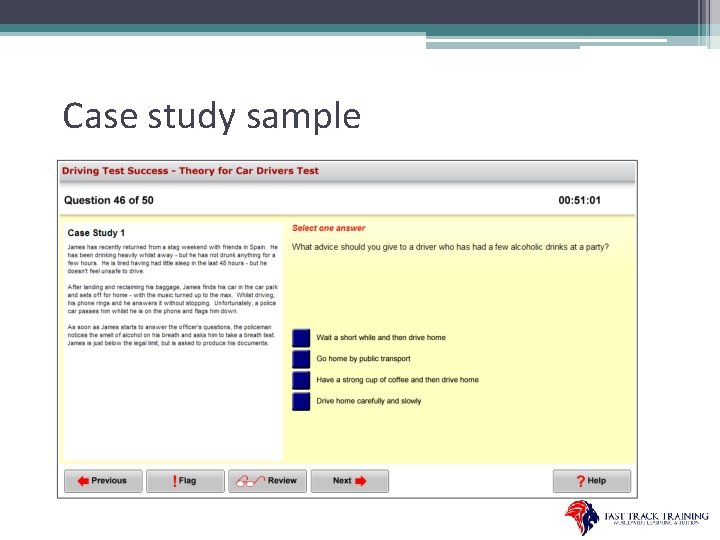
Case study Some of the questions asked during the Theory Test come in the form of a 'case study' - a scenario on which five questions will be based. These questions are designed to test whether you have really understood and can apply driving theory. In a 'case study' a driving scenario is set and you will be asked a number of questions about that scenario and how you would react as in the example
Case Study A scenario with 5 questions Real life situation a driver could face Assesses understanding of road safety issues
Case study sample
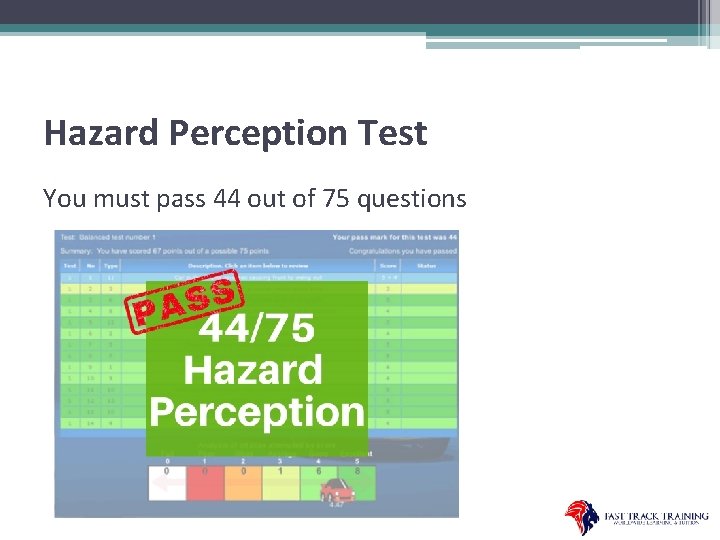
Hazard Perception Test You must pass 44 out of 75 questions
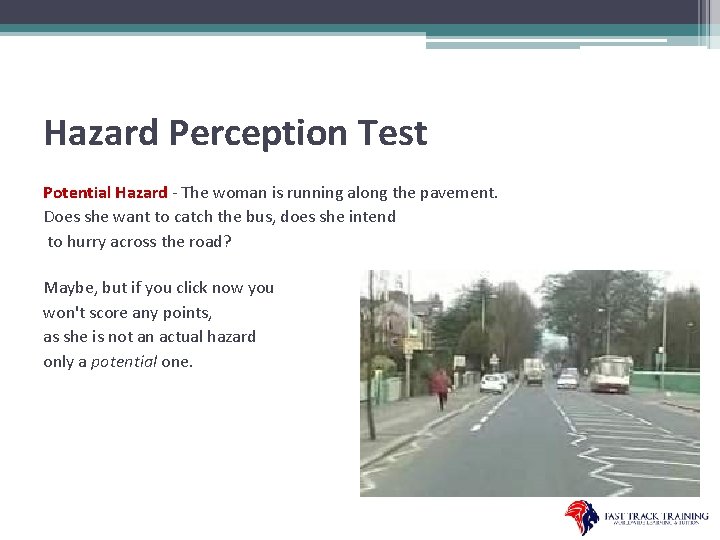
Hazard Perception Test Potential Hazard - The woman is running along the pavement. Does she want to catch the bus, does she intend to hurry across the road? Maybe, but if you click now you won't score any points, as she is not an actual hazard only a potential one.
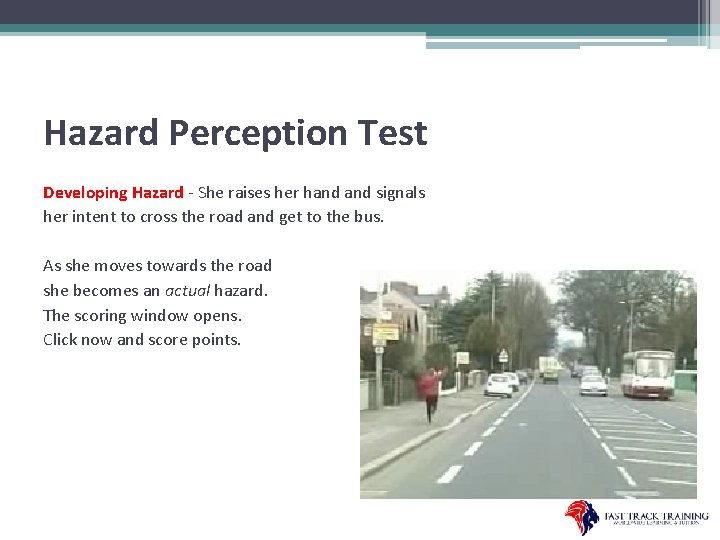
Hazard Perception Test Developing Hazard - She raises her hand signals her intent to cross the road and get to the bus. As she moves towards the road she becomes an actual hazard. The scoring window opens. Click now and score points.
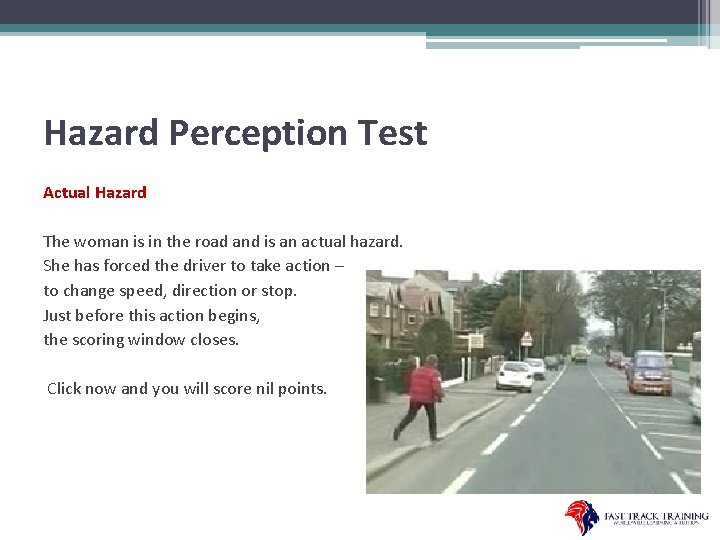
Hazard Perception Test Actual Hazard The woman is in the road and is an actual hazard. She has forced the driver to take action – to change speed, direction or stop. Just before this action begins, the scoring window closes. Click now and you will score nil points.
Tips! To prepare and practice for the hazard perception test try testing yourself. Take a journey by car and watch the road ahead. Numerous hazards will emerge. Some will develop, others will not. Can you tell which? For the potential hazards that develop into actual hazards, ask yourself what action you would need to take in order to deal with them safely.
Tips! Book your test It may sound obvious, but you’ll need to book your test at one of the 160 test centres nationwide visit: https: //www. gov. uk/driving-theory-test-centre to find your nearest centre and book your test. Make sure you have your provisional licence and a credit or debit card to hand, because it’ll cost around £ 30.
Tips! Hit the books During the test you’ll be given 50 multiple choice questions from a bank of more than 1000 and you’ll need to get at least 43 correct to pass. The good news is that the DSA (Driving Standards Agency) has produced a Theory Test Handbook which is packed full of useful tips and example questions. Make sure you get your hands on a copy and take some time to revise. Brush up on your hazard spotting
Tips! Once you’ve made it through the multiple-choice questions you’ll move on to the hazard perception test. It’s made up of a series of video clips featuring a variety of driving hazards. You can get loads more information on the Hazard Perception Test here: http: //www. ingenie. com/young-drivers-guide/10 -tipson-how-to-pass-your-theory-test/
Tips! To make sure you’re fully prepared, visit Drive i. Q http: //www. driveiq. co. uk/ where you can practise scanning the road effectively, identifying distractions and looking out for cyclists with their interactive video clips. You should complete at least 20 hours of revision to make sure you are fully prepared for your theory test.
Tips! Put in the hours Yes, when it comes to revising there’s just no substitute for putting the hours in. Your test questions will be picked at random, so you need to be confident answering ANY of the questions in the DSA Theory Test Handbook – that’s around 1000 possible questions! And don’t forget to practise your hazard perception. You need to get a minimum of 43 out of 50 on the multiple choice and 44 out of 75 on the Hazard Perception test to pass
Tips! Top tip Practise answering under pressure by asking friends and family to quiz you, bearing in mind that in the real test you’ll have 57 minutes to answer the 50 questions. Take a mock test Think you’re ready for your theory test? Head over to the government-run Safe Driving For Life website: http: //www. safedrivingforlife. info/take-official-freepractice-driving-theory-test and try their mock tests – though they only offer the multiple choice part.
Tips! If your mock test doesn’t go quite as well as you hoped, you can reschedule your theory test up to three days before your test date. If you’re not feeling confident of a pass, it’s best to take a rain check and squeeze in some extra revision!
Tips! On the day: You need to be at the test centre 30 minutes before the start of your test. Leave plenty of time Chances are you’ve not been to the test centre before, so leave plenty of time to get there and minimise stress on the day.
Tips! Take both parts of your licence You must have your paper AND photocard licence on the day of your theory test. If you forget either of these, you won’t be able to sit your test and you’ll still have to pay the test fee.
Tips! Use the practice time You get 15 minutes before your test to get used to the touch screen and the layout of the questions. Take your time and if something doesn’t look like it’s working properly, raise it before your test starts. Flag tricky questions In the test you’ll have 57 minutes to answer 50 multiple choice questions. Stuck on a tricky one? Not to worry. Hit the flag button and it’ll mark the question as unanswered, so you can easily go back to it before the end of the test.
Tips! Take a breather You get a 3 minute break between the first and second part of your test. You’re halfway there (YES!) so take a breather, have a quick stretch at the desk and focus on the next part of the test - hazard perception: http: //www. ingenie. com/young-drivers-guide/what-toexpect-from-the-hazard-perception-test/
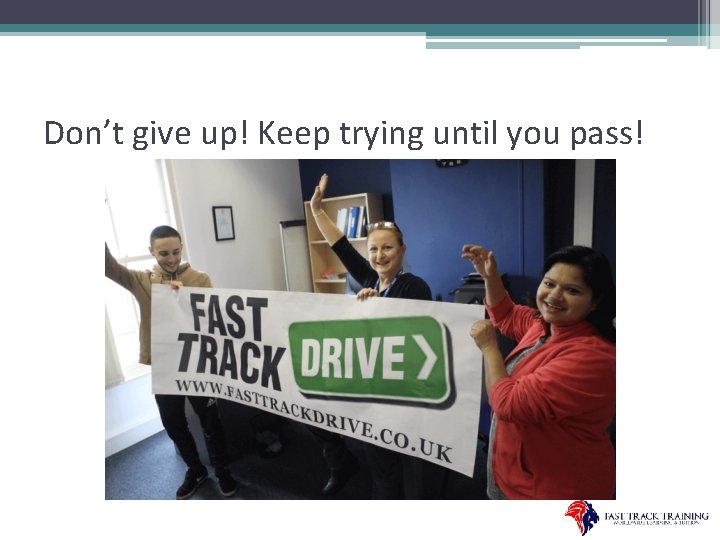
Don’t give up! Keep trying until you pass!