
DRIVING COLLABORATION LEVERAGING THE EFQM MODEL AND ISO
DRIVING COLLABORATION: LEVERAGING THE EFQM MODEL AND ISO 44001 BY DENIS LEONARD GRAHAM 18 TH NOV 2020 deliver projects better, faster, together
Topic and Speaker Driving Collaboration: Leveraging The EFQM Model & ISO 44001. Organizational collaboration has become increasingly important. However, most organizations still lack the knowledge and management capabilities to realize the full potential of collaboration. More formal approaches are needed to manage collaboration to provide structure and competence. The EFQM Model and ISO 44001 provide the strategic and tactical tools to help achieve this. By leveraging the links between them we can use them to their maximum advantage. Denis Leonard has a degree in Building Engineering, an MBA and Ph. D in Quality Management. He is a Fellow of the Chartered Quality Institute, American Society for Quality, Chartered Institute of Building & Institution of Civil Engineers and a Member of the Institute of Collaborative Working. A Certified Lean Practitioner and Six Sigma Black Belt he has experience with Lean, Six Sigma, ISO 9001, 14001, 45001, 44001 and the EFQM & Baldrige Criteria. He has worked in Quality Management for 25 years, in the construction industry in both the US and UK in commercial, civil engineering and home building. He is Head of Integrated Management Systems for GRAHAM are ISO 44001 Certified and achieved an Institute of Collaborative Working Award in 2019. deliver projects better, faster, together
Presentation Overview • • Collaboration The EFQM Model & ISO 44001 Their alignment Q&A deliver projects better, faster, together
Collaboration deliver projects better, faster, together
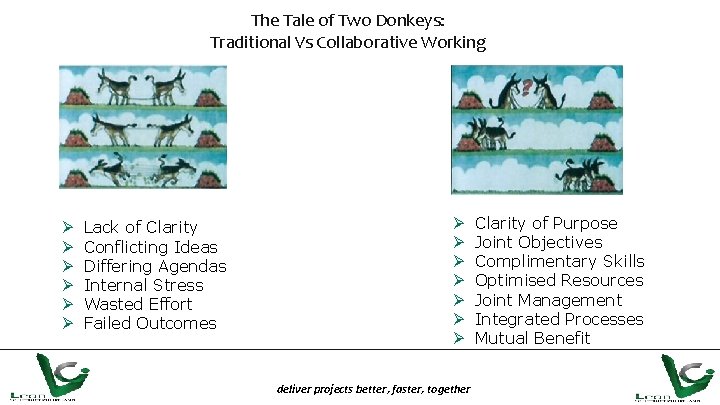
The Tale of Two Donkeys: Traditional Vs Collaborative Working Ø Ø Ø Lack of Clarity Conflicting Ideas Differing Agendas Internal Stress Wasted Effort Failed Outcomes Ø Ø Ø Ø deliver projects better, faster, together Clarity of Purpose Joint Objectives Complimentary Skills Optimised Resources Joint Management Integrated Processes Mutual Benefit
Don’ts Do’s of collaboration • Create a clarity of purpose • Work in isolation • Ensure there are joint • Have a win – lose mindset objectives • Use a siloed approach to management • Build trust • Work with differing agendas • Emphasis teamwork • Have a lack of candour • Use your behavioural profile and training to focus on behaviours (Di. SC, EI, Belbin. . ) deliver projects better, faster, together
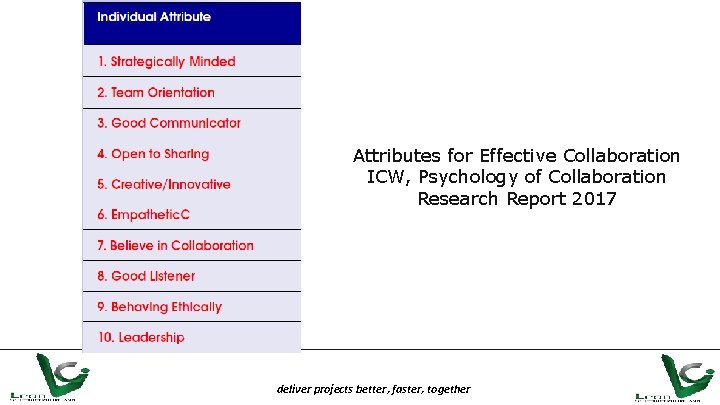
Attributes for Effective Collaboration ICW, Psychology of Collaboration Research Report 2017 deliver projects better, faster, together
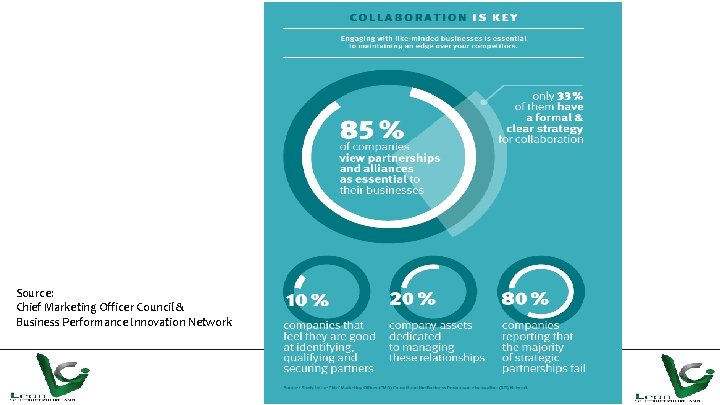
Source: Chief Marketing Officer Council & Business Performance Innovation Network deliver projects better, faster, together
The EFQM Model deliver projects better, faster, together
The EFQM Model deliver projects better, faster, together

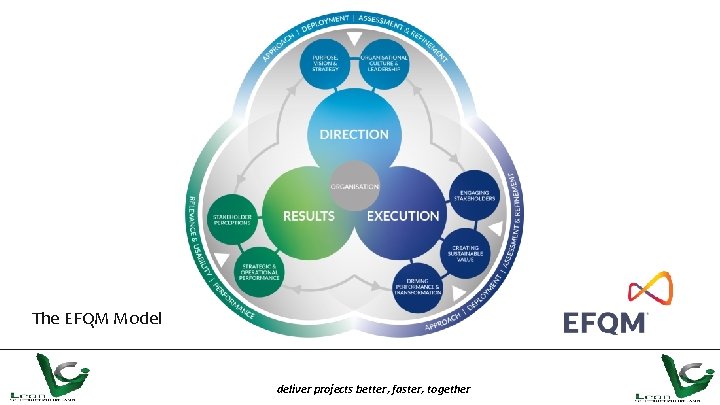
does this Organisation exist? What Purpose does it fulfil? Why this particular Strategy? 1. “How” 2. does it intend to deliver on its Purpose and its Strategy? RESULTS “Why” EXECUTION DIRECTION EFQM: Concept & Structure 1. “What” 2. has it actually achieved to date? “What” does it intend to achieve tomorrow? deliver projects better, faster, together
Plan and develop the APPROACHES that will deliver the improvement Define the RESULTS you want to achieve WHAT RADAR ASSESS the impact and REFINE to ensure you achieve the desired result WHY DEPLOY the improvement plan HOW deliver projects better, faster, together
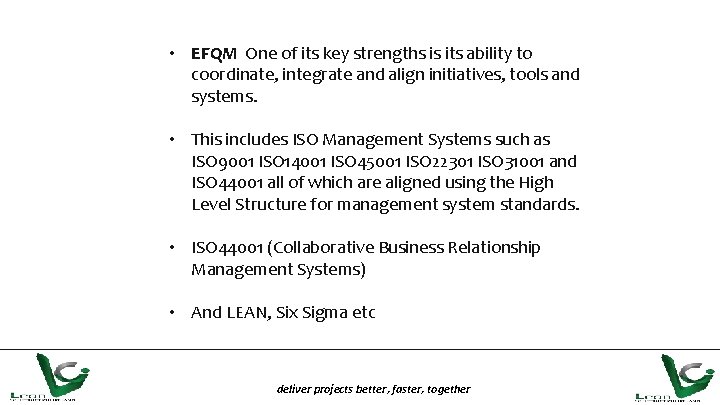
• EFQM One of its key strengths is its ability to coordinate, integrate and align initiatives, tools and systems. • This includes ISO Management Systems such as ISO 9001 ISO 14001 ISO 45001 ISO 22301 ISO 31001 and ISO 44001 all of which are aligned using the High Level Structure for management system standards. • ISO 44001 (Collaborative Business Relationship Management Systems) • And LEAN, Six Sigma etc deliver projects better, faster, together
• The EFQM Model itself has a strong focus on collaboration. • The research findings that shaped the newest version of The EFQM Model include a need for a leadership style that is ‘less hierarchical, less command control, more collaborative’ (EFQM a p 6) • Fundamental to the model is the need for ‘developing a culture based on co-creation rather than win-lose in an organisations relationships with others in its ecosystem’ p 7 (EFQM a) deliver projects better, faster, together
Within the structure of the model itself: • Criterion 2 Organisational Culture and Leadership, • 2. 3 Enable Creativity and Innovation, looks for organizations that ‘engages in learning and collaboration networks to identify opportunities for creativity, innovation and disruptive thinking. ’ • 2. 2 Create the Conditions for Realising Change, the need to ‘work with key stakeholders to create the conditions where the norm is successful change. ’ • The EFQM Innovation Lens, a set of criteria which has been developed based on the EFQM Model to focus specifically on innovation, has a whole Criterion that is dedicated to ‘Stakeholder Collaboration’. (EFQM b) • The EFQM Model is therefore a significant strategic vehicle for collaboration. deliver projects better, faster, together

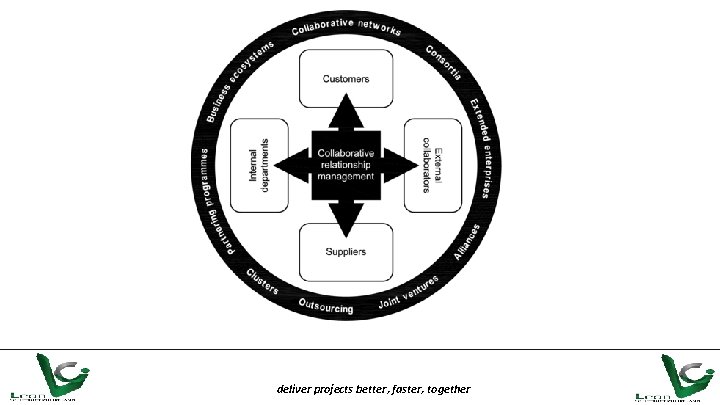
ISO 44001 Collaborative Management System deliver projects better, faster, together
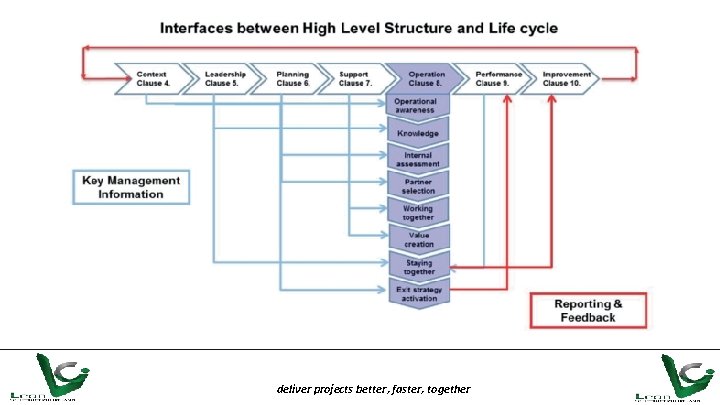
• Collaboration is not new but building on the principle that relationships in business are a crucial aspect of performance and success, organizations need to consider the catalyst required to develop, promote, implement and maintain effective collaborative practice, whilst at the same time exploring and evaluating the interdependence between operational practices and the behaviours that underpin performance and outcomes. • The ISO 44001 Collaborative Standard provides the infrastructure to achieve this. deliver projects better, faster, together
deliver projects better, faster, together
deliver projects better, faster, together
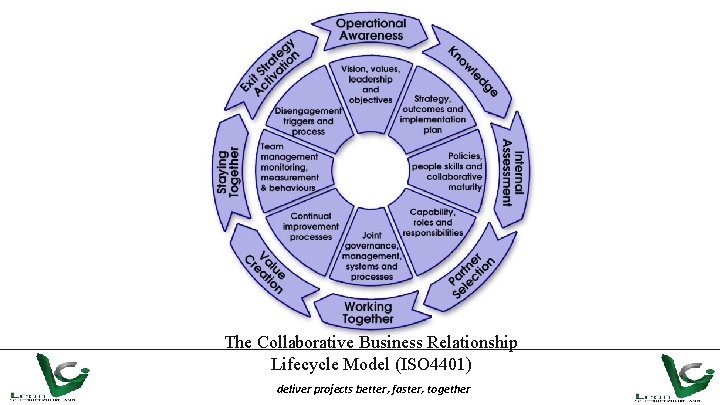
The Collaborative Business Relationship Lifecycle Model (ISO 4401) deliver projects better, faster, together

• ISO 44001 was developed to establish the requirements of a lifecycle framework to improve collaborative business relationships in and between organisations of all sizes. • To establish a management system and operational process requirements for organisational engagement. deliver projects better, faster, together
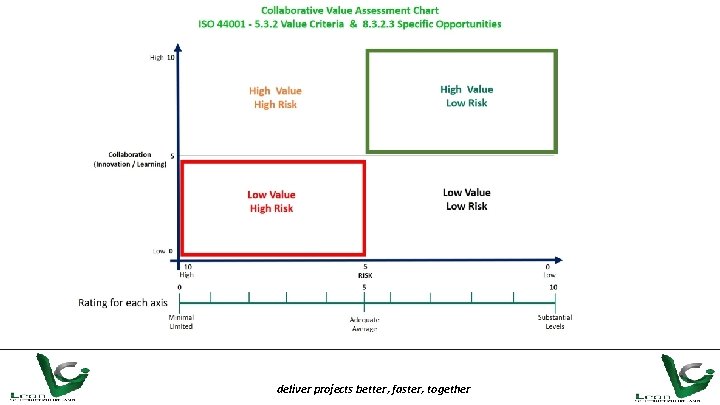
• At the core of ISO 44001 is Value. • Value Creation in Stage 6 is defined as ‘the need to establish processes for creating additional value through collaboration and enhanced alignment between organisations. • The importance of this continual improvement and innovation is established within all collaborative relationships. ’ (ISO 44001, p 58) • It is interesting to note the reference to continual improvement, just one example of the inherent connections between The EFQM Model and ISO 44001. deliver projects better, faster, together
EFQM Model & ISO 44001 Alignment deliver projects better, faster, together
There a number of important common factors and alignments between The EFQM Model and ISO 44001 that make them at both a fundamental and detailed operational level fully compatible. Both use the term Eco-System. For The EFQM Model a fundamental principle of an ecosystem is interdependence, i. e. something that happens in one part of the systems may affect other parts within the system. In the context of an organisation there are many factors external to it that affect how it operates but over which it has no control. These can include government policy, the economic and societal make up with in its region and neighbourhoods, the prevailing religious and cultural expectations of its communities, demands for sustainability and financing. (EFQM a, p 44) deliver projects better, faster, together
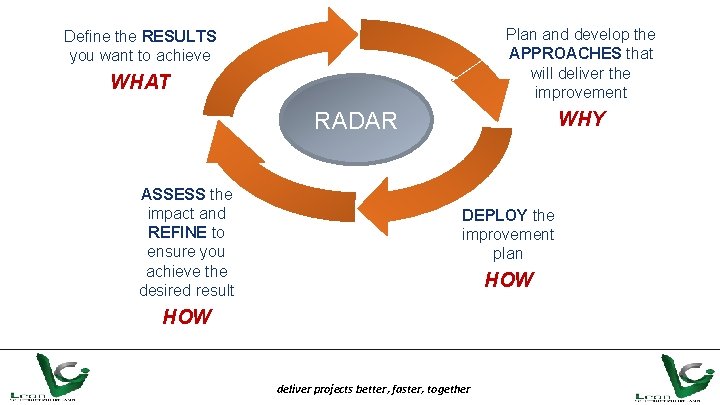
ISO 44002 uses the structure of: What: summary of the intent Why: explanation of relevance and How: implementation guidance structure. (ISO 44002, p 2) The EFQM Model structure is based on ‘the simple but powerful logic of asking three questions: Why does this organisation exist? How does it intend to deliver on its Purpose and its Strategy? What has it actually achieved to date? ’ (EFQM a, p 9) deliver projects better, faster, together
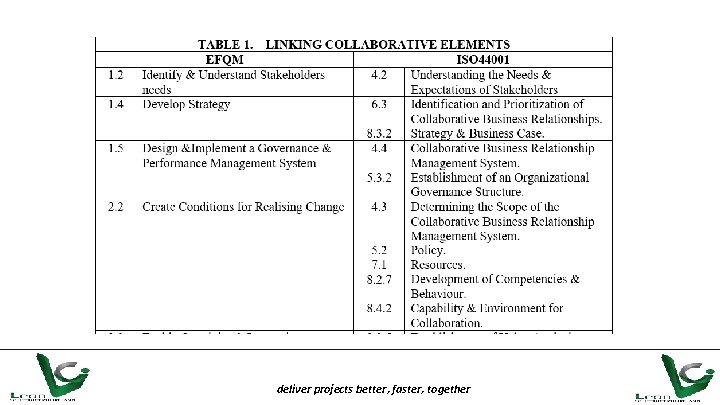
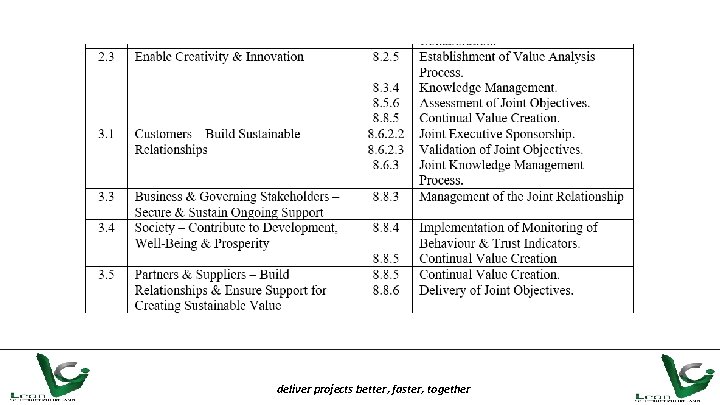
The 4 key areas (criterion) that drive collaboration in EFQM and directly relate to ISO 44001 are: 2. 3 Enable Creativity & Innovation, ‘Engages in learning and collaboration networks to identify opportunities for creativity, innovation and disruptive thinking’ 3. 1 Customers, Build Sustainable Relationships. ‘Maintains a relationship with its customers during all stages of Creating Sustainable Value, even in those phases where there is no ongoing value creation’ deliver projects better, faster, together
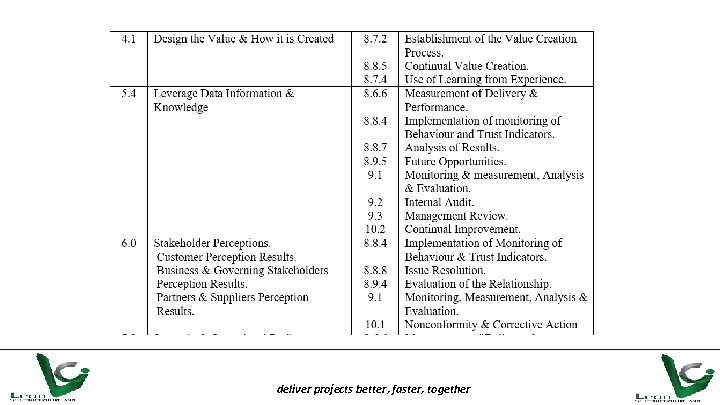
3. 5 Partners & Suppliers – Build Relationships & Ensue Support for Creating Sustainable Value. ‘Builds a trusting relationship with its Key Partners and Suppliers to support the objective of Creating Sustainable Value’ 6. 0 Stakeholders Perceptions: Partners & Suppliers Perception Results. ‘The commitment and achievement of the organisation to co-creation and working towards mutual benefit…the sustainability of the relationship between the organisation and the Key Partners and Suppliers. ’ deliver projects better, faster, together
Finally, there is a strong focus on stakeholders within The EFQM Model: • It defines these as a ‘person, group or organisation that has a direct or indirect stake or interest in the organisation, its activities and performance, because it can either affect the organisation or be affected by it. ’ (EFQM a, p 9) • This includes customers, suppliers, partners, government agencies and representatives of the community or society. deliver projects better, faster, together
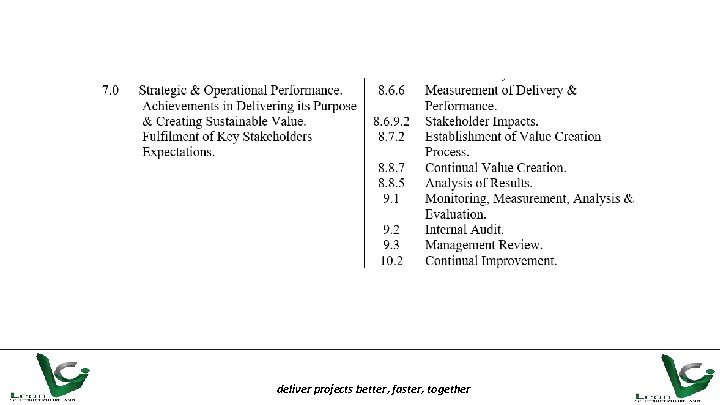
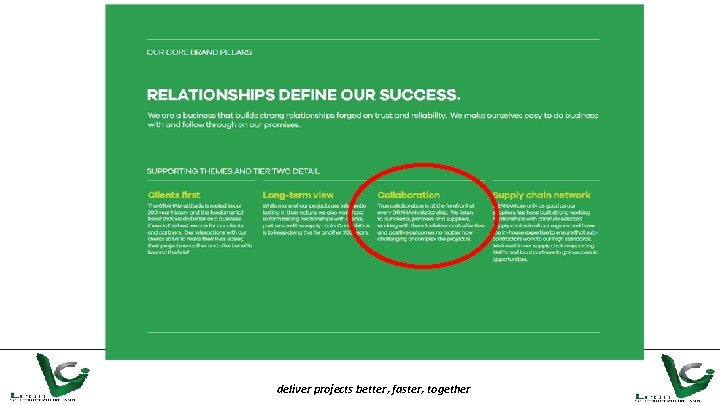
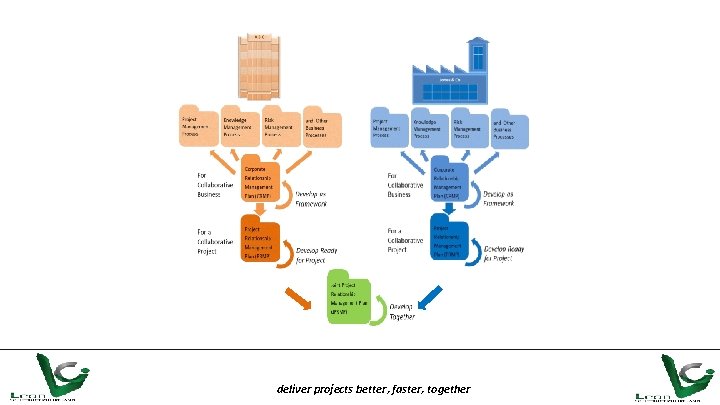
• With The EFQM Model at the strategic level and ISO 44001 at the tactical and operational level working in combination we have a powerful systematic approach to effectively and efficiently plan, implement, manage, improve and sustain collaborative efforts. • When we distil the issues of collaboration down between The EFQM Model and ISO 44001, we are left with the common fundamental issues of Relationships and Value. deliver projects better, faster, together
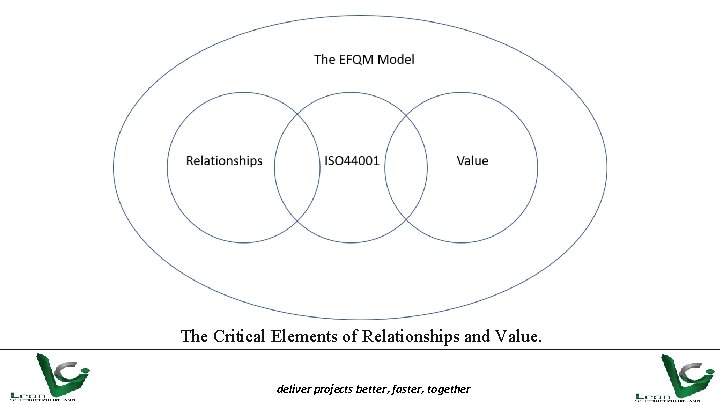
The Critical Elements of Relationships and Value. deliver projects better, faster, together
deliver projects better, faster, together
deliver projects better, faster, together
deliver projects better, faster, together
deliver projects better, faster, together
GRAHAM & LLWR deliver projects better, faster, together
deliver projects better, faster, together
deliver projects better, faster, together
deliver projects better, faster, together
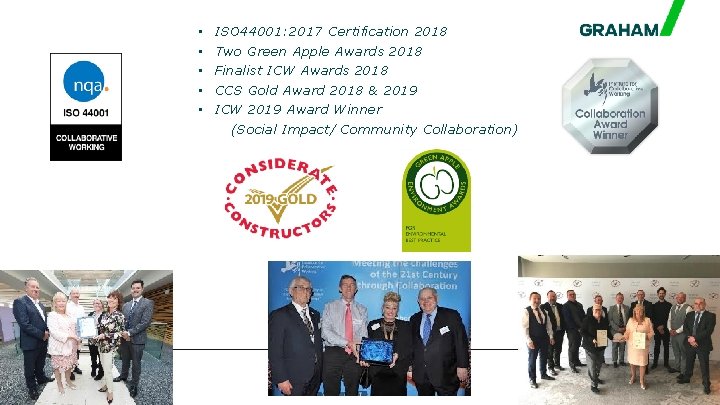
• • • ISO 44001: 2017 Certification 2018 Two Green Apple Awards 2018 Finalist ICW Awards 2018 CCS Gold Award 2018 & 2019 ICW 2019 Award Winner (Social Impact/ Community Collaboration) deliver projects better, faster, together
Thank you, Questions? § You can contact me for more information @ Denis. Leonard@Graham. co. uk deliver projects better, faster, together
WWW. LEANCONSTRUCTIONIRELAND. IE INFO@LEANCONSTRUCTIONIRELAND. IE Should you wish to receive information on the benefits of becoming an LCi Corporate Member, please contact shauna@boxmedia. ie or call + 353 46 9773434 deliver projects better, faster, together
- Slides: 41