
Drivers Ed Section 4 Information Processing Complex Risk


- Slides: 42
Driver’s Ed Section 4 Information Processing: Complex Risk Environments
Bell Ringer Write a half page red to red. o Think about interstate entrances and exits. Explain some of the difficulties of entering and exiting the interstate. What was a scary moment that you might have experienced entering or exiting the interstate?
Day 1 Objectives • • The students will be able to identify the 3 parts of an expressway entrance The students will be able to explain the steps of entering the entrance ramp The students will be able to explain the steps of entering the acceleration lane The students will be able to explain the steps of entering the merge area The students will be able to list reasons for lane changes The students will be able to explain the steps of passing on expressways The students will be able to explain reasons of choosing lanes on expressways The students will be able to identify parts of an expressway exit Related SOL: DE. 3, DE. 4, DE. 5, DE. 6, DE. 7, and DE. 20
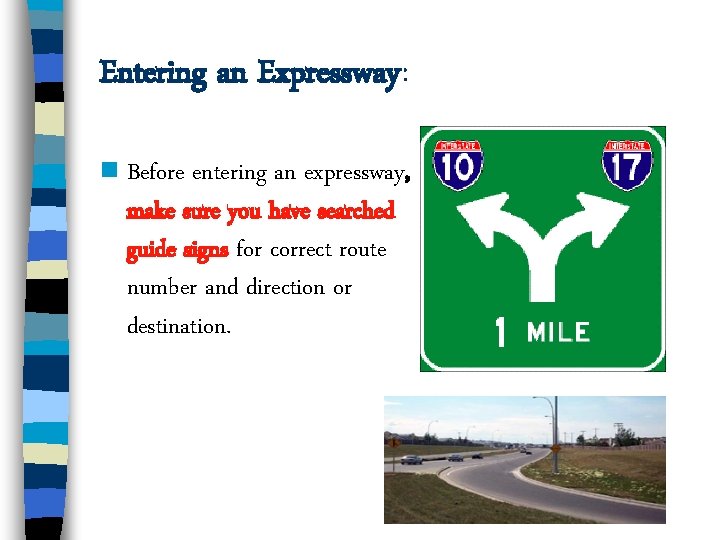
Entering an Expressway: n Before entering an expressway, make sure you have searched guide signs for correct route number and direction or destination.
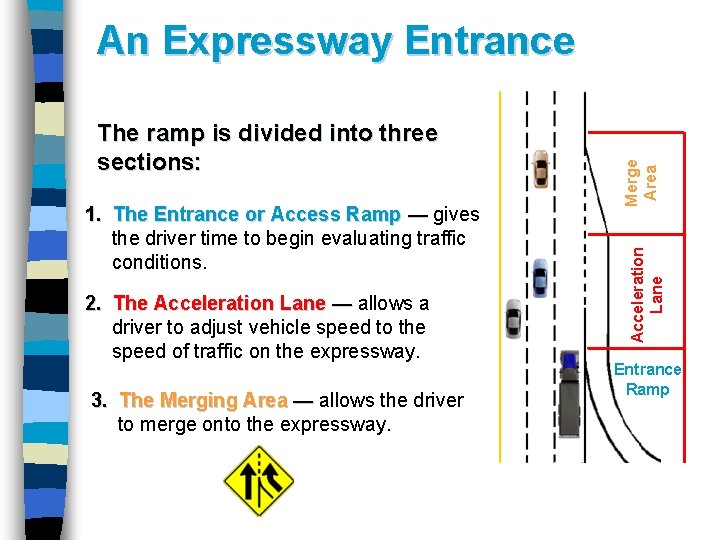
1. The Entrance or Access Ramp — gives the driver time to begin evaluating traffic conditions. 2. The Acceleration Lane — allows a driver to adjust vehicle speed to the speed of traffic on the expressway. 3. The Merging Area — allows the driver to merge onto the expressway. Acceleration Lane The ramp is divided into three sections: Merge Area An Expressway Entrance Ramp
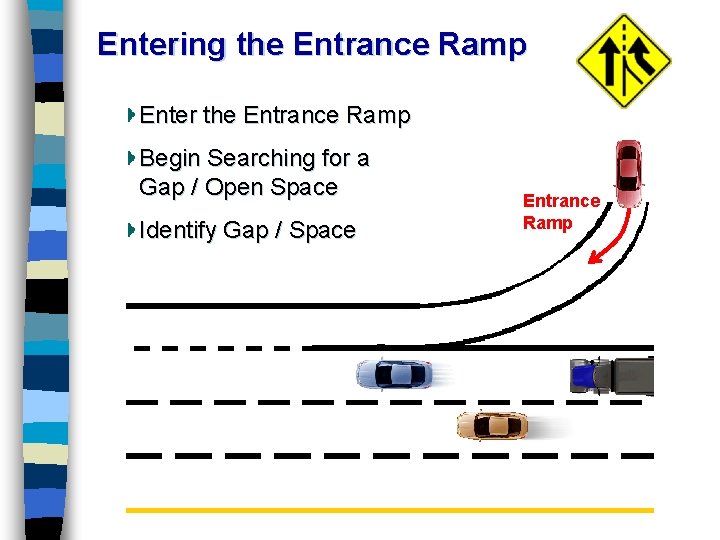
Entering the Entrance Ramp Enter the Entrance Ramp Begin Searching for a Gap / Open Space Identify Gap / Space Entrance Ramp
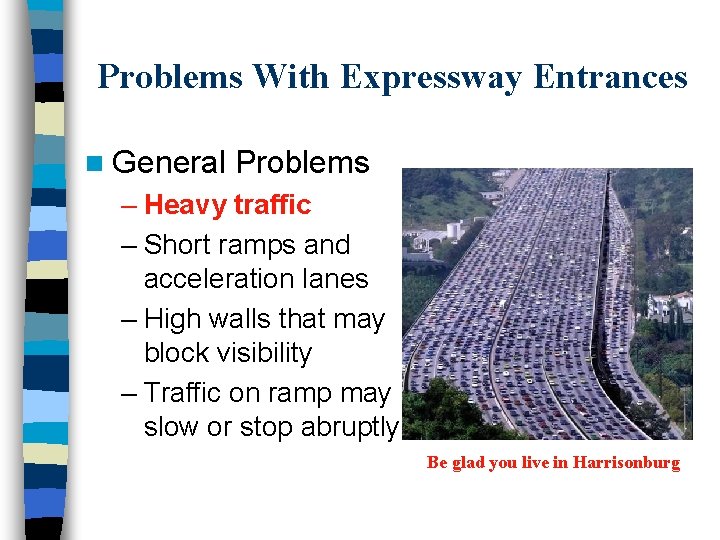
Problems With Expressway Entrances n General Problems – Heavy traffic – Short ramps and acceleration lanes – High walls that may block visibility – Traffic on ramp may slow or stop abruptly Be glad you live in Harrisonburg
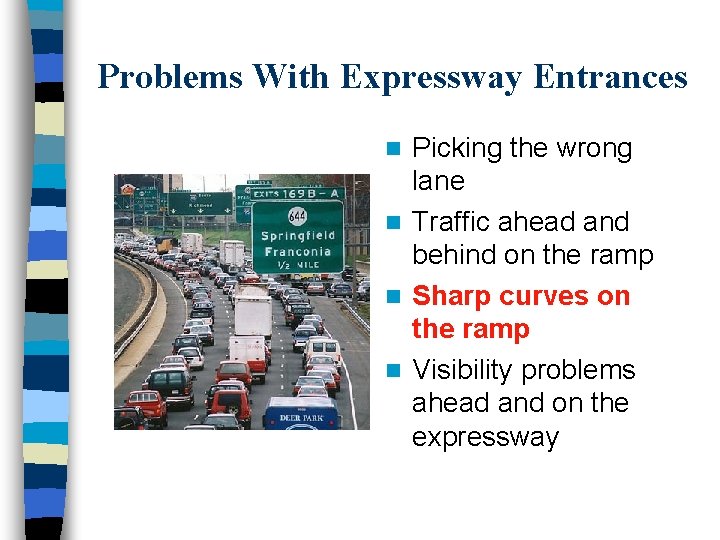
Problems With Expressway Entrances Picking the wrong lane n Traffic ahead and behind on the ramp n Sharp curves on the ramp n Visibility problems ahead and on the expressway n
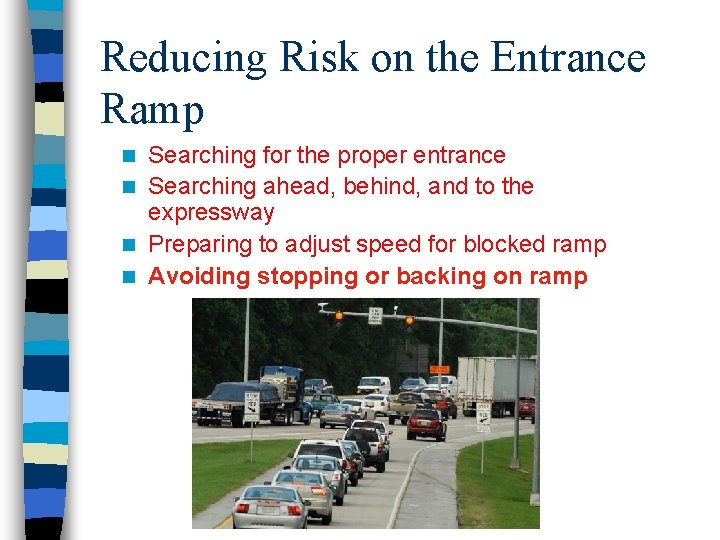
Reducing Risk on the Entrance Ramp Searching for the proper entrance n Searching ahead, behind, and to the expressway n Preparing to adjust speed for blocked ramp n Avoiding stopping or backing on ramp n
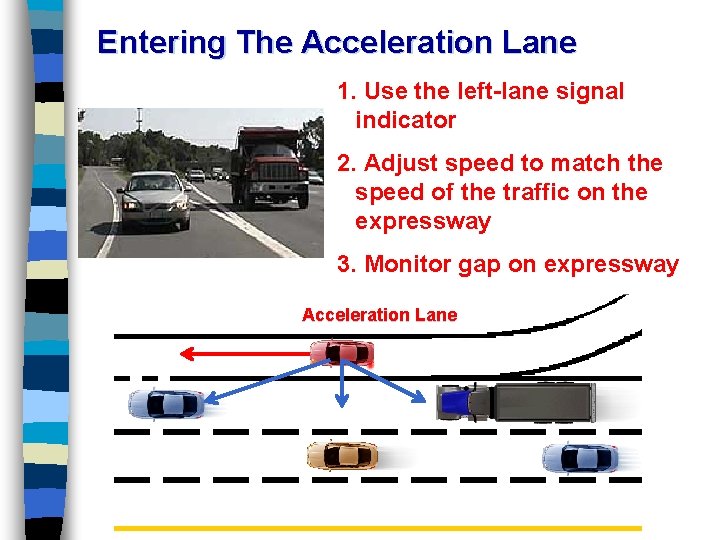
Entering The Acceleration Lane 1. Use the left-lane signal indicator 2. Adjust speed to match the speed of the traffic on the expressway 3. Monitor gap on expressway Acceleration Lane
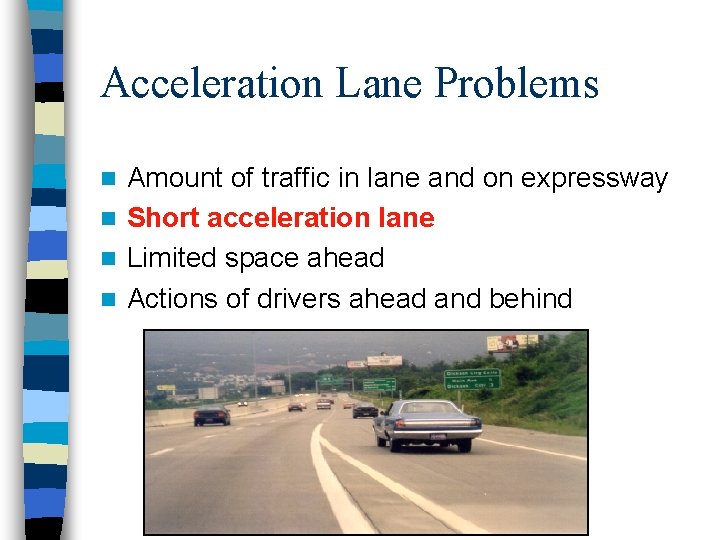
Acceleration Lane Problems Amount of traffic in lane and on expressway n Short acceleration lane n Limited space ahead n Actions of drivers ahead and behind n
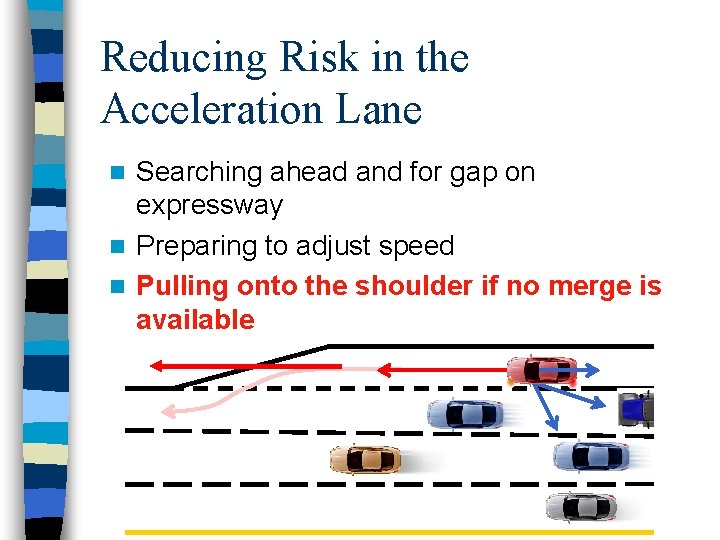
Reducing Risk in the Acceleration Lane Searching ahead and for gap on expressway n Preparing to adjust speed n Pulling onto the shoulder if no merge is available n
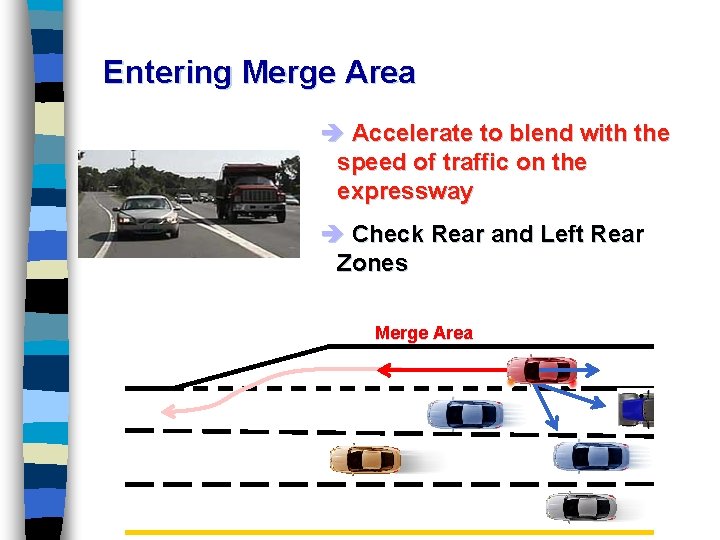
Entering Merge Area è Accelerate to blend with the speed of traffic on the expressway è Check Rear and Left Rear Zones Merge Area
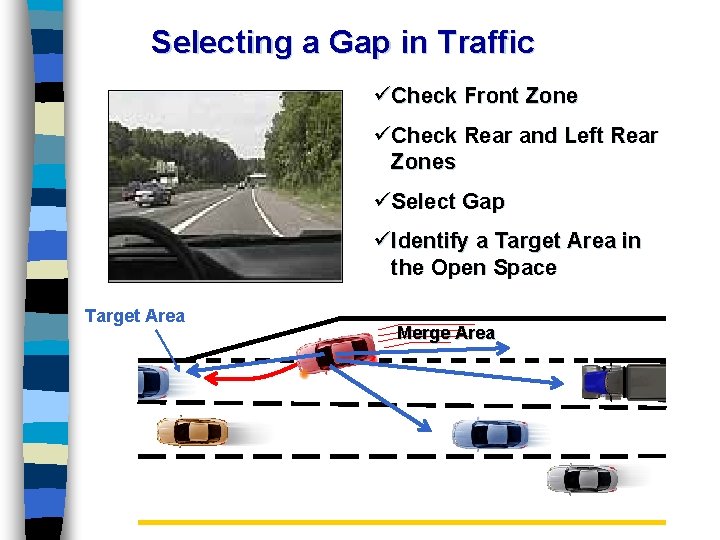
Selecting a Gap in Traffic üCheck Front Zone üCheck Rear and Left Rear Zones üSelect Gap üIdentify a Target Area in the Open Space Target Area Merge Area
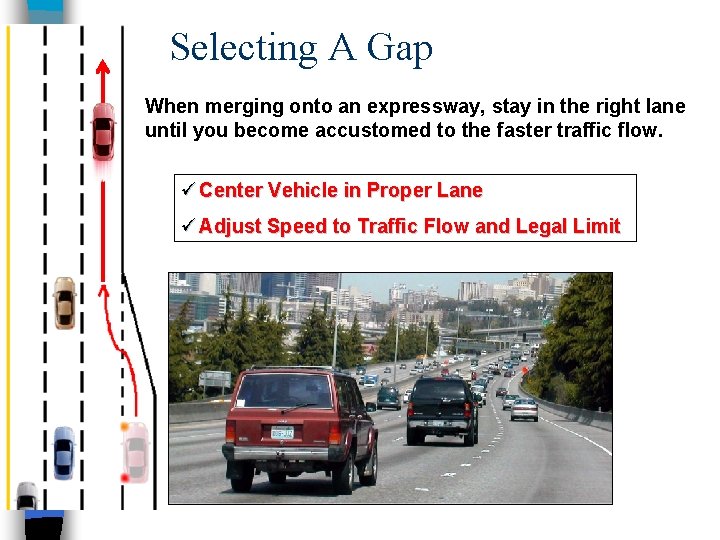
Selecting A Gap When merging onto an expressway, stay in the right lane until you become accustomed to the faster traffic flow. ü Center Vehicle in Proper Lane ü Adjust Speed to Traffic Flow and Legal Limit
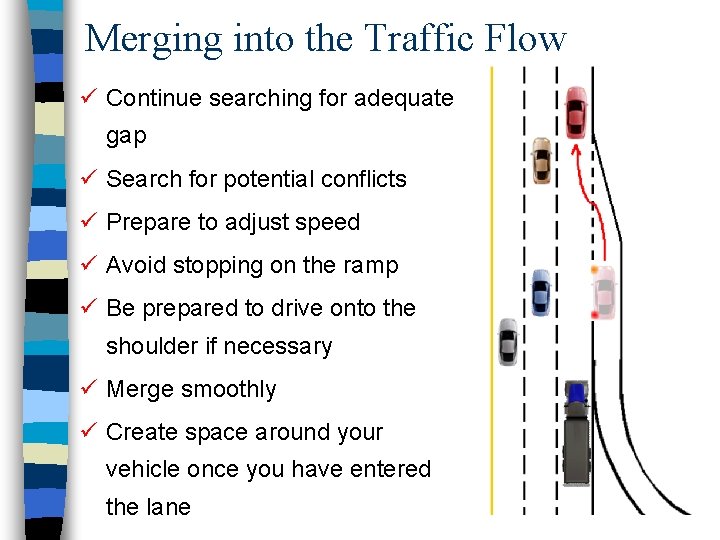
Merging into the Traffic Flow ü Continue searching for adequate gap ü Search for potential conflicts ü Prepare to adjust speed ü Avoid stopping on the ramp ü Be prepared to drive onto the shoulder if necessary ü Merge smoothly ü Create space around your vehicle once you have entered the lane
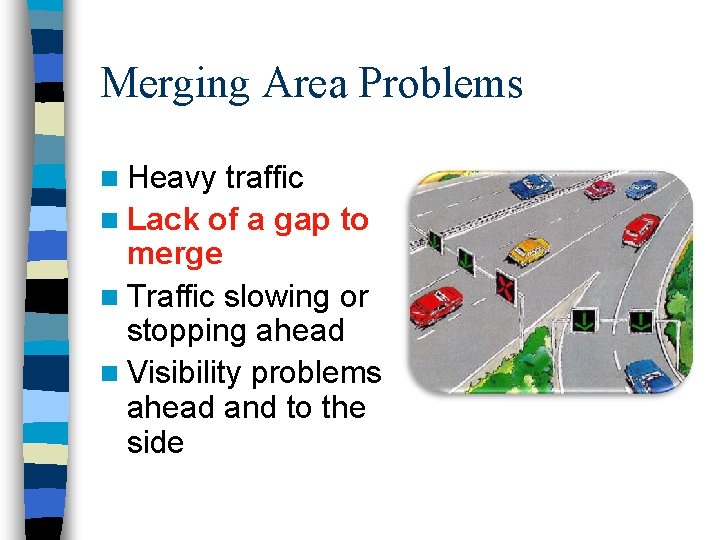
Merging Area Problems n Heavy traffic n Lack of a gap to merge n Traffic slowing or stopping ahead n Visibility problems ahead and to the side
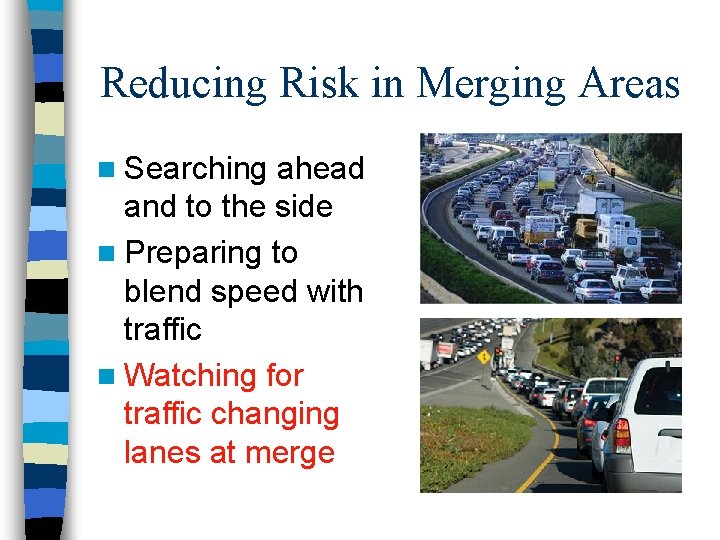
Reducing Risk in Merging Areas n Searching ahead and to the side n Preparing to blend speed with traffic n Watching for traffic changing lanes at merge
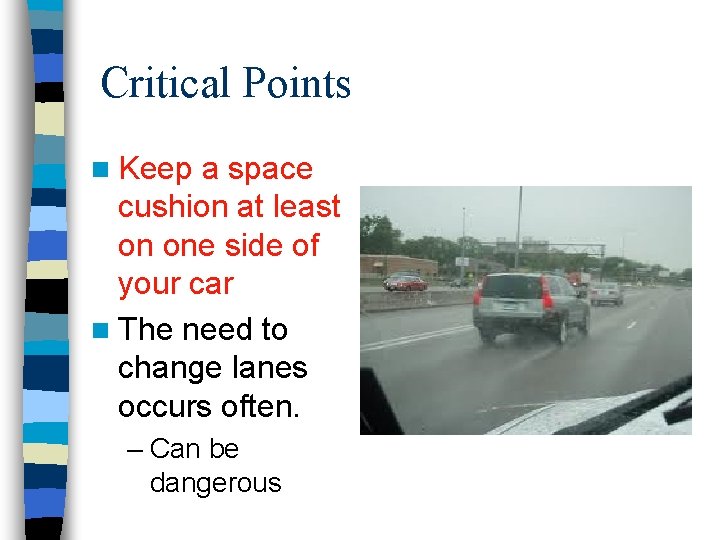
Critical Points n Keep a space cushion at least on one side of your car n The need to change lanes occurs often. – Can be dangerous
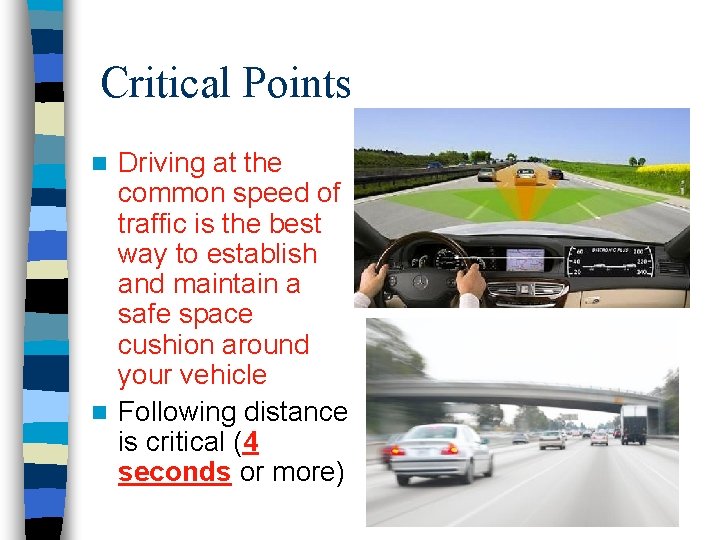
Critical Points Driving at the common speed of traffic is the best way to establish and maintain a safe space cushion around your vehicle n Following distance is critical (4 seconds or more) n
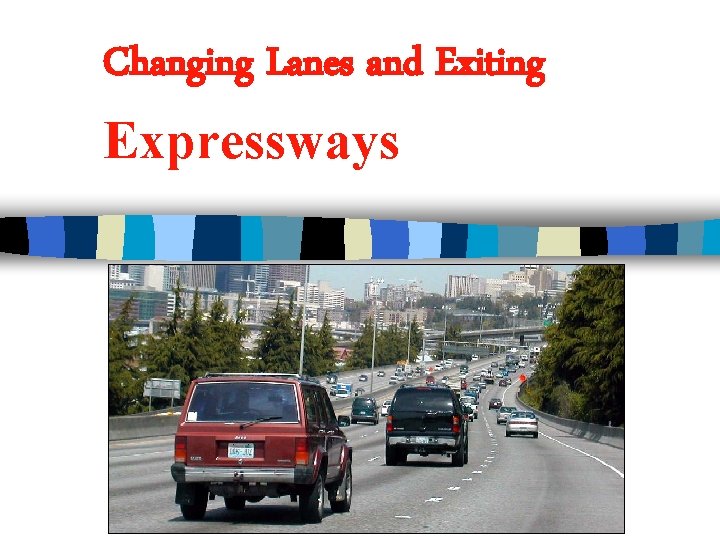
Changing Lanes and Exiting Expressways
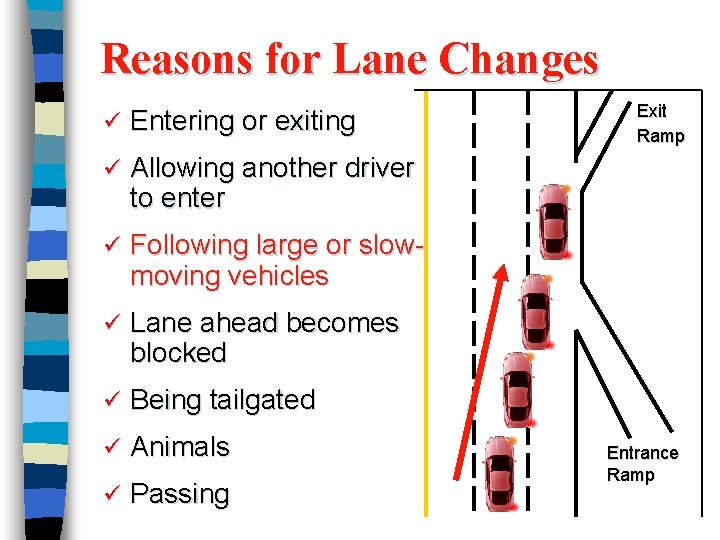
Reasons for Lane Changes ü Entering or exiting ü Allowing another driver to enter ü Following large or slowmoving vehicles ü Lane ahead becomes blocked ü Being tailgated ü Animals ü Passing Exit Ramp Entrance Ramp
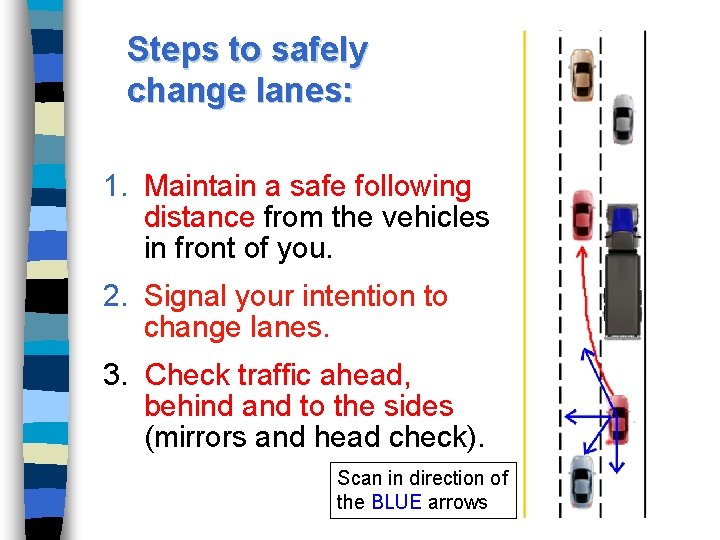
Steps to safely change lanes: 1. Maintain a safe following distance from the vehicles in front of you. 2. Signal your intention to change lanes. 3. Check traffic ahead, behind and to the sides (mirrors and head check). Scan in direction of the BLUE arrows
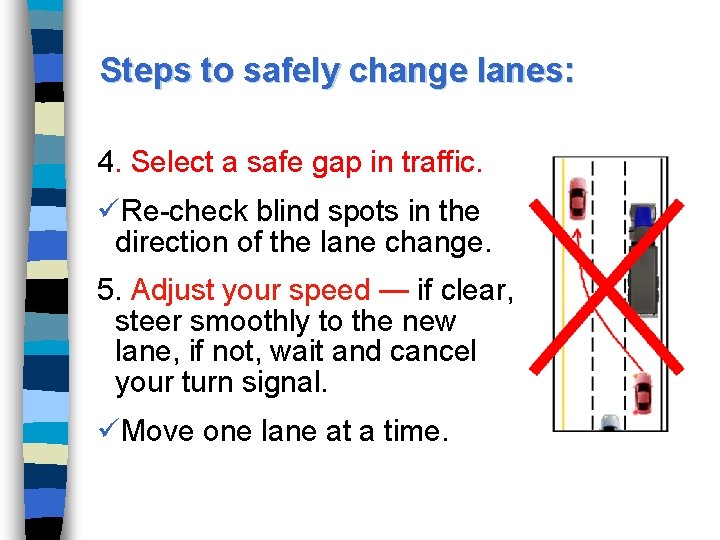
Steps to safely change lanes: 4. Select a safe gap in traffic. üRe-check blind spots in the direction of the lane change. 5. Adjust your speed — if clear, steer smoothly to the new lane, if not, wait and cancel your turn signal. üMove one lane at a time.
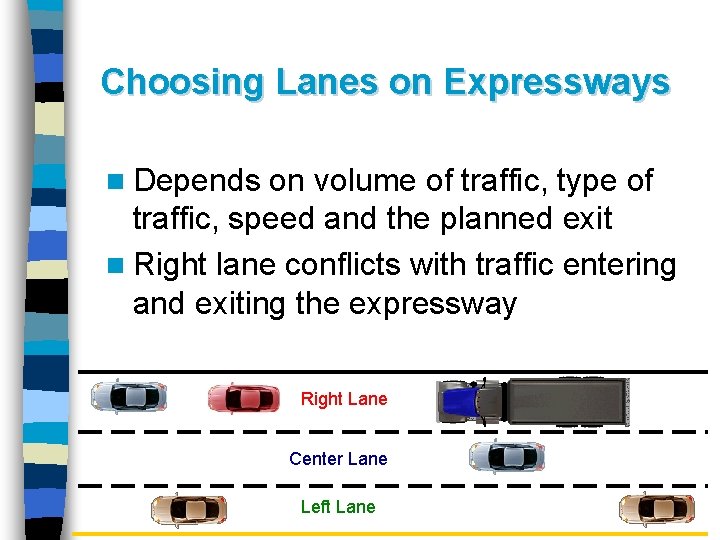
Choosing Lanes on Expressways n Depends on volume of traffic, type of traffic, speed and the planned exit n Right lane conflicts with traffic entering and exiting the expressway Right Lane Center Lane Left Lane
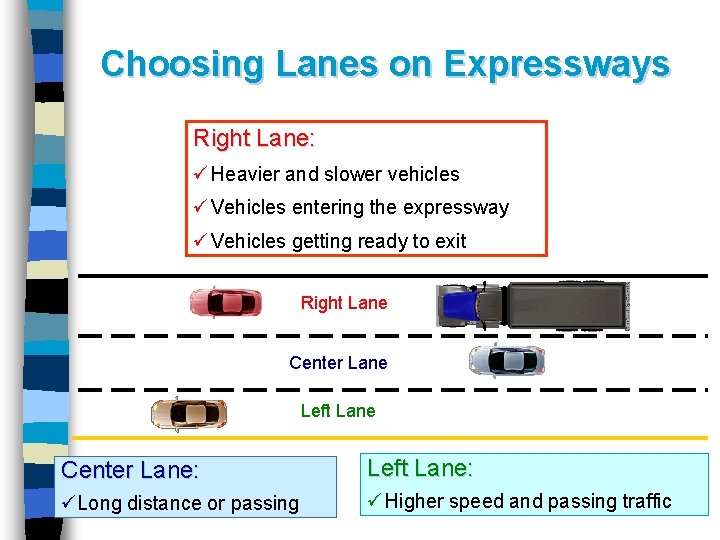
Choosing Lanes on Expressways Right Lane: ü Heavier and slower vehicles ü Vehicles entering the expressway ü Vehicles getting ready to exit Right Lane Center Lane Left Lane Center Lane: Left Lane: üLong distance or passing ü Higher speed and passing traffic
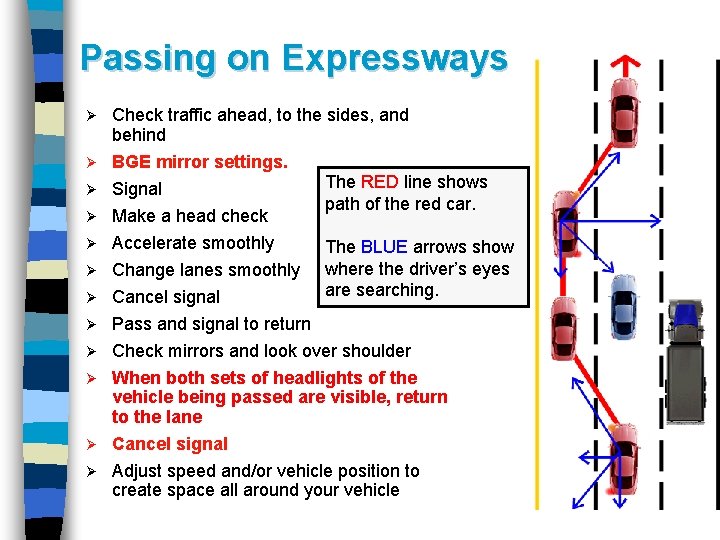
Passing on Expressways Ø Ø Ø Ø Check traffic ahead, to the sides, and behind BGE mirror settings. The RED line shows Signal path of the red car. Make a head check Accelerate smoothly The BLUE arrows show Change lanes smoothly where the driver’s eyes are searching. Cancel signal Pass and signal to return Ø Check mirrors and look over shoulder Ø When both sets of headlights of the vehicle being passed are visible, return to the lane Ø Cancel signal Ø Adjust speed and/or vehicle position to create space all around your vehicle Ø
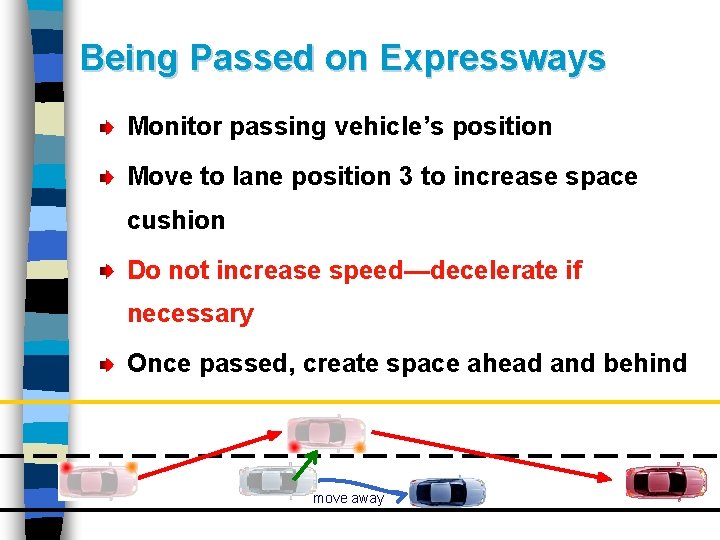
Being Passed on Expressways Monitor passing vehicle’s position Move to lane position 3 to increase space cushion Do not increase speed—decelerate if necessary Once passed, create space ahead and behind move away
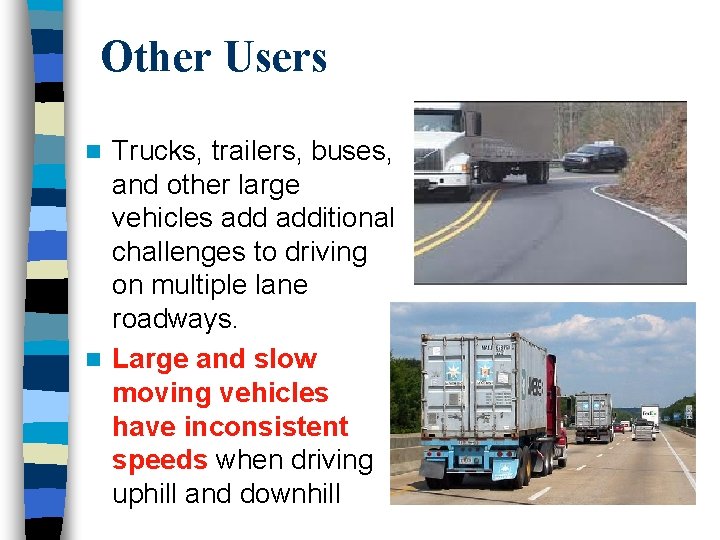
Other Users Trucks, trailers, buses, and other large vehicles additional challenges to driving on multiple lane roadways. n Large and slow moving vehicles have inconsistent speeds when driving uphill and downhill n
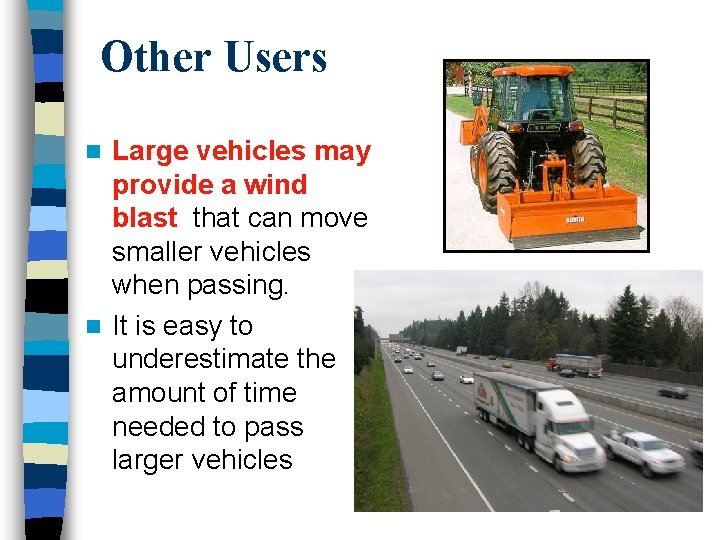
Other Users Large vehicles may provide a wind blast that can move smaller vehicles when passing. n It is easy to underestimate the amount of time needed to pass larger vehicles n
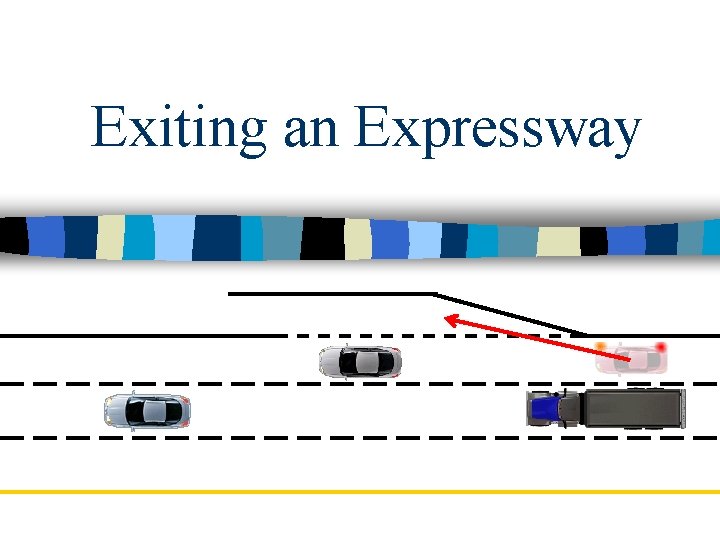
Exiting an Expressway
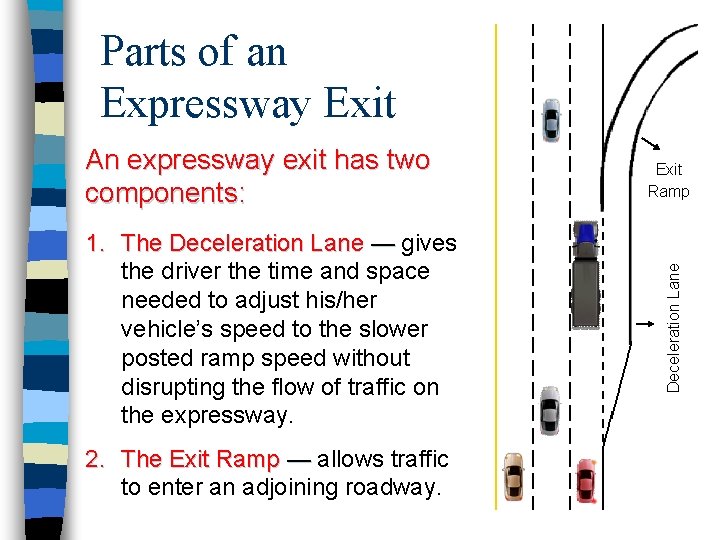
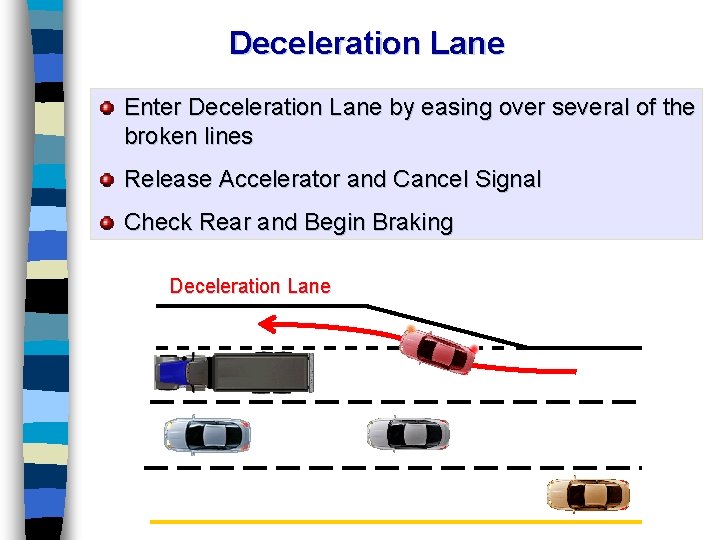
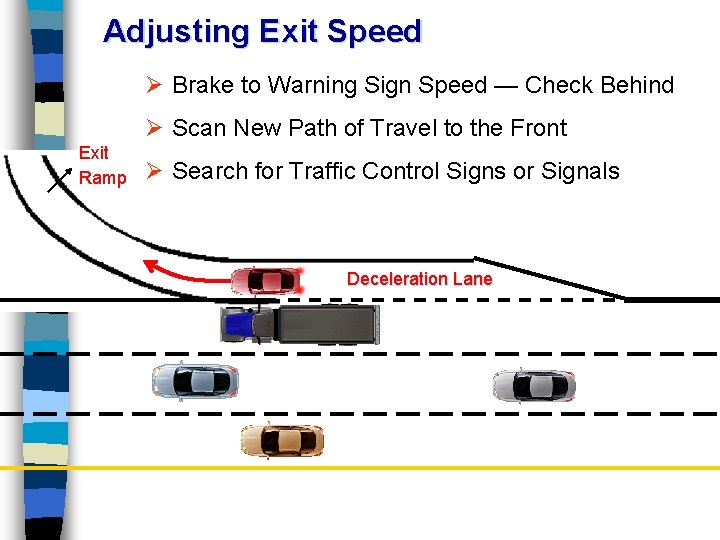
Parts of an Expressway Exit 1. The Deceleration Lane — gives the driver the time and space needed to adjust his/her vehicle’s speed to the slower posted ramp speed without disrupting the flow of traffic on the expressway. 2. The Exit Ramp — allows traffic to enter an adjoining roadway. Exit Ramp Deceleration Lane An expressway exit has two components:
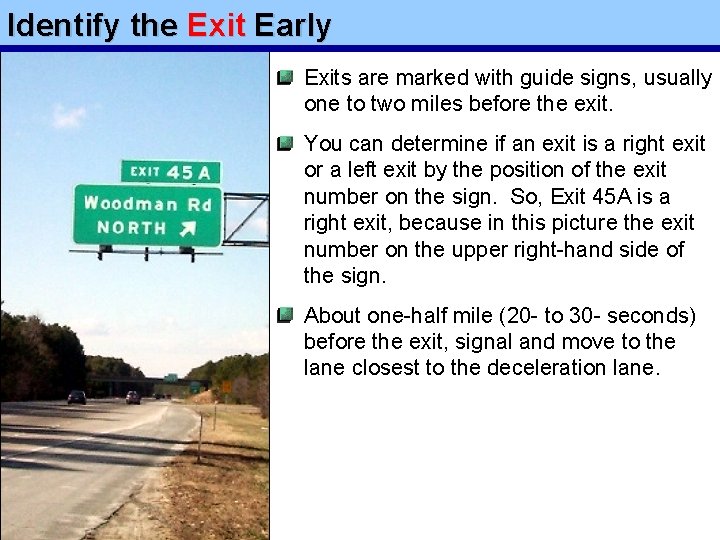
Identify the Exit Early Exits are marked with guide signs, usually one to two miles before the exit. You can determine if an exit is a right exit or a left exit by the position of the exit number on the sign. So, Exit 45 A is a right exit, because in this picture the exit number on the upper right-hand side of the sign. About one-half mile (20 - to 30 - seconds) before the exit, signal and move to the lane closest to the deceleration lane.
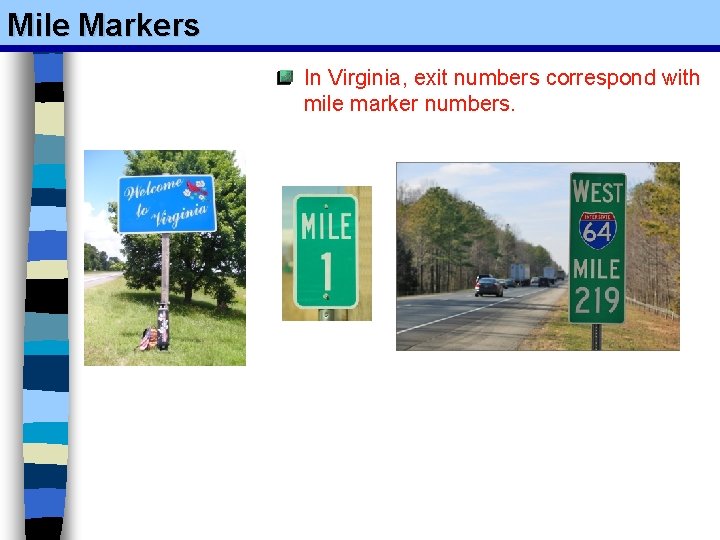
Mile Markers In Virginia, exit numbers correspond with mile marker numbers.
Exiting an Expressway n If you miss the exit, do not stop and/or back up on the expressway or ramp. n Take the next exit and turn around.
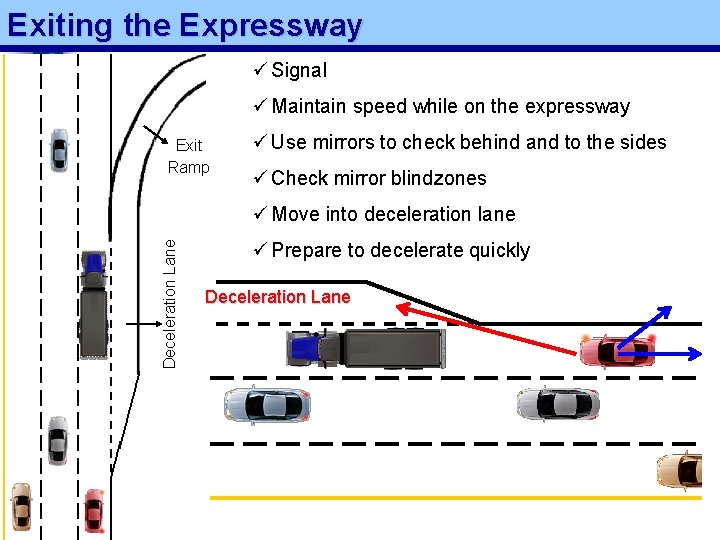
Exiting the Expressway ü Signal ü Maintain speed while on the expressway Exit Ramp ü Use mirrors to check behind and to the sides ü Check mirror blindzones Deceleration Lane ü Move into deceleration lane ü Prepare to decelerate quickly Deceleration Lane
Deceleration Lane Enter Deceleration Lane by easing over several of the broken lines Release Accelerator and Cancel Signal Check Rear and Begin Braking Deceleration Lane
Adjusting Exit Speed Ø Brake to Warning Sign Speed — Check Behind Ø Scan New Path of Travel to the Front Exit Ramp Ø Search for Traffic Control Signs or Signals Deceleration Lane
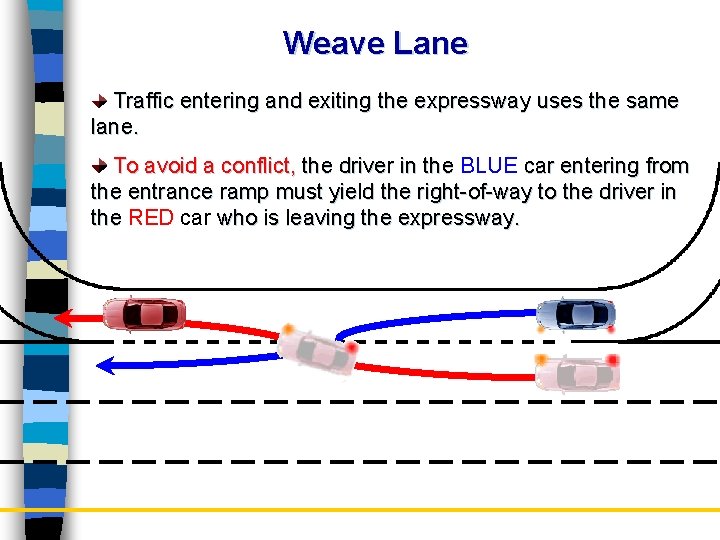
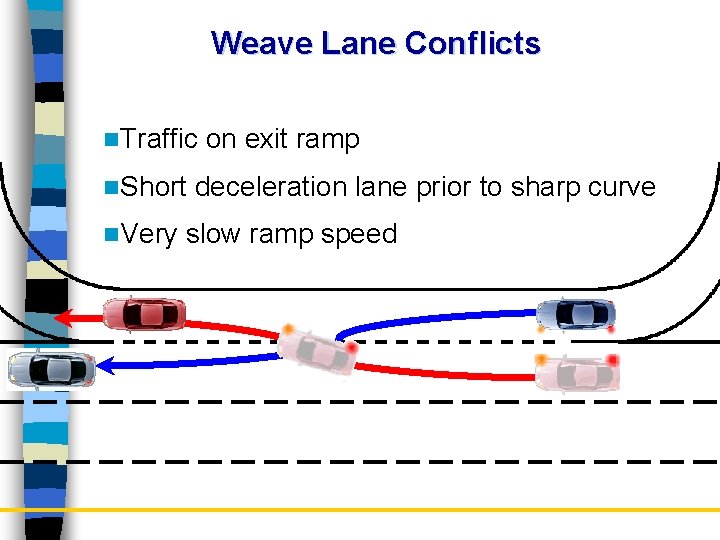
Weave Lane Traffic entering and exiting the expressway uses the same lane. To avoid a conflict, the driver in the BLUE car entering from the entrance ramp must yield the right-of-way to the driver in the RED car who is leaving the expressway.
Weave Lane Conflicts n. Traffic n. Short n. Very on exit ramp deceleration lane prior to sharp curve slow ramp speed
Class Work n Read pages 114 – 117 n Answer Lesson 1 Review Questions on page 117 – #’s 1 -3
THE END !