
Drinking Water Safety Security Planning Part 2 Implementing
- Slides: 17
Drinking Water Safety & Security Planning Part 2 Implementing DWSSP Training Introduction DWSSP Programme
Who’s who? Let’s get to know each other
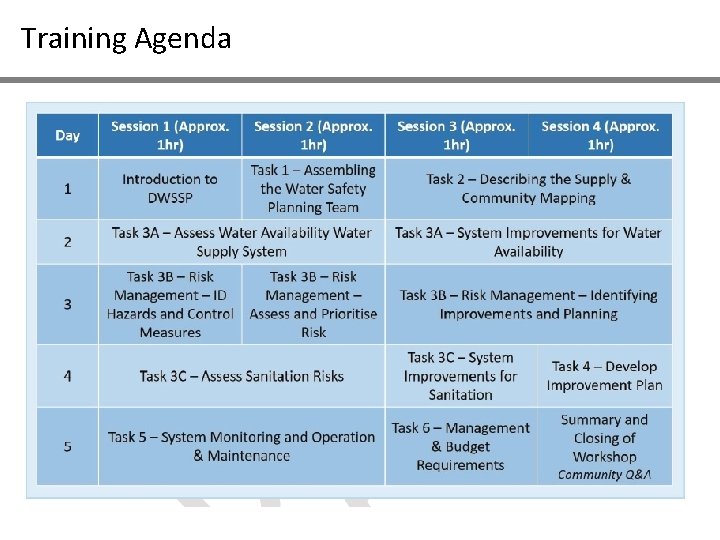
Training Agenda
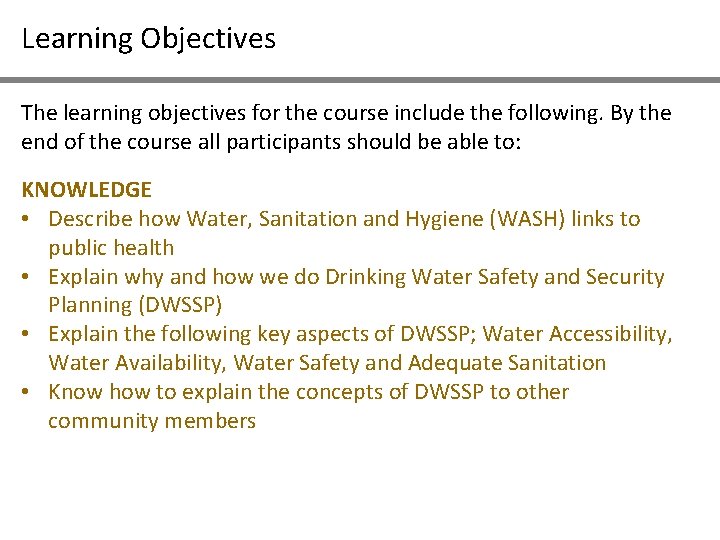
Learning Objectives The learning objectives for the course include the following. By the end of the course all participants should be able to: KNOWLEDGE • Describe how Water, Sanitation and Hygiene (WASH) links to public health • Explain why and how we do Drinking Water Safety and Security Planning (DWSSP) • Explain the following key aspects of DWSSP; Water Accessibility, Water Availability, Water Safety and Adequate Sanitation • Know how to explain the concepts of DWSSP to other community members
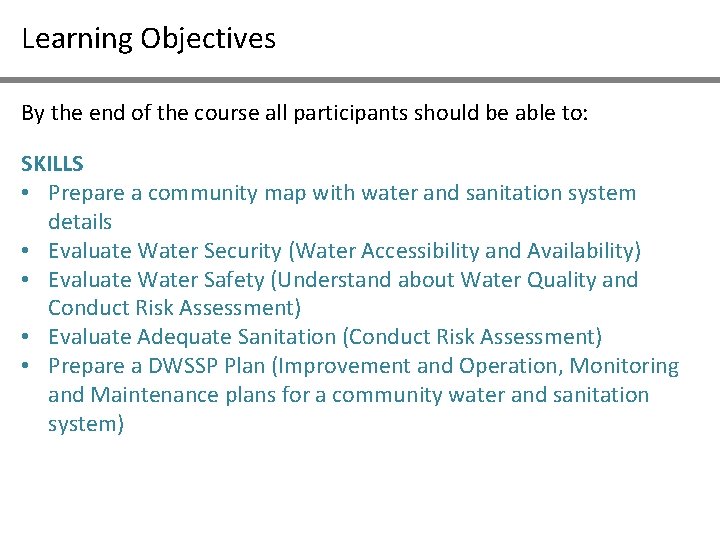
Learning Objectives By the end of the course all participants should be able to: SKILLS • Prepare a community map with water and sanitation system details • Evaluate Water Security (Water Accessibility and Availability) • Evaluate Water Safety (Understand about Water Quality and Conduct Risk Assessment) • Evaluate Adequate Sanitation (Conduct Risk Assessment) • Prepare a DWSSP Plan (Improvement and Operation, Monitoring and Maintenance plans for a community water and sanitation system)
Expectations What do you as participants expect from this training? Time to discuss
Ground Rules Shall we set some?
A quick review of why we are here
Why are we here? – The benefits of WASH We know from research that access to clean water, adequate sanitation and performing good hygiene practices (WASH), improves PUBLIC HEALTH How? • Having enough water allows us to drink, cook, and maintain sanitation and hygiene • Consuming clean and safe water reduces water borne disease burden • Utilising adequate sanitation avoids water contamination and the spread of other disease • Practicing good hygiene prevents water borne and other disease spreading
Some definitions to clarify WASH Water Sanitation and Hygiene Sanitation: means of promoting health through prevention of human contact with waste as well as proper disposal of sewage wastewater. Hygiene: conditions or practices conducive to maintaining health and preventing disease, esp. through cleanliness.
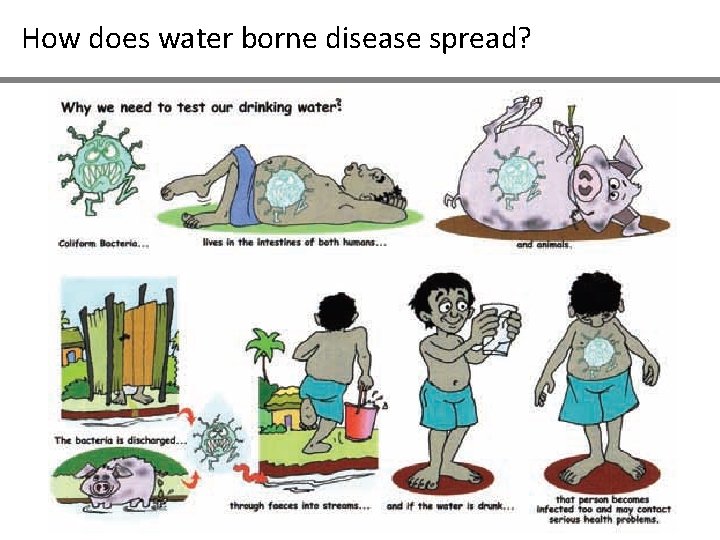
How does water borne disease spread?
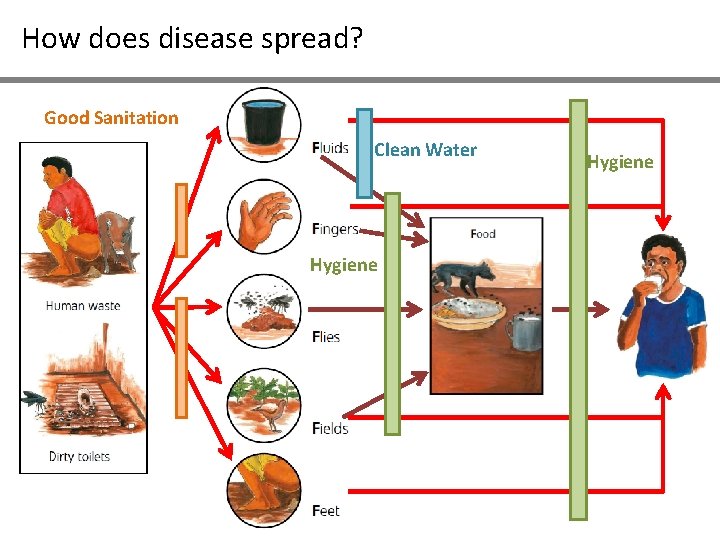
How does disease spread? Good Sanitation Clean Water Hygiene
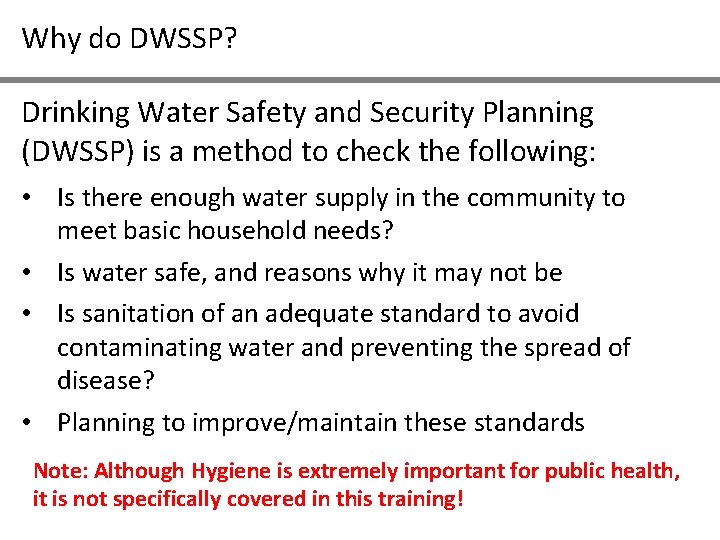
Why do DWSSP? Drinking Water Safety and Security Planning (DWSSP) is a method to check the following: • Is there enough water supply in the community to meet basic household needs? • Is water safe, and reasons why it may not be • Is sanitation of an adequate standard to avoid contaminating water and preventing the spread of disease? • Planning to improve/maintain these standards Note: Although Hygiene is extremely important for public health, it is not specifically covered in this training!
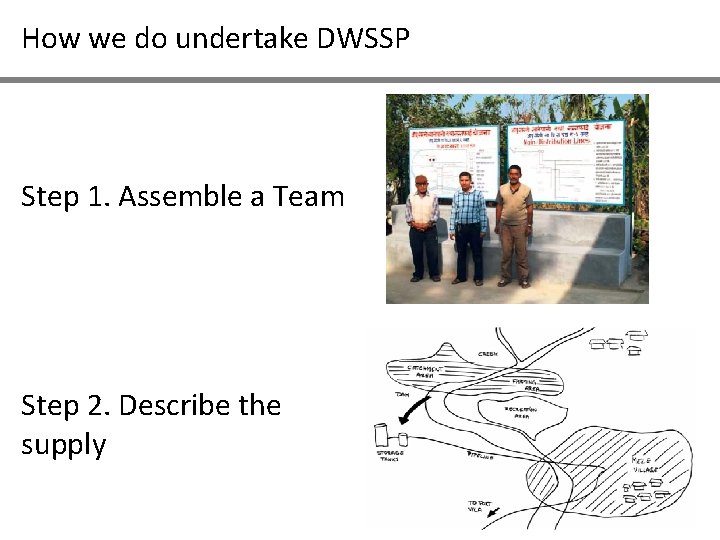
How we do undertake DWSSP Step 1. Assemble a Team Step 2. Describe the supply
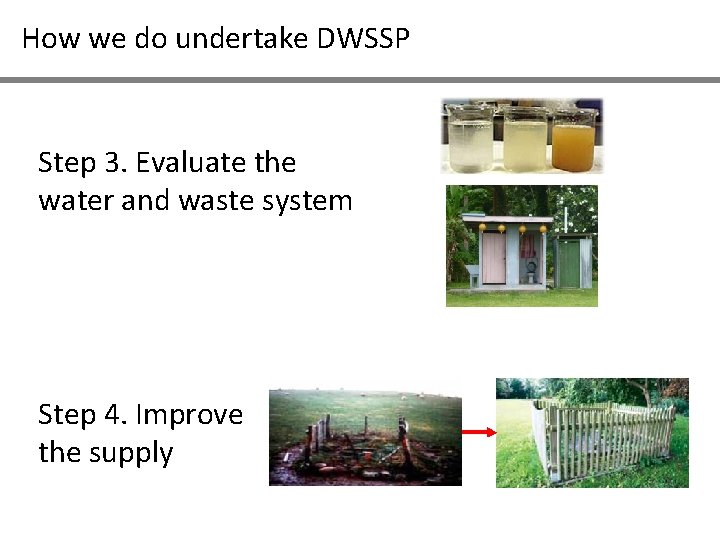
How we do undertake DWSSP Step 3. Evaluate the water and waste system Step 4. Improve the supply
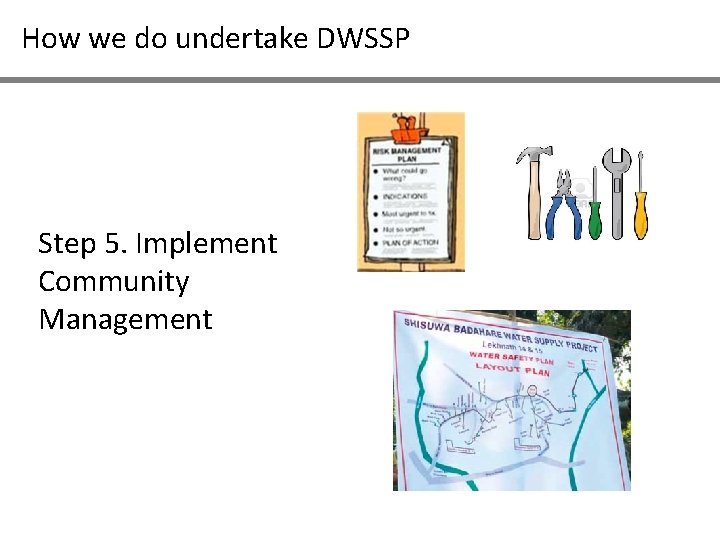
How we do undertake DWSSP Step 5. Implement Community Management
End of Session