
DRINKING AND DRIVING Overview What is What is
- Slides: 16
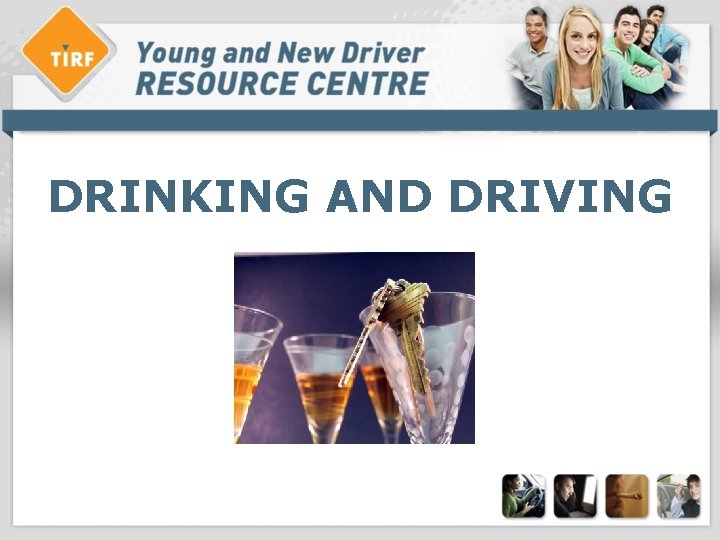
DRINKING AND DRIVING
Overview > What is… » What is impaired driving? > Characteristics of youth and drunk driving » Canadian youth and drunk driving > Attitudes and concerns » Understanding the risks > Legislation » Federal, Provincial, and Young Driver laws > Solutions » Alternatives to drinking and driving
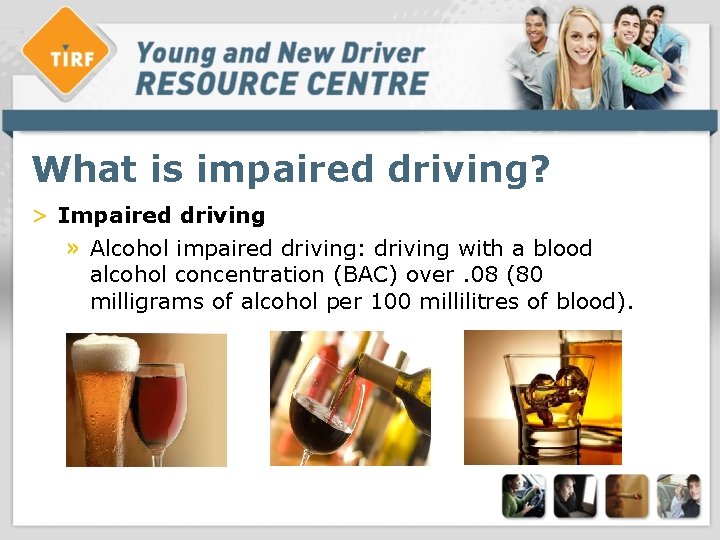
What is impaired driving? > Impaired driving » Alcohol impaired driving: driving with a blood alcohol concentration (BAC) over. 08 (80 milligrams of alcohol per 100 millilitres of blood).
What is impaired driving? >There are two types of laws: » Per se laws: if an alcohol test shows a driver is over the legal limit of. 08 he/she is charged with impaired driving. » Impairment-based laws: there must be evidence showing that the driver was not able to safely operate the vehicle because they were impaired by alcohol.
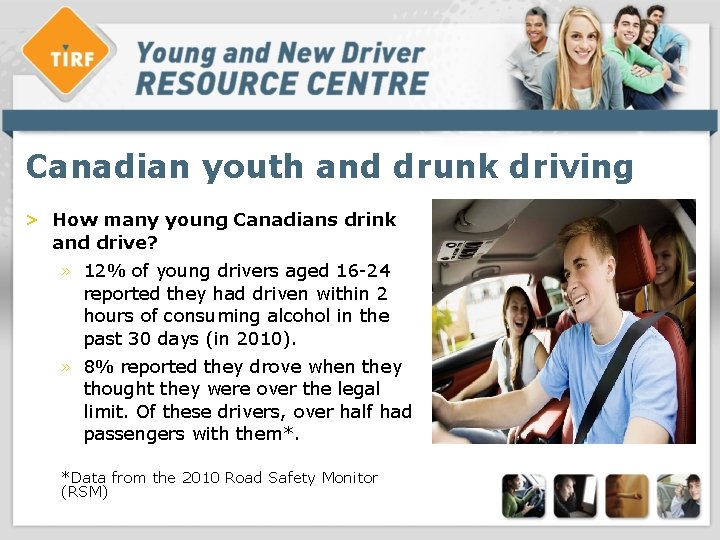
Canadian youth and drunk driving > How many young Canadians drink and drive? » 12% of young drivers aged 16 -24 reported they had driven within 2 hours of consuming alcohol in the past 30 days (in 2010). » 8% reported they drove when they thought they were over the legal limit. Of these drivers, over half had passengers with them*. *Data from the 2010 Road Safety Monitor (RSM)
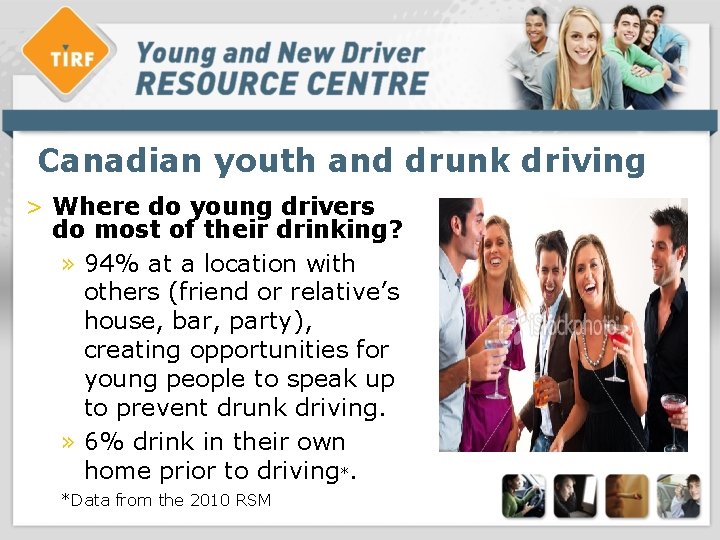
Canadian youth and drunk driving > Where do young drivers do most of their drinking? » 94% at a location with others (friend or relative’s house, bar, party), creating opportunities for young people to speak up to prevent drunk driving. » 6% drink in their own home prior to driving*. *Data from the 2010 RSM
Canadian youth and drunk driving How many youth are killed in crashes involving a drinking driver? > In Canada in 2010, there were 510 motor vehicle deaths involving a drinking driver. Of these: » 8. 3% (42) were between the ages of 16 and 19; » 19. 9% (101) were between the ages of 20 and 25; » 23. 6% (120) were between the ages of 26 and 35. *Data from the 2010 Alcohol Crash Problem in Canada
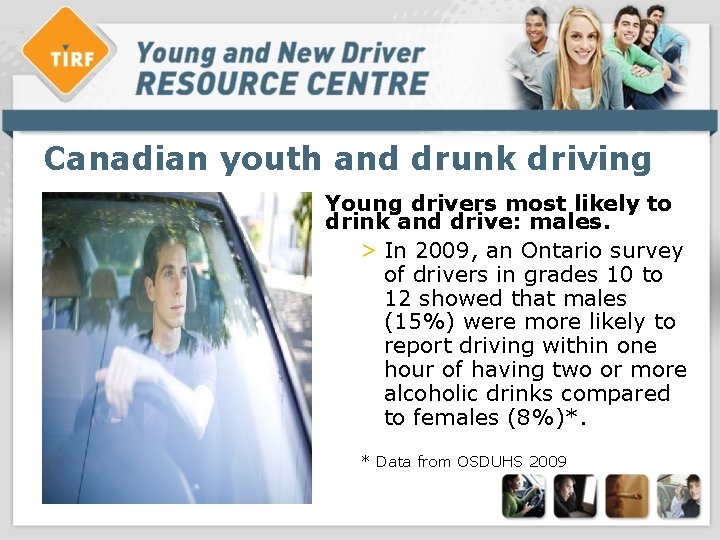
Canadian youth and drunk driving Young drivers most likely to drink and drive: males. > In 2009, an Ontario survey of drivers in grades 10 to 12 showed that males (15%) were more likely to report driving within one hour of having two or more alcoholic drinks compared to females (8%)*. * Data from OSDUHS 2009
Attitudes, concerns and perceptions Understanding the risks of drunk driving > Young drivers aged 16 to 24 understand the dangers of drunk driving: » 86% of young Canadian drivers agreed they cannot drive safely when they have been drinking alcohol (77% of adults agreed with this). » 82% of young Canadian drivers think that young impaired drivers are a serious or extremely serious problem*. *Data from 2010 RSM
Legislation > Federal: » The Criminal Code of Canada contains laws making it illegal to drive with a BAC over. 08 or with any impairment (alcohol or drug). > Provincial: » Each jurisdiction can set its own administrative laws; many have a BAC lower than. 08. Penalties include a road side licence suspension or vehicle impoundment. (Further info: http: //changetheconversation. ca/drinking and_driving_facts/offender_programs. php)
Legislation > Young/new driver laws: » All jurisdictions in Canada have a Graduated Driver Licencing (GDL) program with a zero BAC restriction for the first two years before a full licence. » Also, Ontario, Quebec and New Brunswick have a zero BAC requirement for all young and/or new drivers until age 21 (www. changetheconversation. ca).
Solutions > Young Canadian’s alternatives to drunk driving: » 42% take a taxi; » 40% take public transit; » 34% stay at a friend’s place; and, » 67% ask some one else to drive*. > Have a game plan or select a designated driver before the night begins. > Passengers can positively change a drunk driver’s behaviour by speaking up. *Data from 2010 RSM
For more information: > http: //yndrc. tirf. ca/default. php > www. tirf. ca > http: //www. tirf. ca/publications/PDF_publications/R SM_2011_Drinking_Driving_Eng_1. pdf > http: //www. ccmta. ca/english/committees/rsrp/stri d/pdf/alcohol_crash 09_e. PDF
Quiz: true or false? >Alcohol impaired driving is defined as driving with a BAC over. 10. >A majority of provinces have a lower provincial BAC limit than. 08.
Quiz: multiple choice Where do most young drivers do a majority of their drinking? A. At school. B. At a location with others. C. In their home. D. In their car.
Discussion >What would you do if your friend was drinking and wanted to drive home? >How would your family or loved ones feel if they found out you’d driven while drunk?