
Drilling Waste Management Information System An Interactive WebBased
Drilling Waste Management Information System An Interactive Web-Based Tool for Access to Technological, Environmental, and Regulatory Information on Drilling Waste Management R. Sullivan, T. Kotek, P. Richmond, M. Puder, D. Elcock Environmental Science Division October 26, 2006 Argonne National Laboratory Operated by The University of Chicago for the U. S. Department of Energy
Topics n What is drilling waste and why is it a problem? n Drilling Waste Management Information System (DWMIS) approach n DWMIS module screen shots n Results n Technology used Work funded by DOE Office of Fossil Energy and the National Energy Technology Laboratory

Drilling Waste Results from Oil and Gas Exploration n Drilling waste consists of drilling mud and solid drill cuttings – Drilling mud lubricates drill bit and carries cuttings to surface – Solid drill cuttings must be separated from mud so mud can be recycled n Generally produced in large volumes during well drilling n Waste can cause environmental problems when disposed
Drilling Waste Management Decisions Are Complex n Drilling waste disposal can be costly – Disposal method must be determined prior to beginning operations n Many technical options for drilling waste management – Three main management methods, 12 sub-options, with many variations – Not all options are allowed or make sense in all locations – New, environmentally-friendly methods available n Complex regulations exist at federal and state level for disposal practices – Can greatly restrict available options How do operators determine which drilling waste management methods to use?

Drilling Waste Management Information System (DWMIS) Web-based resource for environmentally responsible drilling waste management decision making Three modules: n Technology Description Module – technical fact sheets on current disposal methods and technologies n Regulatory Module – compendium of federal and state regulations n Technology Identification Module – expert system to select reasonable disposal alternatives for a given location and circumstances.

DWMIS Home Page http: //web. evs. anl. gov/dwm
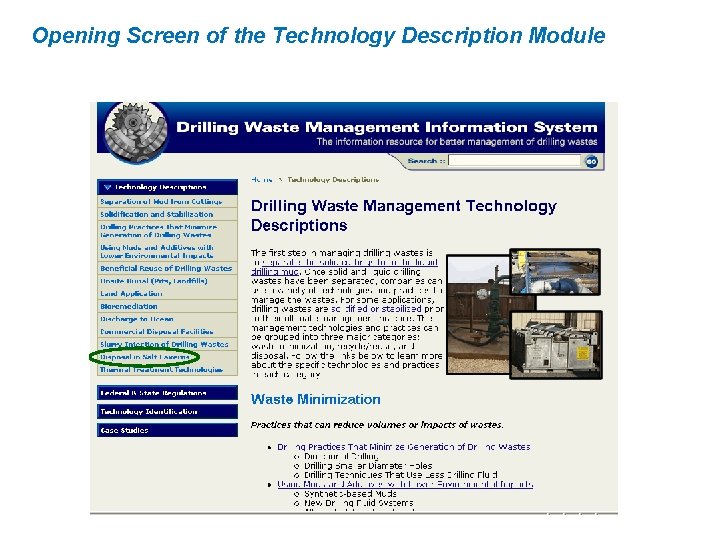
Opening Screen of the Technology Description Module
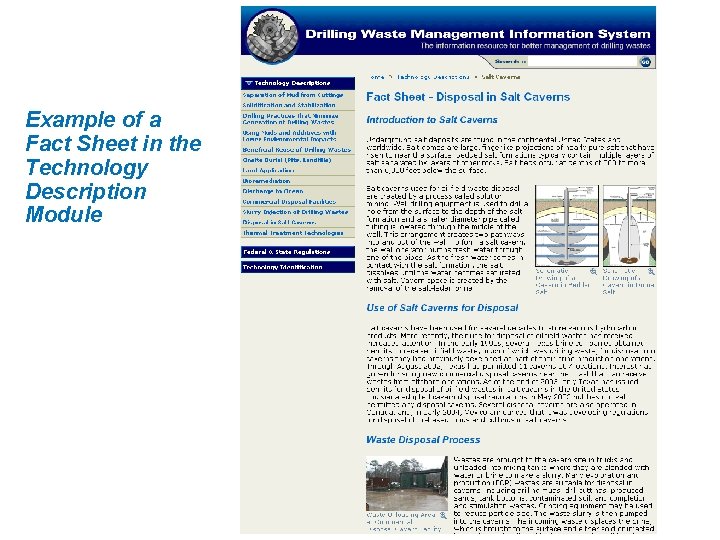
Example of a Fact Sheet in the Technology Description Module
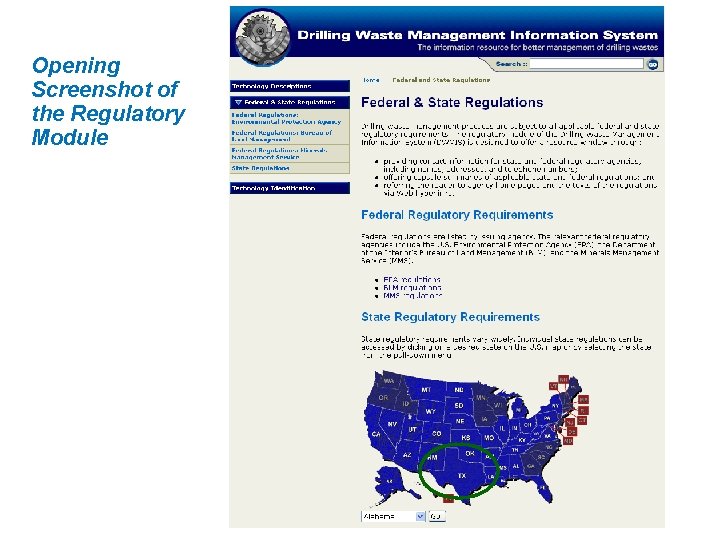
Opening Screenshot of the Regulatory Module
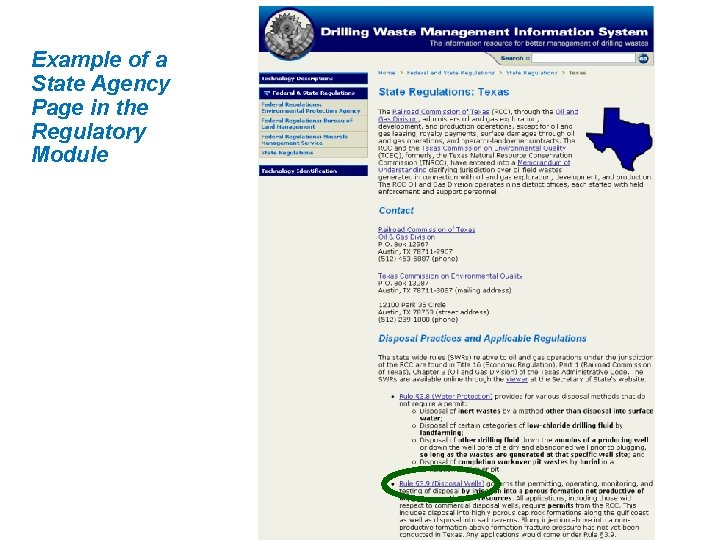
Example of a State Agency Page in the Regulatory Module

Link to Texas Regulations
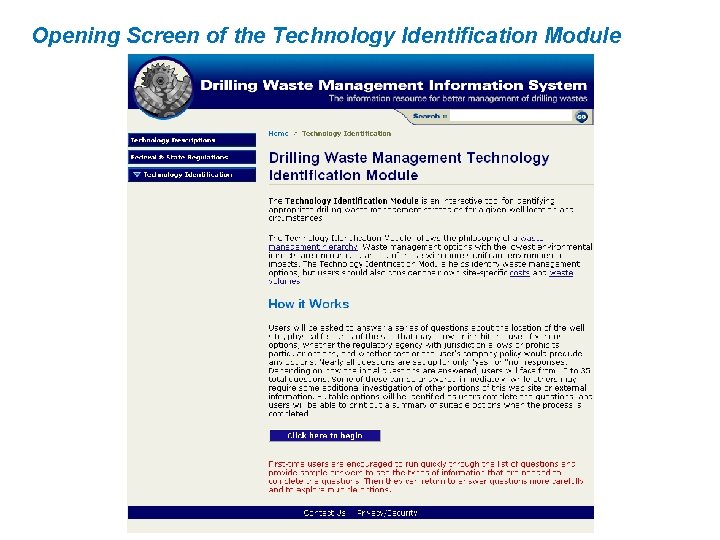
Opening Screen of the Technology Identification Module
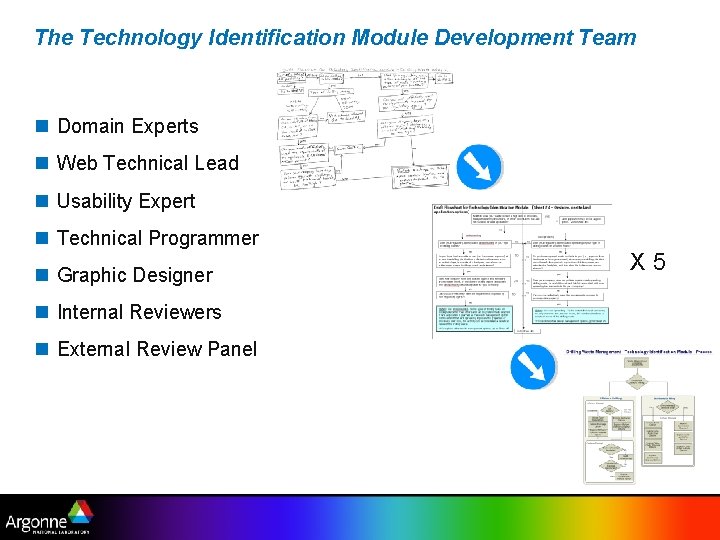
The Technology Identification Module Development Team n Domain Experts n Web Technical Lead n Usability Expert n Technical Programmer n Graphic Designer n Internal Reviewers n External Review Panel X 5
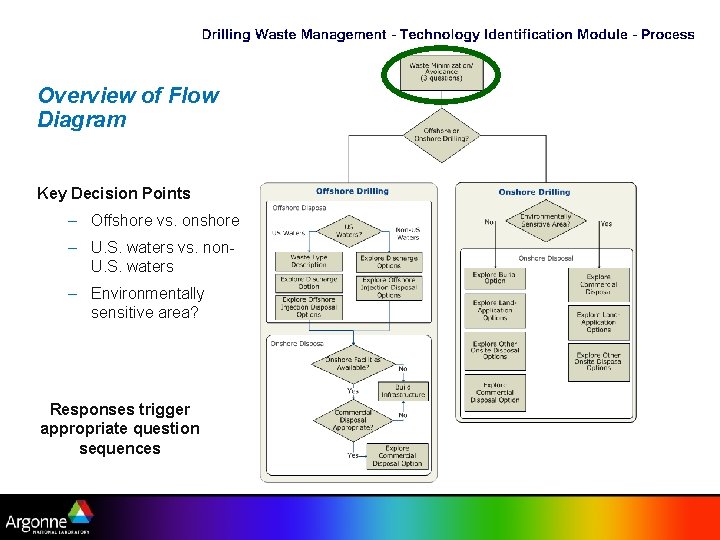
Overview of Flow Diagram Key Decision Points – Offshore vs. onshore – U. S. waters vs. non. U. S. waters – Environmentally sensitive area? Responses trigger appropriate question sequences
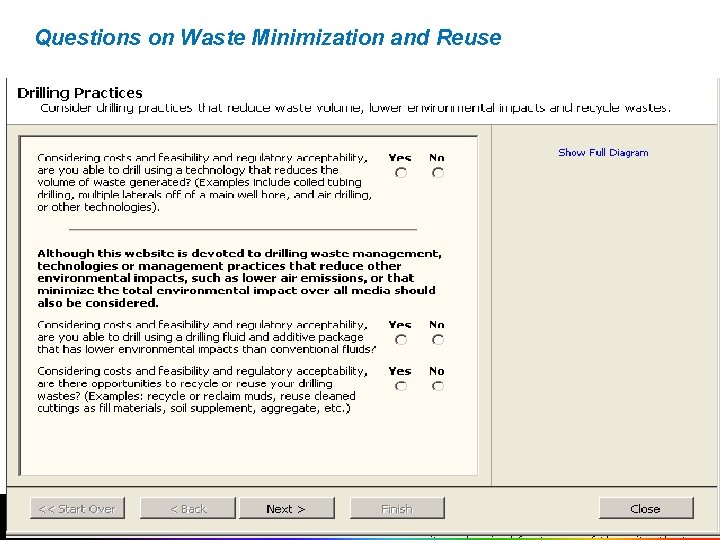
Questions on Waste Minimization and Reuse

Overview of Flow Diagram Offshore drilling U. S. Waters Waste Type Description
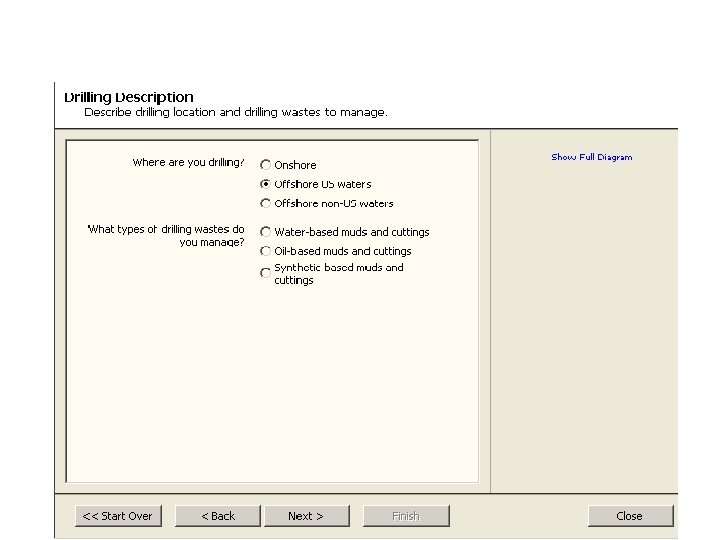
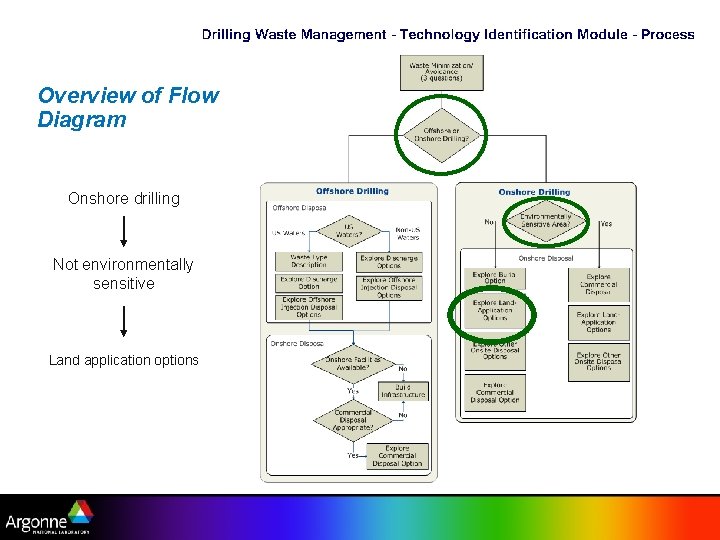
Overview of Flow Diagram Onshore drilling Not environmentally sensitive Land application options
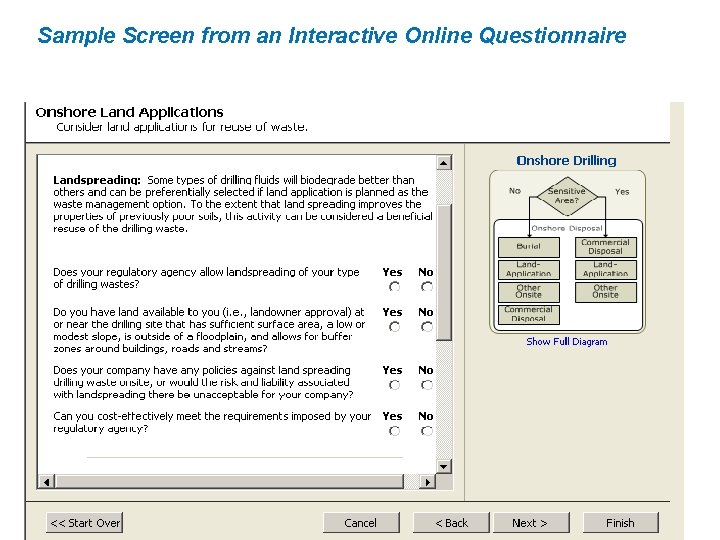
Sample Screen from an Interactive Online Questionnaire
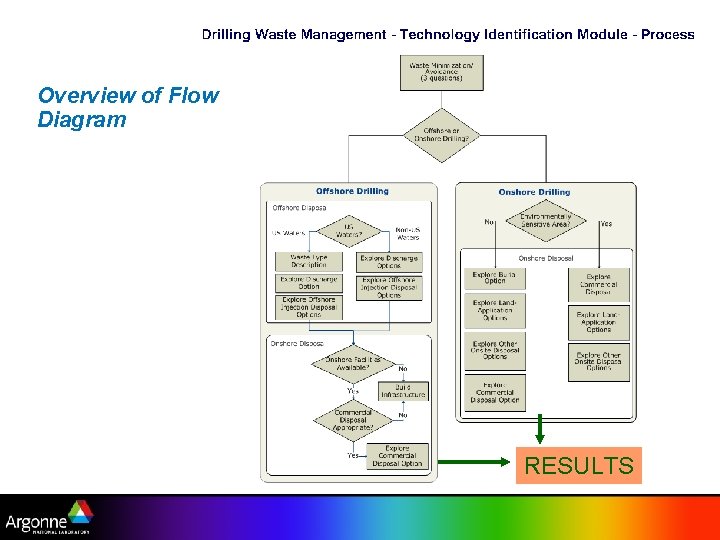
Overview of Flow Diagram RESULTS
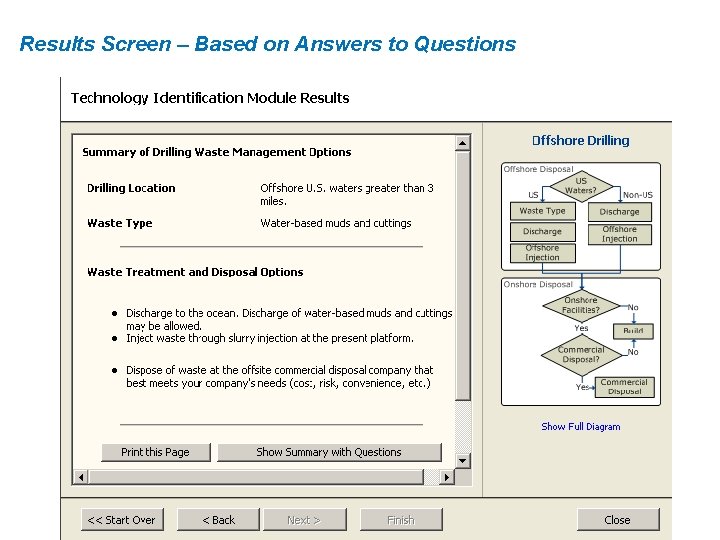
Results Screen – Based on Answers to Questions
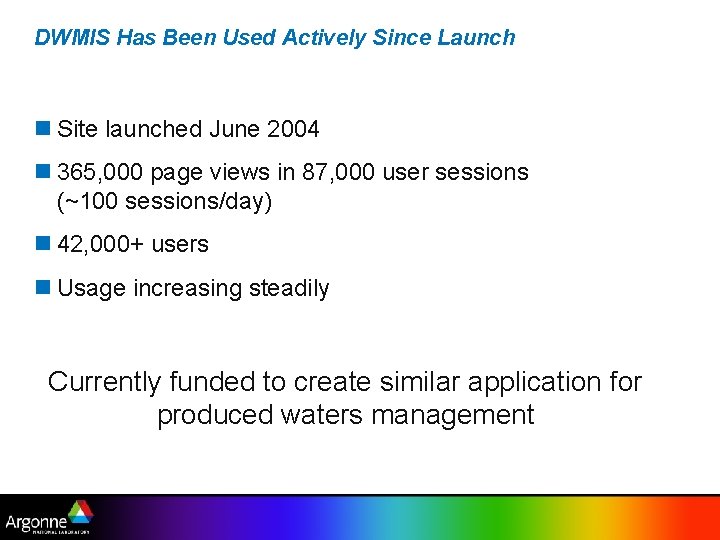
DWMIS Has Been Used Actively Since Launch n Site launched June 2004 n 365, 000 page views in 87, 000 user sessions (~100 sessions/day) n 42, 000+ users n Usage increasing steadily Currently funded to create similar application for produced waters management
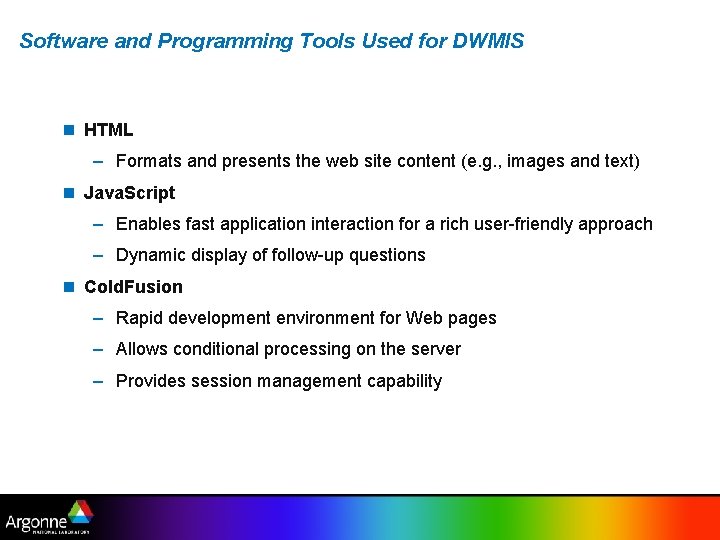
Software and Programming Tools Used for DWMIS n HTML – Formats and presents the web site content (e. g. , images and text) n Java. Script – Enables fast application interaction for a rich user-friendly approach – Dynamic display of follow-up questions n Cold. Fusion – Rapid development environment for Web pages – Allows conditional processing on the server – Provides session management capability
For More Information Bob Sullivan 630 -252 -6182 sullivan@anl. gov Drilling Waste Management Information System http: //web. evd. anl. gov/dwm
- Slides: 24