
Drill Press General Safety n Wear your safety
- Slides: 27
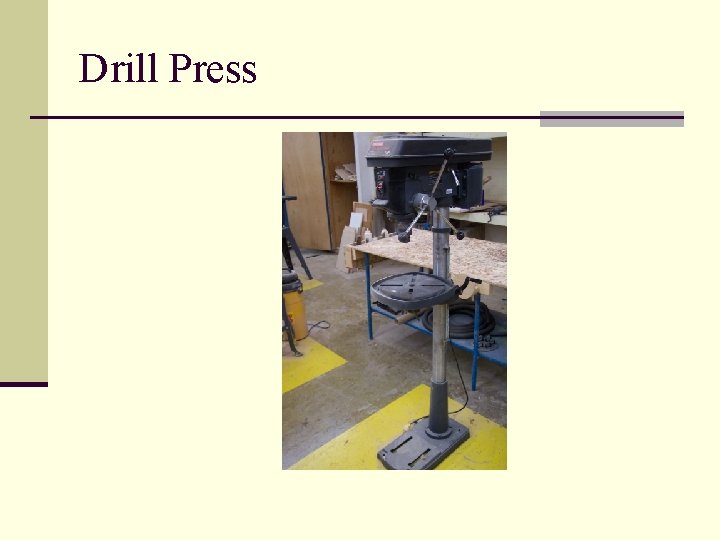
Drill Press
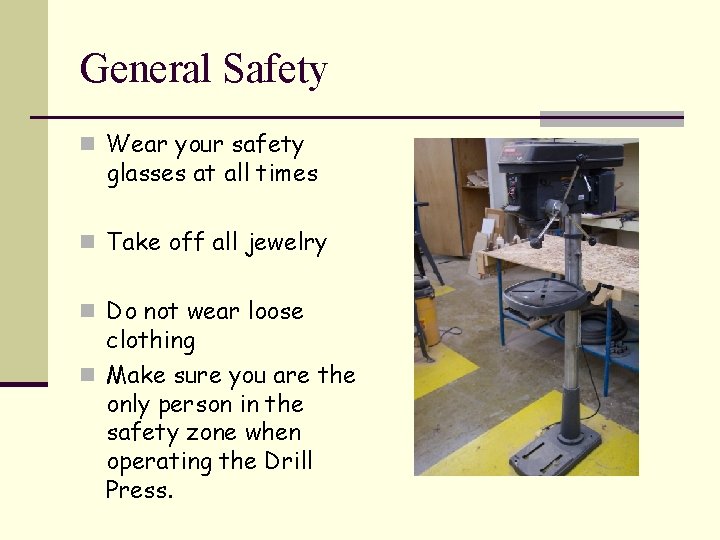
General Safety n Wear your safety glasses at all times n Take off all jewelry n Do not wear loose clothing n Make sure you are the only person in the safety zone when operating the Drill Press.
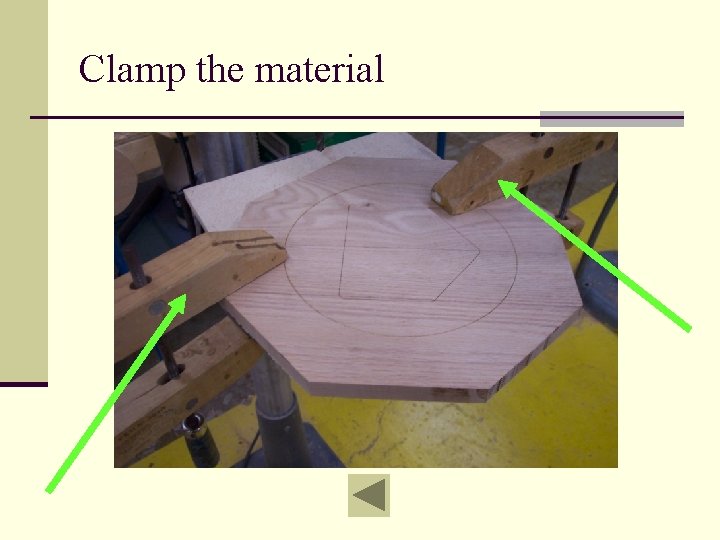
General Safety continued n Keep your material tight against the table n Clear scrap or cut material with a brush, other scrap material, or your project from the table. Do not use your hands. n Use wood screw clamps to tighten the material to the drill press table
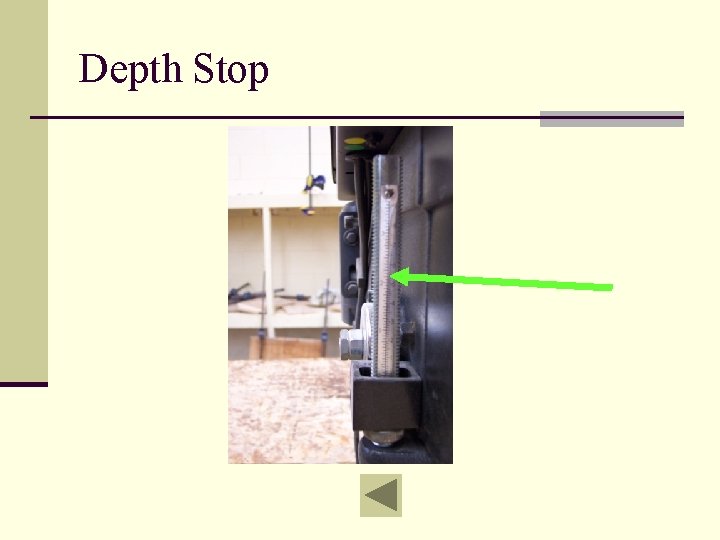
Components of the Drill Press n Table n Chuck Key n Depth Stop
Operations of the Drill Press n Drilling n Boring n Countersinking n Sanding n Routing
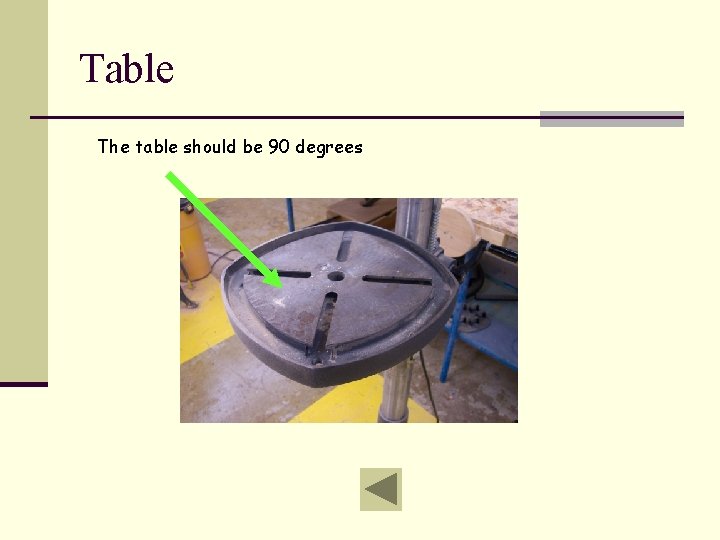
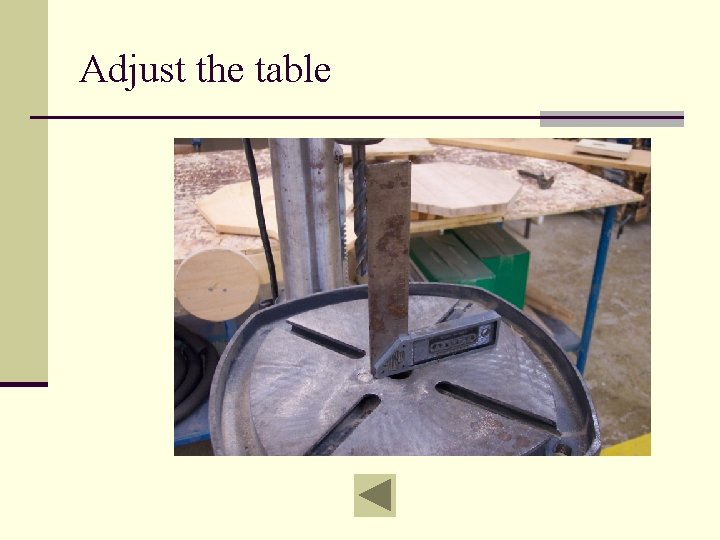
Table The table should be 90 degrees
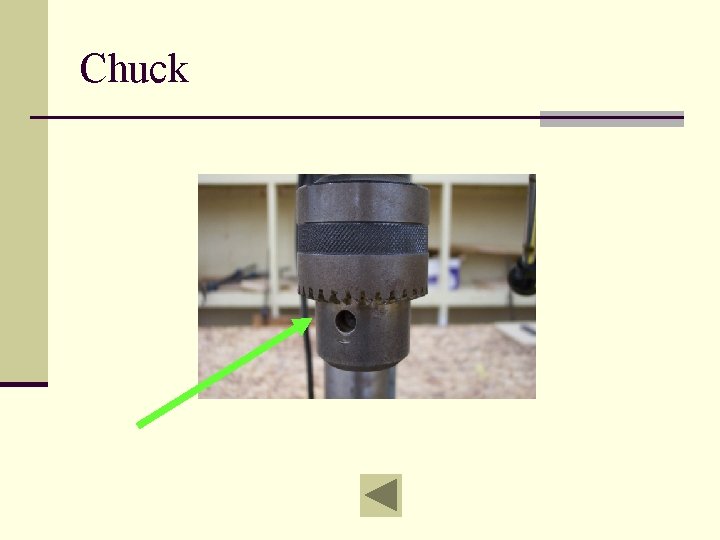
Chuck
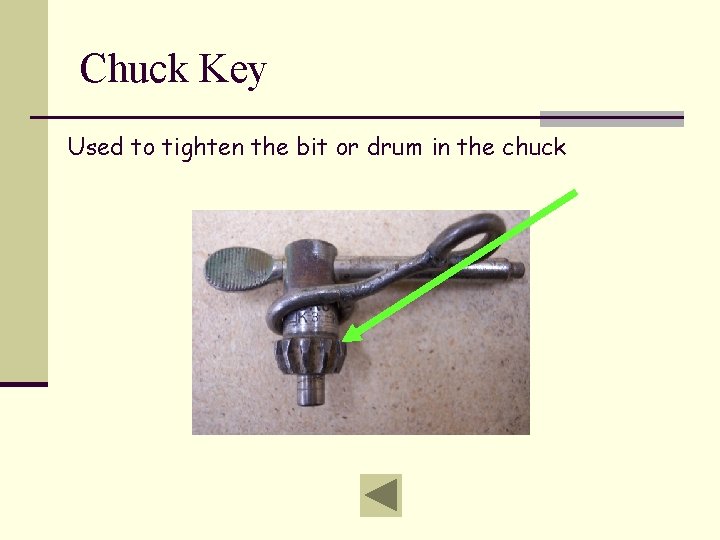
Chuck Key Used to tighten the bit or drum in the chuck
Depth Stop
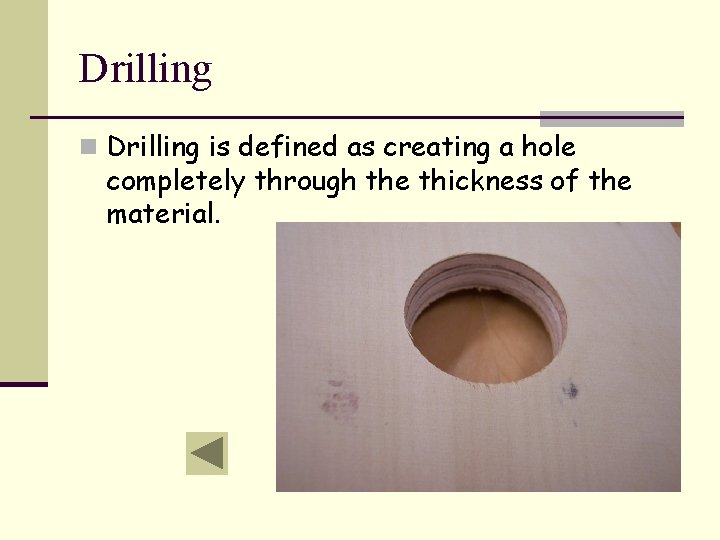
Drilling n Drilling is defined as creating a hole completely through the thickness of the material.
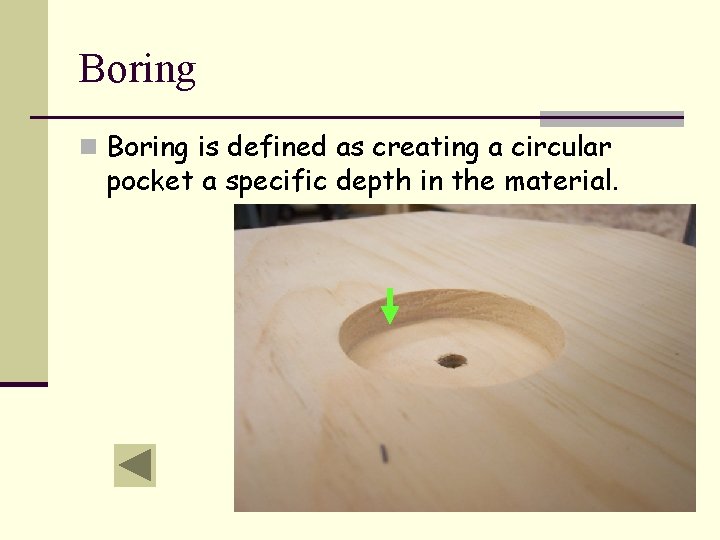
Boring n Boring is defined as creating a circular pocket a specific depth in the material.
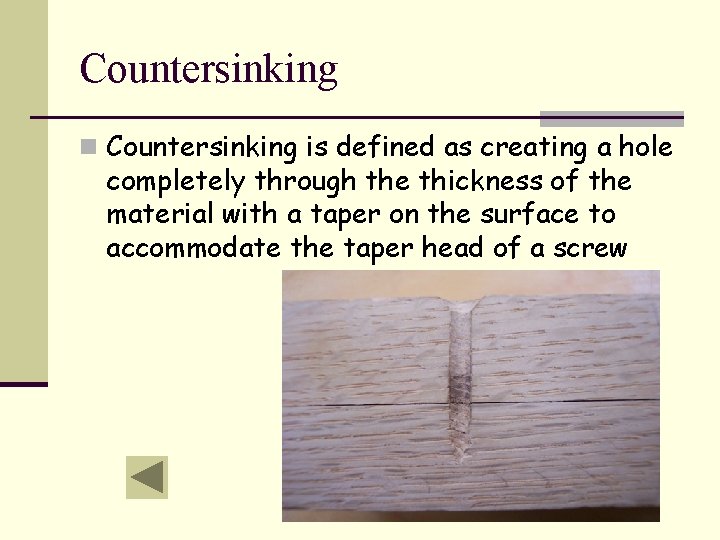
Countersinking n Countersinking is defined as creating a hole completely through the thickness of the material with a taper on the surface to accommodate the taper head of a screw
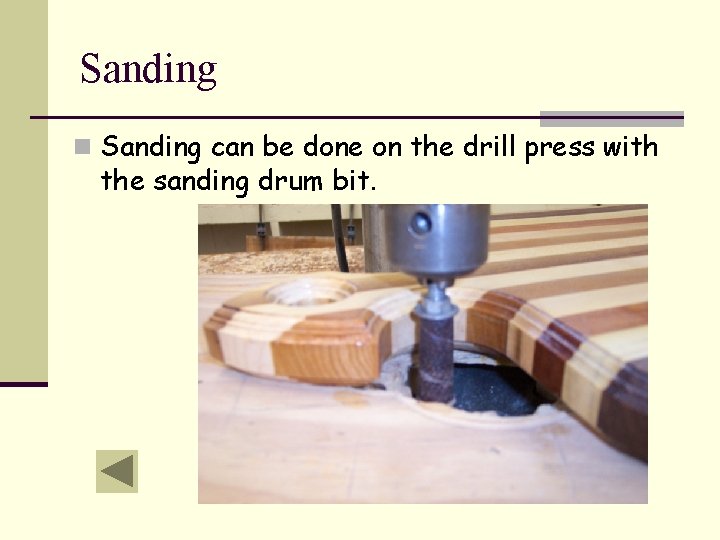
Sanding n Sanding can be done on the drill press with the sanding drum bit.
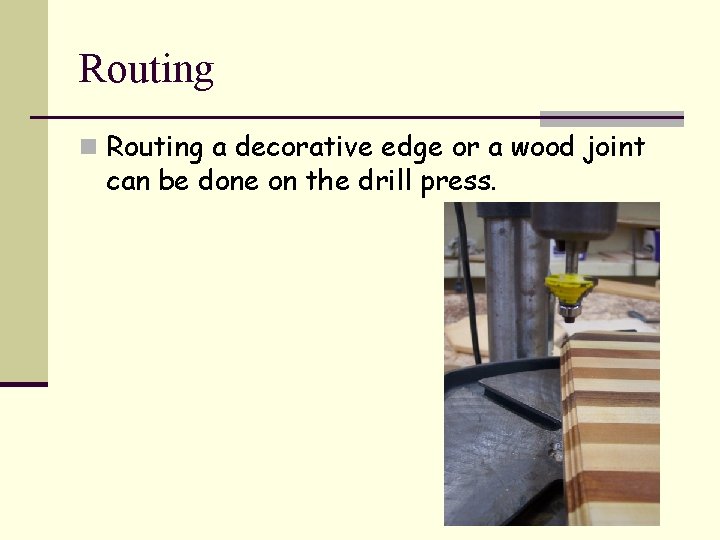
Routing n Routing a decorative edge or a wood joint can be done on the drill press.
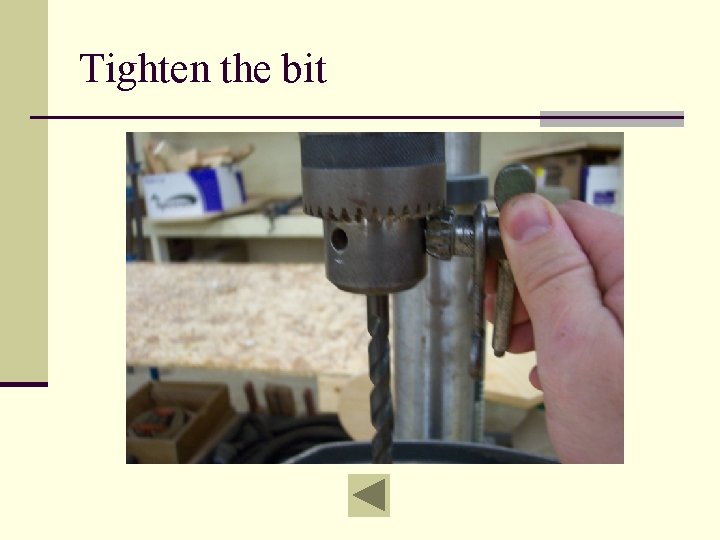
Operation Procedure 1 n 1. Tighten the bit or drum in the chuck with the chuck key.
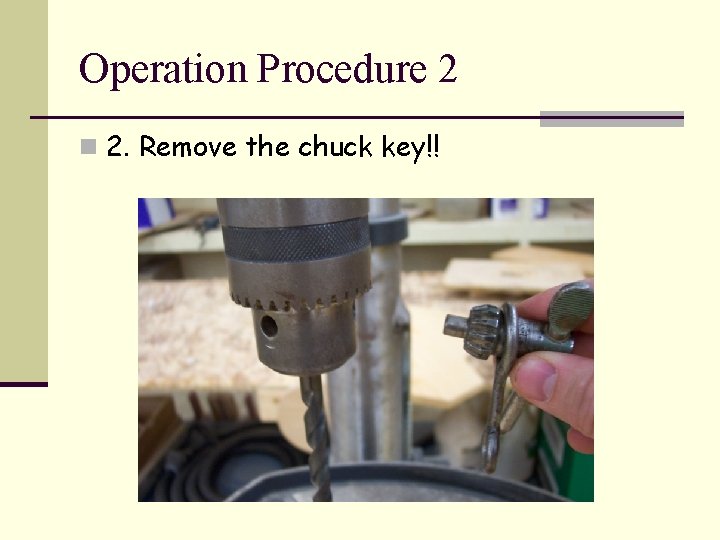
Operation Procedure 2 n 2. Remove the chuck key!!
Operation Procedure 3 n Adjust the table to be 90 degrees to the bit or drum
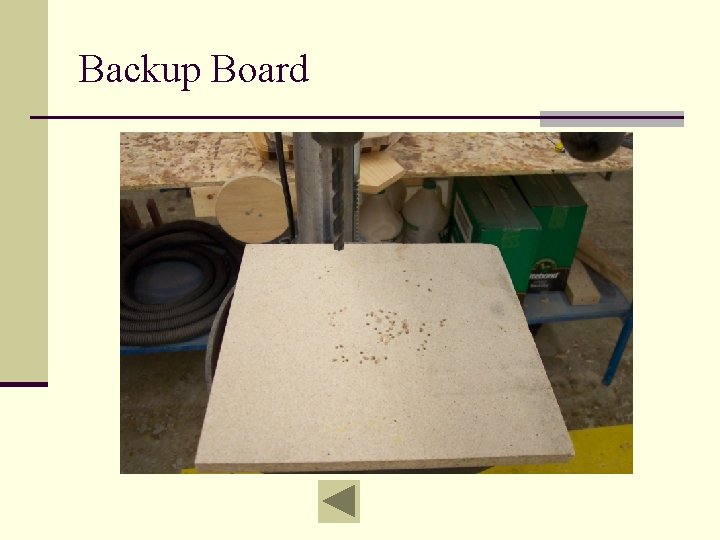
Operation Procedure 4 n Use a back-up board to prevent drilling into the table.
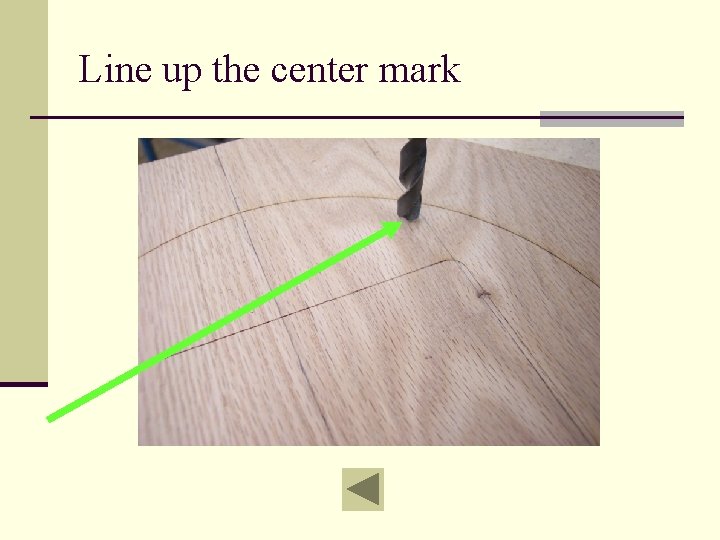
Operation Procedure 5 n Line up your material with the mark needed to be drilled
Operation Procedure 6 n Clamp the material down to the table with wood screw clamps.
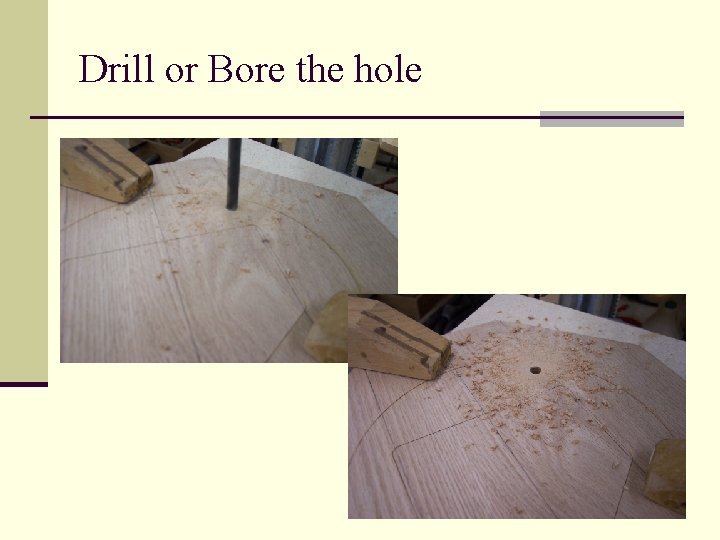
Operation Procedure 7 n Turn the machine on and drill or bore the hole needed. n Use a consistent rocking motion to clear chips from the hole
Tighten the bit
Adjust the table
Backup Board
Line up the center mark
Clamp the material
Drill or Bore the hole