
Dressing is not technique but Art Dressing 1
“ Dressing is not technique, but Art. ”
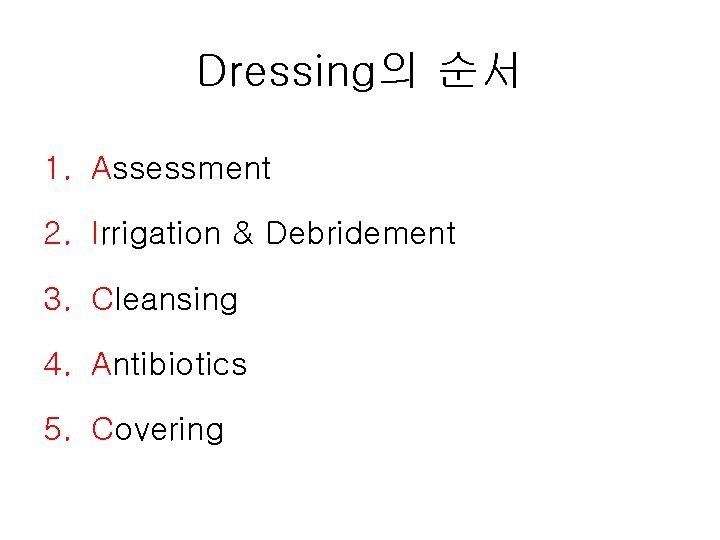
Dressing의 순서 1. Assessment 2. Irrigation & Debridement 3. Cleansing 4. Antibiotics 5. Covering
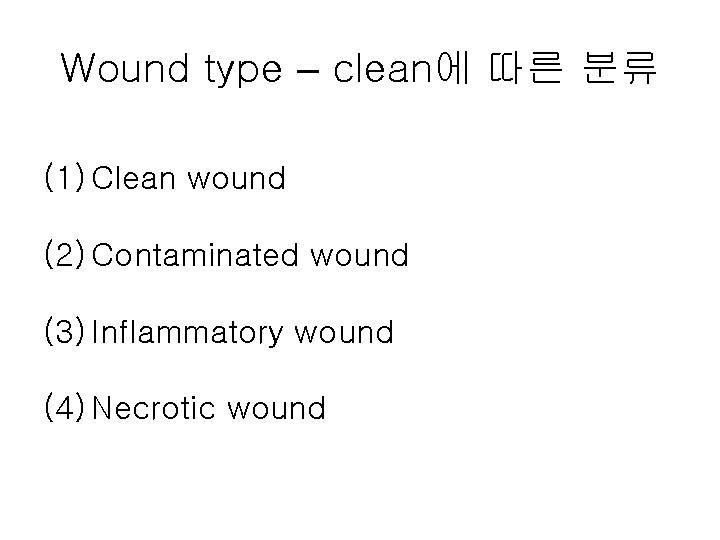
Wound type – clean에 따른 분류 (1) Clean wound (2) Contaminated wound (3) Inflammatory wound (4) Necrotic wound
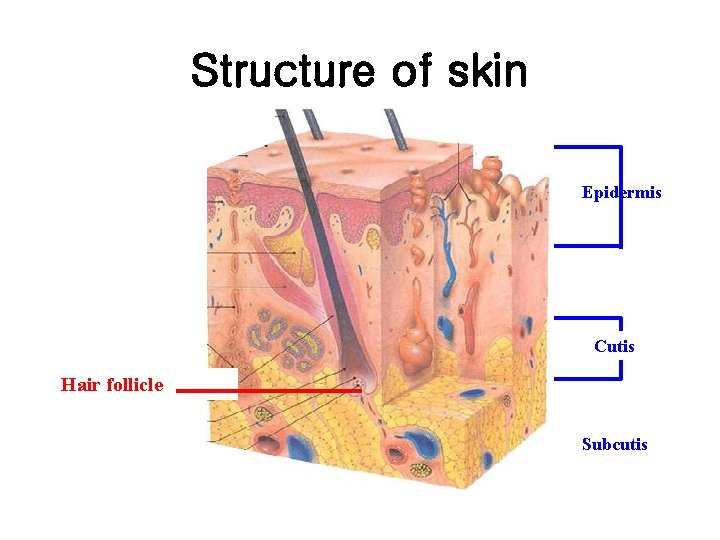
Structure of skin Epidermis Cutis Hair follicle Subcutis
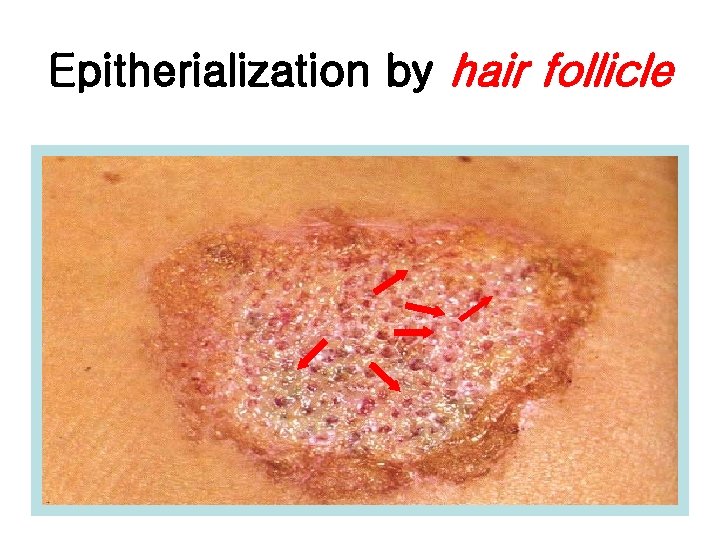
Epitherialization by hair follicle
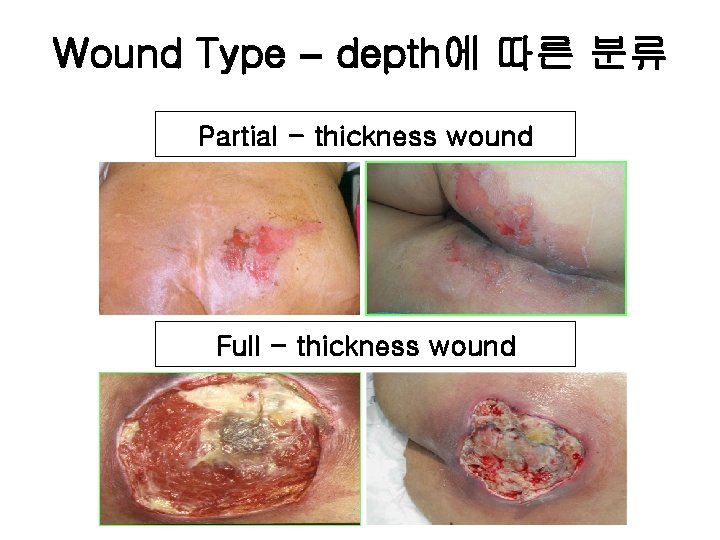
Wound Type – depth에 따른 분류 Partial - thickness wound Full - thickness wound
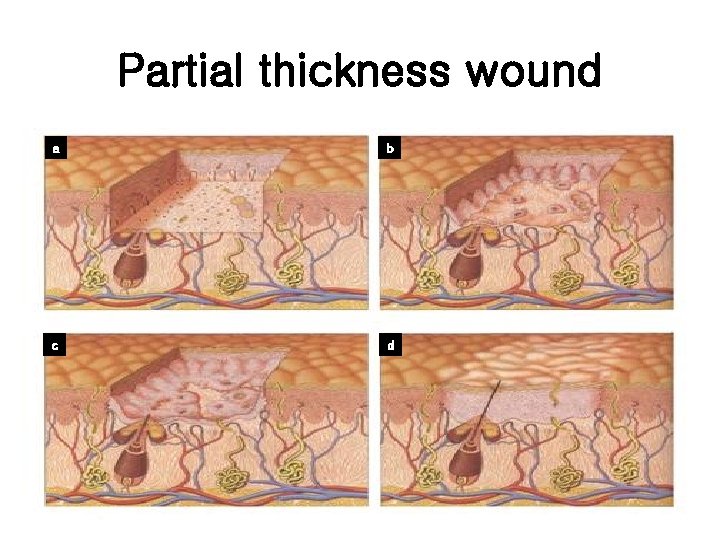
Partial thickness wound a b c d
Wound type – 손상형태에 따른 분류 (1) Erosion (2) Laceration (3) Stab wound (4) Avulsion (5) Contusion (6) Crushing injury
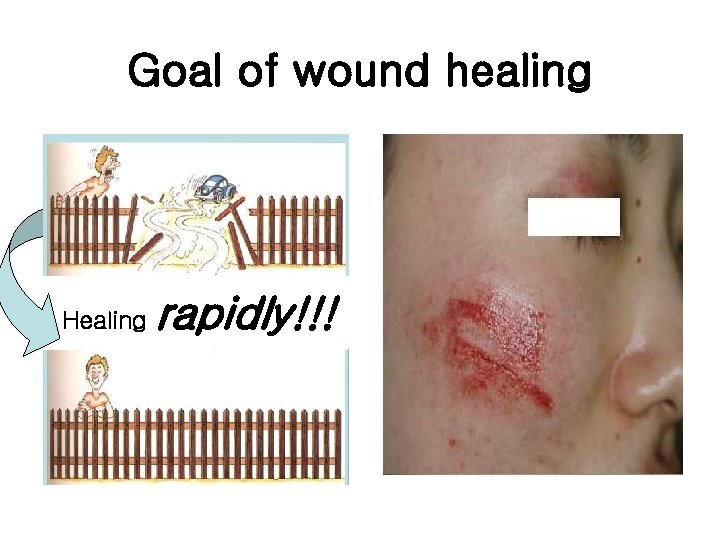
Goal of wound healing Healing rapidly!!!
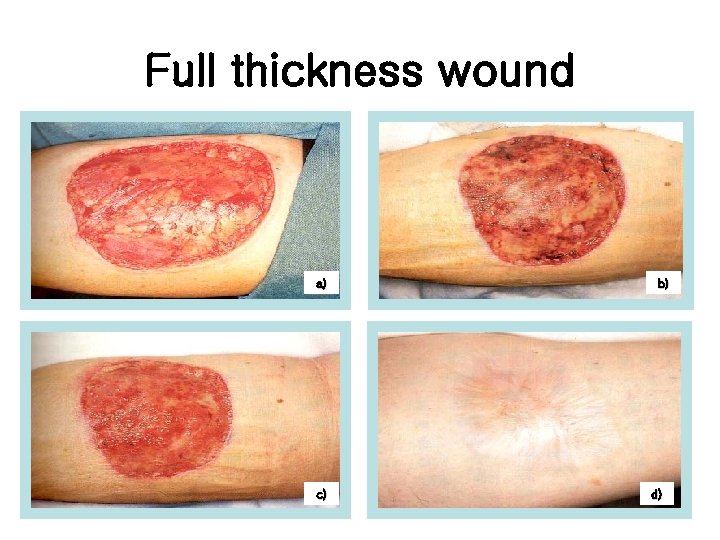
Full thickness wound a) c) b) d)
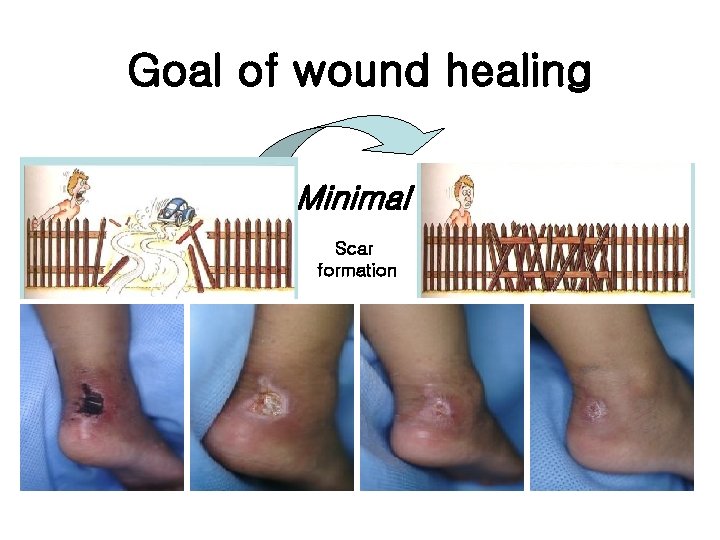
Goal of wound healing Minimal Scar formation
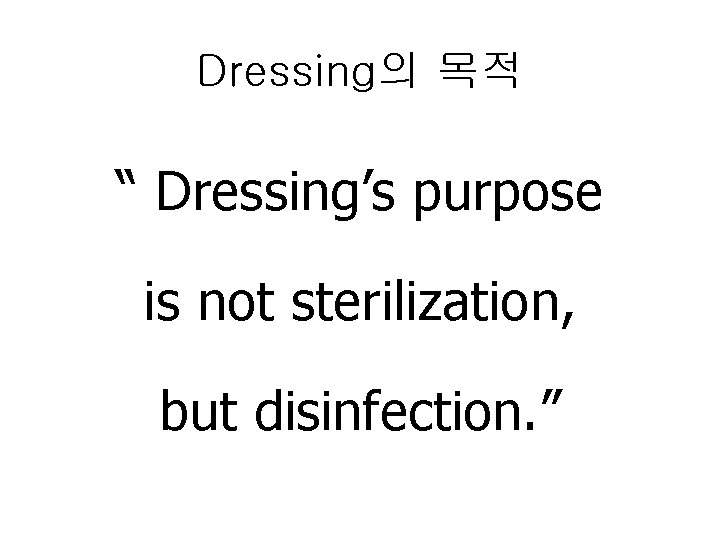
Dressing의 목적 “ Dressing’s purpose is not sterilization, but disinfection. ”
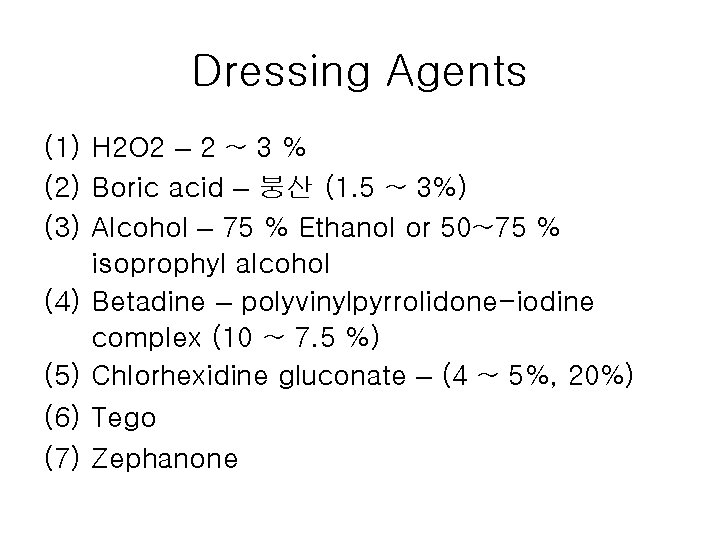
Dressing Agents (1) H 2 O 2 – 2 ~ 3 % (2) Boric acid – 붕산 (1. 5 ~ 3%) (3) Alcohol – 75 % Ethanol or 50~75 % isoprophyl alcohol (4) Betadine – polyvinylpyrrolidone-iodine complex (10 ~ 7. 5 %) (5) Chlorhexidine gluconate – (4 ~ 5%, 20%) (6) Tego (7) Zephanone
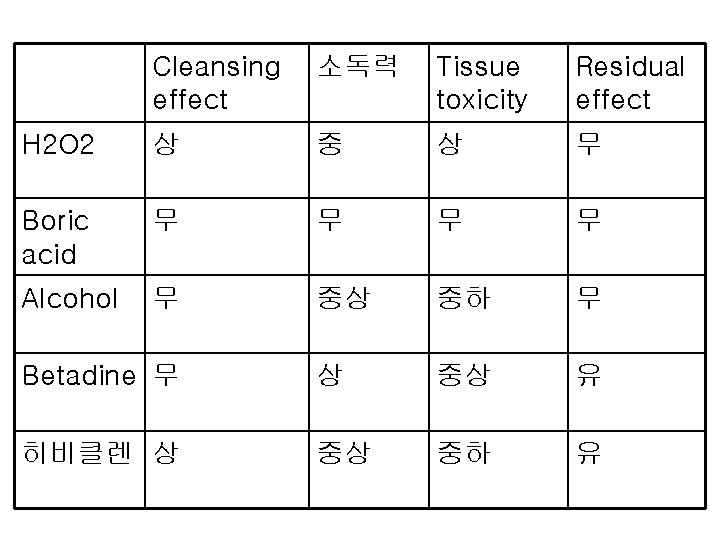
Cleansing effect 소독력 Tissue toxicity Residual effect H 2 O 2 상 중 상 무 Boric acid 무 무 Alcohol 무 중상 중하 무 Betadine 무 상 중상 유 히비클렌 상 중상 중하 유
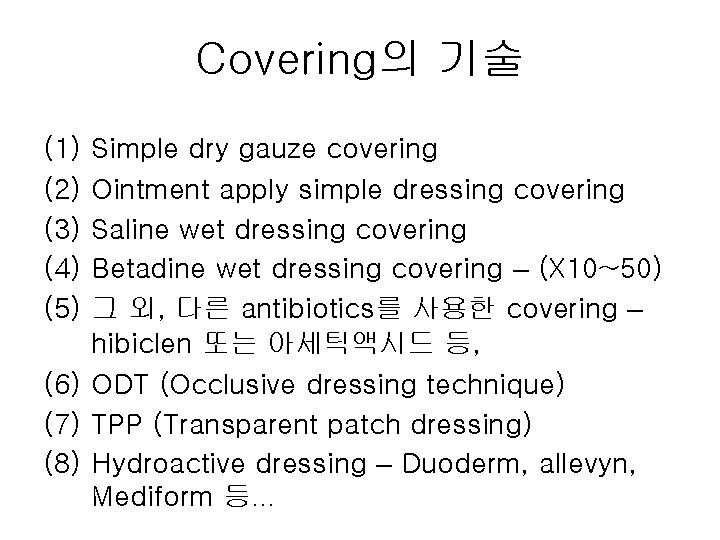
Covering의 기술 (1) (2) (3) (4) (5) Simple dry gauze covering Ointment apply simple dressing covering Saline wet dressing covering Betadine wet dressing covering – (X 10~50) 그 외, 다른 antibiotics를 사용한 covering – hibiclen 또는 아세틱액시드 등, (6) ODT (Occlusive dressing technique) (7) TPP (Transparent patch dressing) (8) Hydroactive dressing – Duoderm, allevyn, Mediform 등…
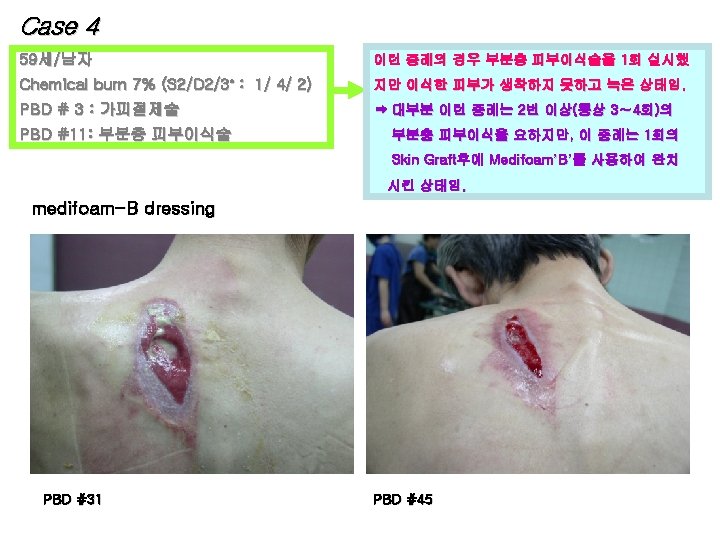
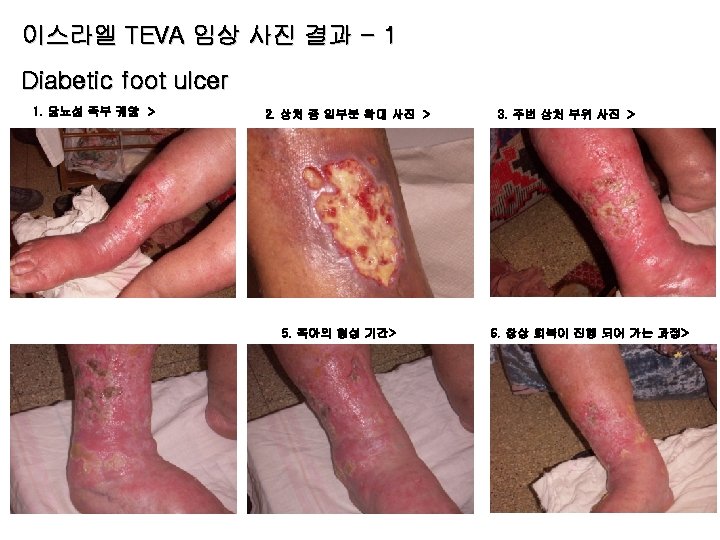
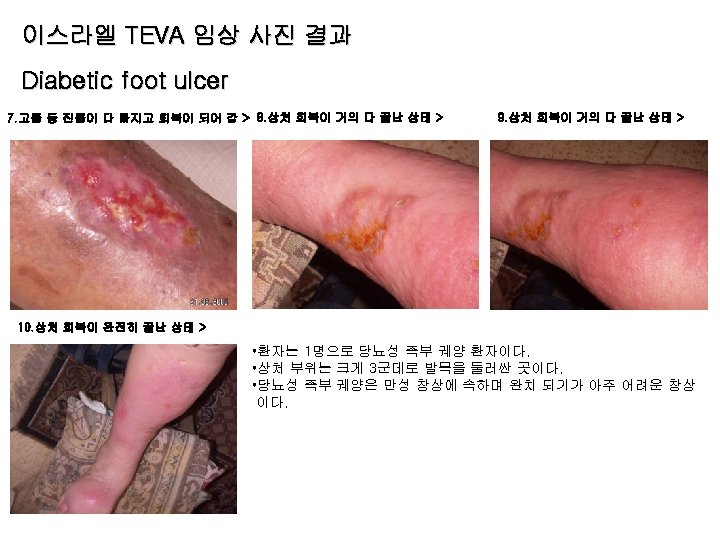
Hydroactive dressing이란… • Wound에서 분비되는 exudates를 healing 에 도움이 되도록 이용하는 방법 • Hydrostatic pressure의 변동이 없고, 2 ndary infection이 발생하지 않을 경우, hydroactive dressing에 함유된 fluid에서 Tissue necrosis factor, IL-2, IL-6 및 collagenase 등의 cytokines 과 효소가 감 소한다.
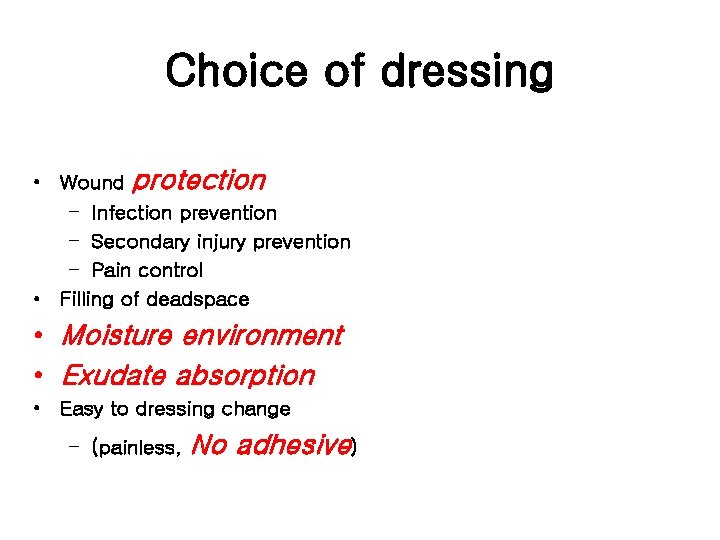
Choice of dressing • Wound protection – Infection prevention – Secondary injury prevention – Pain control • Filling of deadspace • Moisture environment • Exudate absorption • Easy to dressing change – (painless, No adhesive)
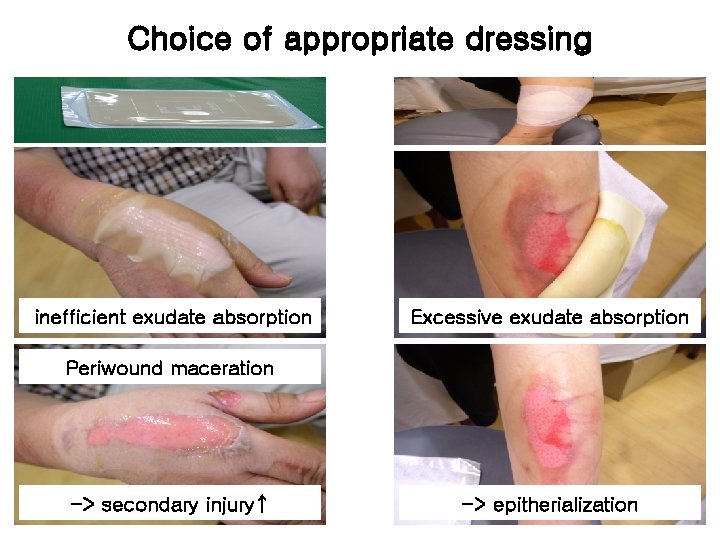
Choice of appropriate dressing inefficient exudate absorption Excessive exudate absorption Periwound maceration -> secondary injury↑ -> epitherialization

Thank you!!!
- Slides: 24