
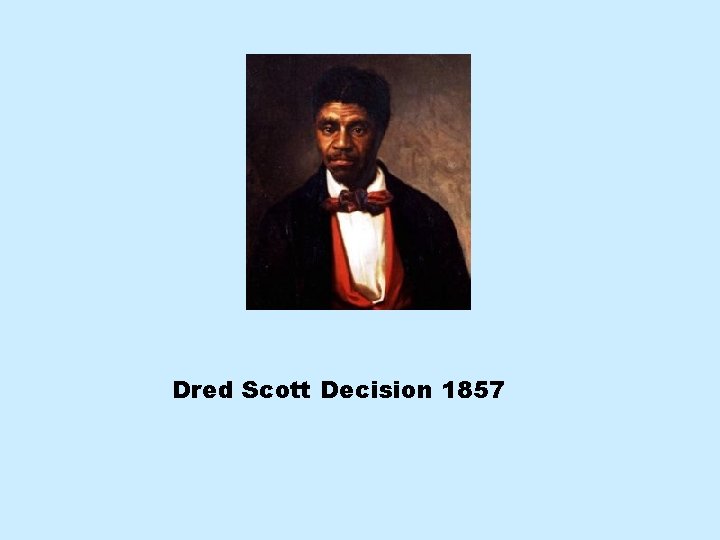
Dred Scott Decision 1857 Dred Scott Decision FACTS
- Slides: 5
Dred Scott Decision 1857
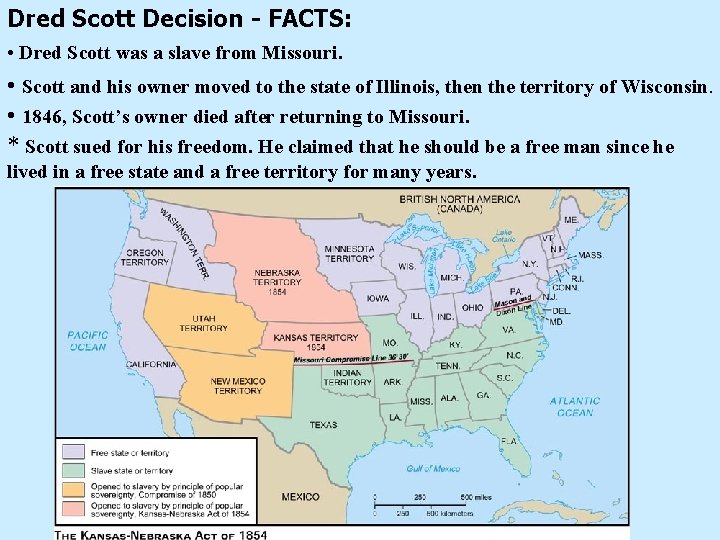
Dred Scott Decision - FACTS: • Dred Scott was a slave from Missouri. • Scott and his owner moved to the state of Illinois, then the territory of Wisconsin. • 1846, Scott’s owner died after returning to Missouri. * Scott sued for his freedom. He claimed that he should be a free man since he lived in a free state and a free territory for many years.
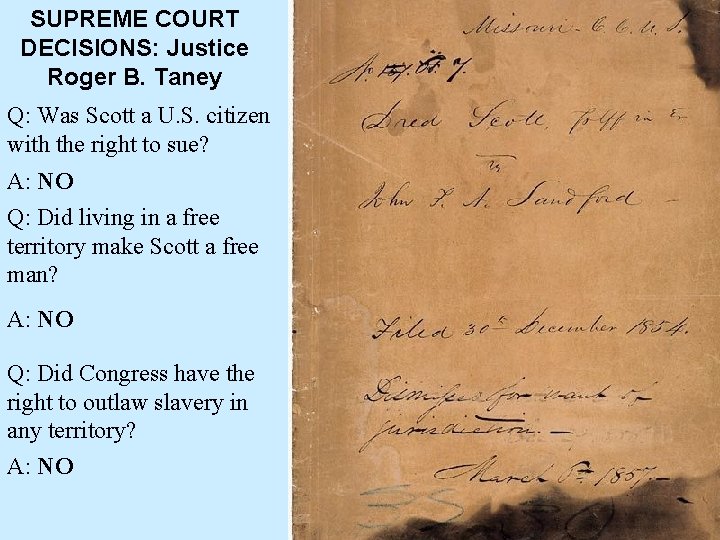
SUPREME COURT DECISIONS: Justice Roger B. Taney Q: Was Scott a U. S. citizen with the right to sue? A: NO Q: Did living in a free territory make Scott a free man? A: NO Q: Did Congress have the right to outlaw slavery in any territory? A: NO
Ruled that slaves were property not citizens Scott had no right to sue B/c slaves are property, saying they are free violates the Bill of Rights (5 th amendment) Taney (Supreme Court) says Congress has no power to ban slavery in a territory, meaning the MO Compromise, 1850 Comp. , are all UNCONSTUTIONAL
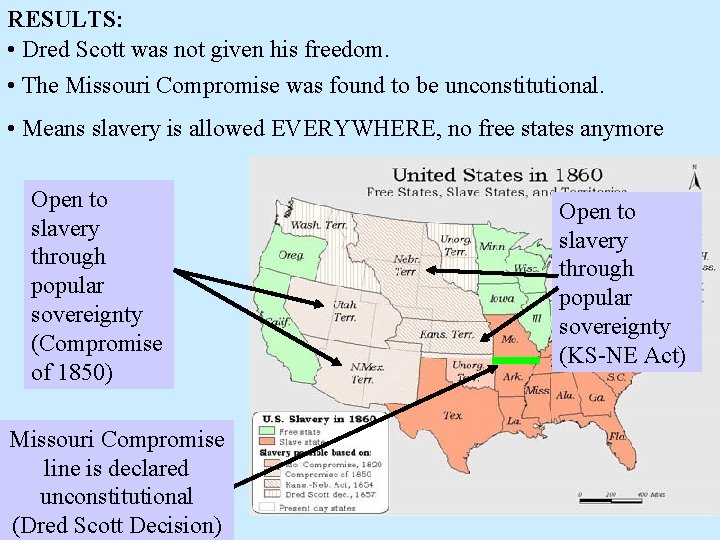
RESULTS: • Dred Scott was not given his freedom. • The Missouri Compromise was found to be unconstitutional. • Means slavery is allowed EVERYWHERE, no free states anymore Open to slavery through popular sovereignty (Compromise of 1850) Missouri Compromise line is declared unconstitutional (Dred Scott Decision) Open to slavery through popular sovereignty (KS-NE Act)