
DREAM DESIGN DELIVER INTENTIONAL PROGRAM PLANNING FOR WI

- Slides: 30
DREAM > DESIGN > DELIVER INTENTIONAL PROGRAM PLANNING FOR WI 21 ST CCLC PROGRAMS Jessy Newman, Senior Researcher OCTOBER 2018
American Institutes for Research Established in 1946, the American Institutes for Research (AIR) is an independent, nonpartisan, not-for-profit organization that conducts behavioral and social science research on important social issues and delivers technical assistance, both domestically and internationally, in the areas of education, health, and workforce productivity. 2
Introductions 3
Activity • Where are you from? • Has your program already started? • Who do (will) you serve (grades, ages, targeted populations or general enrollment)? • Does your school year include summer? • Is your program school-based or stand-alone? • What is your program’s primary area of focus (academic support, enrichment, health + wellness, leadership, something else)? 4
Today’s Goals • Have fun! • Connect with others from around the state • Learn from each other • Develop/refine your program plan • Leave with concrete action steps for intentional program delivery 5
Agenda 1. Beyond the Bell and resource overview 2. Vision, goals, and action steps 3. Activities and logic model-ing 4. Planning for next steps 5. Continuous improvement through ongoing data use 6. Reflection 6
Mindful Minute 7
Beyond the Bell What is all of this stuff in front of me? 8
Beyond the Bell® is a suite of professional development services, products, and practical tools designed to help afterschool program leaders and staff create and sustain high-quality, effective afterschool and expanded learning programs. The practical, easy-to-use Beyond the Bell Toolkit provides information about program management, design, partnerships, delivery, evaluation, and improvement. It contains 96 tools that are ready to use and has a set of related professional development services. 9
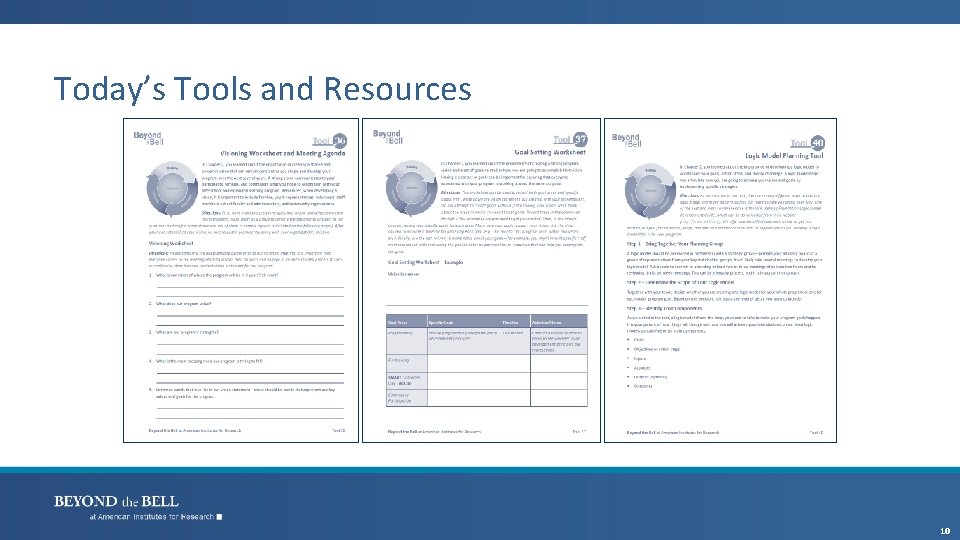
Today’s Tools and Resources 10
Word of the Day: Intentionality Purposeful decisions about allocating resources, hiring staff members, and deciding on programming to meet your vision and reach your goals. 11
Word of the Day: Intentionality • What is the overall purpose of our program? • Does the purpose align with our program’s vision and goals? • What skills will youth develop in our program? • How do we want to recruit youth for our program? • What outcomes do we want to achieve? How can we shape our program plan to help achieve these outcomes? • How can our staffing structure help us to achieve our goals? 12
Vision and Goals 13
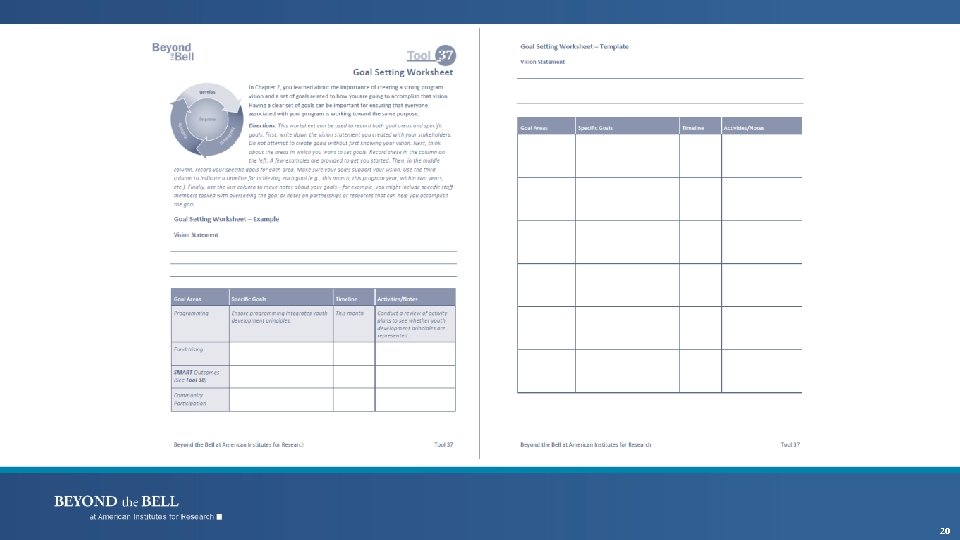
Program Vision and Goals • A vision is the “big picture, ” values-based idea of what your program will accomplish, so it should be aspirational. • Program goals are broad but understandable descriptions of how a program will achieve its vision. – State goals – Local goals, activities, and outcomes 14
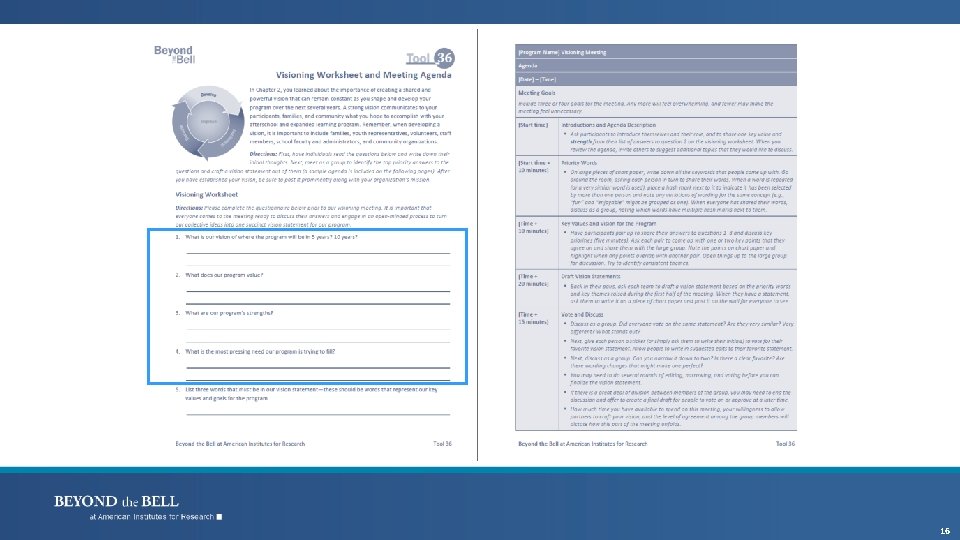
Your Program Vision • Creating a shared and powerful vision that can remain constant as you shape and develop your program over the next several years is important • A strong vision communicates to your participants, families, and community what you hope to accomplish through your program • Including families, youth representatives, staff, volunteers, school faculty, and community organizations is helpful 15
16
Pair-Share 17
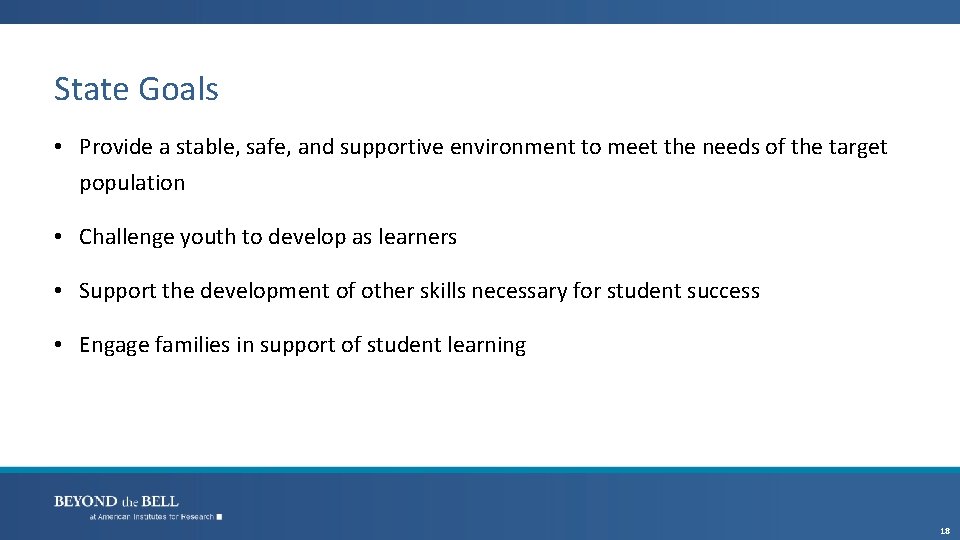
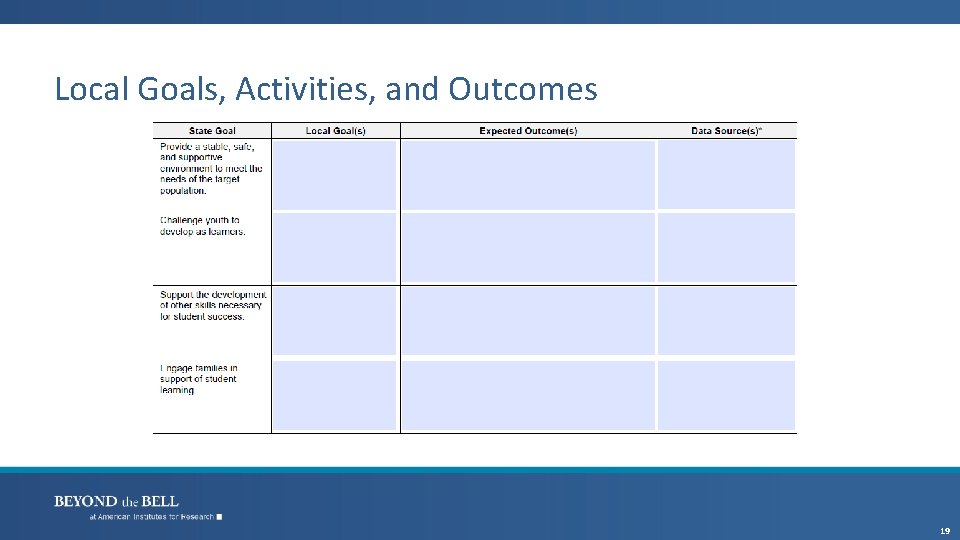
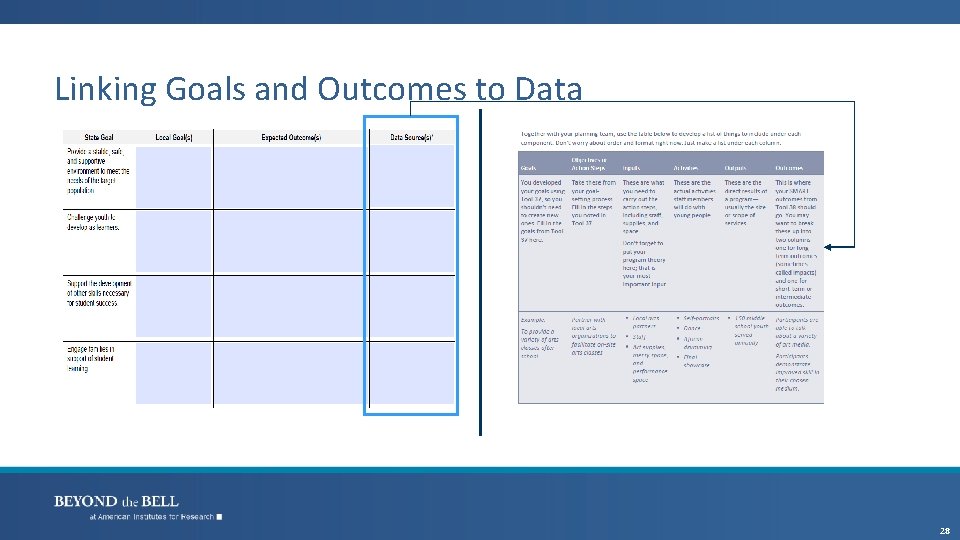
State Goals • Provide a stable, safe, and supportive environment to meet the needs of the target population • Challenge youth to develop as learners • Support the development of other skills necessary for student success • Engage families in support of student learning 18
Local Goals, Activities, and Outcomes 19
20
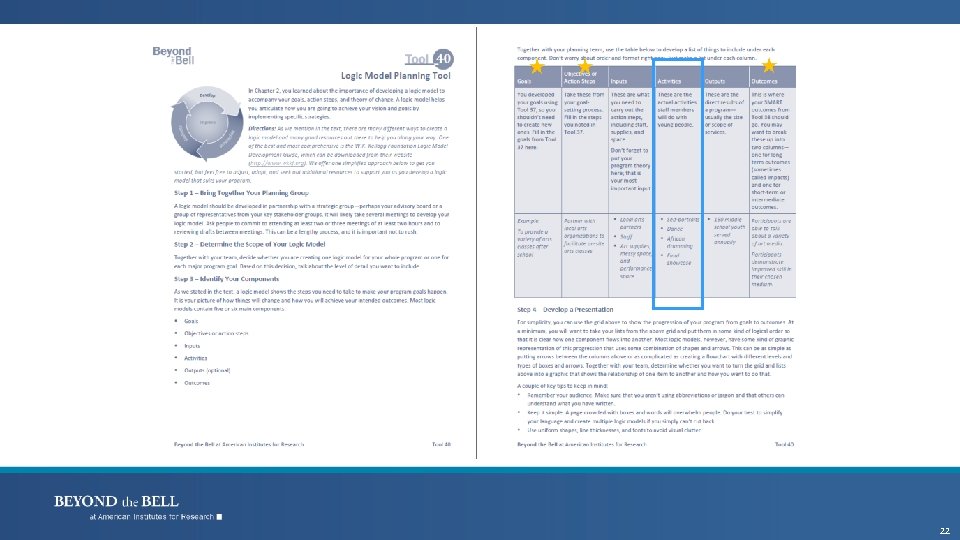
Logic Model • A logic model shows the steps that must take place to make your program goals happen. • You can have one logic model for every major or overarching goal in your program. 21
22
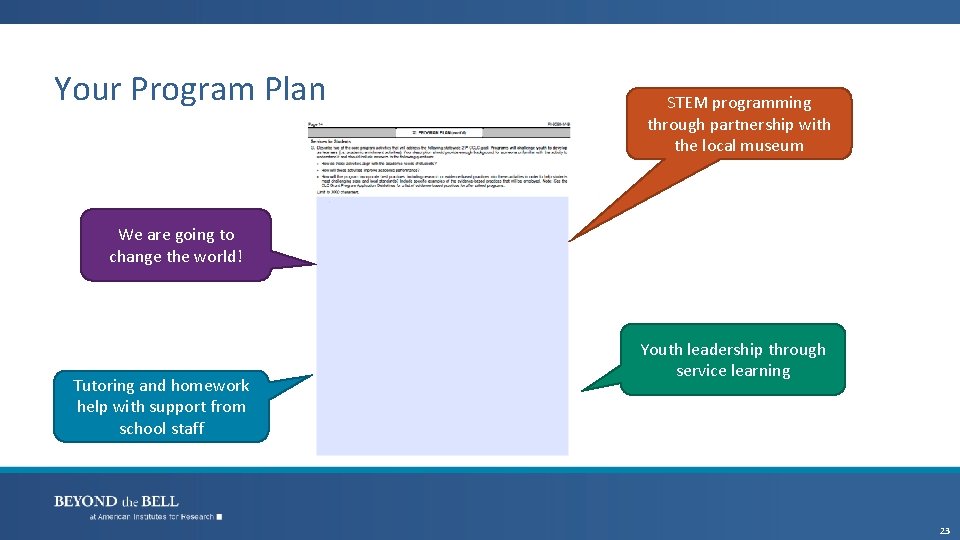
Your Program Plan STEM programming through partnership with the local museum We are going to change the world! Tutoring and homework help with support from school staff Youth leadership through service learning 23
Logic Model • Which planned activities support your local goals and expected outcomes? • What inputs are needed to support those activities? • What outputs directly result from those activities to support your expected outcomes? 24
Pair-Share 25
Building in Continuous Improvement 26
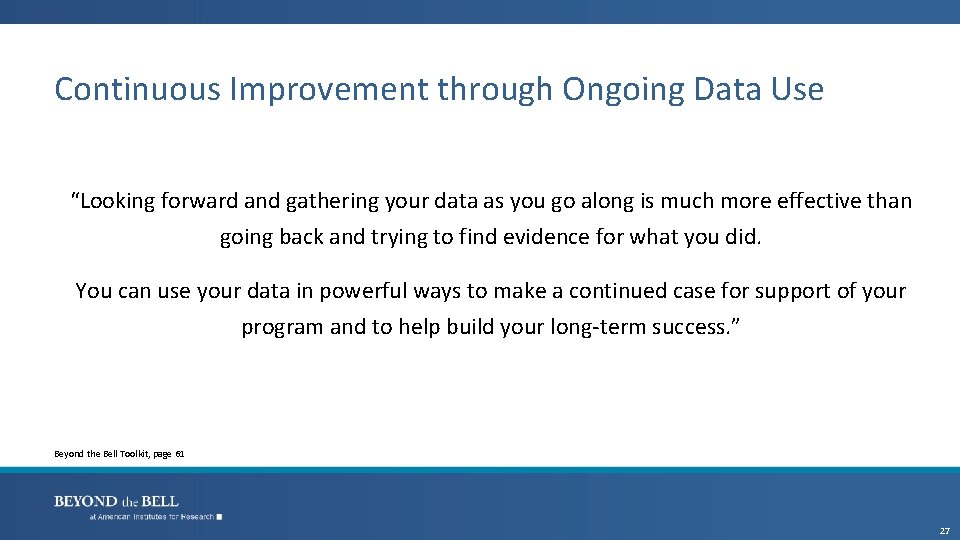
Continuous Improvement through Ongoing Data Use “Looking forward and gathering your data as you go along is much more effective than going back and trying to find evidence for what you did. You can use your data in powerful ways to make a continued case for support of your program and to help build your long-term success. ” Beyond the Bell Toolkit, page 61 27
Linking Goals and Outcomes to Data 28
Reflection 29
Jessy Newman Senior Researcher E: jnewman@air. org P: 312 -588 -7341 @jznewman