
Drawing the Line Learning About Sexuality and Gender
Drawing the Line Learning About Sexuality and Gender Lesson 1
Ground Rules To create a safe environment: • Do not use put downs. • Be sensitive to others. • • • You have the right to privacy/confidentiality. Use correct terminology. Do not divulge private information. There are no dumb questions. Talk to your parents for more information.
Introduction • It is important for you to have a basic understanding of sex and sexuality so you can make good decisions in life. • You will be learning about the following aspects of sexuality over the next two weeks: Reproductive Anatomy HIV/STD Prevention Contraception Sexual Assault Relationships Personal Health Gender Roles Making Decisions
Class Discussion: Talking About Sexuality • Sexuality begins at birth and develops over a person’s lifetime. • What are some of the components that make up sexuality? • Review the components on the following chart and think about how they are all part of a person’s sexuality.
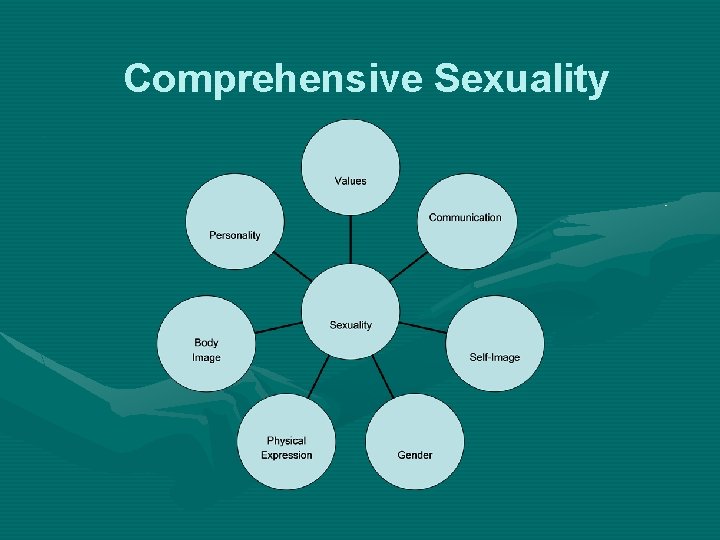
Comprehensive Sexuality.
Class Activity: “Exploring Gender” There are three different aspects to gender: • Gender Identity: Person’s sense of being male, female or in between • Gender Expression: The way a person communicates their identity to others; behavior, clothing, voice, etc. • Gender Roles/Norms: Learned expectations of what males and females are supposed to be and do
Class Activity: “Exploring Gender” Gender Role Stereotypes are expectations, ideals and scripts we learn for how males and females should think, behave and feel: • Stereotypes can influence our relationships. • Suggest some stereotypes for males and females that you experience or see in the media (see next slide for template). Remember that we are talking about stereotypes and not the personal beliefs of students in the class.
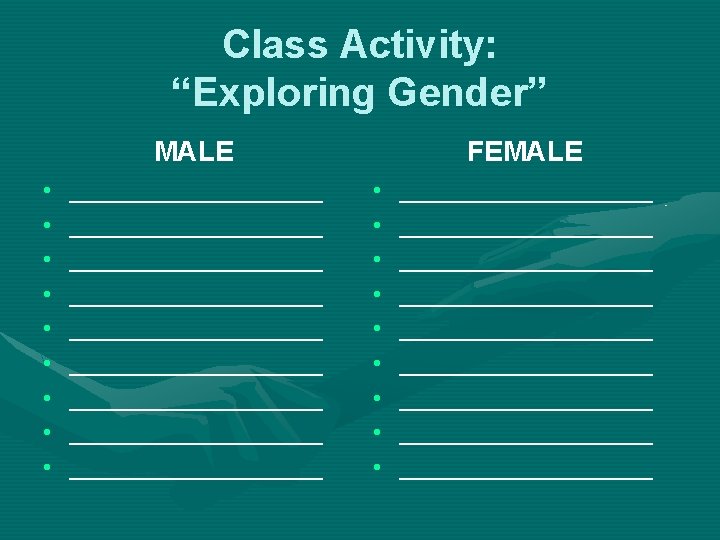

Reviewing Stereotypes • What are one or two words that summarize each list? • How does it make you feel to see the stereotypes about gender? • What impact does gender stereotyping have on young people, especially in intimate relationships? • How can you challenge these stereotypes?

Power and Control in Relationships Gender stereotypes can create an imbalance of power in relationships: • Who is expected to make the first move? • Who is expected to pay for dates? • Who is expected to have more sexual experience? • Who is expected to lead, and who is expected to defer, when decisions are made? Power and/or control can lead to abuse or coercion in a relationship.
Confidential Health Laws • Minors older than 12 years can receive treatment for STDs without parental consent. • Minors any age can purchase contraception without parental consent. • Students in grades 7– 12 can be released from school to seek confidential medical services without parental notification. • Minors have a right to confidential health services.
Additional Health Laws • Sexual intercourse is illegal and must be reported when a minor is 15 years old or younger and the partner is older than 21 years. • Safely Surrender Baby Law – Parents can surrender custody of a newborn within 72 hours of birth to an employee at designated facilities such as hospitals and fire departments. The parent may claim custody of the child again within 14 days of surrender (http: //www. babysafe. ca. gov/).
Responsibilities of Sexual Health In addition to rights, you also have responsibilities for being sexually healthy: • Show respect for other’s boundaries/limits. • Do not knowingly spread disease. • Treat others with respect. • Keep your body healthy. • Engage in open and honest communication.
Summary • You can access medical services without parental consent, but it is important to talk to your parents or other trusted adults about health decisions. • Be aware of your own values, know the consequence of your behavior and make decisions to protect your health.
- Slides: 14