
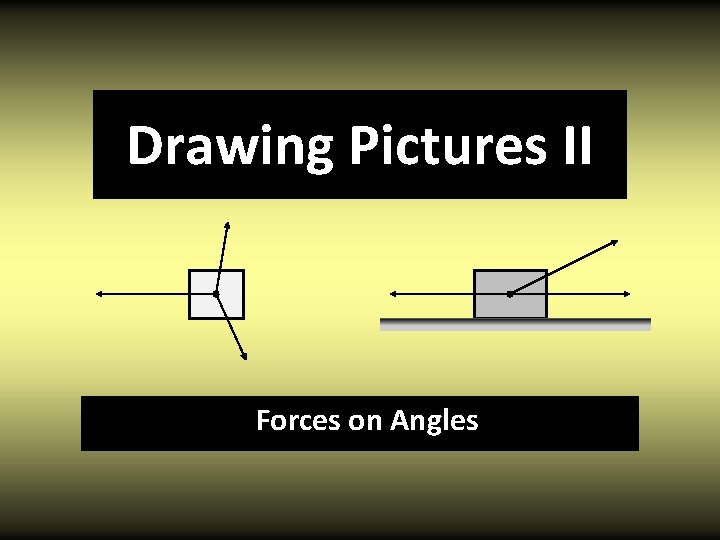
Drawing Pictures II Forces on Angles Forces on
- Slides: 14
Drawing Pictures II Forces on Angles
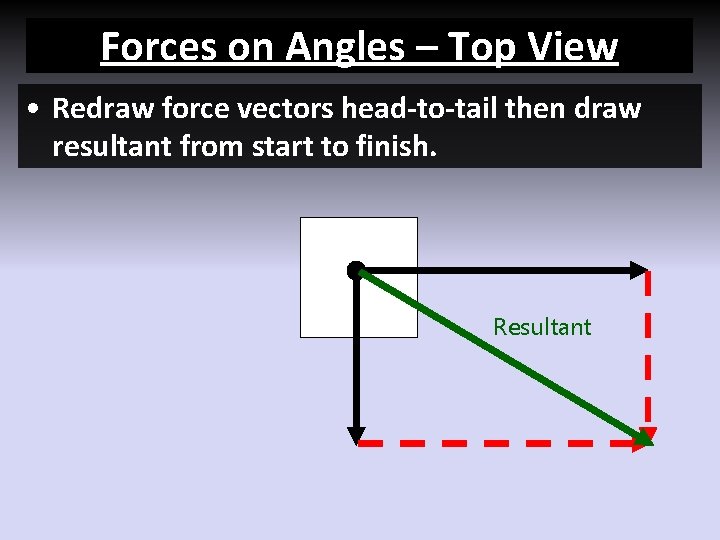
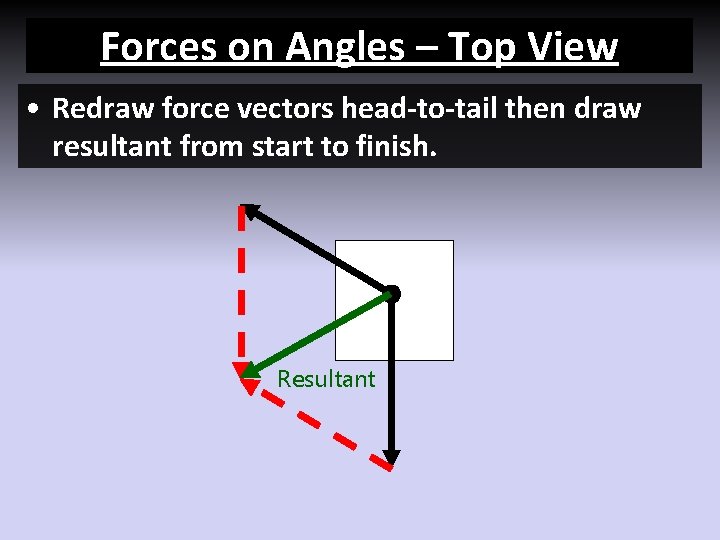
Forces on Angles – Top View • Redraw force vectors head-to-tail then draw resultant from start to finish. Resultant
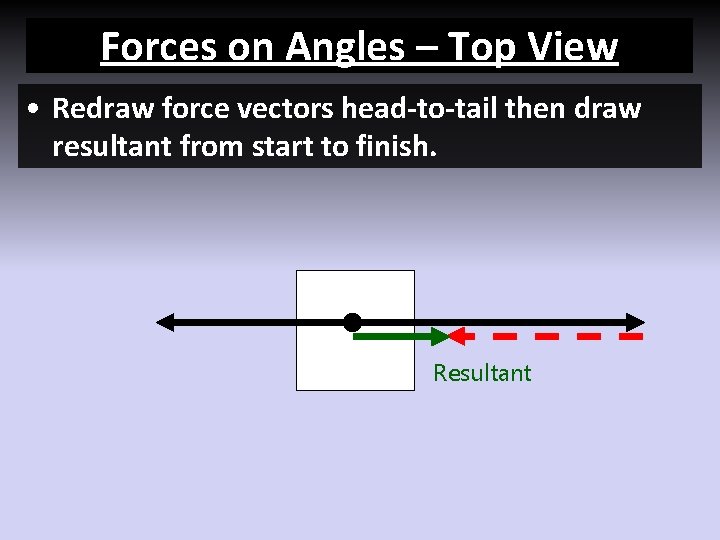
Forces on Angles – Top View • Redraw force vectors head-to-tail then draw resultant from start to finish. Resultant
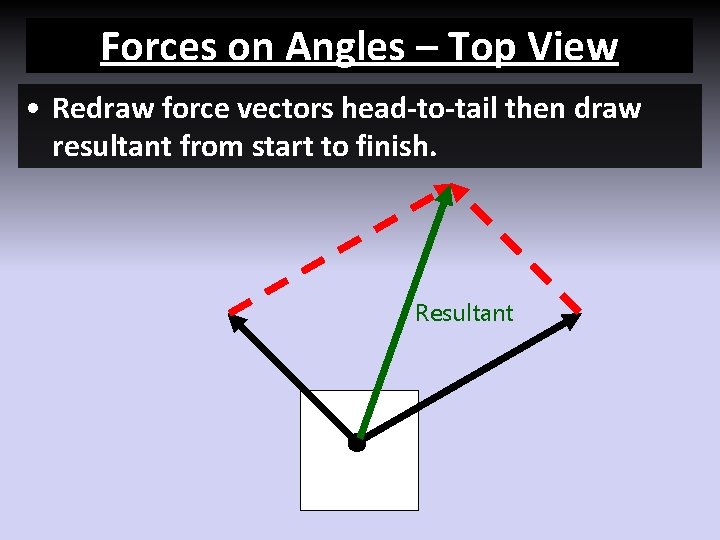
Forces on Angles – Top View • Redraw force vectors head-to-tail then draw resultant from start to finish. Resultant
Forces on Angles – Top View • Redraw force vectors head-to-tail then draw resultant from start to finish. Resultant
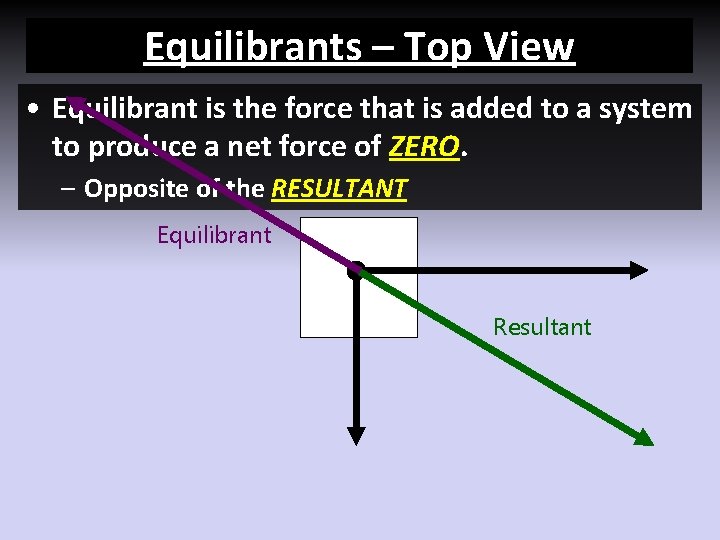
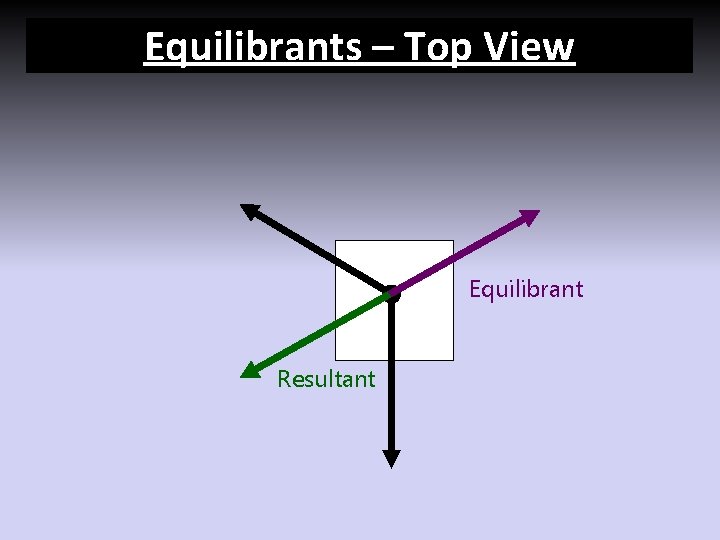
Equilibrants – Top View • Equilibrant is the force that is added to a system to produce a net force of ZERO. – Opposite of the RESULTANT Equilibrant Resultant
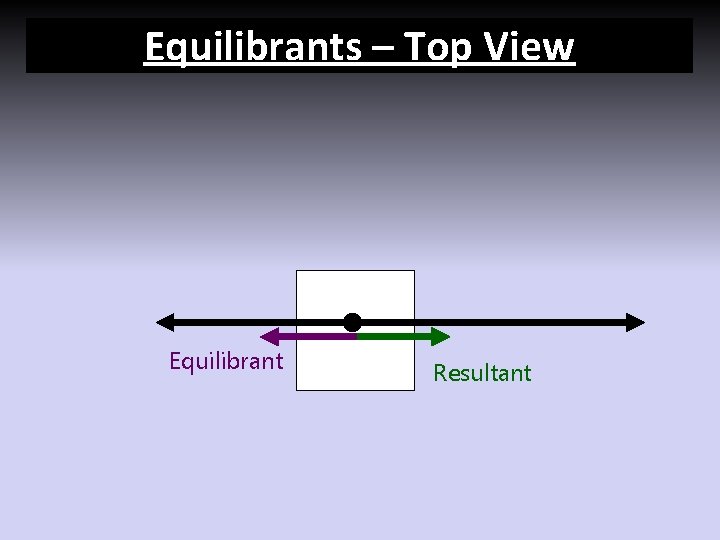
Equilibrants – Top View Equilibrant Resultant
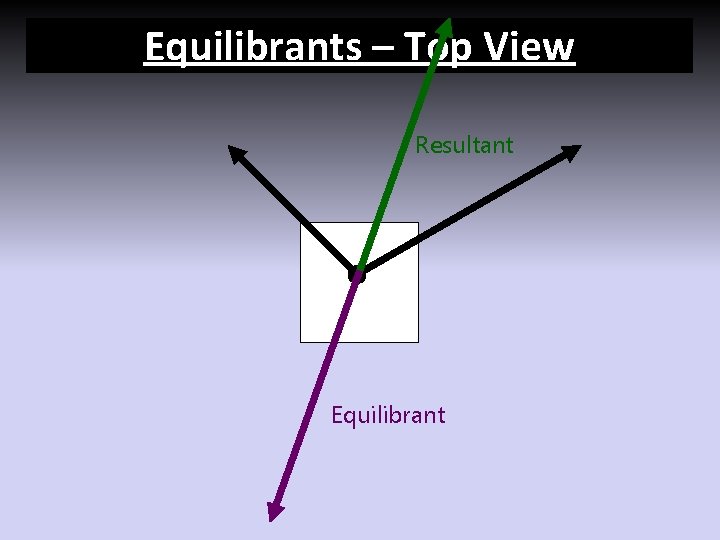
Equilibrants – Top View Resultant Equilibrant
Equilibrants – Top View Equilibrant Resultant
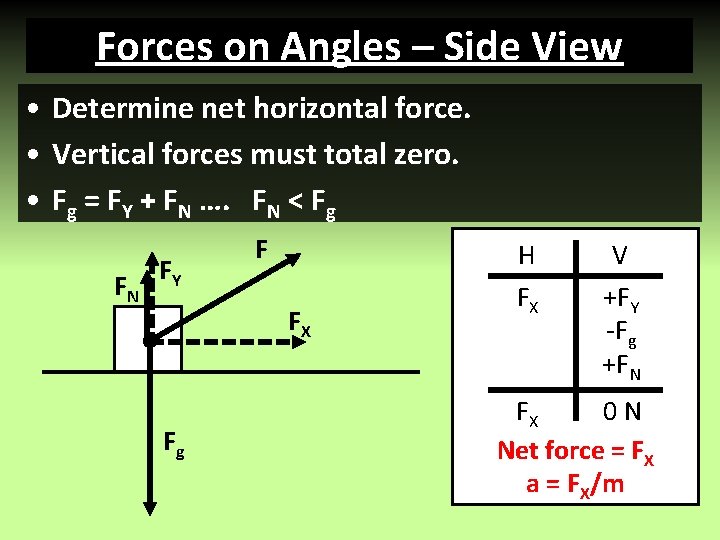
Forces on Angles – Side View • Determine net horizontal force. • Vertical forces must total zero. • Fg = FY + FN …. FN < Fg FN FY F FX Fg H FX V +FY -Fg +FN FX 0 N Net force = FX a = FX/m
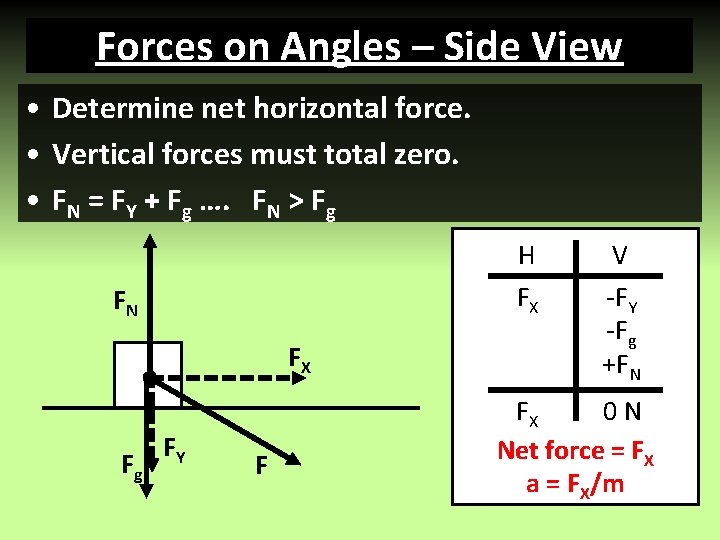
Forces on Angles – Side View • Determine net horizontal force. • Vertical forces must total zero. • FN = FY + Fg …. FN > Fg H FX FN FX Fg FY F V -FY -Fg +FN FX 0 N Net force = FX a = FX/m
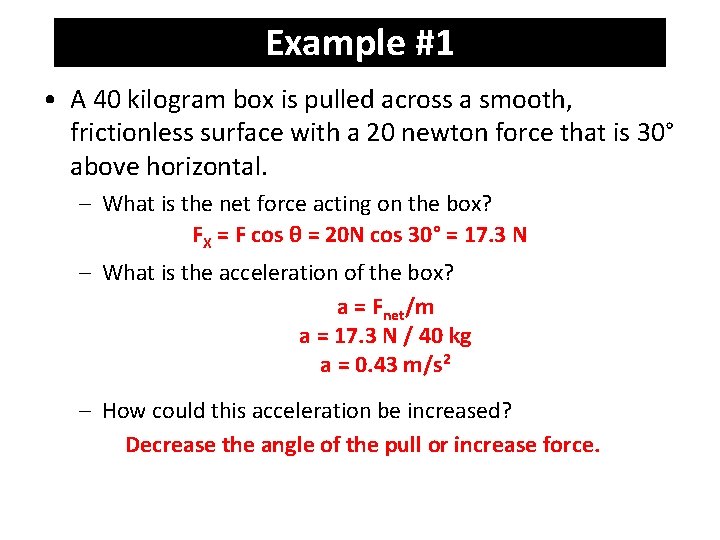
Example #1 • A 40 kilogram box is pulled across a smooth, frictionless surface with a 20 newton force that is 30° above horizontal. – What is the net force acting on the box? FX = F cos θ = 20 N cos 30° = 17. 3 N – What is the acceleration of the box? a = Fnet/m a = 17. 3 N / 40 kg a = 0. 43 m/s 2 – How could this acceleration be increased? Decrease the angle of the pull or increase force.
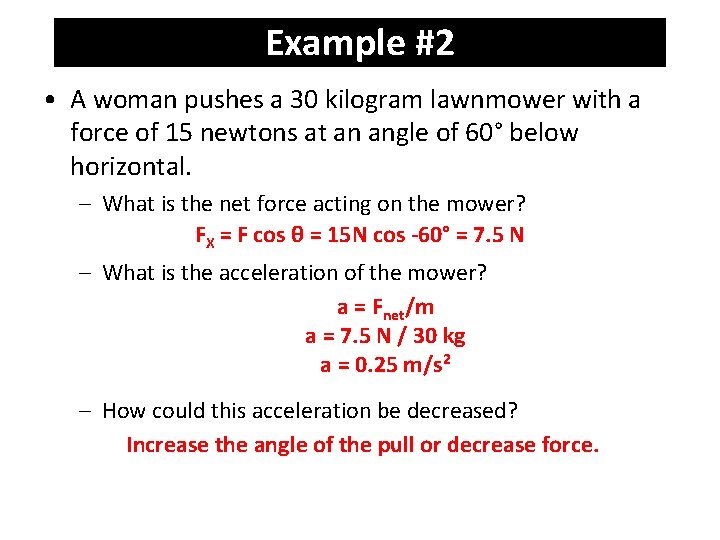
Example #2 • A woman pushes a 30 kilogram lawnmower with a force of 15 newtons at an angle of 60° below horizontal. – What is the net force acting on the mower? FX = F cos θ = 15 N cos -60° = 7. 5 N – What is the acceleration of the mower? a = Fnet/m a = 7. 5 N / 30 kg a = 0. 25 m/s 2 – How could this acceleration be decreased? Increase the angle of the pull or decrease force.
End