
Drawing an Ellipse Model Steps LAB PRACTICAL 1
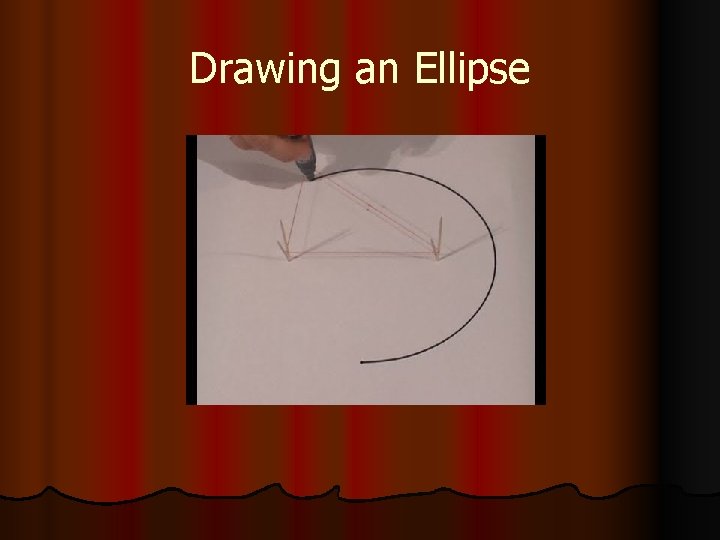
Drawing an Ellipse
Model / Steps (LAB PRACTICAL) 1. 2. 3. 4. 5. Place a blank piece of paper on cardboard. Measure and place two push pins a distance apart. Place string around push pins. Put pencil inside the string with the push pins. Extend the string out with the pencil and draw the ellipse.
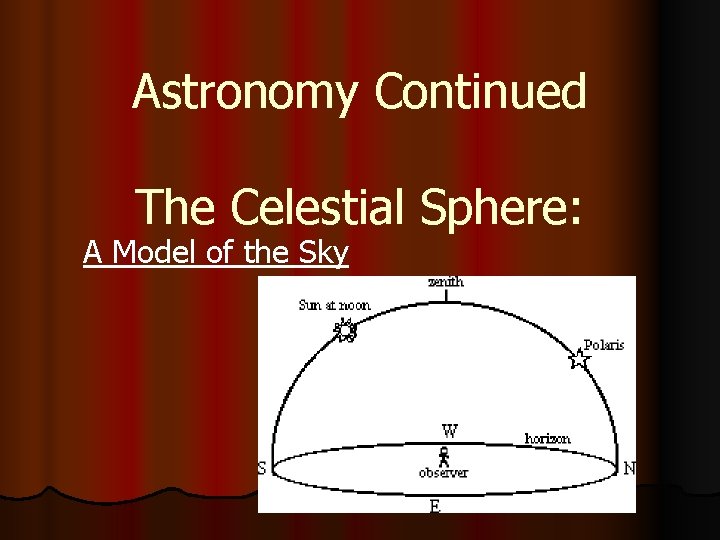
Astronomy Continued The Celestial Sphere: A Model of the Sky
Horizon: Place where the Earth appears to meet the sky. ● Zenith: Point in the sky directly above the observer. OR the highest altitude that an object reaches. ●
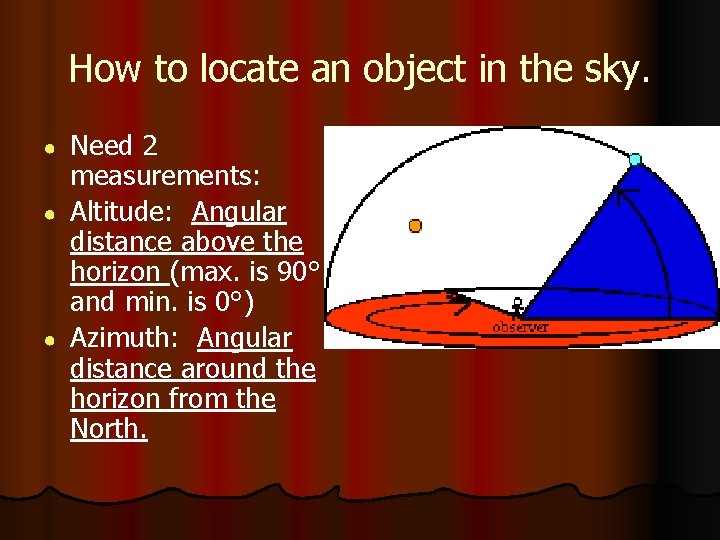
How to locate an object in the sky. ● ● ● Need 2 measurements: Altitude: Angular distance above the horizon (max. is 90° and min. is 0°) Azimuth: Angular distance around the horizon from the North.
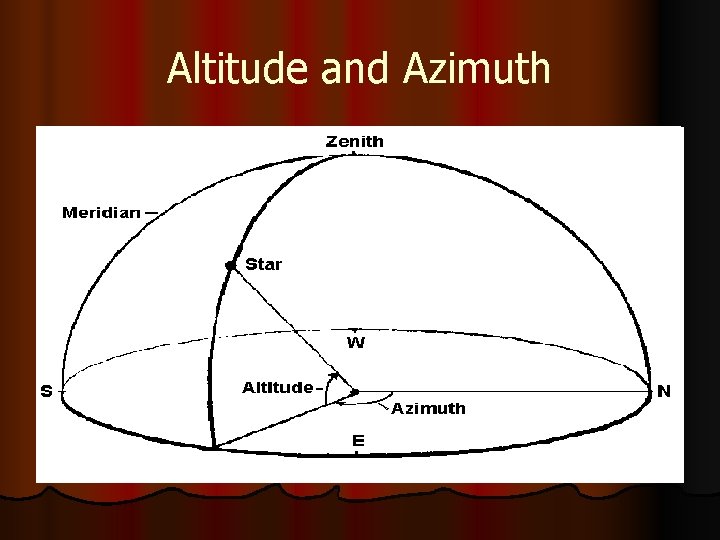
Altitude and Azimuth
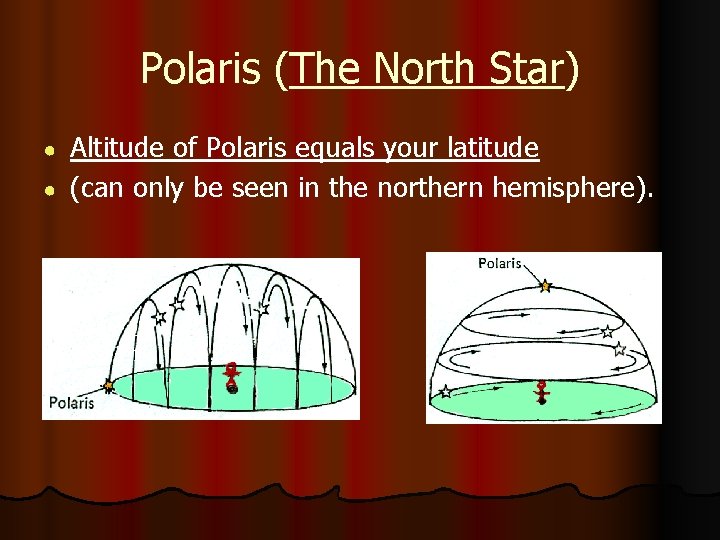
Polaris (The North Star) ● ● Altitude of Polaris equals your latitude (can only be seen in the northern hemisphere).
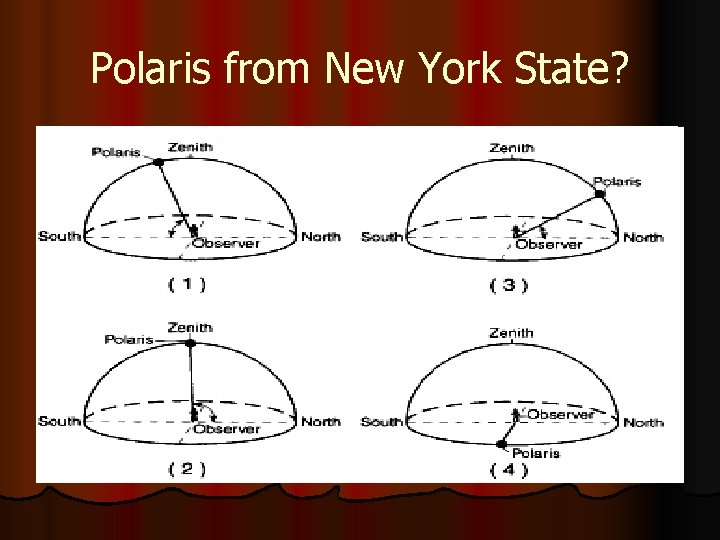
Polaris from New York State?
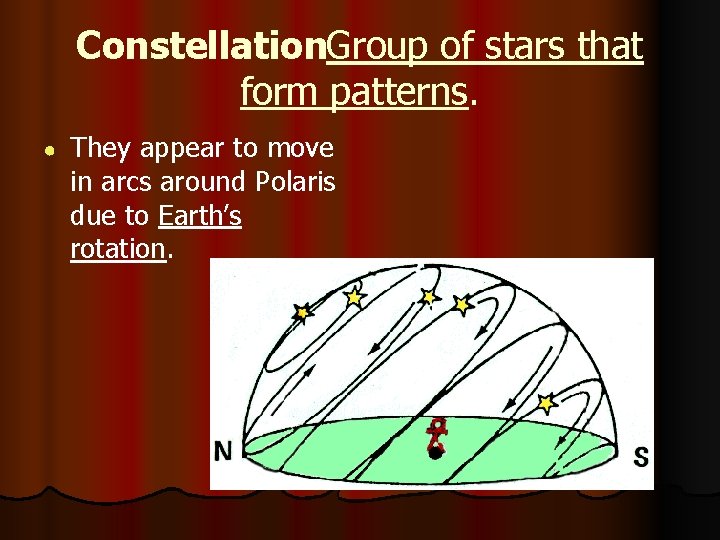
Constellation : Group of stars that form patterns. ● They appear to move in arcs around Polaris due to Earth’s rotation.
**The apparent path of the Sun** ● ● ● The Sun and stars rise in the East and set in the West. Moves across the sky in an arc. Length of Sun’s path determines length of day. The Sun sets in the West. June 21 is longest day of the year; December 21 is the shortest day.
Path of the Sun ● At Noon, The Sun is always in our Southern sky (equator is south).
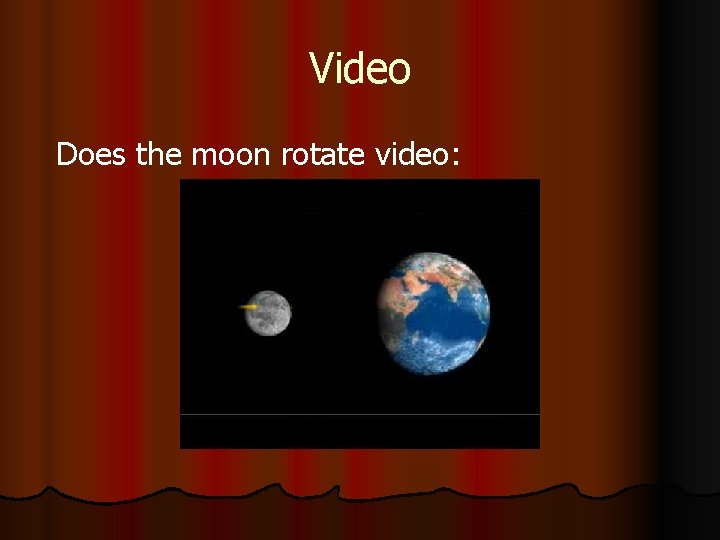
Video Does the moon rotate video:
The Moon REVOLUTION: orbits around Earth in ellipse. ● Takes 27. 3 days. ● Perigee: Point at which moon is closest to Earth (appears larger). ● Apogee (think Apart): Point at which moon is farthest from Earth. ●
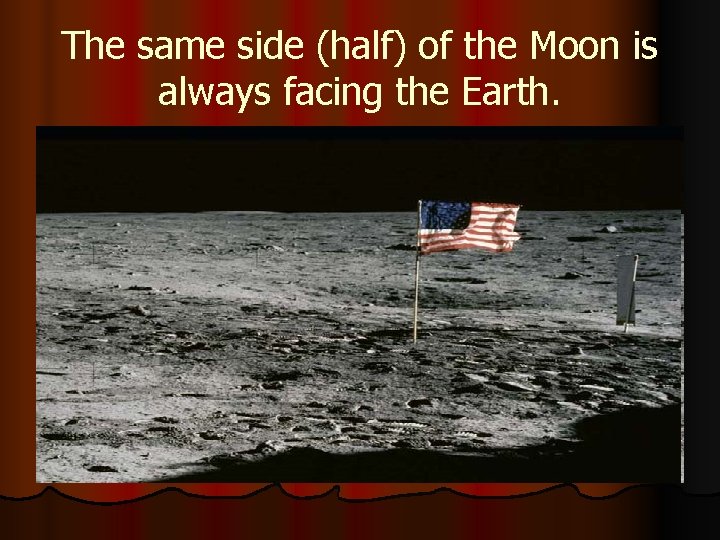
The same side (half) of the Moon is always facing the Earth.
The Lunar Month: Time it takes for 1 full moon cycle: 29. 5 days. ● This is longer than the time it takes the moon to revolve (27. 3 days), because the Earth is also in orbit around the Sun, and the moon has to “catch up”. ●
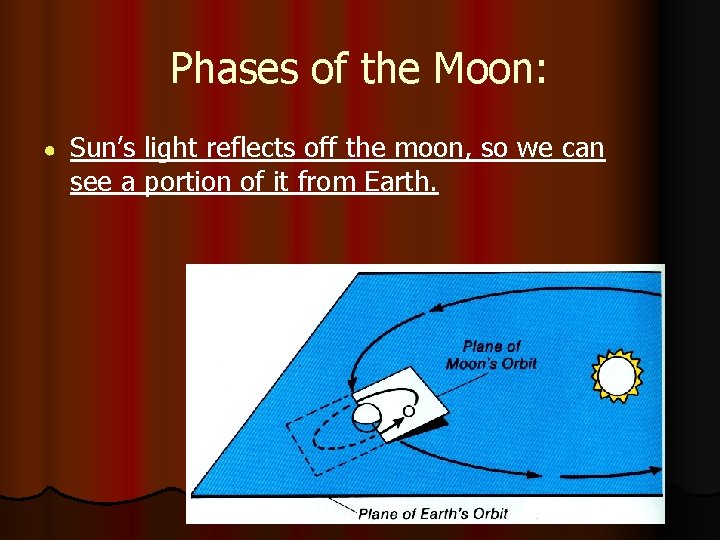
Phases of the Moon: ● Sun’s light reflects off the moon, so we can see a portion of it from Earth.
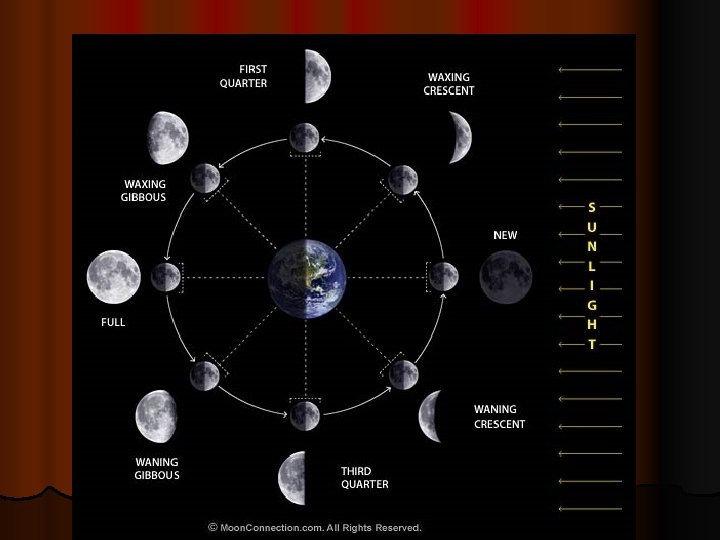
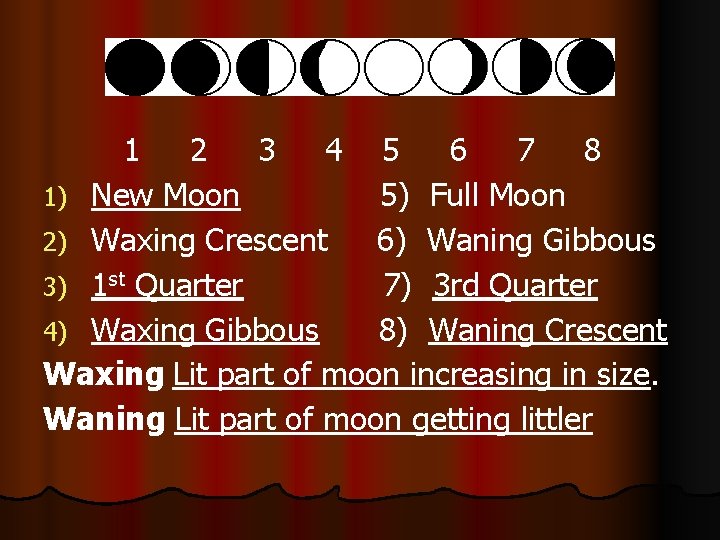
1 2 3 4 5 6 7 8 1) New Moon 5) Full Moon 2) Waxing Crescent 6) Waning Gibbous 3) 1 st Quarter 7) 3 rd Quarter 4) Waxing Gibbous 8) Waning Crescent Waxing: Lit part of moon increasing in size. Waning: Lit part of moon getting littler
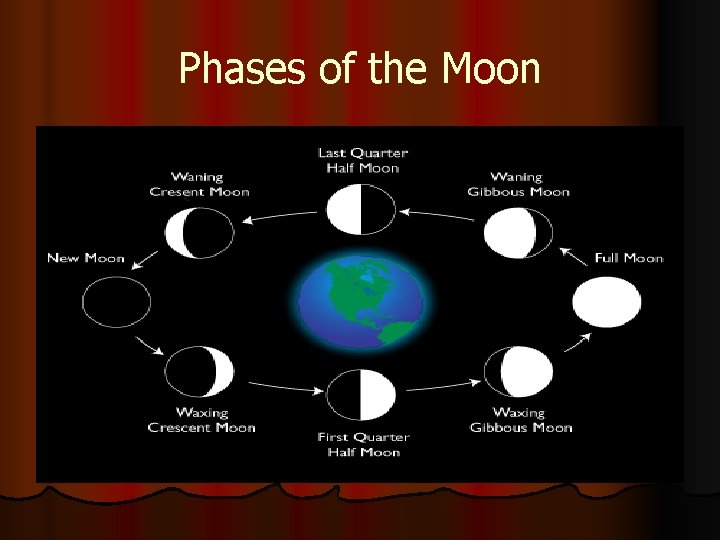
Phases of the Moon
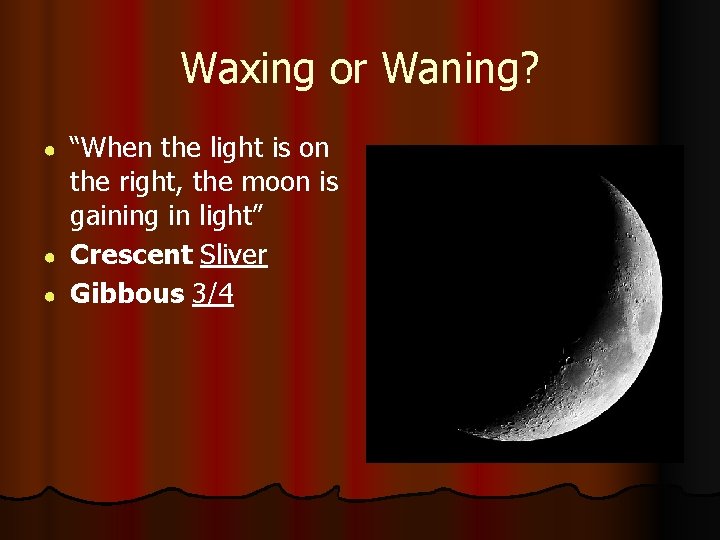
Waxing or Waning? ● ● ● “When the light is on the right, the moon is gaining in light” Crescent: Sliver Gibbous: 3/4
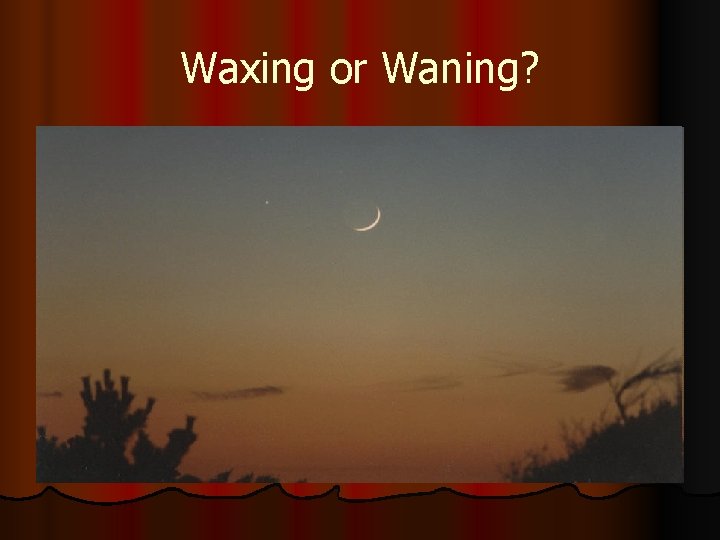
Waxing or Waning?
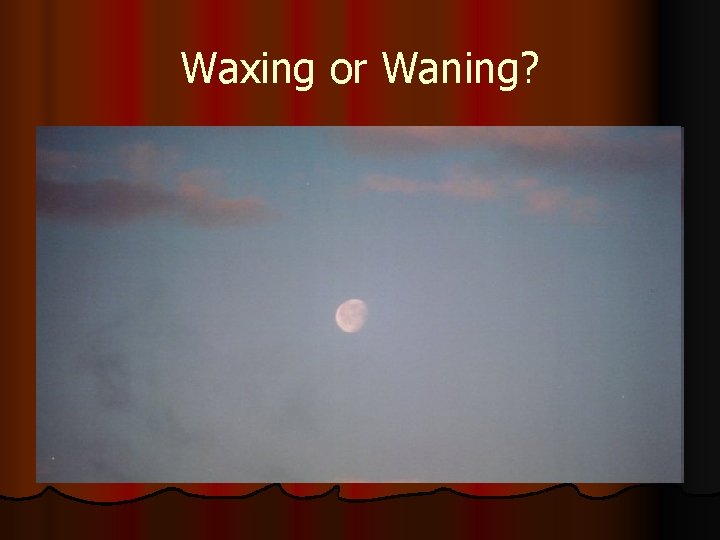
Waxing or Waning?
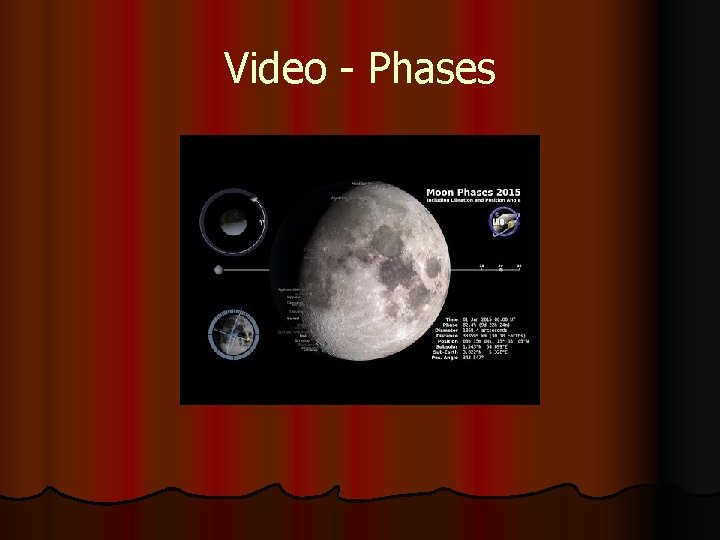
Video - Phases
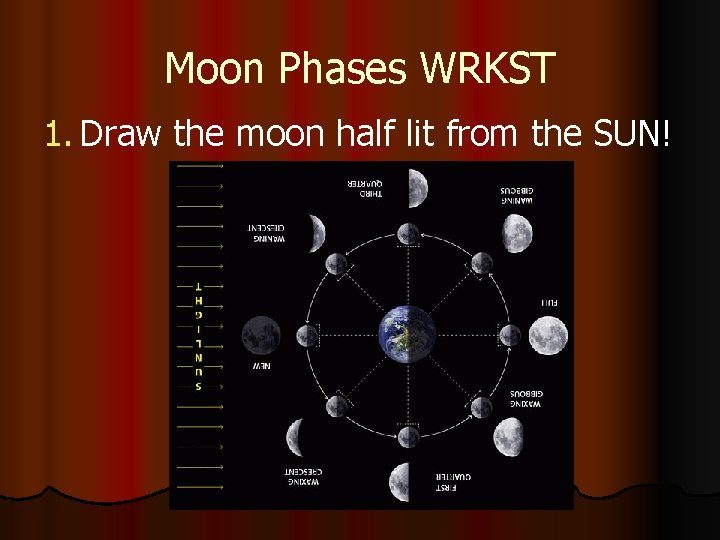
Moon Phases WRKST 1. Draw the moon half lit from the SUN!
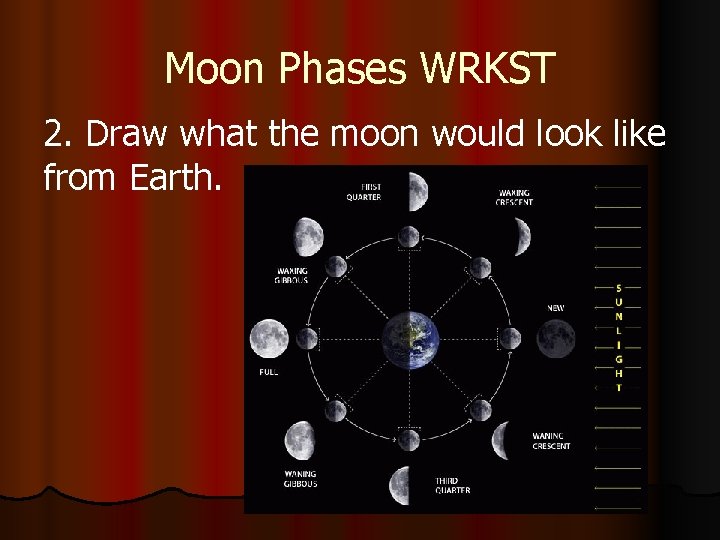
Moon Phases WRKST 2. Draw what the moon would look like from Earth.
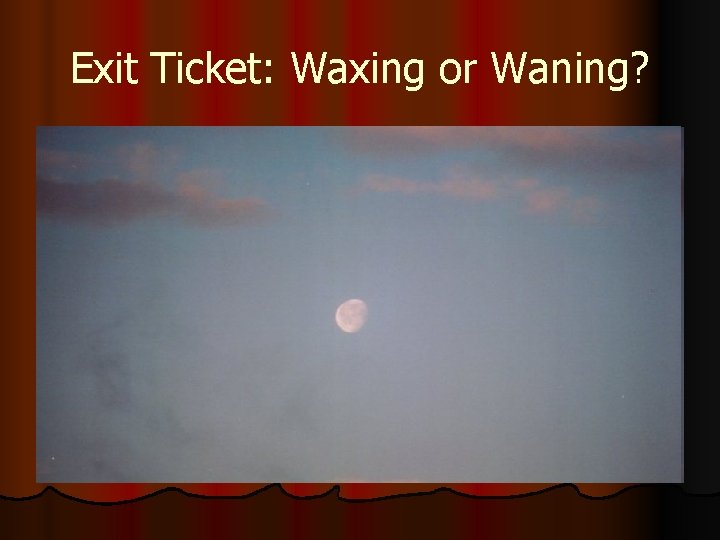
Exit Ticket: Waxing or Waning?
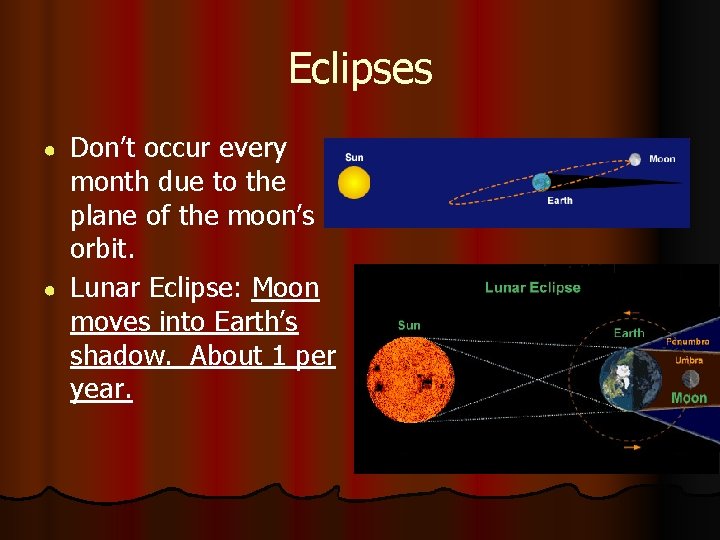
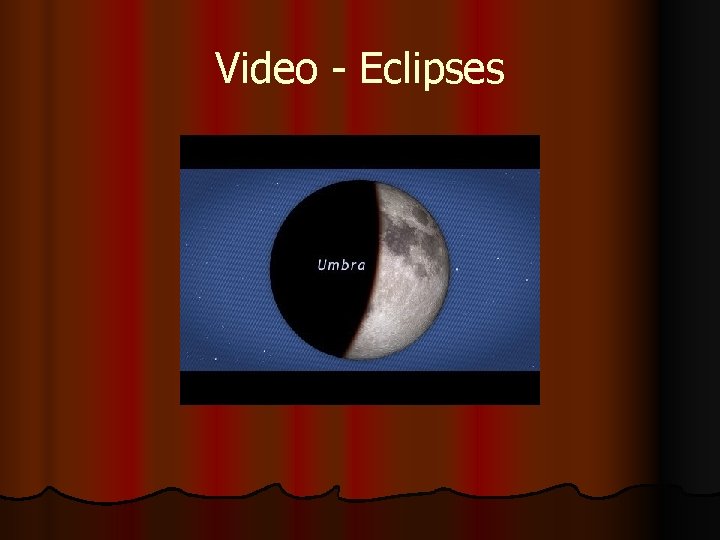
Eclipses ● ● Don’t occur every month due to the plane of the moon’s orbit. Lunar Eclipse: Moon moves into Earth’s shadow. About 1 per year.
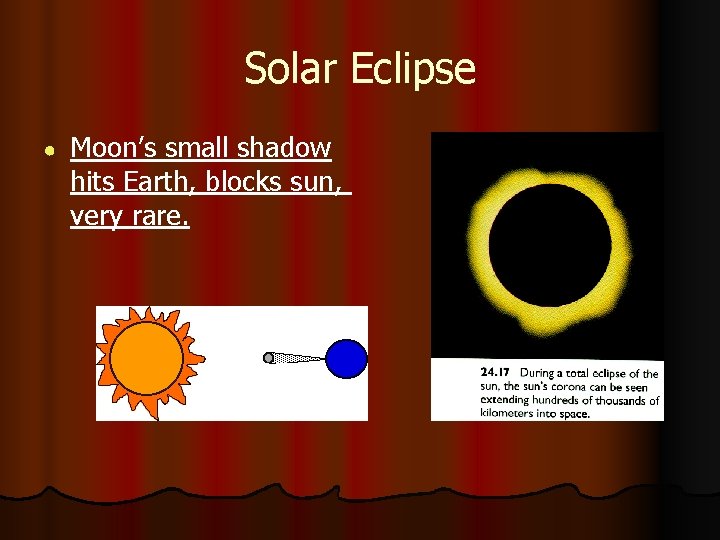
Solar Eclipse ● Moon’s small shadow hits Earth, blocks sun, very rare.
Video - Eclipses
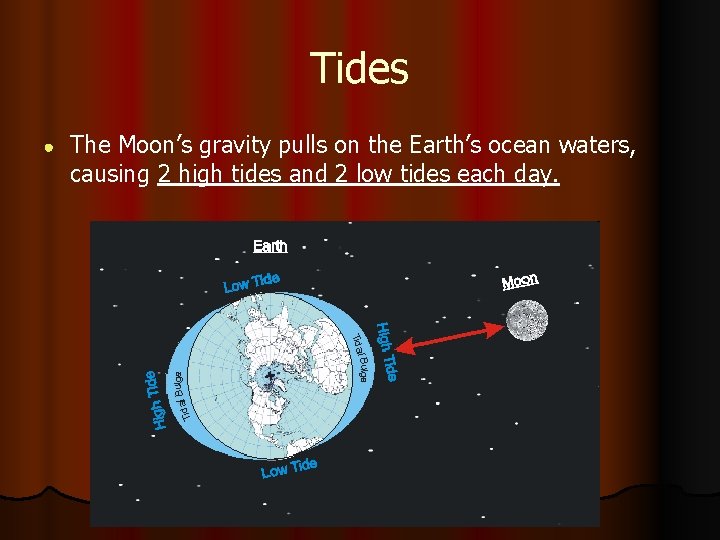
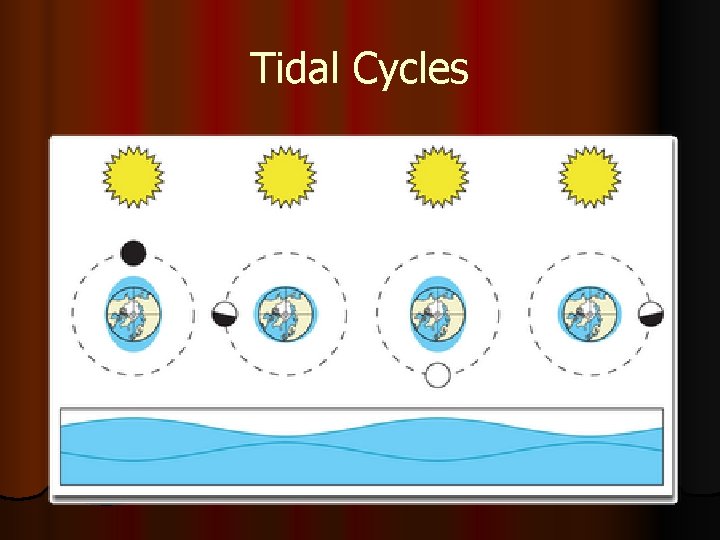
Tides ● The Moon’s gravity pulls on the Earth’s ocean waters, causing 2 high tides and 2 low tides each day.
Tidal Cycles
Video
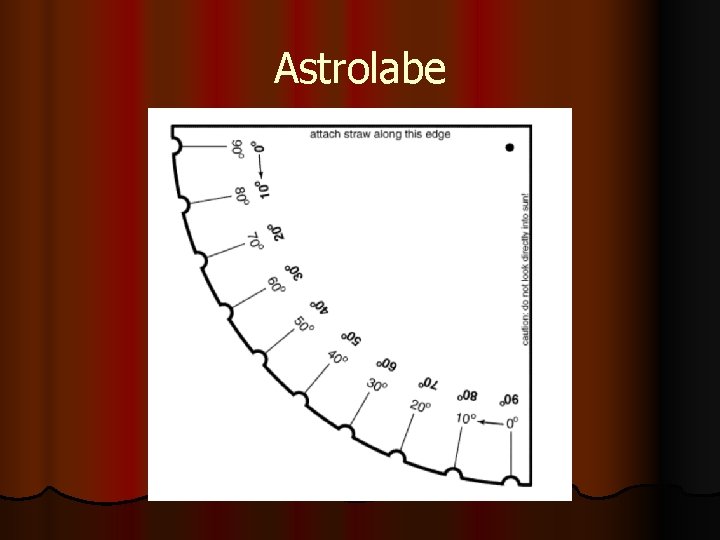
Astrolabe
- Slides: 33