
Draw four straight lines which go through the

- Slides: 25
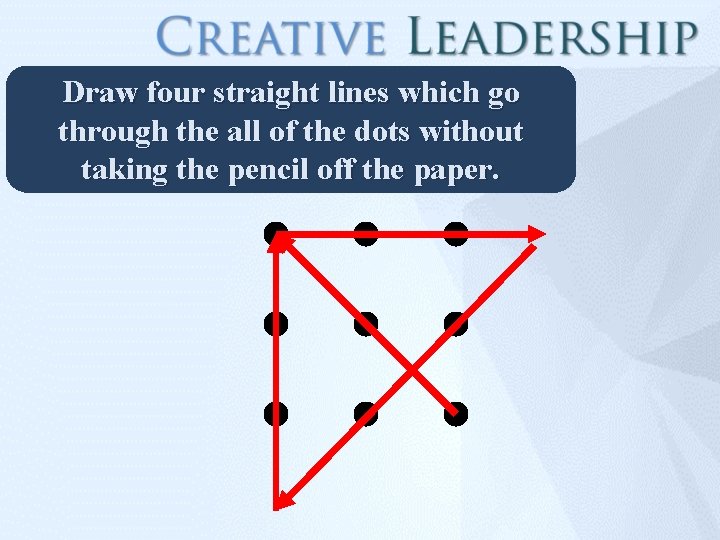
Draw four straight lines which go through the all of the dots without taking the pencil off the paper.
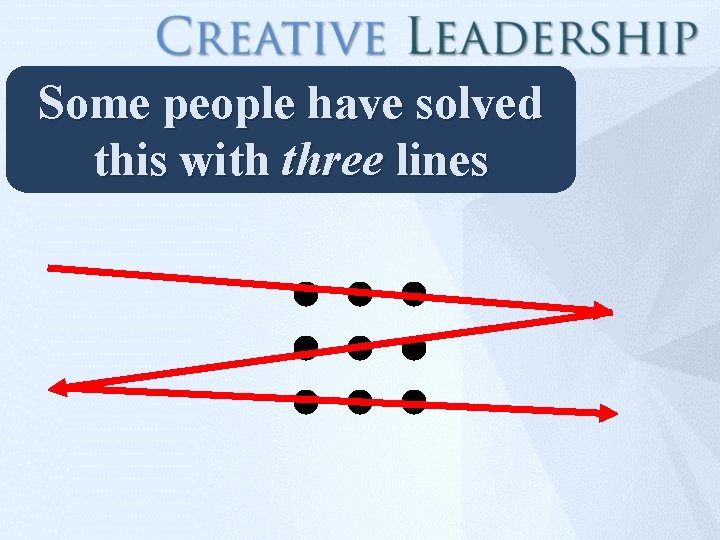
Some people have solved this with three lines
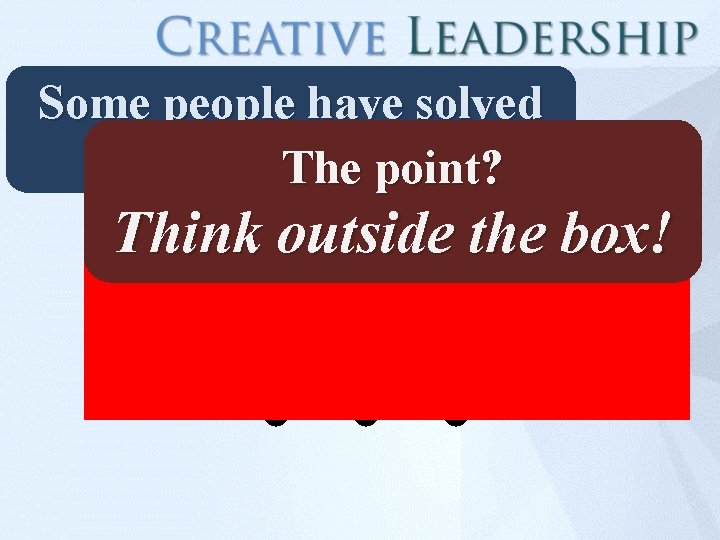
Some people have solved this with. The onepoint? line Think outside the box!
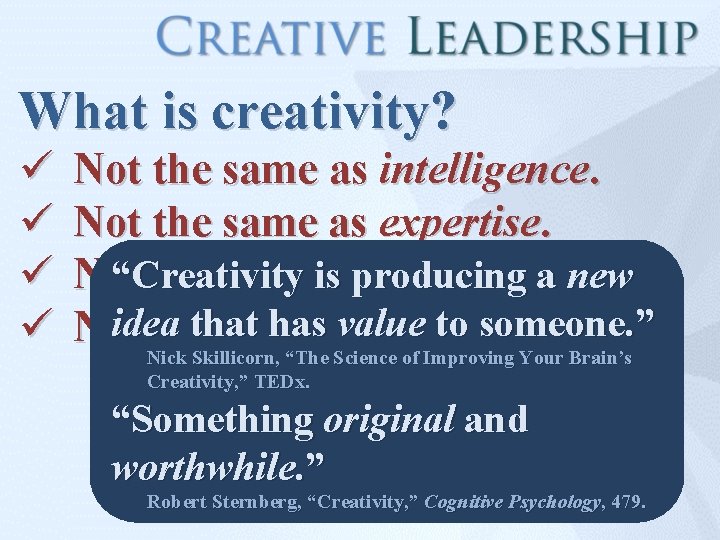
What is creativity? ü ü Not the same as intelligence. Not the same as expertise. “Creativity a new. Not the sameisasproducing being artistic idea that has valueimaginative to someone. ” Not merely being. Nick Skillicorn, “The Science of Improving Your Brain’s Creativity, ” TEDx. “Something original and worthwhile. ” Robert Sternberg, “Creativity, ” Cognitive Psychology, 479.
What is creativity? ü Convergent thinking: reproduces known concepts and applies them to new situations. ü Divergent thinking: incorporates new concepts to new situations. We need both!
Why do we need creativity? ü Fights fatalism or frustration.
Why do we need creativity? ü ü Fights fatalism or frustration. Connected with charisma. “[The] stock price of companies perceived to have creative leadership grew 900% over a 10 -year period, compared with just 74% growth in companies perceived to lack creative leadership. ” Emmanuel Agbor, “Creativity and Innovation: The Leadership Dynamics. ” Journal of Strategic Leadership, Vol. 1 Iss. 1, 2008, 41.
Instead of asking God for more resources or better people, creative Why do we need creativity? leaders seek to better steward the ü Fights fatalism or frustration. resources they already have. ü Connected with charisma. ü Utilizes our limited resources better.
How do we become creative? 1. Recognize the problem ü Think inside the box before you think outside of it. ü Collect the facts. Is there missing info? ü Do we have a deadline? ü Are we minimizing or exaggerating? ü Have we prioritized the most important issues?
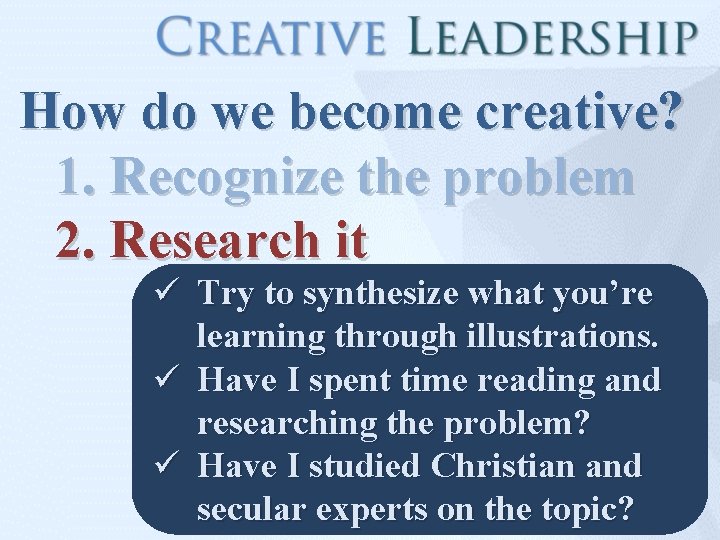
How do we become creative? 1. Recognize the problem 2. Research it ü Try to synthesize what you’re learning through illustrations. ü Have I spent time reading and researching the problem? ü Have I studied Christian and secular experts on the topic?
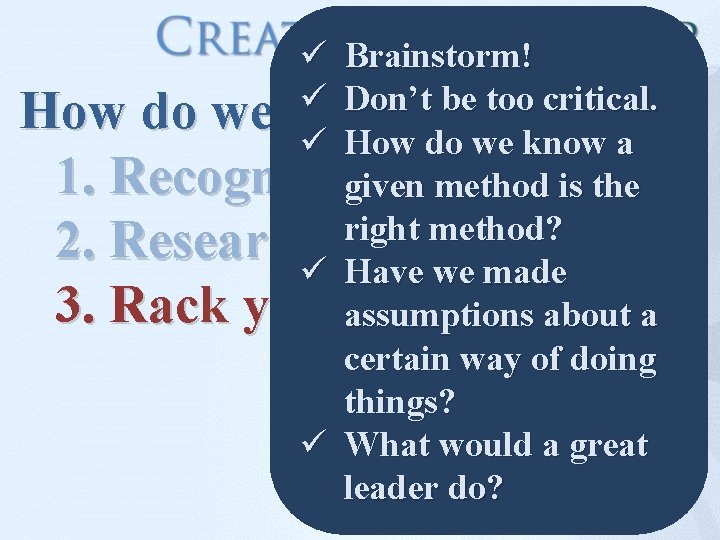
ü Brainstorm! ü Don’t be too critical. How do we become creative? ü How do we know a 1. Recognizegiven the method problem is the right method? 2. Researchü it. Have we made 3. Rack yourassumptions brain about a certain way of doing things? ü What would a great leader do?
How do we become creative? 1. Recognize the problem 2. Research it 3. Rack your brain 4. Rest and relaxation
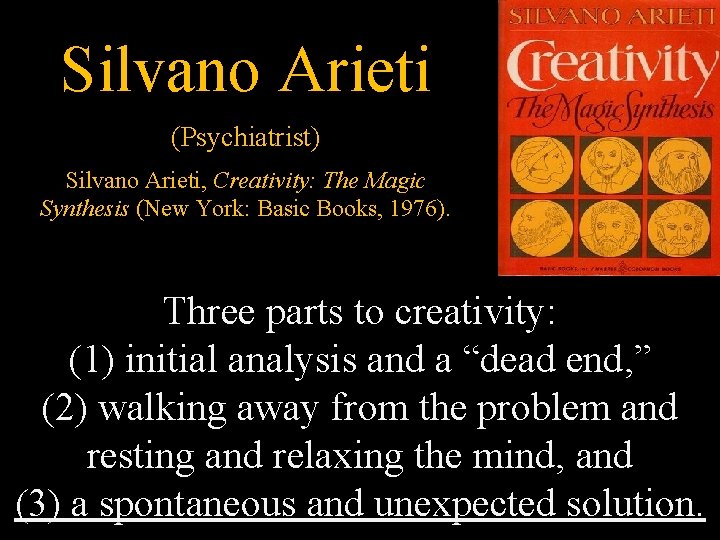
Silvano Arieti (Psychiatrist) Silvano Arieti, Creativity: The Magic Synthesis (New York: Basic Books, 1976). Three parts to creativity: (1) initial analysis and a “dead end, ” (2) walking away from the problem and resting and relaxing the mind, and (3) a spontaneous and unexpected solution.
Jose Gomez (University of Alabama) Jose Gomez, “What Do We Know About Creativity? ” The Journal of Effective Teaching, Vol. 7, No. 1, 2007, 33, 36. [The creative act] seldom follows a period of intensive reflection; often it occurs much later, when least unexpected. .
Jose Gomez (University of Alabama) Jose Gomez, “What Do We Know About Creativity? ” The Journal of Effective Teaching, Vol. 7, No. 1, 2007, 33, 36. Creative students soon become detached enough to see the problem in its total perspective. By setting work aside temporarily, creative persons give ideas the freedom to develop.
William Klemm (Retired Colonel in the US Air Force; Professor Veterinary Med. ) William R. Klemm, “Leadership: Creativity and Innovation, ” Concepts of Air Force Leadership. 455 Ever notice how some of your best ideas occur when you are NOT working, even when you are on vacation?
William Klemm (Retired Colonel in the US Air Force; Professor Veterinary Med. ) William R. Klemm, “Leadership: Creativity and Innovation, ” Concepts of Air Force Leadership. 455 Most creativity theorists believe that it is important, even essential, to have an intense and sustained grappling with a problem if creative solutions are to emerge,
ü Does NOT refer to mental William Klemm passivity! (Retired Colonel in the US Air Force; ü It. Veterinary means. Med. ) we oscillate Professor William R. Klemm, “Leadership: Creativity and between times of Innovation, ” Concepts of Air Force Leadership. 455 reflection and relaxation. but often the flash of insight will only occur when you stop thinking about the problem.
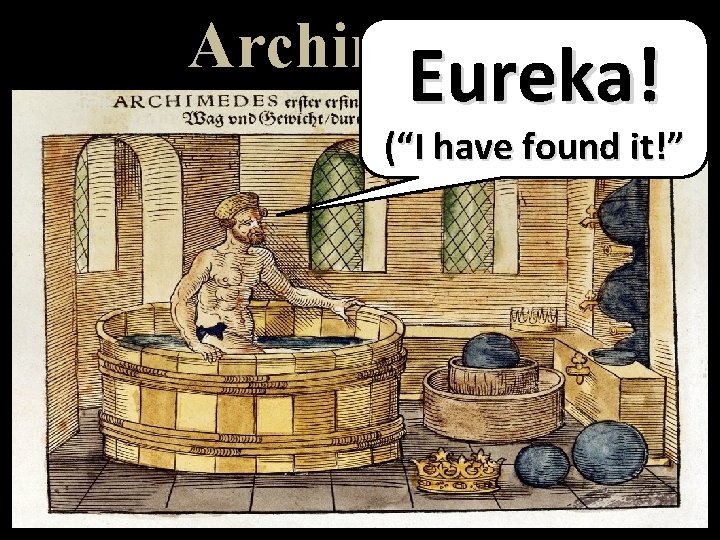
Archimedes Eureka! (“I have found it!”
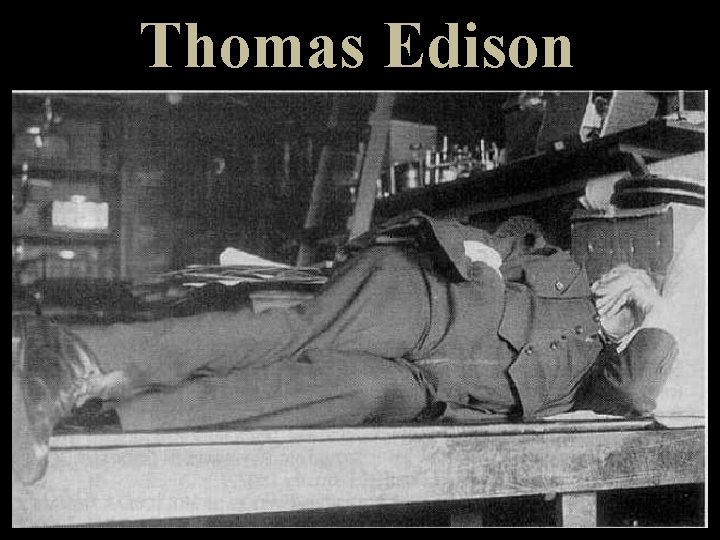
Thomas Edison
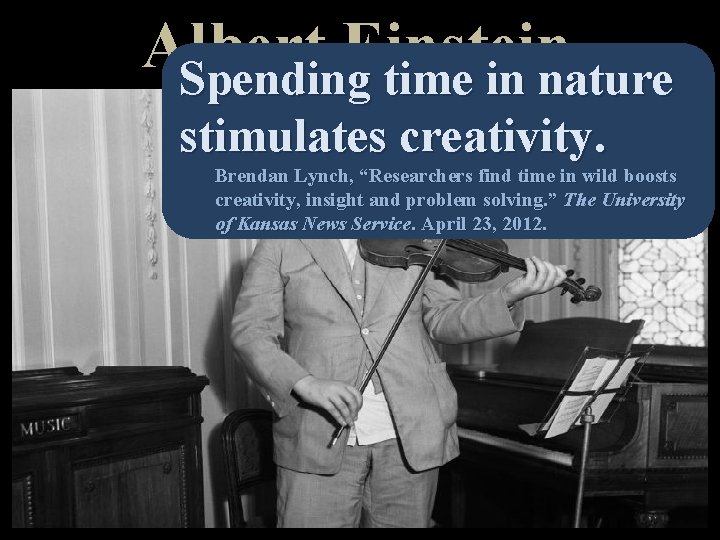
Albert Einstein Spending time in nature stimulates creativity. Brendan Lynch, “Researchers find time in wild boosts creativity, insight and problem solving. ” The University of Kansas News Service. April 23, 2012.
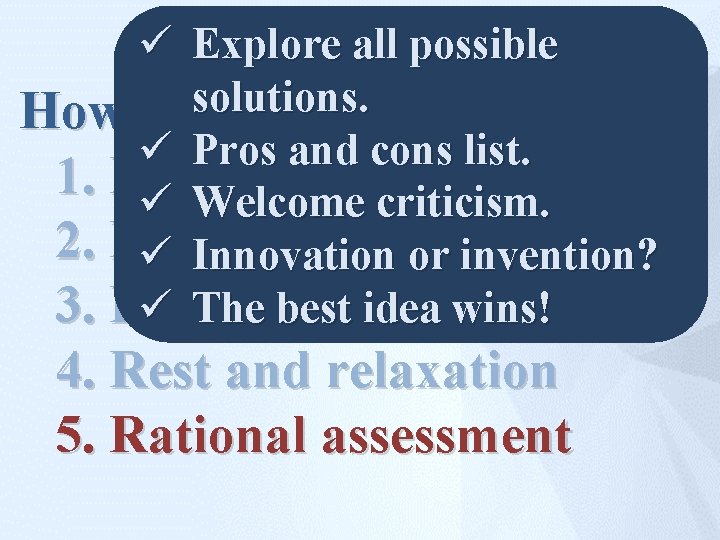
ü Explore all possible solutions. How do we become creative? ü Pros and cons list. 1. Recognize the problem ü Welcome criticism. 2. Research it or invention? ü Innovation ü Theyour best idea wins! 3. Rack brain 4. Rest and relaxation 5. Rational assessment
What implications might this research have on Christian leadership? ü Leaders meetings? ü Teaching? ü Discipleship? ü Prayer meeting?
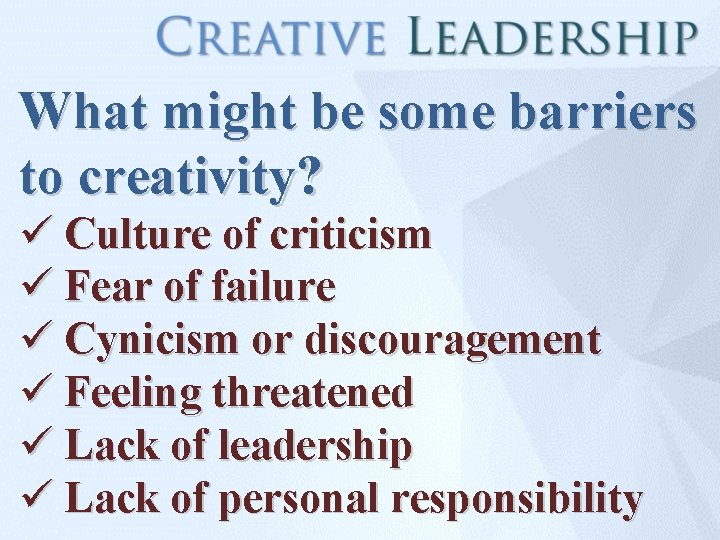
What might be some barriers to creativity? ü Culture of criticism ü Fear of failure ü Cynicism or discouragement ü Feeling threatened ü Lack of leadership ü Lack of personal responsibility
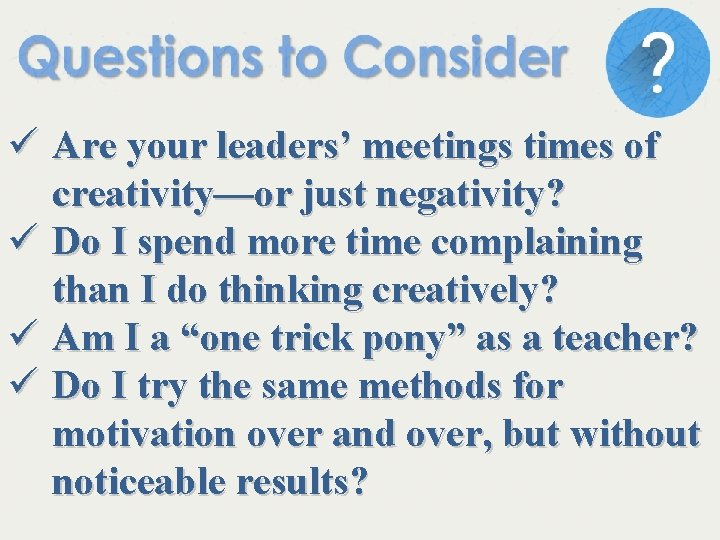
ü Are your leaders’ meetings times of creativity—or just negativity? ü Do I spend more time complaining than I do thinking creatively? ü Am I a “one trick pony” as a teacher? ü Do I try the same methods for motivation over and over, but without noticeable results?