
Dramatic Terms William Shakespeare alliteration n The repetition




- Slides: 17
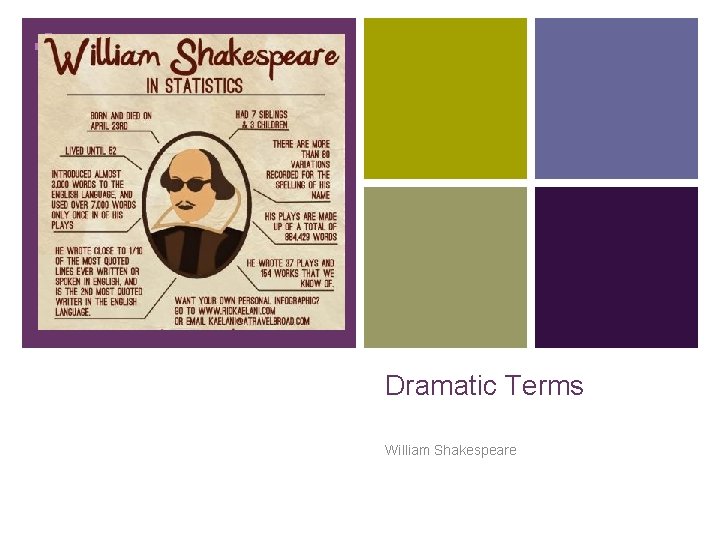
+ Dramatic Terms William Shakespeare
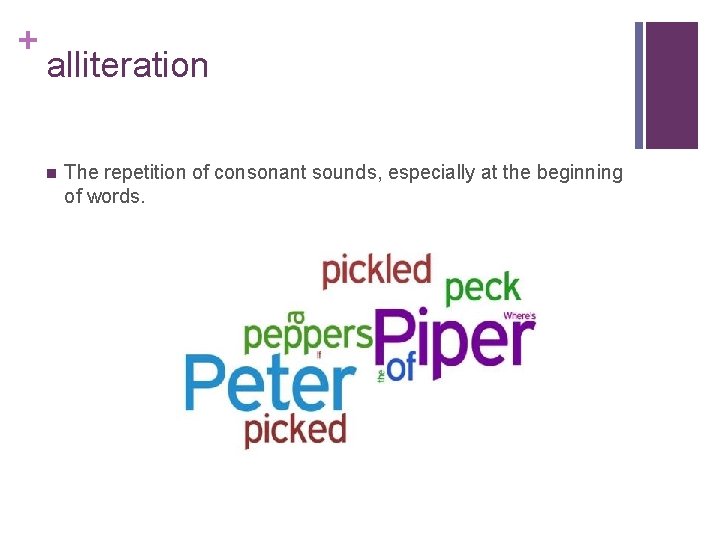
+ alliteration n The repetition of consonant sounds, especially at the beginning of words.
+ aside n Words spoken by an actor directly to the audience, which are not “heard” by the other actors on the stage. n Cameron Freaks Out
+ catastrophe n The action at the end of the tragedy that initiates the denouement or falling action of the play.
+ character n An imaginary person that inhabits a literary work. Characters may be major or minor, static (unchanging) or dynamic (changing).
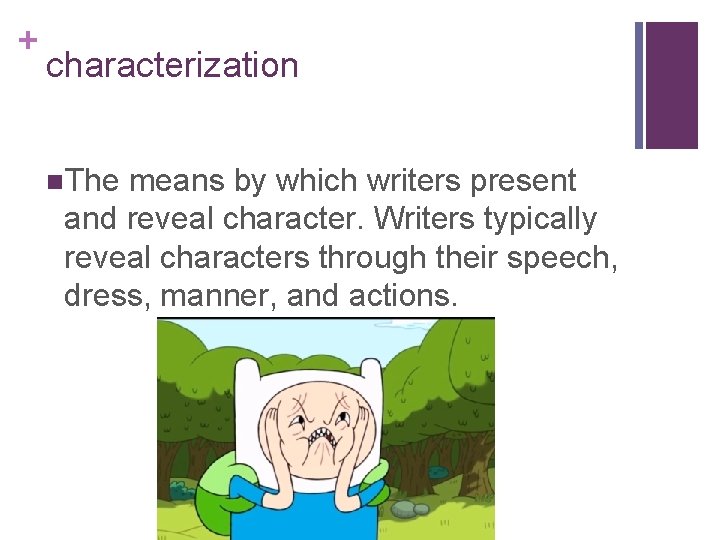
+ characterization n. The means by which writers present and reveal character. Writers typically reveal characters through their speech, dress, manner, and actions.
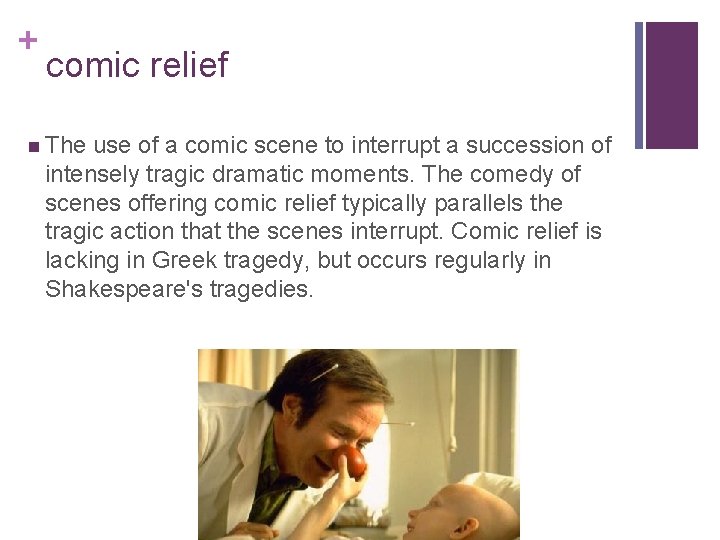
+ comic relief n The use of a comic scene to interrupt a succession of intensely tragic dramatic moments. The comedy of scenes offering comic relief typically parallels the tragic action that the scenes interrupt. Comic relief is lacking in Greek tragedy, but occurs regularly in Shakespeare's tragedies.
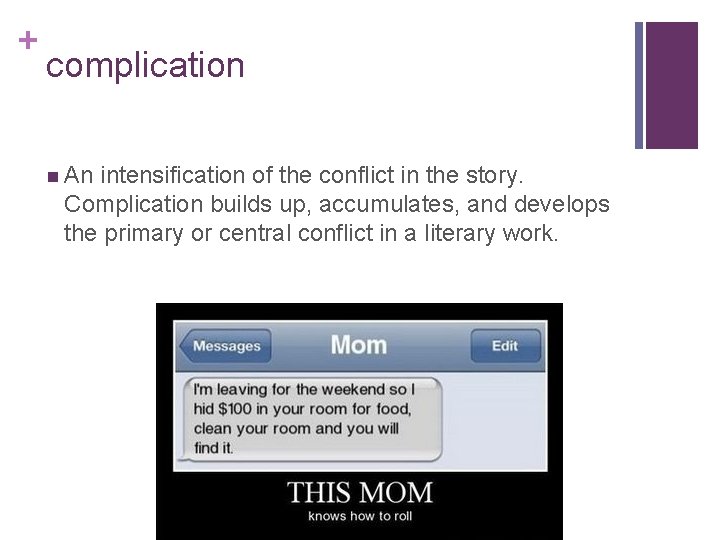
+ complication n An intensification of the conflict in the story. Complication builds up, accumulates, and develops the primary or central conflict in a literary work.
+ monologue n. A type of poem in which a speaker addresses a silent listener (sometimes). As readers, we overhear the speaker in a dramatic monologue. n Dory Monologue
+ foil n. A character who contrasts and parallels the main character in a play or story.
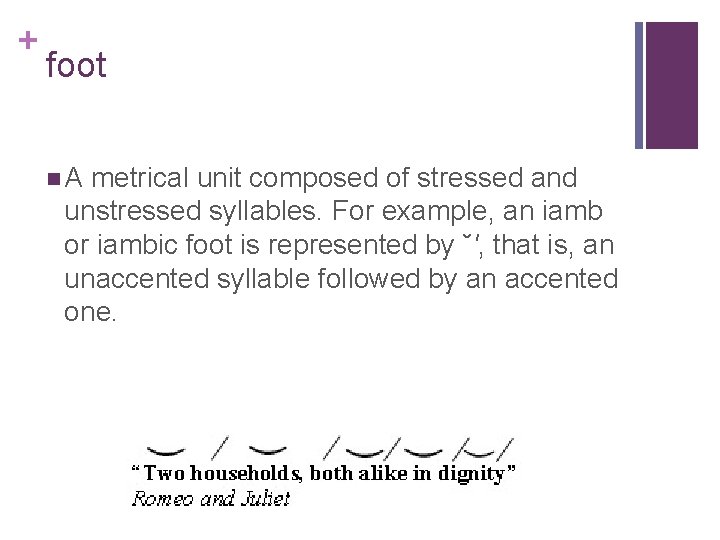
+ foot n. A metrical unit composed of stressed and unstressed syllables. For example, an iamb or iambic foot is represented by ˘', that is, an unaccented syllable followed by an accented one.
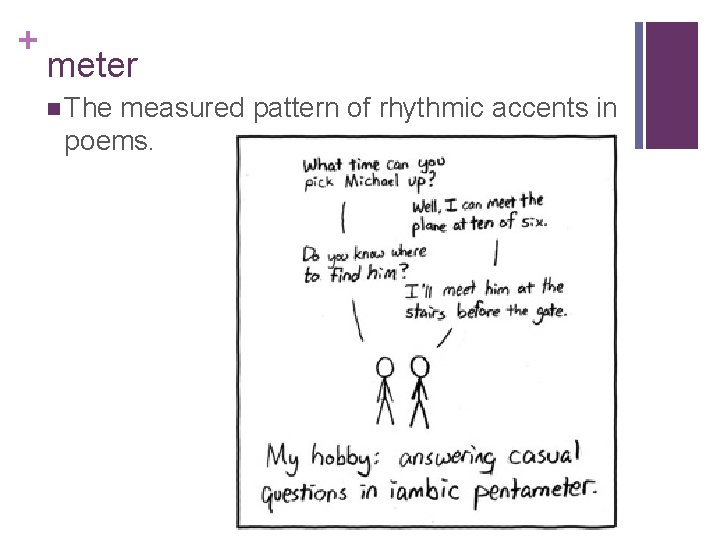
+ meter n The measured pattern of rhythmic accents in poems.
+ quatrain n. A four-line stanza in a poem. A Shakespearean sonnet contains three quatrains followed by a couplet.
+ soliloquy n. A speech in a play that is meant to be heard by the audience but not by other characters on the stage. If there are no other characters present, the soliloquy represents the character thinking aloud. n Hamlet "B" Parody
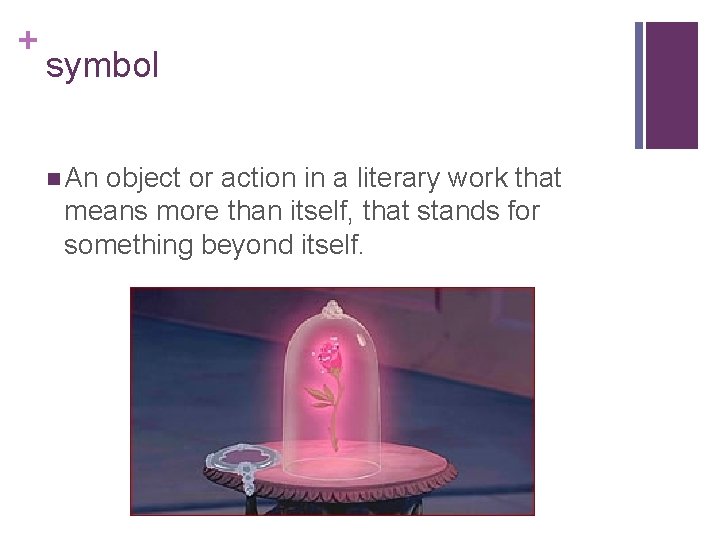
+ symbol n An object or action in a literary work that means more than itself, that stands for something beyond itself.
+ syntax n The grammatical order of words in a sentence or line of verse or dialogue. The organization of words and phrases and clauses in sentences of prose, verse, and dialogue. n Shakespeare uses inverted syntax.
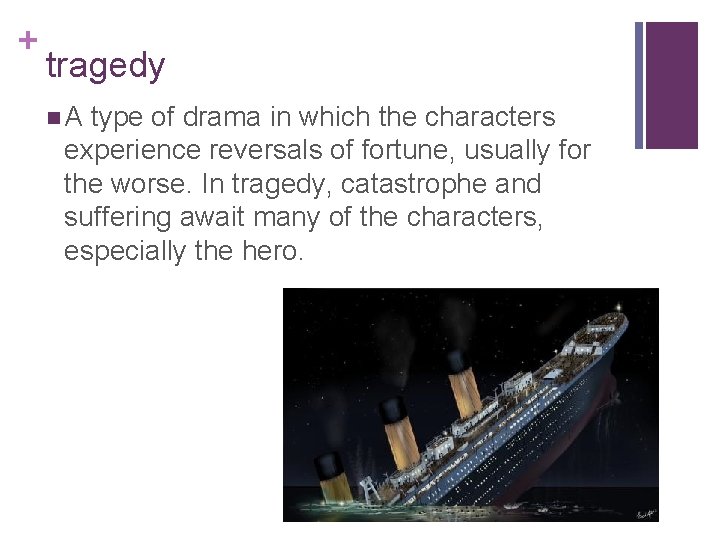
+ tragedy n. A type of drama in which the characters experience reversals of fortune, usually for the worse. In tragedy, catastrophe and suffering await many of the characters, especially the hero.